The shooting happened at a restaurant that had just hosted the release party for a rapper’s new album.
CHICAGO — Four people have died from gunshot wounds and 14 others have been hospitalized following a drive-by shooting in Chicago, police said Thursday. At least three were in critical condition.
The shooting happened late Wednesday in Chicago’s River North neighborhood, a popular nightlife destination with many restaurants and bars. Several media outlets said it happened outside a restaurant and lounge that had hosted an album release party for a rapper.
Someone opened fire into a crowd standing outside, police said, and the vehicle immediately drove away.
No one was in custody, police said.
“When I arrived last night it was absolute chaos, from people screaming to blood on the streets, to people laying on the streets,” said Chicago pastor Donovan Price, who responds to communities and people in crisis.
He described the scene to reporters as “the worst I’ve seen — just people wanting to find their other people, find who was alive, finding where their phones were because they dropped them in the chaos.”
Preliminary information from police said 13 women and five men ranging in age from 21 to 32 were shot, and that the dead included two men and two women. Those shot were taken to multiple hospitals, police said.
Video showed people waiting and crying outside of hospitals. Other images showed multiple police and ambulances at the scene of the shooting.
Police said that nine people, including the two women who died, were taken to Northwestern Hospital. Five people, including the two men who died, were taken to John H. Stroger Hospital.
Copyright 2025 Associated Press. All rights reserved. This material may not be published, broadcast, rewritten, or redistributed.
Great Job & the Team @ WFAA RSS Feed: news Source link for sharing this story.
WASHINGTON – The Supreme Court said Thursday it will not hear a case involving a push to revive a law that minors must have their parents’ permission for an abortion in Montana, where voters have enshrined the right to abortion in the state’s constitution.
The justices rebuffed an appeal from the Republican-led state seeking to overturn a Montana Supreme Court ruling that struck down the law. The parental consent law passed in 2013 but was blocked in court and never took effect before it was invalidated last year.
Montana state leaders say that decision violated parents’ rights.
“The right that Montana seeks to vindicate here — parents’ right to know about, and participate in, their child’s medical decisions — falls well within the core of parents’ fundamental rights,” state attorneys argued in court documents.
Two conservative justices, Samuel Alito and Clarence Thomas, wrote separately to say the high court’s denial to take up the case was about its technical legalities rather than rejection of the state’s argument.
Planned Parenthood argued that the Montana Supreme Court decision balanced the rights of parents and of minors in a state that has protected the right to abortion. Montana’s highest recognized a right to abortion before the Supreme Court overturned it nationwide, and voters also enshrined it in the Montana Constitution last year.
“Petitioners seek to use the parental right as a cudgel against a minor’s rights,” the group wrote. “The broader interests of the child must be accounted for along with parental rights.”
The law would require notarized, written consent for people younger than 18 to get an abortion. It would also allow minors to petition judges for permission, a process known as judicial bypass. Montana also has another law in place requiring parents be notified of minors’ abortions.
More than two dozen states require parents consent to abortions for minors, though the laws have also been blocked in California and New Mexico, according to data gathered by KFF, a nonprofit that researches health care issues. Twelve more states require parental notification, though three of those laws are also blocked in court.
Copyright 2025 The Associated Press. All rights reserved. This material may not be published, broadcast, rewritten or redistributed without permission.
Great Job Lindsay Whitehurst, Associated Press & the Team @ KSAT San Antonio Source link for sharing this story.
The best way to celebrate this almost too-good-to-be-true run of shows is to dive into the band’s rich catalog. Even if you know the hits and have committed their unimpeachable run of mid-’90s albums to memory — looking at you, 1994’s “Definitely Maybe,” 1995’s “(What’s the Story) Morning Glory?” and 1997’s “Be Here Now” — there’s so much more to dive into. And that’s why The Associated Press has created a playlist of megahits and beloved B-sides alike.
Where better to begin than at the beginning? Oasis’ first single, “Supersonic,” what would later appear on their landmark debut album “Definitely, Maybe,” immediately establishes an idiosyncratic band’s sound: Britpop that would soon grow massive. Their songs sounded like the Beatles performed with the edgy intensity of the Sex Pistols, as a popular description by the English press suggested at the time. (Remember when they called this band “The Sex Beatles”? No?)
From the jump, Noel emerged a prolific songwriter with unrivaled talent — so much so, that when he first played “Live Forever” for his bandmates, even they couldn’t believe he’d written such a massive tune. The song’s malleable structure — and its deviation from major chords to a minor on in its last chorus — gives it an incomplete feeling. It perfectly mirrors the song’s message. “Maybe you’re the same as me / We see things they’ll never see,” Liam sings. “You and I are gonna live forever.”
Before “Wonderwall” entered popular consciousness as the No. 1 song choice of dudes with acoustic guitars at house parties aiming to serenade the uninterested, it was a simply … one of the best contemporary rock ’n’ roll songs ever recorded. The track that appears on the mythmaking record “(What’s the Story) Morning Glory?” is known the world over. Stateside, it may even be more popular than the band itself. No celebration of Oasis is complete without it.
It is a bar ballad that plays out, effortlessly, like the timeless classic it became. Is there a better full-throated karaoke song than “Don’t Look Back in Anger,” with its fierce, self-referential spirit? “Please don’t put your life in the hands / Of a rock ’n’ roll band / Who’ll throw it all away,” you’ll sway and scream-sing with a friend, preferably with a pint in hand.
This playlist could’ve been every song on “(What’s the Story) Morning Glory?” listed in sequential order, and it would make for a truly enjoyable and diverse listening experience. Cut to the oddly psychedelic “Champagne Supernova,” and its easter-egg inclusion of one of the Gallagher brothers’ favorite guitarists, The Jam’s Paul Weller.
It is a story diehard Oasis fans have long committed to memory: During the band’s first tour of the United States, in 1994, after a drug-addled performance at Los Angeles’ infamous Whiskey a Go Go rock club, Noel decided he had enough and abandoned his band for San Francisco. Their tour manager found him by checking hotel call logs — the songwriter was hiding out with a woman he had met at their show in the Bay Area a few days prior. The experience inspired Noel to write “Talk Tonight,” on which he takes over lead vocals.
Few bands have B-sides as memorable as their singles. The Mancunian group have a number, but widely agreed upon as one of the all-time greatest is “Acquiesce,” originally released as the B-side to the 1995 hit “Some Might Say,” and later featured on the B-side compilation album, 1998’s “The Masterplan.” It is an ascendent power pop record, a forever fan favorite, and one where Noel and Liam get along … at least, on the mic, taking turns singing the verse and chorus.
It is not all Beatles worship and transformative rock ballads for Oasis. Well, OK, there’s still some Beatles worship. Enter “D’You Know What I Mean?” a 7 ½-minute detour of backwards vocals and distortion from their album “Be Here Now.” They’re challenging their listeners and themselves here. And it works.
Later Oasis — particularly the ’00s albums — is often overlooked. It is understandable, but that music is not without their charms. That’s especially true of the psychedelic track, “The Hindu Times” from “Heathen Chemistry.”
“Lyla,” from their penultimate album “Don’t Believe the Truth,” is pogo pop; a late-in-their-career arena anthem. The popular fan folklore is that Lyla is a real person, the sister to Sally from “Don’t Look Back in Anger.” If that’s the truth, then Lyla clearly got the better end of the deal. “She’s the queen of all I’ve seen,” as Liam sings. Compare that to “And so, Sally can wait,” from the better-known track and, well, who wouldn’t want to be Lyla?
Copyright 2025 The Associated Press. All rights reserved. This material may not be published, broadcast, rewritten or redistributed without permission.
Great Job Maria Sherman, Associated Press & the Team @ KSAT San Antonio Source link for sharing this story.
Unemployment rates over the past year have remained largely steady for every group of workers but one: Black women, whose unemployment rates have been rising.
For the past three months that increase has been even more pronounced, with Black women’s unemployment rate hovering at 6 percent — twice the rate of White workers — according to new data released Thursday from the Bureau of Labor Statistics. It’s a trend that has been troubling economists, and a potential sign of strain in the economy.
Because of systematic racism and inequities in the labor market, any cracks in the strength of the overall economy always show up for Black workers first, said Jessica Fulton, a senior fellow at the Joint Center for Political and Economic Studies, a think tank focused on Black Americans.
“Black workers, and particularly Black women, show up as a canary in the coal mine, giving a picture of what may happen to everyone else later,” Fulton said.
Over the past several months, Black women’s unemployment rate has jumped from 5.1 percent in March to 6.1 percent in April, 6.2 percent in May and 5.8 percent in June. The unemployment rate among White women and Asian women stayed largely flat around 3 percent from March to June, and among Latinas, it hovered near 5 percent in that time period. The rate for every racial subgroup of men stayed flat during that time, except Black men, who last month saw a significant increase — 6.9 percent from 5.2 percent in May.
The implications are severe: Black women participate more in the labor force than any other group of women. They are the most likely to be working or seeking work, and they work in sectors that offer critical services, including health care, education and the federal government.
The high rate of unemployed Black women is also concerning because Black women tend to remain unemployed for longer than other workers, said Jasmine Tucker, the vice president for research at the National Women’s Law Center. In June, the average time Black women spent unemployed before they found a job was more than six months — the longest duration of any group.
Economists The 19th spoke to agree that some of what may be behind those numbers is a loss of government jobs as part of cuts led by the Department of Government Efficiency (DOGE) under the Trump administration. From February to March, when the bulk of the cuts were taking place, 266,000 Black women lost jobs, Fulton’s research found, amounting to a 2.52 percent decline in employed Black women. The only other time in recent years there’s been a larger decline for Black women was in mid-2020 with the onset of the pandemic.
They are also more likely to be in the departments that have been most targeted for cuts by DOGE, including the Departments of Education, Health and Human Services, and Housing and Urban Development. According to a New York Times tracker of federal job cuts, about half of the jobs at the Department of Education and a quarter of those in the Department of Health and Human Services have been cut. According to a report by ProPublica, Black women made up 28 percent of the education department. They also made up many of the diversity, equity and inclusion, or DEI, positions that Trump has set out to eliminate since his first day in office.
Still, it’s been difficult to quantify how many of the jobs lost in the federal government this year were held by Black women. In March, the Trump administration removed current and historic diversity data on the federal workforce from its public website. The National Women’s Law Center ran its analysis based on data saved prior to that purge.
Federal job losses, however, still don’t explain all of the decline in unemployment for Black women over the past several months. For example, Black workers make up large shares of the health care and hospitality workforce, and those sectors have seen some of the highest job growth of any over the past several years.
But it’s clear something is happening in the broader workforce. Kate Bahn, the chief economist and senior vice president of research at the Institute for Women’s Policy Research, said Black workers, because of persisting discrimination in the workforce, are sensitive to any challenges in the labor market.
“Black women are overrepresented among those jobs,” Bahn said. “But somehow, that’s still not enough to overcome the bigger structural barriers,” Bahn said.
And though month-to-month employment data is volatile because of small sample sizes, Thursday’s data marked the third straight month of high unemployment rates for Black women, indicating a larger trend.
“Are we heading into a recession? Is some action the current administration is going to take going to keep moving us in that direction? Prices remain high, people can’t afford child care — there are a whole host of things people are really nervous about,” Tucker said. “For me, Black women’s unemployment going up — this is the backbone of our economy, of our labor force. We have cause to be concerned.”
Great Job Chabeli Carrazana & the Team @ The 19th Source link for sharing this story.
All products and services featured are independently chosen by editors. However, Billboard may receive a commission on orders placed through its retail links, and the retailer may receive certain auditable data for accounting purposes.
The Macy’s 4th of July Fireworks Show returns to New York City on Friday (July 4), and is expected to be the biggest one yet. You can catch all the action live on NBC and Peacock.
Explore
See latest videos, charts and news
See latest videos, charts and news
The fireworks launches from barges in the East River, with broadcasts starting at 8 p.m. ET, and the actual fireworks show starting around 9:25 p.m. ET.
Keep reading to learn how to stream the annual fireworks display.
How to Watch the ‘Macy’s 4th of July Fireworks Show’
For those staying home, or who are unable to attend in person, the show airs live on NBC and Peacock starting at 8 p.m. ET on Tuesday (July 4). If you’re already a subscriber to Peacock, you can watch the show for free. Cable subscribers can also watch the showcase on NBC.
Not a Peacock subscriber? Monthly plans start at just $7.99 per month for Peacock Premium and $13.99 per month for the commercial-free, Premium Plus. If you subscribe to Peacock’s annual plans you’ll be able to save around 17% off your streaming package.
For additional streaming options, you may also be able to watch the Macy’s fireworks display if you have an HD antenna. You can also snag a free-trial through DirectTV, Fubo, Hulu + Live TV or SlingTV, all of which gives you access to NBC as well, to watch the fireworks live on TV or stream from your laptop, tablet or smartphone.
You could go for DirecTV’s traditional signature packages, which start at $59.99 for the first month of service ($89.99 per month) afterward. The “Choice” package comes with more than 125 channels, including NBC for the Macy’s 4th of July Fireworks Show. It includes ABC, ESPN, PBS, NBC, Fox, CBS, TNT, NBA TV and other channels, and access to on-demand content and DVR storage.
Although Sling TV doesn’t offer a free trial, new subscribers can join at a discounted rate with up to 50% off for your first month of service. Sling Orange + Blue lets you access 50 channels including ABC (in some markets), Fox, NBC, ESPN, ESPN2, A&E, AMC, MTV, BET, E!, VH1, Bravo and others (DVR storage included). Please note: Sling TV’s pricing and channel availability varies from location to location.
Elsewhere on the roster of streamers, FuboTV’s Pro package is $64.99 for the first month of service and 84.99 per month afterwards after a five-day free trial. You’ll get access to more than 230 channels (over 100 sporting events), cloud DVR and streaming on up to 10 screens.
Hulu + Live TV starts at $82.99 per month to stream more than 95 live and on-demand channels — including ABC, CBS, Fox, NBC, ESPN, ESPN 2, ESPN News, ESPN U, FS1, FS2, FX, MTV, truTV, BET, Food Network, Lifetime, Paramount Network, ID, TLC and others — along with everything on Hulu, Disney+ and ESPN+.
In 2025, the show broadcasts live on NBC with host Ariana DeBose, accompanied by performances from Trisha Yearwood, Lenny Kravitz, Keke Palmer, Jonas Brothers, Eric Church, Ava Max and a score produced by Questlove and James Poyser.
Great Job Rudie Obias & the Team @ Billboard Source link for sharing this story.
Washington — The Supreme Court on Thursday said it will consider whether states can prohibit transgender athletes from participating in girls’ and women’s sports, setting up a high-profile clash that could have far-reaching implications across the country.
The justices agreed to decide whether laws from Idaho and West Virginia that prevent transgender girls and women from competing in female athletics violate the Constitution’s Equal Protection Clause and Title IX. The cases involving transgender rights come after the court’s conservative majority upheld a ban on gender-affirming care for transgender minors last month.
Beginning in its next term in October, the Supreme Court will review lower court decisions in favor of transgender athletes from Idaho and West Virginia who challenged the bans in their respective states. The Idaho case involves the 14th Amendment’s Equal Protection Clause, while the dispute over West Virginia’s law involves the Constitution’s guarantee of equal protection and Title IX, the landmark civil rights law that prohibits sex-based discrimination in education.
The issue of transgender athletes participating in girls’ and women’s sports has exploded at the state level in recent years. Idaho was the first state to pass a law prohibiting transgender athletes from participating in women and girls’ sports, and two dozen have since followed suit. Roughly half of the states have also passed laws that bar certain medical treatments for minors experiencing gender dysphoria.
At the federal level, President Trump signed an executive order in February that aimed to ban transgender girls and women from competing on sports teams that match their gender identity. The president’s order directs that under Title IX, educational institutions that receive federal funds cannot “deny women an equal opportunity to participate in sports.”
On the heels of Mr. Trump’s executive order, the NCAA announced it had updated its participation policy for transgender athletes to bar student-athletes who were assigned male at birth from competing on women’s teams. On Wednesday, the University of Pennsylvania said it would no longer allow transgender athletes to participate in women’s sports as part of an agreement to resolve Title IX violations. The Trump administration had opened an investigation into the school after it awarded Lia Thomas, a transgender swimmer, a spot on the women’s swimming team.
“Categorically excluding kids from school sports just because they are transgender will only make our schools less safe and more hurtful places for all youth,” said Joshua Block of the ACLU, which is representing the athletes in the cases, Lindsay Hecox and Becky Pepper-Jackson. “We believe the lower courts were right to block these discriminatory laws, and we will continue to defend the freedom of all kids to play.”
West Virginia Attorney General JB McCuskey said he is confident the Supreme Court will uphold his state’s law.
“It’s a great day, as female athletes in West Virginia will have their voices heard,” he said in a statement. “The people of West Virginia know that it’s unfair to let male athletes compete against women; that’s why we passed this commonsense law preserving women’s sports for women.”
Idaho’s law
Idaho’s measure, called the Fairness in Women’s Sports Act, requires athletic teams or sports to be designated based on biological sex, and says those for women or girls “shall not be open to students of the male sex.” If there is any dispute about a student’s sex, the law says schools must ask for a health examination and consent form verifying the student’s biological sex.
After Idaho’s GOP-led legislature passed the legislation, Hecox, a transgender woman who was attending Boise State University, sued, arguing the law violates Title IX and the Constitution’s promise of equal protection under the law. Hecox was a freshman when she filed her lawsuit in April 2020, and she said she wanted to try out for the women’s track and cross-country teams as a sophomore, but couldn’t do so because of Idaho’s ban.
Hecox has received treatment for gender dysphoria since 2019, including testosterone suppression and estrogen, according to court papers.
A federal district court blocked enforcement of Idaho’s law, finding that Hecox was likely to succeed in her challenge. U.S. District Judge David Nye wrote in August 2020 that the ban “on its face discriminates between cisgender athletes, who may compete on athletic teams consistent with their gender identity, and transgender women athletes, who may not compete on athletic teams consistent with their gender identity.”
Additionally, Nye found the measure discriminates against transgender women by categorically excluding them from female sports and subjects participants in female athletics to a “potentially invasive” process for verifying a student’s biological sex.
As a result of the district court’s order, Hecox tried out for the women’s NCAA running teams at Boise State, but did not qualify. She instead participated in women’s club soccer and running at the university, according to court filings.
The U.S. Court of Appeals for the 9th Circuit upheld the district court’s injunction as applied to Hecox, finding that Idaho’s ban targets all transgender girls and women regardless of their testosterone levels or whether they have received certain gender-transition treatments.
The appeals court said that the record in the case doesn’t back “the conclusion that all transgender women, including those like Lindsay who receive hormone therapy, have a physiological advantage over cisgender women.”
The West Virginia law
West Virginia’s legislature passed its law, the Save Women’s Sports Act, in 2021, which restricts participation on girls’ sports teams based on biological sex, defined as a student’s “reproductive biology and genetics at birth.” The law prohibits transgender athletes from participating in girls’ sports at every level, including club and intramural activities.
State officials have argued the law aims to protect equality in girls’ sports, and it does not prevent anyone from trying out for men’s, boys’ or co-ed teams.
“It is only when students are playing skill and contact sports — where biological sex has a direct effect— that biological males (again, however they might identify) cannot compete with females,” they wrote in a Supreme Court filing.
Before the law took effect, Pepper-Jackson, who was then 11 years old, challenged the measure, arguing it is unconstitutional and violates Title IX, the landmark civil rights law that prohibits sex-based discrimination in schools or programs that receive federal funding.
Pepper-Jackson, now a teenager, was born male but began identifying as female at “an early age,” lawyers wrote in court papers. She has received puberty-delaying treatment and estrogen hormone therapy. When Pepper-Jackson was a rising sixth grader and preparing to begin middle school, she was informed by her school’s principal that she could not participate in girls’ school sports because of West Virginia’s law.
A federal judge in July 2022 temporarily blocked West Virginia from enforcing the law only against Pepper-Jackson, ruling its application would likely violate Title IX and the Constitution. As a result of the injunction, she was able to participate in her middle school girls’ cross-country and track-and-field teams.
In early 2023, U.S. District judge Joseph Goodwin ruled for the state and upheld the law. He also lifted the earlier injunction that had blocked enforcement against Pepper-Jackson.
“A transgender girl is biologically male and, barring medical intervention, would undergo male puberty like other biological males. And biological males generally outperform females athletically,” he wrote. “The state is permitted to legislate sports rules on this basis because sex, and the physical characteristics that flow from it, are substantially related to athletic performance and fairness in sports.”
Pepper-Jackson appealed and asked the U.S. Court of Appeals for the 4th Circuit for emergency relief, which would’ve allowed her to participate in the spring 2023 track-and-field season. The appeals court granted her request, after which West Virginia officials sought the Supreme Court’s intervention. The high court then denied the state’s bid to allow it to enforce the law against Pepper-Jackson, with Justices Clarence Thomas and Samuel Alito dissenting.
A divided 4th Circuit issued a ruling on the merits of the case in April 2024, finding West Virginia’s law violated Title IX by discriminating against Pepper-Jackson on the basis of sex.
Citing Pepper-Jackson’s years-long identity as a girl, social transition, name change, updated birth certificate listing her as a female and medical treatments, the 4th Circuit’s majority said offering her a “‘choice’ between not participating in sports and participating only on boys teams is no real choice at all.”
“By participating on boys teams, B.P.J. would be sharing the field with boys who are larger, stronger, and faster than her because of the elevated levels of circulating testosterone she lacks,” Judge Toby Heytens wrote. “The act thus exposes B.P.J. to the very harms Title IX is meant to prevent by effectively ‘exclud[ing]’ her from ‘participation in’ all non-coed sports entirely.”
But in their appeal to the Supreme Court, West Virginia officials argued that the 4th Circuit’s decision threatens Title IX’s promise of equal athletic opportunity for women and girls.
“In the Fourth Circuit, females must now compete against biological males — and all the physiological advantages they possess — in all athletic events,” lawyers for the state wrote.
Lawyers for Pepper-Jackson argued it’s too soon for the Supreme Court to weigh in, as the 4th Circuit’s decision is the first and only from a federal appeals court to address Title IX’s protections for transgender athletes.
Melissa Quinn is a politics reporter for CBSNews.com. She has written for outlets including the Washington Examiner, Daily Signal and Alexandria Times. Melissa covers U.S. politics, with a focus on the Supreme Court and federal courts.
Great Job & the Team @ Home – CBSNews.com Source link for sharing this story.
House Democratic Leader Hakeem Jeffries is making a marathon last stand against President Donald Trump’s major tax cut and spending bill.
Jeffries took to the House floor just after 5 a.m. on Thursday and has now been speaking for more than five hours, delaying a final vote in the chamber on the domestic policy bill at the heart of Trump’s second term agenda.
Jeffries has stacks of binders next to him at the podium. It does not appear he is wrapping any time soon.
“I’ve been given 15 minutes each on a bill of such significant magnitude as it relates to the health, the safety and the well being of the American people and because that debate was so limited, I feel the obligation, Mr. Speaker, to stand on this house floor and take my sweet time to tell the stories and that’s exactly what I intend to do,” Jeffries said.
The “magic minute” speech is a procedure that grants members of House leadership unlimited time to speak after debate on a bill has concluded. For context, then-House Minority Leader Kevin McCarthy, a Republican, spoke for more than eight hours in 2021 when the House passed President Joe Biden’s Build Back Better Act.
House Minority Leader Hakeem Jeffries is applauded as he speaks on the floor of the House of Represenatives in Washington, July 3, 2025.
House of Represenatives
Jeffries has focused much of his speech on the bill’s projected impact on Medicaid, the federal program that primarily serves seniors and people with disabilities, sharing personal stories from people he says will struggle as a result of the megabill.
“People will die. Tens of thousands, perhaps year after year after year, as a result of the Republican assault on the healthcare of the American people,” Jeffries said. “I’m sad. I never thought I would be on the House floor saying this is a crime scene.”
According to the nonpartisan Congressional Budget Office, the Medicaid cuts and changes passed by the Senate could cause 11.8 million Americans to lose their health insurance over the next decade.
Jeffries is excoriating the Trump-backed megabill’s “assault on healthcare.”
“Every single house Democrat is fighting hard to protect your Medicaid,” Jeffries said. “We value you and we’re working hard to defend you.”
Republicans have defended the changes as reforms to entitlement programs they claim are riddled with “waste, fraud and abuse.” The Trump administration has also pushed back on the nonpartisan budget office itself and its analysis, claiming bias.
Jeffries didn’t stop at health care and is criticizing other portions of the bill, including its impact on the Supplemental Nutrition Assistance Program (SNAP) and its immigration provisions.
“You see, budgets are moral documents. And in our view, Mr. Speaker, budgets should be designed to lift people up,” he said. “This reckless Republican budget that we are debating right now on the floor of the House of Representatives tears people down.”
“This reckless Republican budget is an immoral document,” Jeffries continued. “And everybody should vote no against it because of how it attacks children, seniors, and everyday Americans, and people with disabilities. This reckless Republican budget is an immoral document. And that is why I stand here on the floor of the House of Representatives with my colleagues in the House Democratic caucus to stand up and push back against it with everything we have.”
Those comments prompted House Democrats gathered near Jeffries to stand in applause.
Great Job & the Team @ ABC News: Top Stories Source link for sharing this story.
Whether it’s driven by burnout or the need to take a meaningful break with an increasingly longer career on the horizon, sabbaticals are experiencing a resurgence. And it’s not just Gen Z grads exploring the world before getting serious about their careers—leaders are joining in too.
Take Ania Smith, the CEO of Taskrabbit, for example.
She was seemingly at a career high, working as an executive at Airbnb, when she quit it all; she packed up her life and moved to Buenos Aires for a year in 2018 with her husband and three young children, to hit pause.
Despite the stigma that often surrounds résumé gaps, Smith scored a promotion on her return–and has since seen her career go from strength to strength. And the 50-year-old chief tells Fortune that it’s largely down to the big reset the year abroad gave her—and importantly, her marriage.
After all, how often do you get an entire year to break away from your routine and redefine your life?
Instead of backpacking, she enjoyed life unemployed with long lunches, cinema at 10 a.m., and space to think
Unlike your typical backpacker on a sabbatical, Smith’s year in Argentina’s capital was less on the spontaneous side. Bar from a trip to Patagonia, the family stayed in the same apartment, so the kids could attend school nearby. That meant regular routines—early wake-ups, school drop-offs, family dinners, bedtimes. No swimming with sharks or last-minute gorilla treks—just everyday structure, in a different country.
However, Smith and her husband took the long days they had to themselves to enjoy Spanish lessons, horseback riding, languorous restaurant lunches, even trips to the cinema at 10 a.m. on a Tuesday if they felt like it.
“It was jarring, but it was also great,” she says, adding that for the first half of the year abroad, they crammed in too many activities and lessons (including dancing and photography). “We felt like we didn’t want to waste it—there’s a lot to learn and a lot to see.” But then came the realization that, they’d not actually given themselves the pause they needed.
Courtesy of Small Girls PR
“I think it’s really nice to also have the time to rethink what’s important to you,” she explains.
So for the second half of their gap year, they did exactly that. “We spent like five hours until we had to go pick up our children, having those types of conversations about, do we want to come back to live in the Bay Area? Do we want to move somewhere else? What would it be like to move to Park City and ski a lot more and work a lot less? Can we afford to do that?”
“We had all sorts of discussions about life, and had the time and space to do that. So by the time we did make a decision to come back and work in technology again, and to, in fact, come back to the Bay Area, it felt so right— and it felt so that this is very intentional.”
“But we did make some big changes,” she adds—one transformative change being how they divided the household chores.
The gap year showed her husband the mental load of running a house—so she could elevate her career
Before the gap year, Smith says managing the household often fell on her shoulders, despite holding down an executive role at the time. “I was often the person who took care of all the doctors’ appointments for the kids, or the summer camps, or I would make sure that we had all the plans for the weekend.”
But without a daily 9-to-5 grind, the roles they’d automatically taken on when they became working parents quickly disappeared.
“Because neither one of us were working, we literally split responsibilities down the middle completely—and then when we moved back, that really stuck.”
Smith credits the gap year with giving her husband a “profound understanding” of the mental load that typically falls on working mothers. Today, he even takes on the lion’s share of managing the children’s routines—freeing her up to advance into more demanding positions at Uber, IKEA, and now Taskrabbit.
“That has meant that it’s okay for me to have a more rigorous role at the moment, while he steps in and helps to manage the house,” she adds.
“And I’m not sure that we would have been able to do that without the experience we had in Argentina. It’s really hard to understand what it means to carry the mental load of running a house unless you have to do it yourself.”
Really, it wasn’t just a gap year—it was a reset that allowed them to rethink how they sustainably balance ambition and family life, instead of slipping into default modes. The bottom line, Smith says, is simple: “We can’t both be running a C-suite and running a house.”
Great Job Orianna Rosa Royle & the Team @ Fortune | FORTUNE Source link for sharing this story.
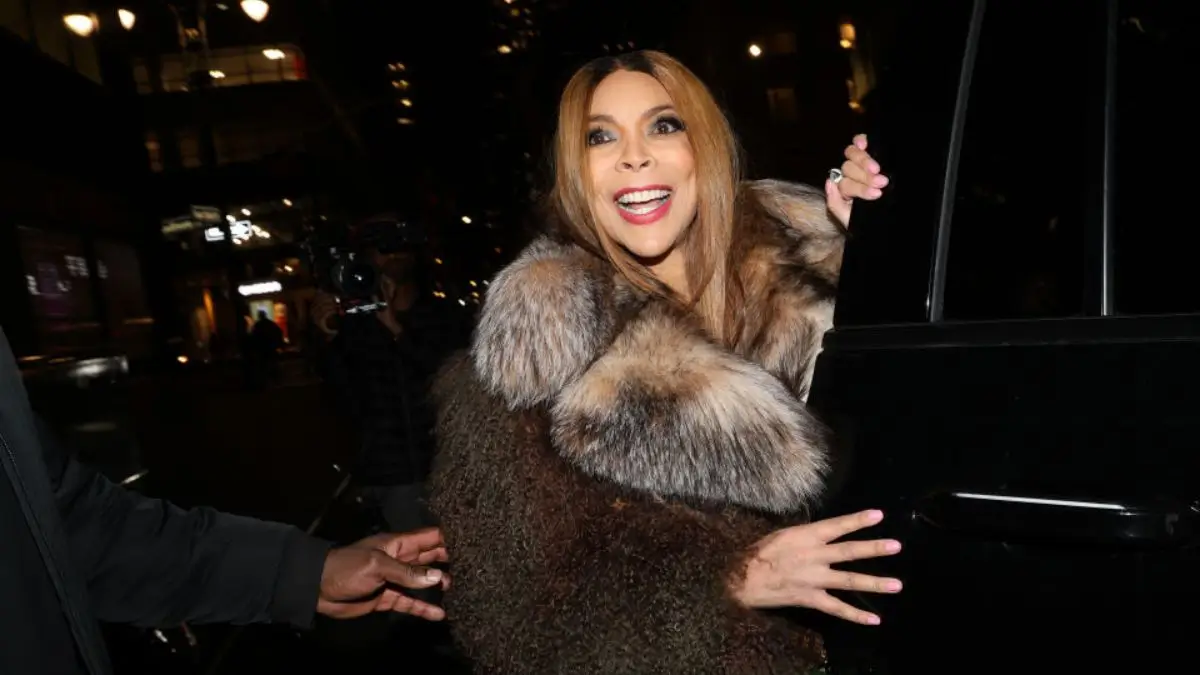
Wendy Williams stepped back into the spotlight in spectacular fashion this week, making a surprise appearance at Columbia University that had fans celebrating her return to public life.
The beloved former daytime television host was spotted Tuesday, July 1, in New York City, radiating confidence and style as she supported her longtime friend and fashion designer Mel Maxi, who was delivering a lecture at the prestigious institution. For someone who has faced significant health and legal challenges in recent years, Williams appeared remarkably vibrant and engaged during her outing.
Wendy Williams spotted looking alert and well in New York City amid health battles. (Photo by Johnny Nunez/WireImage)
The media maven turned heads as she navigated through the campus, dressed to perfection in an ensemble personally crafted by Maxi for the special occasion.
The former host of “The Wendy Williams Show” wore a cream and black floral printed silk shirt tucked into black pocketed silk shorts, completing her look with Christian Louboutin sneakers, a Cap USA Harlem baseball cap, a designer handbag, and her dark pink lipstick. Videos quickly circulated across social media platforms, including TikTok footage showing her using a mobility scooter while maintaining her characteristic poise and charm.
During her visit, Williams took time to speak with TMZ, gushing about her designer friend’s exceptional talent. She told cameras while showcasing the intricate details of her outfit, “He did this specifically for me.
She proudly shared Maxi’s impressive credentials, noting his work with notable clients including Fat Joe, Remy Ma, and Eric B and Rakim, as well as his training under legendary designer Dapper Dan.
Williams also graciously stopped to chat with the smaller platform Speak Your Fit, bringing the same enthusiastic energy she showed the larger outlet.
Instagram show, “Speak Your Fit” caught up with Wendy Williams out with her fashion designer friend, Mel Maxi. (Instagram/ @speakyourfit)
When asked what advice she would offer her younger self, she provided wisdom that felt both personal and universal: “Stay true to what you wear.”
The conversation took a characteristically playful turn when asked about what movies she liked.
“Excuse me, I don’t do movies unless I’m with the date and even then I don’t even focus on the movie I focus on canoodling,” she responded with her trademark wit.
Then, when prompted about her social media presence, Williams cheekily replied, “Social what? Social who?” making it clear she avoids those platforms entirely.
However, social media was certainly paying attention to her.
Fans were particularly struck by her physical appearance, with many commenting positively on her health progress.
“What’s wrong with her legs,” asked one person. Another noted, “Her legs looking better. They use to be so swollen,” referencing Williams’ ongoing battle with lymphedema, a chronic condition causing swelling in her legs and feet that she first publicly discussed in 2019.
“Her legs look so much better! Gone head Wendy,” wrote one TikTok user.
“She’s outside? so amazing to see people didn’t abandon her completely- she looks amazing,” asked a second individual.
Another supporter expressed pure joy: “It made me smile. I hope she bounces all the way back.”
These observations about Williams’ mental sharpness carry significant weight, given her recent legal circumstances.
The television personality has been under court-ordered guardianship since 2022, even amid reports that she recently took a cognitive assessment and scored a perfect 10 out of 10. This result directly contradicts claims from her guardian about her deteriorating condition, as noted in the lawsuit recently filed by her ex-husband, Kevin Hunter.
One fan on The Neighborhood Talk pointedly questioned the entire narrative: “Dementia where?!”
The enthusiastic responses continued on the Instagram post, with supporters already envisioning her return to television.
“Sherri babe we love you but get down to the unemployment office early tomorrow morning okay? We want to makes sure you good but mother is back,” one fan wrote, playfully referencing daytime talk show host Sherri Shepherd, whose show supplanted Wendy’s.
Even Williams’ fashion choices didn’t escape notice, with one observer commenting on her luxury accessories: “The croc birkin mama is gon always give high priced.”
The fan was correct, according to Speak Your Fit, which reported she was rocking a Hermes Birkin bag. This particular bag retails on Jane Finds for over $100,000.
For Williams’ devoted fan base, seeing her out and about, engaging confidently with media, dressing as fly as ever, and supporting a friend represented hope and normalcy after months of concerning headlines.
The appearance demonstrated that despite her legal battles and health challenges, the essence of Williams — her warmth, humor, and genuine connection with people — remains beautifully intact. Her day at Columbia University served as a powerful reminder of why audiences fell in love with her authentic personality and infectious spirit in the first place.
She opened up about her lifestyle habits, revealing that she maintains a regular gym schedule three times per week and loves good food. When pressed about her dining preferences, Williams mentioned craving soul food, though she had enjoyed lox, bagels, and cream cheese the previous day.
Great Job Nicole Duncan-Smith & the Team @ Atlanta Black Star Source link for sharing this story.