

Home News Page 2561

Elon Musk Hired a Dozen Texas Lobbyists This Year. State Law Keeps the Extent of Their Influence Under Wraps.

Elon Musk Hired a Dozen Texas Lobbyists This Year. State Law Keeps the Extent of Their Influence Under Wraps.

ProPublica is a nonprofit newsroom that investigates abuses of power. Sign up to receive our biggest stories as soon as they’re published.

This article is co-published with The Texas Newsroom and The Texas Tribune as part of an initiative to report on how power is wielded in Texas.

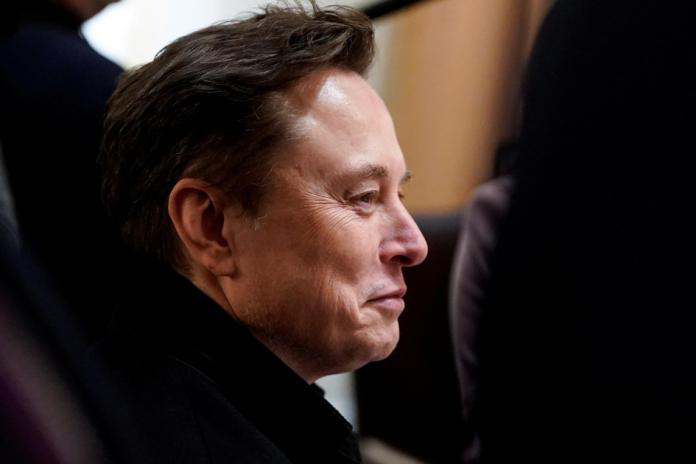
Elon Musk’s team of Texas lobbyists during the 2025 legislative session did not rival those of huge energy and telecommunications companies, which typically employ dozens of people to represent them. But Musk and his companies still hired more lobbyists this year than any other since 2021, according to data from the Texas Ethics Commission.

Musk, the billionaire businessman behind carmaker Tesla and aerospace company SpaceX, influenced several new Texas laws this year. How his lobbyists came about these wins, however, is more of a mystery.

His lobbyists, who represented Tesla, SpaceX and the social media giant X Corp., spent tens of thousands of dollars on things like gifts and meals for Texas elected officials and others during the session, according to an analysis of state ethics data. In most cases, Texas transparency laws do not require lobbyists to disclose which politicians they wined and dined or on behalf of which clients.

The Texas Newsroom reached out to all 12 of Musk’s lobbyists registered with the state this session. Only one, Carrie Simmons, a lobbyist who counts Tesla among her clients, responded, but she declined to be interviewed. She said only Musk’s companies could comment on their work this session.

Emails sent to Musk’s companies and to Musk himself were not returned.

The Texas Newsroom was able to find hints of some of their actions in records obtained from Lt. Gov. Dan Patrick and state Sen. Adam Hinojosa. Other documents detailing their deeper connections are hidden from disclosure by state laws.

Ethics experts said the responsibility to improve transparency lies with Texas lawmakers. State law provides a “base level of transparency” for the public on who lobbyists are and who they represent, said Andrew Cates, a former lobbyist who wrote a guide on state ethics rules.

“Beyond that, the Legislature simply has not prioritized enough transparency in how the dollars are actually being spent on legislators on a regular basis. But that’s not the lobby’s fault, it’s the Legislature’s,” Cates said.

Tom Forbes, president of the Professional Advocacy Association of Texas, a statewide lobbyist organization, said while lobbyists sometimes get a bad rap, they play a critical role for lawmakers trying to make decisions on complex policies. He told The Texas Newsroom that his group is “agnostic” about making reporting requirements more stringent but will follow any changes the state implements.

“Our association is going to comply with whatever law the Legislature passes,” Forbes said.

Who did Musk hire and who did they lobby?

Eight of Musk’s lobbyists worked for SpaceX, according to filings with the Ethics Commission. Tesla had four, one of whom also worked for X.

Musk’s lobbyists include former advisers and staffers for Gov. Greg Abbott, among them Mike Toomey and Reed Clay. Another lobbyist, Will McAdams, once sat on the Public Utility Commission of Texas, which regulates the state’s electric, telecommunications, and water and sewer utilities.

All but one lobbyist had other clients for whom they were also working, making it more difficult to track exactly how much spending went to further Musk’s agenda. Benjamin Lancaster, a former legislative staffer, was only on SpaceX’s payroll.

Lobbyists are not required to report their exact salaries, only a pay range. According to Ethics Commission data, Musk pledged to pay somewhere between about $400,000 to nearly $1 million in total to his lobbyists for their work this year. Half of them could rake in more than $110,000 each working for Musk’s companies.

Each month, lobbyists report their total spending. But state rules don’t require them to disclose who was on the receiving end unless the lobbyist shelled out more than $132.60 on one person in a single day. This includes food and beverages, transportation, lodging or entertainment. Taxes and tips are not counted. The disclosure threshold for gifts is $110.

Lobbyists also don’t need to disclose exactly who attended events to which all legislators were invited, like catered lunches for the entire Texas House of Representatives or happy hours hosted off-site.

In practice, these rules mean a lobbyist could buy the same elected official a steak dinner every night. As long as the daily cost stays under that amount, they don’t need to say who got the free meal.

Musk’s lobbyists spent more than $46,000 on food and drink alone for elected officials and their staff, family and guests this year, according to state ethics records. None of them detailed which elected officials may have been on the receiving end, implying all of their spending remained beneath the daily threshold.

Jim Clancy, the former chair of the Ethics Commission, said it’s common for multiple lobbyists to divide a single bill in order to stay below the reporting threshold.

“They have 15 different credit cards in the deal to make sure that it’s all below the limit,” Clancy told The Texas Newsroom. “The Legislature has to change it. And if they did, they wouldn’t get to eat for free.”

A slate of ethics bills, including several to require transparency into who funds mass text messages for political campaigns, failed to become law this year, according to The Texas Tribune. Meanwhile, legislators approved a new law that will reduce the fine for former lawmakers who engage in illegal lobbying activity.

What do other records show?

While lobbyists are not required to disclose which bills they discuss in private meetings with officials and their staff, they must note their position if they choose to testify on a piece of legislation. This is how The Texas Newsroom identified the 13 bills on which Musk’s lobbyists took a public stance.

The Texas Newsroom was able to glean some additional insight on lobbyist influence from records received through public information requests.

Calendars for Hinojosa, a newly elected South Texas Republican who authored multiple bills that would benefit SpaceX and other aerospace companies, showed he or his staff had meetings scheduled with lobbyists or representatives from Musk’s rocket company at least three times in two months. Emails showed Patrick penned a letter to the Federal Aviation Administration supporting SpaceX’s ability to increase the number of launches at its South Texas rocket site.

Patrick was also invited to take a tour of the Tesla Gigafactory outside Austin, these records showed, but it’s unclear if he went.

Neither Hinojosa nor Patrick responded to requests for an interview.

The Texas Senate declined to release other documents that could have shed light on how Musk’s companies interacted with elected officials. In denying their release, Senate Secretary Patsy Spaw said communications between state lawmakers and Texas residents are “confidential by law.”

The reason, she said, is “to ensure the right of citizens of the state to petition their state government without fear of harassment, retaliation or public ridicule.”

This could include emails with lobbyists.

Lauren McGaughy is a journalist with The Texas Newsroom, a collaboration among NPR and the public radio stations in Texas. She is based at KUT in Austin. Reach her at [email protected]. Sign up for KUT newsletters.

Great Job by Lauren McGaughy, The Texas Newsroom & the Team @ ProPublica Source link for sharing this story.
Ringo Starr Definitely Had Notes For Director Sam Mendes on Beatles Biopic Script: ‘That’s Not How We Were’

Ringo Starr Definitely Had Notes For Director Sam Mendes on Beatles Biopic Script: ‘That’s Not How We Were’

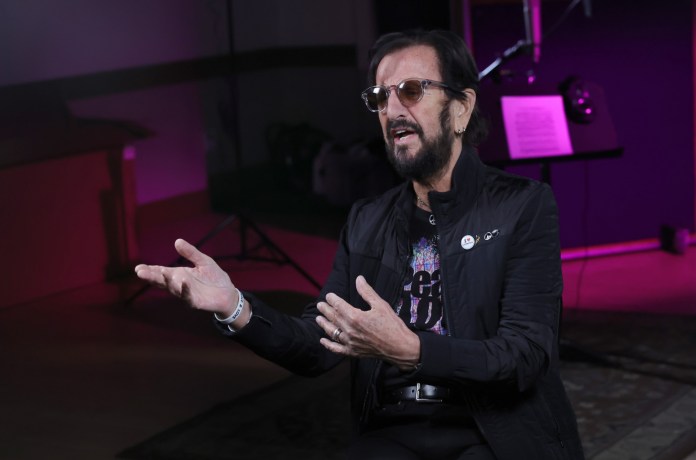
Ringo Starr is all about peace and love. But the Beatles legend who has made mellow vibes his calling card for half a century had to share some tough love with director Sam Mendes when the pair met in London earlier this year to discuss the filmmaker’s ambitious four-part Fab Four biopic project.

Explore

See latest videos, charts and news

See latest videos, charts and news

Speaking to The New York Times, the drummer who will turn 85 on Monday (July 7) described sitting down with Mendes for two days in April to go over the script for the film in which Saltburn star Barry Keoghan will play the band’s timekeeper. The paper reported that the pair went over the script for the Ringo film line-by-line, with Starr offering up “extensive notes” to Mendes in an effort to get the story closer to the real thing.

In particular, Starr had some pointed suggestions about scenes depicting his family and his first wife, Maureen Starkey Tigrett. “He had a writer — very good writer, great reputation, and he wrote it great, but it had nothing to do with Maureen and I,” Starr explained. “That’s not how we were. I’d say, ‘We would never do that.’” Starr and Tigrett were married in 1965 and had three children, former Oasis/Who drummer Zak Starkey, son Jason and and daughter Lee, before splitting in 1975; Starr married actress/model Barbara Bach in 1981.

Starr said he’s much happier with how he’s portrayed in the script now, even though he’s not sure how Mendes will manage the monumental task of shooting the four films at the same time. “But he’ll do what he’s doing,” Starr said, “and I’ll send him peace and love.”

In addition to Keoghan portraying Starr, the cast of the films includes Harris Dickinson (Triangle of SadnessThe Iron Claw), who will portray play John Lennon, Paul Mescal (Gladiator IIAftersun) taking on Paul McCartney and Joseph Quinn (Gladiator IIThe Fantastic Four: First Steps) suiting up as George Harrison. No other casting details have been announced so far. The scripts will be written by Tony Award-winner Jez Butterworth (Ford v FerrariSpectre) Oscar winner Peter Straughan (ConclaveTinker Tailor Soldier Spy) and BAFTA- and Tony Award-winner Jack Thorne (AdolescenceEnola Holmes).

At press time it was still unknown how the workload on the four films will be spread among the writers, or if they will collaborate on all four films that are currently being referred to as The Beatles — A Four Film Cinematic Event. The movies marks the first time that Apple Corps. Ltd. and the Beatles have granted full life story and music rights to a scripted film, with each movie slated to tell the story of one of the members. A press release also revealed that all four movies — due out in early 2028 — will intersect to tell “the astonishing story of the greatest band in history.”

Great Job Gil Kaufman & the Team @ Billboard Source link for sharing this story.

Video Airports brace for busy travel rush for Fourth of July

Video Airports brace for busy travel rush for Fourth of July

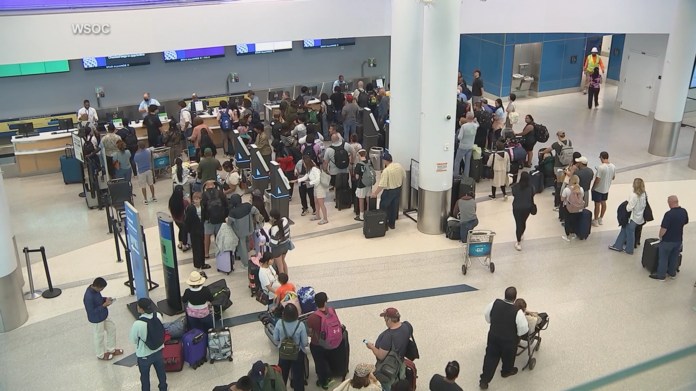
Airlines and TSA are preparing for a record travel weekend as millions of Americans hit the skies for Independence Day weekend.

Great Job & the Team @ ABC News: Top Stories Source link for sharing this story.

Oscar Mayer turkey bacon recalled over possible listeria contamination

Oscar Mayer turkey bacon recalled over possible listeria contamination

Kraft Heinz Foods Company, the parent company of Oscar Mayer, is recalling approximately 367,812 pounds of fully cooked turkey bacon due to potential listeria, a disease-causing bacteria, according to federal officials. 

In an alert Wednesday, the U.S. Department of Agriculture’s Food Safety and Inspection Service said the recalled products were produced April 24 through June 11 of this year and shipped to stores nationwide.

The recalled products include: 

12-oz. vacuum-packed packages of “Oscar Mayer Turkey BACON ORIGINAL” 

  • With universal product code (UPC) “071871548601” printed on the packaging under the barcode
  • “Use by” dates ranging “18 JUL 2025” to “02 AUG 2025”
  • Lot code “RS40”

Recalled Oscar Mayer product

Courtesy of USDA


36-oz. packages containing three 12-oz. vacuum-packed packages of “Oscar Mayer Turkey BACON ORIGINAL” 

  • UPC “071871548748” 
  • “Use by” dates ranging “23 JUL 2025” to “04 SEP 2025” 
  • Lot codes “RS19,” “RS40” or “RS42”

Oscar Mayer turkey bacon recalled over possible listeria contamination

Recalled Oscar Mayer product

Courtesy of the USDA


48-oz. packages containing four 12-oz. vacuum-packed packages of “Oscar Mayer Turkey BACON ORIGINAL” 

  • UPC “071871548793” 
  • “Use by” dates ranging “18 JUL 2025” to “04 SEP 2025”
  • Lot codes “RS19,” “RS40” or “RS42”

3recall-025-2025-labels.jpg

Recalled Oscar Mayer product

Courtesy of the USDA


There have been no confirmed reports of adverse reactions to date, but the agency warns eating contaminated food can cause listeriosis, a serious infection.

Listeria infections are caused by eating food contaminated with the bacteria called Listeria monocytogenes. Symptoms to look out for include headaches, fevers, changes in your mental status, difficulty walking and even seizures.

The Centers for Disease Control and Prevention warns that people may also experience a stiff neck and flu-like symptoms, such as muscle aches and fatigue.

Some people are also at higher risk of severe cases, including those who are pregnant, newborns, adults 65 or older, and those with weakened immune systems. 

“Consumers who have purchased these products are urged not to consume them. These products should be thrown away or returned to the place of purchase,” the recall alert noted. “Anyone concerned about an illness should contact a healthcare provider.”

Great Job & the Team @ Home – CBSNews.com Source link for sharing this story.
Runway’s AI transformed films. The $3 billion startup’s founders have a bold, new script: building immersive worlds

Runway’s AI transformed films. The  billion startup’s founders have a bold, new script: building immersive worlds

Artists like Claude Monet, Pierre-Auguste Renoir, and Edgar Degas were ridiculed, their work described by critics as “base,” “unfinished,” and the worst thing to ever happen to art. A commercial flop, the exhibition saw 3,500 visitors, who mostly sauntered by to express horror at the plain frames and individual brushstrokes. 

About a decade later, Georges Seurat would start A Sunday Afternoon on the Island of La Grande Jatte. Seven feet tall and ten feet wide, Sunday would become the most famous example of an Impressionist offshoot technique, pointillism. 

Sunday’s central conceit was simple—one detailed image of a bustling afternoon at a Parisian park on the Seine. If you looked closely, you could see distinct spots of color and light that zoomed out into parasols, instruments, hats, humans, and a monkey on a leash. Each image could be unraveled, deconstructed into individual dots—the pixels of an analog age. And there’s a direct throughline between Seurat and the Impressionists and Total Pixel Space, the winning film at this month’s Runway AI Film Festival (AIFF)

“Pixels are the building blocks of digital images, tiny tiles forming a mosaic,” the film’s velvety voiceover says. “Each pixel is defined by numbers representing color and position. Therefore, any digital image can be represented as a sequence of numbers…Therefore, every photograph that could ever be taken exists as coordinates. Every frame of every possible film exists as coordinates. Every face that could ever be seen exists as coordinates. To deny this would be to deny the existence of numbers themselves.”

Jacob Adler, who made Total Pixel Space, is a classically-trained musician and composer, a multidisciplinary artist rendered a filmmaker by advances in AI. Adler worked on the film for more than a year, generating tens of thousands of images along the way, inspired by Jorge Luis Borges’s short story “The Library of Babel” and the miracle of making sense in a random, vast world.

“I was fascinated by the act of generating these images, and it spawned all these philosophical questions,” said Adler. “In this vast combinatorial space of language, the overwhelming majority of combinations of letters are gibberish and nonsense. So, apply that to digital imagery: How many images can possibly exist? And how many of these images are incomprehensible noise? I tried expressing this idea in other media, and it just failed. But it came together as a short AI film.”

Runway, the $3 billion AI video startup, has hosted the AIFF since 2023 to showcase short films made with AI. This year’s festival—won by Total Pixel Space—marked a major leap: from 300 submissions in small NYC theaters in 2023 to a sold-out Lincoln Center show with 6,000 submissions, drawing an international crowd. Runway didn’t pick the winner—a panel of judges, including directors Harmony Korine and Gaspar Noe, made the call—but Total Pixel Space reflects how Runway is thinking about its own future: AI-generated experiences that don’t just tell stories but build worlds.

“We’re going to have all these new forms of media that go beyond film and games, that exist in all the spaces in-between,” said Anastasis Germanidis, Runway CTO and cofounder. “Some of it might look more like immersive theater productions, where there’s a fixed storyline, but you can kind of move around, experiencing it from different perspectives.”

Germanidis added: “Imagine these models get really good at generating realistic depictions of reality, and you have a world where you can essentially simulate most of what we care about as we navigate the world. That’s going to be both a very important piece of solving problems.  

Germanidis is thinking about world simulation as a principle more than anything else; one that could be applied not just to stories, but to biology, robotics, and physics. It’s distinctly about finding ways to mimic not just humans, but physics and biology. 

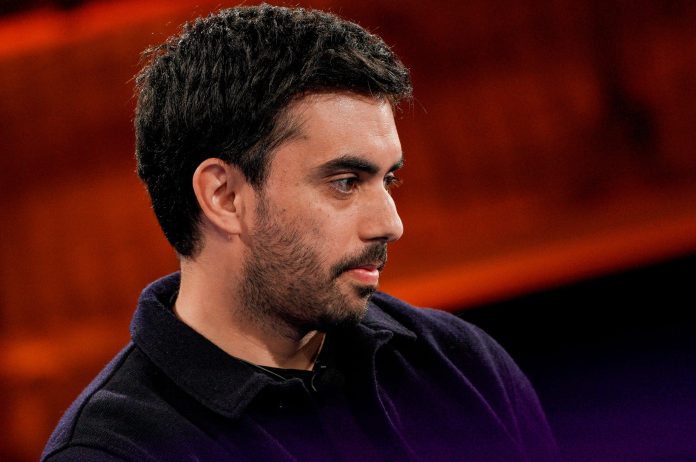
“We want to be able to simulate pretty much every instruction you have in the physical world,” said Cristóbal Valenzuela, CEO and cofounder of Runway. “We know that’s coming…AI labs have been very obsessed with simulating the human mind. But I think that might be the wrong approach long-term. What you want to do is not simulate how humans work, but how the world works.”

We’re seeing the beginnings of this strategy play out this week, as Runway plans to launch an interactive gaming experience, marking a push into the gaming market. The product right now is text and image generation, but is expected to become increasingly visual over time. How this all will ultimately lead to world-building applications is hazy—and that’s part of the point. 

“If you have a predetermined way of getting there, it’s too late and it’s obvious,” Valenzuela said. “For me, it goes back to how creative [something is]…. If you’re not involved in creative acts, you don’t understand. Most people who have any form of creative expression within their work know that when they start, they don’t exactly know where they’re heading. You’re putting yourself in a very vulnerable position to just explore everything. Then, eventually you’ll know by experience that you will have to land somewhere.”

Runway has no shortage of competition in AI video generation—including but not limited to OpenAI’s Sora, Stability AI, Moonvalley, and Pika Labs. And Runway is in the position where they must continue to distinguish themselves in order to compete. The company has raised more than $500 million to date from investors like General Atlantic, SoftBank, Nvidia, Salesforce Ventures, Felicis, and Coatue. Meta reportedly approached Runway in an attempt to acquire the company before dropping billions on Scale AI this summer.  

The AI “wake up” call

The history of art is a history of technological disruption, from the invention of the printing press to the advent of “talkies” in the 1920s. Job displacement is, of course, part of that story—and always has been. 

“Before the printing press, it was all monks and people who knew how to share specific stories,” said Valenzuela. “Then, with the printing press, more people could read and write, which was treated as an apocalyptic event.”

This is true: When the printing press was invented in 1440 and adoption of the technology spread, religious authorities worried about losing control, and guilds of scribes were displaced. But a world of people could now read, and stories could scale. 

Valenzuela brings up another example, this one infused with a comically droll element: 

“Before alarm clocks were invented, you’d hire a guy who came to your door, at the time you wanted, and throw up a stone to your window,” said Valenzuela. “That was a job. What else were you going to do if you didn’t have family around and needed to wake up?”

In 19th-century Britain and Ireland, these people were called “knocker-uppers.” They’d tap on windows with long sticks or shoot peas at windows to wake workers for shifts. Once alarm clocks were invented, it became natural for people to just, well, use alarm clocks. As AI comes tapping at Hollywood windows, a trend that Valenzuela is directly involved in, the industry reaction has been fraught—even as people secretly use it. 

“It’s been a little dirty secret, because whether it’s Runway or, you know, he does have a little competition,” said Michael Burns, vice chair at Lionsgate onstage at AIFF, gesturing to Valenzuela. “We believe that this tool is being used by everybody that doesn’t talk about the fact that they’re using it.”

Runway’s Germanidis says there are three phases of technological art evolution: getting the technology to work, imitating existing art forms, and then creating unique forms. We’re just starting to “enter that third stage with, like generative generative models,” he said. That’s not to say, of course, that everything should be AI—for Adler, an artist whose practice has fundamentally expanded with AI, is very clear that some things (like surrealistic images and philosophical concepts) are well-suited to AI, whereas other material (like complex human interactions) isn’t. 

“I look at [AI] as a tool, but I don’t know yet if I’m convinced that it’s a new genre,” said Adler. “There are things I can produce with cameras that are impossible with AI and vice versa—things I can do with AI that are impossible with cameras.”

That alone is an incredible phenomenon that speaks to excitement, and fear, that Runway and its video AI rivals are already causing throughout the worlds of art, media, and entertainment. For Runway’s founders however, the real payoff of their AI vision, if they can pull it off, will extend far beyond the screen, existing as something spectacular, immersive—and probably unrecognizable.

Great Job Allie Garfinkle & the Team @ Fortune | FORTUNE Source link for sharing this story.
Brazil wants to be a sustainable data center hub. Environmentalists are skeptical

Brazil wants to be a sustainable data center hub. Environmentalists are skeptical

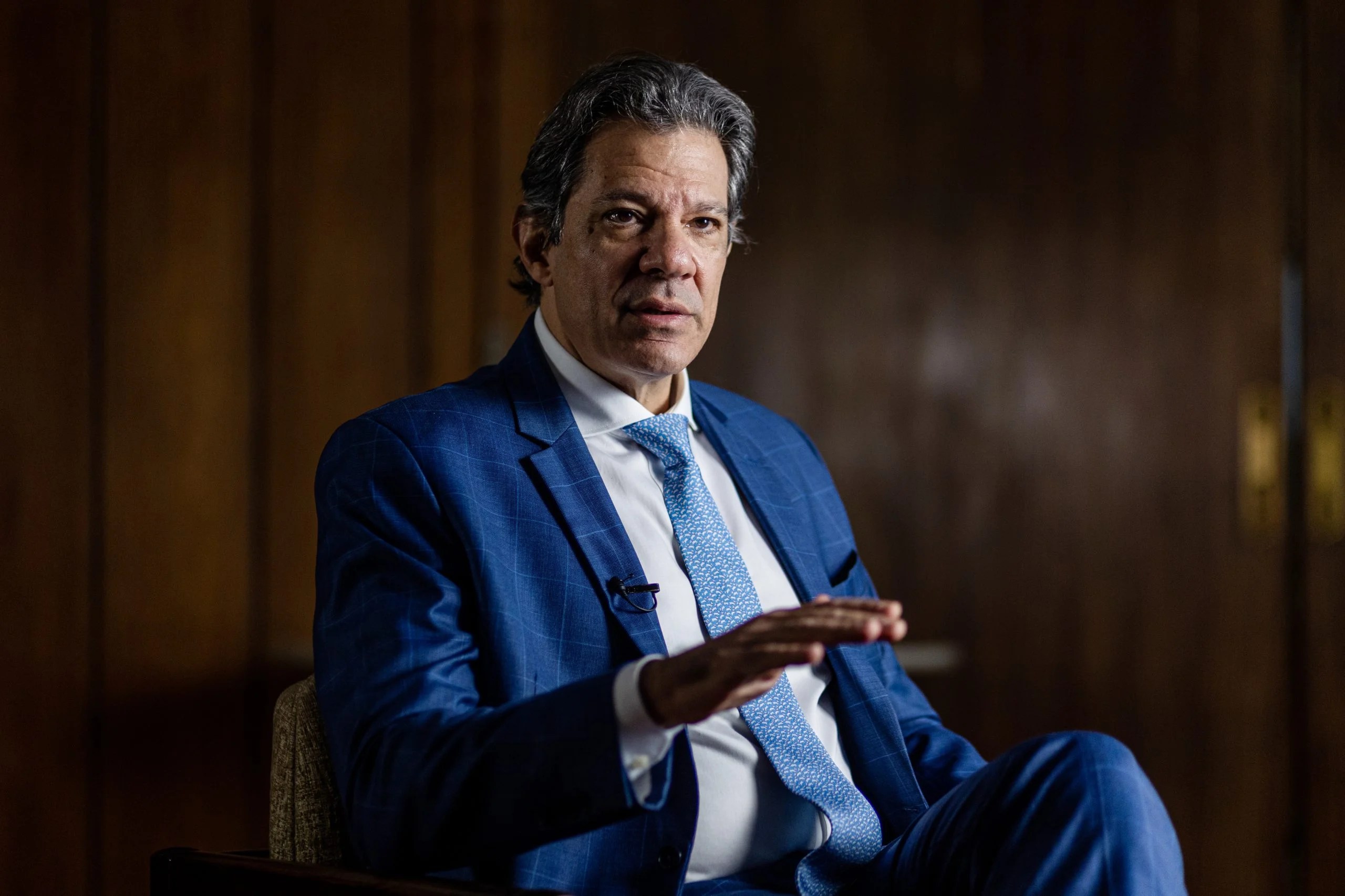
In May, Brazil’s Finance Minister Fernando Haddad flew to the U.S. to meet with executives from Amazon, Google, Nvidia, and Meta. His agenda: to pitch his country as the newest, most attractive data center hub in the region.

Haddad’s biggest selling point was sustainability. “We want the digital economy in Brazil to be simultaneously digital and green,” he said during a presentation at the Milken Institute Global Conference in Los Angeles.

The timing of Haddad’s tour was no coincidence: The country had just introduced its national data center policy, intended to lure Big Tech with tax breaks and renewable energy alternatives. Even before Haddad’s U.S. trip, tech giants like Microsoft and Amazon Web Services had signed multimillion-dollar contracts to build data centers in Brazil to meet the growing demand for artificial intelligence and cloud computing in Latin America’s biggest economy.

But with the new policy expected to draw more interest from global tech companies, environmental regulators and experts are raising the alarm about their potential impact, especially in fragile areas, including a city that was hit by record floods last year.

Data centers are “putting significant pressure on our energy system and could have a major environmental impact, especially considering the locations where they’re being installed,” Andréa Santos, an engineering professor at the Federal University of Rio de Janeiro, told Rest of World.

Brazil is home to more than 180 data centers, putting it ahead of other large economies in the region: There are nearly 60 data centers in Mexico and fewer than 40 in Argentina. About one-third of Brazil’s data centers are located in São Paulo, the biggest city, which suffered an acute water crisis about a decade ago. At least 41 of the data centers are considered either large or hyperscale, meaning they occupy enough space to house thousands of servers and other equipment. 

Brazil’s data center market is expected to be worth nearly $6 billion by 2030, according to a recent study from Arizton Advisory & Intelligence, a market research and consulting firm. The country’s geography lends itself to the particular demands of data centers, Luis Tossi, vice president of the Brazilian Data Center Association, an industry body, told Rest of World.

“We have available land, abundant electric and renewable energy, and a skilled workforce,” he said. “We are in a condition as a country to attract this kind of investment.”


Arthur Menescal/Bloomberg via Getty Images

Since 2024, the federal government has intensified its efforts to attract tech infrastructure, introducing the Brazilian Artificial Intelligence Plan, which outlines $4.2 billion in targeted investments. Also last year, the national development bank, BNDES, rolled out a $367 million credit line to support the expansion of data centers.

The efforts have paid off. Last year, AWS announced an investment of $1.8 billion to expand its data center infrastructure in Brazil through 2034. In September, Microsoft pledged to invest $2.7 billion in Brazil over three years to boost its cloud and artificial intelligence infrastructure.

The tax break proposed in the new national data center plan could attract around $356 billion in investment over the next decade, according to some estimates, with the country’s installed capacity rising to 8 gigawatts from around 1 gigawatt currently.

“We came to understand that Brazil’s greatest potential lies in positioning itself as a hub for clean data centers,” Igor Marchesini, special adviser to the Ministry of Finance, which is involved in the drafting of the national data center policy, told Rest of World. “No other country in the world has the conditions to compete at scale on this front.”

But environmental advocates say the plan to turn Brazil into a data center hub does not consider the long-term impacts on the country’s ecosystem.

We have to take into account that we’re living in the midst of a climate crisis.

While the draft legislation for the national data center plan has not yet been submitted to Congress, over 80 meetings involving at least 200 federal officials have already taken place, according to an investigation by The Intercept Brazil. No officials from the environment ministry were present at any of these gatherings.

The Ministry of Environment is “taking part in the ongoing discussions within the federal government regarding the forthcoming national data center policy,” a spokesperson told Rest of World. Asked about environmental safeguards, the spokesperson said data centers “are subject to the current environmental regulatory framework, including the National Environmental Policy, which requires environmental licensing for activities that are potentially polluting or that use natural resources.”

Industries considered to be polluting, such as oil, energy, and metal, have a special licensing regulation. Data centers are currently not on this list.

In May, the nongovernmental group Brazilian Institute for Consumer Protection requested a copy of the data center policy that Haddad presented to U.S. investors, from both the Ministry of Finance and the Ministry of Development, Industry, Trade and Services. Both ministries refused, saying the document wasn’t finalized yet.

“We’ve been watching with great concern how this process has been unfolding, how it often masks greenwashing practices, and how these narratives are being used in the name of a so-called energy transition,” Julia Catão, coordinator of the sustainable consumption program at the Brazilian Institute for Consumer Protection, told Rest of World.

The Ministry of Finance will make the plan public once it is final, Marchesini said. The Ministry of Development, Industry, Trade and Services did not respond to queries from Rest of World.

Meanwhile, Brazilian company Scala Data Centers has set its sights on Eldorado do Sul, in the south of the country — a region that suffered widespread destruction last year from unusually powerful floods. With an initial investment of $550 million, the project is expected to become the largest digital infrastructure complex in South America.

Scala Data Centers and the local government have framed the project as an example of resilience and innovation. But environmentalists are concerned it will exacerbate the environmental devastation of the region, which has yet to fully recover.

“We have to take into account that we’re living in the midst of a climate crisis, which leaves us with very little room for error,” Heverton Lacerda, president of the Gaúcha Association for the Protection of the Natural Environment, told Rest of World. Data centers could strain the fragile power grid in Eldorado do Sul, he said.

The Scala Data Centers infrastructure is expected to operate at a capacity of 4.75 gigawatts initially — equivalent to the energy requirements of around 40 million people. The state of Rio Grande do Sul, where it is slated to be built, has a population of around 11.2 million.

Scala Data Centers did not respond to an interview request from Rest of World.

Worldwide, there is growing pushback against the large quantities of water needed to cool data centers, as well as their broader environmental impact. The International Energy Agency estimates that electricity consumption from global data operations — including storage facilities and machine learning clusters — could more than double by 2026. 

About 89% of Brazil’s electricity now comes from renewable sources — primarily hydropower — though recent droughts in the southeast region have stretched the system. The cooling systems in large data centers, especially those relying on older air-liquid hybrid technologies, can consume millions of liters of water per day, particularly in hot climates.

The national data center policy is set to be submitted to Congress in the coming weeks. Meanwhile, uneasiness over the lack of transparency around it is growing.

“Many of the debates are taking place behind closed doors,” said Catão. “We had hoped that civil society would be heard, but that’s not what’s happening.”

Great Job Jorge C. Carrasco & the Team @ Rest of World – Source link for sharing this story.

#FeliciaRayOwens #TheFeliciaFiles #FROUSA #LocalVoices #IndependentMedia #HerSheSquad

Great Job Felicia Ray Owens & the Team @ Felicia Ray Owens Source link for sharing this story.

Court Greenlights Plan To Drastically Curb Car Use In Berlin

Court Greenlights Plan To Drastically Curb Car Use In Berlin


The Berlin Constitutional Court has declared the “Berlin car-free” referendum admissible, paving the way for a possible drastic reduction in car traffic. [emphasis, links added]

The court found that the aim of promoting health and climate protection is a legitimate legislative objective and that the draft does not violate fundamental rights.

There is no constitutional right to individual road use.

The initiative aims for a car-free Berlin center in which private car trips would be limited to just twelve per person per year.

Exceptions would be for police, emergency services and people with mobility impairments. Delivery traffic and special cases such as services would be able to be approved digitally.

The proponents argue that the aim is not to replace combustion engines with electric cars, but to reduce the total number of vehicles around the city center.

“We have won, right down the line: the future of Berlin belongs to safety, climate protection and the health of all Berliners – and not to unrestrained car traffic,” said the Volksentscheid Berlin autofrei (Referendum Berlin car-free) in a statement.

170,000 signatures needed for a referendum

Next, the initiative must collect 170,000 signatures within four months in order to bring about a binding referendum.

The initiative, however, faces opposition from various groups. Business associations, such as the Association of Business Associations in Berlin and Brandenburg (UVB), have warned that a widespread car ban would be a severe blow to the economy in the capital region.

They fear reduced customer access, especially for businesses that rely on delivery services or customers traveling by car.

There are also concerns that restricting car use would interfere with property rights, as car owners within the affected zone would be limited in how they could use their vehicles near their homes.

Many residents and businesses rely on cars for their daily commutes, deliveries, and other activities. The proposed restrictions allow only 12 private car trips per person per year within the city’s S-Bahn ring.

Critics also point to the current state of public transport infrastructure, expressing concerns about “significant bottlenecks” and overcrowding if a large number of car users switch to public transport.

While Berlin has an extensive public transport network, it probably isn’t robust enough to handle such a massive shift.

The current conservative-led Senate under Mayor Kai Wegner (CDU) has actively opposed traffic-reduction policies, campaigning against bicycle lane expansion, speed limits, and parking reductions. Residents should be able to choose their mode of transport, including cars.

While the court has deemed the initiative legally permissible, there remains a number of hurdles, including a potential referendum. Past experiences with referendums in Berlin show that implementation can be challenging due to political resistance.

There are also questions about how the 12-trip limit per person would be enforced, raising concerns about bureaucracy and data privacy.

Read more at No Tricks Zone

Great Job Pierre Gosselin & the Team @ Climate Change Dispatch Source link for sharing this story.

‘Completely Unacceptable’: Illinois HVAC Employee Suspended After Being Caught on Doorbell Camera Using Racial Slur During Service Call at Black Man’s Apartment

‘Completely Unacceptable’: Illinois HVAC Employee Suspended After Being Caught on Doorbell Camera Using Racial Slur During Service Call at Black Man’s Apartment

An HVAC company in Illinois is going viral after being seen on a doorbell camera video referring to Black people as “monkeys,” during a service call at an apartment complex.

The viral footage, posted by JT Toombs on Facebook, shows a team member from Diversified Mechanical, Inc. at the front door of Toombs’ apartment in Peoria, Illinois, after being called to repair an air conditioning unit on June 24.

‘Completely Unacceptable’: Illinois HVAC Employee Suspended After Being Caught on Doorbell Camera Using Racial Slur During Service Call at Black Man’s Apartment
A worker was dispatched to JT Toombs’ apartment to service his air conditioner. (Photo: Facebook video screenshot/JT Toombs)

The employee was on a phone call with a man who was on speakerphone.

From the other end of the call, the man could be heard saying, “You know how those monkeys are; they shut the f—king s—t off. Like, leave it on when it’s hot outside.”

Aware that he’s being recorded on the Ring doorbell camera, the worker walks away from the apartment’s front door, walks down the stairs, and can be heard telling the caller, “Hold on, let me take you off speaker.”

He’s heard laughing as he walks off.

Off-camera, but still within earshot of the doorbell camera, the employee says, “You said that, and I was like, ‘Ope, hold on,’” while he still laughs.

The 19-second clip garnered more than 900 shares and nearly 300,000 views on Facebook.

Toombs later posted that what he heard was “shocking, painful, and completely unacceptable,” and stated that his apartment complex’s management cut ties with the HVAC company after seeing the video.

“I applaud my building’s management for taking swift action by terminating their relationship with DMI. But real change means we don’t stop there. I sincerely hope my apartment complex — and other businesses in this community — will consider only partnering with companies that respect all individuals and don’t tolerate the use of racial slurs against patrons,” Toombs wrote on Facebook.

The owner of DMI confirmed to WEEK-TV that the man on the other end of the phone was also an employee. Both workers have been suspended, pending termination.

Toombs said that he has yet to hear from DMI with an apology.

“I believe an apology could have gone a long way a long time ago,” Toombs stated.

Great Job Yasmeen F. & the Team @ Atlanta Black Star Source link for sharing this story.

GIS Training Manual for Health Statistics

GIS Training Manual for Health Statistics

Public Health Update

Public Health Update is a popular public health portal in Nepal. It was initiated in 2011. The main purpose of this platform is to share public health updates, information & opportunities for public health professionals all around the world. Thousands of health professionals have trusted Public Health Update as the right website to find the latest public health opportunities, information & resources for health updates in Nepal. It is expected that this initiation will help public health professionals to have access to the right information & opportunities at the right time to develop their professional careers. Public Health Update is committed & dedicated to deliver accurately, trusted, up-to-date health information & opportunities to all health professionals. The most popular information in this blog are jobs, scholarships, conferences, fellowships, awards, internships, grants, national & international plan policy, guidelines, reports, and health news. If you have any complaints, information, or suggestions about the content published on Public Health Update, please feel free to contact at blog.publichealthupdate@gmail.com. Thanks for visiting us. Public Health Update: Inform | Advocate | Promote | Motivate | We are globally connected.

Great Job Public Health Update & the Team @ Public Health Update Source link for sharing this story.

Deadspin | Kyle Freeland, Rockies seek improvement against Astros

Deadspin | Kyle Freeland, Rockies seek improvement against Astros

Jun 27, 2025; Milwaukee, Wisconsin, USA; Colorado Rockies pitcher Kyle Freeland (21) throws a pitch during the first inning against the Milwaukee Brewers at American Family Field. Mandatory Credit: Jeff Hanisch-Imagn Images

Kyle Freeland was getting into a good rhythm for the Colorado Rockies before he landed on the injured list in mid-June.

The left-hander posted three consecutive quality starts and dropped his ERA by more than half a run, but his first start after coming off the IL broke that string of good outings.

Freeland will try to get back on track when he wraps up Colorado’s three-game series against the Houston Astros on Thursday. Houston will send lefty Brandon Walter to the mound.

The Astros held off another ninth-inning rally by the Rockies to win 5-3 on Wednesday. Houston has captured the first two games of the series, adding to Colorado’s home woes. The Rockies have lost all 14 home series this season. They have won just two series, lost 26 and split none in 2025.

Freeland (1-9, 5.56 ERA) allowed a total of six earned runs in his three quality starts before low back stiffness sidelined him. He returned Friday in Milwaukee and was tagged for six runs on eight hits in four innings. All of the runs came in his final frame, spoiling a solid beginning to his outing.

“I felt good. I felt healthy out there,” Freeland said postgame. “I felt like I was filling up the zone, doing a good job. Unfortunately, that fourth inning just unraveled on me with some seeing-eye ground balls and some base hits, and then that big home run there at the end by (Brewers center fielder Jackson) Chourio.”

Despite his record, Freeland has been the subject of trade rumors ahead of the deadline at the end of the month. He has shown in the past he can be a top-of-the-rotation pitcher, notably in 2018, when he went 17-7 with a 2.85 ERA and finished fourth in the National League Cy Young Award voting.

In his career against the Astros, Freeland is 0-2 with a 4.38 ERA in two starts.

Walter (1-1, 3.34 ERA) has never faced Colorado in his short career, which consists of five starts since his debut on May 20. He earned his first win in his latest outing when he held the Chicago Cubs to one run over six innings on Friday night.

The Astros had another injury scare on Wednesday when Jake Meyers took a Jake Bird fastball to the ribs in the sixth inning. Meyers, however, remained in the game. It was a similar scenario to how Jeremy Pena was hurt on Friday, and the shortstop landed on the injured list with a fractured rib.

Despite the absence of Pena and Yordan Alvarez (fractured right hand), Houston keeps winning.

“I love how our team is responding to anything that’s happening,” Astros manager Joe Espada said. “This is how we roll. This is how we do it. There’s no way around it. Teams are not going to feel sorry for us. I expect the players to get ready to play.

“We have some really good players, guys who are waiting to get an opportunity to play, and we’ll find ways to win. Coming here and singing a sad song, that ain’t going to help.”

–Field Level Media

Great Job & the Team @ Deadspin > Sports News Without Fear, Favor or Compromise Source link for sharing this story.

Secret Link