Home News Page 2566

$6 billion school funding freeze sparks outcry over ‘cruel betrayal’ of students

 billion school funding freeze sparks outcry over ‘cruel betrayal’ of students

State officials and teacher union leaders are reeling after President Donald Trump’s decision Tuesday to freeze over $6 billion in federal K-12 education funding for the upcoming school year  — a move critics say will further kneecap schools after mass cuts and layoffs at the Department of Education earlier this year raised widespread fears about the future of public education in the United States.

The Trump administration told school officials that it is withholding funding typically released July 1 for services such as reading and math support, summer and after-school programs and assistance for migrant students and English learners.

The nation’s two largest states, California and Texas, stand to lose the most funding due to the  freeze, but no state will go unaffected if the funds aren’t released imminently.

The National Education Association (NEA), the nation’s largest labor union, said that schools could be forced to slash the salaries of educators or begin layoffs, both moves that could cause classroom sizes to balloon and destabilize this woman-dominated profession. NEA President Becky Pringle called the freeze “outrageous and unconscionable.”

“Withholding billions in promised federal education funding that students need and states had planned to use to support children in their states is a cruel betrayal of students, especially those who rely on critical support services,” Pringle said in a statement. “Schools are already grappling with severe teacher shortages, burnout, and under-resourced classrooms, and here comes the federal government ripping resources away from public schools.”

Pringle said that withholding federal funding is part of the Trump administration’s pattern of hobbling public education by starving it of key resources in an effort to champion private and religious schools that aren’t obligated to admit the most vulnerable students, particularly those with learning disabilities or special needs or who belong to marginalized groups based on their race, religion or gender identity. 

Randi Weingarten, president of the American Federation of Teachers (AFT), said in a statement that Trump has attacked public education since the day he took office, describing his funding freeze as an “illegal” and ideologically-driven ploy to defund education. The programs affected, she pointed out, are congressionally approved.

The Trump administration “has delayed disbursements of billions in desperately needed federal funds for student services and instruction, as the Education Department weighs whether the money will be spent according to Trump’s ‘priorities,’” Weingarten said. “This is another illegal usurpation of the authority of the Congress. Plus, it directly harms the children in our nation.”

Instead of planning for the upcoming school year, K-12 public school leaders across the country are left uncertain about what services they can provide or even who they can hire, Weingarten said.

Tony Thurmond, California’s superintendent of public instruction, estimated that the Trump administration is denying roughly $1 billion to the Golden State. He said in a statement that the administration did not legally justify why they’re withholding the funds. 

“The administration is punishing children for the sole reason that states refuse to cater to Trump’s political ideology,” Thurmond said. “The administration is withholding funds that employ vital school staff who provide critical resources and supports for learning for all students. Every child will feel the impact of this disruption delivered shortly before the start of the school year, when our students, educators, and families should be anticipating the year ahead and making plans to support our children’s learning and growth.” 

He noted that California has previously taken legal action against the Trump administration and is prepared to do the same now to ensure that it can serve public school students in the state.

Using an analysis from the Learning Policy Institute, the Texas AFT estimates that the Lone Star State will lose $660.8 million unless the federal funds are released soon. As Texas endures a severe teacher shortage, the program that will be most affected supports effective instruction, or professional development and recruitment/retention efforts for educators in the state. 

“It wasn’t enough for DOGE [the federal Department of Government Efficiency] to cut the Department of Education staff and programming that protect the rights of our most vulnerable students,” said Zeph Capo, president of Texas AFT, in a statement. “It wasn’t enough for Texas special education classrooms to lose over half a million in needed federal funds. And it apparently wasn’t enough for Gov. Greg Abbott to veto a program that feeds the poorest kids in our state over summer break. No, Trump had to take hundreds of millions more from Texas schools already struggling amid rising costs and chronic underfunding.”

Capo was especially outraged that the freeze takes aim at programs in the state to boost  student achievement, given Texas leaders’ emphasis on academic performance when they threaten government takeovers of school districts, which the Houston Independent School District has experienced. He asked why Texas lawmakers aren’t speaking up about Trump’s impoundment of the funding. 

“If they won’t say a word to challenge Trump’s cuts, it’s an admission that they share his goal of undermining and ultimately privatizing public education in this country,” Capo said. “Texas students deserve classrooms that are fully funded and talented teachers who are paid what they’re worth. Texas voters deserve leaders who will fight tooth and nail for our schools.”

National education leaders noted that the funding freeze coincides with the Senate’s recent passage of Trump’s so-called One Big Beautiful Bill, which they argue will also hurt children in this country. The bill has moved to the House for a vote.

Weingarten characterized the legislation as the “big, ugly betrayal of a bill.” The bill, she said “will kick millions off healthcare and snatch food away from children, all while handing massive tax cuts to Trump’s billionaire friends.”

Feeling overwhelmed by the news? The 19th is considering new ways to keep you informed. But we need your input. Fill out this quick survey to share your thoughts.

#FeliciaRayOwens #TheFeliciaFiles #FROUSA #LocalVoices #IndependentMedia #HerSheSquad

Great Job Felicia Ray Owens & the Team @ Felicia Ray Owens Source link for sharing this story.

Seven County Infrastructure Coalition: The Supreme Court’s “Substantial Deference” Standard and Implications for Judicial Review under NEPA – Climate Law Blog

Seven County Infrastructure Coalition: The Supreme Court’s “Substantial Deference” Standard and Implications for Judicial Review under NEPA – Climate Law Blog


On May 29, 2025, the U.S. Supreme Court issued a decision in Seven County Infrastructure Coalition v. Eagle County (No. 23-975) in which it perhaps clarified, perhaps modified, or perhaps announced entirely new standards for judicial review of agency obligations under the National Environmental Policy Act (NEPA). Justice Kavanaugh delivered the majority opinion, holding that federal agencies are now entitled to “substantial deference” when making decisions about the scope and content of an environmental impact statement (EIS). This holding was predicated on the majority’s view that NEPA is a “procedural cross-check, not a substantive roadblock” to agency action, and thus courts should not “micromanage” agency decisions about EIS scope and detail as long as the agency’s final decision is “reasonable and reasonably explained.” Applying this standard, the majority held the U.S. Surface Transportation Board (STB) was not required to analyze potential upstream and downstream effects from “separate projects” over which it had no regulatory authority. In a concurring opinion authored by Justice Sotomayor, the liberal minority on the Court reached the same result, for some of the same reasons, but under a non-deferential standard of review.

The majority opinion emphasizes the central role of deference in NEPA litigation, and undoubtedly seeks to change the mood of adjudication of NEPA claims. Many commentators have characterized this as a major shift in legal standards of review (see, e.g., here and here), and some lower courts may read in it a signal to curtail scrutiny. However, as explained below, the impact of the “substantial deference” standard is uncertain; in some ways, it resembles deferential standards of review that have governed aspects of past NEPA litigation, and arguably the case can be best understood as a restatement, maybe a tightening, of the “rule of reason” and the principle that agencies need only consider environmental information in an EIS that is relevant and useful to the decision-making process. In our view, the decision does not foreclose meaningful judicial review of agency obligations under NEPA. To the contrary, courts should continue enforcing agency obligations to evaluate upstream and downstream effects when that information is necessary in order for the agency to reach a final decision that is “reasonable and reasonably explained.”

Background

This case involved an EIS for an 88-mile rail line intended to transport crude oil from the Uinta Basin in Utah to the national railway system, where it could then be carried by train to oil refineries in Louisiana, Texas, and other states. In the EIS, STB acknowledged that increased oil production was a foreseeable result of the project, and included estimates of the greenhouse gas (GHG) emissions attributable to the combustion of fuels refined from the crude oil transported on the line. However, STB did not conduct a detailed analysis of GHG emissions or other environmental impacts attributable to oil production and refining. STB maintained that it lacked authority to even consider such effects when issuing a rail certificate because: (i) it “generally cannot restrict the types of products and commodities that are transported on rail lines, and in fact, has held that railroads have a common carrier obligation to carry all commodities, including hazardous materials”, and (ii) it has “no role in determining or controlling the final destinations or end uses of any products or commodities transported on the proposed rail line.”

After STB approved the construction and operation of the Uinta Basin Railway, Eagle County, Colorado, and seven environmental organizations filed a lawsuit alleging that STB had arbitrarily limited the scope of its assessment, and had failed to take a “hard look” at upstream and downstream effects of the crude oil supply chain, among other things. The D.C. Circuit Court of Appeals issued a decision in 2023 finding that the EIS was deficient because it did not include estimates of GHG emissions and other impacts from induced oil production or oil refining. The court vacated the EIS and the STB’s approval on these grounds.

The Supreme Court’s Decision

In an 8-0 decision, with Justice Gorsuch recused, the Supreme Court reversed and remanded the D.C. Circuit Court’s decision. The majority held that the D.C. Circuit Court had not afforded STB the “substantial judicial deference” it declared is required in NEPA cases (Part II.A), and that STB had rightly concluded that it need not evaluate the effects of oil drilling and refining in its EIS (Part II.B). The majority opinion lashes out at NEPA in a variety of ways, yet we think that these holdings should be interpreted somewhat narrowly, for the following reasons:

First, the majority’s holding on substantial deference was based on its view that NEPA was a “purely procedural” statute and that the “ultimate question” for courts in NEPA cases is not “whether an EIS in and of itself is inadequate, but whether the agency’s final decision was reasonable and reasonably explained.” This suggests that courts should afford substantial deference to agencies in the context of standalone NEPA claims that do not implicate the agency’s obligations under the substantive statutory framework governing the action. However, if the alleged deficiencies in the EIS may result in a breach of the agency’s obligations to “consider all relevant factors” and provide a “reasonable explanation” for its action, then presumably the standard level of deference under Administrative Procedure Act (APA) arbitrary-and-capricious review should apply.

As for standalone NEPA claims, things are a bit hazy: The Supreme Court has previously recognized that heightened deference is warranted in the context of some NEPA decisions, for example where an agency is making “speculative assessments or predictive or scientific judgments, and decides what qualifies as significant or feasible or the like.” Baltimore Gas & Electric Co. v. NRDC (1983). But the majority opinion goes beyond precedent by directing courts to afford substantial deference to agencies across essentially all areas of NEPA decision-making, including decisions about scope, level of detail, significance determinations, and choice of alternatives. Most of these NEPA decisions entail mixed questions of law and fact. The majority seemed to recognize this, and at one point even asserted that agencies are entitled to substantial deference when determining the scope of their legal authority for the purpose of NEPA scoping decisions (see p. 20). This is not an obvious result, especially in the wake of the Supreme Court’s recent decision in Loper Bright Enterprises v. Raimondo (overturning Chevron deference). The concurring opinion viewed the matter differently, as discussed below.

Importantly, the majority does not suggest that substantial deference is absolute. It recognizes that courts will still play a role in enforcing NEPA (see FN1), that there are instances where agencies will have obligations to assess indirect effects and effects from related projects (see pp. 16, 19-20), and that courts should only defer to NEPA decisions that fall within a “zone of reasonableness.”

Second, the majority’s holding on STB’s NEPA obligations in part II.B. of the opinion should be understood in the context of the substantial deference standard that the majority announced in part II.A and the specific facts of the case.  As noted above, STB maintained that it did not need to further analyze the effects of oil drilling and refining because it had no authority to prevent those effects and thus they were irrelevant to its decision-making process.  The majority found that this was a reasonable determination, as it was undisputed that STB had “no authority or control over future oil and gas development” in the Uinta Basin, and, moreover, STB “cannot decline to provide ‘common carrier’ transport based on the product or commodity to be carried” (see FN 6).  Accordingly, the majority held that STB was not the legally relevant cause of the effects and not required to evaluate those effects, consistent with the rule articulated in Department of Transportation v. Public Citizen (“where an agency has no ability to prevent a certain effect due to its limited statutory authority over the relevant actions, the agency cannot be considered a legally relevant cause of the effect.”)

The majority noted that the question of whether STB’s determination was reasonable was “not close” – and so this dispute did not test the limits of the “substantial deference” standard. Indeed, the concurring opinion arrived at the same result applying the Loper Bright standard of review, and ultimately agreed that STB could not lawfully consider the contested upstream and downstream effects as part of the approval process, and therefore did not need to include further assessment of those effects in the EIS, also as per the Court’s ruling in Public Citizen.

In its application, then, the decision is not a major departure from past NEPA precedent, but merely a clarification and more modest expansion of preexisting standards, specifically: (i) the “rule of reason” – agencies need only consider environmental information in NEPA reviews that is relevant and useful to the action under review; (ii) the “legally relevant cause” standard – agencies are not responsible for effects that they have no ability to control or prevent; and (iii) courts should afford some amount of deference to agency decisions about the breadth and depth of an EIS.[1]

But What About the Rhetoric?

Now, the Seven County majority opinion is laden with sweeping generalizations and unsupported assertions about the negative effects of NEPA litigation.[2] Chief among those statements is that “NEPA does not require the agency to evaluate the effects of [a] separate project” that is separate in time or place from the action under review. But the import of these statements may be more limited than it at first blush seems.

First, the “separate projects” at issue in this case were structured activities that are regulated by other agencies, and STB had no ability to prevent or influence those activities due to its limited statutory authority. The majority also explicitly recognized that agencies may still have obligations to evaluate environmental effects that “extend outside the geographical territory of the project or might materialize later in time.” The distinction between “separate projects” and “effects” is important, as the majority does not at any point suggest that agencies do not have obligations to consider indirect effects that are caused by their actions but further removed in time or distance.

Second, the majority invokes the tort law concept of proximate cause as the guiding principle for NEPA scoping decisions, consistent with the Court’s prior holding in Public Citizen (“NEPA requires a ‘reasonably close causal relationship’ akin to proximate cause in tort law”). However, as other legal scholars have noted, the doctrine of proximate cause is context-specific, and should not be construed as imposing “artificial limits” on the scope of an agency’s NEPA analysis. Generally speaking, the doctrine of proximate cause is concerned with ensuring a reasonably close relationship between conduct and consequence, but this does not necessarily hinge on issues such as geographical or temporal proximity, or even the fact that intervening actions may occur on a causal chain. Rather, the essential question is whether it is reasonable to hold an agent responsible for a given outcome, which in turn depends on what a reasonable agent would have considered before taking action.[3]

Foreseeability is a major component of proximate cause analysis, but the majority notes that this is not sufficient to establish an adequate causal connection for NEPA purposes, because foreseeability alone “does not mean that those effects are relevant to the agency’s decision-making process or that it is reasonable to hold the agency responsible for those effects.” This statement suggests that proximate cause, for NEPA purposes, should be assessed in relation to: (i) whether the impact is relevant to the decision, and (ii) whether the agency is responsible for the effect, i.e., whether the agency has any authority to undertake a course of action that would prevent or mitigate the effect. That framework is consistent with the tort law principles noted above; however, as other legal scholars have noted, the majority’s application of those principles is somewhat incoherent and inconsistent with tort law application.

Third, in light of the above, the majority’s statements about “separate projects” should not be read to create some kind of categorical bar. The holding in Part II.B specifically dealt with STB’s obligations to consider separate projects that it had no ability to influence due to its limited statutory authority (see FN 6). The majority acknowledged that there are other contexts where agencies may need to consider the effects of separate projects (e.g., “a residential development next door to and built at the same time as a ski resort”). Thus, to the extent the majority has made sweeping, arguably absolute claims about agency obligations that are divorced from context – and ultimately unnecessary to the resolution of the case – we think these are best understood as dictum. Courts should continue to interpret agency obligations to evaluate effects from activities that fall outside of their jurisdiction in light of the overarching legal standards articulated in this case, most notably the rule of reason, the legally relevant cause standard, and the standard of substantial deference.

Implications for Future Actions

How important will Seven County be? How will courts apply the “substantial deference” standard in future NEPA cases? What will be the limits on indirect (and cumulative) effects analysis? In our reading, post-Seven County courts should continue to apply the basic principles of “arbitrary and capricious” review used in APA and NEPA claims: judicial review should focus on whether the agency has considered all relevant factors and provided a reasonable explanation of its decision in light of its NEPA analysis. Although courts should afford “substantial deference” to agency determinations about the scope of environmental review, and to the agencies’ technical analyses, there are limits to deference. The scope inquiry should ultimately depend on both the statutory framework that governs the agency action as well as the nature of the action itself. The adequacy inquiry should ultimately depend, as it always has, on whether the agency missed something major, conducted an assessment that could plausibly be read as in bad faith, or otherwise messed up in a significant way.

Seven County involved a relatively small project (88 miles of railway) that was approved by an agency with limited statutory authority. Other agencies are responsible for different types of projects and operate under different statutory mandates, and unlike STB, agencies often have discretion to account for and respond to environmental impacts that may fall outside of their immediate jurisdiction.  There are some contexts where consideration of upstream and/or downstream effects, including effects from activities undertaken by third parties, may be essential to the decision-making processes. For example, the agencies that are responsible for managing public lands and approving fossil fuel development on those lands operate under much broader mandates than the STB, including mandates related to multiple use, sustainable use, conservation, and environmental protection. These agencies have both the authority and an obligation to weigh various policy considerations, including environmental considerations, when making decisions about the utilization of public lands and resources. They also need to account for actions undertaken by other agencies and entities to accurately characterize baseline conditions for their environmental and land management decisions.

Perhaps most importantly, climate change is an obviously salient environmental consideration for agencies tasked with considering whether and to what extent public lands should be used for fossil fuel development. The fact that fossil fuels will be combusted, generating GHG emissions, is a direct and foreseeable consequence of fossil fuel production. As we have discussed in previous articles, many courts have recognized agency obligations to account for those downstream impacts in their NEPA reviews (see here and here for further discussion). Moreover, fossil fuel use – a highly diffuse activity – does not clearly qualify as the type of “separate project” contemplated in the Court’s decision. Finally, and critically the agencies responsible for fossil fuel leasing decisions have the authority to account for environmental impacts that fall outside of their immediate jurisdiction when making decisions about land and resource uses.[4]  So courts should not assume that Seven Counties forecloses judicial review of agency obligations to assess downstream emissions from fossil fuel production. To the contrary, the guiding principle, as stated by the Court, is “whether the agency’s final decision was reasonable and reasonably explained” in light of its NEPA analysis. And reasonableness sometimes requires looking at those foreseeable indirect effects, from separate projects, remote in time and place, that are approximately proximately caused by, and legally relevant to, to the action under review.

[1] The majority asserts that it is necessary to reiterate and clarify the deference owed to agencies because some courts have assumed an overly “aggressive” role in enforcing NEPA requirements. However, litigation surveys have demonstrated that courts are already highly deferential to agencies in NEPA litigation, and agencies win the majority of these cases. See National Association of Environmental Professionals, National Environmental Policy Act (NEPA) Annual Reports , https://www.naep.org/nepa-annual-reports.

[2] The majority opinion is rooted in concern that NEPA litigation poses a major hurdle to federal projects, but recent scholarship suggests that this is not the case. See David E. Adelman, Permitting Reform’s False Choice, 51 Ecology Law Quarterly 129 (2024) (finding that most federal energy infrastructure projects are subject to streamlined review procedures or avoid federal regulation altogether);  John C. Ruple & Kayla Race, Measuring the NEPA Litigation Burden: A Review of 1,499 Federal Court Cases, 50(2) Environmental Law 479 (2020) (finding that, between 2001 and 2013, only one in 450 NEPA decisions were litigated, and the amount of NEPA litigation was declining).

[3] See Prosser & Keeton on Torts, 5th Ed. 1984; Knobe & Shapiro (2021).

[4] For example, the Bureau of Land Management (BLM) operates under a broad mandate to ensure the sustainable use of resources on public lands in a manner that will best serve the public interest for both present and future generations. See Federal Lands Policy and Management Act, 43 U.S.C. §§ 1701 et seq. Pursuant to this mandate, BLM must consider how land management decisions will affect broad environmental, economic, and social interests in both the short- and long-term, and this requires consideration of effects that are removed in time and distance from the immediate land use decision. See 43 U.S.C. § 1702(c) (defining the “multiple use” objective for public land management).


Seven County Infrastructure Coalition: The Supreme Court’s “Substantial Deference” Standard and Implications for Judicial Review under NEPA – Climate Law Blog

Jessica Wentz

Jessica is now a non-resident senior fellow at the Sabin Center.

Great Job Jessica Wentz & the Team @ Climate Law Blog Source link for sharing this story.

Judge Denies Bail for Sean “Diddy” Combs Following Guilty Verdict in Federal Trial

Judge Denies Bail for Sean “Diddy” Combs Following Guilty Verdict in Federal Trial

Source: Variety / Getty

Sean “Diddy” Combs will remain behind bars after a federal judge denied him bail Tuesday, just hours after a jury found the music mogul guilty on two federal charges related to transporting women across state lines for illegal sexual activity.

Judge Arun Subramanian ruled against Combs’ release as concerns mounted from victims’ advocates about the safety of witnesses and alleged survivors connected to the case. The decision came shortly after a partial guilty verdict was delivered in the high-profile trial that has gripped the entertainment industry for months.

A New York federal jury convicted Combs on Count 3 and Count 5, both violations of the Mann Act, for transporting two women, including singer Casandra “Cassie” Ventura and another former girlfriend referred to as “Jane,” across state lines for illicit purposes. However, the jury acquitted Combs on three other charges, including the most serious: Count 1, racketeering conspiracy. He was also found not guilty of sex trafficking allegations tied to both women.

The mixed verdict followed over 14 hours of deliberation and concluded a seven-week trial marked by explosive testimony. More than 30 witnesses, including former staff, industry insiders, and alleged victims, detailed a disturbing pattern of abuse, coercion, and systemic coverups that prosecutors claimed were orchestrated from within Combs’ inner circle.

Despite his acquittal on racketeering and sex trafficking counts, the Mann Act convictions carry serious legal consequences and could result in a significant prison sentence.

Victims’ rights attorney Gloria Allred weighed in on the ruling during an interview with CNN, applauding the judge’s decision to deny bail and highlighting broader concerns about witness safety.

“I am very concerned about Mr. Combs being released on bail,” Allred said. “Some of [the potential witnesses] were on the witness list turned over to the defense but have not been made public. They overcame a lot of fear just to speak to law enforcement and tell the truth. And they were very much afraid.”

Allred stressed that the fear and trauma these individuals have faced should not be underestimated, especially now that Combs’ legal fate is in the hands of the court.

Combs, 55, remains in federal custody as sentencing preparations begin. Sentencing has been set for Oct. 3 at 10 a.m.


Judge Denies Bail for Sean “Diddy” Combs Following Guilty Verdict in Federal Trial 
was originally published on
92q.com

Great Job Airiel B. & the Team @ Black America Web Source link for sharing this story.

Dodgers complete comeback to cap off historic night for Clayton Kershaw

Dodgers complete comeback to cap off historic night for Clayton Kershaw

Clayton Kershaw got his 3,000th strikeout and Freddie Freeman capped a three-run ninth inning by singled in Shohei Ohtani, lifting the Los Angeles Dodgers over the Chicago White Sox 5-4 on Wednesday night.

Kershaw became the 20th pitcher to reach 3,000 when Vinny Capra took a slider for a called third strike for the final out of the sixth inning.

Los Angeles trailed 4-2 and hadn’t scored since the second inning when Michael Conforto singled and Tommy Edman and Hyesong Kim drew back-to-back walks from Grant Taylor (0-1) to open the ninth. Ohtani hit into a run-scoring forceout, Mookie Betts tied the score with a sacrifice fly off Steven Wilson and Freeman singled sharply to right.

Los Angeles won for the 14th time in 17 games and clinched its seventh straight series victory.

Andrew Benintendi had a two-out RBI single in the first. Will Smith tied the score in the bottom half against Sean Burke with his 11th homer and Andy Pages lead off the second with his 17th homer.

Austin Slater hit a two-run homer in the third for a 3-2 lead and Edgar Quero added a flare RBI single.

Dodgers third baseman Max Muncy was injured while tagging out Michael A. Taylor in the sixth. Taylor was caught stealing as catcher Will Smith threw to Muncy, who tagged Taylor for the second out of the inning. Muncy sprawled on his back as a Dodgers athletic trainer came out to check on him. The team said he had left knee pain. A White Sox trainer also checked on Taylor, who sustained a bruised left trapezius in his back.

Kershaw threw a season-high 100 pitches, giving up four runs and nine hits in six innings. He struck out Miguel Vargas in the third and Lenyn Sosa in the fifth.

White Sox RHP Aaron Civale (1-4, 4.74 ERA) starts the series finale Thursday. Dodgers RHP Dustin May (4-5, 4.68) faces Chicago for the first time in his career.

Clayton Kershaw reaches 3,000 career strikeouts vs. White Sox

Reporting by The Associated Press. 

Want great stories delivered right to your inbox? Create or log in to your FOX Sports account and follow leagues, teams and players to receive a personalized newsletter daily!


Get more from Major League Baseball Follow your favorites to get information about games, news and more


Great Job & the Team @ FOX Sports Digital Source link for sharing this story.

Multiple people injured in shooting at Savannah-area mall

Multiple people injured in shooting at Savannah-area mall

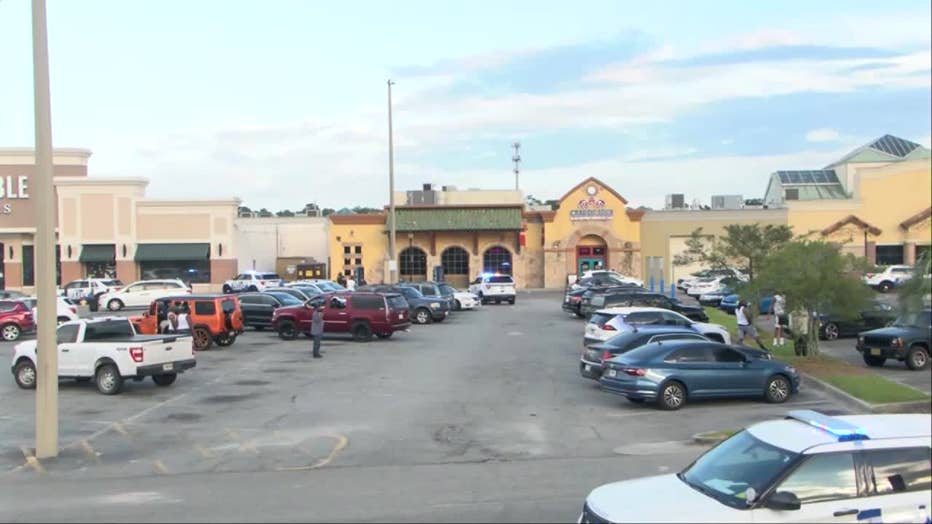
Police respond to a shooting at a Savannah-area mall on July 2, 2025.

At least three people are injured after a shooting at a Savannah-area mall, according to Savannah police.

What we know:

Police said the shooting happened at the Oglethorpe Mall on Wednesday evening. 

Two victims are adults and one is a juvenile, according to police. All three were taken to the hospital. 

There is no longer an active threat at the mall, but no suspects were arrested, police said. 

The Chief of Police in Savannah told local media outlets it was a shooting between two groups, according to WTOC, WSAV and WJCL

Multiple people injured in shooting at Savannah-area mall

Police respond to a shooting at a Savannah-area mall on July 2, 2025.

The mall was evacuated after the shooting. 

The Savannah Police Department is investigating

Original reports about the shooting came in from the International Association of Firefighters around 5:45 p.m. Tuesday. It called the shooting an “active and dangerous” situation. 

As of a 7:47 p.m. update, the IAFF said firefighters were still on scene “tending to any additional patients and occupants who are still stuck within the building.”

What we don’t know:

Police have not released the identities of any victims or possible suspects in the shooting. 

What they’re saying:

Georgia Attorney General Chris Carr issued a statement on the shooting Wednesday. 

“The reports out of Savannah are devastating. My office is monitoring the situation closely and we’re in touch with local law enforcement. We stand ready to support them with whatever they need,” Carr said. 

The Source: Information in this article came from a post on Facebook by the IAFF Savannah Firefighters.  This article was updated to add information from local media outlets, the Savannah Police Department and Georgia Attorney General Chris Carr. 

GeorgiaCrime and Public SafetyNews

Great Job Sam.Daniel@fox.com (Sam Daniel) & the Team @ Latest News | FOX 7 Source link for sharing this story.

Brewers phenom Jacob Misiorowski gets tagged for 1st time in loss to Mets

Brewers phenom Jacob Misiorowski gets tagged for 1st time in loss to Mets

NEW YORK – Jacob Misiorowski made everything look so easy in his first three major league starts.

Now he knows it’s not.

The hard-throwing rookie finally got knocked around Wednesday, serving up back-to-back homers as the Milwaukee Brewers lost 7-3 to the New York Mets in the second game of a day-night doubleheader at Citi Field.

Barely touched by opposing batters since getting called up from the minors last month, Misiorowski (3-1) gave up five runs, five hits and three walks over 3 2/3 innings in his fourth career outing. Brandon Nimmo connected for a grand slam in the second and a slumping Francisco Lindor followed with another longball off Misiorowski to give the Mets a 5-0 lead.

“He wasn’t in sync tonight, for sure. You could see it early. He’d have it for one pitch and then you could just see the ball wasn’t coming out of his fingers the same. You could see the frustration building,” Brewers manager Pat Murphy said.

“That’s too good of a team and too good of a lineup. (These are) the days you realize how good these guys are, all major league players. It’s so tough to perform at the highest level and be consistent. But when you’re off a little bit, it can be the difference, and Miz just wasn’t in sync.”

A touted prospect, the 6-foot-7 Misiorowski had more than lived up to the hype since his arrival.

He began his career with 11 hitless innings and then a scoreless start in a win over Pirates ace Paul Skenes before a crowd of 42,774 in Milwaukee last week. The 23-year-old right-hander carried a perfect game into the seventh June 20 at Minnesota and racked up 19 strikeouts in his first 16 big league innings.

“He has amazing stuff,” Nimmo said.

Misiorowski threw 62 pitches at least 100 mph in his first three games, and opposing batters were 3 for 49 (.061) against him — making him the first pitcher in the modern era (since 1900) to have as many wins as hits allowed through three career starts.

“He’s really good. Crazy future ahead of him,” Lindor said. “It’s going to be fun to watch him and fun to play against him.”

But on this night, Misiorowski walked consecutive batters with two outs in the second and was unable to corral a high comebacker off the bat of No. 9 hitter Hayden Senger.

The ball glanced off Misiorowski’s glove and spun away from second baseman Brice Turang for an infield single that loaded the bases.

“There was a fastball at the bottom of the zone for a walk that I thought was there. But I thought, good spot, and maybe get it up a little bit more,” Misiorowski said. “Just frustrated at myself for not making a play.”

Nimmo pulled the next pitch, a 96 mph slider, to right field for his third career slam and second this season. Lindor then drove a 1-2 fastball to right-center for his 17th home run.

“I threw good pitches and they hit ’em. Plain and simple as that,” Misiorowski said. “I mean, you’re facing the best of the best. They’re getting paid what they’re getting paid for a reason.”

Misiorowski said his problem was mechanical.

“My fingers were just a little too far on the right side of the ball, and it kind of spun a little different than I’m used to,” he said. “I think I came back pretty well after that. … I fixed it that next inning.”

Murphy said Misiorowski didn’t feel good while warming up in the bullpen, and that carried over to the game.

“His whole body was not in sync,” the manager explained. “All the arms and legs, it’s hard to sync it all up.”

Misiorowski came out firing 100 mph fastballs, touching 102 mph against Lindor in the first inning — but it didn’t last.

“He learned his lesson. He’s ticked about it. Even some of the sequencing he’s ticked about,” Murphy said. “He can see it that there’s just a really fine line between being dominant and being just OK.”

Misiorowski, however, won’t dwell on this disappointment.

“It’s done. Use the old Tiger Woods approach and move on to the next hit. Move on to the next pitch. It is what it is. I got a loss but, oh well,” he said. “It’s frustrating. But at the same time like, young career, it’s good figuring it out now. Not when we’re in the playoffs and it matters most.”

___

AP MLB: https://apnews.com/hub/mlb

Copyright 2025 The Associated Press. All rights reserved. This material may not be published, broadcast, rewritten or redistributed without permission.

Great Job Mike Fitzpatrick, Associated Press & the Team @ KSAT San Antonio Source link for sharing this story.

Monsoon season brings the promise of rain for the arid southwestern US

Monsoon season brings the promise of rain for the arid southwestern US

ESPAÑOLA, N.M. – Clouds build up in the early afternoon and gusty winds push in every direction. The skies darken and then comes the rain — often a downpour that is gone as quickly as it came.

This seasonal dance choreographed by Mother Nature marks a special time for the southwestern United States and Mexico. It is when residents clasp their hands, hoping for much-needed moisture to dampen the threat of wildfire and keep rivers flowing.

Forecasters say it has been a wet start to this year’s monsoon season, which officially began June 15 and runs through the end of September. Parts of New Mexico and West Texas have been doused with rain, while Arizona and Nevada have been hit with dust storms, which are a common hazard of the season.

In other parts of the world, monsoons often mean months of never-ending rain.

In North America, the season can have considerable variability. The bursts and breaks depend on how much moisture is circulating and which way the wind blows.

Easing drought

The monsoon relies on the buildup of summer heat and shifting wind direction, which helps funnel moisture from distant bodies of water to areas where rain is sparse.

Just ahead of the monsoon, officials with the Navajo Nation declared an emergency because of worsening drought conditions across the reservation, which spans parts of New Mexico, Arizona and Utah.

Below-average precipitation month after month has left little forage for livestock, and fire danger has ramped up as pockets of moderate and severe drought expand. Ranchers and farmers are being urged to reduce their herds, shift to drought-tolerant crops and limit irrigation.

New Mexico’s governor also declared an emergency in May because of severe drought and escalating fire risk.

Forecasters with the National Oceanic and Atmospheric Administration and the National Integrated Drought Information System say monsoonal rainfall only provides a fraction of the West’s water supplies, with the majority coming from snowpack. Still, summer rains can reduce drought impacts by lessening the demand for water stored in reservoirs, recharging soil moisture and groundwater, and reducing the risk of wildfires.

New Mexico and Arizona typically stand to benefit the most from the North American monsoon, getting anywhere between 10% to 60% of their annual precipitation during the season. It has a lesser influence in Nevada and California, though southern Nevada on average gets 20% to 25% of its precipitation during the summer.

Along the Rio Grande at the base of the Jemez Mountains, Santa Ana Pueblo farmers are eagerly watching the afternoon skies. Pueblo Gov. Myron Armijo said they have already had several good downpours, and he wouldn’t mind more.

But that will be for the spirits to decide, Armijo said. “You know, it’s not up to us,” he said.

Flooding fears

With summer rains come increased river flows and in some cases flooding in normally dry washes and across the scars left by wildfires.

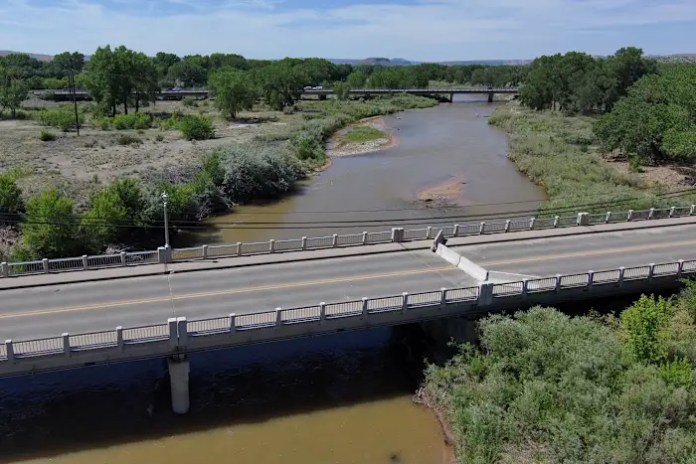
Sandbag stations have been set up in communities across the region — from Tucson, Arizona, to Albuquerque and San Antonio, Texas. In Española, state transportation workers have closed a historic bridge that funnels traffic across the Rio Grande, citing concerns about higher flows further eroding a concrete pier.

On the edge of the Gila National Forest, New Mexico National Guard troops have delivered dozens of pallets of filled sandbags for residents who are preparing for flooding following a blaze that has charred about 74 square miles (192 square kilometers).

Meanwhile, hundreds of firefighters are hoping for higher humidity and rain to tamp down a wildfire that is racing through a mountainous area of the Navajo Nation. Fire officials reported that the flames made a 6-mile (9.66-kilometer) run in a matter of hours.

Once the fire is out, land managers acknowledge that the monsoon will be a mixed blessing, as rainfall on the charred hillsides will surely result in surges of runoff filled with ash and debris.

A tie that binds

Just as light and shadow move across the mesa tops beyond artist Daniel McCoy’s studio, the Rio Grande pulses with each downpour, turning into what looks like a sudsy caramel concoction as it carries away sediment.

The river and the desert badlands and purple mountain peaks that border it are the inspiration for the giant canvasses McCoy is preparing for an upcoming show at the Hecho a Mano gallery in Santa Fe.

McCoy, who is Muskogee (Creek) and Potawatomi, grew up working on a farm with his grandfather in Oklahoma. He and his green thumb faced new challenges when he moved to the arid Southwest, where water shortages often lead to mandatory rationing and pleas for prayers.

A sign down the street from his studio reads in Spanish: “El Agua No Se Vende. El Agua Se Defiende.” It means water isn’t for sale, and the right to access the finite resource should be defended.

“It’s made me mindful more than I ever thought I would be,” he said of hearing stories from longtime locals about the preciousness of water.

But McCoy fits right in, living by the seasons and learning to tend to his drinking water well.

“When you’re outside working, it’s a different kind of time. You live more by what the sun’s doing and what the water’s doing,” he said. “And so it’s good to be connected to that.”

Copyright 2025 The Associated Press. All rights reserved. This material may not be published, broadcast, rewritten or redistributed without permission.

Great Job Susan Montoya Bryan, Associated Press & the Team @ KSAT San Antonio Source link for sharing this story.

Diddy Denied Bail After Trial Verdict, Judge Cites History of Violence and Disregard for the Law

Diddy Denied Bail After Trial Verdict, Judge Cites History of Violence and Disregard for the Law

Diddy was denied bail today, and must stay in jail as he awaits sentencing after being convicted of prostitution-related charges earlier in the day.

Diddy Denied Bail

Immediately after he was acquitted of the major charges of sex trafficking and racketeering conspiracy and found guilty of two counts of transportation for prostitution on Wednesday (July 2), Diddy’s attorney, Marc Agnifilo, pressed for bond. According to Associated Press, Diddy was convicted of flying men and women around the country, including his ex-girlfriends Cassie and the anonymous witness known as Jane, and male sex workers, to engage in sexual encounters, a felony violation of the federal Mann Act. The government opposed the bond motion. After hearing both sides out, Judge Arun Subramanian decided to deny bail late this afternoon.

“I’ve read the parties submissions and others,” Judge Subramanian said during today’s bond hearing, according to Inner City Press. “The jury convicted the defendant of Counts 3 and 5. For the following reasons, bail is denied.”

The judge cited Puff’s history of violence and disregard for the law as reasons to keep him locked up. “Even if the defendant was solely required to show that he is not a danger to the community, he could not meet that burden,” the judge continued.

“There was violence after the searches in this case,” he added. “As to Jane, there was June 2024 – after the searches of Combs’ residences. This evidences a disregard for the law and a propensity for violence.”

Read More: The Confirmed and Alleged Violent Moments of Diddy’s Past

What Was Diddy’s Bond Package?

The defense proposed the following bail package, according to a court document obtained and shared by legal reporter Meghann Cuniff:

a. A $1,000,000 bond

b. Co-signed by Sean Combs, his mother, his sister, and the mother of his oldest daughter

c. Mr. Combs’s travel will be restricted to the Southern District of Florida, Central District of California and the Southern District of New York (to attend Court and meet with his counsel) as well as the Eastern District of New York or the District of New Jersey (only to the extent that his travel to and from New York involves an airport in those Districts)

d. Mr. Combs’s passport surrendered to Pretrial Services

e. Drug testing as ordered by Pretrial Services

f. All other standard conditions of pretrial supervision

Read More: 12 Rappers Who Beat Major Legal Cases and Walked Away With a Victory

How Much Time Is Diddy Facing?

Two counts of transportation for purposes of prostitution carry a maximum sentence of 20 years in prison. However, according to sentencing guidelines set forth by the prosecution, the range is at least 51 to 63 months (four to five years) in prison. Diddy’s legal team is arguing 21 months (more than a year, but less than two) should be the minimum.

He has spent the last nine months locked up at Brooklyn’s Metropolitan Detention Center after being arrested last September. A pardon from President Trump also might not be out of the realm of possibility.

When Will Diddy Be Sentenced?

Diddy’s sentencing date has been scheduled for Oct. 3.

Read More: There Are Some Serious Hip-Hop Trials Going Down in 2025

See 47 of the Longest Prison Bids in Hip-Hop History

C-Murder, Max B, B.G. and more.

Great Job C. Vernon Coleman II & the Team @ Hip-Hop News, Rap Music – XXL Source link for sharing this story.

CHP officer dies on duty after feeling unwell, losing control of cruiser

CHP officer dies on duty after feeling unwell, losing control of cruiser

CHP Officer Miguel Cano was on duty in the wee hours of Wednesday morning. He and his partner were en route from an arrest, taking a DUI suspect to the West L.A. CHP Office, which was a few blocks away.

But Cano didn’t make it.

Moments after telling his partner that he didn’t feel well, he lost control of his patrol cruiser and smashed into a tree in Culver City. He was killed. His partner and the suspect they were transporting were injured.

“We are devastated by the loss of Officer Cano, who gave his life while serving the people of California,” said California Highway Patrol Commissioner Sean Duryee in a statement. “His dedication, courage and commitment to public safety will never be forgotten. We stand with his family and our CHP family during this incredibly difficult time.”

It was not immediately clear what caused the crash and what medical emergency Cano may have experienced. Duryee said the officer did not have any known health issues.

Cano, a 34-year-old from Moreno Valley, had been driving south on Bristol Parkway, north of Green Valley Circle at 12:28 a.m. Wednesday, alongside his partner, who was not immediately identified. They had taken into a custody a person allegedly in possession of a firearm, possible cocaine and drug paraphernalia. They feared the suspect could be overdosing.

Cano administered Narcan as a precaution. Then the partners were headed back to the office when Cano said he didn’t feel well, Duryee said.

Their vehicle went off the roadway and struck a tree. Cano was rushed to UCLA Medical Center, where he was pronounced dead around 1:40 a.m.

On Wednesday morning, a solemn cadre of Cano’s fellow officers took part in a procession as the body was transported to the medical examiner’s office.

Cano’s partner sustained minor injuries and was treated at the scene, CHP said. The person in custody was transported to Cedars-Sinai in Marina Del Rey by the Culver City Fire Department. Duryee said their injuries were not severe.

The department’s accident investigation team is leading an investigation into the incident, CHP said. But investigators have already ruled out a possible exposure to drugs.

“We do not think this was an exposure to drugs,” Duryee said. “The other officer and the subject did not experience any signs or symptoms related to that.”

Cano, who graduated from the CHP Academy in November 2023, is survived by his wife and parents.

California Gov. Gavin Newsom said in a statement that Cano’s “passing is a heartbreaking loss for the state and the California Highway Patrol.” The governor noted that this was the first line-of-duty death for the CHP since 2020, and that flags at the State Capitol would be flown at half-staff.

Great Job Jasmine Mendez & the Team @ California Source link for sharing this story.

7

7

Seven people are “unaccounted for” after several explosions at a fireworks warehouse resulted in a fire in Northern California’s Yolo County, officials said.

It happened Tuesday evening in the community of Esparto at Devastating Pyrotechnics. The Yolo County Sheriff’s Office confirmed the building was a fireworks warehouse in the area of county roads 23 and 86A. 

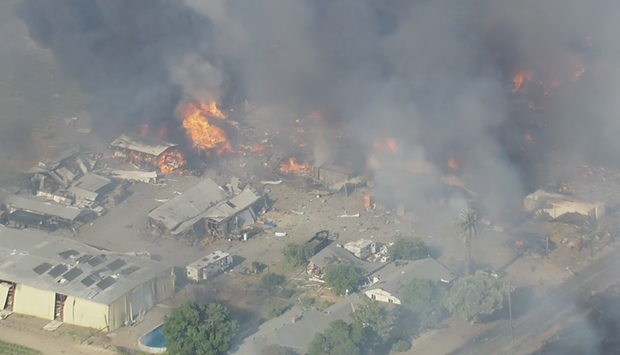
Here’s a look at the facility before and after the explosions.

Yolo County officials issued mandatory evacuations for a one-mile stretch as a result of the fire. The evacuation area is on the south side of Highway 16, stretching south to County Road 25 and stretching west from Tutt Street to County Road 85B. The small community of Madison was also in the evacuation zone, but residents have since been allowed to return home.

Several structures on the property caught fire after the explosions, with the flames spreading into multiple grass fires with a combined burn area of approximately 80 acres, the Esparto Fire Protection District said in a Tuesday night news conference. The initial explosion happened around 5:50 p.m.

CBS Sacramento spoke to some people who said they had loved ones believed to have been inside the facility at the time of the incident, but they had not been able to contact them. In an update late Wednesday morning, Cal Fire said seven people were not accounted for and that first responders are working to determine their whereabouts. 

Syanna Ruiz, 18, said her boyfriend and two brothers-in-law are missing. She said that her boyfriend, Jesus Ramos, 18, had his first day on the job at the facility on Tuesday. She identified Jesus’ brothers as Johnny Ramos, 22, and Junior Melendez, 28.

Officials have not confirmed the identities of the seven people unaccounted for.

“We last spoke to them around 2 or 3 when they were supposed to be leaving and then we found out about it through a report or something on Instagram and we came instantly,” Ruiz said. “Praying to God that they’re alive and maybe they just need medical attention.”

Late Wednesday night, officials said there were still explosions going on at the property with fireworks that had not yet detonated.

Esparto Fire Chief Curtis Lawrence said two people were injured and received medical care. He said no firefighters have been injured. 

Law enforcement officials said streets around the evacuation zone and leading into the facility were shut down.

Road closures remain in effect for the following stretches, however: County Road 86A at County Road 25, County Road 86A at State Route 16, County Road 23 at County Road 87B, and County Road 86 at County Road 23.

CBS News San Francisco’s chopper was in the region due to a grass fire in nearby Vacaville. The chopper flew by the Esparto fire and captured images of the flames.

7

CBS News San Francisco  


Cal Fire LNU sent crews into the area to assist with the fire. Cal Fire will be taking the lead in the investigation. 

What we know about Devastating Pyrotechnics.

Devastating Pyrotechnics has an active fireworks license as an importer and exporter, according to state records. It also has an active license for public displays.

The Esparto warehouse was cited as a storage facility for commercial fireworks.

Fire officials said they have been to the Esparto warehouse for safety checks in the past, but did not provide information on whether there were any safety concerns or when the last time the business was checked.

Devastating Pyrotechnics released the following statement on its website shortly before 6 p.m. on the matter:

“Our hearts and thoughts are with those we lost, their families, and everyone impacted in our community. We are grateful for the swift response of law enforcement and emergency personnel. Our focus will remain on those directly impacted by this tragedy, and we will cooperate fully with the proper authorities in their investigation.”

Aside from the two injuries reported by law enforcement, there have been no confirmed deaths.

A previous version of the website stated the business has another location in San Francisco and has been serving Northern California for 30 years. The website now only shows the statement released by the business.

The statement also refers all further inquiries to a lawyer. CBS Sacramento reached out to the lawyer for further comment but received the same statement that was posted to the website.

Where are Esparto and Yolo County located in California?

Yolo County borders the west side of Sacramento County. Esparto is a small, rural town located about 14 miles west of the city of Woodland in Yolo County and about 35 miles northwest of the city of Sacramento.

Some residents of the area told CBS Sacramento that windows to their homes were rattled by at least two separate explosions. Some described their house shaking like during an earthquake, with explosions going off seemingly every five minutes.  

Nearly 2,200 Pacific Gas and Electric customers in the area were left without power due to the incident. PG&E’s online outage map showed that more than 150 customers were still without power as of Wednesday afternoon.

fire-smoke.png

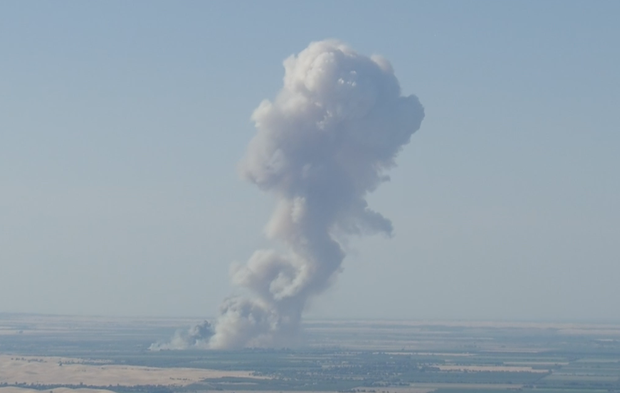
Smoke plume from the explosion and fire

CBS News San Francisco


CBS Sacramento’s First Alert Weather Team confirmed the smoke plume from the initial explosion reached between 10,000 and 15,000 feet in elevation.  

Great Job & the Team @ Home – CBSNews.com Source link for sharing this story.

Secret Link