

Home News Page 2565

The Pre-Symbolic Dance: A Deep Dive into Manlin’s Artistic Mindscape – Our Culture

The Pre-Symbolic Dance: A Deep Dive into Manlin’s Artistic Mindscape – Our Culture

Manlin Zhang’s work invites us into a liminal space, where art and science might coexist; where cognitive inquiry and the evocative language of visual expression are addressed with rigorous care. Her 2025 exhibition – Intelligence in MotionDreaming Butterfly and A Thoughtful Bee – presents the potential of this intersection with luminous clarity and delicacy in its contemplation of consciousness, what feels equally significant, is the congruence between intelligence and the possibilities of perception that these works explore.

Manlin is not just an artist. As a Professional Optoelectronic Engineer, with an education in Art and Science at Central Saint Martins, Manlin is uniquely positioned as an artist/researcher, situated at the remarkable intersection of empirical exploration and advancing artistry as speculative practice. The particularity of her on-ground position – which integrates scientific analytical rigor and proposed forms of creative expression – allows the rigor and criticality of her practice to emerge naturally, unfolding alongside the visual language, she integrates scientific research into her creative painting practice; The medium in which she does this – Oil on Claybord – presents an ephemeral moment that indicates the cognitive process just before intelligence identified itself through language. The collected strokes of her mark-making present a sparkly moment in cognition: a trace; a flicker that is pre-symbolic.

Her statement – “a visual trace of intelligence, before it becomes language.” – reads as a poetic manifesto towards an emerging form of scientific art. Intelligence, in this sense, is free flowing; it flows, it is living, recursive, and vibrant. Intelligence exist before logic conquers it, and before thought calcifies into categorical stasis. The brushwork in her painting captures not just subjective feeling, or computational thought, but the “between” of the two; and the biological and more-than biological.

On first glance, Intelligence in Motion – Dreaming Butterfly entices the viewer’s gaze with its luminous layers of translucent blue and green and ochre that take on broad overlapping strokes which ripple across the surface of the claybord and spark memory or connect neural pathways. The image itself – abstract in nature and organic in subject – uses the wings of a butterfly, and yet it is not just a representation. It functions as a visual echo of the fleeting nature of thought as it moves before it becomes identified with the body or mind.

The surface texture of the claybord allows oil to stay fluid and imbues tactility that evokes a sense of biological matter and micro surfaces. The way the fluids bleed out and pool evoke a sense of movement, evolution and recursion. The notion of recursion reinforces the artist’s aim to illustrate intelligence as “not yet dried, recursive and pre-symbolic.”

What is most fascinating is that multilayered perception: that what you think you are seeing is partial truth, like ants walking on a Möbius strip constrained by limitation of view. Manlin’s sweeping brushwork gestures toward that complexity of information native to the support – the unseen “topology” of reality that will never be seen through direct observation but can be articulated through all brush strokes.

The Thoughtful Bee series highlighted by proximity to bees relates back to the abstract fluidity of Dreaming Butterfly in that anchors the discourse back into biological reality – the bee as a container of multiple schemas of collective intelligence, instinct and delicate complexity is engaged in here not only as an insect but understood as a site of inquiry into what thought & awareness actually is.

In the macro close without hesitation to bee wings we are presented that wings have a quality of stained glass or biological mosaics that are static to hold water with structure and yet ethereal. This visual element encourages us to think about the complexity of natural form and function, the intelligence that is woven into the living matrix of biological systems and the subtle rhythms of animal reasoning.

We have here the bee, spinning in the black nothing, which for me creates a feeling of thought wandering from its origins; stripped of source and context, not lost – but contributing to something larger. The bee’s color in infinite black reflects a sense of both volition and wonder; how can consciousness emanate as a luminous trace in a vast unknown.

Manlin Zhang creates work that is not simply representing science, it is a philosophical inquiry into big picture thinking about the self and environment. By incorporating elements of Eastern metaphysics to cognitive science understanding, she attaches herself to traditions that explore the gulf between subject-object or observer-observed.

Her paintings, drawings, and photographs explore the frail lines that separate “thought” from “sensation,” “intelligence” from “embodiment,” and is directly in line with the current tensions present in the philosophy of mind and quantum physics where thinking about consciousness has begun to destabilize classical categories.

The butterfly and (the bee) are contemporaneous beings of transformations and workers in motion thus represent motion of intelligence itself; between form and formlessness, pattern and chaos.

From a technical standpoint, Manlin handles her various media very well. The oil on claybord she is working with is a responsive medium that behaves like a living tissue and creates surfaces that seem to have energy lying in- wait. The more subtle blacks and blues of Dreaming Butterfly create a peaceful – but impenetrable palette that draws the viewer into contemplation.

In contrast, in her photographs Manlin uses a stark black backdrop and a tool-like existence to clarify, isolate, and glorify her subjects while utilizing pinpoints of light. While the bees are represented in crystalline perfection, the juxtaposed placement of the bees in near black holes terminates the connection of physicality like a faint spiritual or cognitive essence made visible.

All of these works are conversing with one another, between abstract and realistic, between science and poetry, between microscopic and metaphysical.

Manlin Zhang is working at a cusp of a new kind of artistic territory where scientific accuracy and metaphysical speculation come together in what can be understood as discrete, yet by unique, ways of investigating the realms of intelligence and consciousness. Zhang’s Intelligence in Motion framed with the intimate and contemplative images of A Thoughtful Bee , is a deep visual exploration into what it means to think, feel, and be aware.

Zhang’s work prompts us to rethink the parameters of perception and understanding, to recognize intelligence before it has been crystallized into language and to see intellect as fluid and recursive in process. Zhang performs a formulation in which science becomes sensuous and art becomes investigation, a welcoming invitation to dwell with meaning in the glowing unknown.

This is art that interacts with not just intellect, but emotionally prompts us to be immersed and lost in the cadences of thought and sensation, to dream upon the wings of a butterfly and contemplate the wisdom contained in the stillness of a bee.

Manlin Zhang’s work powerfully serves as a clarion call toward what the future of intertwining art and science work might find itself inherited in; that the truest mystery of intelligence and consciousness ultimately lies not in declarations of possession toward knowing, but questions we deem, fundamental, worthy and worthy of investigation.

Great Job Abbie Wilson & the Team @ Our Culture Source link for sharing this story.

Debbie Harry on Image Expectations in Music: ‘I Wanted to Work’

Debbie Harry on Image Expectations in Music: ‘I Wanted to Work’

Debbie Harry is reflecting on the pressures of image in the music industry, revealing in a new interview that undergoing cosmetic surgery “felt necessary” to maintain her career as Blondie’s frontwoman.

Explore

Explore

See latest videos, charts and news

See latest videos, charts and news

The singer, who celebrated her 80th birthday on July 1, opened up about her decision to have cosmetic procedures in a new interview with Vanity Fair, acknowledging the pressures of being a woman in the music industry.

“It’s always been a tool for me,” Harry shared. “It’s not like I started having cosmetic surgery as a kid in school — I think nowadays a lot of girls are getting cosmetic surgery when they’re 10, 11 years old. God bless if it improves their lives and they feel happy. But as far as me having cosmetic surgery, it made me feel better about myself. Maybe it made me feel happy, or more confident.”

She added, “It was just something that I felt necessary at the time. I wanted to work, and so much of women being attractive, and being a selling point, is clearly showbiz. If you’re going to be in the business, be in it.”

The “Heart of Glass” singer also reflected earlier this year on aging gracefully. “The beauty of aging is that you learn how to live with yourself,” she said at the time.

Blondie fans have more to celebrate than Harry’s milestone birthday. The band is reportedly working on a new studio album with Grammy-winning producer John Congleton.

The news was shared back in December 2024 by guitarist and co-founder Chris Stein, who posted a black-and-white photo of lead singer Debbie Harry and Congleton in the studio on Bluesky, accompanied by the caption, “With John Congleton. New Blondie record next year.”

It marks the band’s first album since 2017’s Pollinator, also produced by Congleton. That record earned critical acclaim and featured collaborations with artists like Joan Jett, Charli XCX, and Johnny Marr. Known for his work with St. Vincent and Angel Olsen, Congleton’s involvement hints at a modern, innovative approach for Blondie’s upcoming release.

The album comes in the wake of drummer Clem Burke’s death in April following a private battle with cancer. Sex Pistols bassist Glen Matlock has been contributing to Blondie’s new music and performing with the band in recent years, including at Glastonbury 2023.

Great Job Jessica Lynch & the Team @ Billboard Source link for sharing this story.

House GOP can’t pass Trump’s tax bill as holdouts on center and far-right push back in late-night session

House GOP can’t pass Trump’s tax bill as holdouts on center and far-right push back in late-night session

House Republicans strained through a day of starts and stops trying to advance President Donald Trump’s tax and spending cuts package, GOP leaders working almost around the clock to persuade skeptical holdouts to send the bill to his desk by the Fourth of July deadline.

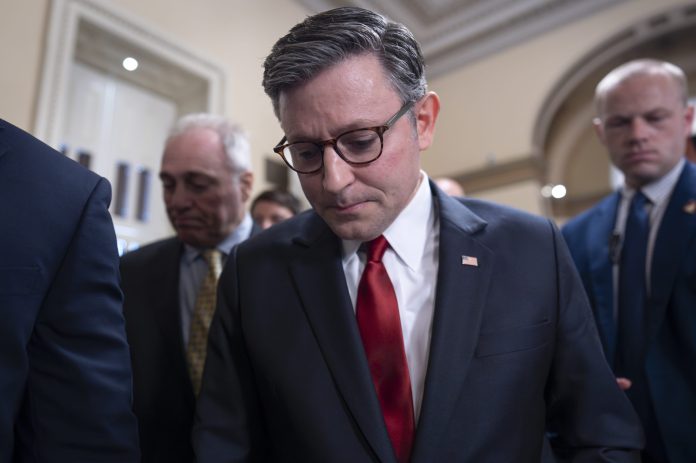
A procedural roll call that started late Wednesday night was held open into Thursday morning as several Republicans refused to give their votes. With few to spare from their slim majority, the outcome was in jeopardy. House Speaker Mike Johnson had recalled lawmakers to Washington, eager to seize on the momentum of the bill’s passage the day before in the Senate, and he vowed to press ahead.

“Our way is to plow through and get it done,” Johnson said, emerging in the middle of the night from a series of closed-door meetings. He expected votes later Thursday morning. “We will meet our July 4th deadline.”

But as voting stalled Trump, who hosted lawmakers Wednesday at the White House and spoke with some by phone, lashed out in a midnight post: “What are the Republicans waiting for??? What are you trying to prove???” He also warned starkly of political fallout from the delay “COSTING YOU VOTES!!!”

The idea of quickly convening to for a vote on the more than 800-page bill was a risky gambit, one designed to meet Trump’s demand for a holiday finish. Republicans have struggled mightily with the bill nearly every step of the way, often succeeding by the narrowest of margins — just one vote. Their slim 220-212 majority leaves little room for defections.

Several Republicans are balking at being asked to rubber-stamp the Senate version less than 24 hours after passage. A number of moderate Republicans from competitive districts have objected to the Senate bill’s cuts to Medicaid, while conservatives have lambasted the legislation as straying from their fiscal goals.

It falls to Johnson and his team to convince them that the time for negotiations is over. They will need assistance from Trump to close the deal, and lawmakers headed to the White House for a two-hour session Wednesday to talk to the president about their concerns.

“The president’s message was, ‘We’re on a roll,’” said Rep. Ralph Norman, R-S.C. “He wants to see this.”

Republicans are relying on their majority hold of Congress to push the package over a wall of unified Democratic opposition. No Democrats voted for bill in the Senate and none were expected to do so in the House.

“Hell no!” said House Democratic Leader Hakeem Jeffries, flanked by fellow Democrats outside the Capitol.

In an early warning sign of Republican resistance, a resolution setting up terms for debating Trump’s bill barely cleared the House Rules Committee on Wednesday morning. As soon as it came to the full House, it stalled out as GOP leadership waited for lawmakers who were delayed coming back to Washington and conducted closed-door negotiations with holdouts.

By nightfall, as pizzas and other dinners were arriving at the Capitol, the next steps were uncertain.

Trump pushes Republicans to do ‘the right thing’

The bill would extend and make permanent various individual and business tax breaks from Trump’s first term, plus temporarily add new ones he promised during the 2024 campaign. This includes allowing workers to deduct tips and overtime pay, and a $6,000 deduction for most older adults earning less than $75,000 a year. In all, the legislation contains about $4.5 trillion in tax cuts over 10 years.

The bill also provides about $350 billion for defense and Trump’s immigration crackdown. Republicans partially pay for it all through less spending on Medicaid and food assistance. The Congressional Budget Office projects the bill will add about $3.3 trillion to the federal debt over the coming decade.

The House passed its version of the bill in May by a single vote, despite worries about spending cuts and the overall price tag. Now it’s being asked to give final passage to a version that, in many respects, exacerbates those concerns. The Senate bill’s projected impact on the nation’s debt, for example, is significantly higher.

“Lets go Republicans and everyone else,” Trump said in a late evening post.

The high price of opposing Trump’s bill

Johnson is intent on meeting Trump’s timeline and betting that hesitant Republicans won’t cross the president because of the heavy political price they would have to pay.

They need only look to Sen. Thom Tillis, R-N.C., who announced his intention to vote against the legislation over the weekend. Soon, the president was calling for a primary challenger to the senator and criticizing him on social media. Tillis quickly announced he would not seek a third term.

One House Republican who has staked out opposition to the bill, Rep. Thomas Massie of Kentucky, is being targeted by Trump’s well-funded political operation.

Democrats target vulnerable Republicans to join them in opposition

Flanked by nearly every member of his caucus, Democratic Leader Jeffries of New York delivered a pointed message: With all Democrats voting “no,” they only need to flip four Republicans to prevent the bill from passing.

Jeffries invoked the “courage” of the late Sen. John McCain giving a thumbs-down to the GOP effort to “repeal and replace” the Affordable Care Act, and singled out Republicans from districts expected to be highly competitive in 2026, including two from Pennsylvania.

“Why would Rob Bresnahan vote for this bill? Why would Scott Perry vote for this bill?” Jeffries asked.

Democrats have described the bill in dire terms, warning that Medicaid cuts would result in lives lost and food stamp cuts would be “literally ripping the food out of the mouths of children, veterans and seniors,” Jeffries said Monday.

Republicans say they are trying to right-size the safety net programs for the population they were initially designed to serve, mainly pregnant women, the disabled and children, and root out what they describe as waste, fraud and abuse.

The package includes new 80-hour-a-month work requirements for many adults receiving Medicaid and applies existing work requirements in the Supplemental Nutrition Assistance Program, or SNAP, to more beneficiaries. States will also pick up more of the cost for food benefits.

The driving force behind the bill, however, is the tax cuts. Many expire at the end of this year if Congress doesn’t act.

The Tax Policy Center, which provides nonpartisan analysis of tax and budget policy, projected the bill would result next year in a $150 tax break for the lowest quintile of Americans, a $1,750 tax cut for the middle quintile and a $10,950 tax cut for the top quintile. That’s compared with what they would face if the 2017 tax cuts expired.

Great Job Kevin Freking, Lisa Mascaro, Joey Cappelletti, The Associated Press & the Team @ Fortune | FORTUNE Source link for sharing this story.

Need air conditioning? Consider the heat pump.

Need air conditioning? Consider the heat pump.

Here’s one example: In California, it costs between $900 and $1,900 more to replace a broken central AC with a heat pump instead of a conventional AC. That’s out of a median total heat-pump installation cost of $15,900, per data from the TECH Clean California program from July 2021 to April 2024.

But spending on a heat pump can mean avoiding the expense of getting a new furnace. Southern California’s air-quality agency recently found that installing a heat pump in a single-family home in the region typically costs $1,000 less than installing a gas furnace and AC.

Across the U.S., heat pump installations typically fall between $6,600 and $29,000, according to Rewiring America. That wide range is because project prices for heat pumps, like other HVAC equipment, can depend on a dizzying number of factors, including the size of your home, its energy demand, your local climate, the equipment efficiency rating, the state of your home’s electrical system, and how familiar your local labor market is with the product. 

3. What financial incentives are available for heat pumps?

For now, there’s the Energy Efficient Home Improvement Credit, which can take up to $2,000 off your federal tax bill for a qualifying heat pump. But if Republicans’ Big, Beautiful Bill” passes in its current form, that tax credit will disappear at the end of this year. (All the more reason to get one this summer.)

Income-qualified households can check with their state energy office about the availability of Home Energy Rebates, an $8.8 billion initiative created under the landmark 2022 Inflation Reduction Act. Details vary by state, but the law established an $8,000 incentive for a heat pump, as well as rebates for enabling updates: $2,500 for electrical wiring and $4,000 for an electrical panel upgrade. While some state programs have rolled out after being finalized under the Biden administration, others still awaiting approvals are now stuck in limbo.

Separate state and local incentives may also be available. Ask your utility, Google, and reputable heat-pump contractors in your area. Rewiring America also has a handy calculator that provides information on electrification incentives for residents in 29 states, with more soon to come, a spokesperson said.

4. How do I find the right contractor to install a heat pump?

Get at least three quotes; the EnergySage marketplace can connect you to vetted local installers so you can compare offers. Some contractors specialize in home electrification — and might offer cutting-edge strategies to navigate a heat pump transition. Utility and local incentive programs may also have lists of participating installers.

5. What else should I keep in mind before deciding whether to get an AC or a heat pump?

Ideally, you don’t want to find yourself in the sticky and sometimes downright dangerous situation of needing to get your AC replaced in an emergency. But if your AC has suddenly expired, you can give yourself more time to weigh your options by getting a micro” heat pump as a stopgap measure.

Changing your HVAC system is a big deal — and you don’t have to figure it out on your own. Got a question or story to share about choosing a heat pump over an AC, tackling another electrification project, or fully electrifying your home? I’d love to hear it! Reach out to me at [email protected]; my aim is to make the energy transition easier for you. Stay cool out there!

Great Job Alison F. Takemura & the Team @ Canary Media Source link for sharing this story.

Cassie Breaks Silence After Diddy’s Shocking Verdict: ‘We Will Continue To Fight On behalf Of Survivors’

Cassie Breaks Silence After Diddy’s Shocking Verdict: ‘We Will Continue To Fight On behalf Of Survivors’

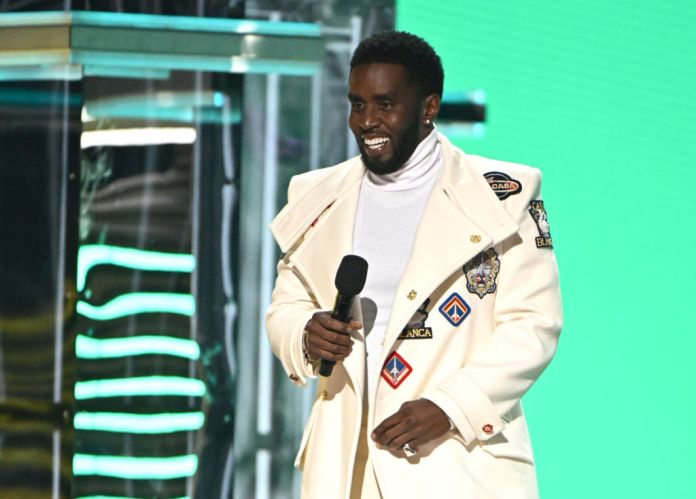
Source: Billboard / Getty

Sean “Diddy” Combs’ attorney is seeking his immediate release after the mogul was acquitted on charges of racketeering conspiracy and sex trafficking.

Following the verdict, Diddy’s lawyer, Marc Agnifilo, asked that Diddy be allowed to return to his Miami Beach home on Star Island.

“His family is here and could sign a bond,” Agnifilo told Judge Arun Subramanian on Wednesday, per CNN. “He should be released today.”

When Subramanian asked, “Are you proposing he just walk outside now?” Agnifilo replied, “Yes.”

“He is no longer charged with sex trafficking or racketeering,” his lawyer continued. “His plane has been chartered—it is in Maui. He does not have access to his plane. This is his first conviction, and it is a prostitution offense. He should be released.”

RELATED CONTENT: How Diddy’s Trial Sparked Online Discourse, Misogyny And Victim Blaming In Hip-Hop [Op-Ed]

Agnifilo went on to request a $1 million bond that would allow Diddy to travel to New York, Los Angeles, and Florida.

On the contrary, prosecutor Maurene Comey said, “The U.S. opposes his release…A person found guilty shall be detained until the judicial officer finds he is not likely to flee or be a danger.”

Subramanian said he needed “to address a few matters with the lawyer,” saying: “I am not going to resolve this this second. I need to review the statutes.”

Though Combs was acquitted on the racketeering and sex trafficking charges, he was found guilty on two counts of transportation to engage in prostitution. He is facing a maximum sentence of 20 years in jail.

Multiple women and men have accused Diddy of sexual assault and sex trafficking, starting with his ex-girlfriend Cassie Ventura. She testified in May as a key witness for the prosecution after Diddy pleaded not guilty to all charges leveled against him and continuously denied all allegations.

In a statement to Us Weekly on Wednesday, July 2, Ventura’s attorney, Douglas H. Wigdor, reacted to the verdict, applauding Cassie’s courage in coming forward.

“This entire criminal process started when our client Cassie Ventura had the courage to file her civil complaint in November 2023,” Wigdor began. “Although the jury did not find Combs guilty of sex trafficking Cassie beyond a reasonable doubt, she paved the way for a jury to find him guilty of transportation to engage in prostitution. By coming forward with her experience, Cassie has left an indelible mark on both the entertainment industry and the fight for justice.”

The statement continued, “We must repeat—with no reservation—that we believe and support our client who showed exemplary courage throughout this trial. She displayed unquestionable strength and brought attention to the realities of powerful men in our orbit and the misconduct that has persisted for decades without repercussion. This case proved that change is long overdue, and we will continue to fight on behalf of survivors.”

Combs’ arrest came almost one year after Ventura filed a lawsuit against him, accusing him of sexual and physical abuse throughout their relationship, which lasted over a decade. The mogul denied her claims in a statement shared by his attorney, though her lawsuit was settled less than 24 hours later.

Wigdor commented on whether Ventura has been following the case, saying, “Yes, so, I mean, she is primarily and has been focused on her family. She did testify when she was eight months pregnant. And she is really trying to look forward,” according to CNN.

“I mean, obviously, it’s almost impossible not to see some of the media about the case, and so she has seen some of that,” he continued. “I can tell you that some of the comments that were made in the closing argument, I thought were repugnant, frankly, calling those sorts of behaviors as a modern-day relationship, saying that she enjoyed sex, saying she was a gangster, things like that. I don’t think, even with the jury verdict, that they would have given that any credit.”

Wigdor also reacted to Combs’ defense attorney saying Ventura is a “winner,” clarifying: “Obviously, Cassie Ventura, at that point in time and today, is not the winner. She endured 10 years of abuse, where she had to engage in days-long sexual acts with UTIs. She alleged that she was raped. And so to call her a winner, even though she did get $30 million part from—as she testified—part from Sean Combs, part from the hotel, no amount of money is going to ever undo what she had to endure and what she had to go through.”

Most recently, Cassie submitted a letter to the judge asking that Diddy not be allowed to post bond, alleging that he “poses a danger to the victims.”

RELATED CONTENT: Sean ‘Diddy’ Combs Found Guilty Of Prostitution Charge, Cleared Of Sex Trafficking And Racketeering

Great Job Rebecah Jacobs & the Team @ MadameNoire Source link for sharing this story.
Clayton Kershaw, a throwback to baseball's past, could be the last to 3,000 strikeouts

Clayton Kershaw, a throwback to baseball's past, could be the last to 3,000 strikeouts

LOS ANGELES — In March 2008, two months before the shaggy-haired, clean-shaven, 20-year-old phenom recorded the first of his 3,000+ career strikeouts, Clayton Kershaw had already left a legendary broadcaster wonderstruck. 

Wearing the No. 96 with no name on the back in a spring training game, the promising prospect released a mesmerizing breaking ball that appeared to drop from the sky before buckling the knees of Sean Casey and striking out the 12-year MLB veteran. Vin Scully dubbed the pitch “Public Enemy No. 1.” That curveball, along with a biting slider and precise fastball, would eventually make Kershaw the left-hander of a generation.

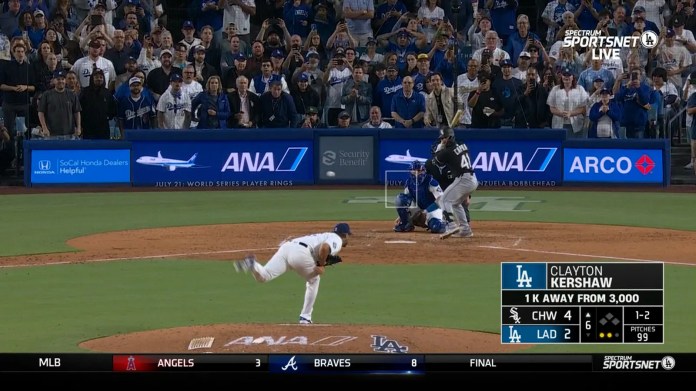
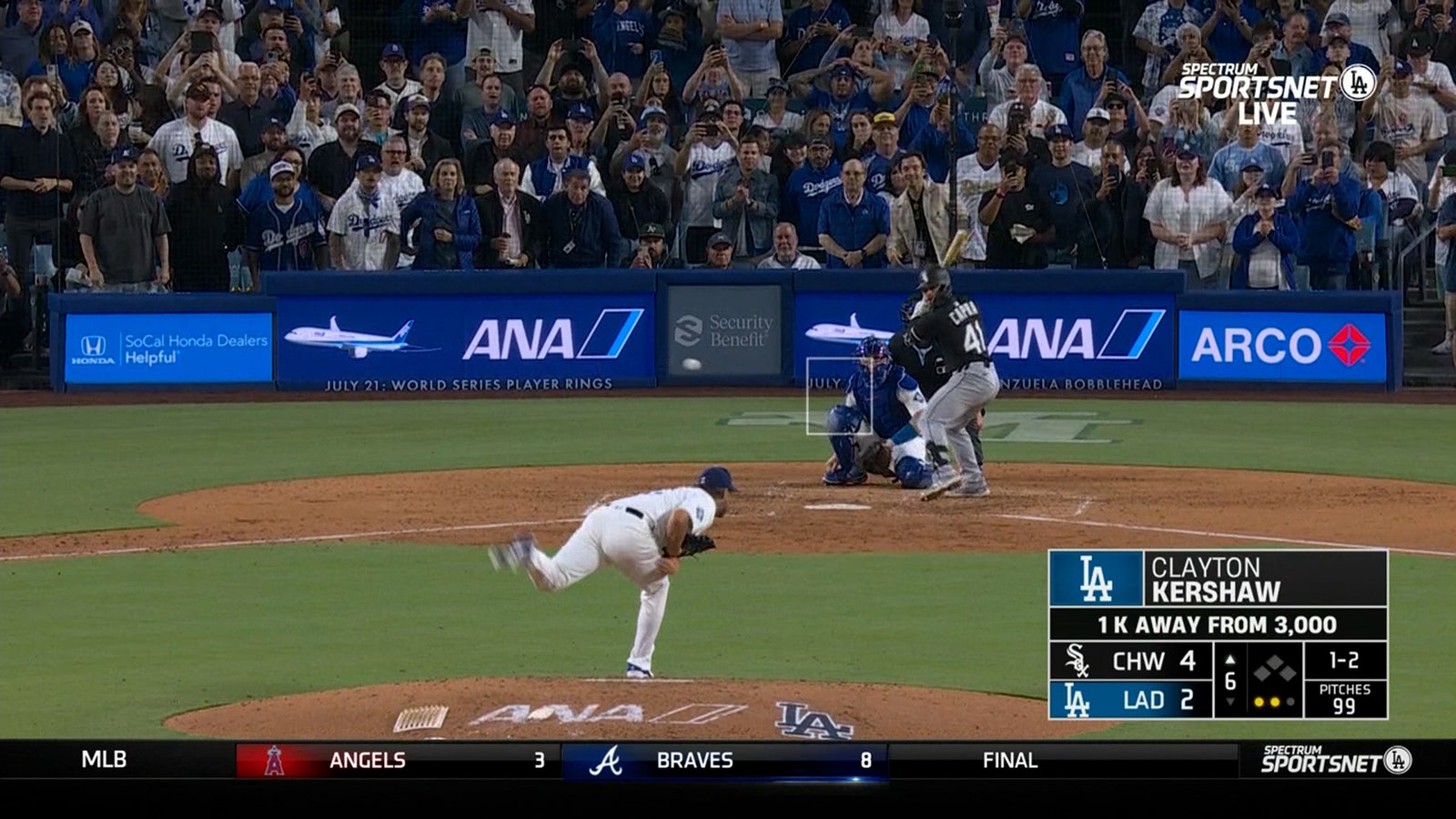
Seventeen years later, with four children and speckles of gray in his beard marking the passage of time, the 37-year-old future Hall of Famer authored his latest historical feat when he struck out Vinny Capra on his 100th pitch of the night to end the sixth inning Wednesday at Dodger Stadium. 

(Photo by Katelyn Mulcahy/MLB Photos via Getty Images)

With that, Kershaw became the 20th player ever to record 3,000 strikeouts. 

It’s possible he’s also the last to do it, at least for the foreseeable future, a testament to the longevity and sustained excellence that has defined his Hall of Fame career.

Kershaw appreciated joining Max Scherzer and Justin Verlander on the exclusive list, the only other two contemporaries to reach the mark. He also found it special to join C.C. Sabathia.  

“I remember watching C.C. when he got traded over to the Brewers, and he pitched on three days’ rest constantly to try to get them to the playoffs all the way through … just really put his team on his back,” Kershaw said. “It really just kind of resonated with me what a starting pitcher could be and what he could do for a team like that, just kind of no regard for himself, doing everything he can to get his team to the playoffs, and he succeeded. He did it.”

In an age of openers, bullpen games, shortened starts, optimized arms and triple-digit velocity, Kershaw, who has recorded 200 strikeouts seven times and has never missed a full season in his illustrious 18-year career, perseveres as a lasting remnant of a bygone era. 

And though a litany of injuries over the last decade have zapped some of the life from his left arm and prevented the Dodgers’ all-time leader in strikeouts and wins above replacement from remaining the workhorse he was when he won three Cy Young Awards, an MVP and a Triple Crown in his 20s, he persists. His fastball now sits in the high-80s in velocity, rather than the mid-90s, and his strikeout rate has steadily declined from his prime. But even without the overpowering stuff he once possessed, he continues to find ways to prevent runs, largely through precision, avoiding barrels, grit and guile. 

“He knows how to find outs,” catcher Will Smith said. “He knows how to pitch.”

Using the same iconic pitching motion he learned from Oklahoma head coach Skip Johnson, as if his hands and legs were on string, and featuring the same three-pitch mix that will one day get him a plaque in Cooperstown, Kershaw entered Wednesday with a 4-0 record and 2.08 ERA over his last eight starts.

“It’s just again a reminder for me, for anyone, to never bet against that guy,” manager Dave Roberts said. “It doesn’t matter health, stuff, he’s going to will himself to doing whatever the team needs.”

The milestone performance required more determination than Kershaw might have preferred. 

He did not record his first strikeout against the White Sox until his 51st pitch of the night in the third inning. His next strikeout came on pitch No. 92, tied for the most he had thrown in a game this year, to end the fifth with the Dodgers down 4-2. On the walk down the steps to the dugout, there wasn’t so much as a glance between Kershaw and Roberts. This was the veteran lefty’s night.  

“I was going to give him every opportunity to do it at home,” Roberts said. 

He emerged from the dugout before the sixth inning to a standing ovation from a sold-out crowd of 53,536 that hung on every pitch and came to see him make history. The moment stuck with him as one he knows he won’t forget. 

“We’ve been through it,” Kershaw said. We have. I’ve been through it a lot, ups and downs here, more downs than I care to admit. But the fans tonight, it really meant a lot. Usually I try not to acknowledge anything before the game just because I try to lock it in a little bit, but it was too hard not to tonight. It was overwhelming to feel that.”

He got a groundout to start the sixth. Michael A. Taylor followed with a double and was caught stealing at third base. His slide took him into the knee of Max Muncy, who was injured on the play. After a brief pause in the action, Kershaw resumed and ended the frame with his 3,000th strikeout on his 100th pitch of the night. Capra was going to be his last better, whether he got the strikeout or not. 

He took his hat off to a raucous crowd and embraced his teammates. A video tribute played, and he retreated to the dugout briefly before emerging for a curtain call. 

Three innings later, Freddie Freeman — who for weeks had counted down Kershaw’s strikeouts, constantly reminding the pitcher how many strikeouts remained in the chase for 3,000 — ended the performance triumphantly with a walk-off single. 

“I wanted it to come easy,” Kershaw said. “I’d much rather have just gotten it done in the first. But now looking back on it with us winning the game and the last pitch of the night being the strikeout, I don’t think I would change it now.”
 

Clayton Kershaw reaches 3,000 career strikeouts vs. White Sox

Since the start of the live-ball era, Kershaw has the lowest ERA (2.51) and WHIP (1.01) among all pitchers who’ve thrown at least 1,500 innings. 

And since his age-30 season in 2018, only Jacob deGrom has a lower ERA than the Dodgers left-hander among pitchers who’ve thrown at least 750 innings in that span. 

Often, Kershaw’s desire to play has required pitching through pain. 

He has dealt with back, elbow, biceps, shoulder, knee and foot injuries in recent years, the last three of which have required offseason procedures, but he keeps bouncing back. He has made the All-Star team three times in the last six years and 10 times in his distinguished career. Over the last 15 seasons, Kershaw has led the Dodgers in strikeouts 10 times and in innings pitched nine times. 

“Somebody will tell me to retire at some point, I’m sure,” he quipped before making his debut this year. 

He has reached the point of his career, after electing to play on short-term deals with the only big-league club he has ever known, where the end of every season requires a decision. 

In November, at the championship parade, he emotionally claimed he was a “Dodger for life,” before re-signing with the club. When he was younger, Kershaw didn’t put much stock in playing on one team for his whole career. As he got older, that started to mean more. 

“I mean the Dodgers have stuck with me, too,” he said. “It hasn’t been all roses. I know that. So there’s just a lot of mutual respect, I think. And I’m super grateful now looking back to say I got to spend my whole career here, and I will spend my career here.”

But he only wants to continue if he can still be effective and additive. 

He has now played more seasons with the club than any pitcher in franchise history. And yet again, as pitching injuries stockpile around him in the Dodgers’ rotation, the team still needs his innings. 

“We all know what he means for baseball and this organization,” teammate Miguel Rojas said, “and it’s obviously really important to me playing behind him.” 

Rojas has a different perspective than most.

Eleven years ago, in the 11th game of Rojas’ career, he was manning third base in the seventh inning on June 18, 2014, when he gloved a chopper down the line from Troy Tulowitzki near the outfield grass and completed the long throw across the diamond. The play saved the only no-hitter of Kershaw’s career, a 15-strikeout, zero-walk masterpiece.

(Photo by Chris Williams/Icon SMI/Corbis/Icon Sportswire via Getty Images)

Two weeks ago, playing behind Kershaw at third base and wearing the same No. 72 he did a decade ago in Los Angeles, Rojas had flashbacks to one of his favorite moments on a baseball field.

“Looking back at that day and that opportunity to be in that lineup, something really special,” said Rojas, who was again back at third base behind Kershaw on Thursday in Colorado. “I reflect on it, and every time I take the field behind him, I still feel like he’s going to throw a no-hitter.”

Kershaw has not thrown another since that June day 11 years ago, but he has added plenty of pages to his Hall of Fame resumé in that time. 

Wednesday night’s feat, three years after he became the Dodgers’ all-time strikeout leader, was just the latest chapter. His manager could sense how much this one mattered to Kershaw. 

“There’s still more work to be done in the season, but as far as his career, I think that this is the last box,” Roberts said before the start. “This is it. He’s won two championships, and he wants this. He wants to finish this marathon.”

Time and perspective have chipped away at Kershaw’s intense facade. As years have passed, and injuries have accumulated, and his family has grown, and his children have gotten older, Kershaw has routinely expressed how appreciative he is every time he gets to take the mound. 

“I just want to be a contributing part of this team, so I’m excited to do that,” Kershaw said before the season. “I don’t take it for granted anymore to get to go out there and pitch at Dodger Stadium.” 

He entered this year 32 strikeouts shy of 3,000, a mark only three other left-handers had ever reached before. When he decided to run it back with the Dodgers coming off knee and foot procedures, he claimed he hadn’t thought about the milestone “a whole lot.” 

As the number got closer this month, though, that changed.

In a seven-strikeout outing June 8, Kershaw passed teammate Zack Greinke on the all-time strikeout list with No. 2,980. Kershaw fanned five batters his next time out to move 12 strikeouts away. 

“Maybe by September I’ll get there,” he joked at the time. “We’ll see. It’s obviously a very cool thing and it’s starting to get a little more on the forefront of the mind, but who knows how long 12 could take me at this point?”

He would not need to wait that long.

Kershaw struck out four Nationals batters on June 20 at Dodger Stadium to move eight away from the landmark number when he took the mound last week at Coors Field and struck out five batters while firing six innings of one-run ball, lowering his ERA on the season to 3.03. At 69 pitches, three strikeouts away from 3,000, Roberts decided Kershaw had done enough. 

He would get the opportunity to hit the mark at home, something Kershaw admitted “would be very special.” 

“I kind of short-hooked him a little bit as far as pitch count,” Roberts admitted, “but I just felt that was in Denver, and maybe, a little bit, I wanted him to do it here.”

Kershaw’s first career strikeout came on a 95-mph fastball against Skip Schumaker, who was born in 1980. His 3,000th career strikeout came on a slider against Capra, who was born in 1996. With that, Kershaw joined Verlander and Scherzer as the only active pitchers to reach 3,000 strikeouts. 

“I don’t know the next time you’re going to see that again,” said Giants manager Bob Melvin, whose team faced Kershaw earlier this month. “It’s pretty impressive. Longevity, obviously quality. This guy’s been a stud for a long, long time.”

The way pitchers are used in shorter spurts nowadays, along with the proliferation of injuries at the position, means there are no guarantees that the exclusive club will see a 21st member. 

(Photo by Matthew Grimes Jr./Atlanta Braves/Getty Images)

Chris Sale is the closest active player to the plateau at 2,528, but he’s 36 years old with a checkered injury history. Gerrit Cole has an opportunity if he returns to look like his usual self, but he’s still more than 700 strikeouts away and will be 35 next season coming off Tommy John surgery. 

After that, the remaining candidates are either too young to project or too close to retirement to believe it likely. Charlie Morton is the next closest active player to 3,000 but is 41 years old and still more than 850 strikeouts short. Yu Darvish is the only other active pitcher with at least 2,000 strikeouts, but he’s 38. At 32 years old, Aaron Nola has a chance, too, but he’s still nearly 1,200 strikeouts shy of the mark. 

So if Sale or Cole don’t get there, it might be at least a decade into the future before the next best contenders for 3,000 strikeouts emerge after Kershaw. 

“I don’t think he’s going to be the last to do it, but maybe at least for a little while,” “said veteran Robbie Ray, who ranks 16th among active pitchers in strikeouts. “It’s a short list, for sure; 3,000 is a lot of strikeouts. You have to throw a lot of innings to get to that. But there’s some young guys coming up that are pretty impressive and put up some big strikeout numbers, so I don’t think anything’s out of the question.”

At 23, Paul Skenes might have the physicality to hold up for the long haul as a perennial ace, but he’s only 239 innings and 280 strikeouts into his career. At 28, Tarik Skubal has the elite arm talent to get there. But entering this year, injuries limited him to an average of 135 innings and 153 strikeouts over the previous four years. Even if he had another 200-strikeout season this year, he would have to average 150 strikeouts every season and pitch into his 40s to approach the mark. 

Spencer Strider, Hunter Greene and MacKenzie Gore have all accumulated more than 500 strikeouts before the age of 27, but it will take tremendous consistency and health to eventually approach 3,000. Neither Greene, who underwent Tommy John surgery six years ago, nor Gore has recorded a 200-strikeout season yet. Strider has two under his belt, but he’s coming off a major elbow procedure that wiped out most of his 2024 season. 

“The longevity, the consistency, is something that should be valued certainly a lot more,” Roberts said. 

Kershaw was the fastest Dodger ever to reach 1,000 strikeouts in 2013. Four years later, he became the fastest to reach 2,000. He’s now the only Dodger to reach the 3,000-strikeout mark while recording all of his punchouts with the franchise. 

Before Wednesday, only four pitchers had recorded 3,000 strikeouts with one team.

Only two, Walter Johnson and Bob Gibson, had accomplished the feat while playing for just one team their entire career.  

Kershaw, among his many achievements as a Dodger, is now the third.

“He’s going to have a statue at some point,” Roberts said. “We’re trying to win a baseball game, but big moments like this are bigger than the game.”  

Rowan Kavner is an MLB writer for FOX Sports. He previously covered the L.A. Dodgers, LA Clippers and Dallas Cowboys. An LSU grad, Rowan was born in California, grew up in Texas, then moved back to the West Coast in 2014. Follow him on X at @RowanKavner.

FOLLOW Follow your favorites to personalize your FOX Sports experience

Clayton Kershaw

Los Angeles Dodgers

Major League Baseball


Get more from Major League Baseball Follow your favorites to get information about games, news and more


Great Job & the Team @ FOX Sports Digital Source link for sharing this story.
Federal judge strikes down Trump’s order suspending asylum access at the southern border

Federal judge strikes down Trump’s order suspending asylum access at the southern border

A federal judge in Washington, D.C. ruled Wednesday that the Trump administration cannot deny entry to people crossing the southern border to apply for asylum. The court found that neither the constitution nor federal immigration law allow the president to make that decision.

The proclamation to deny entry to asylum seekers at the southern border was issued by President Trump on his first day in office.

Asylum has been part of U.S. law since 1980, allowing those who fear for their safety to seek refuge in the U.S. as long as they can show a credible fear of persecution in their home country. In the past, other U.S. presidents had attempted to make asylum seeking more difficult, but the scope of Trump’s order was unprecedented.

“This is a flat-out ban on all asylum,” Lee Gelernt, deputy director of the ACLU’s Immigrants’ Rights Project told NPR in January. “This is way beyond anything that even President Trump has tried in the past.”

Several immigrant rights advocacy groups filed a lawsuit to halt the policy in February, including the ACLU, the Texas Civil Rights Project, and the National Immigrant Justice Center. They argued that the proclamation endangered thousands of lives of those fleeing violence and persecution in their home countries.

In his 128-page ruling, U.S. District Judge Randolph D. Moss wrote that “The President cannot adopt an alternative immigration system, which supplants the statutes that Congress has enacted.”

Immigrant rights groups took issue with the president’s repeated characterization of the situation at the southern border as an “invasion.”

The ruling will take effect in two weeks, and the Trump administration is expected to appeal. In a post on X, White House Deputy Chief of Staff Stephen Miller blasted the decision: “a marxist judge has declared that all potential FUTURE illegal aliens on foreign soil (eg a large portion of planet earth) are part of a protected global ‘class’ entitled to admission into the United States.”

Copyright 2025 NPR

Great Job Jasmine Garsd & the Team @ Texas Public Radio Source link for sharing this story.
Top Thai Court Suspends Prime Minister Pending Ethics Investigation

Top Thai Court Suspends Prime Minister Pending Ethics Investigation

Welcome back to World Brief, where we’re looking at Thailand’s political instability, trade concerns in the Quadrilateral Security Dialogue, and controversy over a satirical cartoon in Turkey.


Deferential Tone

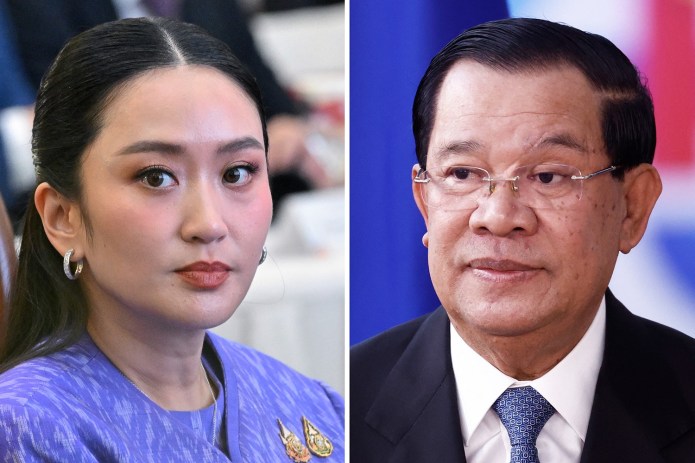
Thailand’s Constitutional Court suspended Prime Minister Paetongtarn Shinawatra on Tuesday pending an ethics investigation into a leaked phone call made last month between Paetongtarn and former Cambodian leader Hun Sen. The nine-judge court voted unanimously to review a petition, filed by 36 senators, that accuses her of violating the constitution’s ethical code and seeks her dismissal; the court also ruled in a 7-2 vote to immediately suspend Paetongtarn from office until a ruling is given.

Welcome back to World Brief, where we’re looking at Thailand’s political instability, trade concerns in the Quadrilateral Security Dialogue, and controversy over a satirical cartoon in Turkey.


Deferential Tone

Thailand’s Constitutional Court suspended Prime Minister Paetongtarn Shinawatra on Tuesday pending an ethics investigation into a leaked phone call made last month between Paetongtarn and former Cambodian leader Hun Sen. The nine-judge court voted unanimously to review a petition, filed by 36 senators, that accuses her of violating the constitution’s ethical code and seeks her dismissal; the court also ruled in a 7-2 vote to immediately suspend Paetongtarn from office until a ruling is given.

Paetongtarn has 15 days to submit evidence to support her case. In the interim, Deputy Prime Minister Suriya Juangroongruangkit will take charge.

The phone call at the center of the controversy occurred amid an ongoing conflict between Thailand and Cambodia. The clash began on May 28, when an armed confrontation along their shared border killed one Cambodian soldier; both sides have accused the other of instigating the firefight. In response, Cambodia has boycotted Thai movies and films; fruits and vegetables; electricity and fuel; and some internet services. Thailand, meanwhile, has increased restrictions on border crossings and issued measures targeting online scam operations in the neighboring nation.

After weeks of tit-for-tat retaliatory measures, Paetongtarn held a 17-minute phone call with Hun Sen to discuss ways to de-escalate the conflict. Hun Sen later posted a recording of the full conversation to his Facebook page after a shorter version was published online, arguing that such action was necessary “to avoid any misunderstanding or misrepresentation in official matters.”

In the recording, Paetongtarn can be heard calling Hun Sen “uncle” and referring to a Thai regional commander as “an opponent.” Hun Sen is a longtime friend of Paetongtarn’s father, former Prime Minister Thaksin Shinawatra, who is facing his own criminal charges for criticizing the Thai royal family.

Paetongtarn maintains that her deferential tone toward Hun Sen was a negotiating tactic. “I only thought about what to do to avoid troubles, what to do to avoid armed confrontation, for the soldiers not to suffer any loss,” she said on Tuesday. But critics argue that her behavior made Thailand appear weak in the face of potential conflict.

Already, Paetongtarn’s Pheu Thai Party has faced growing discontent as Bangkok struggles to revive a sluggish economy and as the conservative establishment, which includes the military, warns that the current political dynasty is becoming too powerful. Paetongtarn is the third member of her family to serve as prime minister—and the third to face potential removal before the position’s term ends.

Following Paetongtarn’s phone call with Hun Sen, though, that skepticism has only worsened. The Bhumjaithai Party, a key conservative ally in her ruling coalition, pulled out of the alliance following the leak of the conversation—leaving the Pheu Thai Party with a slim majority. Paetongtarn’s approval rating fell from 30.9 percent in March to 9.2 percent last week. And on Tuesday, King Maha Vajiralongkorn endorsed a cabinet reshuffle to try to appease weekend protests calling for Paetongtarn’s removal; such demonstrations were the largest anti-government protests in the country since the Pheu Thai Party took power in 2023.

Still, Paetongtarn’s role in government remains unclear. In the cabinet reshuffle, she was appointed culture minister. Thailand’s parliament will convene on Thursday to swear her into that role, and she will be able to attend cabinet meetings in that capacity even as the ethics investigation unfolds.


Today’s Most Read


What We’re Following

Dissent within the Quad. Foreign ministers from Australia, India, Japan, and the United States convened in Washington on Tuesday for a meeting of the Quadrilateral Security Dialogue to discuss Chinese threats to the Indo-Pacific. They hope to refocus global attention on East Asia and make strides to diversify their supply chains away from Beijing, which has tried to dominate the critical minerals sector. But the traditionally close alliance struggled to make progress on Tuesday as internal rifts over trade and defense spending marred their conversations.

Hefty U.S. tariffs were among the primary obstacles to talks, as U.S. President Donald Trump’s trade war has not spared any of the other Quad nations. Japan canceled a top-level meeting with U.S. officials last week after Elbridge Colby—the Pentagon’s third-most senior civilian official—reportedly demanded that Tokyo boost its defense spending from 3 percent to 3.5 percent. And India maintains that Trump did not use trade threats to avert an India-Pakistan conflict despite the U.S. president claiming the opposite.

Still, Quad members remain optimistic that their issues will fall to the wayside in the face of greater challenges. “Relationships will never be free of issues,” Indian Foreign Minister S. Jaishankar said on Monday. “What matters is the ability to deal with it and to keep that trend going in the positive direction.”

Controversial cartoon. Turkish authorities arrested three more employees of the satirical magazine LeMan on Tuesday for publishing a cartoon that government officials allege depicts the Prophet Muhammad, thereby “publicly insulting religious values.” This brings the total number of people detained to four, with warrants out for two other editors believed to be abroad.

In the image, two figures labeled “Muhammed” and “Musa” (meaning Moses), clad in wings and halos, shake hands in the sky while a scene of war unfolds below them. LeMan has apologized for any offense caused by the cartoon but maintains that the image portrayed an imaginary Muslim man named “Muhammed,” not the prophet, and that it was intended to highlight the suffering of Muslims. The magazine also called on local authorities to protect the publication’s right to freedom of expression as police and protesters clashed outside of the magazine’s building on Monday.

However, Ankara appears likely to side against LeMan. “The disrespect shown to our beloved prophet by some shameless individuals, devoid of this nation’s values and ignorant of manners and propriety, is utterly unacceptable,” Turkish President Recep Tayyip Erdogan said on Tuesday. “It is an open provocation disguised as humor, a despicable act of instigation.”

Surveilling Jewish targets. Iran is believed to be collecting information on Jewish sites in Berlin to prepare for potential attacks, German authorities warned on Tuesday. Last week, local officials detained a Danish national identified as Ali S. over charges that Tehran’s Quds Force—an elite branch of the Islamic Revolutionary Guard Corps (IRGC)—ordered him early this year to gather intelligence on Berlin’s Jewish community and prominent Jewish individuals.

It is unclear whether Ali’s intelligence-gathering would have led to an attack. An initial investigation into his activities found that he took photographs of at least three buildings, including the headquarters of the German-Israeli Society and the home of Josef Schuster, the president of the Central Council of Jews in Germany. Similar intelligence operations have also targeted sites in Germany as well as other European nations, such as Austria, Belgium, Denmark, France, and the Netherlands.

The German-Israeli Society has called on the European Union to list the IRGC as a terrorist organization, and Germany’s Foreign Ministry has summoned Iranian Ambassador Majid Nili Ahmadabadi following Ali’s arrest.

“If this suspicion were confirmed, it would be an outrageous incident that would once again demonstrate that Iran is a threat to Jews all over the world,” German Foreign Minister Johann Wadephul said. The Iranian Embassy in Berlin rejected the allegations as “unfounded and dangerous.”


Odds and Ends

What would you do with $50 million? Around 47,000 people in Norway faced that question on Friday after being informed that they had won the EuroJackpot—only to have their hopes dashed. According to Norsk Tipping, which runs the continent-wide lottery, a “manual error” led to tens of thousands of people being falsely told that they had struck it big. “We are terribly sorry that we have disappointed so many people, and completely understand that people are angry with us,” Norsk Tipping told the New York Times. Chief executive Tonje Sagstuen has since resigned over the incident.

Great Job Alexandra Sharp & the Team @ World Brief – Foreign Policy Source link for sharing this story.

Sasha Keable Wants to ‘Feel Something’ on New Song: Listen

Sasha Keable Wants to ‘Feel Something’ on New Song: Listen

Rising R&B singer-songwriter Sasha Keable has released her new single “Feel Something.” 

On the hip-hop soul-flavored track, produced by Taylor Hill, the British-Colombian singer expresses desire for a tangible love.

“I just wanna feel something, something,” she sings in the choir-backed chorus. 

Regarding the song’s inspiration, Keable candidly states, “I needed to say what I needed to say,” allowing the music to speak for itself.

The Fight Club Records

“Feel Something” is the follow-up to the Etienne-produced “Act Right,” released in April.

Speaking on the latter track, which is “rooted in betrayal and heartbreak,” Keable noted, “‘Act Right’ is a plea to the people who did me wrong to fix up and attempt to see the wrong in what they did while simultaneously attempting to find the love within myself that I so generously gave away to those people that didn’t deserve it.”

In November 2024, Keable released her soul-stirring single “Why,” which she co-wrote with kwn and producer Charlie Pitts.

Earlier that year, she released “Hold Up” in April, then joined forces with Destin Conrad for “Auction,” which dropped in June, and “Take Your Time” with 6LACK in September. She concluded 2024 with a feature on Isaiah Falls‘ “Night Off,” released in mid-December. 

Stream Sasha Keable’s new song “Feel Something” below.

Great Job Keithan Samuels & the Team @ Rated R&B Source link for sharing this story.
The Fantasy of a Grand Bargain Between America and China

The Fantasy of a Grand Bargain Between America and China

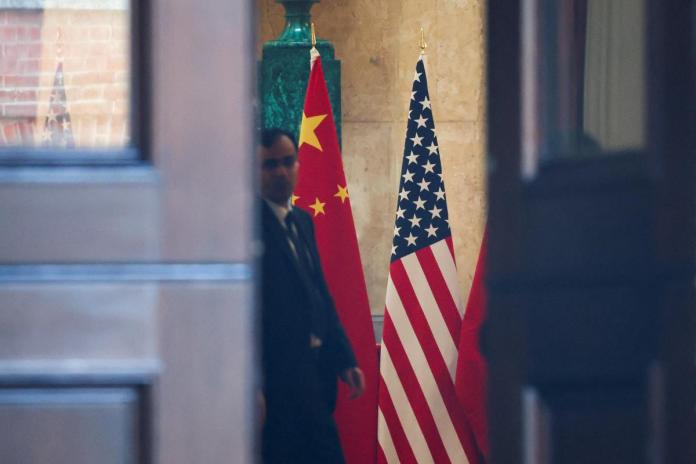
Hope springs eternal in the world of great-power diplomacy. Even today, in the throes of a norm-busting trade war with China, there is talk of some kind of leader-to-leader grand bargain between U.S. President Donald Trump and his Chinese counterpart, Xi Jinping. Trump says he “would love to get a deal with China.” Xi, who has responded to Trump’s tariff broadside in a measured and targeted way, has left the door open for a negotiated settlement. Such a breakthrough in U.S.-Chinese relations might sound alluring at this particularly fraught moment, but the history of the strategic rivalry between China and the United States and each country’s internal politics make the likelihood of reaching one remote.

Since 1950, China and the United States have pivoted from cooperation to confrontation and back again, several times. They have done so for geopolitical and domestic political reasons. As a rule, they have been able to cooperate on security only when facing a clear and present danger from a common enemy. U.S. President Richard Nixon’s historic visit to China in 1972, for example, led to a series of agreements aimed at containing the Soviet Union. And the two countries have managed economic cooperation only when both were governed by domestic coalitions that supported the expansion of international trade, as during the 1990s and early 2000s. Cooperation across both security and economic affairs, meanwhile, has always been elusive.

Today, there is nothing—internationally or domestically—that would suggest this is a propitious moment for China and the United States to transcend their differences in either the security or economic realm. Both countries are currently governed by strident nationalist coalitions, with an antiglobalization backlash dominating domestic politics. There is also no common security threat drawing the two countries together. Indeed, they are more likely to find themselves on opposite sides (or at least at orthogonal purposes) regarding international conflicts, such as those between Russia and Ukraine and between Israel and Iran. Only once in the past hundred years, at the height of the Cold War in the 1950s and 1960s, did China and the United States find themselves completely at loggerheads on both dimensions of statecraft. With today’s environment becoming more like that one, it is hard to imagine either leader meaningfully resetting relations or addressing any of the major issues dividing them.

Trump won’t want to play the cards in his hand. If he were to push for a grand bargain, it would almost certainly be a Faustian one for the United States. For Washington to seal any sweeping, across-the-board deal, the United States would likely have to make concessions on Taiwan or on Beijing’s claims in the South China Sea—thus potentially unraveling a security architecture that has underpinned regional stability for decades.

The strategic costs to the United States of conceding influence in the region to China far outweigh any potential economic benefits—including increased access to the Chinese market or even resurgent American manufacturing. Given the circumstances, American policymakers should focus on more manageable, critical goals, such as reducing the risk of inadvertent war, particularly in the South China Sea and other flash points. A small but real step back from the brink would be grand indeed.

USEFUL ADVERSARIES, USEFUL PARTNERS

History shows that relations between China and the United States sour when the countries do not share a common enemy and when inward-looking, nationalist economic interests are in ascendance in domestic politics. Following the Communist Party’s victory in the Chinese Civil War in 1949, for instance, Americans from Wall Street to Main Street viewed the People’s Republic of China as a key part of the widening global communist threat orchestrated from Moscow. This view crystallized during the Korean War, when the two countries faced off on the battlefield, and it hardened in the 1960s, when the U.S.-Chinese strategic rivalry spread across the developing world as part of the Cold War competition for “hearts and minds.”

Domestic political imperatives buttressed those geopolitical considerations and fueled hostility on both sides. In the 1950s and 1960s, globalization and trade liberalization were off the table in both countries, albeit for different reasons. The United States favored managed, not liberalized, trade, focusing almost exclusively on commercial ties with its Western allies. Meanwhile, Washington did everything it could to isolate and punish China economically by imposing a broad trade embargo. In Mao Zedong’s China, this hardly mattered. During these years, China had little interest in trading with the outside world. Apart from the Soviet Union, North Korea, and a few other outposts such as Albania, China kept foreign economic ties to a minimum.

For the first two decades of the Cold War, China and the United States were not only bitter strategic rivals; they also served, as political scientist Tom Christensen has noted, as “useful adversaries” for each other domestically. Political leaders in both countries found advantage by pointing to an implacable foe at critical moments of domestic vulnerability. For Mao, this was to shore up power following the calamitous Great Leap Forward and amid the tumult of the Cultural Revolution. And for U.S. presidents from Dwight Eisenhower to Lyndon Johnson, pointing to a hostile China helped sell a foreign policy of deepening engagement in South Vietnam to a public that would not buy it on its own merits. This tactic, however, came at the price of strengthening hard-liners in both countries, which in turn deepened the rift between Beijing and Washington.

By the 1970s, Beijing viewed Moscow as an even greater threat than Washington. The two communist giants had border clashes in 1969, and Beijing’s anxiety about facing off against both of the world’s superpowers was palpable. Simultaneously, the United States was seeking to extricate itself from a deeply unpopular war in Southeast Asia and recalibrate its Cold War strategy in Asia and beyond. China and the Soviet Union were no longer universally seen in Washington as part of a monolithic communist bloc, and this convergence of strategic interests led to a thaw in U.S.-Chinese relations, beginning with Nixon’s visit to China, which was facilitated by the secret diplomacy of his national security adviser, Henry Kissinger.

U.S.-Chinese cooperation across both security and economic affairs has always been elusive.

The visit marked the beginning of a “tacit alliance,” as Kissinger put it at the time, to counterbalance Soviet power. Although formal diplomatic relations were not established until 1979, the 1970s set the stage for a series of strategic initiatives from “Ping-Pong diplomacy” and other charm offensives to increasing trade and technical exchanges to the beginnings of actual defense cooperation that lasted throughout the 1980s. Although strategic cooperation flourished, economic cooperation between China and the United States remained limited during the 1970s. China’s economy was still largely autarchic and disconnected from global markets. All industry remained state-owned, and agriculture was still collectivized. Mao’s successor, Hua Guofeng, even doubled down on whatever his predecessor had been doing, replacing five-year central plans with a ten-year one.

It wasn’t until the 1980s, when domestic coalitions favoring globalization took firmer root in both countries, that security and economic interests on both sides were briefly in sync. In China, the new paramount leader, Deng Xiaoping, along with his deputies Hu Yaobang and Zhao Ziyang, pursued structural economic reforms, committing China to the twin goals of market reform and integration into the global economy. And in the United States, President Ronald Reagan championed globalization, promoting trade liberalization and open markets. Strategically, meanwhile, China and the United States continued to cooperate against the Soviet Union. The 1980s saw collaboration in arming Afghan resistance fighters (the mujahideen) during the Soviet invasion of Afghanistan, which further strengthened the U.S.-Chinese security relationship. The emergence of pro-globalization coalitions in both countries, combined with a common enemy, created a conducive environment for economic as well as strategic cooperation that would last until the end of the Cold War.

The collapse of the Soviet Union in 1991 fundamentally altered the calculus. With the common enemy gone, the strategic rationale for security cooperation all but disappeared even as economic cooperation flourished. In Washington, Beijing’s growing economic and military power raised questions about the credibility of the United States’ forward presence in Asia, as did China’s willingness to push back against perceived encroachments on its interests in the region. The 1995–96 crisis in the Taiwan Strait, when Beijing fired a series of missiles near Taiwan as a warning against movements toward independence, highlighted the issues and raised the stakes. In the face of Chinese assertiveness, the United States demonstrated its military commitment to Taiwan by deploying multiple aircraft carriers to the region.

With only economic interests in alignment, relations between Beijing and Washington were plagued by mixed motives, as leaders navigated conflicting pressures to cooperate and compete. U.S. President Bill Clinton, for instance, devised a rationale for doubling down on economic interests that he thought could one day lead to strategic alignment: using free trade and investment as a means to integrate China into the U.S.-led global order. With Deng’s successor Jiang Zemin deepening reformist policies, China seemed willing to play ball. The net result was spectacular growth in U.S.-Chinese trade and the start of negotiations that led to China’s accession to the World Trade Organization (WTO) in 2001. The U.S. and Chinese economies have been deeply intertwined ever since.

OUT OF ALIGNMENT

Last year, China and the United States traded over $580 billion in goods and services. China is the United States’ third-largest trade partner. The United States, meanwhile, is China’s largest single export market, not counting regional blocs such as the Association of Southeast Asian Nations or the EU. Beijing holds over $1 trillion in U.S. treasury securities. But this mutual economic dependence masks deeper centrifugal forces that have been gradually pulling the two countries apart. Domestically, both American and Chinese leaders are facing increasing political pressure to turn inward and away from global markets—and for roughly the same reason: the inequality and dislocation globalization is believed to have caused.

In the United States, economic dislocation precipitated and accelerated by globalization has led to a growing backlash against free trade and international institutions. Signs of trouble were evident as early as the 1990s in the battle over Clinton’s North American Free Trade Agreement and the Seattle protests over the WTO. But it was not until the 2008 global financial crash and the Obama administration that domestic concerns about job losses and China’s trade practices became hot-button electoral issues. Lawmakers on Capitol Hill increasingly linked the United States’ economic troubles to China’s emergence as an economic powerhouse. It was a short step from there to the anti-Chinese, “America first” neomercantilist agenda that Trump championed on the campaign trail and then from the Oval Office.

Parallel developments were afoot in China—first under the leadership of Hu Jintao in the first decade of this century and then more dramatically under Xi in the 2010s—as the country pivoted toward a more assertive nationalism and an inwardly focused policy agenda. Xi emphasized “common prosperity” and social equity, the green transition, and eventually, the “China Dream,” which promised rising living standards but also a better overall quality of life, a powerful and confident China, and a more consumer-oriented economy focused on leading-edge technologies. These moves entailed reducing its reliance on foreign technology and investment and increasing domestic demand, fostering domestic innovation, and favoring the state over the market. In the 2010s, amid its fears that the United States was winning the hearts and minds of young Chinese, Beijing increasingly blamed Washington for its economic and social problems.

U.S. policymakers should focus on manageable, critical goals, such as reducing the risk of war.

With each side scapegoating the other and no common enemy to create incentives to cooperate, the political space for alignment over strategic-military matters narrowed. Attempts to find common ground over nontraditional security challenges such as terrorism, climate change, and global health foundered during the George W. Bush and Obama administrations. For Washington, fighting a so-called global war on terror was paramount in the first decade of the century, while Beijing was much more focused on developments in East Asia. U.S.-Chinese efforts to cooperate over climate change became entangled in broader disputes over trade, technology, subsidies, and intellectual property.

By 2020, the COVID-19 pandemic exposed and exacerbated confrontational tendencies. In the United States, political leaders lambasted China for its handling of the outbreak, with Trump pejoratively labeling the disease the “China virus.” China rejected these accusations and portrayed its pandemic response as superior, later using “vaccine diplomacy” to compete with the United States and bolster its global image. The pandemic also intensified economic nationalism: both countries moved to secure critical supply chains domestically and then, during Joe Biden’s presidency, to restrict access to key materials and leading-edge technologies.

As strategic mistrust deepened during the Biden years, Washington and Beijing came to view the other’s actions through a lens of great-power rivalry. Both countries increasingly sought to weaponize aspects of their interdependence (imposing export controls on microchips and rare earths, for instance) and rachet up threats over publicly held debt, state or state-directed investment flows, and more. Economic statecraft could not become the same kind of battleground it was in the 1950s and 1960s, when China and the United States operated in separate trading spheres. Their dependence on each other necessitated a subtler dance, but it also opened additional avenues of competition and angles of leverage that were unthinkable during the Cold War. Although both sides recognize the need to prevent rivalry from spiraling into open conflict, the relationship remains volatile and unstable.

LESS IS MORE

Six months into the new Trump administration, relations have only become more precarious. Trump’s over-the-top tariffs on China in April, jacked up to an eye-popping 145 percent, were intended to force Xi to the negotiating table and possibly pave the way for a grand bargain. But the Chinese leader’s quick, forceful response—raising tariffs on U.S. goods to 125 percent and imposing export restrictions on critical rare-earth minerals and magnetssuggests such blunt, coercive tactics are unlikely to work. Although both sides have since agreed to a temporary trade truce, it was Trump, not Xi, who blinked first. Short of major concessions by Trump on issues critical to Xi’s geopolitical ambitions, the latter is extremely unlikely to cave to the former’s demands on trade and economic matters. Herein lies the rub. 

Given the state of play, any grand bargain would require the United States to implicitly recognize much of East Asia and Southeast Asia as a de facto Chinese sphere of influence in exchange for similar recognition of a U.S. sphere of influence in the Western Hemisphere, the Atlantic, the Pacific Islands, and Oceania. Such a deal, however, would seriously compromise the security of core U.S. allies including Japan and the Philippines and could very well drive Japan and others across Asia to consider drastic options to guarantee their security—including acquiring nuclear weapons. This is a recipe for what international relations scholars call a perilous security dilemma, in which each country’s effort to increase its own security threatens the security of other countries, putting in motion a cycle of mistrust and potential conflict. It would also set a dangerous precedent for global alliance politics and nonproliferation norms. The erosion of trust in the United States among its allies would then make future coalition-building efforts more difficult, weakening the United States’ strategic posture in the Indo-Pacific and around the world.

An oft-discussed economic angle of a grand bargain, meanwhile, would involve Trump rolling back U.S. tariffs, easing export controls on advanced technology, and allowing Chinese investments in key U.S. sectors in return for Xi agreeing to relax export restrictions on rare earths and curb China’s anticompetitive policies—including subsidies and intellectual property theft—that have long disadvantaged American businesses. Such an agreement would offer each side something that key domestic economic sectors want, but it would do little to address the deeper issues whipsawing the two economies—namely, falling living standards, rising prices, and a poor job market. Any agreement that fails to deliver tangible and immediate economic gains is likely only to fuel stronger demands for protectionism, trepidation about globalization, and feelings of xenophobia and distrust.

To better serve U.S. interests, Trump would be wise to recalibrate his dealmaking ambitions to narrower yet strategically significant and winnable objectives. Chief among them should be preventing accidental conflict in the South China Sea through more reliable communication channels, military-to-military dialogues, and confidence-building measures such as prelaunch notification procedures for space launches and processes for dealing in real time with cyberwarfare and hacking. Such initiatives would not only reduce the likelihood of escalation but also reassure allies in Asia of the United States’ commitment to regional peace and security. Through incremental agreements, for instance, Trump and Xi could address specific issues such as maritime security and freedom of navigation by agreeing to a code of conduct along with protocols for managing close-in naval encounters. The two leaders could also establish norms against cyber-espionage and state-sponsored commercial cybertheft.

Washington and Beijing view the other’s actions through a lens of great-power rivalry.

Measured progress on economics, meanwhile, first requires some sort of shared framework to deliver predictability in the regulation and terms of trade: tariffs and other barriers rising and falling every week or month harms both U.S. and Chinese interests. More progress can then be made on aligning standards and practices regarding labor rights and environmental safeguards. China has shown significant willingness to move in such a direction, not least by dramatically tightening emissions standards—improving air quality in all Chinese cities over the past decade—and initiating markedly stronger enforcement, since at least 2010, of labor protections, including health and safety rules, minimum wages, and overtime. If Washington were able to cement a bilateral agreement on, say, baseline labor practices or greenhouse gas protocols, it would help, not harm, American workers and producers because it would blunt some of China’s competitive advantages that U.S. labor unions and others have long decried as unfair.

The United States would also benefit greatly from any headway in making China’s financial sector more transparent or more open, such as by pushing even noncore sections of state enterprises to disclose more information and allowing freer entry into the Chinese market for U.S. and other international banks, insurers, and financial firms. Some of these reforms were important components of the agreement that brought China into the WTO but have never been properly implemented. If Trump were to pursue even modest progress on them now, it could help provide better information and opportunities to American firms operating within the Chinese market.

By prioritizing these narrow and achievable outcomes, Trump has an opportunity to place the world’s most important bilateral relationship on more solid footing. U.S. policy toward China must be based on a clear-eyed assessment of prevailing international and domestic conditions. This means recognizing that in the absence of a common enemy, any grand bargain Washington strikes is likely to be self-defeating, given that the enhanced security Beijing seeks in the region can only come from unilateral U.S. concessions. Meanwhile, the concessions China is apt to offer on trade in return for U.S. concessions on security are unlikely to deliver the relief that antiglobalization constituencies demand. With the political room for negotiation or compromise between China and the United States so narrow, small incremental steps in the right direction trump any promises of a grand bargain.

Loading…

Great Job William Hurst, Peter Trubowitz & the Team @ FA RSS Source link for sharing this story.

Secret Link