Home News Page 2569

Supporting Black Survivors in This Moment — Therapy for Black Girls

Supporting Black Survivors in This Moment — Therapy for Black Girls

Written in collaboration with Dr. Shena Young

As news continues to unfold around the Diddy trial, many in our community—especially Black women and femmes—are sitting with a complicated, painful mix of emotions. For many survivors, this moment is more than a headline. It’s personal. It brings up deep wounds, ancestral pain, and the ever-present reminder of how violence against Black bodies—especially Black women’s bodies—too often goes ignored, silenced, or justified.

At Therapy for Black Girls, we believe that conversations like this matter. And we believe they must happen with care, intention, and a commitment to centering Black survivors in their healing.

In that spirit, we’re honored to share resources and reflections from Dr. Shena Young—an embodiment-focused psychologist, healer, author, and survivor—who has devoted her life to creating spaces for Black women and femmes to feel at home and free in their bodies again. Below are excerpts from her heartfelt message and offerings for our community, shared with permission.


“I want us to be done with the culture of secrecy around sexual trauma. It has held us, our bodies, and our communities hostage long enough… It’s time to revisit the me too and add on: I am healing from it too. To breathe in solidarity, and to snatch our freedom back together.”

—Dr. Shena Young


Resources for Healing & Support

Body Rites

Dr. Shena’s holistic embodiment workbook, Body Rites, is a powerful companion for Black women, femmes, and non-binary survivors of sexual trauma. The book offers four guided healing journeys rooted in embodiment, African spiritual traditions, and intuitive wisdom. It’s available wherever books are sold (with encouragement to support Black-owned bookstores!).

An Open Letter to Black Survivors

In 2023, Dr. Shena penned an open letter to Cassie and other Black survivors that continues to resonate deeply. It’s a must-read for anyone seeking affirmation, validation, and kinship.

YouTube Series: Let’s Continue the Conversation

In partnership with the Me Too Movement, this dialogue series explores healing through community, storytelling, and truth-telling. Watch it here.

Healing on the Mat

A 10-week embodiment workshop and support group for survivors, led by Dr. Shena. The next cohort begins in September 2025. Learn more or share with clients here.

Consultation for Clinicians

For therapists and clinicians supporting survivors, Dr. Shena offers both individual and group consultation centered in holistic, decolonized healing frameworks. Reach out here to learn more.


As therapists, advocates, and members of a broader community, we have an opportunity—and a responsibility—to hold space for survivors with tenderness, strategy, and truth. The culture of silence around sexual violence must be broken. And breaking it begins with us.

Let’s keep showing up. Let’s keep believing. Let’s keep building a future where every Black survivor knows they are seen, supported, and safe.

With care,

The Therapy for Black Girls Team

Great Job Kamron (Taylor) Melton & the Team @ Therapy for Black Girls Source link for sharing this story.

INSTANT REACTION: Mexico defeats Honduras to advance to Gold Cup Final | FOX Soccer

INSTANT REACTION: Mexico defeats Honduras to advance to Gold Cup Final | FOX Soccer

The “FOX Soccer” crew reacts to the Mexico vs. Honduras a match and Mexico advancing to the Gold Cup Final!

Great Job & the Team @ FOX Sports Digital Source link for sharing this story.

Trump administration withholds over $6 billion for after-school, summer programs and more

Trump administration withholds over  billion for after-school, summer programs and more

Without the money, schools say they won’t be able to provide free or affordable after-school care for low-income kids while their parents work.

WASHINGTON — Day camp providers and schools are warning that a Trump administration funding freeze could wreck summer for low-income American families and wipe out some after-school programming next year.

The administration is withholding more than $6 billion in federal grants for after-school and summer programs, English language instruction, adult literacy and more as part of a review to ensure grants align with President Donald Trump’s priorities.

The move leaves states and schools in limbo as they budget for programs this summer and in the upcoming school year, introducing new uncertainty about when — or if — they will receive the money. It also sets the stage for a clash with Democrats, who say the administration is flouting the law by holding back money Congress appropriated.

Without the money, schools say they won’t be able to provide free or affordable after-school care for low-income kids while their parents work, and they may not be able to hire staff to teach children who are learning English. Even classes or camps underway this summer could be in jeopardy.

For instance, the Boys and Girls Clubs of America depend on some of the withheld money to run camps and other summer programming for low-income students. If funding isn’t restored soon, the programming may end mid-season, said Boys and Girls Club President Jim Clark.

After-school programming in the fall could also take a hit. “If these funds are blocked, the fallout will be swift and devastating,” Clark said. As many as 926 Boys and Girls Clubs could close, affecting more than 220,000 kids, the group said.

Programs that rely on the money were expecting it to be distributed July 1, but an Education Department notice issued Monday announced the money would not be released while the programs are under review. The department did not provide a timeline and warned that “decisions have not yet been made” on grants for the upcoming school year.

“The Department remains committed to ensuring taxpayer resources are spent in accordance with the President’s priorities and the Department’s statutory responsibilities,” Education Department officials wrote in the notice, which was obtained by The Associated Press.

The department referred questions to the Office of Management and Budget, which did not respond to a request for comment.

After-school child care at risk

In Gadsden City Schools in Alabama, officials say they’ll have no choice but to shutter their after-school program serving more than 1,200 low-income students if federal funds aren’t released. There’s no other way to make up for the frozen federal money, said Janie Browning, who directs the program.

Families who rely on after-school programs would lose an important source of child care that keeps children safe and engaged while their parents work. The roughly 75 employees of the district’s after-school programs may lose their jobs.

“Those hours between after school and 6 o’clock really are the hours in the day when students are at the most risk for things that may not produce great outcomes,” Browning said. “It would be devastating if we lost the lifeline of afterschool for our students and our families.”

Jodi Grant, executive director of the Afterschool Alliance, said withholding the money could cause lasting damage to the economy.

Some advocates fear the grants are being targeted for elimination, which could force schools to cut programs and teachers. Trump’s 2026 budget proposal called for Congress to zero out all of the programs under review, signaling the administration sees them as unnecessary.

Sen. Patty Murray, D-Wash., pressed the administration to spend the money as Congress intended.

“Every day that this funding is held up is a day that school districts are forced to worry about whether they’ll have to cut back on afterschool programs or lay off teachers instead of worrying about how to make sure our kids can succeed,” Murray said in a statement.

What the money funds

The six grant programs under review include one known as 21st Century Community Learning Centers. It’s the primary federal funding source for after-school and summer learning programs and supports more than 10,000 local programs nationwide, according to the Afterschool Alliance. Every state runs its own competition to distribute the grants, which totaled $1.3 billion this fiscal year.

Also under review are $2 billion in grants for teachers’ professional development and efforts to reduce class size; $1 billion for academic enrichment grants, often used for science and math education and accelerated learning; $890 million for students who are learning English; $376 million to educate the children of migrant workers; and $715 million to teach adults how to read.

These programs account for over 20% of the federal money the District of Columbia receives for K-12 education, according to an analysis by the Learning Policy Institute, a think tank. California alone has over $800,000 in limbo, while Texas has over $660,000.

“Trump is illegally impounding billions of dollars appropriated by Congress to serve students this fiscal year,” said Tony Thurmond, California’s state superintendent, in a statement. “The Administration is punishing children when states refuse to cater to Trump’s political ideology.

The loss of funds could “put several more school districts in extreme financial distress,” said Chris Reykdal, superintendent of public instruction in Washington state. Districts have already adopted budgets, planned programming and hired staff, assuming they’d receive the money, Reykdal said.

If the funding freeze remains, children learning English and their parents would be especially affected. Some districts use the money to pay for summer programming designed for English learners, family engagement specialists who can communicate with parents and professional development training for staff. Rural districts would be hit the hardest.

“They’re trying to send a message,” said Amaya Garcia, who oversees education research at New America, a left-leaning think tank. “They don’t believe that taxpayer funding should be used for these children.”

Umatilla School District in rural eastern Oregon — with a sizable population of migrant families and students learning English — relies heavily on federal funding for its after-school and summer school programs. Superintendent Heidi Sipe says she is meeting with state officials soon to find out if the district will have to plan an early end to summer school, an option 20% of students are using. Come this fall, if federal money stays frozen, she’ll have to lay off staff and eliminate after-school programs attended by around half the district’s students.

“It’s an essential service in our community because we don’t have any licensed child care centers for school-age children,” she said.

Sipe said it’s particularly frustrating to deal with these funds being put into limbo because the school district was in the middle of a five-year grant period.

“It feels preventable,” she said, “and it feels as though we could have done a better job planning for America’s children.”

Copyright 2025 Associated Press. All rights reserved. This material may not be published, broadcast, rewritten, or redistributed.     

Great Job & the Team @ WFAA RSS Feed: news Source link for sharing this story.

Women’s Pro Baseball League to hold tryouts at Nationals Park as it aims for 2026 debut

Women’s Pro Baseball League to hold tryouts at Nationals Park as it aims for 2026 debut

The Women’s Professional Baseball League will hold tryouts next month at the Washington Nationals’ home ballpark as it moves closer to its launch.

The league is aiming to play its first season with six teams starting in spring 2026. The tryouts, which will be held Aug. 22-25, will determine the 150 players who will be invited to the league’s draft in October.

More than 600 players registered for the four-day camp, the WPBL said. The first three days will include drill-focused sessions, athletic performance testing and player evaluations at the Nationals’ Youth Baseball Academy before an initial round of cuts. Players will then compete in a live game at Nationals Park on Aug. 25, after which the final cuts will happen.

Team USA women’s baseball star Alex Hugo, who is a special adviser to the league, will lead the tryouts.

“We are really excited to see all of the players at tryouts this summer and see their incredible skills,” Hugo said in a statement. “We’re building a future where girls and women who love baseball can dream as big as they want and now, finally, have a league to call their own.”

The WPBL was co-founded by Justine Siegal, who is the first woman to coach for an MLB team. When it debuts, it will be the first pro league for women since the All-American Girls Professional Baseball League — the one immortalized in “A League of Their Own” — dissolved in 1954.

As it nears its launch, the WPBL has already struck a media deal with Fremantle, the production company behind shows like “The Price Is Right” and “Family Feud,” as well as brought in global women’s sports investor Assia Grazioli-Venier as its chair.

___

AP MLB: https://apnews.com/hub/MLB

Copyright 2025 The Associated Press. All rights reserved. This material may not be published, broadcast, rewritten or redistributed without permission.

Great Job Alanis Thames, Associated Press & the Team @ KSAT San Antonio Source link for sharing this story.

Wisconsin Supreme Court’s liberal majority strikes down 176-year-old abortion ban

Wisconsin Supreme Court’s liberal majority strikes down 176-year-old abortion ban

MADISON, Wis. – The Wisconsin Supreme Court’s liberal majority struck down the state’s 176-year-old abortion ban on Wednesday, ruling 4-3 that it was superseded by newer state laws regulating the procedure, including statutes that criminalize abortions only after a fetus can survive outside the womb.

The ban state lawmakers adopted in 1849 made it a felony when anyone other than the mother “intentionally destroys the life of an unborn child.”

It was in effect until 1973, when the U.S. Supreme Court’s landmark Roe v. Wade decision legalizing abortion nationwide nullified it. Legislators never officially repealed the ban, however, and conservatives argued that the U.S. Supreme Court’s 2022 decision to overturn Roe reactivated it.

Wisconsin Attorney General Josh Kaul, a Democrat, filed a lawsuit that year arguing that the ban was trumped by abortion restrictions legislators enacted during the nearly half-century that Roe was in effect. Kaul specifically cited a 1985 law that essentially permits abortions until viability. Some babies can survive with medical help after 21 weeks of gestation.

Sheboygan County District Attorney Joel Urmanski, a Republican, defended the 1849 ban in court, arguing that it could coexist with the newer abortion restrictions, just as different penalties for the same crime coexist.

Dane County Circuit Judge Diane Schlipper ruled in 2023 that the 1849 ban outlaws feticide — which she defined as the killing of a fetus without the mother’s consent — but not consensual abortions. Abortions have been available in the state since that ruling but the state Supreme Court decision gives providers and patients more certainty that abortions will remain legal in Wisconsin.

Urmanski had asked the state Supreme Court to overturn Schlipper’s ruling without waiting for a decision from a lower appellate court. It was expected as soon as the justices took the case that they would overturn the ban. Liberals hold a 4-3 majority on the court and one of them, Janet Protasiewicz, openly stated on the campaign trail that she supports abortion rights.

The justices concluded that “the legislature impliedly repealed” the ban “by enacting comprehensive legislation about virtually every aspect of abortion including where, when, and how healthcare providers may lawfully perform abortions,” Justice Rebecca Dallet wrote for the majority. “That comprehensive legislation so thoroughly covers the entire subject of abortion that it was clearly meant as a substitute for the 19th century near-total ban on abortion.”

In a dissent, Justice Annette Ziegler called the ruling “a jaw-dropping exercise of judicial will.” She said the liberal justices based the decision on their personal preference to allow abortions.

Urmanski’s attorney, Andrew Phillips, didn’t immediately respond to an email Wednesday morning seeking comment. Kaul’s spokesperson, Riley Vetterkind, also didn’t immediately return an email.

Democratic-backed Susan Crawford defeated conservative Brad Schimel for an open seat on the court in April, ensuring liberals will maintain their 4-3 edge until at least 2028. Crawford has not been sworn in yet and was not part of Wednesday’s ruling. She’ll play pivotal role, though, in a separate Planned Parenthood of Wisconsin lawsuit challenging the 1849 ban’s constitutionality. The high court decided last year to take that case. It’s still pending.

Copyright 2025 The Associated Press. All rights reserved. This material may not be published, broadcast, rewritten or redistributed without permission.

Great Job Todd Richmond, Associated Press & the Team @ KSAT San Antonio Source link for sharing this story.

Midwest Strong, Science Backed: How Stem Cells Are Changing the Way We Heal – Our Culture

Midwest Strong, Science Backed: How Stem Cells Are Changing the Way We Heal – Our Culture

The Midwest has always been a region built on resilience. Whether you’re clocking in for a 10-hour shift at the plant, chasing toddlers around the backyard, or running your usual route along the Mississippi before dawn, the demand on your body never really lets up. So when pain hits—whether it’s your knees, back, or shoulders—you don’t just feel sore. You feel stalled. And for many locals, slowing down isn’t an option.

Thankfully, modern recovery doesn’t always have to mean surgery, long recoveries, or giving up the things you love. There’s a new approach gaining traction among active Midwesterners: regenerative medicine. More specifically, stem cell therapy.

The idea is simple. Use the body’s own repair tools to fix what’s broken—without cutting corners or going under the knife. Clinics across the country are now offering these treatments, including trusted options like a Pittsburgh stem cell clinic that blends scientific rigor with a real-world understanding of what people need to stay on their feet.

Let’s break down how it works—and why it’s catching on with folks who just want to get back to work, back to the field, or back to feeling like themselves again.

What Is Stem Cell Therapy, Really?

Let’s clear something up first: this isn’t science fiction. Stem cell therapy uses your own body’s cells—usually from bone marrow or fat—to target inflammation and encourage healing in injured joints and tissues. These are adult stem cells, not embryonic, and they’re already hanging out in your body doing repair work. The therapy just gives them a boost.

Think of it as adding more construction workers to a job site that’s been understaffed for too long. Stem cells are good at turning into different types of tissue, depending on where they’re needed. When injected into an arthritic knee or a torn shoulder, they support the body’s own healing response, which often slows down with age or overuse.

It’s not a miracle cure. But it’s showing promising results for people who want to try something between “just live with it” and “book the OR.”

Why Midwesterners Are Leaning In

We’re not the type to chase trends just because they’re new. Around here, things have to prove themselves. That’s why stem cell therapy is starting to appeal to farmers, factory workers, teachers, and retirees—not because it’s flashy, but because it’s working for people who live active, grounded lives.

Here’s what’s making it a fit:

  • Less downtime – Most patients are back to regular activities in days, not weeks or months.
  • No general anesthesia – Treatments are often outpatient with local numbing only.
  • No reliance on pain meds – It’s drug-free and doesn’t involve long-term prescriptions.
  • Focus on healing, not masking – It helps address the source, not just the symptoms.

For someone who needs to be back at work Monday or has grandkids to keep up with, that’s not a small deal.

Common Conditions It Helps

You don’t need to be a marathoner to benefit. Stem cell therapy has been used to support recovery from:

  • Arthritis – Especially in knees, hips, and shoulders
  • Joint injuries – Rotator cuff tears, labrum issues, meniscus damage
  • Back pain – Bulging discs or facet joint problems
  • Tendonitis – Like tennis elbow or Achilles tendon issues

If it hurts when you bend, lift, twist, or just move how you used to, chances are someone with a similar issue has tried regenerative treatment.

What It’s Not

Let’s be honest—there’s a lot of noise out there. Between miracle ads and YouTube gurus, it can be hard to sort what’s legit. So, a quick reality check:

  • It’s not instant. Healing takes time, even when you’re using your own cells.
  • It’s not for every injury. Severe damage or structural issues might still require surgery.
  • It’s not a one-size-fits-all fix. The best clinics do thorough evaluations, imaging, and tailor the treatment to your exact needs.

That’s why choosing the right provider matters. It’s not about hype. It’s about science, skill, and getting real results.

What to Expect from a Treatment

Most stem cell therapy is a two-step process:

  1. Cell collection – A doctor draws stem cells from your body, usually the hip (bone marrow) or abdomen (fat).
  2. Injection – After processing, the cells are injected into the injured joint or tissue with image guidance for accuracy.

From start to finish, it’s usually done in a day. Most people experience only minor soreness where the cells were taken or injected. And recovery is more like resting after a big workout—not months in a brace or hospital bed.

You’re usually walking out of the clinic the same day.

Is It Covered by Insurance?

Not yet, in most cases. That’s the catch for some. While some regenerative therapies may be partially reimbursed (especially platelet-rich plasma), stem cell treatments are often considered elective.

But here’s the thing: if it keeps you out of surgery, off the prescription train, or away from long-term disability, many patients feel the cost is well worth it. Some clinics even offer payment plans or consultations to help assess both fit and affordability.

What to Look for in a Clinic

If you’re curious about treatment, don’t start with flashy ads. Start with these questions:

  • Do they use image guidance (like ultrasound or fluoroscopy) during injections? Accuracy matters.
  • Are the treatments based on your own cells? Avoid places offering “off-the-shelf” stem cells.
  • Is there follow-up care? Good providers track your progress and adjust if needed.
  • Do they specialize in orthopedics or sports medicine? Experience counts.

A quality Pittsburgh stem cell clinic, for example, will walk you through your imaging, explain the science, and never promise outcomes they can’t support with data.

Real-Life Comebacks: Stories from Locals

You don’t have to go far to find someone who’s tried it. A high school baseball coach in Moline treated his pitching arm and was back running practices in weeks. A retired Rock Island nurse who couldn’t stand for long now hikes again with her grandkids. A machinist from Davenport avoided back surgery and stayed on the job.

These stories don’t always make headlines—but in the Quad Cities, they matter.

When Should You Consider It?

If you’ve done physical therapy, tried cortisone, and are staring down a surgeon’s consult—or just sick of the cycle of “rest and flare-up”—it might be time to explore a consult.

You don’t have to commit. A good provider will assess your condition, look at your scans, and give you honest input on whether stem cell therapy makes sense. No pressure, no hard sell. Just information.

Even if the answer is “not yet,” you’ll walk away with a better understanding of your options.

Final Thoughts: You’re Strong. So Should Your Recovery Be.

The Midwest way has always been about showing up. Whether it’s on the job, for your family, or on your feet—this region runs on effort, grit, and people who don’t quit. And that’s exactly why a recovery method like regenerative medicine fits so well.

It doesn’t promise shortcuts. It supports your body’s natural strength, builds on your effort, and gives you a path to healing that doesn’t leave you sidelined.

Whether you’re 35 or 65, playing sports or just want to garden without pain—this approach puts control back in your hands.


Great Job Our Culture Mag & Partners & the Team @ Our Culture Source link for sharing this story.

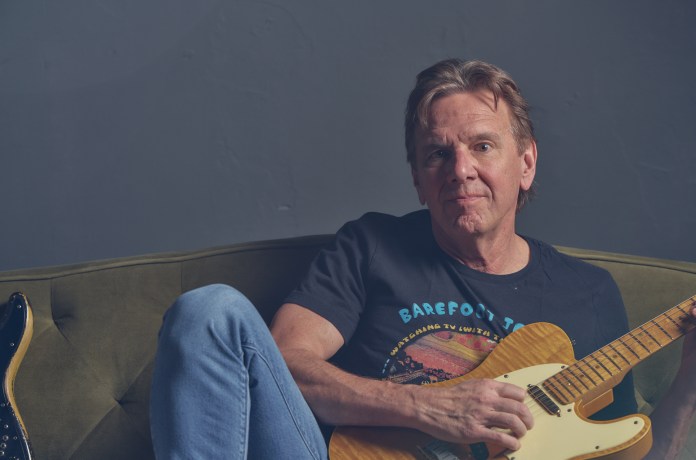
Country Studio Legend Dann Huff Lets His Guitar Do the Talking on New Album

Country Studio Legend Dann Huff Lets His Guitar Do the Talking on New Album

In spring 1980, a makeshift group of students at what was then Nashville’s Belmont College performed a version of Boz Scaggs‘ driving “Breakdown Dead Ahead,” with the 19-year-old guitarist ripping through Steve Lukather‘s original solo like he did it in his sleep.

That 19-year-old was Dann Huff, who — before the decade was over — would become a significant Los Angeles session player, working on recordings by Michael Jackson, Whitney Houston and Mariah Carey. He would also become the frontman for rock band Giant, but ultimately returned to his native Nashville, where he emerged as one of the most significant country producers of the last 25 years, playing a key role in the careers of Keith Urban, Rascal Flatts, Thomas Rhett and Kane Brown, to name just a few.

On May 30, Huff quietly released an independent guitar album, When Words Aren’t Enough, that returned him to his musical foundations. But the album —stripped entirely of any lyrical content — also provides an insightful guide into the skill set and core principles that vaulted him to his role in the country world, where he has been nominated 41 times for Country Music Association Awards, winning three musician of the year trophies and two as producer of the single of the year, Rhett’s “Die a Happy Man” and Urban’s “Blue Ain’t Your Color.”

“I heard this great statement the other day,” Huff says, looking back on the germination of Words. “In essence, the phrase was, ‘You’re trying to recognize your own soul through your art.’ And I just thought, ‘Oh, man.’ I was trying to recognize myself again, to see if I could recognize myself again.”

When Words Aren’t Enough reconnected Huff to the spirit in a string of instrumental (or mostly instrumental) albums that spun regularly on his turntable during his teen years. There was George Benson‘s Breezin’, received as a Christmas gift; projects by Nashville-based Barefoot Jerry and Georgia fusion band The Dixie Dregs; and guitar albums by Larry Carlton, Al DiMeola, Lee Ritenour and Jeff Beck, whose mid-’70s releases Blow by Blow and Wired were must-haves for many guitar wannabes in the era. Huff, of course, was the real deal, and he picked up a valuable lesson from Beck.

“What inspired me about him was that he wasn’t writing music or recording music that basically was an excuse to play a solo,” Huff explains. “It was predicated on melody. The melody was everything. It wasn’t an excuse to show off.”

Huff launched into Words while testing an amp at his home studio in early 2024. He grabbed some grooves he had created on his computer and began playing to them. Over the course of a couple of hours, he would end up with a fully formed song that he would label No. 1, No. 2, etc.,  until he had a full album’s worth of material. Initially, he planned to record them with a large cadre of session musicians he works with regularly, but drummer Jerry Roe and bassist Mark Hill connected with the material so deeply that they knocked out the core tracks in just a few days. 

Huff renamed those files before their release, titling them with descriptors that fit the mood, such as “Colorado Creepin’,” “Indefatigable Strut,” “Giant Free Fall” or “Southern Synchronicity.”

“Who the hell knows what you’re ever really trying to say in music,” he says rhetorically. “Especially with instrumental music.”

That points to one of the key tenets in Huff’s productions that’s detectable in When Words Aren’t Enough. He’s a “music first” guy in a genre where lyrics often dominate. But because he picks up on the sound of a song before the story hits home, he’s frequently connecting beneath the surface, recognizing the implicit feelings underneath the piece’s verbal cues.

“That’s the beauty of working with Dann,” Ashley Cooke says. “He’s such a ‘feel’ guy.”

Some other basic Huff traits are also evident in his new project. Even when the songs become adventurous, he’s careful to establish the basic melodic structure in the beginning, giving the listener a home base even as the music stretches out. The musicians are always working together as a unit — even though it’s a guitar album, the instrument doesn’t hog the spotlight. Additionally, there’s always an element of surprise: an unexpected chord, a change in instrumental textures or even a whole new melodic section. 

He is, as an instrumental soloist, the same guy who has overseen bundles of country hits and graced some old-school pop tracks.

“You can’t get away from yourself,” he says. “That’s the thing. I’m the same person in the derivations of all this stuff.”

When Words Aren’t Enough comes at a time when Huff, 64, is contemplating how he wants to spend the rest of his life. He intends to keep producing as long as there’s a market for his services, but returning to the spotlight is intriguing. At the urging of his musical peers, he expects to do some Nashville shows in the coming months, and he’s open to touring, too, if the interest is there. 

Ultimately, he seems intent on digging into music that connects at the soul level in whatever format makes sense. The future is wide open since he doesn’t have much left to prove. But he does have a better understanding of what his 19-year-old self was intuiting from those Beck albums: His technique is only a tool to help convey something deeper, even if he lacks the words to explain it.

“I used to play 12 hours a day,” he recalls. “That was it for decades, you know. For the last quarter of a century, I play guitar, but only in brief moments. I still know how to ride the bike.”

Great Job Marc Schneider & the Team @ Billboard Source link for sharing this story.

Exclusive discounts from CBS Mornings Deals

Exclusive discounts from CBS Mornings Deals


Exclusive discounts from CBS Mornings Deals – CBS News


Watch CBS News


On this edition of CBS Mornings Deals, we show you items that might just become essentials in your everyday life. Visit cbsdeals.com to take advantage of these exclusive deals today. CBS earns commissions on purchases made through cbsdeals.com.

Be the first to know

Get browser notifications for breaking news, live events, and exclusive reporting.


Great Job & the Team @ Home – CBSNews.com Source link for sharing this story.

Video Man joins his wife as ‘Jeopardy!’ champion

Video Man joins his wife as ‘Jeopardy!’ champion

Maine real estate agent Jason Singer, who won last night’s episode, is married to Susan McMillan, who took home the title in 2021.

Great Job & the Team @ ABC News: Top Stories Source link for sharing this story.

Melinda French Gates tells Oprah Winfrey she runs every major life decision by her three closest female friends: ‘They are my truth council’

Melinda French Gates tells Oprah Winfrey she runs every major life decision by her three closest female friends: ‘They are my truth council’

Every Monday morning, Melinda French Gates has her calendar blocked to walk with her three closest female friends. 

“I’ve been incredibly lucky to have three female friends now for over 30 years,” French Gates told Oprah Winfrey and Gayle King in an interview posted to her YouTube channel ahead of turning 60 last year. “If you’re in town, you walk.”

In celebration of hitting the 60-milestone, French Gates, whose company Pivotal Ventures supports organizations and individuals at the forefront of gender equity, sat down with King and Winfrey for her series called “Moments That Make Us” to talk about the pearls of aging—and the power of female friendship. King and Winfrey have been friends for 50 years after meeting in Baltimore when 22-year-old Winfrey was the anchor and offered 21-year-old King a job as a production assistant. They told French Gates their lives would be wildly different if it weren’t for having each other’s ongoing support, which has taken them through job changes and King’s divorce. 

 “She fills a role for me that is as solid as mothering or sistering or anything could be,” Winfrey, age 71, said of King, age 70. 

Winfrey, at age 30, recalls being reluctant to take a new opportunity in Chicago. “Gayle was the only person who said, ‘I think you could do it,’” she said, praising King for believing in her potential. “The reasons why I think our friendship has worked is because Gayle is happier—not happy but happier—for me for any kind of success or victory or challenge I get through than I am for myself,” Winfrey said in the interview. King shared the same sentiment, saying she would not have been at CBS or the Met Gala if it weren’t for this friendship. 

As for French Gates and her closest friends: “They are my truth council. Whenever I’m going to make a really hard decision or make a big transition, I know I have to have the courage to tell them…and they’re honest with me,” she said. 

The powerhouse trio is on to something, because the longest study on happiness to date underscores how the strength of our relationships is the biggest determinant of our happiness at the end of our life. Further, people are craving connection, and while it can be harder to maintain friendships in midlife, it’s imperative for our well-being amid an ongoing loneliness epidemic. In conjunction with diminishing happiness potential, social isolation puts people at risk for dementia and chronic conditions like heart disease. 

Strong friendships persist when both parties are supportive and encouraging of the other, can lend a helpful perspective, and don’t fall into patterns of jealousy or competition, Winfrey said. And it doesn’t matter how many people you know because even one close friend is enough. 

The importance of having a support system became most apparent for French Gates during her 2021 much-publicized divorce from Bill Gates—calling the time “unbelievably painful.” 

“I would not have gotten through my divorce without my three closest friends. There’s no chance,” said French Gates in the interview, who said she told her trio of confidants about her relationship struggles right as she thought about them herself.

“You actually need a friend who will tell you the truth even when you don’t want to hear it. I’ll say about my friends, they have a perspective on me, and I have a perspective on them,” she said. “When you have a longtime friendship, you’ve kind of seen it all with the other person.” 

What makes King and Winfrey’s friendship so strong? “We had very like philosophies about people. We were so in sync about so many things,” King said, who adds that she would never make a major life decision without getting advice from Winfrey. “And philosophies about approaching life,” Winfrey said. 

Having close friendships as we age not only strengthens our physical and mental health but helps us reframe what it means to get older, encouraging us to make bold transitions, to follow our gut, and to continue to grow, Winfrey and King note. 

“Love helps you blossom and helps you flourish and helps you be the best of yourself,” Winfrey said, who encourages people to pay attention to the whispers life sends you to move you in the right direction and surround yourself with your “walking cabinet” of friends to lean on in times of need. “If you are paying attention to your life, life only gets better.” 

For French Gates, she feels like life is just getting started in her sixties—and her weekly morning walks will continue to be a staple of this new decade. 

“Women used to not talk about their age as if we should be ashamed to be our age. But I’m really proud that I’m about to turn 60,” French Gates said. “Shouldn’t we celebrate? I hope by this age we have some wisdom, right? We don’t talk about the importance of deep, deep female friendship.” 

A version of this story originally published on Fortune.com on July 26, 2024.

More on Melinda French Gates:

Great Job Alexa Mikhail & the Team @ Fortune | FORTUNE Source link for sharing this story.

Secret Link