


Home News Page 2572

MS-13 leader to be sentenced in racketeering case involving 8 murders

MS-13 leader to be sentenced in racketeering case involving 8 murders

CENTRAL ISLIP, N.Y. — The leader of an MS-13 clique in the suburbs of New York City faces sentencing Wednesday in a federal racketeering case involving eight murders, including the 2016 killings of two high school girls that focused the nation’s attention on the violent Central American street gang.

Alexi Saenz pleaded guilty last year for his role in ordering and approving the killings as well as other crimes during a rash of bloody violence that prompted President Donald Trump to make several visits to Long Island and call for the death penalty for Saenz and other gang members during his first term in the White House.

Saenz’s lawyers are seeking a sentence of 45 years behind bars, but prosecutors want the judge to impose the maximum sentence of 70 years.

Prosecutors, who previously withdrew their intent to seek the death penalty, say Saenz deserves to live out his days in prison for his “senseless” and “sadistic” crimes.

“The eight victims who lost their lives did nothing to deserve what the MS-13 did to them,” they wrote in legal filings ahead of Wednesday’s hearing. “The defendant and the others killed them in service of the gang without remorse or any regard for them as human beings.”

But Saenz’s lawyers have argued for leniency, saying in their own legal filings that the now-30-year-old is remorseful and “on a journey of redemption” while incarcerated.

“With the passage of time and much reflection, it is hard for Mr. Saenz to reconcile the person he is today with the person he was when he committed the crimes,” their sentencing memo reads. “He is profoundly sorry, and although he knows the families may not accept his apology, it is sincere, and he accepts full responsibility for his participation in these crimes.”

Saenz’s lawyers also say he suffers from intellectual disabilities and lasting trauma from an abusive father and difficult upbringing in El Salvador. They say Saenz was recruited and unwittingly “groomed” into MS-13 because he was an “easily influenced” and “gullible” high school student on Long Island.

Prosecutors, however, counter that Saenz has remained “firmly entrenched” in MS-13 while in a federal lockup in Brooklyn for the past eight years.

They cited photos of him posing with other gang members behind bars and displaying gang signs and gang paraphernalia. They also say Saenz has been disciplined for assaulting other inmates, refusing staff orders and possessing sharpened metal shanks, cellphones and other contraband.

“Indeed, the same pattern of violence and mayhem that has marked his life on the street has not waned with the passage of time,” prosecutors wrote.

Saenz, also known as “Blasty” and “Big Homie,” was the leader of an MS-13 clique operating in Brentwood and Central Islip known as Sailors Locos Salvatruchas Westside.

He admitted last July that he’d authorized the eight killings and three other attempted killings of perceived rivals and others that had disrespected or feuded with the clique.

Saenz also admitted to arson, firearms offenses and drug trafficking — the proceeds of which went toward buying firearms, more drugs and providing contributions to the wider MS-13 gang.

Among the killings Saenz oversaw were the deaths of Kayla Cuevas, 16, and Nisa Mickens, 15, lifelong friends and classmates at Brentwood High School who were slain with a machete and a baseball bat.

Other victims included Javier Castillo, 15, of Central Islip, who was befriended by gang members only to be cut down with a machete in an isolated marsh.

Another victim, Oscar Acosta, 19, was found dead in a wooded area near railroad tracks nearly five months after he left his Brentwood home to play soccer.

MS-13, or Mara Salvatrucha, is a transnational criminal organization believed to have been founded as a neighborhood street gang in Los Angeles in the mid-1980s by people fleeing civil war in El Salvador.

___

Follow Philip Marcelo at https://x.com/philmarcelo

Great Job & the Team @ ABC News: Top Stories Source link for sharing this story.

2 Growth Stocks to Buy Hand Over Fist in July | The Motley Fool

2 Growth Stocks to Buy Hand Over Fist in July | The Motley Fool

These companies are poised to produce fireworks for your portfolio over the coming years.

July kicks off the latter half of 2025, and the first six months of this year have been eventful, to say the least.

Yet, the broader market is once again near all-time highs, a testament to the benefits of being an optimist with patience on Wall Street. However, that doesn’t mean that there aren’t opportunities. In the stock market, there’s always a deal somewhere.

Two growth stocks in the healthcare industry stand out in particular.

Here is what you need to know about each one and why investors should consider buying them hand over fist in July.

Image source: Getty Images.

This pharmaceutical giant could soon take first place in the red-hot weight loss drug market

GLP-1 agonists, a type of drug used to treat diabetes and weight loss, could be the hottest growth story in healthcare today. Experts at Morgan Stanley estimate that the market could grow to a $150 billion opportunity over the next decade, representing a tenfold increase from its sales last year. Eli Lilly (LLY -0.47%) has captured approximately 35% of the GLP-1 market, alongside arch-rival Novo Nordisk, the current market leader at 65%.

However, Eli Lilly could gain on, perhaps even surpass, its rival over the coming years. The company has two potential game-changers on the way. First is Orforglipron, an oral GLP-1 pill and the first oral small-molecule GLP-1 to pass a phase 3 study. It’s significant because patients may prefer a pill to an injection, which the current leading GLP-1 drugs are, and its small-molecule structure could make it easier and cheaper to produce.

Additionally, Eli Lilly is developing Retatrutide as the successor to Tirzepatide, the active drug in Mounjaro and Zepbound. Retatrutide is also in phase 3 studies, and thus far, its ability to target multiple hormones has shown significant efficacy potential. Across the aisle, Novo Nordisk is developing CagriSema, its successor to Semaglutide, the active drug in Ozempic and Wegovy. However, CagriSema has struggled to outperform its predecessor, which has worried investors and weighed on Novo Nordisk’s share price.

These shifting tides in the weight loss landscape have analysts anticipating big things from Eli Lilly, including 32% annualized earnings growth over the long term. Eli Lilly’s price-to-earnings (P/E) ratio is a bit steep at nearly 65. That said, the anticipated growth is sufficient to justify purchasing this winning weight loss stock, as these new drugs, barring any unexpected clinical failures, arrive on the market over the next couple of years.

This gene-editing company finally looks ready to deliver on its potential

Gene editing has been the stuff of movies and science fiction for years, but it’s a very real technology. CRISPR Therapeutics (CRSP -0.33%) has been developing CRISPR-based therapies to cure or treat various health conditions and diseases since 2013. The stock has bounced around for years as a pre-revenue company, but that is starting to change.

CRISPR Therapeutics has begun ramping up commercialization efforts for Casgevy, a therapy developed in a joint venture with Vertex Pharmaceuticals, for the treatment of sickle cell disease and beta-thalassemia. It works by modifying the blood-forming stem cells in patients to produce healthy blood cells. It is the first treatment utilizing a novel genome editing technology to receive regulatory approval from the U.S. Food and Drug Administration.

It could be a sign of what’s to come. CRISPR Therapeutics currently has five additional therapies in clinical trials. Failure is common in this business, but it only takes a home run or two to transform a company like CRISPR Therapeutics, with an enterprise value of just $2.2 billion, into a massive company and a highly lucrative stock for investors.

The stock offers high-end long-term upside but trades at a reasonable price today. Analysts expect the company to achieve $173 million in revenue next year, which is less than 13 times its current enterprise value. Again, that’s next year’s revenue, so it’s hard to say the stock is cheap. Still, CRISPR Therapeutics remains well funded with $1.8 billion in cash, so investors can afford to be patient, given the potential upside if the company succeeds in bringing more therapies to market.

Justin Pope has no position in any of the stocks mentioned. The Motley Fool has positions in and recommends CRISPR Therapeutics and Vertex Pharmaceuticals. The Motley Fool recommends Novo Nordisk. The Motley Fool has a disclosure policy.

Great Job newsfeedback@fool.com (Justin Pope) & the Team @ The Motley Fool Source link for sharing this story.

Trump’s Big Ugly Bill has passed the Senate. We can still defeat it in the House.

Trump’s Big Ugly Bill has passed the Senate. We can still defeat it in the House.

By Sarah Dohl, Indivisible Chief Campaigns Officer

Remember the night Trump’s first reconciliation bill failed and we saved the Affordable Care Act?

I do. It was July 28, 2017.

After months of nonstop calls, packed town halls, and rallies in blistering Arizona heat, every sign pointed to defeat. Republicans appeared to have the votes to kill Obamacare, and we had our “we lost” email written, proofed, and ready to send. But we should have known better.

Because in those months, weeks, and days leading up to that vote, Indivisibles never stopped fighting.

Activists like you showed up at Susan CollinsFourth of July parades with signs and bullhorns. You stood outside John McCain’s Phoenix office in 100-degree heat. You flooded the Senate with calls. And at 1:29am that July morning, McCain gave the most famous thumbs-down in Senate history — joining Collins and Murkowski to kill Trumpcare for good.

That wasn’t luck. That was power — your power. We fought until the gavel fell, and we changed the course of history.

So, why am I telling you this story?

Simple.

Moments ago, almost 8 years to the day after we killed Trumpcare, the Senate passed Trump’s Medicaid-slashing, billionaire-enriching, big ugly bill. Republicans are celebrating, and we understand if you’re feeling angry and deflated. Lord knows, we’re angry.

But this fight isn’t over. Not by a long shot.

You’ve already moved the needle. You made Medicaid the defining issue of the debate. Senator Thom Tillis broke with Trump on national TV, called out the cruelty of this bill, and announced he wouldn’t seek re-election rather than betray his state’s Medicaid recipients. That didn’t happen in a vacuum — it happened because North Carolinians showed up, called in, rallied at Hands Off events, and refused to let him look away.

The bill now heads back to the House, where Republicans can only afford to lose three votes. It barely squeaked by with a single-vote margin the first time, and it’s only gotten more divisive since:

The so-called deficit hawks are fuming about the $3 trillion this adds to the debt.

Vulnerable “moderates” understand that ripping health insurance away from 17 million people and kicking 11.8 million more off SNAP in order to shovel $4.5 trillion to the ultra-rich might not be a winning message back home.

Anyone who tells you this is a done deal doesn’t know what the hell they’re talking about.

Is it an uphill battle? Yes. But so was 2017.

So no matter where you live or who your Member of Congress is, here’s what you can do right now:

(Folks in AZ-01, AZ-06, CA-22, CA-40, CO-03, CO-05, CO-08, MI-02, MI-05, MI-07, MI-09, NE-02, NJ-02, NJ-07, NV-02, NY-01, NY-02, NY-11, NY-17, OH-14, PA-01, PA-07, PA-08, PA-09, VA-01, VA-02)

Get a group of friends and neighbors together and plan a District Office Visit for as soon as possible. There’s no getting around it: in-person action is more impactful than phone calls and emails. That means it’s time to show up on your home turf and tell your Republican representative to vote no. Here’s a toolkit to get started and a Mobilize link to register your event so others can find it and attend with you! The sooner the better — and don’t overthink it!

Flood the phones. Tell your representative that a vote for this bill is a vote to destroy lives — and you’ll remember it. Once you make the call (no, but really, you need to make the call because they’re more impactful than emails), send an email to drive home the point.

Help spread the word about what’s in this bill using our social toolkit. When people know what’s in the bill, they overwhelmingly oppose it — but a lot of people still aren’t aware of the details. You can help change that.

Then, knock on 5 of your neighbors’ doors and ask them to call. When you sign up, we’ll send you the addresses for five like-minded neighbors near you, a sample script, and flyers to leave behind so they can take action to fight back against the Republican tax scam.

Flood the phones. Tell your representative that a vote for this bill is a vote to destroy lives — and you’ll remember it. Then, send an email to drive home the point.

Fight back with friends. We’re stronger together, so encourage your friends and family to take action to stop the cuts to Medicaid and SNAP. Sign up and get access to Empower, an app that has everything you need to text your circle about the Republican tax scam: ready-to-use scripts and messages with links they can use to call their own Members of Congress.

Help spread the word about what’s in this bill using our social toolkit. When people know what’s in the bill, they overwhelmingly oppose it — but a lot of people still aren’t aware of the details. You can help change that.

Share this link. Five texts. One group chat. You never know who’s in a swing district until you ask.

Call folks whose GOP representatives are flippable. If you can spare 1–2 hours for the fight, join a phonebank to call people in vulnerable Republican districts, sound the alarm about this bill, and patch them through to let their GOP representative have it. Anyone can join a phonebank; you just need a phone and a computer.

Fight back with friends. We’re stronger together, so encourage your friends and family to take action to stop the cuts to Medicaid and SNAP. Sign up and get access to Empower, an app that has everything you need to text your circle about the Republican tax scam: ready-to-use scripts and messages with links they can use to call their own Members of Congress.

Help spread the word about what’s in this bill using our social toolkit. When people know what’s in the bill, they overwhelmingly oppose it — but a lot of people still aren’t aware of the details. You can help change that.

Share this link. Think your friends in swing districts already know? Don’t risk it. Hit forward.

We already changed the trajectory of this fight in the Senate. We may have come up a vote short, but all the pressure we’ve built is now being felt by the House.

Will we win? I don’t know.

But this is what movements do. We rise when they expect us to fold. We organize through the setbacks. And we win the fights they say are impossible — because we refuse to give up.

You ready?

Let’s finish what we started.

P.S. This isn’t a fundraising ask — calls and door knocks and district office visits matter more to us than dollars. But if you’ve got cash itching for a fight, we’ll put it to good use: turbo-charging expanded House phonebanks to patch folks through to their Members of Congress, fueling door-knocks in key House districts, and plastering billboards in key states and districts that scream, “You voted to rip away our healthcare.” If you want to chip in, click here (and thank you in advance).

Great Job Indivisible Guide & the Team @ Stories by Indivisible Guide on Medium Source link for sharing this story.

#FeliciaRayOwens #TheFeliciaFiles #FROUSA #LocalVoices #IndependentMedia #HerSheSquad

Great Job Felicia Ray Owens & the Team @ Felicia Ray Owens Source link for sharing this story.

Redwood Materials built record grid storage project using old EV…

Redwood Materials built record grid storage project using old EV…

I was supposed to be looking at the largest energy-storage installation ever assembled from used electric-vehicle batteries, the tantalizing new side project of former Tesla Chief Technology Officer JB Straubel’s recycling juggernaut, Redwood Materials. Instead, all I saw was a dusty field strewn with oddly shaped boxes wrapped in some kind of plastic sheeting. The boxes were propped up on cinder blocks, in the manner of rusted cars in a forgotten yard. It looked a bit like a garbage dump.

My Redwood tour guide assured me, however, that we were in the right place. Underneath those white shrouds were 792 individual EV battery packs, wired up in long rows and spread across two acres on the firm’s campus outside Reno, Nevada. The plastic wrapping was meant to protect them from the dust. Nearby was a field of solar panels laid flat on the ground, making it hard to gauge just how far back they went. These panels convert sunlight to electricity and store it in the array of old car batteries, to power a miniature data center that a startup named Crusoe built in the same field as the batteries. Any surplus power flows to Redwood’s own facilities surrounding the installation.

Redwood hailed the installation as a breakthrough in the sleepy field of second-life batteries, which has been around for a while but failed to move beyond initial proofs of concept to repeated, large-scale deployments. The firm has indeed broken a record for that stunted sector, certainly in the U.S. and likely the world, delivering 63 megawatt-hours of second-life grid storage in its own backyard. That’s a very deep reservoir of storage for the diminutive onsite data center, which has just 1 megawatt of computing load. The goal is to guarantee 24/7 clean power even with days of inclement weather.

Given the initial success, Straubel sees the energy storage business as a key growth area for Redwood, which was founded in 2017 to recycle battery materials into the domestic supply chain.

This is, in a way, a first of its kind, and to be able to have a profitable project as a first one is pretty cool,” Straubel said prior to a sunset celebration of the project, held on the desert outcropping above it. You will absolutely see much larger deployments of this in well under a year, and we are actively engineering and working on those projects today.”

Assuming the concept scales up further, it could be a game changer for data centers that prize speedy new energy construction. But it could further reshape the clean energy transition. Dozens of startups have toiled for years to invent new batteries for long-duration storage. Redwood has already beaten them to a large-scale deployment, without inventing anything new and risky — all it took was some clever reimagining of what others viewed as waste.

A radical new approach to second-life battery design

Using old EV batteries to store energy for the grid makes intuitive sense. Diminished battery capacity is a bigger deal for a vehicle than it is for grid storage; stationary stuff doesn’t need to work as hard as EV batteries, and it can take up a lot more space. A battery with just 80% of its original capacity left may get plucked from a vehicle, but it can still function fine for storing solar power. In theory, these secondhand batteries should be cheaper than new ones, reducing the cost of much-needed grid storage to accompany the rise of renewables.

Yet few second-life grid storage installations exist.

Most of the people who have actually installed second-life batteries have approached it as a small-scale research project, typically grant-funded. A scrappy company called B2U Storage Solutions broke that mold in 2020, when it built an array of old packs to deliver solar power into California’s energy markets in the most lucrative evening hours. I verified that with my own eyes in 2021, since it went far beyond the sector’s accomplishments at the time. B2U has since expanded the capacity to 28 megawatt-hours, but I haven’t seen a repeat project elsewhere yet.

Another startup called Element Energy obtained a bounty of lightly used packs, quite possibly through their investor LG, which endured a billion-dollar recall for units it supplied to General Motors a few years back. Element installed a couple dozen containers in West Texas last year, filled with 53 megawatt-hours of second-life storage. Next, it plans to build a factory to mass-produce enclosures for second-life installations.

Now, Redwood has entered the scene with its sprawling Nevada installation.

All of these developers have had to grapple with the same initial challenges. They need to get their hands on old EV packs and then sort out the ones that aren’t going to catch fire. Then they have to figure out how to safely control a patchwork fleet of batteries cobbled together from several manufacturers.

Redwood immediately stands out for its ability to handily source old packs. The company is, officially, a battery recycler, and it says it receives more old batteries than any of its U.S. competitors. All week long, trucks drop off pallets of everything from toothbrush batteries to electric-truck packs, which workers sort and stash in a 32-acre open-air depot. (Redwood says the safety benefits of super-dry air outweigh any risks associated with the bludgeoning Nevada sunshine.)

If you ever used a lithium-ion battery, it’s probably going to end up coming through here in one way, shape, or form,” Straubel said. EV packs have been shooting up as a portion of total intake, from less than 1 gigawatt-hour per year in 2023 to more than 5 now, he added.

That’s really one of the keys, is having the scale and having the access to the partnerships and the ability to move and transact and just physically harness that much material,” Straubel said.

Another differentiator might as well be called moxie. Founder Straubel sets the tone as a clean-energy nerd who just likes to give things a shot. He tried second-life microgrids at home before making it a focus for the workplace. His engineers hacked together a universal controller box that connects to each type of EV pack and operates it according to its unique needs. When the time came to test the concept, Straubel oversaw construction of the biggest second-life storage project in the world, all in five months from clearing ground to completion. No grant applications required.

Great Job Julian Spector & the Team @ Canary Media Source link for sharing this story.

Session 418: Navigating Flight Anxiety — Therapy for Black Girls

Session 418: Navigating Flight Anxiety — Therapy for Black Girls

We’re stepping into summer, and vacation season is in full swing. For many, that means excitement, adventure, and a packed travel itinerary. But for others, especially when it comes to flying, it can stir up a lot of anxiety. With everything we’ve seen in the news this year, those feelings might be new, or more intense than ever. In today’s episode, we’re talking about how to navigate flight anxiety so it doesn’t get in the way of the special moments and experiences that matter most. To help us explore ways to manage and move through this anxiety, this week we’re joined by Dr. Angela Neal-Barnett . She is a professor of Psychological Science at Kent State University and the author of ‘Soothe Your Nerves: The Black Woman’s Guide to Understanding and Overcoming Anxiety, Panic, and Fear.’ We’re also joined by Aviation professional and Flight Attendant Isaiah Peters, who provides some helpful tips for tackling a fear of flying and shares how his own experience in the skies has shaped his approach to supporting anxious travelers.

About the Podcast

The Therapy for Black Girls Podcast is a weekly conversation with Dr. Joy Harden Bradford, a licensed Psychologist in Atlanta, Georgia, about all things mental health, personal development, and all the small decisions we can make to become the best possible versions of ourselves.

Resources & Announcements

Registration for the 2nd Annual Holding Space for Healers Therapist Summit is now open! Join us July 24–26, 2025 in Atlanta, GA for this one-of-a-kind event designed for Black mental health professionals, offering the tools, connections, and resources to grow your practice, strengthen your brand, and expand your impact in a meaningful way.​Register for the summit here!

Did you know you can leave us a voice note with your questions for the podcast? If you have a question you’d like some feedback on, topics you’d like to hear covered, or want to suggest movies or books for us to review, drop us a message at memo.fm/therapyforblackgirls and let us know what’s on your mind. We just might share it on the podcast.

Grab your copy of Sisterhood Heals.


Where to Find Our Guests

Dr. Angela Neal Barnett 

Website: https://www.drangelanealbarnett.com/

Isaiah Peters

Instagram – @isaiahpete_ 

LinkedIn – https://www.linkedin.com/in/isaiah-peters-1017/ 


Stay Connected

Join us in over on Patreon where we’re building community through our chats, connecting at Sunday Night Check-Ins, and soaking in the wisdom from exclusive series like Ask Dr. Joy and So, My Therapist Said. 

Is there a topic you’d like covered on the podcast? Submit it at therapyforblackgirls.com/mailbox.

If you’re looking for a therapist in your area, check out the directory at https://www.therapyforblackgirls.com/directory.

Grab your copy of our guided affirmation and other TBG Merch at therapyforblackgirls.com/shop.

The hashtag for the podcast is #TBGinSession.


Make sure to follow us on social media:

Twitter: @therapy4bgirls

Instagram: @therapyforblackgirls

Facebook: @therapyforblackgirls


Our Production Team

Executive Producers: Dennison Bradford & Maya Cole Howard

Senior Producer: Ellice Ellis

Producers: Tyree Rush & Ndeye Thioubou

See omnystudio.com/listener for privacy information.

Great Job Dr. Joy Harden Bradford & the Team @ Therapy for Black Girls Source link for sharing this story.

Deadspin | Gen.G dump G2 to open LoL MSI’s bracket stage

Deadspin | Gen.G dump G2 to open LoL MSI’s bracket stage

A backlit keyboard is part of the gear online video game streamer Jordan Woodruff uses in his Gilbert home.

Jordan Woodruff

Gen.G Esports dropped the first map before storming to a 3-1 win over G2 Esports as the bracket stage of the League of Legends Mid-Season Invitational got underway on Tuesday in Vancouver.

The $2 million event began with two teams from each League of Legends region: China, Korea, Pacific, the Americas and Europe-Middle East-Africa.

Gen.G Esports, T1, Anyone’s Legend, CTBC Flying Oyster, FlyQuest and KOI were seeded directly into the bracket stage. The other four teams — Bilibili Gaming, FURIA, G2 Esports and GAM Esports — battled in the play-in stage for the final two bracket-stage berths that went to Bilibili and G2.

All matches in the play-in and the double-elimination bracket stage are best-of-five. The winner of the grand final next Saturday, July 12, will earn $500,000 and a spot in the $5 million League of Legends World Championship, to be played this fall in China.

On Tuesday, G2 opened with a 32-minute win on red. Gen.G responded with a 32-minute victory on blue, a 27-minute triumph on red and a 31-minute win on blue.

South Korea’s Park “Ruler” Jae-hyuk recorded a 26/8/17 kill-death-assist ratio for Gen.G Esports. Germany’s Sergen “BrokenBlade” Celik finished at 12/9/22 for G2 Esports.

Next up for Gen.G will be a matchup against the winner of Wednesday’s contest between Anyone’s Legend and FlyQuest.

The final two opening-round matches are scheduled Thursday, with CTBC Flying Oyster set to oppose T1 and KOI ready to face Bilibili Gaming.

League of Legends Mid-Season Invitational prize pool:

1. $500,000, berth in League of Legends World Championship

2. $300,000

3. $240,000

4. $200,000

5-6. $160,000

7-8. $130,000

9. $100,000

10. $80,000

–Field Level Media

Great Job & the Team @ Deadspin > Sports News Without Fear, Favor or Compromise Source link for sharing this story.

Texas Rep. Chip Roy calls GOP mega bill ‘garbage’ and casts doubt on passage by July 4

Texas Rep. Chip Roy calls GOP mega bill ‘garbage’ and casts doubt on passage by July 4

Sign up for TPR Today, Texas Public Radio’s newsletter that brings our top stories to your inbox each morning.

Texas Republican Congressman Chip Roy is a holdout on the GOP tax and spending bill.

Roy — whose district includes San Antonio, Austin, and the Hill Country — is a member of the House Rules Committee.

“My colleagues in the Senate failed us,” Roy told the committee during a tense hearing on Tuesday after the Senate narrowly passed the bill that includes $4 trillion in tax cuts. It would also increase the federal deficit by nearly $3.3 trillion over the next decade.

“If we’re going to do the tax policy, at least do the spending policy,” Roy said. “Have the courage and the fortitude to do what you campaign on when you’re talking about balancing the dang budget.”

In an interview with Politico after the hearing, Roy called the bill “garbage.” He said it was a betrayal of a framework House conservatives worked out earlier this year with no new deficit spending.

Roy told Politico he thought the chances of the Senate bill passing the House in its current form by the end of the week are a “hell of a lot lower than they were even 48 hours ago.”

Trump has given lawmakers a deadline of July 4 to pass the bill “as is.”

Republican leaders say they’re confident they can do it despite heavy opposition from conservative House members like Roy as well as Democrats, who denounce the bill for different reasons.

They point to massive cuts to nutrition and health programs and the many ripple effects that could come from the largest cut to Medicaid since it was enacted in 1965.

Republican lawmakers on Capitol Hill are in the final stages of getting massive legislation containing much of President Trump’s domestic agenda through Congress.

Great Job Dan Katz & the Team @ Texas Public Radio Source link for sharing this story.
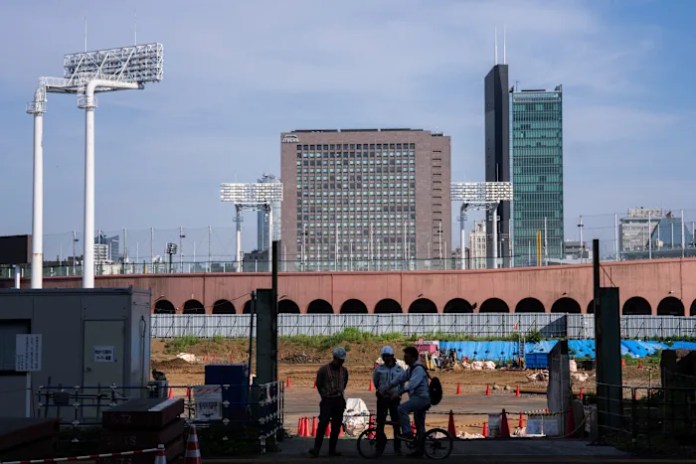
Stadium where Babe Ruth played in Tokyo is at the center of a disputed park redevelopment plan

Stadium where Babe Ruth played in Tokyo is at the center of a disputed park redevelopment plan

TOKYO – Plans to demolish a historic baseball stadium where Babe Ruth played and an adjacent rugby venue are at the heart of a disputed park redevelopment in Tokyo that critics say trades history and greenery for commercial space.

The plan to remake the Jingu Gaien park area was approved 2 1/2 years ago by the Tokyo Metropolitan Government. Work clearing land has begun but opponents are still trying to stop the project, which could take a decade to complete.

A coalition on Wednesday presented an open letter to Toshiko Abe, the minister of education, culture, sports, science and technology, asking the project be reassessed.

It’s signed by 368 experts — urban planners, architects and environmental scientists — and 1,167 others.

Ode to an emperor

The park area was established a century ago through public donations to honor the Meiji Emperor. At the heart of the issue is citizens’ control of public space, and a potential conflict of interest with private developers and politicians deciding how valuable parcels are used.

The stadium oozes history and critics say building skyscrapers in the park space would never be allowed in Central Park in New York or Hyde Park in London.

Ruth and Lou Gehrig played at the stadium on a 1934 barnstorming tour. Japanese novelist Haruki Murakami was inspired to write his first novel while drinking beer and watching a game there in 1978. The stadium is still home to the Yakult Swallows baseball team and hosted a concert this week.

Lofty plans in place

Plans call for developers to build a pair of 200-meter (650-feet) towers and a smaller tower. The stadiums are to be rebuilt in the reconfigured space with the baseball stadium going where the rugby stadium now stands.

The open letter is critical of so-called private finance schemes that give private developers access to park space. Hibiya Park is Tokyo’s oldest public park, another example of this approach.

Opposition to the Jingu redevelopment has included novelist Murakami, a conservancy group, and botanists and environmentalists who argue the sprawling project threatens 100-year-old gingko trees that grace the area’s main avenue.

A global conservancy body ICOMOS, which works with the United Nations body UNESCO, has said the development will lead to “irreversible destruction of cultural heritage” with trees and green space being lost.

Strong lobby for the development

Opposition groups are pitted against powerful real-estate developer Mitsui Fudosan, the Shinto religious body, and Tokyo Gov. Yuriko Koike.

“The problem is that many Japanese citizens are not so much interested in democratically regulating their own city and are used to demolishing buildings,” Kohei Saito, a Japanese political economist at Tokyo University, wrote to The Associated Press.

He said “companies with political power try to maximize their short-term profits without consideration of Tokyo’s attractiveness (history, culture), inhabitants’ well-being and future generations.”

Zoning changes to allow high-rise buildings in the area were made around 2013 by the Tokyo government when the city won the bid for the 2020 Olympics. Many of those changes permitted building the neighboring National Stadium but also applied to the park area.

“The process of rezoning the area lacked transparency and democratic procedure and constitutes an illegal abuse of the governor’s discretion in urban planning decisions,” the open letter said.

The Jingu district was considered “common property” until after World War II when the government sold it to Shinto under a promise it would remain a common space.

The national government comes into play because the rugby venue is the property of the Japan Sport Council, a national government affiliated body. The rugby venue represents about 30% of the Jingu Gaien area.

Forthcoming election might help

Opponents hope the timing later this month of a national election might aid their cause with Prime Minister Shigeru Ishiba heading a minority government.

Former Prime Minister Yoshiro Mori has ties to the rugby venue.

In addition to serving two decades ago as prime minister, he is the former president of the Japan Rugby Football Union and also served as the president of the 2020 Olympic organizing committee until he was forced to resign after making sexist comments about women.

Opened in 1926, developers argue the baseball stadium is too old to save. However, Fenway Park in Boston dates from 1912 and Wrigley Field in Chicago from 1914. Both have been refurbished and are among the most venerated in the United States.

Meiji Kinenkan, a historic reception hall in Jingu Gaien, dates from 1881 and is still widely used with no calls for its demolition. Mitsui Fudosan’s headquarters building in Tokyo dates from 1929. Koshien Stadium, located near Osaka, was built in 1924 and has been in use since a refurbishment.

The new rugby stadium would be an indoor venue with plastic grass, which players view as the least desirable surface for the sport.

___

AP sports: https://apnews.com/sports

Copyright 2025 The Associated Press. All rights reserved. This material may not be published, broadcast, rewritten or redistributed without permission.

Great Job Stephen Wade, Associated Press & the Team @ KSAT San Antonio Source link for sharing this story.
When the Federal Government Fails, Local Organizers Step In—With Laws, Not Just Protests

When the Federal Government Fails, Local Organizers Step In—With Laws, Not Just Protests

At a time of federal democracy backsliding, grassroots leaders are transforming personal struggle into community-driven policy solutions.

This essay is part of an ongoing Gender & Democracy series, presented in partnership with Groundswell Fund and Groundswell Action Fund, highlighting the work of Groundswell partners advancing inclusive democracy. You’ll find stories, reflections and accomplishments—told in their own words—by grassroots leaders, women of color, Indigenous women, and trans and gender-expansive people supported by Groundswell. By amplifying these voices—their solutions, communities, challenges and victories—our shared goal is to show how intersectional organizing strengthens democracy.


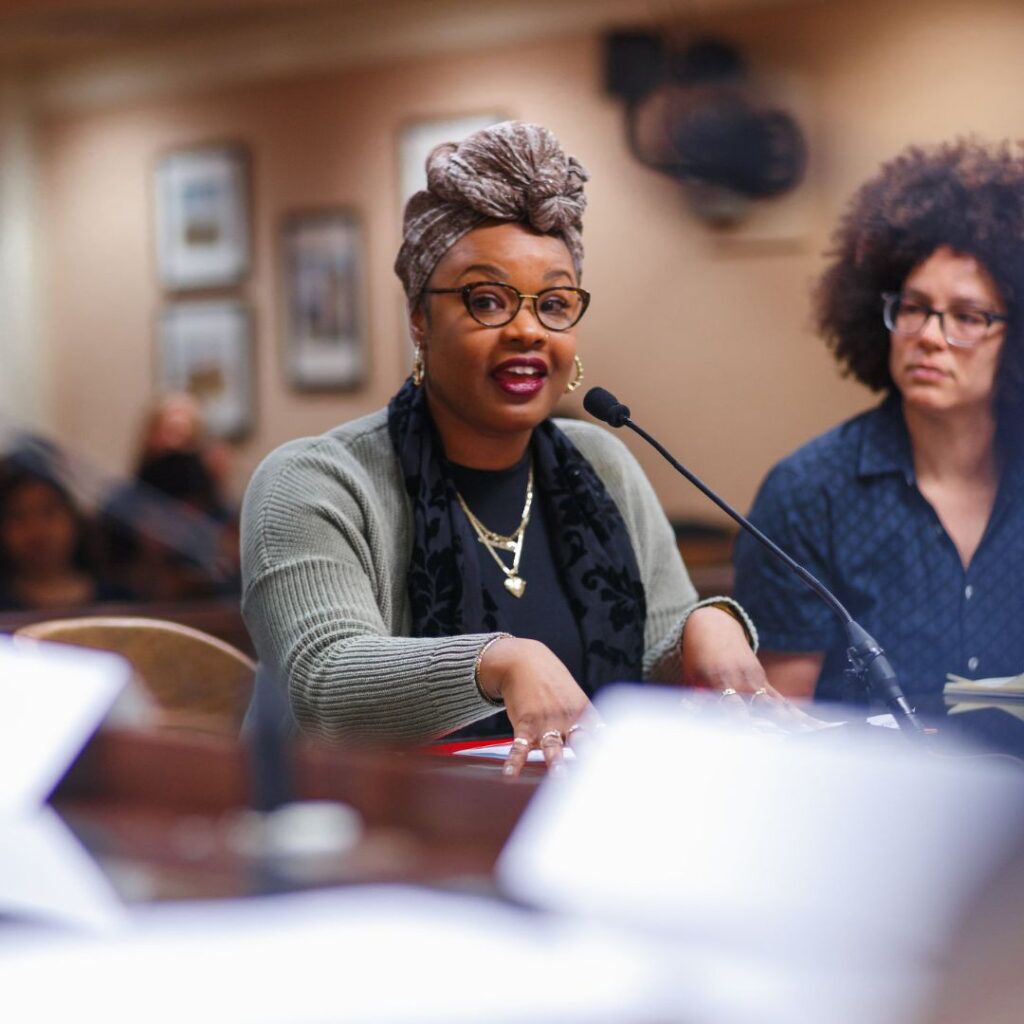
Fellows in the Solís Policy Institute (SPI), a project of Women’s Foundation California that trains local activists on policymaking. (Facebook)

We are living through the hollowing out of federal protection. In real time, the rights to bodily autonomy, to asylum, to be transgender, visible and safe in this country are dissolving, state by state, ruling by ruling. And while the usual narrative goes something like, “Vote, wait, trust the system,” in many places, the people closest to the chaos have stepped up to envision and advance new laws.

In California this year, four bills moving through the legislature were not the result of think tank white papers or party strategists. They came from organizers: queer folks, women of color, survivors … people who have lived the very broken systems they are now trying to change.

A process that centers lived experience as a form of policy expertise is a cutting-edge theory of governance. One that says communities should not have to beg for inclusion in policymaking—they should be building the policy themselves.

Let’s look at what that actually produces.

AB 969: Safety or Economic Stability

In a year when domestic violence shelters are facing budget cuts across the country and Roe v. Wade’s reversal continues to destabilize reproductive safety nets, California is offering a different approach.

AB 969, introduced by Assemblymember Celeste Rodriguez, helps survivors access CalWORKs—California’s main welfare program—by expanding the Family Violence Option and making it easier to navigate the system.

It is a reminder that gender-based violence doesn’t end when someone walks out the door. Without financial independence, safety can remain out of reach. This bill closes the gap between escaping harm and rebuilding life.