Home News Page 2600

Daily Show for June 20, 2025

Democracy Now! 2025-06-20 Friday

  • Headlines for June 20, 2025
  • Another Iraq? Military Expert Warns U.S. Has No Real Plan If It joins Israel's War on Iran
  • "Harming Young People": Chase Strangio on SCOTUS Trans Heathcare Ban & End of LGBTQ Suicide Hotline
  • I Was Detained, Deported from L.A. Airport for My Reporting on Gaza Campus Protests: Australian Writer
  • "More Choices and More Power": How the Ranked-Choice Ballot Is Changing NYC Elections

Download this show

Great Job Democracy Now! & the Team @ Democracy Now! Audio Source link for sharing this story.

Europe Seeks Diplomatic Solution to Israel-Iran Conflict

Welcome back to World Brief, where we’re looking at diplomatic efforts to end the Israel-Iran conflict, a landmark vote in the U.K. Parliament, and the diminishing power of Taiwan’s opposition.


Two Weeks of Diplomacy

Iranian Foreign Minister Abbas Araghchi met with his counterparts from France, Germany, and the United Kingdom in Geneva on Friday to discuss the ongoing Israel-Iran conflict, which marked its eighth day with both sides launching another barrage of missiles.

Welcome back to World Brief, where we’re looking at diplomatic efforts to end the Israel-Iran conflict, a landmark vote in the U.K. Parliament, and the diminishing power of Taiwan’s opposition.


Two Weeks of Diplomacy

Iranian Foreign Minister Abbas Araghchi met with his counterparts from France, Germany, and the United Kingdom in Geneva on Friday to discuss the ongoing Israel-Iran conflict, which marked its eighth day with both sides launching another barrage of missiles.

European leaders are hoping that a diplomatic solution can be achieved in the next two weeks—a deadline that U.S. President Donald Trump imposed on Thursday to decide whether to order direct U.S. military involvement against Iran. But Friday’s talks dissolved with no major breakthroughs, and both Iran and Israel remain adamant that negotiations cannot occur while strikes carry on.

“We do not want to negotiate with anyone while the Zionist regime’s aggression continues,” Araghchi said in an address broadcast on Iranian state TV on Friday. “It is the Americans who want talks.”

Danny Danon, Israel’s ambassador to the United Nations, cast similar doubts on the effectiveness of negotiations. “We have seen diplomatic talks for the last few decades, and look at the results,” Danon said, adding that Israel would only consider a genuine effort to dismantle Iran’s nuclear capabilities.

Such a proposal may be in the works. On Friday, French President Emmanuel Macron said Europe was preparing a deal to end the conflict that would include Iran reducing its uranium enrichment to zero, restricting its ballistic missile program, and ending its funding of proxy groups, such as Hamas and Hezbollah. This deal will likely be rejected, though, as Tehran maintains that it has the right to enrich uranium on its soil for civilian purposes.

Israel first launched strikes targeting Iranian nuclear and military infrastructure last Friday, hitting uranium enrichment facilities, top military leaders, and other alleged command centers used by the Iranian government. Iran has retaliated with hundreds of drones and missile strikes, and it pulled out of nuclear talks with the United States originally scheduled for last Sunday.

This week, Trump called for unconditional surrender from Iran, which went ignored; took partial credit for control of Iranian airspace; and suggested that the United States might consider assassinating Iran’s supreme leader, Ayatollah Ali Khamenei.

Trump will do “what’s best for America,” Israeli Prime Minister Benjamin Netanyahu said on Thursday. “I can tell you that they’re already helping a lot.”

It is unclear whether Trump will order U.S. armed forces to assist Israel directly by targeting Iran’s nuclear sites. Such an attack would likely include U.S. B-2 bombers dropping bunker buster bombs on Fordow, a major underground uranium enrichment facility in Iran.

But experts warn that U.S. involvement to that scale could exacerbate the conflict and produce dangerous results. Armed attack on nuclear facilities “could result in radioactive releases with grave consequences within and beyond the boundaries of the state which has been attacked,” Rafael Grossi, the head of the International Atomic Energy Agency, warned the United Nations Security Council on Friday.


Today’s Most Read


What We’re Following

Landmark vote in London. The U.K. Parliament voted on Friday to legalize assisted dying for terminally ill patients. The legislation would apply only to mentally competent adults in England and Wales with six months or less to live. After receiving 314 votes in favor to 291 against, the bill now heads to the House of Lords for scrutiny, where it is expected to eventually pass.

Prime Minister Keir Starmer’s Labour Party did not issue a formal stance on the bill, leading lawmakers to vote their personal choice rather than along party lines. An initial vote last November approved the legislation by 330 votes, signaling that some parliamentarians have since changed their minds. Starmer, himself, voted in favor on Friday.

Passing the divisive legislation puts the United Kingdom on course to follow Australia, Canada, and some U.S. states in permitting assisted dying with the help of a medical professional. Those in favor argue that the bill would give terminally ill individuals greater control over their own lives; however, the legislation’s opponents fear that it could put already vulnerable groups at greater risk of coercion.

Diminishing power. Taiwan’s Central Election Commission approved recall petitions on Friday for almost half of the opposition party’s lawmakers. Twenty-four members of the Kuomintang (KMT) will face a vote on July 26 to potentially be removed from parliament. If the votes succeed, then the opposition could lose its legislative majority until the next general elections are held in 2028, giving President Lai Ching-te the support he needs to strengthen the country’s defenses against China.

Lai’s Democratic Progressive Party urged people on Friday to vote “yes” and “oppose the communists” who have hindered the president’s security goals. However, the KMT has called on voters to select “no” to “oppose the green communists and fight against dictatorship.”

In Taiwan, a recall vote can be issued if more than 10 percent of eligible voters in a legislator’s district back a petition demanding one. The lawmaker will be unseated if more than 50 percent of voters turn out and more than half of those people vote in favor. The ousted parliamentarians would not be eligible to run in the ensuing by-elections, to be held later this year.

A deferential tone. Thai Prime Minister Paetongtarn Shinawatra faced growing calls for her resignation on Friday after a recording was leaked on Wednesday of her negotiating with Cambodian Senate President Hun Sen. Paetongtarn has been accused of being too soft toward the Cambodian leadership at a time when a border dispute has soured relations between the historically friendly neighbors.

Late last month, an armed skirmish in a contested area killed one Cambodian soldier. Both sides have blamed the other for instigating the attack, and the resulting diplomatic headache has led to travel bans, restrictions on Thai fruit and vegetable imports, and boycotts of Thai movies and TV shows.

On Wednesday, Hun Sen posted the 17-minute phone conversation after a shorter version was leaked online, saying he was doing so to “avoid any misunderstanding or misrepresentation in official matters.” In the recording, Paetongtarn can be heard calling Hun Sen “uncle” and referring to a Thai army commander in charge of the border area as an “opponent.” Some argue that Paetongtarn was trying to appease Hun Sen, but others believe that her wording made Bangkok look weak in the face of potential conflict.

Paetongtarn apologized for her conversation on Thursday, and Thailand’s Ministry of Foreign Affairs has summoned the Cambodian ambassador to formally protest what it called a “breach of diplomatic etiquette.”


What in the World?

The G-7 leaders’ summit began on Sunday in which country?

A. United Kingdom
B. Canada
C. Italy
D. France


Odds and Ends

Getting a root canal can be a terrifying experience without any additional stress. But for dozens of patients in the Czech Republic, their procedures had the added complication of being done by a fake dentist. Local authorities on Wednesday said they had arrested a 22-year-old posing as a dentist—as well as his two assistants—for practicing without a license or expertise. All three individuals have pleaded guilty and could face up to eight years in prison for illegal business, money laundering, attempted battery, drug dealing, and theft. Smile for the mugshot.


And the Answer Is…

B. Canada

U.S. President Donald Trump departed the meeting early, leaving the bloc with less ability to coordinate on the Russia-Ukraine and Israel-Iran wars, FP’s Keith Johnson reports.

To take the rest of FP’s weekly international news quiz, click here, or sign up to be alerted when a new one is published.

#Europe #Seeks #Diplomatic #Solution #IsraelIran #Conflict

Thanks to the Team @ World Brief – Foreign Policy Source link & Great Job Alexandra Sharp

Is Trump’s Energy Czar Lying About Work Experience in Solar?

During Chris Wright’s January 2025 confirmation hearing as secretary of energy, his home state senator, John Hickenlooper (D-CO), expressed concern about the pace of climate change. Wright agreed that climate change was a serious issue, citing his twenty-year career in diverse energy sectors, including renewables.

“The solution to climate change is to evolve our energy system,” he told Hickenlooper. “I’ve worked on that most — all of my career, again in nuclear and solar, and geothermal and new battery storage technology now.”

This is far from the first time Wright has noted he’s worked in solar. Wright — the former founder, chief executive, and chair of Colorado-based Liberty Energy, one of the country’s top fracking companies — has claimed in public appearances, organizational biographies, on his LinkedIn profile, and even formal testimony before Congress that he spent parts of his career working in solar energy.

But despite such claims, there’s no evidence that Wright ever studied, invested in, or worked in solar energy, according to a Lever investigation of Wright’s school records, corporate disclosures, and several close followers of his career and companies.

In fact, the entire notion that Wright has ever worked in solar energy exclusively stems from vague public claims he’s made on the matter. The one time he elaborated on this notion, he submitted a résumé with what appears to be false information about his solar experience to Congress, the Lever found.

In response to requests for comment from Wright and the Department of Energy, an agency spokesperson noted in an email, “During his decades-long career working in the energy sector, Wright worked with and advised on a variety of different energy sources and technologies, including oil, natural gas, nuclear (including [small modular reactors]), solar, and geothermal.”

The spokesperson did not respond to repeated follow-up requests for evidence supporting Wright’s claims that he studied and worked in solar energy.

One expert says Wright’s allegedly false claims about his experience in solar energy suggest an insincere interest in using the Energy Department to support, or even treat fairly, the country’s $70.3 billion solar energy industry.

Now as secretary of energy, Wright will be responsible for overseeing solar energy research and development, solar energy tax credits, and the Energy Department’s clean energy loan program, which has included solar projects. All of these programs are under threat from Wright and the Trump administration’s vague and far-reaching emergency powers, as well as Congress’ proposed “Big Beautiful Budget” bill.

These developments come as scientists urge the United States to quickly transition its energy system away from fossil fuels and toward renewables like solar — or else face existential, ecological threats.

“Wind and solar are seen as being primarily promoted by Democrats and entities that support Democrats, and Trump is attacking all policies that he perceives as supporting his political opponents,” said Tyson Slocum, energy program director at consumer advocacy group Public Citizen. “This is just crass politics.”

Wright studied undergraduate mechanical engineering at the Massachusetts Institute of Technology from 1981 to 1985, according to the school. He enrolled at MIT as an undergraduate student “specifically to work on [nuclear] fusion energy,” Wright testified before the Democrat-led House Select Committee on the Climate Crisis in 2019.

His undergraduate thesis focused on the use of semiviscous materials to dampen vibrations of stiff, constrained materials. This work could have applications in spacecraft, Wright argued in the thesis. After he graduated, Wright pivoted to study electrical engineering at the University of California, Berkeley, school records state.

“As a graduate student at UC Berkeley, Chris Wright developed regulating charging circuits to connect batteries to solar in order to power remote instruments,” a Department of Energy spokesperson told the Lever over email, but failed to provide evidence supporting the claim.

In fall 1985, Wright enrolled for just one semester at Berkeley. Berkeley did not maintain records of Wright’s academic coursework, research, or the classes he taught; the school could only confirm he was employed as a teaching assistant that semester in the Department of Electrical Engineering and Computer Science. Like any electrical engineering student, Wright could have spent a week learning about solar or teaching it in a single class, but absent hard evidence, there is no way to be sure.

In February 1986, Wright returned to MIT, where he would remain until January 1988 before dropping out, the school confirmed. A 1991 paper he copublished with other researchers focused on electrical engineering, but it made no mention of applications for solar energy.

More than forty academics who were enrolled in or taught graduate school at either Berkeley or MIT in those years either did not respond or denied recalling Wright, much less what classes he took or what he researched.

According to a 2019 résumé Wright submitted to Congress, he published fifty-seven research articles between 1989 and 2019, most of which were presented at fossil fuel industry conferences, symposia, and meetings. Besides his first two articles on spacecraft and power converters, all other research has been directly related to fossil fuel extraction.

According to his 2019 résumé, from 1985 to 1989, Wright worked at Hunter Geophysics, a company based in California’s Bay Area, while he was still enrolled at MIT for graduate work on the other side of the country. It is unclear, and a spokesperson for the Energy Department declined to comment on, how Wright accomplished both decades before the remote-work era.

Wright’s known career consists entirely of working in or leading fracking companies. The few recent investments that he or his companies have made in alternative energy sources like advanced nuclear, geothermal, and battery power have been widely publicized, but none of them are related to solar energy.

In August 2019, Wright suggested otherwise when he appeared before a now-dismantled House Select Committee on the Climate Crisis in a hearing focused on renewable energy solutions in Colorado. At the hearing, he submitted a résumé claiming that immediately after ending his graduate work at Berkeley, he joined Hunter Geophysics. At that firm, Wright claimed that he “designed charging circuits for solar panels to remotely and continuously power electronic monitoring equipment.”

But Hunter Geophysics never did any work related to solar energy, according to Bruce Braden, the now-defunct company’s chief financial officer. Instead, the Mountain View, California–based company was an early pioneer in fracking technology.

Not every congressional hearing is under oath, but Wright filled out a standard “Truth in Testimony” disclosure before his appearance asking about any potential conflict of interest (he didn’t list any). Even if congressional witnesses aren’t under oath, “they are supposed to be truthful when they give comments, because that could be considered lying to Congress,” noted a staffer for the now-defunct climate committee’s chair, Rep. Kathy Castor (D-FL). It is unclear whether Wright was under oath during that 2019 hearing, and the staffer did not respond to additional questions.

Wright and Braden would go on to cofound two fracking companies together, Pinnacle Technologies and Stroud Energy, Braden said. Both were sold in 2006. Braden isn’t aware of any solar energy work that Wright has ever done.

In 2010, Wright started Denver-based Liberty Resources, and in 2011, he started Denver-based Liberty Oilfield Services. Both are types of fracking companies; Liberty Resources, like ExxonMobil or Chevron, is an exploration and drilling company, while Liberty Oilfield Services, like Halliburton, fracks, pumps, and transports the oil and gas. Other companies Wright worked for or helmed — Resources Engineering Systems and Liberty Midstream Solutions — were also fracking companies with no involvement in solar.

Liberty Oilfield Services went public in 2018, and in 2022, the company changed its name to Liberty Energy.

In July 2022, Liberty Energy invested $10 million in Fervo Energy, a geothermal energy company. In September 2022, the company invested in Natron Energy, a sodium-ion battery manufacturer. In January 2024, Liberty announced an investment in Oklo, an alternative nuclear-fission company that until recently had Sam Altman, CEO of OpenAI, as its chairman.

Wright joined Oklo’s board and bought company shares in July 2024 before becoming energy secretary. Wright has not submitted a Securities and Exchange Commission (SEC) disclosure noting he has sold those shares, even as his office recently maintained a $575 million loan in the small modular nuclear reactor industry while cutting loans to other carbon-cutting sectors.

Prior to joining the government, Wright also owned shares in EMX Royalties, which acquires mineral mining royalties, including for precious, battery, and base minerals, according to his executive branch ethics disclosure form. Wright was also a director of Urban Solution Group, a private company that creates physical barriers, processes permitting, and provides public relations help for oil and gas drilling companies seeking to work near residential areas, according to his executive branch financial disclosures. Neither of these companies work in the solar energy industry.

On his executive branch disclosure, Wright also listed many nonprofits, foundations, and trade groups for which he serves as a board member, including fossil fuel advocacy organizations like Western Energy Alliance and the Domestic Energy Producers Alliance as well as dark money-funded free-market think tanks like Property and Environmental Research Center and the Pacific Research Institute. None of these organizations are involved in solar energy.

In January 2024, Wright’s fracking company Liberty Energy announced the creation of the Bettering Human Lives Foundation with a $1 million seed donation, which lists Wright as its principal officer and Anne Hyre, Wright’s sister-in-law, as its executive director and sole employee. So far, the new and small nonprofit exclusively “supports” liquid petroleum gas nonprofits and “social enterprise” companies in Ghana and Kenya.

Wright also serves as the managing member of four holding companies, his executive branch disclosure stated. Three are used as holding companies for his shares in other endeavors: an oil and gas production company called Urban Solutions Group, and an IPO shell company. But it is unclear what the fourth shell company, Sol 2 LLC, is for. Wright has held “one unreportable asset” in the LLC since May 2021 and is a comanaging member of the Cherry Hills, Colorado, company. Does “Sol” stand for solar? The Energy Department spokesperson would not say.

On the now-scrubbed corporate biographies of Wright at Liberty Energy and EMX Royalty Corporation, both publicly traded companies, Wright’s biographies do not mention him working in solar energy. Public companies that state false information could be liable for securities fraud.

Three entities affiliated with Wright — the Domestic Energy Producers Alliance, Liberty Energy, and Nomad Proppant, LLC — are party to a battle-royale federal lawsuit to kill a Biden-era rule requiring publicly traded companies to disclose some of their climate risks and greenhouse gas emissions. The rule would make greenwashing or other false statements about climate change a securities law violation. The rule and the litigation have both been paused but not thrown out — even as the Trump SEC has exited the litigation — because blue-state attorneys general intervened, asking the court to reject arguments that the rule exceeded SEC authority.

Wright has been a pioneer in fracking technology. He has worked in oil and gas as far back as 1985, started over half a dozen fracking companies, and has authored dozens of papers and presentations on oil and gas industry research. However, the solar endeavor he described to Congress in 2019, Hunter Geophysics, appears to be a fabrication.

Even if he took a class on solar at Berkeley, or Sol 2 LLC represents a minimal investment in solar, for him to at times give such circumstances equal billing as his four decades of investment in oil and gas is, at a minimum, deeply misleading.

Why would a fossil fuel mogul like Wright fabricate experience in solar? Possibly because Wright likes to fashion himself as not just another fossil fuel executive. According to his LinkedIn bio, Wright is a “tech nerd turned entrepreneur,” a black turtleneck on an oil rig. Chris Wright doesn’t mention solar when he needs to green wash his career; he mentions it when he needs to green wash himself.

“Secretary Wright has been sharply critical of renewable energy and solar, specifically that it is unreliable and that it is not an advantageous energy source in comparison to fossil fuels,” said Slocum at Public Citizen. None of these criticisms are factual, Slocum added.

Solar energy’s benefits are myriad, according to the Department of Energy’s own website: In addition to lowering energy bills, solar energy is plentiful, clean, raises home values, and reduces water usage and greenhouse gas emissions. It can also serve as a useful way to get energy to remote communities and places with expensive electric grids, the agency has asserted.

The Department of Energy currently oversees an energy loan portfolio that includes eleven solar energy projects with issued loans worth $10 billion and one conditional commitment worth $62 million, according to its website. Five of the project loans total over $1 billion.

On climate and energy policy, Wright’s approach is no different from any past Republican Secretary of Energy, said Slocum: manipulate all possible regulatory authority to artificially prop up fossil fuels.

Wright, for example, has reportedly lobbied Congress to extend Inflation Reduction Act clean energy tax credits for nuclear and geothermal, but not for wind and solar.

Wright’s greenwashing of his own career appears to have paid political dividends: The Senate confirmed Wright, 59-38. No Republican voted against him, and seven Democrats and one Democratic-affiliated independent voted for him, including both of Colorado’s Democratic senators, John Hickenlooper and Michael Bennet.

Neither Hickenlooper nor Bennet responded to multiple requests for comment.

Wright left Liberty Energy on February 3, 2025, so he could become the secretary of energy. A month after Wright left, on March 5, 2025, Liberty Energy acquired IMG Energy Solutions, a diverse energy company that provides “microgrids,” which are on-site, modular natural gas plants accompanied by grids of solar arrays. The Pittsburgh International Airport is currently powered by an IMG hybrid gas/solar grid.

This marked Liberty Energy’s first-ever foray into solar energy, according to Tom Curran, a senior securities analyst who covers Liberty Energy at Seaport Research Partners. Two days later, Wright sold the last of his shares in Liberty Energy.


Great Job David Isenberg & the Team @ Jacobin Source link for sharing this story.

Acknowledgments

This report is a collaborative effort based on the input and analysis of the following individuals:

Research team

Jocelyn Kiley, Director, Political Research
Hannah Hartig, Senior Researcher
Baxter Oliphant, Senior Researcher
Gabe Borelli, Research Associate
Andrew Daniller, Research Associate
Andy Cerda, Research Analyst
Joseph Copeland, Research Analyst
Ted Van Green, Research Analyst
Shanay Gracia, Research Assistant

Communications and editorial

Nida Asheer, Senior Communications Manager
Mithila Samak, Communications Associate
David Kent, Senior Copy Editor

Graphic design and web publishing

Peter Bell, Associate Director, Design and Production
Alissa Scheller, Senior Information Graphics Designer
Reem Nadeem, Digital Producer

Methodology

Andrew Mercer, Senior Research Methodologist
Dorene Asare-Marfo, Senior Panel Manager
Dana Popky, Associate Panel Manager
Arnold Lau, Research Methodologist

Great Job Reem Nadeem & the Team @ Pew Research Center Source link for sharing this story.

A Historic Black Community Takes On the World’s Richest Man Over Environmental Racism

Last summer, Elon Musk quietly transformed a portion of a South Memphis, Tennessee, community established by a group of formerly enslaved people in 1863 into what the world’s wealthiest man called “Colossus” — the planet’s most powerful supercomputer. 

The artificial intelligence venture turned an old manufacturing plant into a powerful 550-acre supercomputer designed to train Grok, which is his AI company’s “anti-woke” chatbot that deliberately pushes boundaries on controversial topics. The neighborhood, which remains predominantly Black, was already choking on industrial pollution, but he promised hundreds of jobs and millions in tax revenue.

For many residents, the promise of prosperity came with a price. To feed its computational appetite, a company called xAI deployed three dozen gas-powered turbines across the site, bypassing standard environmental review processes and pumping out toxic nitrogen oxides in a region already failing federal air quality standards, advocates and lawyers said. 

Memphis has worse smog pollution than 86% of major U.S. cities, and these turbines would make the computer the largest source of the smog-forming pollutants in the city. Already, the neighborhood where it is located has a cancer risk from air pollution that is four times the national average. 

Tuesday, after months of community activism led in large part by Memphis Community Against Pollution, the battle received national support. The NAACP filed notice of its intent to sue xAI for alleged Clean Air Act violations. To file a lawsuit under the Clean Air Act, those taking legal action must submit a 60-day Notice of Intent to Sue, which is what the NAACP has filed.

The organization contends that the company’s operations without proper permits represent a case of environmental injustice, where marginalized communities bear the costs of corporate expansion while seeing few of the promised benefits.

At a recent community event, LaTricea Adams, the founder of a national Black environmental group called Young, Gifted & Green, said even before Musk’s computer arrived, living in the ZIP code — 38109 — where the facility is located has already negatively impacted the health of Black residents. 

There are 19 active polluting facilities already located in the ZIP code, including a major oil refinery, according to the Environmental Protection Agency. According to the World Health Organization, exposure to pollution is the second-leading risk factor for premature death. 

Adams said her father died prematurely just one week before Christmas in 2022, and the matriarch of her family died from cancer just six months after that. Her great-grandmother, she said, developed breast cancer as soon as she moved into the neighborhood as well.

“Living in this ZIP code has been a death sentence for Black Memphians,” she said, calling it “a clear act of genocide.”

Local students in Memphis, Tennessee, speak in opposition to a proposal by Elon Musk’s xAI to run gas turbines at its data center. The Shelby County Health Department hosted a public comment meeting on the proposal in April. (Brandon Dill for The Washington Post via Getty Images)

The life expectancy in the neighborhood, known as Boxtown because the first Black inhabitants built shotgun houses that resembled boxed train cars, is eight years less than the U.S. average, and roughly 45% of residents report living in “poor or fair” health, which is three times higher than the national average, according to the Centers for Disease Control and Prevention’s PLACES database. 

“We are going to stand 10 toes down in South Memphis,” she added about the community’s resolve to fight an onslaught of environmental threats. 


Read More: America’s Digital Demand Threatens Black Communities with More Pollution


The dispute represents a collision between Silicon Valley’s AI gold rush and long-standing fights for environmental justice taking place nationwide.

“We cannot afford to normalize this kind of environmental injustice — where billion-dollar companies set up polluting operations in Black neighborhoods without any permits and think they’ll get away with it because the people don’t have the power to fight back,” NAACP President and CEO Derrick Johnson said in a statement.

In a statement on Tuesday, xAI told NBC News that the company is following the law. “We take our commitment to the community and environment seriously,” an xAI spokesperson said in a statement. “The temporary power generation units are operating in compliance with applicable laws.”

The Southern Environmental Law Center, which is planning legal action against xAI, has said the company was required to have a permit before bringing the turbines onsite. But the county health department, the mayor and the local chamber of commerce have said the company does not need permits for the turbines’ first year of use.

The company is paying substantial amounts for its Memphis operations, according to reports, including as much as $30 million in property taxes annually, plus investments of $35 million for a new power substation to ultimately replace the turbines and $80 million for a water recycling plant. 

But regardless of the money surrounding the project, residents and experts fear that such computers and data centers are misguided as the nation shifts to clean energy, which doesn’t rely on fossil fuels, and attempts to combat climate and environmental threats related to pollution. 

Advocates for clean energy argue that the growing electricity demands from data centers and technology companies are prolonging America’s dependence on dirty energy sources. Nationwide, at least 17 fossil fuel generators scheduled for closure are now delayed or at risk of delay, and about 20 new fossil fuel projects are being planned to meet data centers’ soaring energy demands.

“Elon Musk’s xAI is joining a dozen other polluters who are destroying Memphis’ air quality,” said KeShaun Pearson, the president of Memphis Community Against Pollution. It is  “dangerous for a wannabe tech-dictator to determine what kind of air we breathe.”

State Rep. Justin J. Pearson, who is KeShaun Pearson’s brother and represents the neighborhood where the plant is located, likened the current battle to the biblical story of David and the Goliath.

“We’re Davids in this fight,” he said. “It’s alright to be David because we know how the story ends.”

Great Job Adam Mahoney & the Team @ Capital B News Source link for sharing this story.

Jesse Watters: “I bet a bunch of guys that are dating illegal alien Spanish girls are like ICE, here’s the address! She hasn’t been very good.”

JESSE WATTERS (HOST): The Democrats are running that ad that says ICE is going to abduct your Spanish girlfriend and then take advantage of her in a mega prison. Sorry.

KAYLEIGH MCENANY (GUEST): I mean, no, it is worth the laugh. This is what they’re coming up with. I mean, look at this. Look at this. What about the 2024 election said this is what’s going to win the day? These Democrats, and I don’t like throwing around words, they are so dense. The polling shows immigration is Donald Trump’s top issue. He has majority support. I mean, you talked about that 95 number, 95 illegal immigrants coming in one day to the southern border, it’s 2000 miles long. Bill Melugin said that’s the most jaw-dropping statistic he has ever heard. It is the lowest number ever to come to the southern border. And the American people say, “We support this.” What do Democrats do? They’re going to abduct your Spanish-speaking girlfriend and take her to prison in El Salvador, but oh, wait, at least she’ll have senators coming down to have margaritas with her. Watch out, boyfriend, because you’ll have a bunch of Dem senators lining up.

WATTERS: I bet a bunch of guys that are dating illegal alien Spanish girls are like ICE, here’s the address! She hasn’t been very good.

Great Job Media Matters for America & the Team @ Media Matters for America Source link for sharing this story.

BYD sends thousands of EVs to Brazil ahead of final tariff hike

In May, BYDiBYDBYD Auto is a Chinese carmaker that became the world’s leading EV manufacturer in 2023, competing with Tesla for market share and global attention.READ MORE’s largest car carrier arrived in Brazil with 7,300 new electric vehicles. The consignment, coupled with two other large shipments a few days later, represented the company’s biggest export operation to Brazil.

BYD, which recently overtook Tesla to become the top seller of EVs globally, made little fuss over its Brazil milestone. But the shipments were welcomed by Brazilians eager to beat rising tariffs on imported EVs.

Since its launch in Brazil in 2015, BYD has grown at a fast pace: Sales rose 327% between 2024 and 2023. The expansion is in large part due to the country’s zero-tax policy for EV imports. But the company’s future is uncertain as Brazil has implemented a progressive tax program for imported EVs, starting at 10% in January 2024 and expected to reach 35% by July 2026. The tariff, which is currently at 18% and rises to 25% next month, is backed by the powerful Brazilian automakers’ lobby.

Tax-free EV imports “favor ready-made imported cars that arrive in Brazil, distorting the logic and natural order of the Brazilian market,” Igor Calvet, president of Anfavea, an industry group that largely represents makers of gas-powered cars in Brazil, told Rest of World. “It takes away from automakers and their Brazilian workers all the potential they otherwise would have.”

BYD did not respond to questions from Rest of World on its sales strategy in Brazil.

Anfavea has said companies like BYD have an “unfair advantage” over local automakers, who face high operational costs and local levies. Under its pressure, the government is weighing the possibility of advancing the final tax implementation date to July, prompting consumers to flock to BYD dealerships before prices go up.

Luiz Fernando Suzarte, an electric engineer in Brasíilia, bought a BYD Song Pro earlier this year, ahead of the planned hike in tariffs in July. “There’s a certain rush to seize this window of opportunity,” Suzarte told Rest of World. “I took many test drives, looking for the most economical car, and between the most popular ones, BYD won for its cost benefits.”

327%

The 1-year rise in BYD sales

With its tax on imported EVs, Brazil is following the playbook of the U.S., which imposes a 100% tariff on Chinese EVs, and the EU, where BYD’s battery electric vehicles are subject to a 27% levy. But Brazil’s progressive tariff is an outlier in Latin America, where countries including Argentina, Costa Rica, and Colombia have reduced or completely eliminated EV tariffs in their push for clean energy.

The U.S. and Europe, with their established auto industries, are the top markets for EVs, according to a report from the International Energy Agency. But emerging markets in Asia and Latin America are adopting EVs at a faster pace. EV sales are expected to exceed 20 million units worldwide this year, with one of every four cars sold set to be electric. Chinese brands accounted for 10% of global EV and plug-in hybrid sales last year, according to energy transition consultancy Rho Motion. That figure is forecast to grow.

In Brazil, the number of imported vehicles sold rose by 18.7% between January and April, while sales of domestically produced vehicles grew 0.2%, according to data compiled by Anfavea. In March and April alone, the country’s automobile market grew 16% solely from the sales of imported cars, while the sale of locally made cars “practically stalled.”

With a goal to sell half its cars outside an increasingly competitive Chinese market, and under pressure to localize production in several countries, BYD is adding manufacturing and assembly units worldwide. But in Brazil, the company has faced several challenges. 

Last year, BYD began building a large manufacturing plant in Camaçari, a town synonymous for decades with Ford Motor. In December, authorities said they had found 163 people working in “slavery-like conditions,” and have since sued BYD for $45.3 million. The company recently announced it had pushed back its rollout of Brazilian-made vehicles from the middle of 2025 to the end of the year.

“What we want is that there’s no more delay in their beginning of [local] production,” Calvet said. The tax is meant to pressure the company into kickstarting its Brazilian operation. This will lead to job creation and subject BYD to the same tax requirements that other automakers in the country face, he said.

Brazil is the largest market for EVs in Latin America. A recent study from the Latin American Energy Organization, an intergovernmental body, estimates that half the EVs on the continent are in Brazil. By the end of 2024, more than 237,000 EVs had been sold in the country, with an annual growth of 187% compared to the previous year. The organization estimates the number of EVs in Brazil will reach close to 1 million by 2030.

Chinese EVs already account for as much as 90% of Brazil’s active electromobility fleet, according to a report from Oxford Energy Forum.

187%

The 1-year rise in EV sales in Brazil in 2024

Brazil is not just a significant consumer market but a huge producer as well. The main objective of the tariffs is “to stimulate local production, promoting a gradual nationalization of the country’s own supply chain for electromobility,” said Edgar Barassa, a researcher of electromobility and public policy at the University of Campinas in São Paulo.

“Brazil is at a crossroads,” Barassa told Rest of World. “Either it positions itself as a key actor in the emergent supply chains for electromobility and clean energy — generating jobs, innovation, and technological sovereignty — or it limits itself to import technologies, losing opportunity in a new global industrial cycle.”

In Vitória da Conquista, a northeastern state, solar-panel company owner Bruno Peter Cardoso recently created a local WhatsApp group for new EV buyers. There has been a spike in new members recently, said Cardoso, who bought a plug-in hybrid BYD in 2023. He would like to buy a fully electric BYD next.

“People are rushing to EVs because they are finally realizing how much better they are,” he said. “It changes your conception of things.”

#BYD #sends #thousands #EVs #Brazil #ahead #final #tariff #hike

Thanks to the Team @ Rest of World – Source link & Great Job Gabriel Daros

Labor Could Swing New York’s Election to Zohran Mamdani

Zohran Mamdani has shocked the political establishment by turning the New York City mayoral race into a nail-biter. How has a thirty-three-year-old Muslim socialist gotten this close to heading the world’s most economically and politically important city? Some pundits have pointed to Zohran’s charisma and brilliant use of social media. Others have stressed the strength of his volunteer canvassing army as well as the popularity of his policies to lower living costs. All those things are true.

But one piece of the puzzle has so far been overlooked: Zohran has received just enough labor support to prevent this race from becoming an Andrew Cuomo cakewalk.

Thousands of rank-and-file supporters have successfully pushed some of the city’s biggest unions to endorse Zohran or at least not endorse Cuomo. Though not all union leaders have been brave enough to buck the political establishment, New York City’s young leftist upstart has generated enough labor support to come within electoral striking distance. The union vote could be decisive in a tight, low-turnout primary election. And union power will be pivotal for overcoming the billionaire-backed onslaught that is sure to come if Zohran wins the June 24 primary.

One sad thing about labor politics in contemporary America is that it’s taken for granted that union leaders will almost always back the establishment Democratic who is most likely to win, since endorsing the front-runner gives unions a “seat at table” from which they can then lobby for the interests of their members.

But the fact that this strategy is so common does not make it any less narrow-minded. At best, billionaire-backed electeds provide crumbs. At worst, such politicians actively undermine workers’ lives (and members’ trust in their unions). Despite Cuomo’s AWFUL track record for workers as governor, and despite his disgraced ouster due to sexual harassment charges, it seemed at the beginning of this race like politics as usual would reign in the House of Labor. Indeed, Andrew Cuomo launched his mayoral run in early March from the carpenters’ union hall.

Zohran’s rank-and-file backers knew from day one that they would have to get organized to avoid a repeat of the dynamic in 2018, when exactly zero unions endorsed Alexandria Ocasio-Cortez’s primary challenge against Democratic Party leader Joe Crowley. Not only are unions unaccustomed to joining anti-corporate political insurgencies, but Cuomo, like Donald Trump, has a long history of using his political power to punish opponents. As the District Council 37 (DC 37) member Joshua Barnett put it to me, “Cuomo is a real vindictive son of a bitch. So if you don’t endorse and he wins, it could cost you.” Challenging a bully is risky.

With Zohran’s initial polling running in the low single digits, his earliest union supporters understood that it would take a lot of outreach and persuasion to get their unions on board. So they began by building up ad hoc rank-and-file organizing committees, starting in United Auto Workers (UAW) Region 9A and the American Federation of State, County and Municipal Employees’ (AFSCME) massive DC 37, which represents city workers.

They had their work cut out for them even in a progressive union like the newly reformed UAW. “There were lots of doubts about Zohran’s viability early on,” one rank-and-file member told me. “But we knew we really needed an early UAW endorsement, to make it clear to the rest of labor — and the rest of the progressive movement — that he was a serious contender.”

Zohran’s supporters succeeded in mobilizing their coworkers to come out in large numbers to the union’s endorsement forum, highlighting his labor platform, including a plan for a $30 minimum wage by 2030, as well as his broader push for a rent freeze, fast and free buses, and free childcare. And they then pivoted to a concerted grassroots lobbying campaign to convince the members of UAW Region 9A’s Community Action Program.

This organizing worked. On December 4, 2024, Zohran got his first labor endorsement when Region 9A endorsed him on an unranked slate of three. Then on May 30, 2025, once Zohran had begun to surge, the union urged its members to rank him first.

“Some may say we took a chance,” explained 9A director Brandon Mancilla, “but the actual reckless gamble is to endorse status quo candidates that caused the crisis working families face in the first place.”

Such views are not widely shared among New York City union leaders. On April 14, Cuomo received the endorsement of two of the city’s biggest unions, the Hotel and Gaming Trades Council (HTC) and 32BJ Service Employees International Union (SEIU), which, respectively, represent tens of thousands of hospitality and building service workers. These “highly sought” endorsements, noted Politico, solidified “Cuomo’s status as the clear frontrunner.” Though not surprising, 32BJ and the HTC’s decisions were particularly disheartening since both unions in 2021 pushed for Cuomo’s resignation over sexual harassment charges.

This type of realpolitik is, above all, selfish. It is personally beneficial for top union leaders to make nice with Cuomo, and doing so might occasionally benefit the narrow short-term interests of some of their members. But there’s a price to pay: throwing the rest of the working class under the bus, not just in New York City but nationwide. Everybody understands that this race has become a referendum on the future of the Democratic Party, a test of whether voters want a party that pushes for the old status quo or one that will vigorously champion workers and challenge billionaires.

It’s particularly disheartening to see working-class leaders continue with the same old political playbook at a moment of unprecedented crisis in America and the world. As Rep. Alexandria Ocasio-Cortez explained to the three-thousand-strong Zohran rally on June 14:

We will never get past Donald Trump if we continue to elect the same people and make the same decisions that got us here in the first place. And I will tell you there are people out there that say if you go out and if you make this [Zohran] endorsement . . . your political career will be over. And to that I say, “I don’t care.” We will never get to a better place if everyone’s just worried about themselves and making decisions that are selfish.

By late April, there were two big New York City union endorsements still up for grabs: DC 37 and the United Federation of Teachers (UFT). The former is the city’s largest union, with 150,000 members and 89,000 retirees. A powerhouse of city and state politics, DC 37 had endorsed Cuomo for governor in 2018, despite the fact that in 2012 he had slashed public sector worker pensions through his much-hated “Tier 6” policy that raised the retirement age and raised employees’ retirement contributions.

Massive labor machines like DC 37 do not have much of a tradition of including members in political decisions. Joshua Barnett, a longtime DC 37 member who works in Local 375’s public housing division, explained to me that “during the last mayoral primary [in 2021], we all first found out over the news that the union had endorsed Eric Adams. That’s how little the leadership had tried to involve us members.” But this time around, “even though the process was technically still the same, our grassroots movement, all our vocal pressure, made things a bit more inclusionary.”

Like hundreds of other DC 37 members, Barnett had spent the preceding months rallying support for Zohran. Even so, on the eve of the union’s endorsement announcement in late April, Barnett was convinced the leadership was going to endorse Cuomo. “I was really surprised, pleasantly surprised, that [our union leaders] actually listened to us.”

On April 23, DC 37 made political waves by not only refusing to back Cuomo, but by endorsing the young democratic socialist second on its slate. Laura Pirtle Morand, a member of DC 37’s electoral endorsement committee, explained to a local reporter that she and other union leaders were “inundated” with calls by their members to support Zohran. “It did help to make sure that we thoroughly considered him. It made me take a second look at him.”

DC 37’s backing was a major breakthrough. Crucially, DC 37 members tend to be older black and brown workers — the key working-class demographics to which Zohran’s disproportionately college-educated movement, like the Left generally, needs to expand to win. The union’s endorsement has already translated into systematically emailing, calling, and sending mailers to its enormous membership, as well as participation in official campaign events. Praising Zohran’s “understanding that keeping this city affordable is the most important thing a mayor can do now,” DC 37 treasurer Maf Misbah Uddin brought down the house at the June 14 rally: “God bless Zohran. God bless all you. Enjoy! Fight harder! Win bigger! Together we can win together.”

Similar grassroots efforts also emerged in the UFT, though these arose later since the union’s activists were focused on internal union elections for much of this year. Again it took bottom-up pressure to move the needle up top. Various teachers I spoke with were very worried that the union leadership was preparing to endorse Cuomo despite his vociferously pro-charter-school policies as governor.

“We all deserve so much more from our government and our unions,” explained Sonia Silva, a recently retired teacher. “But that’s going to take each of us standing up.” Along those lines, Silva on her own initiative wrote and proposed a pro-Zohran resolution to the union’s retirees’ meeting. Though the resolution was not allowed to be debated in the meeting, it nevertheless sparked discussion among members and contributed to shrinking the space for a potential Cuomo endorsement.

With so many members making their voices heard, UFT’s leadership sent out a survey to try to get a broader read on members’ views. Though the poll results were never made public, the UFT leadership ended up endorsing neither Cuomo nor Zohran, citing the widespread support both candidates had among their ranks. Anti-Cuomo forces saw this as a significant victory.

Momentum has continued to spread in recent weeks. A rank-and-file movement has sprung up in 1199SEIU, where members are demanding the newly elected leadership rescind their predecessors’ Cuomo endorsement. John Samuelsen of the Transport Workers Union of America (TWU) spoke at the June 14 rally, declaring that “every mayoral candidate thinks they know something about public transit, and they don’t know shite. But Zohran reached out, talked to the workers, talked to worker leaders, and he’s firm in his understanding of what working people, riders, and New York City transit workers need to make this system better.”

And just yesterday, Office and Professional Employees International Union (OPEIU) Local 153 announced it was backing Zohran, growing a now-respectable list of labor endorsers, which also includes Doctors Council SEIU, CIR/SEIU, UNITE HERE Local 100, International Alliance of Theatrical Stage Employees (IATSE) Local 161, the Professional Staff Congress (PSC-CUNY), and Teamsters Local 804. In an era when unions routinely endorse candidates beholden to the bosses, Zohran’s inroads within organized labor constitute a significant step forward. And in an exceedingly tight race, they could be a crucial tipping point.

It would be hard to exaggerate the stakes of this mayoral election. AOC put it well at last week’s campaign rally:

This can no longer be a city of pieds-à-terre for the rich and the global elite. New York City is a union town; New York City is a town of the working class. If we can turn the page in the biggest and best city in the United States of America, we can turn the page in our country too. But it takes courage, New York, because we are up against the Goliaths.

Even those unions that have so far failed to show any signs of political courage could very soon get another chance. According to political tradition, all unions should line up behind the Democratic nominee after June 24. But Cuomo has already announced that he will run on an independent ballot line for the November 4 general election if he loses the primary. If Zohran wins the primary, union leaders would again have to make a choice: act on fear and narrow self-interest — or on hope and a fighting vision for all working-class New Yorkers.

Labor support would be even more decisive in the general election since a Zohran primary win will inevitably spark a scorched-earth scare campaign of epic, unprecedented proportions. Despite the fact, as Ezra Klein yesterday noted, that democratic socialists regularly get elected to run European cities, real estate tycoons, Trump-supporting billionaires, corporate CEOs, and Cuomo sycophants will stop at nothing to scare New Yorkers into thinking that a Zohran mayoralty will result in fiscal bankruptcy, not to mention crime sprees and anti-Jewish persecution.

Unions are the only force in New York City with the reach and power to decisively counter such cynical scaremongering. They can point not only to Zohran’s actual program, but also to the strong historical precedent for effective socialist urban governance, from New York City under Fiorello La Guardia to Milwaukee’s “sewer socialists.”

It’s no coincidence that fighting labor unions were the central pillars of each of those successful urban precedents. When you’re going up against the most powerful people on Earth, just winning an election is not enough.

To actually win ambitious social democratic policies in the face of intense employer and political obstructionism, officials normally need a large amount of people power outside of the state, in workplaces and neighborhoods. We don’t yet have that level of organized working-class power in New York City. But Zohran’s campaign is helping bring it into being by jump-starting rank-and-file activity within organized labor, by raising working people’s political expectations, and by recruiting thousands of new young activists into a pragmatically radical movement for change.

Great Job Eric Blanc & the Team @ Jacobin Source link for sharing this story.

ProPublica Sued the FDA for Withholding Records About the Safety of Generic Drugs

We are still reporting. If you are a current or former FDA employee or someone in the industry with information about the agency, the safety of generic drugs, or the manufacturers that make them, our team wants to hear from you. Megan Rose can be reached on Signal or WhatsApp at 202-805-4865. Debbie Cenziper can be reached on Signal or WhatsApp at 301-222-3133. You can also email us at [email protected].

ProPublica has sued the U.S. Food and Drug Administration in federal court in New York, accusing the agency of withholding information about the safety and availability of generic drugs critical to millions of Americans.

For years, Congress, watchdog groups, doctors and others have questioned the quality of generic drugs made in factories overseas. To better understand how the FDA regulates the industry and protects consumers, ProPublica submitted four records requests last year under the Freedom of Information Act.

The FDA declined to quickly release the documents, including records that would identify drugs made at some of the most troubled factories in India. Inspection reports that describe unsafe manufacturing conditions are public, but the FDA redacts the names of the medications made in those factories.

“Americans (including pharmacists, doctors, hospital systems, policy makers) cannot see for themselves which drugs may have been made in unsafe facilities,” the lawsuit said.

ProPublica requested the records as part of an ongoing investigation into the safety of America’s generic drug supply. ProPublica has reported that the FDA allowed some manufacturers to continue shipping their drugs to Americans even after the factories that made them were found in violation of quality standards and banned from the U.S. market. More than 150 drugs or their ingredients were given these little-known exemptions over the past dozen years.

In its response to ProPublica’s initial records request, the FDA said the news organization had not demonstrated “a compelling need” to expedite the release of documents. Since the lawsuit was filed in November, the agency has begun to turn over some of the requested records. The case is still active in federal court in New York.

ProPublica has argued the records will help inform American consumers, who increasingly rely on generic drugs made overseas. Quality concerns have dogged the industry for years: In 2023, four people died after using tainted eye drops made in India, and others had to have their eyeballs surgically removed.

“Every single one of us relies on the FDA to ensure that the medicines we take and give our loved ones are safe,” said ProPublica’s outside counsel, Jack Browning, a partner at Davis Wright Tremaine. “With the increasing prevalence of offshore manufacturing, it is imperative for organizations like ProPublica to ensure that safety violations are not being swept under the rug.”

The Department of Health and Human Services, which oversees the FDA, declined to comment on the case, citing the ongoing litigation.

This is the second time ProPublica has sued the FDA in recent years.

In 2023, the news outlet and the Pittsburgh Post-Gazette filed a lawsuit against the agency for withholding records related to the massive recall of breathing machines made by Philips Respironics. The agency ultimately provided the documents.

Dailey and Nguyen are with Northwestern University’s Medill Investigative Lab in Washington, D.C.

Great Job by Katherine Dailey and Jessie Nguyen, Medill Investigative Lab & the Team @ ProPublica Source link for sharing this story.

‘We don’t wait to be celebrated’: What Juneteenth means this year

Thursday marks the first national observance under President Donald Trump of Juneteenth, the day commemorating the end of slavery in the United States that became a federal holiday in 2021. 

This year, it comes as Trump’s presidency has been marked by attacks on diversity, equity and inclusion and attempts to erase and minimize Black history as part of the American story. What does it mean to claim resistance and resilience in an age of exclusion?

For perspective on how to consider Juneteenth this year, I spoke to Dr. Kaye Wise Whitehead, president of the Association for the Study of African American Life and History, the organization that founded Black History Month. Whitehead shared her insights on the politics of history, memory and race and why traditions matter even more in the current political climate.

This interview has been edited for length and clarity.

Errin Haines: How do you understand the meaning of Juneteenth — not just as a holiday, but as a marker of America’s unfinished work?

Kaye Wise Whitehead: The country has significantly changed between January 19, 2025, and today. Every single thing that we have fought for — that, I would argue, we began to take a little bit for granted — has either been canceled, erased or is under fire. Juneteenth is no different. 

We don’t wait to be celebrated; we celebrate ourselves. We celebrate our history, and we celebrate our contributions to this country. Our lives and our histories are etched into the stones of the buildings. So we don’t have to have a proclamation from anyone else but ourselves. 

What does it mean to celebrate emancipation in a political era marked by rollbacks of civil rights and diversity policies?

This is why it’s even more important that we take a moment to stop and understand the significance of Juneteeth. Juneteenth, as a holiday, has been celebrated within the Black communities of Texas and Louisiana since right after American slavery ended. They did not wait for it to be a holiday. 

That is really the message of the American historical narrative. It is the people that lead the government. It’s not government leading the people. It is “We the People.” And Juneteenth is a great example of that.

If we don’t center the teaching and the understanding of Black history, if we don’t amplify it, if we don’t force it onto America’s agenda, then it can be erased. People don’t understand that if you erase the contributions of Black people to America, you are essentially erasing the American historical narrative, because Black history is American history. It is tied to the fabric that makes up the blanket of this country. 

Juneteenth is a celebration. It is a time of firing up the grill, it is a time to line dance, of getting out the fans, and celebrating the beauty and the wonder and the joy that is essentially in the heart of Black culture. Our culture is not rooted in just tears and tragedy and trauma and slavery and oppression and lynching. Our culture is rooted in joy and laughter and tenacity and the ability to overcome and find places of happiness despite what the situation is around us.

What parallels do you see between the delayed freedom of Juneteenth and the current efforts to delay or deny racial progress — whether in education, policy or civic life?

We are not powerless in the face of those who seek to erase us. In fact, this is the best time for us to reclaim our power — our history is a part of this story. We can turn all of our spaces into freedom schools: a church basement, if you’re standing in the middle of a coffee shop, if you’re sitting with young children. You put it on your bags, you put it on your T-shirt, you put it on your social media. They can’t stop us from telling our story. Even though they are banning books, they don’t stop me from buying books and giving them to people. We have to take back our power in this moment, because otherwise, that is how authoritarianism wins. It makes you believe you’re powerless. 

You’ve spoken and written powerfully about memory as resistance. How does celebrating Juneteenth become a form of resistance in a time of historical erasure?

I argue that you only have four choices right now. You fight, which to me means practicing small, daily acts of resistance. You have flight: If you have an exit plan, you activate it — and most folks do not. You freeze, and you pretend that everything is normal and that you pretend you can’t do anything. Or you fawn: You bend your knee and you kiss the ring and say, “I support this administration.” 

I’m telling people, choose to fight and practice small, daily acts of resistance. Unfortunately, in this environment, celebrating Juneteenth is an act of resistance. 

I believe that this moment is about both reclaiming the historical memory, but it’s also about a moment of looking forward, because if we stand right now and say that we’re not going to be erased, we are holding fast to our memory, we’re holding fast to our history, we’re holding fast to our contributions, then we’re laying the groundwork, setting up the framework for what’s going to come next. 

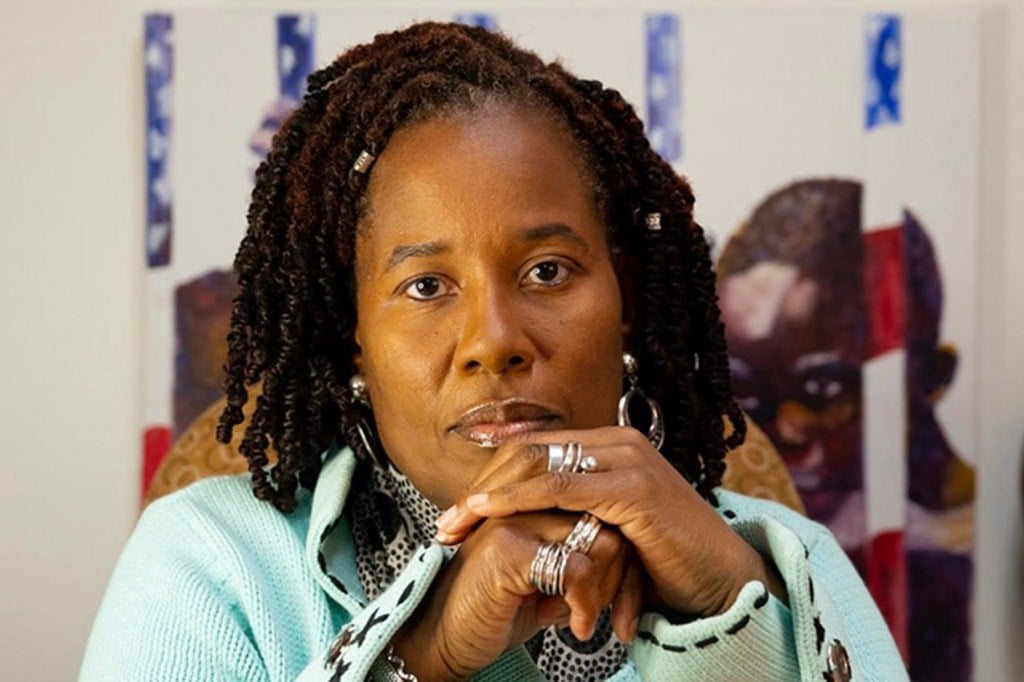
A portrait of a woman.
Kaye Wise Whitehead
(Courtesy Kaye Wise Whitehead)

What role have Black women played — historically and now — in defending and advancing the truth of our history against efforts to distort or erase it?

Black women have always been, as Zora Neale Hurston has said, “the mules of the world.” I talk about this as Black women being the ones that are willing to push and carry this country forward, because that is what we have done, whether it was during the time of American slavery trying to hold our family together, whether it was using quilts to stitch a road to freedom, whether it was braiding in routes to freedom in the hair of our children. Or as 19th-century women lifting as they climb, setting up club groups, raising money for the family, or coming today with the political activism that Black women have continued to be involved in and have continued to stand firm on trying to save this country, politically, culturally, socially and economically, for hundreds of years. 

We’re at a moment now where a number of Black women are saying, “This is a moment that we sit out. We are tired. We’re exhausted. We’ve been teaching and reteaching the same lessons.” I’m making the argument that as much as I want to sit down, I cannot, as much as I want to stop I cannot. I can take rest breaks, but I do have to keep pushing the work, I do have to keep getting involved politically. I do have to keep talking about the reclamation of memory and history. I do have to keep standing up and resisting, even in very small ways. We are planting seeds for trees that will never give us shade. I am very clear that the work I’m doing right now is not work that I’m going to actually benefit from. 

So then, what does rest, joy and celebration look like for Black women in this political climate? How do Black women hold space for both resistance and restoration?

That’s where Juneteenth comes in! Juneteenth is a great example of resistance and restoration. I’m telling Black women like I tell myself: No one’s asking you to fight 24/7, we’re not looking for that. Even Harriet Tubman rested. So where are the moments when you can actively get involved without draining your social battery? Maybe it’s an economic choice that you made. I can choose to vote with my feet, to vote with my dollars, write an op-ed. I can’t go out and march, but I can call into the radio station, I can give $5 to the institutions and the organizations that are holding up the work. That’s what restoration and resistance look like. You choose the moments when you can engage and then you practice radical self-care when you can’t — and be honest with yourself about what those moments look like. 

For people who feel disheartened by the moment we’re in, what do you say about the power of showing up?

I’m gonna say this, and I know that it goes to the opposite of what a number of folks are saying right now, but our ancestors didn’t stop. 

We can’t be the generation that stops. I know I’m tired, but I can’t be the one where the baton stops. As much as we want to stop in this moment, we have so much to lose. We cannot offer our children and their children a world that’s so destructive and just falling apart because we got tired and we stopped. 

If Juneteenth is a mirror, what should we be reflecting on this year?

I would not say Juneteenth is a mirror; I would say Juneteenth is a prism into what we used to be, into who we are now, and into who we can be. 

I think Juneteenth this year should be a space of radical imagination. It is clear that whatever this form of “democracy” has been, it does not exist anymore. I don’t want to go back to that. That was not a space of freedom, equality and diversity. That was not a space where we could rest. 

So since that system is collapsing all around us, let’s use Juneteenth as a moment of radical imagination. What should come next? What exactly are we working for? Because at times I ask myself, “What am I fighting to save?” We need to have a plan for how we go forward, not their plan, but our plan. 

That’s how we should celebrate and uplift Juneteenth: Throw up the grill, party, get the fans going — and then while people are sitting around the table and they’re passing the beans and the corn, say, “What should come next?” Let’s get some plans on paper. Let’s start getting people into the room to have these conversations. Standing still is not what we want to do at this moment.

Great Job Errin Haines & the Team @ The 19th Source link for sharing this story.

Secret Link