

Home News Page 45

It’s Easy to Imagine a World Without ICE

It’s Easy to Imagine a World Without ICE

In 2024, Donald Trump won a 49.8 percent plurality of the popular vote. Many different kinds of voters pulled the lever for him for many different reasons, but he certainly made no secret of his desire to carry out mass deportations. At the 2024 Republican National Convention, delegates waved professionally printed signs calling for “Mass Deportation Now.”

After seeing what those mass deportations look like in practice, though, there’s been a sea change in public opinion. There was a period early last year when immigration and border policy was the only issue where Trump’s poll numbers were above water. Since then, as Immigration and Customs Enforcement (ICE) has torn through American cities brutalizing people with abandon and impunity, Trump’s immigration policy has become less and less popular. By December 2025, the share of Americans expressing disapproval of the administration’s deportation actions had grown from 44 percent in March to 53 percent. And that was before ICE agent Jonathan Ross shot American citizen Renee Good three times in the face for trying to drive away.

The shooting of Good may be one of the best-documented murders in human history, with multiple videos from various angles painting a picture of what happened that isn’t seriously debatable. Polls show that only 28 percent of Americans believe the shooting was justified. Trump supporters may be tempted to blame liberal media bias, but the same polls show that the vast majority of respondents have seen video footage for themselves. The first polls after the killing show it dealt a major blow to ICE’s already declining favorability.

The Trump administration’s full-throated defense of Ross has had the predictable effect of emboldening ICE agents to engage in ever more thuggish behavior on the ground. This, in turn, continues to generate a nonstop stream of horrifying footage and makes it implausible that the slide of public opinion against ICE will stop any time soon. This week, even talk show host Joe Rogan, who endorsed Trump for president with great fanfare in 2024, said that ICE was acting like “the Gestapo.”

Increasing numbers of Americans even want to entirely eliminate the agency tasked with carrying out the mass deportations. For the first time since pollsters have asked the question, more Americans want to abolish ICE (46 percent) than keep it (43 percent).

To some ears, the demand to disband the agency might blend together with far more radical ideas that are also advocated in some corners of the Left, like “abolishing” prisons or the police. It’s important to remember, though, that ICE has existed for less than twenty-two years. It was founded in March 2003, the same month as the invasion of Iraq, as part of the George W. Bush administration’s aggressive reorganization of the federal bureaucracy for “war on terror” purposes. If you were born in, say, 1983, it should be very easy to imagine a world without ICE. Just imagine the world as it was when you were nineteen.

Bush established ICE, part of the newly founded Department of Homeland Security (DHS), as a larger, more aggressive, and more militarized replacement for the older Immigration and Naturalization Service (INS).

Its operations ramped up further under the administrations of Bush’s successors. Barack Obama was derided by the American Civil Liberties Union and immigrants’ rights groups as the “deporter-in-chief.” Under the first Trump administration, the brutality of a policy of separating undocumented parents from their children led to widespread outrage and the first high-profile calls to abolish ICE. Joe Biden did nothing to curb the agency, whose budget considerably increased during his time in office.

Under the second Trump administration, though, ICE has become something altogether different and qualitatively worse. As Senator Bernie Sanders put it, ICE increasingly looks and acts like “Trump’s domestic army.” More and more, the agency is dispatched in force to cities where there have been mass protests against the administration’s policies as an intimidating show of force, with the apparent mission of bullying critics of the Trump administration into submission.

Until Trump took office, it wasn’t common practice for ICE agents to wear masks on the job. Now it’s so routine that many Trump supporters accused the media of “doxing” Jonathan Ross by identifying him and printing his name. The administration itself has often (falsely) suggested that it’s illegal for citizens to document the agency’s abuses by filming them.

ICE agents themselves have been referencing Renee Good’s murder to threaten people who monitor their activities. In Minneapolis, one agent asked a woman filming him, “Have y’all not learned from the past couple of days?” As she queried his meaning, he said something about “filming federal agents” while snatching the phone from her hand. Another banged on an observer’s car window and yelled, “This is your warning. Stop f—ing following us, you are impeding operations. Did you not learn from what just happened?”

Democracies aren’t supposed to have secret police forces. In many state and local police departments around the country, officers are required to display a badge or name tag on their uniforms with their last name and/or an identifying number. If an officer mistreats you or violates your constitutional rights, you know exactly who to file a complaint about. If a masked ICE officer does the same, you have no such recourse.

A typical social media post from the official DHS account last year called for Americans to join ICE to “defend your culture.” Note: Not “enforce the law,” not even “defend our safety” against some imagined horde of violent drug-running narcoterrorists streaming across the border. But defend American culture against the grave threat of too many people living here who supposedly have the wrong ethnic background. This is just one among many recruitment posts that explicitly evoke white nationalism and historical fascism.

As for vetting the people who heed this call, recruitment standards are so low that anti-ICE commentator Laura Jedeed, who applied to the agency as a test, was offered a job without having to sign any paperwork or pass a background check. In December, one DHS official expressed concern that the rushed hiring of unqualified ICE agents had resulted in onboarding many recruits who “can barely read or write.”

Put all this together, and you get an agency full of people who increasingly haven’t even gone through cursory background checks, who have been recruited on the basis of flagrant appeals to racism, and have gotten a taste for being able to push around and physically brutalize citizens with the blessings of the administration.

ICE has evolved into a rogue, thuggish paramilitary force. In the greater scheme of things, it’s a brand-new addition to the American state, and it’s highly volatile. Even if a new president with better intentions inherits this state-sanctioned gang, it’s far from clear that it would ever be reformable. It’s really not crazy to suggest it shouldn’t exist.

It’s not clear why a free society would require a whole law enforcement agency dedicated to hunting down and deporting otherwise law-abiding people for the crime of unauthorized entry (which, at least for a first offense, is usually treated as a misdemeanor rather than a felony in any case). Even if we did need a new, less militarized agency to handle these immigration functions, though, it would be better to start over with a new force that hadn’t been recruited with appeals to “defend your culture” and the promise of “absolute immunity.”

In 2002, when ICE didn’t exist, the U.S. was far from having an open border. You had to pass through a checkpoint to drive into the country. (A completely separate agency, the Border Patrol, handled that then and continues to handle it now.) And there were even deportations, if not at anything like the mass scale we’ve become accustomed to in the era of ICE. But the basic institutions of a free society were in far better shape than they are now. It’s easy to imagine going back.

Great Job Ben Burgis & the Team @ Jacobin Source link for sharing this story.

Sculptures Explore Size Of Texas And The Weight Of Nostalgia

Sculptures Explore Size Of Texas And The Weight Of Nostalgia

In his pieces, Ken Womack captures the looming shadow of modernity and capitalism, often transforming everyday items into cyclopean artifacts.

Sculptures Explore Size Of Texas And The Weight Of Nostalgia
Image courtesy of Ken Womack

Physical size is tied to human conception of worth. It’s why they hand out big novelty checks as prizes even though a standard one cashes just the same. The difference between how big something is in terms of our regard for it and how big it is in objective measurement is an ever-present source of wonder and friction.

Dallas sculptor Ken Womack rides that frictional space the way his daddy used to ride bulls. Born and raised in Texas, Womack spent 35 years in the advertising game, founding agencies like Shift Option J, Agent 485, MindHandle, and The Agency Hack. Like all ad men, his job was to take things and make them bigger in the public mind, and he brings that same point of view to his remarkable pop art sculptures.

“I instinctively use all of my ad and promotional training when developing and displaying my art, although there are some key distinctions between displaying a product and displaying art,” said Womack via an email interview. “You are trained as a marketer to work backward from the mindset and desires of the target. Often times that actually impacts the development of the product, as the point is always to sell product. For art, I’d (of course) like to sell it, but the exploration of the piece is about self-expression and the meaning of the artwork, not sales.

There’s no denying that Womacks’s presentation is influenced by advertising even as he subverts the practice. “Texas Toast” is an enormous sculpture of buttered bread shaped like the state and almost as tall as Womack himself. Another piece, “Tore Up From the Floor Up” gives the same megaphiliac treatment to a crushed Lone Star Beer can. It’s kitschy, no doubt. Either piece would look at home on the wall of a popular locally owned steak restaurant.

Photo courtesy of Ken Womack

But divorced of that setting and given an unbiased space in a gallery, they become something much more open to interpretation. These kaiju-sized versions of food and garbage obliterate your normal conceptions the way Mothra destroys the definition of insect. It’s almost a form of idolatry, especially fitting in a modern world that almost worships its consumer items. 

Flann Harris is a partner at the Dallas-based Scout Design Studio, which has hosted many works by Womack. Harris has seen visitors wowed by the size and audacity of Womack’s work.

“Ken’s work has swagger without ego,” he said in an email interview. “It’s bold, graphic, and confident—but still soulful. You don’t have to ‘get’ art to feel his pieces; they hit you instantly. We’ve seen a lot of artists come through Scout Design Studio over the years, but Ken is truly in a league of his own. It’s creative, pop-culture-laced, whimsical, punchy, and pingy—yet still legit AF in its execution. No one else is producing work like this; the sheer talent and vision are incredible.”

Scout is displaying one of Womack’s newest works starting January 15. The piece is called “Brolaroid 2,”and is part of Womack’s fascination with analogue media. He’s designed giant cassette tapes and vinyl records, but the “Brolaroid” is a fully interactive Poloaroid camera. Visitors can use it to take enormous selfies. The illusion is created using a screen to display pictures on the extending film part of the structure. So, you can’t take the photo with you, but it’s an interesting commentary on the selfie as seen in the instantaneous digital now versus the slightly less instantaneous analog then.,

“The fascination of legacy media is not accidental, but a human response to our rapidly changing digital existence, I believe,” said Womack. “People are seeking authentic human interaction. We all spend too much time on our screens, and that can be isolating. So art like the Brolaroid is an antidote of sorts. It’s a ‘selfie machine,’ and after watching crowds interact with the first Brolaroid in Miami at the Spectrum Art Fair in 2023, it was clear the power of the piece is seeing people get lost watching themselves on TV, becoming voyeurs of themselves. It’s an interesting sociology experiment blending real life action and digital capture. My original intent was to create a fun, interactive piece, but I think it’s more than that after seeing it in action.” 

Womack’s work is deeply impactful and spreading. Later this month, the ABV Gallery in Atlanta, Georgia will display Womack’s “Nevermind,” a 4-foot sculpture of a Nirvana-inspired mix tape. In June, the Museum of the Southwest in Midland is hosting a solo exhibition of Womack pieces called “GIANT,” featuring 20 large works.

In his pieces, Womack captures the looming shadow of modernity and capitalism, often transforming everyday items into cyclopean artifacts. Advertising does this on billboards and movie screens every day to convince us to see things like Coca-Cola and pop stars as essential needs, but Womack’s subversion dares us to look at them as items of worth in and of themselves. He does this with tongue firmly in cheek, but the awesomeness remains even if you laugh at it. 

It’s the sort of art that really only works in Texas, a place obsessed with size for size’s sake which will make an idol out of anything provided it’s ten feet tall. Through his work. Womack understands Texas more than the state does itself.

“There is a romance to the state and the oil and cowboy culture that the entire world understands, and my art embraces, references and pokes fun at it all at the same time,” said Womack.

Great Job Jef Rouner & the Team @ The Texas Signal for sharing this story.

Musk wants up to $134B in OpenAI lawsuit, despite $700B fortune | TechCrunch

Musk wants up to 4B in OpenAI lawsuit, despite 0B fortune | TechCrunch

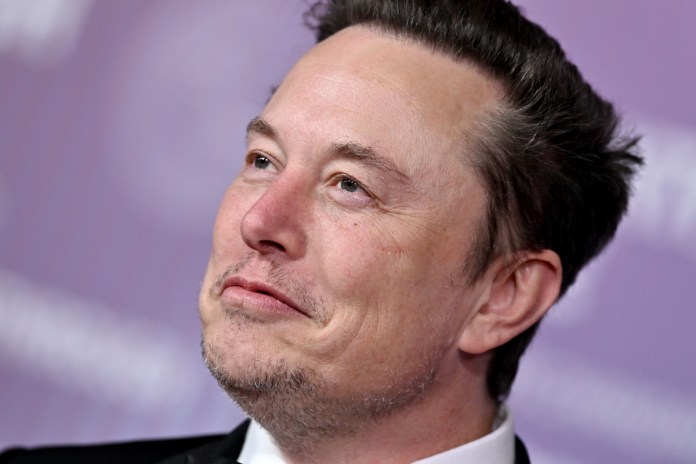
Elon Musk wants a jaw-dropping $79 billion to $134 billion in damages from OpenAI and Microsoft, claiming the AI company defrauded him by jettisoning its nonprofit mission, Bloomberg first reported. The figure comes from expert witness C. Paul Wazzan, a financial economist whose bio says he has been deposed nearly 100 times and testified at trial more than a dozen times in complex commercial litigation cases.

Wazzan, who specializes in valuation and damages calculations in high-stakes disputes, determined that Musk is entitled to a hefty portion of OpenAI’s current $500 billion valuation based on his $38 million seed donation when he co-founded the startup in 2015. (If you’re wondering, that would mean a 3,500-fold return on Musk’s investment.)

Wazzan’s analysis combines Musk’s initial financial contributions with the technical know-how and business contributions he offered to OpenAI’s early team, calculating wrongful gains of $65.5 billion to $109.4 billion for OpenAI and $13.3 billion to $25.1 billion for Microsoft, which today owns a 27% chunk of the company.

Musk’s legal team argues he should be compensated as an early startup investor who sees returns “many orders of magnitude greater” than his initial investment. But the sheer scale of the damages demand underscores that this legal battle isn’t really about the money.

Musk’s personal fortune currently hovers around $700 billion, making him by far the world’s richest person. As Reuters recently noted, his wealth now exceeds that of Google co-founder Larry Page, the world’s second-richest person, by a stunning $500 billion, according to Forbes’ billionaires list. In November, Tesla shareholders separately approved a $1 trillion pay package for Musk, the largest corporate pay package in history.

Against this backdrop, even a $134 billion payout from OpenAI would represent a relatively modest addition to Musk’s wealth, likely reinforcing for those at OpenAI their characterization of the lawsuit as part of an “ongoing pattern of harassment” rather than a legitimate financial grievance. OpenAI already reportedly sent a letter Thursday to investors and others of its business partners, warning that Musk will make “deliberately outlandish, attention-grabbing claims” as his lawsuit against the company heads to trial in April. The case will be heard in Oakland, California, about 15 miles east of San Francisco.

Great Job Connie Loizos & the Team @ TechCrunch Source link for sharing this story.
FAA urges pilots to exercise caution over eastern Pacific, citing ‘military activities’

FAA urges pilots to exercise caution over eastern Pacific, citing ‘military activities’

The Federal Aviation Administration on Friday urged U.S. aircraft operators to “exercise caution” when flying over the eastern Pacific Ocean near Mexico, Central America and parts of South America, citing “military activities” and possible satellite navigation interference.

The warning was issued in a series of Notices to Airmen (NOTAMs) issued by the FAA. They say, “Potential risks exist for aircraft at all altitudes, including during overflight and the arrival and departure phases of flight.” The alerts are in effect for 60 days. Such notices are issued routinely in any region where there are hostilities nearby.

The notices come after nearly four months of U.S. military strikes against boats in the Caribbean Sea and the eastern Pacific that the U.S. alleged were trafficking drugs. That campaign included 35 known strikes that killed at least 115 people, according to the Trump administration.

In November, the FAA warned all pilots to exercise caution when flying in the airspace over Venezuela “due to the worsening security situation and heightened military activity.”

On Jan. 3, the U.S. conducted a “large-scale strike” across Caracas, the capital of Venezuela. President Nicolás Maduro and his wife, Cilia Flores, were seized and transported to New York, where they face federal drug trafficking charges.

In December, a JetBlue flight from the small Caribbean nation of Curaçao halted its ascent to avoid colliding with a U.S. Air Force refueling tanker.

Copyright 2026 The Associated Press. All rights reserved. This material may not be published, broadcast, rewritten or redistributed without permission.

Great Job Associated Press & the Team @ KSAT San Antonio for sharing this story.

‘Just Showing Off!’: Serena Williams Flaunts Her ‘Meg Thee Stallion Knees,’ Leaving Fans Stunned After Dropping Way Lower Than Expected

‘Just Showing Off!’: Serena Williams Flaunts Her ‘Meg Thee Stallion Knees,’ Leaving Fans Stunned After Dropping Way Lower Than Expected

Serena Williams may have retired from tennis, but she’s clearly found new ways to keep those knees in action.

The iconic tennis star is celebrating the return of full strength in her knees after recently opening up about how much better they feel. The improvement comes after she shed weight following years of physical struggle after welcoming two children, a change she says has made a noticeable difference in her mobility and overall comfort.

And for proof, she gave fans a live demonstration.

‘Just Showing Off!’: Serena Williams Flaunts Her ‘Meg Thee Stallion Knees,’ Leaving Fans Stunned After Dropping Way Lower Than Expected
Serena Williams releases photos of her dropping it low while celebrating the return of her knees. (Photo: Jamie McCarthy/Getty Images)

‘Now I Know It’s Worth a Million Bucks’: A.J. Johnson Jokes She’s the O.G. of ‘Meg Thee Stallion Knees’ After Revealing She Can Still Do Her ‘House Party’ Dance Moves That Only Earned Her $4K

On Jan. 16, Williams resurfaced vibrant images of herself dropping it low and dancing, accompanied by a caption to clarify that her knees aren’t going anywhere anytime soon.

“I ain’t sorry, these Meg knees are here to stay,” she wrote along with a hashtag that reads “#girlsnightout.”

The 44-year-old’s photos were a mix of shots of videos, as well as stills from the set of Beyoncé’s “Sorry” music video — which Williams was also featured in. 

In the first image from Venus’ reception, Williams drops into a wide-legged squat, arms flicked outward as if mid-move. She’s dressed in a black, sparkly mesh bodysuit reminiscent of Beyoncé’s look in the “Sorry” era, finished with black ankle boots.

The second photo pulls back to show Williams lined up beside three other women in matching black, glittery outfits, the group standing in what looks like a choreographed formation — less casual snapshot, more rehearsal energy.

In another video captured during Venus Williams’ wedding reception last month, Serena took center stage for a playful performance, lip-synching to Beyoncé’s “Crazy in Love.” According to several Beyoncé fan pages, the reception featured a full Beyoncé-themed lip-sync battle, with Serena joining in as well — adding context to her sparkly, performance-ready outfit.

Fans hyped up the mother of two in the comments of her post.

One person who seemed impressed wrote, “The knees are kneeing! Werq!” Someone else who had the desire to drop that low typed, “Girl I want some of those knees.”

A third person cheering her on, wrote, “There you go showing off with those knees again!”

A fourth person pointed to a more recent moment when Williams proved to an audience that she got her groove back. They said, “I immediately thought of this when you dropped it down on Oprah!!”

Williams was a guest on “The Oprah Podcast” on Jan. 13, where she and Oprah Winfrey discussed their decision to take GLP-1 medications. The 23-time Grand Slam champ first announced she was on Zepbound last year, while Winfrey’s announcement came in 2023. 

During their 66-minute talk, Winfrey asked Williams what has changed for her since taking the medications. 

She responded, “So my life, I feel happier. I mean, I feel like I have more energy for my kids. I just feel like I can do more.”

“Don’t laugh,” she continued, “But I love to dance, I can drop it. I got knees like Megan now.”

Williams’ comment was a reference to rapper Megan Thee Stallion, who is known for her impressive twerk and dance skills powered by her tireless knees. 

“Would you like to see?” Williams said to Winfrey before giving a live demonstration by swiftly dropping low on her knees. The crowd in the room cheered, giving her a standing ovation.

Williams is a celebrity ambassador for Ro, the telehealth company that connects patients with US-licensed professionals online. She said she started taking after struggling to lose weight after having her second daughter, Adira Ohanian, 2, whom she shares with her husband Alexis Ohanian

The couple also share their eldest daughter Alexis Ohanian Jr., 8.

Great Job J. Jones & the Team @ Atlanta Black Star Source link for sharing this story.

Elon Musk’s Boring Co. is studying a tunnel project to Tesla Gigafactory near Reno | Fortune

Elon Musk’s Boring Co. is studying a tunnel project to Tesla Gigafactory near Reno | Fortune

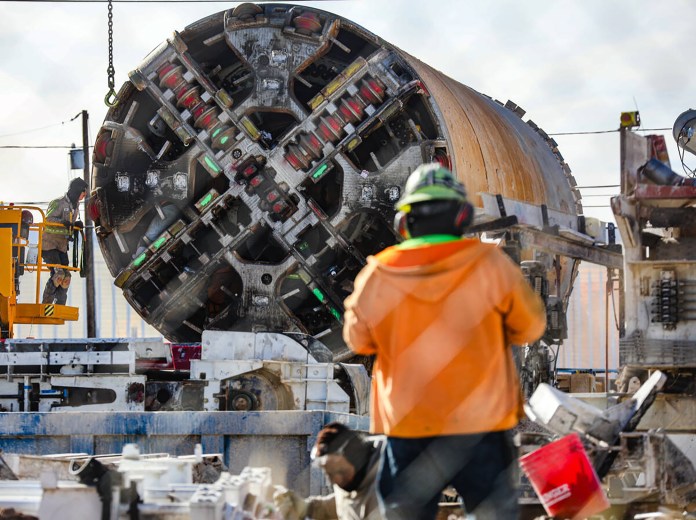
Elon Musk’s tunneling startup Boring Company is working with a Nevada state-affiliated group to study a tunnel project that would go under the nine-mile stretch of highway from Reno to Tesla’s Gigafactory, according to documents reviewed by Fortune.

The Economic Development Authority of Western Nevada (EDAWN), a non-profit that recruits companies to do business and expand in the state, paid Boring Company $50,000 in October to draw up conceptual designs and conduct a feasibility report for a new transportation alternative to the Tahoe-Reno Industrial Center, the mega-business complex that houses Tesla’s Gigafactory, according to a copy of the study invoice, which was obtained by Fortune via a Freedom of Information Act Request.

The potential tunnel project is one of several options various state groups are considering in order to alleviate the steep rise in traffic and accidents along Interstate 80 as more data centers and companies move into the 107,000-acre Industrial Center east of Reno and Sparks, Nev. Tesla and Panasonic, the two largest companies in the Center, have been in contact with the Nevada Governor’s Office since at least last spring about potential transportation solutions, according to emails, which were also obtained by Fortune via the FOIA request. Both Tesla and Panasonic are working with the local transportation agency to sponsor an ongoing study for a commuter rail system that would run on the freight rail next to the interstate. They also provided funding to EDAWN to look at other options, according to an email from Chris Reilly, Nevada Governor Joe Lombardo’s former infrastructure director, who introduced a Boring Company executive to leaders at Tesla and Panasonic to discuss the tunnel study.

It’s not clear if the report has been completed yet, and the specific details of the report—including the exact length of a proposed tunnel, the cost of the projet, and the types of vehicles envisioned for the tunnel, including the potential for autonomous vehicles—could not be learned.

Boring Company, which currently operates a small stretch of tunnel with Teslas underneath the Las Vegas Convention Center, has been trying to pitch a tunnel that would go out to the Gigafactory since at least 2019. “The Boring Company is extremely interested [in] building a Loop tunnel beneath I-80 out to the Tesla Gigafactory, but would need NDOT’s support,” reads a research report published by the Nevada Department of Transportation seven years ago.

Boring Company’s approach is novel, with small, single-lane tunnels made specifically for electric vehicles, and the Elon Musk-founded startup has struggled for many years to garner the political and regulatory support needed to undertake significant transportation projects. Even in Nevada, where Boring Company has successfully opened a tunnel system and begun chauffeuring passengers in Teslas in Las Vegas, the company has completed only four miles of operational tunnel and is currently experiencing delays as it tries to get necessary approvals to dig under land beyond the County and into the City of Las Vegas. The company is also reckoning with community blowback over safety and environmental issues during tunnel construction.  

The prospect of a Reno tunnel is still very conceptual, and while more than 20 stakeholders—including city and county officials in the region—have been looped into conversations about a potential commuter rail alongside I-80, few of those parties have yet been roped into a potential Boring Co. project, according to two people regularly briefed on the progress of the rail study, including Bill Thomas, who runs the Regional Transportation Commission of Washoe County, the organization that spearheaded the commuter rail study and road studies.

“We did not commission it. We’re not paying for it. I’m not involved in it. But I understand there are conversations exploring whether that could be done,” Thomas says, noting that, while he doesn’t understand what the plan would be, he is supportive of any transportation alternative that could help alleviate traffic and reduce accidents along the Interstate. “If there’s a private solution that helps the problem and improves safety, as far as I’m concerned, more power to them.”

Representatives for Tesla, Panasonic, EDAWN, and the Governor’s Office did not respond to requests for comment on this story. Reilly declined to comment.

A traffic surge

Accidents and traffic have ramped up on I-80, which has two lanes going each direction—particularly since the construction of several data centers this past summer as part of Nevada’s push to draw more AI companies to the state. There are some 22,000 employees who work at the Industrial Center each day—70% of whom live in Reno or Sparks, Nev., according to a commuter rail study update report from March 2025 that was seen by Fortune. Nearly 8,000 of those people work for Tesla, and more than 4,000 at Panasonic, according to a second update report from October.

While the state’s Department of Transportation is currently in the process of widening the highway, that expansion will not start until the end of 2027 and will take a few years to complete. Companies in the Center have requested the Governor’s Office help them with alternative solutions, according to the emails. The number of vehicles traveling on stretches of the Interstate during peak rush hour doubled between January and July 2025, according to data pulled by the Nevada Department of Transportation that was shared with Tesla’s senior facilities manager and Reilly, the former infrastructure director for Nevada Governor Joe Lombardo. “We are looking for creative ways to improve the Waltham ramp,” a NDOT employee wrote to the Tesla manager and Reilly in an email. 

RTC Washoe, the regional transportation commission in Western Nevada, began prioritizing transportation alternatives for I-80 about two years ago, according to Thomas. “At this point in time, there’s about [one accident] every other day,” Thomas says.

How effective the Boring Co’s tunnels would be at relieving the congestion is unclear and may depend on whether the tunnel is designed to function as a mass transit system, with a fleet of shared, centrally operated vehicles that commuters hop in and out of, or whether individuals drive their own cars through the tunnel. Boring Company’s 4-mile Las Vegas Loop is able to transport thousands of passengers per day during major conferences at the Convention Center, but those vehicles are operated by dedicated company-hired drivers. With individuals driving their own cars in a tunnel, the potential for accidents and other snafus would likely increase and raise the risk of a severe backlog in a single-lane tunnel.

Boring Company’s involvement may also draw criticism from the public—particularly after the startup was fined for dumping wastewater in Las Vegas and after firefighters were burned by chemicals in a tunnel during a training drill. A Nevada Congresswoman recently sent a demand letter to Nevada Governor Joe Lombardo, requesting more information on both incidents and requesting more information about his Office’s involvement in Nevada OSHA rescinding citations it had issued to the Boring Company last year.

This story was originally featured on Fortune.com

Great Job Jessica Mathews & the Team @ Fortune | FORTUNE Source link for sharing this story.

Duke QB Darian Mensah says he’ll enter transfer portal, reversing plan to return

Duke QB Darian Mensah says he’ll enter transfer portal, reversing plan to return

Duke quarterback Darian Mensah says he’s entering his name into the transfer portal, reversing an original announcement that he would return after leading the Blue Devils to the Atlantic Coast Conference title.

Mensah announced his plan in a social-media post Friday afternoon, hours before the transfer-portal window was set to close.

“I’m forever grateful for Duke and the coaching staff,” Mensah said. “Thank you Duke family for everything. This wasn’t an easy decision, but after talking with my family, I believe it’s in my best interest to enter the transfer portal.”

Mensah and Duke announced his return in December, coming between the Blue Devils’ overtime win against Virginia for the ACC title and their Sun Bowl win against Arizona State.

Mensah, who transferred from Tulane, is second in the Bowl Subdivision ranks with 3,937 yards passing and tied for second with 34 touchdown passes against six interceptions.

College football changed its calendar this year to have only one transfer portal window, with the 15-day period running from Jan. 2 through Friday as the final day for most players to enter their names. In previous years, there was one transfer portal window in December and a second one in April.

___

AP Sports Writer Steve Megargee contributed to this report.

___

Get poll alerts and updates on the AP Top 25 throughout the season. Sign up here. AP college football: https://apnews.com/hub/ap-top-25-college-football-poll and https://apnews.com/hub/college-football

Copyright 2026 The Associated Press. All rights reserved. This material may not be published, broadcast, rewritten or redistributed without permission.

Great Job Aaron Beard, Associated Press & the Team @ KSAT San Antonio Source link for sharing this story.

Federal Court Allows Dominion Energy in Virginia to Continue Offshore Wind Project – Inside Climate News

Federal Court Allows Dominion Energy in Virginia to Continue Offshore Wind Project – Inside Climate News

NORFOLK, Va.—U.S. District Court Judge Jamar K. Walker granted Dominion Energy a preliminary injunction on Friday, pausing a stop work order from the Trump administration and allowing the utility to resume construction on its Coastal Virginia Offshore Wind project as a court case proceeds.

The ruling comes after the Interior Department last month issued the stop work order  on Dominion’s $11 billion project and four other offshore wind farms under construction, citing national security threats without offering specifics. Dominion promptly sued.

Developers of two of those other projects, Revolution Wind in Rhode Island and Empire Wind in New York, also won preliminary injunction requests in federal court this week to resume construction. The Trump administration had previously canceled the leases for future offshore wind areas, and the attack on projects already being built was seen by many legal experts as lacking legal merit.

Dominion’s attorneys had argued in legal filings, and in the U.S. District Court for the Eastern District of Virginia Friday, that the project had a lengthy permit review process that involved regular communication with several agencies, including the Department of Defense, now called the Department of War, to address national security concerns. 

The utility has had two pilot turbines within a mile of CVOW for years to learn about reducing any conflicts with the military, and has made efforts to keep from compromising national security and avoid issues with radar, Dominion also argued.

Federal agencies, which had discussed the security threats in November, had meetings with Dominion in December leading up to the stop work order but declined to share any of its national security concerns with the utility, Dominion’s attorney James Auslander argued.

“This was a total surprise, your honor,” said Auslander, adding that not seeing the classified information amid the legal case means despite having employees with security clearances, meant “we’re flying blind here, your honor.” The government can’t claim national security threats, he added, and “call it a day.”

The Bureau of Ocean Energy Management “just wants to stop wind projects,” Auslander said, and CVOW “is now caught in that net.”

U.S. Department of Justice Associate Attorney General Stanley E. Woodward Jr. was brief in court, in order to protect classified national security information. He said he did not believe the federal government had an obligation to inform Dominion that the Pentagon would be issuing classified national security concerns about the offshore wind project.

“I don’t think that’s required by the law,” he said.

After a 10-minute break, Walker said that he found Dominion had demonstrated it could win the case, and that there were inconsistencies with the security information from the federal government. Virginians had “already” begun paying for the project, he said, adding that Dominion, which recovers cost from its customers, had suffered irreparable harm by “already,” having “millions of dollars of loss.”

“This is appropriate here,” Walker said in justifying the preliminary injunction.

The ruling is a victory for Virginia’s largest utility and the offshore wind industry that has faced an onslaught of attacks from President Donald Trump, despite the need for electricity from  clean sources to reduce greenhouse gas emissions that are warming the planet. 

“Our team will now focus on safely restarting work to ensure CVOW begins delivery of critical energy in just weeks,” the utility said in a statement. “While our legal challenge proceeds, we will continue seeking a durable resolution of this matter through cooperation with the federal government.”

Attorneys for the federal government declined to comment after the hearing.

Approved in 2022, construction of the CVOW’s 176 turbines was about 70 percent complete when the Trump administration issued the stop work order The utility has planned to start sending some of the electricity to customers early this year as construction is completed by the end of 2026. At full capacity, the project would produce 2.6 gigawatts of clean energy, enough to power 660,000 homes while avoiding pollution from fossil fuels that would have been the equivalent of a million cars annually.

Trump has continuously sought to end the offshore wind industry as he champions the continued use of fossil fuels to generate electricity. But energy professionals have criticized Trump’s stop work orders, given the need for electricity as Energy Secretary Chris Wright pushes to win an energy-intensive artificial intelligence (AI) arms race with China. 

Those AI functions are processed through data centers, the massive server farms that operate day and night, requiring massive amounts of electricity and, often, water to cool banks of computers. 

Virginia is home to the largest number of data centers in the world, with Dominion’s grid expected to double from a peak demand for electricity of about 25 gigawatts at the end of last year to 41.5 gigawatts in 2035. PJM Interconnection, the regional grid operator for Virginia, 12 other states and the District of Columbia, had filed a brief in the case supporting the project.

“This ruling is a major win for Virginia families and our economy,” Virginia House Speaker Don Scott, who represents the Portsmouth area near Virginia Beach, said in a statement. “The Coastal Virginia Offshore Wind Project will power more than 10 percent of Dominion Energy’s all time peak load and supply clean, reliable energy … helping keep the lights on and utility costs down.”

The project is also critical to Virginia and its ratepayers, who had already begun paying fees for the project, amounting to about $4 a month over the 35-year life of the project. Higher fees had come over the past two years before leveling out in later years. Customers could be on the hook for more costs if CVOW isn’t able to generate electricity to comply with requirements of the Virginia Clean Economy Act, a 2020 law seeking to decarbonize the grid by mid-century.

“It should finish,” Republican Gov. Glenn Youngkin told Inside Climate News at the end of last year, referring to the offshore wind project. His comment represented  a rare public break for the Trump ally. Youngkin had  reportedly lobbied for CVOW behind closed doors, while publicly boosting fossil fuels as part of an “all-of-the-above” approach to electricity generation. Youngkin’s last day is Friday. 

Virginia’s incoming governor, Abigail Spanberger, a Democrat, has vowed to fight for the project. She trounced her Trump-allied opponent in November as legislative Democrats picked up more than a dozen seats in the state house, strengthening Democratic control of both legislative chambers. 

CVOW had been approved under a regulated structure ensuring costs didn’t soar and included additional ratepayer protections to have Dominion shoulder cost overruns, Youngkin said late last year in explaining his support for the project. Trump’s tariffs on steel had increased the cost by $500 million and removal of clean energy tax credits created financial challenges.

The project had also been sought for years to drive economic development in the region by making it an offshore wind development hub. Dominion had paid for a first-of-its-kind vessel, called Charybids, to safely install the turbines. A maritime economy already in place around the U.S. Naval base in Norfolk, and the region’s central location along the east coast, made it a desirable hub for the industry that was burgeoning, prior to Trump taking office. 

This story is funded by readers like you.

Our nonprofit newsroom provides award-winning climate coverage free of charge and advertising. We rely on donations from readers like you to keep going. Please donate now to support our work.

Donate Now

U.S. Sen. Mark Warner touted that economic potential in a media availability last week. He, and fellow Democrats Sen. Tim Kaine and U.S. Rep Bobby Scott, who represents the Norfolk area, had filed briefs in the case supporting the project. Vice chairman  of the Senate Select Committee on Intelligence who is privy to national security information, Warner said that Trump’s security claims were “baloney.”

Delays on the project were costing the utility $5 million a day, given the need to schedule specialty ships for weeks at a time. And onshore substation and transmission work to receive the electricity from CVOW that would benefit the immediate surrounding area, including the naval base and shipbuilding industry, had also been paused, a consequence that drew the ire of Republican U.S. Rep Jen Kiggans, who represents a swing district including Virginia Beach.

In issuing the preliminary injunction, Judge Walker requested that Dominion and the federal government file a briefing schedule for how the case should proceed in federal district court. 

About This Story

Perhaps you noticed: This story, like all the news we publish, is free to read. That’s because Inside Climate News is a 501c3 nonprofit organization. We do not charge a subscription fee, lock our news behind a paywall, or clutter our website with ads. We make our news on climate and the environment freely available to you and anyone who wants it.

That’s not all. We also share our news for free with scores of other media organizations around the country. Many of them can’t afford to do environmental journalism of their own. We’ve built bureaus from coast to coast to report local stories, collaborate with local newsrooms and co-publish articles so that this vital work is shared as widely as possible.

Two of us launched ICN in 2007. Six years later we earned a Pulitzer Prize for National Reporting, and now we run the oldest and largest dedicated climate newsroom in the nation. We tell the story in all its complexity. We hold polluters accountable. We expose environmental injustice. We debunk misinformation. We scrutinize solutions and inspire action.

Donations from readers like you fund every aspect of what we do. If you don’t already, will you support our ongoing work, our reporting on the biggest crisis facing our planet, and help us reach even more readers in more places?

Please take a moment to make a tax-deductible donation. Every one of them makes a difference.

Thank you,

Great Job By Charles Paullin & the Team @ Inside Climate News Source link for sharing this story.
Military Force Will Not Help the People of Iran

Military Force Will Not Help the People of Iran

Once again, the United States is considering a military attack on Iran, this time in response to the government’s violent crackdown on popular protests that swept across the country over the last several weeks. For the time being, regional allies may have convinced the Trump administration to hold back. But while President Donald Trump seemingly accepted the Iranian government’s claim that the killing has stopped and even thanked Iran for not proceeding with executions of protesters, he has not ruled out military options moving forward depending on how the situation in Iran evolves. The Pentagon reportedly has already prepared a range of options, from targeting the regime’s security apparatus to striking missile sites and once again hitting Iranian nuclear facilities, which Trump had already declared “obliterated” after the last U.S. attack in June. That attack crossed the Rubicon in the nearly half-century long adversarial relationship between the United States and Iran, marking the first U.S. military strike on Iranian territory.

Now, with the likelihood of unrest and government crackdowns continuing, the possibility of a second U.S. attack remains viable. Iran’s people deserve international support as they endure what may prove to be the most brutal suppression in the history of the Islamic Republic. But the quick pivot to considering military force without serious domestic debate in the United States or clarity about what force is meant to achieve, and whether this is the best way to help the Iranian people, is alarming. The President and other senior officials have offered mixed messages on the purpose of military threats, suggesting goals ranging from the protection of protesters, the possibility of regime change, the promotion of freedom and democracy, striking more favorable diplomatic deals, and the need to reassert U.S. credibility. Such varied aims leave the strategic objectives of a potential strike unclear—and raise the risk that military action becomes a substitute for strategy. Moreover, military tools are unlikely to achieve any of these objectives, and may only make the situation worse. 

 Military Force is Unlikely to Advance U.S. Goals in Iran   

The most urgent rationale for using military force is to protect Iranian civilians. Reports on the death toll from the current unrest vary, but even cautious estimates suggest casualties in the thousands. Even with the government imposing a total internet blackout, the reports that have emerged make it clear the leadership sees the current protests as existential and has chosen to use the full force of the state’s security forces against its people. President Trump has repeatedly threatened Iranian leaders if they use force against the protesters, posting early in the crisis that the United States. is “locked and loaded” and would come to the protesters “rescue” if the killing continued. He later told Iranians to “keep protesting” and that “help is on the way.” 

But military strikes are unlikely to prevent Iran’s security forces from killing civilians. Striking the headquarters of the IRGC or other state institutions responsible for the killing may rattle the leadership. But as Israel’s previous killing of top IRGC officials has demonstrated, it is difficult to dismantle an expansive security apparatus through external military intervention alone. Moreover, previous attacks only led to more repression as paranoia about external intelligence infiltration led to mass arrests and executions. In this respect, military strikes can backfire and lead to even more indiscriminate killing of innocent civilians.

What if the objective is more expansive, aiming to not only protect protesters but to topple the regime itself? Trump’s statements moved in this direction as the protests gained momentum, encouraging the Iranian people to “Make Iran Great Again.” Senator Lindsey Graham and other U.S. officials have even been donning ‘Make Iran Great Again’ hats, branding Iran’s uprising as a MAGA movement. Though initially reluctant to meet former Iranian crown prince Reza Pahlavi, who has been actively encouraging protesters to overthrow the regime, senior White House envoy Steve Witkoff reportedly met Pahlavi last weekend. However, Trump has questioned Pahlavi’s support inside the country, suggesting he might be seeking information about potential alternative leaders should the Islamic Republic fall.

But the use of external military force to topple regimes has a poor track record historically. Without armed opposition forces on the ground, airpower alone has rarely succeeded in ousting governments. Peaceful protesters on the streets are not an army. They are not organized to take on the massive security capabilities of the Iranian state. This is not Syria, where an armed opposition had been organizing for years and exercising autonomy in parts of the country during the civil war before the surprising opportunity to advance to Damascus and overthrow Bashar al-Assad. Without defections and other signs of splintering among Iran’s security forces and leadership, regime collapse is unlikely. So far, such fissures have not emerged, even after the significant military setbacks during the Israeli and American attacks in June.

Another goal often linked to overthrowing the regime is the desire to see Iran transition to democratic governance, which is the aspiration for many Iranians inside and outside the country. Trump’s social media postings at times refer to his support for freedom in Iran, but the actions of his second administration suggest little interest in such objectives. The Venezuela model, that some fear may be in store for Iran, demonstrated that the administration was content with a change of leadership, not a change of the regime or its repressive machinery. Even if democracy, human rights and accountability were higher priorities for this administration, research on foreign military interventions suggests they tend to bring more repression and violence than democracy. There is little reason to believe Iran would prove an exception.

Another argument for military force is that it can advance diplomacy, forcing Iran’s leaders to accept terms they previously refused, such as the permanent suspension of uranium enrichment within the country, which has proven a major sticking point in nuclear negotiations. However, the use of military force in June did not move the Iranians to more accommodating positions. Instead of returning to the negotiating table, Iran’s leaders focused on restoring military capabilities, particularly missile capacity, to deter future attacks and make such attacks more costly for the United States and Israel. And in the aftermath of such unprecedented bloodshed in Iran, the political appetite for a deal in Washington is likely diminished. Military escalation tends to disrupt diplomatic processes, not encourage them, as evidenced when the June attacks derailed the Omani-mediated nuclear talks after five rounds of meetings.  

Finally, what if the objective is a show of force to maintain credibility, allowing Trump to claim he acted on his threats without risking prolonged military engagement. Trump prefers military operations that are decisive and short, and that do not require ground troops that could risk quagmires like Afghanistan and Iraq. But just because military operations may be conceived as limited does not mean that they are without risks. Iran has already threatened to retaliate against U.S. bases in neighboring countries if attacked. There are also secondary impacts, including the prospect that even limited strikes lead to unanticipated escalation, spilling over the borders to neighboring states and destabilizing global oil markets. Such concerns, which are not hypothetical as we saw during the June war, explain why regional states, particularly in the Gulf, lobbied Trump to refrain from an attack. 

A Smarter Way to Stand with Iranians

While it is still unclear what the administration is trying to achieve in Iran, military strikes are unlikely to advance any conceivable U.S. objective. The most immediate priority should be to help the Iranian people, and there are more effective and less dangerous ways to do so than resorting to force. 

One way to support Iranian protesters is to improve their ability to communicate with each other and the outside world during internet shutdowns and ensure that reliable information about the protests is available. Internet censorship circumvention tools like Starlink satellite terminals are already being utilized to send videos and images of the protests out of the country, and SpaceX has allowed for free access during this emergency. But relying only on private sector companies and the discretion of its leadership can be risky, and should not replace funding for governmental and nongovernmental organizations working in the internet freedom area, funding that the Trump administration has cut and is under pressure to restore. Funding for NGOs that help investigate and expose AI manipulated media that can be used by the Iranian government and other external actors to distort the nature of the unrest is also critical to document crimes and allow for accountability in the future. 

Another useful step to help Iranians who may be facing increased dangers within the country would be to reverse the current visa restrictions on Iranians who are seeking asylum in the United States and halt deportation flights of Iranians already in the country. The Trump administration sent two planeloads of Iranians seeking refuge in the United States back to Iran before the current protests, Iranians who were sure to face persecution upon their return. Future deportation flights at this perilous time in Iran would be particularly callous.

Finally, this is a moment for a global response, not unilateral military action. The U.S. government should be activating mechanisms like the United Nations, the Human Rights Council, and trans-Atlantic forums to hold those responsible for the killing to account. This is particularly difficult as the administration has withdrawn the United States from dozens of international organizations that press for accountability and rule of law across the world, not to mention the dismantling of U.S. agencies and nongovernmental organizations focused on supporting civil society and democratic governance. 

Ultimately, if the aim is to help the Iranian people, the best approach is to empower them to do it on their own without the complications and dangers of external military intervention. This is an Iranian uprising, and it is up to the people of Iran to decide their own future.

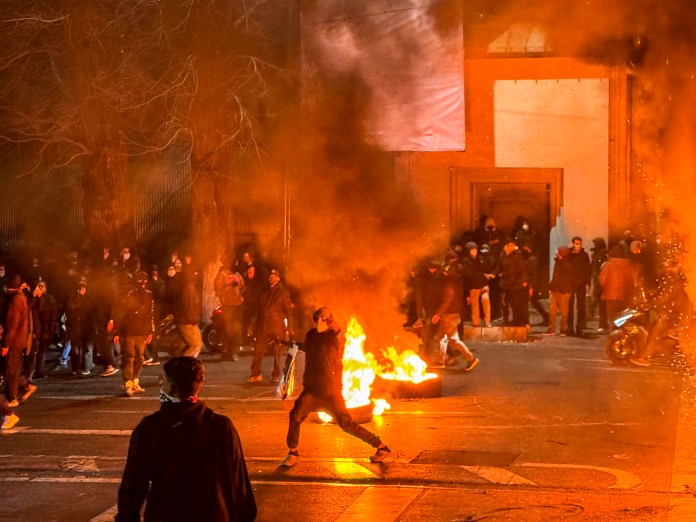
FEATURED IMAGE: Iranians gather while blocking a street during a protest in Tehran, Iran on January 9, 2026. The nationwide protests started in Tehran’s Grand Bazaar against the failing economic policies in late December, which spread to universities and other cities, and included economic slogans, to political and anti-government ones. (Photo by MAHSA / Middle East Images / AFP via Getty Images)

Great Job Dalia Dassa Kaye & the Team @ Just Security Source link for sharing this story.

Oui, Oui! French Food Is Having a Moment in Austin

Oui, Oui! French Food Is Having a Moment in Austin

Whether you’re craving steak tartare, tomato bisque, escargot, or a madeleine cookie, you’re in luck: Austin is experiencing a boom in fare à la française right now. Since Michelin-recognized Le Calamar burst on the scene last summer, the capital city has seen a wave of other French-inspired restaurants, including Kappo Kappo at the Austin Proper and Restaurant François downtown. Here are six new and classic French spots to discover across the city. Bon appétit!


Restaurant François

Over the years, Guy + Larry Restaurants has established a strong reputation in Austin after debuting local favorites like Red Ash Italia, ATX Cocina, J. Carver’s, and Salty Sow. With its latest concept, the hospitality group forays into French-inspired cuisine with American sensibilities. Savor hearty dishes like swordfish steak au poivre, pappardelle with rabbit ragoût, and haricots verts almondine as you soak in the vibes of its gorgeous Art Deco dining room. 401 W. Third St., Ste. 100  


Profiteroles and chocolate souffle at Restaurant François. Photo by Ronny Galdámez.


Le Calamar

Landing on the Best New Restaurants lists of both Austin Monthly and the Austin-American Statesman last year, Michelin-recognized Le Calamar has been racking up accolades for its dynamic French-Texas menu since opening in May 2025. Helmed by Richard Hargreave and Claudia Lee (Underdog) as well as chef Casey Wall, its ever-changing menu features fresh offerings such as chicken wings à la koffman, steak tartare, beef tallow pommes frites, and a Texas riff on the classic Baked Alaska made with local olive oil, pecans, and honey. 1600 S. First St., Ste. 100


Oui, Oui! French Food Is Having a Moment in Austin
Gyulais sirloin flap with shishito peppers at Le Calamar


Kappo Kappo

Japanese fare with a French twist isn’t something you encounter every day. And yet, the combo works at this new omakase restaurant inside the Austin Proper. Helmed by Haru and Gohei Kishi, twin brothers who were born in Paris to Japanese parents, Kappo Kappo’s 11-course tasting menu includes highlights like caviar-topped A5 wagyu in a parmesan crust and Bourguignon-style beef cheek with red wine jus and potato foam. Featuring a cozy 25-seat interior and plenty of flourish from the chefs, this memorable dining experience was made for date night. 600 W. Second St.


Nougatine French Bakery

Satisfy your sweet tooth with petit-fours, madeleines, and almond croissants from this darling French bakery concept, which pops up at the Barton Creek Farmers Market every Saturday from 9 a.m. to 1 p.m. Led by French trained pastry chef Aurélien Decaix and wife Tala, the bakery also specializes in custom handmade French wedding cakes. Gearing up to celebrate Mardi Gras next month? Pre-order a Galette Des Rois made with flaky puff pastry and a rich almond frangipane now through Jan. 31. Oh la la!


Austin Rôtisserie

Elevate your lunch routine with a visit to this tucked-away gem at Fareground, which includes savory offerings like a poulet roti baguette with signature rotisserie chicken, French carrot soup, and salade de chèvre with goat cheese and French vinaigrette. Of course, if you decide to cap off your meal with a freshly baked chocolate croissant, no one could blame you. 111 Congress Ave.


French carrot soup at Austin Rotisserie. Photo courtesy Austin Rotisserie.


Justine’s Brasserie

Considered one of the most romantic restaurants in the city—and arguably the most stylish—this East Side brasserie certainly has that je nais se quois. Reservations are hard to come by, but sipping martinis at the bar while you wait for a table is half the fun. Enjoy escargots, steak frites, and the pan-seared poisson du jour as you grab a late-night bite: The restaurant is open until 11 p.m. weekdays (closed Tuesdays) and midnight on weekends. 4710 E. Fifth St.


Great Job Madeline Hollern & the Team @ Austin Monthly Magazine Source link for sharing this story.

Secret Link