
Home News Page 46

Military Force Will Not Help the People of Iran

Military Force Will Not Help the People of Iran

Once again, the United States is considering a military attack on Iran, this time in response to the government’s violent crackdown on popular protests that swept across the country over the last several weeks. For the time being, regional allies may have convinced the Trump administration to hold back. But while President Donald Trump seemingly accepted the Iranian government’s claim that the killing has stopped and even thanked Iran for not proceeding with executions of protesters, he has not ruled out military options moving forward depending on how the situation in Iran evolves. The Pentagon reportedly has already prepared a range of options, from targeting the regime’s security apparatus to striking missile sites and once again hitting Iranian nuclear facilities, which Trump had already declared “obliterated” after the last U.S. attack in June. That attack crossed the Rubicon in the nearly half-century long adversarial relationship between the United States and Iran, marking the first U.S. military strike on Iranian territory.

Now, with the likelihood of unrest and government crackdowns continuing, the possibility of a second U.S. attack remains viable. Iran’s people deserve international support as they endure what may prove to be the most brutal suppression in the history of the Islamic Republic. But the quick pivot to considering military force without serious domestic debate in the United States or clarity about what force is meant to achieve, and whether this is the best way to help the Iranian people, is alarming. The President and other senior officials have offered mixed messages on the purpose of military threats, suggesting goals ranging from the protection of protesters, the possibility of regime change, the promotion of freedom and democracy, striking more favorable diplomatic deals, and the need to reassert U.S. credibility. Such varied aims leave the strategic objectives of a potential strike unclear—and raise the risk that military action becomes a substitute for strategy. Moreover, military tools are unlikely to achieve any of these objectives, and may only make the situation worse. 

 Military Force is Unlikely to Advance U.S. Goals in Iran   

The most urgent rationale for using military force is to protect Iranian civilians. Reports on the death toll from the current unrest vary, but even cautious estimates suggest casualties in the thousands. Even with the government imposing a total internet blackout, the reports that have emerged make it clear the leadership sees the current protests as existential and has chosen to use the full force of the state’s security forces against its people. President Trump has repeatedly threatened Iranian leaders if they use force against the protesters, posting early in the crisis that the United States. is “locked and loaded” and would come to the protesters “rescue” if the killing continued. He later told Iranians to “keep protesting” and that “help is on the way.” 

But military strikes are unlikely to prevent Iran’s security forces from killing civilians. Striking the headquarters of the IRGC or other state institutions responsible for the killing may rattle the leadership. But as Israel’s previous killing of top IRGC officials has demonstrated, it is difficult to dismantle an expansive security apparatus through external military intervention alone. Moreover, previous attacks only led to more repression as paranoia about external intelligence infiltration led to mass arrests and executions. In this respect, military strikes can backfire and lead to even more indiscriminate killing of innocent civilians.

What if the objective is more expansive, aiming to not only protect protesters but to topple the regime itself? Trump’s statements moved in this direction as the protests gained momentum, encouraging the Iranian people to “Make Iran Great Again.” Senator Lindsey Graham and other U.S. officials have even been donning ‘Make Iran Great Again’ hats, branding Iran’s uprising as a MAGA movement. Though initially reluctant to meet former Iranian crown prince Reza Pahlavi, who has been actively encouraging protesters to overthrow the regime, senior White House envoy Steve Witkoff reportedly met Pahlavi last weekend. However, Trump has questioned Pahlavi’s support inside the country, suggesting he might be seeking information about potential alternative leaders should the Islamic Republic fall.

But the use of external military force to topple regimes has a poor track record historically. Without armed opposition forces on the ground, airpower alone has rarely succeeded in ousting governments. Peaceful protesters on the streets are not an army. They are not organized to take on the massive security capabilities of the Iranian state. This is not Syria, where an armed opposition had been organizing for years and exercising autonomy in parts of the country during the civil war before the surprising opportunity to advance to Damascus and overthrow Bashar al-Assad. Without defections and other signs of splintering among Iran’s security forces and leadership, regime collapse is unlikely. So far, such fissures have not emerged, even after the significant military setbacks during the Israeli and American attacks in June.

Another goal often linked to overthrowing the regime is the desire to see Iran transition to democratic governance, which is the aspiration for many Iranians inside and outside the country. Trump’s social media postings at times refer to his support for freedom in Iran, but the actions of his second administration suggest little interest in such objectives. The Venezuela model, that some fear may be in store for Iran, demonstrated that the administration was content with a change of leadership, not a change of the regime or its repressive machinery. Even if democracy, human rights and accountability were higher priorities for this administration, research on foreign military interventions suggests they tend to bring more repression and violence than democracy. There is little reason to believe Iran would prove an exception.

Another argument for military force is that it can advance diplomacy, forcing Iran’s leaders to accept terms they previously refused, such as the permanent suspension of uranium enrichment within the country, which has proven a major sticking point in nuclear negotiations. However, the use of military force in June did not move the Iranians to more accommodating positions. Instead of returning to the negotiating table, Iran’s leaders focused on restoring military capabilities, particularly missile capacity, to deter future attacks and make such attacks more costly for the United States and Israel. And in the aftermath of such unprecedented bloodshed in Iran, the political appetite for a deal in Washington is likely diminished. Military escalation tends to disrupt diplomatic processes, not encourage them, as evidenced when the June attacks derailed the Omani-mediated nuclear talks after five rounds of meetings.  

Finally, what if the objective is a show of force to maintain credibility, allowing Trump to claim he acted on his threats without risking prolonged military engagement. Trump prefers military operations that are decisive and short, and that do not require ground troops that could risk quagmires like Afghanistan and Iraq. But just because military operations may be conceived as limited does not mean that they are without risks. Iran has already threatened to retaliate against U.S. bases in neighboring countries if attacked. There are also secondary impacts, including the prospect that even limited strikes lead to unanticipated escalation, spilling over the borders to neighboring states and destabilizing global oil markets. Such concerns, which are not hypothetical as we saw during the June war, explain why regional states, particularly in the Gulf, lobbied Trump to refrain from an attack. 

A Smarter Way to Stand with Iranians

While it is still unclear what the administration is trying to achieve in Iran, military strikes are unlikely to advance any conceivable U.S. objective. The most immediate priority should be to help the Iranian people, and there are more effective and less dangerous ways to do so than resorting to force. 

One way to support Iranian protesters is to improve their ability to communicate with each other and the outside world during internet shutdowns and ensure that reliable information about the protests is available. Internet censorship circumvention tools like Starlink satellite terminals are already being utilized to send videos and images of the protests out of the country, and SpaceX has allowed for free access during this emergency. But relying only on private sector companies and the discretion of its leadership can be risky, and should not replace funding for governmental and nongovernmental organizations working in the internet freedom area, funding that the Trump administration has cut and is under pressure to restore. Funding for NGOs that help investigate and expose AI manipulated media that can be used by the Iranian government and other external actors to distort the nature of the unrest is also critical to document crimes and allow for accountability in the future. 

Another useful step to help Iranians who may be facing increased dangers within the country would be to reverse the current visa restrictions on Iranians who are seeking asylum in the United States and halt deportation flights of Iranians already in the country. The Trump administration sent two planeloads of Iranians seeking refuge in the United States back to Iran before the current protests, Iranians who were sure to face persecution upon their return. Future deportation flights at this perilous time in Iran would be particularly callous.

Finally, this is a moment for a global response, not unilateral military action. The U.S. government should be activating mechanisms like the United Nations, the Human Rights Council, and trans-Atlantic forums to hold those responsible for the killing to account. This is particularly difficult as the administration has withdrawn the United States from dozens of international organizations that press for accountability and rule of law across the world, not to mention the dismantling of U.S. agencies and nongovernmental organizations focused on supporting civil society and democratic governance. 

Ultimately, if the aim is to help the Iranian people, the best approach is to empower them to do it on their own without the complications and dangers of external military intervention. This is an Iranian uprising, and it is up to the people of Iran to decide their own future.

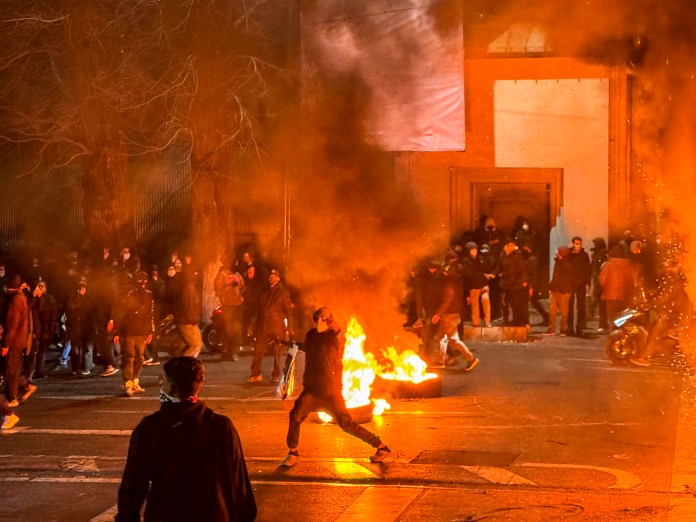
FEATURED IMAGE: Iranians gather while blocking a street during a protest in Tehran, Iran on January 9, 2026. The nationwide protests started in Tehran’s Grand Bazaar against the failing economic policies in late December, which spread to universities and other cities, and included economic slogans, to political and anti-government ones. (Photo by MAHSA / Middle East Images / AFP via Getty Images)

Great Job Dalia Dassa Kaye & the Team @ Just Security Source link for sharing this story.

Oui, Oui! French Food Is Having a Moment in Austin

Oui, Oui! French Food Is Having a Moment in Austin

Whether you’re craving steak tartare, tomato bisque, escargot, or a madeleine cookie, you’re in luck: Austin is experiencing a boom in fare à la française right now. Since Michelin-recognized Le Calamar burst on the scene last summer, the capital city has seen a wave of other French-inspired restaurants, including Kappo Kappo at the Austin Proper and Restaurant François downtown. Here are six new and classic French spots to discover across the city. Bon appétit!


Restaurant François

Over the years, Guy + Larry Restaurants has established a strong reputation in Austin after debuting local favorites like Red Ash Italia, ATX Cocina, J. Carver’s, and Salty Sow. With its latest concept, the hospitality group forays into French-inspired cuisine with American sensibilities. Savor hearty dishes like swordfish steak au poivre, pappardelle with rabbit ragoût, and haricots verts almondine as you soak in the vibes of its gorgeous Art Deco dining room. 401 W. Third St., Ste. 100  


Profiteroles and chocolate souffle at Restaurant François. Photo by Ronny Galdámez.


Le Calamar

Landing on the Best New Restaurants lists of both Austin Monthly and the Austin-American Statesman last year, Michelin-recognized Le Calamar has been racking up accolades for its dynamic French-Texas menu since opening in May 2025. Helmed by Richard Hargreave and Claudia Lee (Underdog) as well as chef Casey Wall, its ever-changing menu features fresh offerings such as chicken wings à la koffman, steak tartare, beef tallow pommes frites, and a Texas riff on the classic Baked Alaska made with local olive oil, pecans, and honey. 1600 S. First St., Ste. 100


Oui, Oui! French Food Is Having a Moment in Austin
Gyulais sirloin flap with shishito peppers at Le Calamar


Kappo Kappo

Japanese fare with a French twist isn’t something you encounter every day. And yet, the combo works at this new omakase restaurant inside the Austin Proper. Helmed by Haru and Gohei Kishi, twin brothers who were born in Paris to Japanese parents, Kappo Kappo’s 11-course tasting menu includes highlights like caviar-topped A5 wagyu in a parmesan crust and Bourguignon-style beef cheek with red wine jus and potato foam. Featuring a cozy 25-seat interior and plenty of flourish from the chefs, this memorable dining experience was made for date night. 600 W. Second St.


Nougatine French Bakery

Satisfy your sweet tooth with petit-fours, madeleines, and almond croissants from this darling French bakery concept, which pops up at the Barton Creek Farmers Market every Saturday from 9 a.m. to 1 p.m. Led by French trained pastry chef Aurélien Decaix and wife Tala, the bakery also specializes in custom handmade French wedding cakes. Gearing up to celebrate Mardi Gras next month? Pre-order a Galette Des Rois made with flaky puff pastry and a rich almond frangipane now through Jan. 31. Oh la la!


Austin Rôtisserie

Elevate your lunch routine with a visit to this tucked-away gem at Fareground, which includes savory offerings like a poulet roti baguette with signature rotisserie chicken, French carrot soup, and salade de chèvre with goat cheese and French vinaigrette. Of course, if you decide to cap off your meal with a freshly baked chocolate croissant, no one could blame you. 111 Congress Ave.


French carrot soup at Austin Rotisserie. Photo courtesy Austin Rotisserie.


Justine’s Brasserie

Considered one of the most romantic restaurants in the city—and arguably the most stylish—this East Side brasserie certainly has that je nais se quois. Reservations are hard to come by, but sipping martinis at the bar while you wait for a table is half the fun. Enjoy escargots, steak frites, and the pan-seared poisson du jour as you grab a late-night bite: The restaurant is open until 11 p.m. weekdays (closed Tuesdays) and midnight on weekends. 4710 E. Fifth St.


Great Job Madeline Hollern & the Team @ Austin Monthly Magazine Source link for sharing this story.

‘We’re asking for very basic things’: 15,000 nurses are on strike in New York City

‘We’re asking for very basic things’: 15,000 nurses are on strike in New York City

The largest nurse walkout in New York City history has entered its fifth day, with no signs of ending quickly as negotiations continue. The nurses union began striking at three private hospital systems after months of unsuccessful talks surrounding health care benefits and staffing shortages.

The strike, which the nurses union said involved 15,000 nurses, illuminates a growing divide between health practitioners and hospitals as the industry faces major upheaval amid federal administrative changes. 

Medical centers in the Mount Sinai, Montefiore and NewYork-Presbyterian systems remain open.  The hospitals have spent more than $100 million on temporary nurses to maintain patient care, including paying for their lodging, according to The New York Times.

The New York State Nurses Association (NYSNA) has condemned hospital management, saying they failed to agree to fair contracts with striking nurses, whose broad demands include guaranteed health care benefits for nurses, improved security measures for staff and patients and better staffing ratios, which union representatives say have been unsatisfactory.

“Montefiore, Mount Sinai and NewYork-Presbyterian need to get serious about meeting our demands for safety,” NYSNA President Nancy Hagans said in a press release on Thursday. “Instead of investing millions in fighting their own nurses, hospital executives need to do the right thing and work with us to improve safety.” 

The association said that the hospitals have proposed slashing nurses’ health care benefits, cuts it estimates would impact approximately 44,000 nurses. 

The hospitals have denied the union’s claims and said that the nurses’ requests are unreasonable.

“We’re not asking for $220,000 a year, we’re not asking for a 40 percent increase in our pay or anything like that,” said Caroline Terris, a registered nurse who is part of the strike. “We’re asking for very basic things like safety for our patients, safe patient ratios, making sure that the patients get the care that they deserve.” 

Terris, 29, has been in the health care profession for five years and works at NewYork-Presbyterian Hospital. During this time, she told The 19th, she had witnessed a gradual shift in the health care industry, particularly since President Donald Trump assumed office. 

In November, the Department of Education excluded nursing as a professional degree through the “One Big Beautiful Bill Act,” which also suggested making major changes to student loan offerings and repayment plans.

“A very big part of that is all the professions that were claimed as non-professional were all women-led professions or female-dominant professions, and I think that that’s very interesting given the kind of social climate that they want to create in America,” she said. 

The decision to reclassify nursing aligns with the general attitude that Terris says she has seen take hold. 

“It has been such a huge change in everything,” she said. “And even just going on social media, you see people are like, ‘Well, they shouldn’t be professional … because they don’t do anything.’ And it’s just that energy has really changed from being heroes in 2020 to now having to fight for basic rights.”

More than 7,000 nurses at Mount Sinai Hospital and Montefiore Medical Center went on strike in 2023 to protest understaffing at their centers, an issue that was then exacerbated by the Covid-19 pandemic, which strained hospitals around the country. In that case, the strike lasted three days. 

Health care workers have now found themselves on the picket line protesting the same issues that had previously been addressed when both Montefiore Bronx and Mount Sinai hospitals first agreed to establish new staffing ratios. It’s unclear how long the affected hospitals can sustain themselves as the strike continues, particularly as the country enters flu season.

If contract negotiations fall through, nurses like Terris worry about what it will mean for other health care providers in the country.  

“I really do think that if this goes more pro-management than pro-patient and pro-nursing, then we’re gonna see a really bad trickle-down effect of other hospitals not paying for their employees’ insurance, not giving them wages that compete with inflation,” Terris said. “They’re gonna be looser with their laws. Also, AI is a very big thing that is up and coming in health care, and nurses wanna be able to sit down and give their input on it so it’s actually for good and not for bad.”

The NYSNA alleges that Mount Sinai previously unlawfully disciplined 14 nurses who denounced workplace violence or spoke to their peers about contract negotiations. The association also claims that Mount Sinai terminated three labor and delivery nurses mere hours before the planned walkout, in an attempt to undermine the strike. 

Mount Sinai CEO Brendan G. Carr denied the accusations, including the nurses’ cause for protest, on the hospital’s website, stating that the three employees were disciplined following complaints that they were interfering with patient care by refusing to provide medical supplies to temporary nurses, and that the hospital has not suggested reducing health benefits.

“On Monday, we saw 20 percent of our scheduled NYSNA nurses decide not to participate in NYSNA’s strike, and yesterday we saw similar numbers — hundreds of nurses joining their teams at the bedside,” Carr said in a press statement on Wednesday. “I remain grateful to our nurses who have come to work, to the traveling nurses who came to help us, to nursing leaders who have been working around the clock, and to the many other individuals who are working incredibly hard to make up for their absent colleagues.”

The hospital rejected claims that staffing levels have not improved, stating that the nursing vacancies have decreased over 80 percent. “In just the last three years we reduced our system-wide number of nursing vacancies from 514 in 2022, to just 92 today, while adding 1,000 new nursing positions over the same 3-year period,” it said

‘We’re asking for very basic things’: 15,000 nurses are on strike in New York City
New York City Mayor Zohran Mamdani greets striking nurses outside NewYork-Presbyterian Hospital in New York City on January 11, 2026.
(Steve Sanchez/SIPA/AP)

Mayor Zohran Mamdani — who heavily courted labor unions during his campaign to lead New York City  — released a statement on X, formerly known as Twitter, about the strike. “No New Yorker should have to fear losing access to health care — and no nurse should be asked to accept less pay, fewer benefits or less dignity for doing lifesaving work,” he wrote on Sunday, ahead of the scheduled walkout. “Our nurses kept this city alive through its hardest moments. Their value is not negotiable.” He joined nurses on the picket line on the day the strikes began.

Mount Sinai declined to comment beyond public statements. NewYork-Presbyterian and Montefiore did not respond immediately to requests for comment. NewYork-Presbyterian and Mount Sinai are in negotiations with union representatives. 

“Our goal is to reach a fair and reasonable agreement with union leadership that reflects our respect for the important role our nurses play,” NewYork-Presbyterian wrote on its website on Monday.  “We remain hopeful that we can accomplish this soon. We want to reassure you that your safety and care remain our top priorities. We have taken the appropriate steps to continue to provide the same level of care that you, and the communities we serve, have come to expect.”

Great Job Lauren Nutall & the Team @ The 19th Source link for sharing this story.

Judge Rules Feds in Minneapolis Immigration Operation Can’t Detain or Tear Gas Peaceful Protesters

Judge Rules Feds in Minneapolis Immigration Operation Can’t Detain or Tear Gas Peaceful Protesters

Posted on January 16, 2026

MINNEAPOLIS, UNITED STATES â” JANUARY 15: Federal agents clash with protestors outside an Immigration and Customs Enforcement (ICE) facility in Minneapolis, Minnesota, during a demonstration over the fatal shooting of Renee Nicole Good, a 37-year-old woman who was killed by a U.S. ICE agent, on January 15, 2026. (Photo by Mostafa Bassim/Anadolu via Getty Images)

MINNEAPOLIS (AP) — A U.S. judge has ruled federal officers in Minneapolis-area immigration operation can’t detain or tear gas peaceful protesters who aren’t obstructing authorities, including when these people are observing the agents. U.S. District Judge Kate Menendez ruled Friday in a case filed in December on behalf of six Minnesota activists. Thousands of people have been observing the activities of Immigration and Customs Enforcement and Border Patrol officers enforcing the Trump administration’s immigration crackdown in the Minneapolis-St. Paul area since early December. Government attorneys have argued the officers have been acting within their legal authority to enforce immigration laws and protect themselves.

(Copyright 2026 The Associated Press. All Rights Reserved.)

Great Job & the Team @ News Talk WBAP-AM for sharing this story.

Jade Combs: Potential Benefits and Tips for Using Them

Jade Combs: Potential Benefits and Tips for Using Them

Jade rollers have been a self-care staple for years, and now beauty influencers and Chinese medicine fans are bringing the stone to the scalp. That’s the proposed basis of jade combing, which is used with the intention to potentially enhance circulation, hair growth, and relaxation, although these are not supported by quality scientific evidence. RELATED: What Are Jade Rollers and Should You Add One to Your Skin-Care Routine? Here’s what a few in-the-know experts say about whether jade combing delivers what it’s said to, and if it’s a good idea for you to give it a try. What Are Jade Combs? Jade combing is related to gua sha, which is an ancient Chinese medicine practice that focuses on using a smooth-edged tool to “rid” the body of inflammation to promote circulation and healing, according to Cleveland Clinic . Gua sha massage is typically used to treat certain conditions by targeting muscles and tendons, says Juli Kramer , founder of Radiant Shenti, a holistic online health and fitness studio based in Englewood, Colorado. Jade combing, on the other hand, involves using a comb made of jade to stimulate and massage the scalp, says Tom Ingegno , acupuncturist and owner of Charm City Integrative Health in Baltimore. The thinking is that jade combing will increase blood flow to the area and promote hair growth. “Using the toothed side on the scalp with a bit more pressure stimulates the scalp, [theoretically] bringing fresh blood to the area,” Ingegno says. Jade is used specifically because it’s one of the most highly revered stones in Chinese and East Asian medicine, Kramer says. “Jade is considered to promote health, longevity, and beauty,” Ingegno says. Take that with a grain of salt, though — Ingegno says there isn’t hard evidence to back up claims on the effects of using jade for health purposes. Even so, the possible benefits could come from the act of combing rather than the jade itself. “All combing — whether using your fingers, a wood comb, or stone comb — will increase blood flow,” Kramer says. RELATED: What Is Self-Care and Why Is It So Important to Your Health?
What Are the Touted Health Benefits of Jade Combs, and Are They Legit? Boosted circulation is the major purported benefit of jade combing. Jade comb retailers such as Mount Lai, the brand behind The Jade Massaging Comb ($52, Bloomingdales.com ) also claim to enhance relaxation and reduce tension, and some people swear jade combs aid hair growth as well. Research surrounding jade combing’s effect on all of the above is lacking. Michele Green, MD , a board-certified cosmetic dermatologist who treats thinning hair in New York City, says jade combing is simply a luxury and offers no known legitimate benefits. “We really only have anecdotal evidence,” Ingegno adds, and these are essentially patient reports online. The one hint of support comes from the possibility that massaging the scalp can promote hair growth, though this study was very small and short term. A small study published in 2016 in Eplasty involving nine Japanese men found a daily four-minute scalp massage for 24 weeks increased hair thickness. More studies are needed. RELATED: What Are the Benefits of Fish Oil for Your Hair? Are There Any Downsides to Using a Jade Comb? Though research suggesting jade combing provides concrete benefits is lacking, jade combing is safe when done gently and in moderation, and are unlikely to hurt you in any way, Ingegno says. One potential downside is the cost of high-quality jade, but Kramer says it’s not necessary to splurge on a comb for everyday use. You can get a comb made of lower-quality jade for less than $10 on Amazon or eBay. The aforementioned experts, however, cautioned that you should manage your expectations and not expect drastic changes. “Are the benefits life-changing? Probably not,” Ingegno says. “But the combs feel nice, are safe, and will last you a lifetime if you don’t drop them.” RELATED: 8 Fascinating Facts You Probably Never Knew About Your Skin So, Should You Try Jade Combing? There is not much evidence to support the use of jade combs beyond anecdotal claims, but incorporating jade combing into your self-care practices won’t hurt you either. “Even if the results are questionable, you won’t hurt yourself and you at least get a pretty comb,” Ingegno says. How to Use a Jade Comb Jade combing is typically a DIY self-care treatment: “A specialist isn’t usually needed, as this has roots in folk medicine and was [traditionally] done at home,” Ingegno says. Ingegno says to apply slightly more pressure against the scalp than you normally would, and spend a longer amount of time brushing your hair. “You can’t comb your hair incorrectly, but you can comb it better,” Kramer says. “Combing from all directions will yield the best benefits.” For instance, comb from front to back, back to front, left to right, right to left, upside down, and right side up. How long it’ll take to see results depends on your goal. “If you’re trying to relax the scalp and relieve some tension, you might notice a change after the first time,” Ingegno says. “If you’re looking to see thicker, healthier hair, it could take a few months, [or may never come to be].” RELATED: What Is Hygge, and Why Is It Good for Your Well-Being?

Great Job Moira Lawler & the Team @ google-discover Source link for sharing this story.

Thinking Machines Cofounder’s Office Relationship Preceded His Termination

Thinking Machines Cofounder’s Office Relationship Preceded His Termination

Leaders at Mira Murati’s Thinking Machines Lab confronted the startup’s cofounder and former CTO, Barret Zoph, over an alleged relationship with another employee last summer, WIRED has learned.

That relationship was likely the alleged “misconduct” that has been mentioned in prior reporting, including by WIRED.

To protect the privacy of the individuals involved, WIRED is not naming the employee in question. The individual, who worked in a different department than Zoph and was in a leadership role, is no longer at the lab.

Murati approached Zoph to discuss the relationship, sources say. The cofounders’ working relationship broke down in the months following that conversation, according to multiple sources, and Zoph started speaking to competitors about other opportunities.

Before Zoph left the company, he was in conversation with leaders from Meta Superintelligence Labs, according to a source familiar with the matter. Zoph was ultimately hired by OpenAI. OpenAI’s CEO of applications, Fidji Simo, said the hiring had been in the works for weeks. Simo also noted that she did not share Thinking Machines’ concerns over Zoph’s ethics.

Zoph and OpenAI declined to comment for this story.

This week, a third Thinking Machines cofounder, Luke Metz, and at least three other researchers from Murati’s startup also departed for OpenAI. In October, the startup’s cofounder Andrew Tulloch left for Meta.

While tensions between Murati and Zoph came to a head in recent days, they do not entirely explain the broader exodus of Thinking Machines employees.

WIRED previously reported that there was misalignment within Thinking Machines about what the startup should build.

In November, Murati’s startup was reportedly looking to raise capital at a $50 billion valuation, up from its current valuation of $12 billion.

Thinking Machines Lab declined to comment for this story.

Great Job Maxwell Zeff & the Team @ WIRED Source link for sharing this story.

Judge Allows a Third Offshore Wind Project to Resume Construction as the Industry Challenges Trump

Judge Allows a Third Offshore Wind Project to Resume Construction as the Industry Challenges Trump

Posted on January 16, 2026

A federal judge has ruled that work on a Virginia offshore wind project could resume. It’s the third project this week to successfully challenge the Trump administration in court. The administration announced last month it was suspending leases for at least 90 days on five East Coast offshore wind projects because of national security concerns. Dominion Energy Virginia, which is developing Coastal Virginia Offshore Wind, was the first to sue. In federal court in Virginia on Friday, a judge granted its request for a preliminary injunction, allowing construction to resume while the lawsuit proceeds. Federal judges ruled this week that construction could also resume on a wind farm for New York and another for Rhode Island and Connecticut.

(Copyright 2026 The Associated Press. All Rights Reserved.)

Great Job & the Team @ News Talk WBAP-AM for sharing this story.

Trump’s plan to make data centers pay for power plants has big flaws

Trump’s plan to make data centers pay for power plants has big flaws

The principle of new large loads paying their fair share is gaining consensus across states, industry groups, and political parties,” Gramlich said. The rules that have been in place for years did not ensure that.”

But Gramlich highlighted that Friday’s plan will run into the same state-vs.-federal jurisdictional conflicts that have stymied PJM’s efforts to reform data-center interconnection to date.

First off, PJM’s capacity auctions operate by allowing power plants, battery projects, demand-response providers, and other supply-side” providers to bid their capacity into the system. Those capacity costs are then passed along to utilities, he noted. Utility customers themselves — including data centers — are not part of that equation.

Even if the large loads voluntarily participate, there’s no mechanism currently for direct participation of a retail customer in a wholesale auction,” Gramlich said. 

What’s more, data centers remain customers of utilities regulated at the state level. It might require changes in state law in any PJM state” to alter those facts, he said.

Even if such state policies were put in place, there’s no guarantee that the prospective data centers would play ball, he said. It’s easy to hold an auction, but the hard part is compelling anyone to participate.”

The new agreement faces other fundamental challenges, too.

While the text doesn’t specify the exact type of power plants it wants PJM to build, its call for reliable baseload power generation” is code for fossil fuels or nuclear power. That will pose problems. Demand for gas turbines has pushed delivery orders for new power plants out to 2028 or later. Almost all of the new gas-fired power plants secured in PJM’s fast-track procurement last year aren’t set to come online until 2030 or later. And nuclear power plants usually take about a decade to build.

Meanwhile, more than 100 gigawatts of potential new grid resources, the vast majority of which are solar, wind, and batteries, remain stuck in PJM’s badly congested interconnection queue. PJM is still working on efforts to fast-track these resources by, for example, pairing batteries with existing solar and wind farms.

Ultimately, an auction of the kind the White House plan envisions could drive investment in more power plants, according to Julia Hoos, head of USA East at Aurora Energy Research — but it could also exacerbate some other elements of PJM’s challenges.”

Everyone agrees that PJM is struggling to bring online new generation fast enough, and that some sort of intervention is required,” Hoos wrote in a Friday email. But she added that PJM already has several ongoing reform processes to address these issues — and it’s pretty unprecedented for this sort of top-down intervention to direct PJM’s efforts.” 

{
if ($event.target.classList.contains(‘hs-richtext’)) {
if ($event.target.textContent === ‘+ more options’) {
$event.target.remove();
open = true;
}
}
}”
>

Great Job Jeff St. John & the Team @ Canary Media Source link for sharing this story.

Laura Ingraham praises DOJ investigations of Walz and Frey, suggests it could get “a lot spicier for them”

Laura Ingraham praises DOJ investigations of Walz and Frey, suggests it could get “a lot spicier for them”

LAURA INGRAHAM (HOST): And when we talk about using language and words, and let’s go to Mike on this, it’s really language and words that lead to action on the part of the agitators on the ground. When you’re telling them to film, to track, and calling this an invasion, Mike, that comes pretty close to incitement and one would think you get text messages and you get emails the story might get a lot spicier for them.

MIKE DAVIS (GUEST): Yeah. Under the Constitution, our US Congress writes our immigration laws on behalf of the American people. Congress decides who gets to come and who has to go and the president has a constitutional duty to enforce those federal immigration laws. That is the supreme law of the lands. And these local governors, these local mayors, cannot interfere with federal immigration enforcement. Not only is it an assault on federal law enforcement, you’re looking at insurrection and seditious conspiracy, along with harboring, conspiracy, and many other serious federal felonies when you are inciting people to commit violent acts, to physically obstruct federal law enforcement.

So I would say to Governor Walz and to Mayor Frey, you better back down or you’re going to end up in federal prison.

Great Job Media Matters for America & the Team @ Media Matters for America Source link for sharing this story.

Republican candidate Marty Lancton leads in Harris County Judge campaign funds, Parker trails behind | Houston Public Media

Republican candidate Marty Lancton leads in Harris County Judge campaign funds, Parker trails behind | Houston Public Media

Sarah Grunau/ Houston Public Media

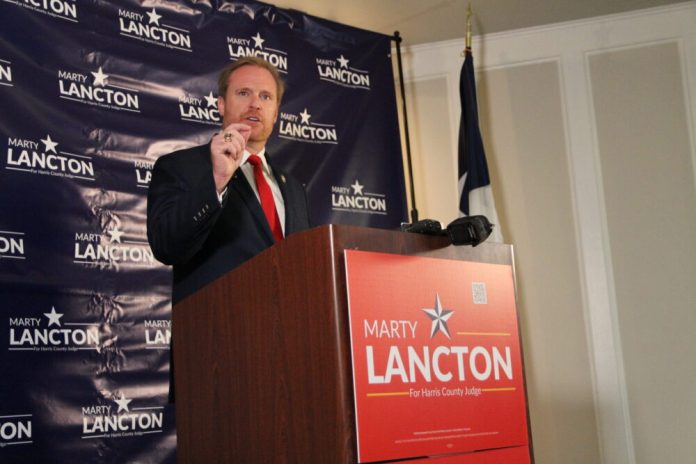
Houston firefighters union leader Marty Lancton confirms his bid for the Harris County Judge’s seat on Thursday, August 20, 2025.

Local firefighters union president Marty Lancton, a top Republican candidate for Harris County Judge, has raised more than $500,000 in his upcoming bid for the seat outpacing the leading Democratic candidate, former Houston Mayor Annise Parker.

But while Lancton received several high-dollar donations from some business owners and real estate moguls, Parker, who drew in roughly $416,000, received about 115 more donations than Lancton, according to recent campaign finance reports filed this week.

His lead in campaign funds comes weeks after Texas Gov. Greg Abbott announced his endorsement of Lancton in the county judge’s race, vowing to devote a significant part of his war chest to Lancton’s campaign and a consolidated effort to turn elected Harris County seats red. Lancton’s campaign finance report did not include any direct donations from Abbott.

A 2025 University of Houston Hobby School of Public Affairs survey which was conducted before Lancton threw his hat in the ring showed Harris County voters slightly favored Parker in this year’s county judge election. Other candidates trailed behind Parker, like Democratic Houston City Council member Letitia Plummer, who received a 2% net favorability for the position.

Plummer did not file a campaign finance report through the Harris County Clerk’s Office by the Jan. 15 reporting period deadline. Her campaign made a July 8 filing appointing a treasurer, and a Jan. 12 filing giving her authorization to file financial reports. A spokesperson for Plummer’s campaign did not immediately return a message seeking comment Friday.

Harris County Judge Lina Hidalgo announced last year she would not seek reelection for her seat. Her recent campaign finance report shows she pulled in about $1,800 in the latest reporting period and spent more than $280,000. Many of those expenditures went towards her Japan trade mission, which was aimed at garnering more business for the county.

Republican candidate Aliza Dutt, the mayor of Houston suburb Piney Point Village, brought in $42,000 in donations. Republican Warren Howell raised just under $4,500.

Oscar Gonzalez, a retired Harris County Sheriff’s Office deputy and Republican, raised about $2,200 in donations in his bid for the seat.

Some of Lancton’s heftiest campaign donations include a $50,000 gift from a Washington D.C.-based firefighters association political action committee, another $50,000 from his own union’s political action committee and various top-dollar donations from some local business owners.

Parker’s top donations include $20,000 from Gilbert Garcia, a managing partner of a Houston-based asset management firm. She also received $10,000 from Ken Bohan, treasurer of the LGBTQ+ Victory Fund, a political action committee founded by Parker, and another $10,000 donation from former Port Houston Commissioner Theldon Branch III.

Great Job & the Team @ Houston Public Media for sharing this story.

Secret Link