Home News Page 49

ICE Protests Continue Throughout Texas

ICE Protests Continue Throughout Texas

While many Texans are calling to abolish ICE, just a few officials in the state are taking that same position despite widespread public condemnation over their actions
ICE Protests Continue Throughout Texas
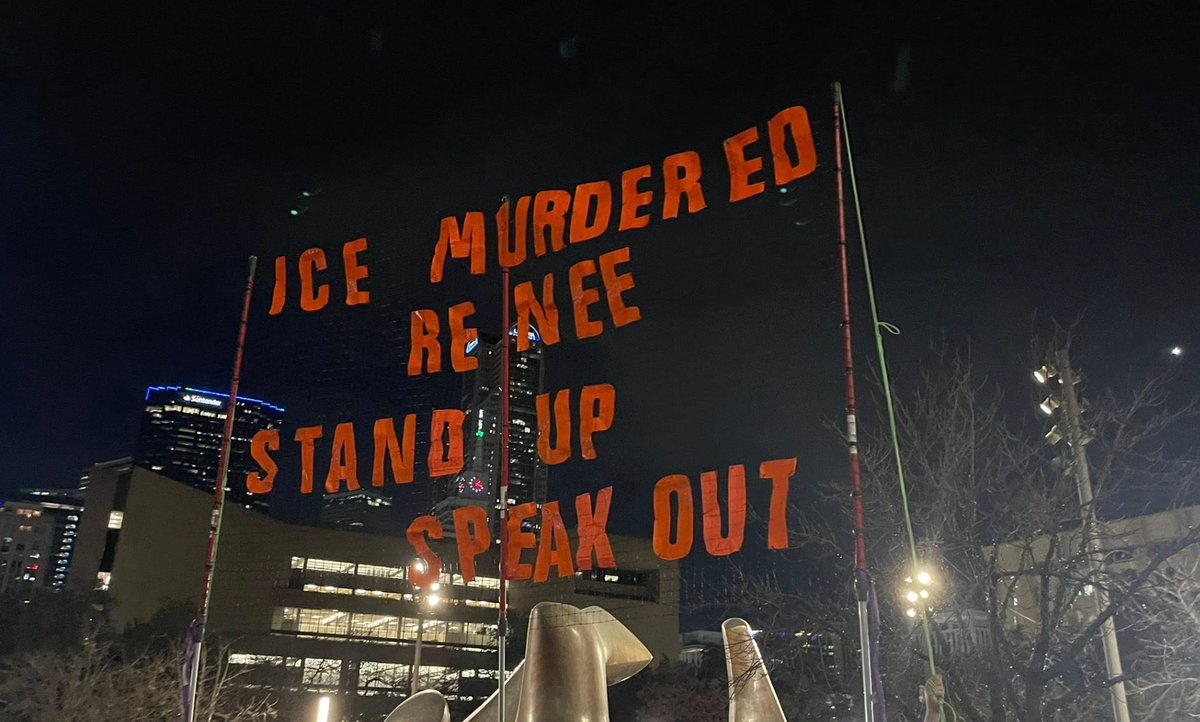
Photo of a Dallas protest (courtesy of Zachary Bullard)

In the week since Renee Nicole Good was killed in Minneapolis after being shot by an ICE officer in Minneapolis, protests and demonstrations have continued in the country and all throughout Texas. And while many Texans are calling to abolish ICE, just a few officials in the state are taking that same position.

The protests that have taken place in Texas have been held in all corners of the state, from Austin to Dallas to Galveston and San Marcos. The organization Indivisible shows several more protests against ICE happening this upcoming weekend, many of them at bridges on prominent Texas highways.

Photo of a protest in Dallas (courtesy of Zachary Bullard)

The events that transpired in Minneapolis have reverberated on the campaign trail in Texas as candidates race to the primary election on March 3. The day after the shooting, Congresswoman Jasmine Crockett, who is running in the Democratic Senate primary, was attending a hearing at the U.S. House Committee on the Judiciary. She became emotional as she implored her Republican colleagues to have a “little bit of courage and humility” to condemn what happened.

Crockett’s fellow Senate candidate James Talarico has been addressing the shooting, and immigration enforcement as he continues campaigning. At a town hall in Plano on January 12, Talarico fielded a question from a nine-year-old who wanted to know “what we can do to stop ICE.” Talarico thanked the young man, named Ryan, for his interest in politics and said that the shooting represented a “moral outrage.” Talarico then called for full investigations and that laws should be passed to stop agents from wearing masks or “kidnapping people without a warrant.” He stopped short of calling for ICE to be abolished.

In October, Crockett co-sponsored the ICE Oversight and Reform Resolution, a six-point bill that would overhaul immigration enforcement that would require ICE and CBP officers to wear body cameras, display identification, and forbid the concealing of identity unless imminent safety was threatened. Like Talarico, Crockett has also not called for ICE to be abolished.

But there are some prominent Democratic politicians who would like to go further when it comes to ICE. Speaking to Zeteo, Congressman Joaquin Castro, who opted not to run for statewide office, told journalist Medhi Hasan that ICE under the Trump administration had been a “rogue organization” that should be disbanded.

Castro’s colleague in Congress ,Greg Casar, who previously supported abolishing ICE as an Austin city council member, spoke at an anti-ICE protest in Austin last Saturday, and led chants of “ICE OUT” to the crowd. Casar is a member of the Congressional Progressive Caucus, which recently announced their group would be opposing any new funding for immigration enforcement until significant changes are made.

New polling from CNN shows broad dissatisfaction with ICE and immigration enforcement in general. The poll administered by SSRS finds that 56 percent of Americans believed Good’s shooting was an “Inappropriate use of force.” Overall, 51 percent of Americans reported that the incident in Minneapolis “reflects bigger problems with the way ICE is operating.”

Texas Republicans have been overwhelmingly supportive of ICE, including the actions of the man who shot Good in Minneapolis. Congressman Wesley Hunt, who is running for Texas Attorney General in the Republican primary, has argued Good was responsible for what transpired, and that immigration enforcement officials have a “constitutional authority to enforce the law.”   

On Thursday, President Trump said on Truth Social that he would be prepared to use the Insurrection Act in Minnesota, after a night of protests and a federal agent shot a man. Texas Governor Greg Abbott has previously shown full support for the president on deploying troops like the Texas National Guard, authorizing their use in Illinois in October 2025.


Great Job Jessica Montoya Coggins & the Team @ The Texas Signal for sharing this story.

Rheumatoid Arthritis in Men: Key Differences and Support Strategies

Rheumatoid Arthritis in Men: Key Differences and Support Strategies

While RA affects men and women in similar ways biologically, research shows some differences in how the disease presents, progresses, and affects overall health.

Age at Diagnosis

Men tend to be diagnosed with rheumatoid arthritis later in life than women.

“In general, men tend to get rheumatoid arthritis in their fifties and sixties, which is later than women, who typically present with RA between their thirties and fifties. It’s unclear why that is; it may be hormonally related, but that’s still being studied,” says Dr. Greer.

Because men develop the condition later, it can complicate the diagnosis and treatment because the symptoms may be mistaken for osteoarthritis or general aging-related joint problems.

Greer notes that this delay can make treatment more challenging as well. “When men come in later, they may already have more stiffness, more functional limitations, or other health issues that make management more complicated,” he says.

Disease Activity and Symptoms

Research shows that women with RA report higher disease activity scores, more pain, and more disability than men, even when objective measures of inflammation are similar.

In general, men with RA tend to have more swelling, joint damage, and objective signs of inflammation, says Greer, while women tend to have more pain, stiffness, and fatigue.

Treatment Response

Research suggests that men with rheumatoid arthritis may respond more quickly to certain treatments, especially when therapy is started early in the disease.

This doesn’t mean RA is less serious in men. Instead, experts believe that biological differences — factors like body composition, hormone levels, and how medications are processed in the body — may influence how treatments work and how quickly symptoms improve, particularly with biologic medications.

When men and women are treated using the same aggressive, treat-to-target approach, long-term outcomes such as joint damage and sustained remission appear similar, even if medication adjustments differ along the way.

Heart and Lung Complications

Men with RA may face higher risks of certain comorbidities (coexisting conditions), particularly involving the heart and lungs, says Greer.

While the risk of cardiovascular disease is higher for everyone with RA, there’s evidence that men are at greater risk of cardiovascular disease than women, including heart attack and stroke, he says. All of the reasons for that aren’t clear, but it’s due in part to men having more uncontrolled heart disease risk factors, such as high cholesterol and high blood pressure.

“It’s also more common for men with rheumatoid arthritis to get inflammatory lung disease called interstitial lung disease, especially men with RA who smoke,” says Greer.

Interstitial lung disease causes inflammation and scarring in the lungs that makes it harder for oxygen to move into the bloodstream. Over time, the scarring is permanent and can raise the risk of serious, even life-threatening complications such as pulmonary hypertension, lung infections, and respiratory failure.

“RA is not just a joint disease. For everyone, but men especially, we’re paying very close attention to heart health and lung symptoms, because those complications can have a big impact on long-term outcomes,” says Greer.

Emotional Impact of RA on Men

The emotional and psychological effects of RA can differ sharply between men and women, shaped in part by social expectations around masculinity, work, and stereotypes about how men have to be tough or stoic.

Research suggests that men with RA often feel pressure to appear strong and self-reliant, leading some to minimize their symptoms or delay seeking help. In interviews, men described hiding their condition at work, pushing through pain, and struggling with the loss of physically demanding roles that were central to their identity.

“Many men may feel like they’re supposed to just deal with it — they may not talk openly about pain, fatigue, or emotional stress, even when it’s affecting their quality of life,” says Greer.

Work and productivity play an especially large role. Studies show that men with RA often link their self-worth to employment and physical capability, making work disability or early retirement particularly distressing.

RA can also affect sexual health and intimacy, due to pain, fatigue, and reduced mobility, which some men may be reluctant to talk about with their provider.

“I always encourage my male patients to bring these issues up. They’re common, they’re treatable, and they’re an important part of overall well-being,” says Greer.

Great Job Becky Upham & the Team @ google-discover Source link for sharing this story.

From OpenAI’s offices to a deal with Eli Lilly — how Chai Discovery became one of the flashiest names in AI drug development | TechCrunch

From OpenAI’s offices to a deal with Eli Lilly — how Chai Discovery became one of the flashiest names in AI drug development | TechCrunch

Drug discovery, the art of identifying new molecules to develop pharmaceuticals, is a notoriously time-consuming and difficult process. Traditional techniques, like high-throughput screening, offer an expensive scattershot approach — one that is not often successful. However, a new breed of biotech companies are leveraging AI and advanced data technologies in an attempt to accelerate and streamline the process.

Chai Discovery, an AI startup founded in 2024, is one such company. In a little over 12 months, its young co-founders have managed to raise hundreds of millions of dollars and rally the backing of some of Silicon Valley’s most influential investors, making it one of the flashiest firms in a growing industry. In December, the company completed its Series B, bringing in an additional $130 million and a valuation of $1.3 billion.

Last Friday, Chai also announced a partnership with Eli Lilly, a deal in which the pharmaceutical giant will use the startup’s software to help develop new medicines. Chai’s algorithm, called Chai-2, is designed to develop antibodies — the proteins necessary to fight illnesses. The startup has said it hopes to serve as a kind of “computer-aided design suite” for molecules.

It’s a critical moment for Chai’s particular field. The startup’s deal was announced shortly before Eli Lilly said it would also collaborate with Nvidia on a $1 billion partnership to create an AI drug discovery lab in San Francisco. This “co-innovation lab,” as it’s being called, will combine big data, compute resources, and scientific expertise, all in an attempt to accelerate the speed of new medicine development.

The industry isn’t without its detractors. Some industry veterans seem to feel that — given how difficult traditional drug development is — these new technologies are unlikely to have a major impact. However, for every naysayer, there seem to be just as many believers.

Elena Viboch, managing director at General Catalyst — one of Chai’s major backers — told TechCrunch that her firm is confident that companies that adopt the startup’s services will see results. “We believe the biopharma companies that move the most quickly to partner with companies like Chai will be the first to get molecules into the clinic, and will make medicines that matter,” Viboch said. “In practice that means partnering in 2026 and by the end of 2027 seeing first-in-class medicines enter into clinical trials.”

Aliza Apple, the head of Lilly’s TuneLab program — which uses AI and machine learning to advance drug discovery — also expressed confidence in Chai’s product. “By combining Chai’s generative design models with Lilly’s deep biologics expertise and proprietary data, we intend to push the frontier of how AI can design better molecules from the outset, with the ultimate goal to help accelerate the development of innovative medicines for patients,” she said.

Techcrunch event

San Francisco
|
October 13-15, 2026

Chai may have been founded less than two years ago, but the startup’s origins began around six years ago, amid conversations between its co-founders and OpenAI CEO Sam Altman. One of those founders, Josh Meier, previously worked for OpenAI in 2018 on its research and engineering team. After he left the company, Altman messaged Meier’s old college friend, Jack Dent, to ask about a potential business opportunity. Meier and Dent had originally met in computer science classes at Harvard but, at the time, Dent was a Stripe engineer (another company Altman was an early backer of). Altman asked him if he thought Meier would be open to collaborating on a proteomics startup — that is, a company focused on the study of proteins.

Altman “messaged me to say that everyone at OpenAI thought highly of him and asked if I thought he’d be open to working with them on a proteomics spinout,” Dent said. Dent told Altman “of course,” but there was just one hitch: Meier didn’t feel like the technology was quite “there” yet. The AI tech behind such firms — which leverage powerful algorithms — was still a growing field and far from where it needed to be.

Meier was also pretty dead set on joining Facebook’s research and engineering team, which is what he would go on to do. At Facebook, Meier helped to develop ESM1, the first transformer protein-language model—an important precursor to the work Chai is currently doing. After Meier’s time at Facebook, he would spend three years at Absci, another AI biotech firm based around drug creation.

By 2024, Meier and Dent finally felt prepared to tackle the proteomics company they had originally discussed with Altman. “Josh and I reached back out to Sam and told him we should pick up that conversation where we left off—and that we were starting Chai together,” Dent said.

OpenAI ended up becoming one of Chai’s first seed investors. Meier and Dent actually founded Chai — along with their co-founders, Matthew McPartlon and Jacques Boitreaud — while working out of the AI giant’s offices in San Francisco’s Mission neighborhood. “They were kind enough to give us some office space,” Dent revealed.

Now, a little over a year later, as Chai basks in the glow of its newfound partnership with Eli Lilly, Dent says that the key to the company’s fast growth has been assembling a team of hugely talented people. “We really just put our heads down and pushed the frontier of what these models are capable of,” said Dent. “Every line of code in our codebase is homegrown. We’re not taking LLMs off the shelf that are in the open source [ecosystem] and fine-tuning them. These are highly custom architectures.”

General Catalyst’s Viboch told TechCrunch that she felt Chai was ready to hit the ground running. “There are no fundamental barriers to deployment of these models in drug discovery,” she said. “Companies will still need to take drug candidates through testing and clinical trials, but we believe there’ll be significant advantages to those who adopt these technologies — not just in compressing discovery timelines, but also in unlocking classes of medicines that have historically been difficult to develop.”

Great Job Lucas Ropek & the Team @ TechCrunch Source link for sharing this story.

A prosecutor’s child witnessed Charlie Kirk’s killing. Does that disqualify him from the case?

A prosecutor’s child witnessed Charlie Kirk’s killing. Does that disqualify him from the case?

The 22-year-old Utah man charged with killing conservative activist Charlie Kirk is due back in court Friday as his attorneys seek to disqualify prosecutors in the case over an alleged conflict of interest.

Tyler Robinson is charged with aggravated murder in Kirk’s Sept. 10 shooting on the Utah Valley University campus in Orem, just a few miles north of the Provo courthouse. Prosecutors with the Utah County Attorney’s Office plan to seek the death penalty if Robinson is convicted. Robinson has not yet entered a plea.

An 18-year-old child of a deputy county attorney attended the campus event where Kirk was shot. The child, whose name was redacted from court filings, later texted with their father in the Utah County Attorney’s Office to describe the chaotic events around the shooting, the filings from prosecutors and defense lawyers state.

Defense attorneys say that personal relationship is a conflict of interest that “raises serious concerns about past and future prosecutorial decision-making in this case,” according to court documents. They also argue that the “rush” to seek the death penalty against Robinson is evidence of “strong emotional reactions” by the prosecution and merits the disqualification of the entire team.

Several thousand people attended the outdoor rally where Kirk, a co-founder of Turning Point USA who helped mobilize young people to vote for President Donald Trump, was shot as he took questions from the audience. The child of the deputy county attorney did not see the shooting, according to an affidavit submitted by prosecutors.

“While the second person in line was speaking with Charlie, I was looking around the crowd when I heard a loud sound, like a pop. Someone yelled, ‘he’s been shot,’” the child stated in the affidavit.

The child later texted a family group chat to say “CHARLIE GOT SHOT.” In the aftermath of the shooting, the child did not miss classes or other activities, and reported no lasting trauma “aside from being scared at the time,” the affidavit said.

Prosecutors have asked District Judge Tony Graf to deny the disqualification request.

“Under these circumstances, there is virtually no risk, let alone a significant risk, that it would arouse such emotions in any father-prosecutor as to render him unable to fairly prosecute the case,” Utah County Attorney Jeffrey Gray said in a filing.

Erika Kirk, Charlie Kirk’s widow, gave remarks Friday, two days after her husband’s fatal shooting at Utah Valley University. “My husband’s mission will not end.”

Gray also said the child was “neither a material witness nor a victim in the case” and that “nearly everything” the person knows about the actual homicide is mere hearsay.

The Associated Press left email and telephone messages for Robinson’s defense attorney, Kathryn Nester.

Prosecutors have said text messages and DNA evidence connect Robinson to the killing. Robinson reportedly texted his romantic partner that he targeted Kirk because he “had enough of his hatred.”

At recent hearings, Robinson’s legal team has pushed to limit media access in the high-profile case. Graf has prohibited media from publishing photos, videos and live broadcasts that show Robinson’s restraints to help protect his presumption of innocence before a trial.

The judge has not ruled on a suggestion by the defense to ban cameras in the courtroom.

Prosecutors are expected to lay out their case against Robinson at a preliminary hearing scheduled to begin May 18.

___

Brown reported from Billings, Montana.

Great Job Hannah Schoenbaum and Matthew Brown | The Associated Press & the Team @ NBC 5 Dallas-Fort Worth for sharing this story.

‘His Tiny Little Hands Could Never’: Trump’s Milk Initiative Promo Backfires After Viewers Spot Details They Say Prove It’s Fake

‘His Tiny Little Hands Could Never’: Trump’s Milk Initiative Promo Backfires After Viewers Spot Details They Say Prove It’s Fake

Things seem to get more bizarre by the day as President Donald Trump’s second term continues to torture the masses, leaving many Americans exhausted by the constant churn of his social media antics.

The latest drama from the White House only added to that sense of controversy, with critics arguing that the Trump administration is now fueling the very kind of “fake news” narratives he so often rails against.

A glass bottle of milk sat front and center as Trump signed the bipartisan “Whole Milk for Healthy Kids Act,” but the signing quickly took a backseat to what came next.

‘His Tiny Little Hands Could Never’: Trump’s Milk Initiative Promo Backfires After Viewers Spot Details They Say Prove It’s Fake
The White House shares an AI image of Donald Trump looking fit to promote milk to Americans, and fans cry “fake” news. (Photo by Anna Moneymaker/Getty Images)

‘Ain’t No Way’: Donald Trump Claims the Same Height and Weight as This Pro Athlete, But the Photos Tell a Completely Different Story

Following the president’s signing of a new legislation, the White House promoted the bill with an AI-generated image of the 79-year-old president, dressed in a navy suit and red tie, hoisting crates of milk with an exaggerated, muscular build.

Captioned “Make Whole Milk Great Again,” the post features a 1950s-style, AI-generated image of Trump in a navy suit and red tie, carrying two crates of milk in each hand. While he appears as orange as ever, the 79-year-old president is also depicted with an exaggerated, muscular build that makes him look far more in shape than reality.

The AI image quickly drew criticism, with viewers calling out the White House for portraying the president with a noticeably “fake” and altered physique. One commenter on Threads responding to the skepticism wondered, “How come you guys always AI generate him with half his weight?”

Another person noted, “You can tell this image is fake because 1) his jacket is buttoned 2) his hands are large 3) he’s shown doing work.”

Others leaned into sarcasm, joking that even the AI edit couldn’t fully smooth out Trump’s appearance. Beyond the exaggerated muscles and trademark orange hue, commenters noted the sharp contrast between the enhanced physique and the unchanged details around Trump’s appearance.

One user shared a revised version of the same Trump image — this time adding a belly — with a simple caption: “Fixed it.”

Even as the AI image slimmed Trump down and gave him a more muscular build, the noticeable wattled skin on his neck remained, leaving many to call the image unintentionally funny.

“My favorite part of this AI version is they left the neckussy,” one person wrote, which prompted another to reply, “Zoomed in and you’re right!!”

Footage of Trump falling asleep during the Oval Office bill signing also went viral — something he’s quite known for doing regularly. The constant napping during briefings and important meetings has people questioning his health, earning him the nickname “Dozy Don” for his frequent naps and public drowsiness.

“Didn’t the milkman fall asleep during the press conference? Lol,” the commenter wrote.

Others zeroed in on the proportions, noting that Trump’s hands appeared far larger than in real life. “His tiny little hands could never carry that much milk,” one commenter quipped

In another separate bizarre moment, Trump attempted to explain the difference between “hole” vs. “whole” milk. He said, “It’s actually a legal definition — ‘whole milk.’ And it’s whole with a W for those of you that have a problem.”

One person joked, “The clarification on the spelling of Whole Milk implies he has tried Hole Milk.”

During the signing, Trump claimed that drinking milk had helped him pass multiple cognitive tests. Still, viewers couldn’t help noticing that the bottle of milk sat untouched, even as critics continued to poke fun at the contrast between the claim and the president’s well-known fast-food-heavy diet of McDonald’s and Diet Coke.

Between the exaggerated AI image, the untouched bottle of milk, and the president appearing to nod off during the event, the moment drifted from policy to performance — with the visuals doing most of the talking.

Great Job Niko Mann & the Team @ Atlanta Black Star Source link for sharing this story.

Meet the self-made billionaire who bought a nearly bankrupt company off Warren Buffett for $1,000 and turned it into a $98 billion giant | Fortune

Meet the self-made billionaire who bought a nearly bankrupt company off Warren Buffett for ,000 and turned it into a  billion giant | Fortune

A small investment made at the right moment has the power to launch ordinary people to millionaire status. All it took was $1,000 and an out-there idea for Jeffrey Sprecher, the founder and CEO of Intercontinental Exchange, to set his business on a path to becoming a $98 billion behemoth.

“I had this idea that you should be able to trade electric power, buy and sell electric power, on an exchange,” Sprecher recalled recently at the Rotary Club Of Atlanta. But there was a huge caveat: He “had no idea how to do that. I’d never worked on Wall Street, I never traded.” 

At the time, Sprecher had heard that Continental Power Exchange—owned by Warren Buffett’s electric utility company, MidAmerican Energy—was about to go bankrupt. Despite Buffett’s business pumping $35 million into it, the company was still struggling. And so Sprecher saw this as an opportune moment to swoop in and pursue his entrepreneurial vision. 

“I bought the company for a dollar a share, and there were a thousand shares. So I bought it for $1,000, and I used that as the basis to build Intercontinental Exchange.”

Thanks to his quick thinking and business savvy, Sprecher now boasts a net worth of $1.3 billion. But the journey to the top was not very glamorous. 

Living in a 500-ft studio and driving a used car while scaling the business 

That measly $1,000 investment made back in 1997 served as the launchpad for Intercontinental Exchange, founded just three years later. A small team of nine employees set off to build the technology in 2000; setting up shop in Atlanta, Georgia, Sprecher and his staffers went all-in on building the business up from its former demise. 

It was all hands on deck, and even as the founder and CEO, Sprecher was doing the menial labor to keep everything in order. With money being tight, the entrepreneur lived in a small apartment and drove a used car to the office to keep Intercontinental Energy afloat.

“I bought a 500-foot, one room studio apartment in Midtown…I bought a used car that I kept and I’d go into the office from time to time,” Sprecher explained, adding that he “took the trash out, shut the lights out, answered the phone, bought the staplers and the paper for the photocopier. That was the way the company started.”

Nearly 26 years later, the company boasts a market cap of $98 billion and a team of more than 12,000 employees—and has proudly owned the NYSE for over a decade. 

Entrepreneurs who made a key investment at the right moment

Some of the wealthiest entrepreneurs made their billions by spotting the perfect window to invest small and earn big. 

Take Kenn Ricci as an example: the serial American aviation businessman and chairman of private jet company Flexjet is a billionaire thanks to his intuition to buy a struggling business four decades ago. After being put on leave from his first pilot job out of the Air Force, he turned a sticky situation into a 10-figure fortune.

“I worked for [airline] Northwest Orient for a brief period of time. I get furloughed. Unemployed, back living with my parents,” Ricci told the Wall Street Journal in a 2025 interview, reminiscing on how he made his first $1 million.

But instead of throwing in the towel, he spotted a golden opportunity. Ricci took a contract pilot job at Professional Flight Crews, and one of the companies he flew for was private aviation company Corporate Wings. The budding businessman was intrigued when its owners put the business up for sale at $27,500 in 1981—and jumped on the opportunity to buy it. By the early 1990s, the business was pulling in $3 million a year.

But people don’t need to buy and scale a company to make a worthwhile investment; millennial investing wiz Martin Mignot became a self-made millionaire thanks to his ability to spot unicorn companies before they make it big. One of his biggest wins was an early investment in Deliveroo—back when the business was just a small, London-based operation. 

“They had eight employees. They were in three London boroughs. Overall, they had a few 1000 users to date, so it was very, very early,” Mignot told Fortune last year. “They didn’t have an app. Their first website was pretty terrible and ugly, if I’m frank, but the delivery experience was incredible.”

Lo and behold, Deliveroo grew to become a $3.5 billion company with millions of global customers. And as a partner at Index Ventures, Mignot is part of a team reaping billion-dollar rewards from forward-thinking investments in tech businesses including Figma, Scale AI, and Wiz. Aside from his day job, Mignot has also strategically put money towards iconic European start-ups including Revolut, Trainline and Personio. Before he was even 30, he solidified himself as a notable investor—and advised others that “It’s about owning equity, that is the key.”

Great Job Emma Burleigh & the Team @ Fortune | FORTUNE Source link for sharing this story.

Victor Wembanyama, Keldon Johnson and diehard Spurs fans go bald for fresh start

Victor Wembanyama, Keldon Johnson and diehard Spurs fans go bald for fresh start

SAN ANTONIO – San Antonio Spurs center Victor Wembanyama needed a fresh start after two frustrating losses, so he decided to let it all go — his hair, that is.

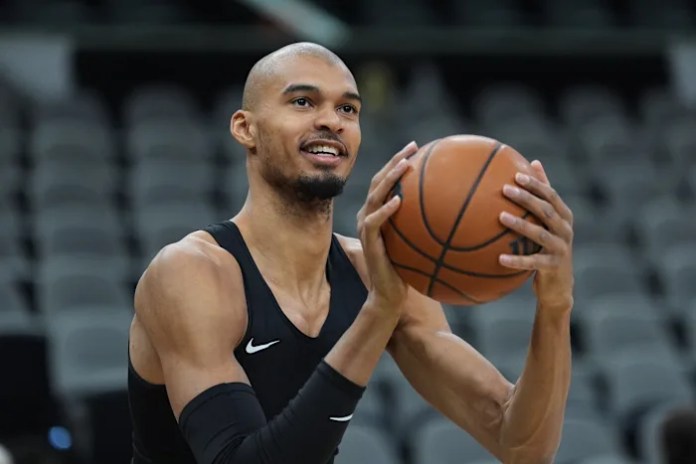
Sporting a freshly shaved head courtesy of a teammate, Wembanyama overcame an injury scare to score 22 points and grab 10 rebounds Thursday night as San Antonio routed Milwaukee 119-101 to snap a two-game skid.

San Antonio Spurs forward Victor Wembanyama, left, drives against Milwaukee Bucks forward Giannis Antetokounmpo (34) during the second half of an NBA basketball game in San Antonio, Thursday, Jan. 15, 2026. (AP Photo/Eric Gay) (Copyright 2026 The Associated Press. All rights reserved)

Wembanyama exited early in the first quarter after banging knees with Giannis Antetokounmpo but returned to even his career record against the Bucks center after four games.

It was a welcome change for Wembanyama and the Spurs after blowing a 19-point lead in the fourth quarter in falling 104-103 at Minnesota on Sunday, followed by a 119-98 loss at Oklahoma City on Tuesday.

Milwaukee Bucks forward Giannis Antetokounmpo (34) drives to the basket against San Antonio Spurs forward Victor Wembanyama (1) during the first half of an NBA basketball game in San Antonio, Thursday, Jan. 15, 2026. (AP Photo/Eric Gay) (Copyright 2026 The Associated Press. All rights reserved)

San Antonio forward Keldon Johnson deserves some credit for the change in fortunes as well as Wembanyama’s new style.

“I have been having this (shaving his head) in the back of my head for a little bit, and the fact that (Keldon) wanted to do it as well, it just convinced me,” Wembanyama said. “But I felt like we had to lock in real quick because we had been losing a little bit.”

The idea for new look began last week when Johnson announced he was planning to shave his head and tried to convince his teammates to join him.

Spurs guard Stephon Castle wasn’t about to shave his dreadlock high-top fade.

“They knew not to ask me,” Castle said. “I don’t got much for that one. It’s not going to happen.”

Not surprisingly, the young man who spent 10 days training with the Shaolin monks in Zhengzhou, China, this summer and played chess in Washington Square Park in New York City on a whim two years ago was all in.

Wembanyama opted to have Johnson shave his head Wednesday night rather than go to a professional barber.

“I mean, what can go wrong if the plan is to cut it all off,” Wembanyama said, chuckling.

San Antonio Spurs forward Victor Wembanyama (1) celebrates a score in front of Milwaukee Bucks center Myles Turner (3) during the second half of an NBA basketball game in San Antonio, Thursday, Jan. 15, 2026. (AP Photo/Eric Gay) (Copyright 2026 The Associated Press. All rights reserved)

Johnson is rarely at a standstill on the court or on the bench, but he reined in his energy while clipping Wembanyama.

“It took me a good little minute,” Johnson said. “I was trying to be cautious because he got hit (on the head against Oklahoma City). He had a knot on his head. So, I was trying to make sure everything’s smooth. Take my time. You know what I’m saying? I had to fade it up a little bit at first. Then I gave him a little bowl cut, and we just went from there.”

Wembanyama returned the favor with the same precision he had in making five of six 3-pointers on Thursday.

“He did good,” Johnson said. “He was quick with it. No lie. Vic probably took like three minutes. Boom, boom, boom, knocking down. Boom. I’m like, ‘Wow.’”

Wembanyama and Johnson weren’t the only ones to shave it all off.

The San Antonio Spurs posted an image of the Spurs players with three members of the Jackals — a fan group Wembanyama created.

“The shaved head look is catching on ,” the team posted on social media Thursday night.

Copyright 2026 The Associated Press. All rights reserved. This material may not be published, broadcast, rewritten or redistributed without permission.

Great Job Associated Press & the Team @ KSAT San Antonio Source link for sharing this story.

The Prosecution of Crimes against Humanity: a National Perspective

The Prosecution of Crimes against Humanity: a National Perspective

Over the past years, Germany has successfully secured verdicts and conducted trials related to core international crimes committed in Syria and Iraq as well as in Rwanda and Gambia. The prosecution of crimes against humanity has been central to these efforts. German courts convicted members of the regime of Bashar al-Assad as well as foreign terrorist fighters, male and female, most of them cumulatively, for membership in a terrorist organization and crimes against humanity.

Focusing on the atrocities members of ISIS committed—for example, against the Yazidis—police, prosecutors, and judges faced many challenges. Questions that had to be answered were:

  • How to prove the widespread and systematic attack of ISIS against Yazidis?
  • How to identify perpetrators – especially those who could be tried in Germany?
  • How to cooperate effectively with a wide variety of stakeholders?
  • How to prove intention of individual male or female ISIS members who committed acts of murder, torture, rape, and enslavement against Yazidis.

These questions had to be raised at every step of the way – at the beginning of building a criminal case, during the preliminary investigation against individual suspects, as well as at the trial proceedings.

Looking at the contextual elements – the widespread and systematic attack – we established the grounds for suspicion of core international crimes by witness testimony of many Yazidi witnesses in Germany who were able to name and describe higher-ranking ISIS fighters who were involved in the initial attack on the Sinjar region of Iraq in August 2014 and who were involved in the initiation of the slave trade with Yazidi women and girls. However, we faced the problem that it would be a huge challenge to bring cases to court as it was so difficult to build a case against individuals with a link to Germany.

The first trials for ISIS-crimes against Yazidis started in 2019 and 2020 against three female ISIS members. In the course of the investigation into the terrorist crimes of these three returnees, the cooperation with several NGOs, especially YAZDA, brought to light that Yazidi slaves were held captive in their households. So, we cumulatively charged these women with the crime against humanity of murder, enslavement, torture, and aiding and abetting rape.

At the time of the trials, we had established the facts for the contextual elements by collecting many witness statements of Yazidis, police reports, ISIS documents, and NGO and expert witness reports. The question was: how was the evidence going to be introduced into the court proceedings?

According to German procedural law everything of relevance for the assessment of someone’s guilt has to be part of the court hearings. As the witness statements of more than 100 Yazidi witnesses built the foundation of our general findings, we were aware that German courts might think it necessary to have many Yazidi witnesses testify about the atrocities they endured, even if they were not directly affected by the acts of the defendants. This was something we didn’t want to happen as it would have caused a lot of stress for many witnesses and the risk of re-traumatization. Ultimately, proof of ISIS’ destructive agenda toward the Yazidi religion was found through other evidence. For example, the court heard statements from police officers who carried out numerous interviews with Yazidi witnesses about the killings during the initial attack on the Sinjar region as well as the established slave trade and the cruel treatment of women and girls. Furthermore, we presented police reports about documented ISIS attacks on Yazidi villages and cultural heritage. Expert witnesses also testified on the Yazidi religion and culture and on ISIS’ structure, the terrorist attacks and crimes it committed, and the group’s propaganda and aim to establish a global caliphate.

Having established the facts for the contextual element, German courts had to examine the evidence for the individual crimes committed by the defendants. Proving this was the most important part – and the heaviest task – and it rested on the shoulders of Yazidi witnesses who had to give evidence about the incredibly cruel treatment by their enslavers.

There were challenges to questioning Yazidi witnesses in court. First of all, there was the challenging situation for the witnesses: In Germany, it is not sufficient to resort to the protocol of the interviews taken during the preliminary investigation. So, in general, witnesses have to go through the painful process of testifying in court again. They are entitled to legal representation, but still the courtroom clearly is a difficult environment to speak about the most terrible events in their lives: They have to speak in the presence of the defendant, the defense counsels, the judges, the prosecutors, and, in most cases, the public, representatives of NGOs, and journalists.

Another challenge can be the lack of specialization of German courts. During the preliminary investigation a lot of specialists are involved in the process, like police officers from war crimes units, prosecutors, and experts. German courts, on the other hand, do not only deal with core international crime cases. They also try cases of Islamic extremists, right-wing and left-wing terrorism, espionage, and weapons proliferation.

When it came to inter-cultural competence, it proved to be very helpful that some of the court chambers in Germany took the time to become familiar with the specifics of the Yazidi cases. Before the Yazidi witnesses were heard, experts explained the religious and cultural background of the Yazidis. It led to the conclusion that exact details of age and time or perceptions in chronological order are atypical and cannot always be expected from Yazidi witnesses. Instead, classifications of time are typically linked to historical events and sensations. These explanations gave the judges the opportunity to adjust their way of questioning the witnesses.

Interpretation was another issue of the criminal proceedings. It was not always easy to find interpreters who speak the “Shingali-Kurmanji” dialect of the Yazidis of Sinjar, a dialect mixing Kurdish Kurmanji with Arabic.

In the end, Yazidi witnesses proved to be survivors in the courtroom as well. One of the witnesses testified in five different cases before Higher Regional Courts, contributing to five convictions. With great patience and resilience, they managed and tolerated endless interrogations by all parties. In every case, judges concluded that the Yazidi witness statements were reliable, credible, and authentic and courts based their convictions on their testimony.

More than 20 years of investigations have demonstrated that crimes against humanity can be effectively prosecuted under the provisions of Section 7 of the German Code of Crimes Against International Law. However, every conflict is unique and every investigation inevitably starts with huge problems. Solving these problems requires clear rules, creativity, and sometimes a lot of patience. Above all, international cooperation is indispensable. I cannot think of any aspect of prosecuting crimes against humanity where it has not been of significant importance to cooperate with international partners. International cooperation is a quintessential element at every step of the way toward holding perpetrators accountable for crimes against humanity. An international convention on prevention and punishment of crimes against humanity would be a visible step toward accountability.

FEATURED IMAGE: A globe in front of books (via Getty Images)

Great Job Stephanie Egerer-Uhrig & the Team @ Just Security Source link for sharing this story.

16 Sultry Sade Tracks Perfect For The Winter

16 Sultry Sade Tracks Perfect For The Winter

Source: getty / Getty

Singer and songwriter, Sade celebrates her 62nd birthday today. For years, she has provided the perfect soundtrack for weekends filled with intense cleaning, deep reflection and creating a peaceful atmosphere. The British-Nigerian songstress has been credited as one of the most successful British female artists in history, and is most often recognized as a major influence on contemporary music. Sade’s voice is both soothing and inviting. Her vocals create a real-life sound bath, which harmoniously heals and calms any listener. Have you ever met someone who did not enjoy the relaxing sounds of Sade?

We crafted a list of 16 sultry Sade tracks that are perfect for winter to celebrate this queen on her birthday.

1. By Your Side

This is definitely one of Sade’s top tracks and an ultimate fan favorite. “By Your Side” was released in 2000 with a pleasant melodic tune that is absolutely irresistible. You have to revisit this song a few times after the first listen. The simplicity of the lyrics, paired with an unforgettable melody, makes it hard not to listen over and over again.

2. No Ordinary Love 

Debuting in 1992, Sade premieres an instant classic with “No Ordinary Love.” This sultry single is simply one where Sade is tooting her own horn. “This ain’t no ordinary love, beloved.”

3. Is It A Crime?

Sade always sported a classic hoop, red lip and ponytail. Similar to her look, Sade’s music continues to resonate with generations to come. The sensual saxophone solo in the beginning that introduces the song is timeless.

4. Hang Onto Your Love 

This Sade classic is a bit more upbeat. The video is set in a casino full of patrons dancing to the sounds of Sade and her band playing paper instruments. “In heaven’s name why are you walking away. Hang onto your love.”

5. Love Is Stronger Than Pride

In 1988, Sade delivers on “Love Is Stronger Than Pride.” This heavy drummed single is one that we can all relate to. No matter how much you may dislike a past lover, it is often hard to stop loving someone you truly care about. Is love stronger than pride?

6. Bullet Proof Soul

“Bullet Proof Soul” is an underrated classic from Sade and her bandmates. It is certainly a sultry sound to snuggle in bed to this winter season.

7. When Am I Going To Make A Living?

Sade owned the 80’s with hit single after hit single. In 1984, she debuts this single that, unlike many of their songs about love, a song about achieving and believing in yourself.

8. Smooth Operator 

In 1984, “Smooth Operator” was released and the world was no longer the same. The iconic track accompanied by Sade’s airy vocals creates an uplifting single to keep your spirits high in the cold wintery months.

9. Soldier Of Love 

This single debuted later in Sade’s career in 2010. The trumpet and snare drum opens with a militant feel that is perfect to emote being a “Soldier of Love.” A perfect addition to your sultry Saturday morning playlist.

10. The Sweetest Taboo 

A common theme in Sade’s music seems to be a heavy kick drum which provides a smooth soundtrack to assist her comforting vocals. This song is definitely one of her most iconic tracks with a simple melodic hook that is both catchy and relatable to all the lovers out there.

11. Paradise

It’s all about a musical introduction for Sade and the band. “Paradise” debuted in 1988 and the single makes you feel like you’ve escaped to an island with just you and your lover. A blissful single that may help you avoid the troubles of winter’s brisk air.

12. Never As Good As The First Time

This single has a cinematic opening that fits perfectly for your favorite 80s film. It really is nothing like the first time and Sade is here to remind you.

13. Slave Song

We had to share at least one live version from Sade. Her performances are so calming and the ideal soundtrack for a relaxing weekend. Kick your feet up and enjoy!

14. I Never Thought I’d See The Day 

Sade’s songs were always so musical. This song provides peaceful, airy sonics that is intrinsic for a restorative winter playlist.

15. Flower Of The Universe

“Flower of the Universe” premiered on Disney’s A Wrinkle In Time in 2018. Like all of Sade’s music, this single represents what a lover’s universe feels like in the most euphoric way possible. No I.D. lends his hands for the remix on the movies soundtrack.

16. Immigrant 

Sade opens this live performance saying this single is dedicated to her father who was an immigrant leaving their country in Nigeria. She mentions that this song was a sketch in her mind since she was a small child. The last addition to your sultry Sade songs consummate for winter.

Enjoy these sultry sounds on the queen’s birthday. Happy Birthday to the iconic voice that is Sade!


16 Sultry Sade Tracks Perfect For The Winter
was originally published on
globalgrind.com

Great Job Sammy Approved & the Team @ Black America Web Source link for sharing this story.

DeBriefed 16 January 2026: Three years of record heat; China and India coal milestone; Beijing’s 2026 climate outlook – Carbon Brief

DeBriefed 16 January 2026: Three years of record heat; China and India coal milestone; Beijing’s 2026 climate outlook – Carbon Brief

Welcome to Carbon Brief’s DeBriefed. 
An essential guide to the week’s key developments relating to climate change.

Hottest hat-trick

STATE OF THE CLIMATE: Scientists have announced that 2025 was either the second or third hottest year on record, with close margins between last year and 2023, reported the Associated Press. The newswire noted that “temperature averages for 2025 hovered around – and mostly above – 1.4C of industrial era warming”. Bloomberg said that this happened despite the natural weather phenomenon La Niña, which “suppresses global temperatures”, meaning “heat from greenhouse gases countered that cooling influence”. Carbon Brief’s comprehensive analysis of the data found cumulative global ice loss also “reached a new record high in 2025”.

OVERHEATING OCEANS: Separately, the world’s oceans “absorbed colossal amounts of heat in 2025”, said the Guardian, setting “yet another new record and fuelling more extreme weather”. It added that the “extra heat makes the hurricanes and typhoons…more intense, causes heavier downpours of rain and greater flooding and results in longer marine heatwaves”.

FIRE AND ICE: Wildfires in Australia have destroyed around 500 structures, said the Sydney Morning Herald, with a “dozen major fires” still burning. A wildfire in Argentinian Patagonia has “blazed through nearly 12,000 hectares” of scrubland and forests, according to the Associated Press. Meanwhile, parts of the Himalayas are “snowless” for the first time in nearly four decades, signalling a “climatic anomaly”, reported the Times of India.

  • EMISSIONS REBOUND: US emissions rose 2% last year after two years of declines” due to a rise in coal power generation, said Axios, in coverage of research by the Rhodium Group.
  • ‘UNINVESTABLE’ OIL: US president Donald Trump may “sideline” ExxonMobil from Venezuela’s oil market after its comment that Venezuela is “uninvestable”, reported CNBC. TotalEnergies is also “in no rush to return to Venezuela”, said Reuters
  • PRICE WARS: The EU issued guidelines that will allow tariffs on Chinese electric vehicles to be removed in exchange for minimum price commitments, said Reuters
  • ‘RECORD’ AUCTION: The UK government has secured “8.4 gigawatts of new offshore wind power” in a “record” auction, said Sky News. Although the auction saw some price rises, this will likely be “cost neutral” for consumers, Carbon Brief said – contrary to the “simplistic and misleading” narratives promoted by some media outlets.
  • COP STRATEGY: The Guardian reported that Chris Bowen, the Australian minister appointed “president of negotiations” for COP31, plans to use his role to lobby “Saudi Arabia and others” on the need to phase out fossil fuels. 

The size of a new climate fund unveiled by the Nigerian government, according to Reuters


  • Rooftop solar in the EU has the potential to meet 40% of electricity demand in a 100% renewable scenario for 2050 | Nature Energy
  • Natural wildfires, such as those ignited by lightning strikes, have been increasing in frequency and intensity in sub-Saharan Africa, driven by climate change | Global and Planetary Change
  • Engaging diverse citizens groups can lead to “more equitable, actionable climate adaptation” across four pilot regions in Europe | Frontiers in Climate

(For more, see Carbon Brief’s in-depth daily summaries of the top climate news stories on Monday, Tuesday, Wednesday, Thursday and Friday.)

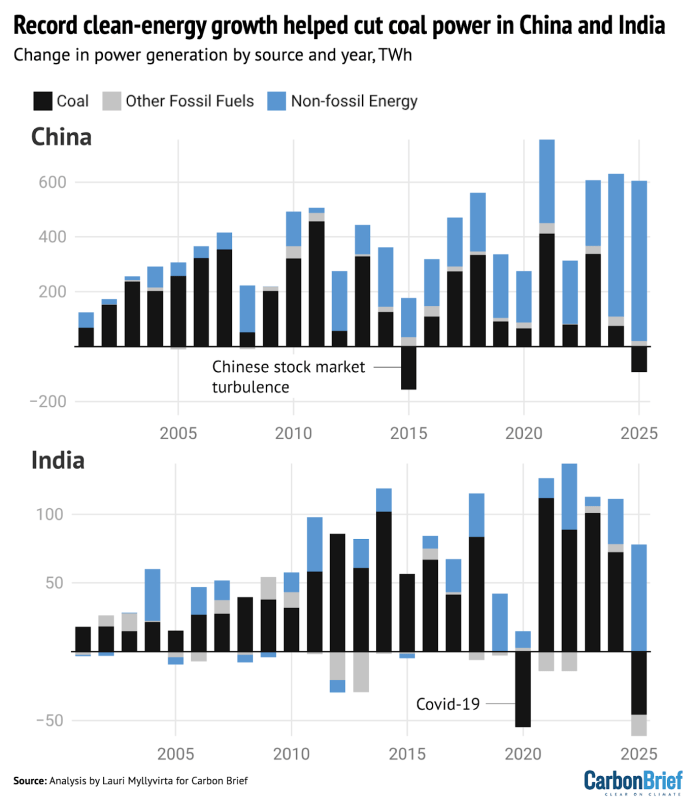
Both China and India saw coal power generation fall in 2025, in the “first simultaneous drop in half a century”, found new analysis for Carbon Brief, which was widely reported around the world. It noted that, for both countries, the decline in coal was driven by new clean-energy capacity additions, which were “more than sufficient to meet rising demand”. 

What are China experts watching for in 2026?

The year 2026 will be pivotal for China’s climate policy. In March, the government will release key climate and energy targets for 2030, the year by which China has pledged to have peaked its emissions. 

At the same time, with the US increasingly turning away from climate policy and towards fossil fuel expansionism, China’s role in global climate action is more important than ever.

Carbon Brief asks leading experts what they are watching for from China over the year ahead. 

Shuo Li, director of the China Climate Hub, Asia Society Policy Institute

After decades of rapid growth, independent analyses suggest China’s CO2 emissions may have plateaued or even begun to decline in 2025. 

The transition from emissions growth to stabilisation and early decline will be the key watch point for 2026 and will be shaped by the forthcoming 15th five-year plan. [This plan will set key economic goals, including energy and climate targets, for 2030.]

However, the precise timing, scale and enforceability of these absolute emissions control measures remain under active debate. Chinese experts broadly agree that if the 2021-2025 period was characterised by continued emissions growth, and 2031-2035 is expected to deliver a clear decline, then 2026-2030 will serve as a critical “bridge” between the two. 

Yan Qin, principal analyst, ClearBlue Markets

First, the 15th five-year plan inaugurates the “dual control of carbon” system. This year marks the first time industries and local governments face binding caps on total emissions, not just intensity.

Second, the national carbon market is aggressively tightening. With the inclusion of steel, cement and aluminum this year, regulators are executing a “market reset” – de-weighting older allowances [meaning they cannot be used to contribute to polluters’ obligations for 2026] and enforcing stricter benchmarks to bolster prices ahead of the full rollout of the EU’s carbon border adjustment mechanism.

Cecilia Trasi, senior policy advisor for industry and trade, ECCO 

China’s solar manufacturing overcapacity is prompting Beijing’s first serious consolidation efforts. At the same time, its offshore wind technology is advancing rapidly [and there are] signals that Chinese wind companies are pursuing entry into European markets through local production, mirroring strategies adopted by battery manufacturers.

Together, these dynamics suggest that the next phase of cleantech competition will be shaped less by trade defense alone and more by the interaction between Chinese supply-side reforms and global market-absorption capacity.

Tu Le, managing director, Sino Auto Insights

China’s electric vehicle (EV) industry has been the primary force pushing the global passenger vehicle market toward clean energy. That momentum should continue. But a growing headwind has emerged: tariffs. Mexico, Brazil, Europe and the US are just a few of the countries raising barriers, complicating the next phase of global EV expansion. 

One new wildcard: the US now effectively controls Venezuelan oil. If that meaningfully impacts global oil prices, it could either slow – or unexpectedly accelerate – the shift toward clean-energy vehicles.

Responses have been edited for length and clarity. 

A full-length version of the article is available on the Carbon Brief website. 

SHAPING THE LAND: In addition to land use shaping the climate, climate change is now increasingly “changing the land”, according to satellite monitoring by World Resources Institute, creating a “dangerous feedback loop”.

‘POSITIVE TIPPING POINTS’: A commentary co-authored by climate scientist Prof Corinne Le Quéré in Nature argued that several climate trends have locked in “irreversible progress in climate action”.

FROM THE FLAMES: Nick Grimshaw interviewed musician and data analyst Miriam Quick on how she turned the 2023 Canadian wildfires into music on BBC Radio 6. (Skip to 1:41:45 to listen.)

Pick of the jobs

DeBriefed is edited by Daisy Dunne. Please send any tips or feedback to [email protected].

This is an online version of Carbon Brief’s weekly DeBriefed email newsletter. Subscribe for free here.

Great Job Anika Patel & the Team @ Carbon Brief Source link for sharing this story.

Secret Link