

Home News Page 48

AI cloud startup Runpod hits $120M in ARR — and it started with a Reddit post   | TechCrunch

AI cloud startup Runpod hits 0M in ARR — and it started with a Reddit post   | TechCrunch

Runpod, an AI app hosting platform that launched four years ago, has hit a $120 million annual revenue run rate, founders Zhen Lu and Pardeep Singh tell TechCrunch.  

Their startup journey is a wild example of how if you build it well and the timing is lucky, they will definitely come.

The story includes bootstrapping their way to over $1 million in revenue; landing a $20 million seed round after VC Radhika Malik, a partner at Dell Technologies Capital, saw some Reddit posts; and gaining another key angel investor, Hugging Face co-founder Julien Chaumond, because he was using the product and reached out over the support chat, the founders tell TechCrunch. 

It all began in late 2021 when the two friends, who worked together as corporate developers for Comcast, decided the hobby they were doing wasn’t fun anymore. 

They had built setups of specialized computers used to generate Ethereum in their respective New Jersey basements. While they did successfully mine a bit of the cryptocurrency, it wasn’t enough to pay back their investment, they said. Plus, mining was going to end after the much-ballyhooed network upgrade called “The Merge.” 

On top of that, it was “boring” after a couple of months, Lu said. 

But they had talked their wives into letting them spend a good $50,000 on the hobby between them, they estimated. Lu and Singh knew that home harmony depended on finding a way to use those GPUs. 

Techcrunch event

San Francisco
|
October 13-15, 2026

The devs had been engaged in machine learning projects at work, so they opted to convert their mining rigs into AI servers. This was before ChatGPT, even before DALL-E 2. 

As they repurposed the rigs, “We were seeing how really god-awful the software stack was for dealing with these GPUs,” Lu said. As developers, they found a problem they wanted to solve.  

Runpod was born “because we felt that the actual experience of developing software on top of GPUs was just hot garbage,” Lu described. 

A few months later in early 2022, they were ready to share what they had built. Runpod is a platform for hosting AI apps, emphasizing speed, easily configured hardware (including a serverless option that automates configuration), and dev tools like APIs, command-line interfaces, and other integrations.  

Back in 2021, they only had a few such integrations (like support for popular web app tool Jupyter notebooks). The next problem: finding beta testers. 

“As first-time founders, we didn’t really know how to market or how to do anything,” Lu recalled. “So I’m like, all right, let’s just post on Reddit.” 

So, they posted in a couple of AI-oriented subreddits. The offer was simple: free access to their AI servers in exchange for feedback. It worked. They landed beta customers, which led to paying customers. Within nine months, they had quit their jobs and hit $1 million in revenue, they said. 

Bootstrapping growth

But that led to another problem. “Six months in, business users were like, ‘Hey, I want to actually run real business stuff on your platform. But I cannot run it on servers that are in people’s basements,” Lu said. 

It had not occurred to the New Jersey founders to raise capital from VCs. Instead they formed revenue-share partnerships with data centers to grow capacity. But it was stressful. The founders needed to stay three steps ahead. 

“If we don’t have the GPUs, the market sentiment, the user sentiment changes. Because when they don’t see capacity from you, they go somewhere else,” Singh described. 

Meanwhile, their user base was growing on Reddit and Discord, especially after ChatGPT launched.

VCs were also on the prowl for investments. Malik saw them on Reddit and reached out, their first VC call. But Lu didn’t know how to pitch to an investor. “Radhika was super helpful, even at the first conversation,” he said. She basically explained to him how a VC thinks and told him she’d stay in touch.  

Meanwhile, Lu had a business to run that had to pay for itself. “It was almost two years where we really didn’t have any funding,” he said. So Runpod never offered a free tier. It had to at least pay for itself, even if it wasn’t throwing off much profit. Unlike other AI cloud services that began as crypto miners, these founders refused to take on debt, they said. 

By May 2024, with AI app fever spreading, their lucky decision to launch AI hosting for devs two years earlier was paying off. Their business had grown to 100,000 developers, and they landed a $20 million seed deal co-led by the VC arms of both Dell and Intel, with participation from big names like Nat Friedman and Chaumond.  

They haven’t raised more money since but are now planning to, armed with a business that, they believe, should command a healthy Series A. 

Today, Runpod counts 500,000 developers as customers, ranging from individuals to Fortune 500 enterprise teams with multimillion-dollar annual spend, the founders said. 

Their cloud spans 31 regions globally and counts customers like Replit, Cursor, OpenAI, Perplexity, Wix, and Zillow as users.

Competition is also fierce. Devs have all the major clouds to choose from (AWS, Microsoft, Google), plus plenty of industry-specific choices like CoreWeave and Core Scientific. 

But they also see their place in the world a bit differently — as a dev-centric platform. They don’t see coding ever going away but changing. Programmers will become AI agent creators and operators. 

“Our goal is to be what this next generation of software developers grows up on,” Lu said.  

Great Job Julie Bort & the Team @ TechCrunch Source link for sharing this story.
‘Diarrhea Can be Very Painful’: Trump Rushes Out of Briefing Claiming Meetings, but Cameras Catch Him Speaking to Reporters Shortly After

‘Diarrhea Can be Very Painful’: Trump Rushes Out of Briefing Claiming Meetings, but Cameras Catch Him Speaking to Reporters Shortly After

President Donald Trump abruptly ended a White House briefing and declined to take questions before making a swift exit.

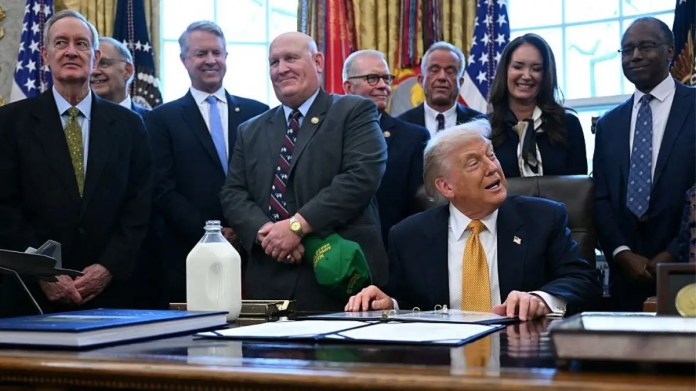
The president gathered executives and officials in the White House’s East Room for what was billed as a serious roundtable on his administration’s “Great Healthcare Plan.” The meeting was supposed to be about rural healthcare, but instead, thanks to his immediate rush out of the room, it ended like a fire drill.

‘Diarrhea Can be Very Painful’: Trump Rushes Out of Briefing Claiming Meetings, but Cameras Catch Him Speaking to Reporters Shortly After
Donald Trump’s White House exit turned a health care roundtable into a viral spectacle on some corners of a social media. ( (Photo by Brendan SMIALOWSKI / AFP via Getty Images)

‘Personal Diaper Changer’: Trump Appears Lifeless as Ally Is Forced to Help Him Fix His Clothes During Trip That Has Viewers Baffled

The roundtable took place on Friday, Jan. 16, around 11:30 a.m. and was packed with his team to unveil his broad framework pitched as a way to lower healthcare costs while Congress continues to argue over the future of Affordable Care Act subsidies.

The setup was familiar: long tables, folded hands, attentive faces, and the quiet expectation that the president would speak, take questions, and linger just long enough to look engaged. That is not how it went.

Video from C-SPAN shows Trump suddenly standing up at the end of the hour-long event, shaking hands with U.S. Secretary of Health and Human Services Robert F. Kennedy Jr. and CMS Administrator Mehmet Oz, and then moving briskly toward the exit.

As he made his getaway, staff cued up “God Bless America,” which played loudly as he left the room without taking a single question from the press.

He was out, and on Threads, the theories came fast and merciless.

One user wrote, “Holding back diarrhea, can be very painful, and scary. Lol.”

Another quipped, “The runs is something he gets, not something he does.”

A third added, “Must’ve consumed whole milk with a W, time for [the toilet bowl emoji].”

The jokes quickly escalated.

“He s—t his diaper and neeeded Don jr to change it,” one person claimed.

Someone else asked, “He didn’t run away, he stumbled away.”

The real reason why the former reality star was in a hurry was that he needed to get to Florida. Trump was headed to Palm Beach for a ceremony renaming a four-mile stretch of Southern Boulevard — the road connecting Palm Beach International Airport to Mar-a-Lago — in his honor. Still, the speed of the exit sparked immediate speculation, according to the Post.

Those comments about how he smells are not new, nor are his those about his overall wellness.

Trump’s health has become the recurring point of fixation online, particularly as critics note that he is the oldest person to assume the presidency.

One pointed rumor about his aging has been amplified for years by former “Celebrity Apprentice” crew members, particularly comedian and ex-staffer Noel Casler.

Casler has repeatedly claimed that Trump suffered from incontinence during the filming of the show, alleging that decades of stimulant abuse and a poor diet compromised his bodily functions, even as Trump projected an image of perfect health. He reiterated those claims publicly in 2020, and they continue to resurface whenever Trump’s physical condition becomes a topic of discussion.

By Friday afternoon around 3 p.m., Trump landed back in Palm Beach for his fifth consecutive weekend at Mar-a-Lago. After his arrival, he spoke with reporters, who asked about receiving the Nobel Peace Prize from the 2025 winner Maria Corina Machado.

“She offered it to me. I thought it was a very nice gesture,” Trump stated, later adding, “And by the way, I think she’s a very fine woman, and we’ll be talking again.”

He returned for a street-naming ceremony, which will include Palm Beach County Mayor Sara Baxter, Florida Rep. Meg Weinberger, former county commissioner Dave Kerner, County Commissioner Maria Sachs, and right-wing provocateur Laura Loomer.

In the end, the health care plan barely registered online. What people talked about everything else: the speed, the music, the frozen smiles, the swirl of jokes about age, health, and smell. In Trump’s universe, even a policy roundtable can turn into a sprint for the exit, leaving the internet to narrate the rest.

Great Job Nicole Duncan-Smith & the Team @ Atlanta Black Star Source link for sharing this story.

ChatGPT tests ads as a new era of AI begins | Fortune

ChatGPT tests ads as a new era of AI begins | Fortune

Two days after Google insisted there are no current plans for ads in its Gemini AI app, OpenAI announced Friday that it is starting to test ads in ChatGPT.

OpenAI CEO of applications Fidji Simo said in a blog post that ads will begin appearing at the bottom of the chatbot’s answers for free users and for Go subscribers (who pay $8 a month) in the U.S. in the coming weeks, opening an important new source of revenue for the high-flying startup which has been valued by investors at $500 billion.

It’s a moment many in tech have long viewed as inevitable: Running frontier AI models is brutally expensive, burning through staggering amounts of computing power, electricity, and GPUs. Advertising’s revenue stream is hard to resist. OpenAI expects to generate “low billions” of dollars in revenue this year, and more each year thereafter, the FT reported on Friday citing an unnamed person “close to the company.”

While Google has so far held back from putting ads in its standalone Gemini chatbot app, the company has incorporated ads into the AI Overviews that appear in its online search results, a move viewed as essential as the company seeks to extend its $265 billion a year advertising business into the AI age.

OpenAI said in its blog post that the forthcoming ads will be clearly labeled, and that users’ conversations with ChatGPT would be kept private. “You need to know that your data and conversations are protected and never sold to advertisers,” the company said. “We need to keep a high bar and give you control over your experience so you see truly relevant, high-quality ads—and can turn off personalization if you want.” In addition, it said that ads will not influence ChatGPT’s answers, which it said “are optimized based on what’s most helpful to you.”

OpenAI emphasized that subscriptions remain its long-term priority, and said that the $20 per month Plus and $200 per month Pro subscriptions, as well as the Business Enterprise version of the product, will remain ad-free. “Our enterprise and subscription businesses are already strong, and we believe in having a diverse revenue model where ads can play a part in making intelligence more accessible to everyone,” the company wrote.

Still, the company doubled down on tying the introduction of ads with its overall mission to ensure that advanced general intelligence, or AGI, “benefits all of humanity,” Simo wrote.

In a separate blog post on Friday, OpenAI said that “ads support our commitment to making AI accessible to everyone by helping us keep ChatGPT available at free and affordable price points.”

Great Job Sharon Goldman & the Team @ Fortune | FORTUNE Source link for sharing this story.

ACC more than survived, it thrived. Miami in the College Football Playoff final is proof

ACC more than survived, it thrived. Miami in the College Football Playoff final is proof

MIAMI – The Power 4 conference that didn’t get its champion into the College Football Playoff has a team that tied for second playing in the CFP’s national title game.

So much for the demise of the Atlantic Coast Conference.

The league that looked most vulnerable a few short years ago when the latest round of realignment shook up college sports is doing just fine.

The best proof comes out of Miami, a second-place finisher in the ACC that plays Indiana in the title game Monday. It’s a turn of events that, at least for now, has left in the rearview mirror the playoff rejection of ACC champion Duke.

“It’s been about creativity and innovation on the business side of sports, as well as in the area that has connections with competition,” commissioner Jim Phillips said in explaining what has worked over the past few tumultuous years.

To reset, Duke won a convoluted tiebreaker to emerge from a five-way tie for second and make the ACC title game, then beat Virginia there. But because the Blue Devils had five losses and were unranked, they got passed over by 24th-ranked Sun Belt champion James Madison for the fifth and final automatic-qualifying spot in the 12-team bracket.

It was something of a black eye for a conference that was, for decades, known for basketball, but through expansion moves of its own along with the steady success of either Florida State or Clemson, has cultivated a more-than-respectable resume as a football conference.

In this case, it was Miami — once a big, brash name in college football that hadn’t been quite that since it joined the league in 2004 — that came to the rescue.

The furor over the Duke snub was erased when the playoff selection committee gave the Hurricanes the last at-large spot over Notre Dame despite ranking them lower than the Fighting Irish all season.

Miami making the final might have validated that decision.

“I believe the ACC is like 9-4 in postseason play this year, and I think a lot of the reasons we have progressed is (thanks to) some of the teams that we have faced throughout the course of the season in our conference,” Miami coach Mario Cristobal said.

Seven of those nine wins have come against other Power Four teams. The ACC also points to solid scheduling — 35 games against Power Four teams overall this season — and 14 wins against those teams and Notre Dame; both numbers were the highest among the P4 conferences.

Another story line that emerged from Miami’s wins is the $20 million playoff share that will all go to the Hurricanes, instead of being divided among all the conference members, which is the traditional way of doing it.

That arrangement strikes to the heart of the ACC’s dilemma and how it solved it when Florida State and Clemson sued the conference and threatened to leave, concerned about being left behind as the Big Ten and SEC kept expanding.

Phillips and the lawyers came up with a “success incentives” initiative in which programs would keep all their postseason money. They crafted a similar deal that placed 60% of their media revenue up for grabs, with teams that generate more viewership (think FSU, Clemson, Duke in hoops) getting more of the dough.

“For us, it was an innovative approach of how to handle our revenue,” Phillips said. “You put everyone at the same level, then compete for a portion of those resources. We thought about it, talked about it, and said, listen this is the evolution of college sports.”

Also evolving — the CFP. Under the arrangement in place for the playoff, the Big Ten and SEC have the power to decide what comes next. The ESPN-mandated deadline for that decision is next Friday and the two conferences head into negotiations this weekend with very different views of what should happen.

Phillips and Big 12 commissioner Brett Yormark will also be sitting at the negotiating table. Time will tell if sitting there as the commissioner of a league that put a team in this year’s final gives Phillips any more say in these conversations.

___

AP college football: https://apnews.com/hub/ap-top-25-college-football-poll and https://apnews.com/hub/college-football. Sign up for the AP’s college football newsletter: https://apnews.com/cfbtop25

Copyright 2026 The Associated Press. All rights reserved. This material may not be published, broadcast, rewritten or redistributed without permission.

Great Job Eddie Pells, Associated Press & the Team @ KSAT San Antonio Source link for sharing this story.

Seeking research using recent Pew-Templeton Global Religious Futures datasets 

Seeking research using recent Pew-Templeton Global Religious Futures datasets 

To encourage reuse of our data, Pew Research Center, with support from the John Templeton Foundation, invites researchers to submit proposals for new research publications that use one or more of the following datasets (collectively, Datasets) from the Global Religious Futures (GRF) project:

  • Spring 2024 Survey. This dataset includes measures of religion and spirituality in 35 countries. (Comparable data was also collected in 2023 and 2024 for the United States. The downloadable materials which accompany the international dataset include additional information about U.S. data.)

We encourage researchers to analyze these datasets for studies to be presented at social science conferences in 2026 and for subsequent publication in academic journals and other media.

We will provide compensation in the amount of $3,000 each for up to 19 researchers to create publications using data from the Datasets. Researchers should submit proposals by March 2, 2026. We will notify selected applicants by March 31.

Compensation to researchers will be contingent on receipt of a paper draft of at least 3,000 words during the month of August 2026. Payment can be made directly to individual researchers. As between Pew Researcher Center and the researcher, the researcher will own all IP rights to their final research publication.

To apply, please send an email to rkielty2@pewresearch.org by 5:30pm EST on Monday, March 2, 2026 with two PDF attachments. The first PDF should contain your CV and be named YOURNAME_CV.pdf. The second PDF should be named YOURNAME_GRFproposal.pdf, and it should include:

  • The applicant’s name, position, institutional affiliation and email address.
  • A project description of no more than 1,500 words that states the research question(s) to be studied, how one or more of the Datasets will be used to answer the question(s) and how this study will advance existing knowledge.
  • A statement of no more than 250 words describing the expertise and resources that will enable the applicant to complete this study.
  • Optional: The conference and outlet where the applicant hopes to present and publish this research.

While we seek to encourage new research using one of these recent GRF datasets, we will consider proposals that use one of these GRF datasets in conjunction with other data sources, including other Pew Research Center datasets. We will favor applications that demonstrate familiarity with published Pew Research Center studies and other research relevant to the research question(s).

We welcome proposals from researchers around the world at all career stages, including doctoral students. Solo and joint applications are possible. If we choose a proposal submitted by multiple co-authors, the payment will be split evenly between all joint applicants.

When assessing proposals, we will look for studies that have the potential to significantly advance current knowledge/theory, and which are likely to result in publication. We hope to fund studies exploring a range of different research questions rather than multiple studies of the same topic.

Researchers should plan to conduct their research independently of the Pew Research Center. While the Center’s staff may be able to provide limited amounts of advice on technical issues, the goal is to foster independent reuse of the Datasets.

You may send questions about this opportunity to Conrad Hackett, Pew Research Center Associate Director of Research and Senior Demographer, at chackett@pewresearch.org

*Disclaimer: By submitting your proposal, you acknowledge that Pew Research Center may be developing its own publications utilizing the Datasets and may publish research on the same topics as your proposal.

Great Job Jcoleman & the Team @ Pew Research Center Source link for sharing this story.

Jazzy Report: Trump’s Funding Freeze and New Weight-Loss Pill

Jazzy Report: Trump’s Funding Freeze and New Weight-Loss Pill

Great Job Nia Noelle & the Team @ Black America Web Source link for sharing this story.

Sneezing season: Allergies, a cold or the flu?

Sneezing season: Allergies, a cold or the flu?

Mountain cedar pollen and rising flu cases across North Texas are making many people feel sick.

Cold temperatures aren’t helping an already challenging cold and flu season in North Texas, especially as flu cases continue to climb and the region remains in the high range for pollen-related allergies.

Sniffling, sneezing and coughing are common right now, leaving many people wondering whether they’re dealing with allergies, a cold or the flu. It can be difficult to tell, particularly with flu activity increasing across the area.

In Dallas and Tarrant counties, between 14% and 18% of flu tests came back positive over the past week. Children’s Health also reported 334 flu cases during the first week of January.

Dr. Preeti Sharma, a pediatric pulmonologist with Children’s Health, said allergy symptoms often include congestion, sneezing and itchy eyes, while flu symptoms tend to be more intense.

“So illnesses like the flu and certain respiratory viruses are going to be associated generally with other symptoms like potentially a fever, body aches, feeling more tired, loss of appetite,” Sharma said.

Dr. Marcial Oquendo, a pediatrician with Guadalupe Medical Center in Dallas, said while symptoms can overlap, there are some key differences.

“The symptoms kind of seem very similar, running nose, headache, pressure in the front of your face, and then you can have sneezing, coughing, sore throat,” Oquendo said. “If it is more kind of itchy, runny-nosed, itchy eyes and the pressure is kind of in the front of your face and moves down, and that causes a lot of pressure. It’s more suggestive of allergies.”

Doctors warn that viral illnesses typically bring more severe symptoms and could remain widespread for months.

“Hopefully we’re getting towards seeing the light at the end of the tunnel, but we’re still in the thick of it right now,” Sharma said.

Health experts recommend checking in with a doctor if symptoms worsen or if there is uncertainty about what’s causing the illness.

TIPS FOR AVOIDING FLU

  • Get a flu vaccine every season, especially people with high risk
  • Wash your hands often with soap and water
  • Cover your mouth and nose with a tissue when coughing or sneezing
  • Avoid close contact with people who are sick
  • Stay home when you are sick
  • Avoid touching your eyes, nose or mouth
  • If you’re experiencing flu symptoms, visit your doctor and begin taking antiviral medications to help you recover more quickly

WHAT IS FLU?

According to the Centers for Disease Control and Prevention, flu is a contagious respiratory illness caused by the influenza virus that affects the nose, throat, and lungs. Some people, those age 65 and older or young children, or those with underlying medical conditions, are at higher risk for flu complications. There are two main types of flu, Flu A and Flu B, that are generally responsible for seasonal flu epidemics each year.

Learn more about the flu virus here from the CDC.

Great Job Vince Sims & the Team @ NBC 5 Dallas-Fort Worth for sharing this story.

Comedores peruanos promueven el uso total de los alimentos y crean comidas ricas en el proceso » Yale Climate Connections

Comedores peruanos promueven el uso total de los alimentos y crean comidas ricas en el proceso » Yale Climate Connections

Adeli Llanos llega al Comedor Virgen del Rosario en Lima, Perú, cuando la sutil luz de la mañana aún va recorriendo el espacio. Ella, junto a otras cocineras, comienza la limpieza del lugar alrededor de las 7:30 A.M. para luego comenzar a preparar el menú del almuerzo, el cual comienza a servirse a las 11:00 A.M. El día que hablamos sobre su participación en los adiestramientos dirigidos a mujeres de la organización peruana CCORI, fundada por la ingeniera Anyell Sanmiguel y el chef investigador Palmiro Ocampo. Su nombre, CCORI es una palabra quechua que significa “oro” y se pronuncia “jori”, lo cual refleja cómo ven al alimento en todas sus partes: como algo valioso. Esta nace con la misión de promover la sostenibilidad alimentaria a través de la cocina óptima, una metodología que adiestra sobre técnicas culinarias que permiten usar todo el alimento, conservándolo, reciclándolo y añadiéndole valor.

Ese día, las cocineras del Comedor Virgen del Rosario prepararon locro de zapallo (plato tradicional a base de calabaza y otros vegetales) con huevos fritos y la sopa de la casa. Confeccionaron esos platos utilizando algunas técnicas que aprendieron de los adiestramientos, las cuales les han servido para reducir la cantidad de alimentos que se descartan a la basura.

Comedores peruanos promueven el uso total de los alimentos y crean comidas ricas en el proceso » Yale Climate Connections
Anita Clemente ofreciendo una capacitación junto a Palmiro Ocampo . (Cortesía de Anita Clemente)

A unos kilómetros, en el Comedor La Amistad, Anita Clemente y otras cocineras también servían almuerzos a esa hora. Ambas conocen que Perú, a la vez que es fuente de una biodiversidad alimentaria tremenda, es el país latinoamericano con mayores índices de inseguridad alimentaria y donde se descartan sobre 50% de residuos orgánicos, incluyendo alimentos. Eso no es un problema peruano, sino mundial, pues se estima que casi un tercio de la comida que se produce termina en la basura.

Los alimentos y otros residuos orgánicos, al descomponerse, contribuyen al metano que calienta nuestra atmósfera e incide en la crisis climática que Perú conoce muy bien. El país ha experimentado sequías, incendios forestales y otros eventos extremos que han sido intensificados por el cambio climático y esto a su vez ha amplificado vulnerabilidades.

Aunque la pérdida de alimentos ocurre a través de toda la cadena de suministros, es en la cocina uno de los mayores puntos en donde este problema puede ser contrarrestado con nuestras acciones individuales. ¿Cómo podemos aportar a reducir los desperdicios orgánicos?

En los comedores mencionados que han tomado los talleres de CCORI, la palabra desperdicio ya no se usa para describir a los alimentos. Y hacen todo lo posible por disminuir esa problemática, a la vez que contribuyen a alimentar a sus comunidades. Llanos y Clemente logran eso practicando la cocina óptima.

Una mujer hablando. Una mujer hablando.
Anyell San Miguel presentando sobre el trabajo de CCORI. (Cortesía de Anyell San Miguel)

“Cocinar más con menos era lo que nosotros buscábamos. Las capacitaciones nos ayudaron bastante a usar a un 100% el producto”, comentó Llanos, quien también es tallerista con CCORI. Además, comentó sobre los comentarios positivos de comensales cuando hace ensaladas con pieles de vegetales y utiliza cáscaras de frutas para hacer bebidas refrescantes, partes del alimento que antes no usaba. “Era sorprendente [darse cuenta] de todo lo que estábamos desperdiciando. Ver que cada producto que tú compras en el mercado es útil, ya sean desde las semillas, la pulpa, la cáscara, todo ello, es emocionante. Y también es emocionante que la que está dando lo que un día recibió”, dijo. 

Con eso concuerda Clemente, quien hoy también lidera capacitaciones en diversos comedores. “Me siento orgullosa de lo que estamos haciendo y también de lo que estamos enseñando. Me emociona mucho poder salir al frente, darles una enseñanza [a otras mujeres]; yo era alguien que no podía hablar en público”, comentó.

Ambas, al igual que sus compañeras, fueron capacitadas a través del programa Cocinas Bondadosas de CCORI, el cual ya ha adiestrado sobre 300 mujeres en más de 20 comedores populares en Lima. A través de la divulgación de técnicas culinarias y conocimientos ancestrales, gastronómicos y científicos, CCORI ha logrado que, en la cocina, ese lugar que está casi al final de la cadena de suministro, se reduzca la pérdida de alimentos.

Es importante valorar el alimento entero

Una foto de un menú.Una foto de un menú.
Menú de CCORI Cocina Óptima. (Crédito de imagen: Luis Alexis Rodríguez Cruz)

Estuve en Lima en verano. Fui a almorzar con unas amistades al restaurante que CCORI recientemente abrió. Un plato que pedí fue confeccionado con todas las partes del brócoli. Tenía las flores y brotes cocidos de distintas maneras, topadas con sus hojas crujientes, proveyendo así un mar de diferentes verdes y texturas, sobre una cremosa base hecha con el tallo. Nos gustó otro que estuvo hecho de varias conservas, incluyendo semillas de frutas y pieles de los vegetales que se usan en otros platos. Nosotros éramos catorce y ocupamos todo el restaurante, el cual tiene el fin de generarle ingresos a la organización para sostener parte de sus programas sociales.

“[El restaurante] es una herramienta para nuestro propósito mayor, que es poder dar mayor seguridad alimentaria y soberanía alimentaria en nuestro país”, comentó Anyell Sanmiguel cuando dialogamos sobre la importancia de lograr injerencia sobre los procesos que rigen nuestros sistemas alimentarios. Y parte de esa injerencia concierne conocer cómo transformar y cocinar los alimentos, a la vez que salvaguardamos nuestro entorno, evitando que estos se desperdicien.

“El mensaje que queremos transmitirles a las personas es que el alimento tiene valor en cada una de sus partes. Ese valor se demuestra a través de convertirse en algo delicioso. Pues, el mecanismo tiene que funcionar para llevar el mensaje”, decía Palmiro Ocampo. “Al usar cada una de sus partes, evita generar residuos, desperdicios, porque cada una de sus partes es un ingrediente extra y que el producto es toda una receta en sí que se puede sacar del mismo ingrediente”, dijo. Cuando él y el equipo de CCORI fueron al Comedor La Amistad para dar un taller, Anita Clemente pensó que era una clase de un recetario.

“Cuando empezaron a explicar sobre cómo usaban las pieles de los alimentos y sobre cómo nos servían esos nutrientes que nosotros botábamos a la basura, sobre cómo podíamos aprovecharlo, fue bien impresionante para mí”, comentó Clemente. “Porque cuando vamos al mercado y compramos un vegetal, pues te lo pesan todo, con todo y cáscara lo pagas. ¿Y qué hacemos? Llegamos al comedor y lo pelamos, sacamos las semillas y la cáscara y las botábamos. ¿Y qué era lo que estábamos botando? También era dinero. Entonces, quedamos impactadas con ellos y, bueno, ya quedó en nosotros esa experiencia en los comedores”, dijo.

Una foto de las partes del brócoli. Una foto de las partes del brócoli.
Todas las partes del brócoli. (Crédito de imagen: Luis Alexis Rodriguez Cruz)

Los talleres han servido para conocer cómo utilizar todas las partes de un alimento, a la vez que logran identificar esa injerencia sobre su sistema alimentario. Por ejemplo, en los talleres se destaca la nutrición de las pieles de los cítricos, como limones, mandarinas, naranjas y de cómo estas se pueden confitar para utilizar en diversos platos. Muchas de las recetas y conocimientos brindados en esos talleres están disponibles en dos recetarios que han publicado en línea. Aunque como consumidores se tiene poder para influenciar las distintas esferas que controlan la cadena de suministros, existen distintas barreras sociales, políticas y de vulnerabilidad que lo impiden.

“En ocasiones puede que el consumidor tenga muy poco impacto en cómo controlar eso, pero en donde tú puedes controlar como consumidor final es en cómo manipulas tú los alimentos”, comentó Sanmiguel. “Que al final es una de las etapas más importantes porque ya se ha utilizado energía, tierra y agua para que ese alimento llegue a tus manos. Es en esta etapa final donde realmente tenemos que hacer honor al alimento que ya llegó a nuestras manos”.

Los intercambios de conocimiento amplifican las redes de apoyo

Una foto de una pareja. Una foto de una pareja.
Anyell San Miguel y Palmiro Ocampo. (Cortesía de Anyell San Miguel)

El restaurante, además de ser foco de ingresos, le ha servido al equipo de CCORI como espacio de inspiración y aprendizaje. Se continúan creando procesos que luego se llevan a los comedores. Pero esto no es unidireccional, puesto que las cocineras de los comedores también van a CCORI a dar demostraciones y participar de otros adiestramientos con el equipo del restaurante.

“Yo las respeto mucho. Ellas para mí son unas chefs también”, comentaba Ocampo, quien antes de trabajar de lleno en CCORI se ocupaba en su carrera en la escena de alta cocina del Perú. “Se da una dinámica muy linda. Porque tienes a un cocinero de Le Cordon Bleu, por ejemplo, que ya trabajó en distintos restaurantes de alta cocina y que ahora está trabajando en CCORI y que conoce a Adeli Llanos, que sabe cosas que él no sabe, a pesar de toda su experiencia. Yo he tenido suerte de colaborar con distintos comedores, pero muchos de los chicos de estas escuelas no. Entonces que tengan esa experiencia desde CCORI, es muy rico para ambos”.

Una foto de una cocina con individuos cocinando. Una foto de una cocina con individuos cocinando.
Interior del restaurante CCORI Cocina Óptima. (Crédito de imagen: Luis Alexis Rodríguez Cruz)

Este intercambio de conocimientos ha permitido que los diversos comedores que han participado del programa puedan obtener recursos técnicos y económicos, a la luz de los diversos retos que enfrentan. Muchos de estos se deben a problemas estructurales, de vulnerabilidad social y de falta de políticas públicas atemperadas a esa realidad. “Hay tantas cosas por hacer en estos restaurantes; temas de infraestructura, de agua, de saneamiento. Que en realidad a mí como sueño me gustaría que el país, que el estado, pueda apoyarlas en ese sentido”, comentaba San Miguel. “Estas mujeres están contribuyendo por nuestra sociedad. Desde su trinchera están haciendo una labor muy muy importante para los peruanos. En su precariedad hay más bondad de la que a veces podemos encontrar en otros espacios”.

Los comedores y restaurantes pueden ser espacios de cambio

El restaurante de CCORI también ha propiciado que otros restaurantes de la ciudad presten importancia a reducir la cantidad de comida que va a la basura. Y otros se han integrado a colaborar y en apoyar los programas de la organización. Incluso, este año adiestraron al equipo del restaurante Gustu en La Paz, Bolivia en la creación de programas similares. “El sueño sería que a la cocina no tengamos ni que decirle ‘óptima’, [que haya un] cambio de paradigma”, comentaba Ocampo.

Creative Commons LicenseCreative Commons License

Republish our articles for free, online or in print, under a Creative Commons license.

Great Job Luis Alexis Rodríguez-Cruz & the Team @ Yale Climate Connections Source link for sharing this story.

Mucho que Decir guest Manny Mulet criticizes Trump for not making his “repressive apparatus” more “functional and effective”

Mucho que Decir guest Manny Mulet criticizes Trump for not making his “repressive apparatus” more “functional and effective”

JORGE DÍAZ-DÍAZ (HOST): Speaking of President Trump, he warned today that he would invoke the Insurrection Act if people, these paid protesters in Minnesota, particularly in Minneapolis, do not comply with the law and continue to attack federal agents. … This warning comes after all the altercations there have been with ICE agents and what is happening right now. Your perspective on this, because look, after, this message is for the Democrats: don’t complain. Don’t call him a dictator if the president invokes the Insurrection Act. I don’t know what you think.

MANNY MULET (LA NUEVA PODEROSA HOST): I criticize Trump for not making his repressive apparatus more functional and more effective. If there’s one thing I think the Trump administration lacks, it’s effectiveness from a judicial standpoint, from a law enforcement standpoint, from a standpoint. — Look, Trump tells the Iranians: if you keep killing, I’m going to do something to you, and it looks like the executions were suspended yesterday. Do you understand? He tells the Venezuelans, if you don’t do business, we’re going to remove Maduro, and he goes and removes Maduro, and when Trump speaks, the world stops, but here in the United States, he tells the Democrats anything, and since there is no action from the Department of Justice and there are no consequences, these people act with impunity. What the governor of Minnesota, the mayor of Minneapolis, and the attorney general of Minnesota are doing is an act of sedition.

DÍAZ-DÍAZ: Yes.

MULET: Or insurrection. So, hopefully he’ll make it happen. There has to be a lesson learned, because part of the courage these people have to carry out these acts against federal officials in this country is because there are no consequences.
 

Great Job Media Matters for America & the Team @ Media Matters for America Source link for sharing this story.

ICE Protests Continue Throughout Texas

ICE Protests Continue Throughout Texas

While many Texans are calling to abolish ICE, just a few officials in the state are taking that same position despite widespread public condemnation over their actions

ICE Protests Continue Throughout Texas
Photo of a Dallas protest (courtesy of Zachary Bullard)

In the week since Renee Nicole Good was killed in Minneapolis after being shot by an ICE officer in Minneapolis, protests and demonstrations have continued in the country and all throughout Texas. And while many Texans are calling to abolish ICE, just a few officials in the state are taking that same position.

The protests that have taken place in Texas have been held in all corners of the state, from Austin to Dallas to Galveston and San Marcos. The organization Indivisible shows several more protests against ICE happening this upcoming weekend, many of them at bridges on prominent Texas highways.

Photo of a protest in Dallas (courtesy of Zachary Bullard)

The events that transpired in Minneapolis have reverberated on the campaign trail in Texas as candidates race to the primary election on March 3. The day after the shooting, Congresswoman Jasmine Crockett, who is running in the Democratic Senate primary, was attending a hearing at the U.S. House Committee on the Judiciary. She became emotional as she implored her Republican colleagues to have a “little bit of courage and humility” to condemn what happened.

Crockett’s fellow Senate candidate James Talarico has been addressing the shooting, and immigration enforcement as he continues campaigning. At a town hall in Plano on January 12, Talarico fielded a question from a nine-year-old who wanted to know “what we can do to stop ICE.” Talarico thanked the young man, named Ryan, for his interest in politics and said that the shooting represented a “moral outrage.” Talarico then called for full investigations and that laws should be passed to stop agents from wearing masks or “kidnapping people without a warrant.” He stopped short of calling for ICE to be abolished.

In October, Crockett co-sponsored the ICE Oversight and Reform Resolution, a six-point bill that would overhaul immigration enforcement that would require ICE and CBP officers to wear body cameras, display identification, and forbid the concealing of identity unless imminent safety was threatened. Like Talarico, Crockett has also not called for ICE to be abolished.

But there are some prominent Democratic politicians who would like to go further when it comes to ICE. Speaking to Zeteo, Congressman Joaquin Castro, who opted not to run for statewide office, told journalist Medhi Hasan that ICE under the Trump administration had been a “rogue organization” that should be disbanded.

Castro’s colleague in Congress ,Greg Casar, who previously supported abolishing ICE as an Austin city council member, spoke at an anti-ICE protest in Austin last Saturday, and led chants of “ICE OUT” to the crowd. Casar is a member of the Congressional Progressive Caucus, which recently announced their group would be opposing any new funding for immigration enforcement until significant changes are made.

New polling from CNN shows broad dissatisfaction with ICE and immigration enforcement in general. The poll administered by SSRS finds that 56 percent of Americans believed Good’s shooting was an “Inappropriate use of force.” Overall, 51 percent of Americans reported that the incident in Minneapolis “reflects bigger problems with the way ICE is operating.”

Texas Republicans have been overwhelmingly supportive of ICE, including the actions of the man who shot Good in Minneapolis. Congressman Wesley Hunt, who is running for Texas Attorney General in the Republican primary, has argued Good was responsible for what transpired, and that immigration enforcement officials have a “constitutional authority to enforce the law.”   

On Thursday, President Trump said on Truth Social that he would be prepared to use the Insurrection Act in Minnesota, after a night of protests and a federal agent shot a man. Texas Governor Greg Abbott has previously shown full support for the president on deploying troops like the Texas National Guard, authorizing their use in Illinois in October 2025.


Great Job Jessica Montoya Coggins & the Team @ The Texas Signal for sharing this story.

Secret Link