A judge in Milwaukee brought a 13-year quest for justice by a grieving father to a close on Thursday, accepting a plea deal for two men charged criminally for their role in the killing of his teenaged son.
Robert W. Beringer and Jesse R. Cole pleaded guilty to felony murder under a deferred prosecution agreement that allows them to avoid jail time yet publicly stand accountable for their actions leading to the 2012 death of Corey Stingley. The men helped restrain the 16-year-old inside a convenience store after an attempted shoplifting incident involving $12 worth of alcohol.
“What happened to Corey Stingley should have never happened. His death was unnecessary, brutal and devastating,” Dane County District Attorney Ismael Ozanne told the judge in a letter filed with the court.
Both of Stingley’s parents spoke directly to the judge in an hourlong hearing in a courtroom filled with family members, community activists, spiritual leaders and some of the teen’s former classmates.
“Corey was my baby. A mother is not supposed to bury her child,” Alicia Stingley told the judge. She spoke of the grace of forgiveness, and after the hearing she hugged Beringer. The Stingleys’ surviving son, Cameron, shook both men’s hands.
The agreement requires Cole and Beringer to make a one-time $500 donation each to a charitable organization of the Stingley family’s choosing in honor of Corey. After six months, if the two men comply with the terms and do not commit any crimes, the prosecution will dismiss the case, according to documents filed with the court.
ProPublica, in a 2023 story, reexamined the incident, the legal presumptions, the background of the men and Stingley’s father’s relentless legal campaign to bring the men into court. The three men previously had defended their actions as justified and necessary to deal with an emergency as they held Stingley while waiting for police to arrive.
Ozanne, who was appointed in 2022 to review the case, recommended the agreement after the two men and the Stingley family engaged in an extensive restorative justice process, in which they sat face to face, under the supervision of a retired judge, and shared their thoughts and feelings. Ozanne said in the letter that the process “appears to have been healing for all involved.”
From the bench, Milwaukee County Circuit Court Judge Laura Crivello said she found the agreement to be fair and just and commended the work of all the parties to come to a resolution.
“Maybe this is the spark that makes other people see similarities in each other and not differences,” she said. “Maybe this is the spark that makes them think about restorative justice and how do we come together. And maybe this is part of the spark that decreases the violence in our community and leads us to finding the paths to have those circles to sit down and have the dialogue and to have that conversation. So maybe there’s some good that comes out of it.”
Craig Stingley, Corey’s father, said during the hearing that his 13-year struggle “has turned into triumph.”
Earlier, the Stingley family filed a statement with the court affirming its support for the agreement and the restorative justice process.
“We sought not vengeance, but acknowledgement — of Corey’s life, his humanity, and the depth of our loss,” it states. “We believe this agreement honors Corey’s memory and offers a model of how people can come together, even after profound harm, to seek understanding and healing.”
The family remembered Stingley as a “vibrant, loving son, brother, and friend” and found that the restorative dialogues brought “truth, understanding, and a measure of healing that the traditional court process could not.”
Jonathan LaVoy, Cole’s attorney, told reporters after the hearing: “This has been a long 13 years. He’s been under investigation with multiple reviews over that time. I think everyone is just so happy that this day has come, that there’s been some finality to this whole situation.”
In a joint written statement provided to the court, Beringer and Cole said they came to recognize “the profound ripple effects” of the incident and their connection to Stingley’s death. They expressed sorrow that Stingley’s “time on this earth ended far too soon.”
The proceeding followed years of work by Craig Stingley to force the justice system to view his son as a crime victim whose life was unlawfully cut short by Beringer, Cole and another store patron, Mario Laumann, who died in 2022.
Prosecutors at the time declined to charge anyone, saying the men did not intend to kill Corey Stingley when they tackled him and pinned him to the floor of VJ’s Food Mart, in West Allis, Wisconsin. They were detaining him for police after the youth attempted to steal bottles of Smirnoff Ice. In surveillance video, Laumann can be seen holding Stingley in a chokehold while the other two men aided in restraining him. A witness told police Laumann was “squeezing the hell” out of the teenager.
The Milwaukee County Medical Examiner’s Office found that Stingley died of a brain injury due to asphyxiation after a “violent struggle with multiple individuals.” It ruled the death a homicide.
Under Wisconsin law, the charge of felony murder is brought in cases in which someone dies during the commission of another alleged crime — in this case false imprisonment.
Ozanne wrote to the court that his analysis found that “there is no doubt Cole, Beringer and Laumann caused Corey Stingley’s death.”
All three men, he wrote, restrained Stingley “intentionally and without his consent” and without legal authority to “arrest” him. “Simply put, Corey, a teenager, was tackled and restrained to the ground by three grown men because they suspected him of shoplifting,” Ozanne wrote. “They killed him while piled on top of his body awaiting the police.”
But he noted that there is no evidence that Beringer or Cole knew that Stingley was in medical distress during the incident. He described their hold on him as “rudimentary detention techniques.”
It was Laumann, Ozanne concluded, who “strangled Corey Stingley to death.” Ozanne wrote that surveillance video shows Laumann’s arm for several minutes across Stingley’s neck “as he fades out of consciousness.”
If Laumann were still alive, Ozanne said in court, prosecutors likely would have been seeking a lengthy prison term for him.
Defendant Jesse Cole sits in the courtroom on Thursday before a hearing on his case.Taylor Glascock for ProPublicaDefendant Robert Beringer walks into the Milwaukee County courtroom.Taylor Glascock for ProPublica
Stingley died the same year as Trayvon Martin, a Black Florida teen shot to death by a neighborhood volunteer watchman, who was acquitted in 2013. Martin’s case drew national attention and led to the formation of the Black Lives Matter movement. But Stingley’s death after being restrained by three white men did not garner widespread notice outside Wisconsin.
Over the years, Craig Stingley unsuccessfully advocated for the men to face charges. Two prosecutors reviewed the case, but nothing came of it.
He then discovered an obscure “John Doe” statute, dating back to Wisconsin’s territorial days, that allows a private citizen to ask a judge to consider whether a crime has been committed and, if so, by whom when a district attorney can’t or won’t do so.
Stingley filed such a petition in late 2020. That led to the appointment of Ozanne as a special prosecutor to review the matter yet again. In 2024, Ozanne informed the Stingley family that his office had found evidence of a crime but that a guilty verdict was not assured for the remaining two men.
That set in motion an effort to achieve healing and accountability through a restorative justice process. Restorative justice programs bring together survivors and offenders for conversations, led by trained facilitators, to work toward understanding and healing and how best to make amends. Last year, Stingley and members of his family met on separate occasions with both Cole and Beringer through the Andrew Center for Restorative Justice, part of the law school at Milwaukee’s Marquette University.
The discussions led to the deferred prosecution agreement.
In an interview, Anthony Neff, a longtime friend of Craig Stingley’s, recalled seeing Corey Stingley in a hospital bed, attached to tubes and a ventilator in his final days. Corey Stingley had been a running back on his high school football team. Everyone in the program showed up for the funeral, Neff said.
“Coaches. The ball boys. The cheerleaders. I mean, they’re all standing in solidarity with Craig and the family,” he said.
In the years since, he and other golfing buddies of Craig Stingley’s have provided emotional support in his quest. Neff called it “a lesson in civics, a master lesson in civics.”
Great Job Megan O’Matz & the Team @ ProPublica Source link for sharing this story.
The “Happy Birthday” song is a tune that has been sung across the world translating into different languages and cultures. In 1980, legendary musician Stevie Wonder made a new rendition of the song that was not only a groovy, alternative version of the original— it holds a deeper meaning. One that helped to highlight an honorable day for one of America’s most notable peace figures.
Wonder, an activist in his own right, had lobbied to have Dr. King’s birthday as a holiday in the U.S. In January 1979, on what would’ve been Dr. King’s 50th birthday, the artist performed at the Georgia state capitol building, calling for his birthday to be made into a holiday. Wonder told the concert goers to start calling their congressional representatives to make Dr. King’s birthday an offical day of observance.
Wonder met Dr. King in the 1960s when the singer was a teenager. When he got the idea for the song to honor Dr. King, the singer reached out to Coretta Scott King to tell her of the song and the goal he had in mind for it.
Love Music? Get more! Join the Black America Web Newsletter
“I said to her, you know, ‘I had a dream about this song. And I imagined in this dream I was doing this song. We were marching, too, with petition signs to make for Dr. King’s birthday to become a national holiday,’” Wonder told CNN in 2011.
After a four-month concert tour across the United States that doubled as a King Day awareness campaign, his rendition of “Happy Birthday” came to life in 1980 on his Hotter Than July album, three years before Martin Luther King Day was officially established.
It was an ode to the late peace activist and his impact on the Civil Rights Movement. Wonder continued to fight for Dr. King’s birthday to become a national holiday, performing at rallies in the early 1980s. In 1981, he performed at the National Mall in D.C., an event held on Dr. King’s birthday that attracted over 25,000 people, according to Grunge.
In 1983, after years of Wonder’s public rallying and other activists’ push, the House of Representatives passed the Martin Luther King birthday bill, and in Oct. 1983, President Ronald Reagan signed it into law.
The first Martin Luther King Day was celebrated on January 20, 1986, and Wonder performed at an “All-Star Celebration Honoring Martin Luther King Jr.,” playing his rendition of “Happy Birthday” in honor of Dr. King and his fight to carry on his historic legacy.
Texas’ grid operator is developing a new process to evaluate multiple large-load interconnection requests at the same time. The question for cryptocurrency miners and data center developers that are already in line is: who gets to go first?
That should hopefully be sorted out by month’s end. That’s when the Electric Reliability Council of Texas (ERCOT) hopes to have criteria announced for which energy-intensive projects could be considered for “Batch Zero,” the first group to go through ERCOT’s revised planning process.
At a Public Utility Commission of Texas (PUC) meeting on Thursday, Jeff Billo, ERCOT’s vice president of interconnection and grid analysis, said that for “Batch Zero,” the grid operator will consider proposed large load interconnection requests from projects that have been in the queue for some time and don’t need to be restudied. Projects that are less far along will be studied in a later batch, Billo said.
These requests primarily come from data centers, crypto mines, industrial sites and hydrogen projects. Billo also said that just because some existing projects in ERCOT’s queue might warrant another transmission study doesn’t mean they couldn’t still be considered for “Batch Zero.”
“There are a lot of details to fill out there,” Billo said. “We are still really early in the process of designing how that batch study would work.”
The timing of a transmission study matters greatly for companies with billions of dollars at stake in developments requiring grid connection. PUC Chairman Thomas Gleeson said one of the largest points of contention among data center developers has been uncertainty about where their projects stand, despite some having been in the queue for years. Gleeson said it’s important not to leave these companies in limbo while ERCOT sorts out its new procedures for reviewing multiple requests from large energy users together and allocating existing transmission capacity among them. ERCOT previously studied large load users one at a time.
“Transparency around this is going to be critically important to ensuring success,” the chairman said.
The planning around “Batch Zero” comes as ERCOT is well into reforming its transmission planning procedures. With the increasing number of large loads seeking to connect to the grid, ERCOT and utilities cannot keep up with the required transmission planning and end issuing restudies.
The current system, built for a large load queue totalling 40 to 50 projects, is now bogged down by the 225 new interconnection requests ERCOT received last year, according to a December report.
Under its previous planning process, by the time one data center finished planning studies, the results would often have to be reconsidered almost immediately, as more projects joined the interconnection queue and changed the local transmission needs and reliability.
The consensus from early conversations with corporate stakeholders, including Google, Meta, CenterPoint, Amazon and OpenAI—all looking for grid capacity in Texas—was that the uncertainty in the current process creates undue risk for developers with existing interconnection requests.
The proposed batch method aims to ameliorate that.
The outcome of the new process would determine the number of megawatts that Texas’ independent grid could reliably deliver and the additional transmission projects needed to enable full interconnection.
If a developer requested a 500-megawatt project be interconnected in 2028, but the batch study showed that ERCOT could only reliably provide 100 megawatts and would need to undergo a transmission upgrade project in 2030, the developer would be offered an “on-ramp” of 100 megawatts until the transmission upgrade is completed in 2030, Billo said as an example. Then, the developer would receive the full 500 megawatts of grid power.
At the end of the batch study process, developers would have a set amount of time to make a financial commitment, Billo said, to demonstrate they will proceed with the project. After that, ERCOT could begin a transmission project to cover “firm” commitments, which could then be utilized in other batch studies.
The initial sentiment from “hyperscale” data center users like Google, Amazon Web Services, Meta and Microsoft, developers and independent power generators is that a batch-based approach is necessary for large load interconnection, Billo said. “Everyone that we have talked to so far has been supportive of us moving to a batch study process,” Billo said.
About This Story
Perhaps you noticed: This story, like all the news we publish, is free to read. That’s because Inside Climate News is a 501c3 nonprofit organization. We do not charge a subscription fee, lock our news behind a paywall, or clutter our website with ads. We make our news on climate and the environment freely available to you and anyone who wants it.
That’s not all. We also share our news for free with scores of other media organizations around the country. Many of them can’t afford to do environmental journalism of their own. We’ve built bureaus from coast to coast to report local stories, collaborate with local newsrooms and co-publish articles so that this vital work is shared as widely as possible.
Two of us launched ICN in 2007. Six years later we earned a Pulitzer Prize for National Reporting, and now we run the oldest and largest dedicated climate newsroom in the nation. We tell the story in all its complexity. We hold polluters accountable. We expose environmental injustice. We debunk misinformation. We scrutinize solutions and inspire action.
Donations from readers like you fund every aspect of what we do. If you don’t already, will you support our ongoing work, our reporting on the biggest crisis facing our planet, and help us reach even more readers in more places?
Please take a moment to make a tax-deductible donation. Every one of them makes a difference.
Arcelia Martin is an award-winning journalist at Inside Climate News. She covers renewable energy in Texas from her base in Dallas. Before joining ICN in 2025, Arcelia was a staff writer at The Dallas Morning News and at The Tennessean. Originally from San Diego, California, she’s a graduate of Gonzaga University and Columbia University Graduate School of Journalism.
Great Job By Arcelia Martin & the Team @ Inside Climate News Source link for sharing this story.
JESSE WATTERS (HOST): Trump’s considering invoking the Insurrection Act in Minnesota, sending in the Guard. This is a battle of wills. The stakes are high. Can the federal government enforce immigration law like the country voted for? Or will sanctuary states dominate and become third world fortresses inside of America?
Minnesota is demanding unlimited flows of foreigners and fraud. And if the federal government tries to stop it, they’ll be met with violence. This is a Minnesota insurgency. They’re conducting guerrilla warfare against federal agents, tailing them, sabotaging them, ramming them, assaulting them, stealing weapons and harboring foreign fugitives and fraudsters. And the most grotesque thing about it is that they’re putting women onto the front lines.
Now, if the federal government doesn’t assert authority over this rebellion, the republic is going to fracture. Other sanctuary states will use the same playbook. Forcing federal immigration agents out of their states and harboring migrants for cheap labor, votes, and welfare money. A coalition of sanctuary city states, impenetrable by the federal government, will bring down the country. And that’s what they want.
Great Job Media Matters for America & the Team @ Media Matters for America Source link for sharing this story.
The company is set to start requiring people to scan a QR code to order food or drink. The days of pen-and-paper are over at Alamo.
AUSTIN, Texas – The Alamo Drafthouse is introducing changes coming soon to a theater near you.
The company is set to start requiring people to scan a QR code to order food or drink. The days of pen-and-paper are over at Alamo.
The backstory:
“It’s complicated for the waiter to go back and forth between the location and the food service area, and so you have to push a button otherwise, and then there’s like a wave them down in the middle of a movie, which would be distracting,” said Walter Stroup.
Instead of pressing the call button and having a waiter come to your seat to write down your order, the movie theater is going mobile.
“This is cynical, but I don’t trust people just to order something and then get off the phone again,” said Kevin Eby.
The online system uses a custom-built dark screen in an effort to minimize distractions.
“I mean, if people are loudly blasting music, that’s a different thing, but they’re using the app to quietly get their order and mosey about their business, that is like a different thing,” said Stroup.
It will allow guests to browse the full menu, place orders before and during the film, request service, and pay the bill. Other dine-in theaters use a similar model. However, the Alamo Drafthouse is known for its no-phone policy. It is the reason many movie-goers prefer to go there.
“That’s honestly the reason why we come so much, because they’re like pretty strict about it,” said Eby. “Some say it’s overly strict, but I say we’ve gotten ourselves to this point of needing to be told not to be on our phones in a movie theater.”
The other side:
There is an online petition with nearly 2,000 signatures that calls for the theater to return to analog.
In the ‘Articles of Grievance’ portion, it states in part, “One minute I’m ordering a Dr. Pepper, and the next, I’ve accidentally seen a terrifying NextDoor notification about a porch poacher. The theater is supposed to be an escape, not an extension of my neighborhood watch.”
The move to mobile starts in February at locations nationwide. The company stated that it is still preserving the strict no-talking, no-texting policy.
The Source: Information from interviews conducted by FOX 7 Austin’s Katie Pratt
When it comes to exercise, even small changes can make a big difference to your health — no matter how active you are currently.
An extensive new study published this week in the Lancet found that participants who increased their moderate-intensity physical activity by as little as five extra minutes a day significantly lowered their odds of dying early.
“Previous research has shown that higher levels of physical activity reduce the risk for premature mortality and many chronic diseases,” says the lead study author, Ulf Ekelund, PhD, a professor in physical activity and health at the Norwegian School of Sport Sciences in Oslo.
“Here we estimated, for the first time, the number of deaths potentially preventable by small increases in moderate intensity activity, such as brisk walking — 5 and 10 more minutes daily. We observed that 10 percent of all deaths [in the majority of adults] are preventable if everybody in the population makes these small changes.”
Along similar lines, Dr. Ekelund and his team found that cutting back on inactive time was also tied to gains in longevity.
Minor Changes Can Have a Major Impact
For this analysis, the researchers pooled data (including device-measured physical activity and sedentary time) from seven studies in the United States, Norway, and Sweden, which included more than 135,000 adults. The participants were 64 on average, with about a 60/40 split between men and women. The studies followed subjects for an average of 8 years.
Researchers usually estimate preventable deaths related to exercise or the lack of it according to the World Health Organization’s physical activity recommendations, the study authors wrote.
The WHO guidelines recommend that adults ages 18 to 64 should:
Get at least 150 minutes of moderate-intensity physical activity throughout the week, or do at least 75 minutes of vigorous-intensity physical activity, or some combination of both.
For additional health benefits, adults should increase their moderate-intensity physical activity to 300 minutes per week, or the equivalent.
Muscle-strengthening activities should be done involving major muscle groups on 2 or more days a week.
Ekelund and his coauthors noted, however, that existing research often overlooks the benefit of small increases in activity, so they looked at the proportion of deaths preventable by slight daily increases in moderate physical activity and reductions in sedentary time.
When it came to modeling more exercise, researchers found:
The majority of adults get about 17 minutes of moderate-intensity activity a day. An extra 5 minutes could lead to a 10 percent reduction in all deaths. An extra 10 minutes was tied to a 15 percent reduction.
For the least-active adults, who get about 2 minutes of moderate-intensity activity a day, an extra 5 minutes could lead to a 6 percent reduction in all deaths, and 10 extra minutes to a 9 percent reduction.
When they modeled less sedentary time, they found:
The majority of adults are sedentary for 10 hours on average every day. Reducing that inactive time by 30 minutes could lead to an estimated 7 percent reduction in all deaths. One hour less of inactivity could lead to a 13 percent reduction in all deaths.
For the most sedentary adults, who spend an average of 12 hours of inactive time each day, reducing that by 30 minutes could lead to a 3 percent reduction in all deaths.
“Public health messages often say that ‘every minute of activity counts’ and ‘any activity is better than no activity,’” says Bethany Barone Gibbs, PhD, a professor and the chair of the department of epidemiology and biostatistics at the West Virginia University School of Public Health in Morgantown, who was not involved in the study.
“But I don’t see much information about how smaller increases in activity could improve health. It would be great to get the whole population to the 150 minutes per week goal, but this study shows the potentially big impact of the much more feasible change of just 5 minutes per day.”
Ways to Get More Activity in Your Life
Walking is a great activity to add a little more movement to your day, but there are plenty of other small changes that can add up quickly, Ekelund says — for example, take the stairs instead of the elevator, and ride a bike instead of driving short distances.
Ekelund emphasizes that more activity also cuts risks related to chronic diseases, such as diabetes.
“All physical activity may reduce blood [sugar levels], although more vigorous intensity may be more beneficial,” he says.
More Research Needed
The authors say that as an observational study, their results show a relationship between activity and living longer, but do not establish for certain that more activity causes longevity.
But the large number of participants and physical activity data captured by tracking devices make these observational findings “robust,” Ekelund says.
“This study does help people see that adding 5 minutes a day of activity is a great place to start and definitely better than staying where they are,” says Gibbs, who volunteers as an expert for the American Heart Association and serves on its Council on Lifestyle and Cardiometabolic Health. “Small amounts of activity matter!”
Great Job Don Rauf & the Team @ google-discover Source link for sharing this story.
Newsrooms have been experimenting with AI for several years now but, for the most part, those efforts have been just that: experiments. A relatively unknown startup, Symbolic.ai, wants to change that, and it just signed a major deal with News Corp, the media conglomerate owned by Rupert Murdoch.
News Corp, the major assets of which include MarketWatch, the New York Post, and The Wall Street Journal, is set to begin using Symbolic’s AI platform with its financial news hub Dow Jones Newswires.
Symbolic.ai, which was founded by former eBay CEO Devin Wenig and Ars Technica co-founder Jon Stokes, says its AI platform can “assist in the production of quality journalism and content” and that its tool has even led to “productivity gains of as much as 90% for complex research tasks.” The platform is designed to make editorial workflows more efficient, providing improvements in areas like newsletter creation, audio transcription, fact-checking, “headline optimization,” SEO advice, and others.
In general, News Corp has shown a willingness to integrate AI into its media operations. In 2024, the company signed a multi-year partnership with OpenAI, wherein it would license its material to the AI company. Last November, the media conglomerate signaled that it was considering branching out, and licensing its material to other AI companies.
Great Job Lucas Ropek & the Team @ TechCrunch Source link for sharing this story.
Sign up for TPR Today, Texas Public Radio’s newsletter that brings our top stories to your inbox each morning.
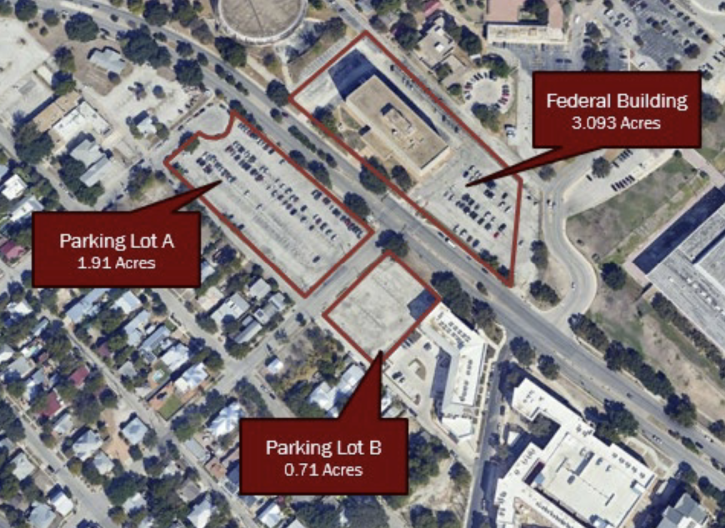
The City of San Antonio will purchase a building and five acres of land near Hemisfair for one of the first steps toward the creation of the sports and entertainment district. The council approved using money from the Spurs for the $30 million purchase.
The building and two parking lots next to the former federal courthouse are owned by the federal government. What will be in the building after the purchase is uncertain, except for a few federal offices for about three years until they relocate. It’s next to what will be the site of the proposed basketball arena.
While the Spurs are providing the funds for the purchase, the city will lease the building back to the team.
Mayor Gina Ortiz Jones tried to delay the vote for a week but did not get the support of council. She said the city could face some reputational harm if there were deviations from the non-binding term sheet on the project that was approved last year.
“I think the other reputational harm, though, that I’m as concerned about is if we don’t do things with sufficient due diligence,” she said. “Being the third poorest city in the country and continuing to exacerbate some of those inequities at this point. I think it is important that people have trust that we’ve done our due diligence.”
At least two council members brought up the hope that the building and land acquisitions would be used with affordability in mind. District 5 Councilwoman Teri Castillo said she wants to ensure that public access is part of this building’s plan and affordable housing is part of the overall Project Marvel plan.
“This property belongs to the public, and we need to ensure that, again, it’s accessible to all folks. If there’s a public park, that it’s accessible to all, it’s not restricted. And of course, if there is development in terms of housing, that it is accessible to the average San Antonio resident.”
District 2 Councilman Jalen McKee-Rodriguez echoed those sentiments.
“Whatever gets developed is stamped by us, and we’ve set our needs in terms of sustainability, in terms of affordable housing, in terms of parks and green space, and so I do expect that whatever is developed here … helps us achieve our goals and is not just some ultra luxury apartment set of condos and whatnot that further cause harm in our community,” he said.
The unanimous approval by council on Thursday starts the process of completing the purchase with $3 million payment initially and the rest, including $120,000 in closing costs, paid for after the final sale approval with the U.S. General Services Administration.
Great Job Joey Palacios & the Team @ Texas Public Radio for sharing this story.
The attacks on climate science by the Trump administration means the US is now “part of the problem” on global warming and “not part of the solution”, says Prof Ben Santer.
Santer – a leading climate scientist and early pioneer in establishing the human “fingerprint” on warming – has played a central role in major climate change reports during his career spanning four decades.
In a wide-ranging interview with Carbon Brief, Santer says the Trump administration is “engaged in a systematic attempt to dismantle climate science”.
The “insane” cuts to major scientific institutions, satellite monitoring and climate research funding amounts to “institutionalised efforts to destroy the US capability to monitor, measure and understand changes in Earth’s climate”, he says.
He adds that “we all lose if we embrace ignorance with open arms and claim that the real world is what the president believes it to be, not what we actually measure and monitor”.
It is “heartbreaking” that “many of the best and the brightest [scientists] will leave the country”, says Santer, and go to work in Europe, China, Japan or Australia.
Now semi-retired, Santer himself is relocating to the UK in order to continue his research in the Climatic Research Unit at the University of East Anglia as it has become “difficult” to do so in the US.
Carbon Brief: Ben, thank you very much for joining us. So, after a long career in the US, you’re now relocating to the UK, where you studied for your degrees. What has prompted your return?
BS: It’s really difficult for me to continue doing work in attribution science in the US in 2026. I’m a scientist – working on identification of human fingerprints on climate is in my life blood. It’s part of who I am. It’s part of what I’ve done for the last 40 years. The notion of not being able to do that work anymore in the US is unacceptable to me, so that’s one of the reasons why I’m moving to the UK to continue to do work in trying to disentangle human and natural effects on climate. I’m also coming to the UK because my partner lives here and I want to be with her.
CB: In Trump’s first term [as US president], you were at the Lawrence Livermore National Laboratory. I wonder, what impacts did you experience of the Trump administration when you were there?
BS: A number of impacts and those impacts started right at the beginning of the first Trump administration. So Trump’s nominee for the Environmental Protection Agency, Scott Pruitt, when he was nominated, had to go through Senate confirmation hearings. During those confirmation hearings, he was asked about the reality and seriousness of climate change. He responded that there had been no significant global warming since 1998. 1998 was a big natural El Nino, natural warming event. And Mr Pruitt was cherrypicking. He was saying [in effect], “when I look at satellite temperature records, the temperature of the lower atmosphere – the troposphere – and only go back to 1998 and then march forward in time, I believe there’s been no significant warming”. That was wrong, demonstrably so.
My colleagues and I at Lawrence Livermore National Lab were asked to investigate Mr Pruitt’s claim. We did. We published a paper in 2017 in the Journal of Climate [it was actually in Scientific Reports], showing that that claim was wrong. Even if one did the cherrypicking and forgot about the pre-1998 portion of the satellite temperature record. The LA Times [it was actually the Washington Post] reported on our Journal of Climate paper and I think it’s fair to say that the Trump administration did not like that we had factchecked Mr Pruitt. And did not like that we had shown that his on-the-record statement to the US Senate was wrong.
That incident led to a complaint by the Trump Department of Energy – the funder, primary funder, of Lawrence Livermore National Lab – to the director of Lawrence Livermore National Lab. The director asked for a meeting with me and, during that meeting, told me that the Trump administration was in a position to cut my funding for detection and attribution research at Livermore – and, indeed, to cut funding for Lawrence Livermore National Lab. In the end, the Trump administration did cut the funding for my research and my group’s research in climate change detection and attribution. In my opinion, that was a direct result of doing science [by] factchecking Mr Pruitt. The administration didn’t like that and they didn’t like the result of the factchecking.
CB: So, how were you able to continue your research at the time?
BS: I was able to continue my research by cutting down the amount of time that I was actually paid by the Department of Energy. So, essentially, I reduced my time at Livermore in order to allow my younger colleagues to continue to do this critically important work. At the time of these cuts, I had been in my position at Livermore for nearly three decades. I was at the tail end of my career. They were not – my younger colleagues were not – and I wanted them to continue to have sufficient funding to do this work.
BS: They are all of deep concern to me. I would say the administration – the second Trump Administration – has engaged in a systematic attempt to dismantle climate science and not only climate science in the US, but I know the climate science piece of things reasonably well. They’ve gone after monitoring. They’ve gone after computer modelling. They’ve gone after people who do the kind of attribution science work that I do; people who look at extreme events and human contribution to the changes in the properties of extreme events – droughts, flooding, all of that – they’ve fired thousands of employees.
And when you break the evidentiary chain, when you no longer monitor, say, changes in Arctic sea ice extent or carbon emissions or atmospheric temperature, you make it difficult for people like me to get at the causes of climate change. That’s a deep, deep concern that we may no longer be able to continuously monitor stuff that we urgently need to monitor, not only for climate, but also for basic weather prediction. For example, if you stop monitoring atmospheric moisture, then you degrade the quality of weather forecasts that give you early warning of severe storms, of atmospheric rivers – it’s unthinkable to actually kill those kinds of critically important measurements, but yet, that’s where we are. It’s heartbreaking.
I have hundreds of colleagues at the National Centre for Atmospheric Research, at the Geophysical Fluid Dynamics Lab at the [NASA] Goddard Institute for Space Studies – women and men who have devoted their entire scientific careers to trying to model the climate system, understand the climatic shape of things to come. Many of them, particularly probationary employees, are gone. And you can’t flip a switch under a more enlightened administration, which we hope we get in three years from now, and bring all of that back. Science doesn’t work that way. Many of the best and the brightest will leave the country and will go to Europe or go to China or go to Japan or Australia. They will leave the US. They will see no future for themselves there. Or they won’t even come to the country to study, to do degrees – and that loss of talented, dedicated researchers is heartbreaking. That’s the only word for it.
CB: You mentioned a lot of programmes that have been cut – for example, monitoring. Do you think other countries can step into the void? And, if so, who and how?
BS: I hope so. I hope the Europeans and the Chinese and the Australians and the Japanese are making serious contingency plans – and recognising that this is a real thing. The Trump administration is going to turn off satellites. They’ve announced their intent to severely cut NASA and go after things like the Orbiting Carbon Observatory and other remote sensing systems that make measurements that they don’t like. So hopefully other space agencies recognise the danger to this evidentiary chain.
But, again, that’s not like flipping a switch that you can suddenly launch a satellite – developing sensors, deploying sensors in space – all of that is the stuff of years, not the stuff of a couple of months. But I hope that these kinds of discussions are going on at the highest level in countries that recognise the value of information – again, not only for climate, but for basic weather forecasting. If the US no longer is willing to lead, is no longer willing to invest in basic monitoring of weather and climate, other countries have to try and fill the gap.
CB: Shortly before Trump won his second term, you wrote that his election risks trapping the US and the planet in an “eddy of ignorance”. I wonder what your reflections are now that Trump is in power?
BS: We are in that “eddy of ignorance” in the US. Clearly, this administration seeks to redefine reality itself; seeks in its public-facing websites – say NASA, EPA – to generate a picture of a world where climate isn’t changing, or if it is, the changes are purely natural – they’re due to the sun, volcanoes, orbital perturbations; humans have no agency, have no discernible influence on climate. So, they’re creating an alternative universe in which human caused fossil fuel burning has no impact on climate. And what do you even call that? “Eddy of ignorance” is too weak a term to describe that wilful misrepresentation of the world we actually live in – of the climate we actually live in – how it’s changed, how it’s likely to change it. It’s – again – heartbreaking when you think of the destruction of information on websites, the destruction of libraries – like, as has recently been reported, the Goddard Space Flight Centre library of volumes about atmospheric science, ocean science – the thought of that stuff going away, of not being there anymore. I don’t know what to do with that, I guess.
The only thing I can do with it – and have tried to do with that kind of wilful ignorance – is shine a light on it and say “this is wrong”. No matter what differences in political positions we have, we all lose if we embrace ignorance with open arms and claim that the real world is what the president believes it to be, not what we actually measure and monitor. That’s where we are in the US – president Trump is defining reality and we risk – as many have written – going back to the Soviet Lysenkoism, where any science that conflicts with the prevailing political views of the leader is dismissed and denied. And that has serious negative consequences – of course, not only for the US, but for the entire world. We’re part of the problem now in the US, not part of the solution to the problem of climate change.
CB: You mentioned the Department of Energy (DoE) earlier and its involvement in the Lawrence Livermore Lab. And I wonder what your reaction was to their “critical review” on climate change that they published last year?
BS: So they published this review in July of 2025. It involved five noted climate change sceptics. I had dealt with all of them over the course of my time at Livermore. It was not a surprise that the administration was going to try and come up with some counter narrative to IPCC and national climate assessments. But what did surprise me was just how brazen and blatantly wrong bits of it were.
So, I’ll give you an example. Chapter 5.5 of this Department of Energy climate working group review dealt with temperature changes in the stratosphere. And it touched on work that my colleagues and I had had done and published most recently in 2023 in a paper in Proceedings of the National Academy of Sciences. And the DoE report cited our 2023 paper and said that we had not found a human fingerprint on climate. We had. We had found the most convincing evidence yet of a human fingerprint on the structure of atmospheric temperature. This predicted fingerprint of warming of the lower atmosphere and cooling of the upper atmosphere – predicted by Suki Manabe back in 1967 – we had found it in satellite measurements of atmospheric temperature change. And we had found that this signal was particularly clear where Manabi had predicted back in ‘67 – that it would be clear right in the upper stratosphere. The Department of Energy, in saying “you didn’t find a fingerprint”, was essentially doing the equivalent of something like this: The walls here in this room were white. They’re essentially telling you, “no, they’re not white, they’re black”. What do you do with something like that? When someone mischaracterises your own work and the work of your colleagues – sober, mature science that you’ve spent decades doing – and fundamentally turns it on his head in an official government report for a specific political purpose.
You know, the report was released on the same day as EPA administrator Lee Zeldin announced his intent to repeal the 2009 endangerment finding – the finding that emissions of greenhouse gases, through their effect on temperature and through temperature effects on air pollution, materially harm human health. So, this report fed into that political goal of wanting to repeal the endangerment finding. And our science is being misrepresented to support that political goal. That was pretty shocking to me – that it would be so blatant. There was no pretence, really, of trying to get the science right. And the example that I just mentioned – with our vertical fingerprint work with atmospheric temperature – is only one example of many dozens that the Dessler report takedown – and Carbon Brief’s own takedown of the many errors in the DoE report – showed. This was a pattern of behaviour. My job is about pattern analysis and there was a pattern in the DoE report of trying to misrepresent well-understood science.
CB: Your career has spanned periods where climate science has been attacked quite fiercely – back to the time of Kyoto in the 90s or Climategate at the end of the 2000s. What parallels or differences do you see today?
BS: So, back in the mid-90s, the attacks focused on the IPCC second assessment report. That report came out in early 1996 and its headline finding was the infamous 12-word statement: “The balance of evidence suggests a discernible human influence on global climate.” And that was significant because it was the first time that the international scientific community said formally: “We see a signal of human activity.” Other individual scientists had made such claims in the past – notably, Jim Hansen in 1988 in a paper in Journal of Geophysical Research. But this was the international community, the IPCC, saying: “Hey, humans are no longer innocent bystanders in the climate system. We formally identified a climate change signal due to our actions. It’s not the sun, it’s not volcanoes, it’s not natural internal variability, it’s on us.”
And as the play Kyoto, which you just mentioned, clearly notes, that was threatening – that discernible human influence finding – to very powerful, moneyed interests. To, for example, the Global Climate Coalition – a consortium of energy interests – they recognised that this was bad for business, that this finding might have downstream implications for their business models, for their ability to continue burning fossil fuels without considering the negative externalities of their actions. So the Global Climate Coalition and other fossil-fuel funded organisations – Western Fuels [Association], the Petroleum Association [the American Petroleum Institute] – went after the IPCC and went after me. No personal animus, but I was the lead author of the chapter in which this finding was situated. And individual folks in Congress, too, like Dana Rohrabacher, a Republican congressman, wanted to make names for themselves and felt that they could do so by casting doubt on the integrity of the IPCC process – the scientific integrity of people like me. So there was some attempt back then to politicise the science too. It wasn’t just fossil-fuel interests that went after the IPCC. It was also folks like Rohrabacher who wanted to make a name for themselves.
What’s different today is that it’s an entire administration. This is institutionalised, wilful ignorance on the part of the administration – institutionalised efforts to destroy the US capability to monitor, measure and understand changes in Earth’s climate. That’s qualitatively different from anything I encountered in the mid-90s at the time of the IPCC second assessment report.
CB: If you were in the earlier stages of your career now, as you were then, do you think you would be just as involved in communication and public engagement on climate change?
BS: Absolutely. The lesson I learned 30 years ago – back at the time of the discernible human influence finding in 1996 – was, sometimes, you don’t have the luxury of sitting on the fence and just waiting to see how things develop. Back then, I was a representative of an entire scientific community. My job had been to – with my peers – assess the then-available science and come up with our best representation of what the science, back then – 30 years told us – and we did and we were right. The cautious, even wimpy, “balance of evidence suggests a discernible human influence on global climate” [statement] was justified by the then-available science. And, in the next 30 years, the science progressed – better models, longer data records, better fingerprint techniques for disentangling human and natural effects on climate, more scientists involved in this kind of work all over the world – leading to the word “unequivocal”.
It is now unequivocal, as the IPCC judged in its 2021 sixth assessment report [on climate science], that there are human fingerprints all over Earth’s climate system – atmosphere, oceans, land surface. Back then, in 1995-96, we were primarily looking at surface thermometer records, surface temperature records. Now, folks have interrogated literally dozens of variables – Arctic sea ice extent, atmospheric moisture, specific humidity, sea level pressure, ocean heat content, clouds, circulation patterns, extreme event properties – you name it, they’ve looked at it. They’ve kicked the tires. They’ve used pattern recognition methods to assess whether purely natural influences can explain the changes in each of those independently measured variables – natural causes can’t.
And that’s the frustration, I would say – this disconnect between this much more mature understanding of causes now in 2021 and this wilful ignorance that we see in the Trump administration. Where the president of your own country refers to all of the work that you’ve done and your colleagues have done as a “con job”. So not only wrong, but criminal – as if there’s intent, on your part and your colleagues’ part, to mislead the global public about the reality and seriousness of climate change. The only response, in my opinion, is you have to, as a scientist, push back against that. If you don’t, if you remain silent, then really bad stuff happens. And I think that’s true for our democracy as well. If good people remain silent when there are serious challenges facing science and democracy, we all lose.
CB: What would be your advice to climate scientists in the US today, particularly those leading the organisations under attack?
BS: “Hang together or hang separately,” as Benjamin Franklin, I believe, famously said. You have to provide some kind of united front to these systematic efforts to dismantle US science. If you don’t, if you leave that to individuals or let the administration attack individual universities, you’re not going to prevail in preventing really serious harms. And I would say it’s taken the scientific community a long time to recognise that. In the US, certain institutions that should have led right from the beginning and said, “no, this is wrong”. Going after the CDC [Centers for Disease Control and Prevention] and going after vaccine schedules harms public health. People will die. Those kinds of messages needed to be made public very early, very forcefully – and they weren’t.
Same with climate science – starting to fire probationary employees, starting to go after climate modelling and to argue that modellers were scaring America’s children by making projections of the climatic shape of things to come. All of that demanded a firm, clear response, which was late in coming. And unfortunately, again, many of the harms that happened in those first few months – the firings, the withholding of grant money that will affect research at universities, climate research, medical research labs, the continuity of whole departments – those harms can’t be easily reversed. I think, for me, the personal lesson learned from the first administration is only when you push back quickly and forcefully in a united way do you have some hope of avoiding the worst outcomes.
CB: We’ve seen how quickly US federal climate science policy has changed under a new government. I wonder what lessons can European governments and institutions and scientists take from that on protecting climate science, regardless of political change?
BS: That’s a great question and it’s one I worry about a lot, because there have been some efforts to export our wilful ignorance, say, to this country [the UK]. Steve Koonin, one of the five authors of the DoE climate working group report, has tried to persuade British colleagues that the science – the climate science done, say, at the Hadley Centre and other research centres and universities isn’t credible, that they shouldn’t make policy based on IPCC or internal climate assessments. And I think we’ll see more of that. I think the Royal Society needs to be very clear that it has to push back against those efforts to try and export our wilful ignorance to this country and to Europe.
[The following part of Santer’s answer is missing from the video recording because of a technical issue.]
Those efforts are only just starting to ramp up in the US. We hear that the same five folks who worked on the DoE report are going to be in charge of the next [US] national climate assessment. And I would not be surprised to see folks like Koonin and others make more appearances over here and it’s in the [Trump] administration’s interests to undermine climate science internationally. Why? Because then they can say, well, “buy our oil – there are no consequences, no climate consequences. And the people who have told you that there are climate consequences are not real, credible scientists – believe our five hand-picked experts who wrote this DoE report and are now rewriting national climate assessments.”
I think you need here, in the UK, to observe what happened and the institutional failures to push back against this kind of wilful ignorance and to learn from those failures. It really is critically important to support science and leading institutions can’t be silent. They can’t say, oh, we don’t want to offend president Trump, or we don’t want to offend Elon Musk, who is one of our members in the Royal Society. No, you will suffer serious, long-lasting reputational harm if you don’t defend science. That’s my lesson learned.
CB: Where do you see things going next in the US? What’s the next move for the Trump administration on climate change?
BS: Well, what I’ve mentioned already is that the five individuals who wrote the DoE’s climate working group report in July 2025 have apparently been tasked with leading the next national climate assessment, which is a congressionally mandated report to Congress. And it’s likely that that will be the same stuff we saw in the DoE report in July 2025 – a counter narrative, if you will, to mature scientific understanding encoded in 30+ years of IPCC reports. So, on the science side of things, it’s about presenting that counter narrative. It’s also, I think, about continuing to dismantle websites and continuing to present the public on EPA and NASA and NOAA websites with a very, very different understanding of the causes of climate change.
It’s – if Congress doesn’t do anything to stop it – going to involve continued cuts to NASA. The Trump administration has made it very clear that they don’t care about observing changes in Earth’s climate from space and they’re going to go after missions that they don’t like that provide basics – atmospheric temperature and atmospheric moisture and, again, pollutants, CO2 emissions, methane emissions, all of those kind of things I would say are imperilled, which is insane. That’s the only word for it. Removing our ability to measure and monitor how the world around us is changing, makes no sense whatsoever. But, yet, that’s where we are, because the data is inconvenient and doesn’t comport with the narrative of the president, that nothing is happening, nothing is changing, or if it is, it’s all natural.
I think there will be continued efforts to go after modelling capability, which is – again – heartbreaking. Some of the institutions I mentioned – like the National Centre for Atmospheric Research, Geophysical Fluid Dynamics Lab in Princeton, Goddard Institute for Space Studies [GISS] – they’re already under attack. Their funding is under attack. Their leases, in the case of GISS, have been rescinded or cancelled. There are efforts to break up these groups of very, very talented women and men and scatter them to the wind. I think that’s going to continue. And what will be important will be to see whether Congress pushes back against these things or is fearful of incurring Trump’s wrath and allows this sort of stuff to continue internationally.
I think the US is not going to engage with IPCC or UN Framework Convention [on Climate Change] or COPs. [The Trump administration has now withdrawn the US from the IPCC and UNFCCC.] They don’t care. All they care about is exporting US and now Venezuelan oil, presumably. And they don’t care about advancing climate science or any kind of science, really, which is an unbelievable thing to say, coming from a country where science has, since the end of the second world war, been an integral part of the country, of its development, of its economy, of its of its future. Now we’re turning away from science in the US. It’s like we’re handing the baton of leadership to you and saying, “here, we’re done leading in climate science, medical science – you lead now, rest of the world, we’re going to go back and try and make the horse and buggy great again”.
BS: I think the EPA Administrator Lee Zeldin has, right from the beginning, intended to rescind the endangerment finding – following Trump’s lead and following the guidance of Project 2025 [A blueprint to reshape the US federal government under a Republican president, published in 2023 by the Heritage Foundation and other right-wing organisations.] There are powerful interests in the US that, right from the beginning, have argued, “the endangerment finding is bad for business, so get rid of it. This should be an important thrust of the second Trump administration.” And it has been, right from the beginning of the administration. And part of the job has been to come up with this scientific counter narrative – in the DoE report and, I believe, now in the planned next national climate assessment – to argue that, “the science isn’t credible. We don’t need an endangerment finding because human actions aren’t endangering the climate. It’s all natural, folks. Nothing to see here.” That’s going to continue.
But, as I mentioned, that faces challenges, that counter narrative now, because it was so badly done. The DoE report was so sloppy, so riddled with mistakes – some of which were really transparent, not shades of grey differences between experts, but really badly wrong stuff. That’s the DoE report. The factchecking on that report has been done. It’s out there, [it] got widespread publicity – thank you Carbon Brief; thank you, Andy Dessler. The fast track study of the US National Academy of Sciences – done partly in response to the DoE report – has affirmed and confirmed the science is credible. Humans are influencing global climate through burning fossil fuels, through particulate pollution, and we need to do something about it. This is a serious danger to human health.
So, Mr Zeldin’s challenge is a difficult one. I would say he’s got powerful scientific – well, decades of mature science – that he’s going against, that he’s tilting against. And that’s going to be a tough sell. But, that said, it’ll wind up before the US supreme court and the supreme court has a conservative majority. How they adjudicate, given that they already decided back in 2009 [it was actually 2007] that climate change constitutes a danger to human health, will they reverse their decision? There’s a lot of uncertainty. But one thing that is very certain is that Trump wants the endangerment finding rescinded and everything flows from that.
CB: I want to look back now a little bit more. We’re now 15+ years on since Climategate [when thousands of emails between climate scientists were stolen from a university server and selectively released online in an attempt to undermine COP15 in Copenhagen in 2009]. And I wondered how you feel about that whole experience now?
BS: Pretty bad about the whole experience. I did my PhD at the Climatic Research Unit at UEA [the University of East Anglia]. I got my PhD in 1987 and I then went to Hamburg to do a postdoc at the Max Planck Institute [for Meteorology]. Then, after Max Planck, I went to Livermore in 1992 and I continued to work together with people at the Climatic Research Unit. They weren’t only colleagues. They were friends. We published a boatload of papers together. Watching what happened, what unfolded in 2009 and thereafter was terrible. The human cost hasn’t really been revealed – to good people who spent their lives trying to compile surface temperature data sets.
The case of Phil Jones, in the case of Keith Briffa – to do dendrochronology and advance understanding of century timescale changes in climate from looking at tree rings – all of that good work was dragged through the mud by these forces of unreason, by folks who had no real understanding of the science of the integrity of the work. It was sickening and disgusting to witness bad things happen to such good people. I spent a fair bit of time back then in 2009 and 2010 providing input to various investigations, speaking publicly about the individuals involved, and I remain deeply concerned at that human cost. This isn’t a game. When you go after the integrity of individuals and the[ir] decency and honesty – in the public arena – in such a vicious and nasty way, it has consequences.
Some of those consequences aren’t visible to people on the outside, who don’t know folks like Phil Jones and folks like Keith Briffa and others deeply involved in Climategate – folks like Michael Mann. But those consequences, those personal consequences, are very real and I’m concerned that that’s where we’re going again. The way forward, say, for the Trump administration is to challenge the integrity and decency and honesty and motives of climate scientists – as is occurring with use of incendiary language like “con job”. That’s where we’re going again.
CB: How do you think that public trust in climate science – and scientists – compares now to back then?
BS: Well, language matters. Words matter. That’s been a lesson of mine – a lesson I learned back in 1995 with those 12 words with the “discernible human influence” finding. So when there’s this drum beat of incendiary language – “con job”, “hoax”, “conspiracy” – again and again and again, it erodes public trust in science and scientists: “Well, the President surely wouldn’t be saying these things if there weren’t something behind them.” These folks have huge megaphones that they can exploit on a daily basis.
They are in control of the levers of power now – websites at NASA, NOAA, EPA. The president can address the UN General Assembly and use this kind of “con job” language, “you’re all fools if you believe scientists”. I have to believe that that has impact – cumulative impact. If you keep on doing it again and again and again, you can erode public confidence in science. And that’s why part of my job, as I see it, is to be a public figure – to speak and to write about evidence: “How do we know? How have we reached this time in history when we know that we’re not innocent bystanders in the climate system. What’s the nature of the evidence? Who gained it? How did they gain it? Do scientists look at alternate hypotheses? Could it all be the sun, volcanoes, orbital perturbations, intrinsic variability?” We have to do a better job explaining how we know and why it matters to what’s at stake here.
This [year] is likely – 2025 – to be the second- or third-warmest year ever. [This has now been confirmed.] And, over my lifetime, I’ve seen the signal of human-caused warming emerge from the noise of natural variability. We know it’s real. We know that if we do nothing to reduce emissions of greenhouse gases, that signal is going to manifest more clearly every year. So it’s critically, just critically, important to speak science to power and continue to push back against this narrative of “con job” and “hoax” and “conspiracy”. But it’s an uphill struggle. Again, given that I can have an interview with you, I can write stuff in Scientific American, but the president can reach tens of millions of people every day.
CB: Just thinking about the media, how do you think the media’s coverage of climate science has changed over time?
BS: I think it’s gotten better. Certainly back in the 90s, it was much more this binary, “he says, she says” type things: “Here’s Expert A, here’s Expert B, giving you some completely different view of a scientific question.” I would say that the reporting is now much more focused on trying to understand the science and rather than having duelling experts out there. Even in the US, we don’t get [prominent climate-sceptic scientists] Dick Lindzen or John Christy now, as we used to on every story about warming and changes in sea ice. You don’t get the counter narrative out there. And that’s good and that’s really positive.
Much of the reporting is now more in depth about what’s going on with the Thwaites great glacier, or what’s going on with sea level and what are the drivers of sea level rise? And all of that is good and positive. And I do think that there’s more effort to hold the administration accountable – the Trump administration accountable – for making incorrect claims. We were unwilling to use the word “lie” at the beginning of the first Trump administration. People are more willing now to say, “this is untrue, there’s no scientific basis for this statement or that statement”, and that’s good, too.
What I think is necessary, as I said before, is for more voices to enter the fray – for the leadership of powerful professional organisations to say, “this claim by the administration that climate science is a ‘con job’ is wrong. It’s not. And here are three decades of reports that we published that show that it’s a thing and we need to worry about it.” It can’t be just individual voices there of a few climate scientists speaking about the reality and seriousness of climate change.
CB: So, you have, obviously, been heavily involved in all IPCC reports throughout the years. We’re now at the early stages of the seventh assessment and countries are still yet to agree on a timeline for publication of the assessment reports. And I wonder what you thought that says about the state of climate politics today?
BS: Well, I’ve been involved in every IPCC assessment since the first one in 1990. I think they’re unique. They’re an invaluable way of providing the collective understanding of an entire community and showing how that understanding has evolved over time. I hope the IPCC continues. I think there’s a continuing need for an authoritative international organisation to say: “This is our best understanding of the science and this is our best understanding of likely outcomes if we do nothing to address the problem, or we follow this emission scenario, or this overshoot scenario.” We need that and it’s clearly good to be able to put error bars on these projections, to have the entire global scientific community involved – and be able to say: “This is what we know with confidence, this is what we don’t know with confidence. Here are our levels of confidence.”
All of that is extraordinary when you think about it, how a community has come together to make these authoritative assessments of the state of our understanding. Which is why it’s been so threatening, I think, to the Trump administration and why they pulled out of IPCC [in 2025] and why they don’t like it.
[The following part of Santer’s answer is missing from the video recording because of a technical issue.]
Because it doesn’t support the president’s narrative that this is a “con job” and that history is valuable to see how, over time, things have firmed up, how the “balance of evidence” finding was transformed into “unequivocal” human fingerprints on climate. Capturing that arc of history, that arc of scientific understanding.
But the IPCC has challenges. The US is backing out now. There are some efforts on the part of the philanthropic community to allow individual US scientists to participate. I hope that that continues. I hope that the US, in some way or other, continues to make scientific contributions to the IPCC. But I do worry about this fractured landscape, with powerful forces out there seeking to undermine the work of the IPCC. We’re going to see the rise of those forces – not only in the US, but elsewhere – to silence or diminish the effectiveness of voices like IPCC. So we need to be prepared for that and we need to have very clear communications about the richness of the evidence.
I think the scientific community and the IPCC maybe haven’t been that good in terms of explaining just how compelling the evidence is for human effects on climate – just how multivariate it is: atmosphere, ocean, land, temperature, moisture, circulation, ice. It’s everywhere. It’s in our backyards. It’s not just evidence of human effects on climate in the far flung Arctic or a few Pacific islands, we need to communicate that better.
CB: Thank you so much for your time.
The interview was conducted by Robert McSweeney at Carbon Brief’s London office on 7 January 2026. Filming and audio by Joe Goodman and Tom Prater.
Great Job Robert McSweeney & the Team @ Carbon Brief Source link for sharing this story.
Posting to his Truth Social platform on January 15, President Donald Trump threatened to invoke the Insurrection Act supposedly because “the corrupt politicians of Minnesota” aren’t stopping “the professional agitators and insurrectionists” from attacking Immigration and Customs Enforcement agents. Several right-wing media personalities backed him up, saying that it’s “time to do it” and claiming that “Trump’s core base, the hardest core of MAGA” are “the biggest advocate of invoking the Insurrection Act.”
Great Job Media Matters for America & the Team @ Media Matters for America Source link for sharing this story.