Newsrooms have been experimenting with AI for several years now but, for the most part, those efforts have been just that: experiments. A relatively unknown startup, Symbolic.ai, wants to change that, and it just signed a major deal with News Corp, the media conglomerate owned by Rupert Murdoch.
News Corp, the major assets of which include MarketWatch, the New York Post, and The Wall Street Journal, is set to begin using Symbolic’s AI platform with its financial news hub Dow Jones Newswires.
Symbolic.ai, which was founded by former eBay CEO Devin Wenig and Ars Technica co-founder Jon Stokes, says its AI platform can “assist in the production of quality journalism and content” and that its tool has even led to “productivity gains of as much as 90% for complex research tasks.” The platform is designed to make editorial workflows more efficient, providing improvements in areas like newsletter creation, audio transcription, fact-checking, “headline optimization,” SEO advice, and others.
In general, News Corp has shown a willingness to integrate AI into its media operations. In 2024, the company signed a multi-year partnership with OpenAI, wherein it would license its material to the AI company. Last November, the media conglomerate signaled that it was considering branching out, and licensing its material to other AI companies.
Great Job Lucas Ropek & the Team @ TechCrunch Source link for sharing this story.
Sign up for TPR Today, Texas Public Radio’s newsletter that brings our top stories to your inbox each morning.
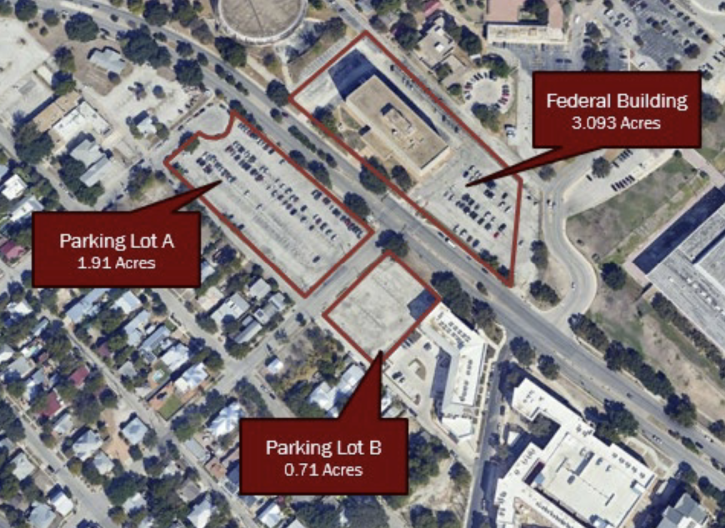
The City of San Antonio will purchase a building and five acres of land near Hemisfair for one of the first steps toward the creation of the sports and entertainment district. The council approved using money from the Spurs for the $30 million purchase.
The building and two parking lots next to the former federal courthouse are owned by the federal government. What will be in the building after the purchase is uncertain, except for a few federal offices for about three years until they relocate. It’s next to what will be the site of the proposed basketball arena.
While the Spurs are providing the funds for the purchase, the city will lease the building back to the team.
Mayor Gina Ortiz Jones tried to delay the vote for a week but did not get the support of council. She said the city could face some reputational harm if there were deviations from the non-binding term sheet on the project that was approved last year.
“I think the other reputational harm, though, that I’m as concerned about is if we don’t do things with sufficient due diligence,” she said. “Being the third poorest city in the country and continuing to exacerbate some of those inequities at this point. I think it is important that people have trust that we’ve done our due diligence.”
At least two council members brought up the hope that the building and land acquisitions would be used with affordability in mind. District 5 Councilwoman Teri Castillo said she wants to ensure that public access is part of this building’s plan and affordable housing is part of the overall Project Marvel plan.
“This property belongs to the public, and we need to ensure that, again, it’s accessible to all folks. If there’s a public park, that it’s accessible to all, it’s not restricted. And of course, if there is development in terms of housing, that it is accessible to the average San Antonio resident.”
District 2 Councilman Jalen McKee-Rodriguez echoed those sentiments.
“Whatever gets developed is stamped by us, and we’ve set our needs in terms of sustainability, in terms of affordable housing, in terms of parks and green space, and so I do expect that whatever is developed here … helps us achieve our goals and is not just some ultra luxury apartment set of condos and whatnot that further cause harm in our community,” he said.
The unanimous approval by council on Thursday starts the process of completing the purchase with $3 million payment initially and the rest, including $120,000 in closing costs, paid for after the final sale approval with the U.S. General Services Administration.
Great Job Joey Palacios & the Team @ Texas Public Radio for sharing this story.
The attacks on climate science by the Trump administration means the US is now “part of the problem” on global warming and “not part of the solution”, says Prof Ben Santer.
Santer – a leading climate scientist and early pioneer in establishing the human “fingerprint” on warming – has played a central role in major climate change reports during his career spanning four decades.
In a wide-ranging interview with Carbon Brief, Santer says the Trump administration is “engaged in a systematic attempt to dismantle climate science”.
The “insane” cuts to major scientific institutions, satellite monitoring and climate research funding amounts to “institutionalised efforts to destroy the US capability to monitor, measure and understand changes in Earth’s climate”, he says.
He adds that “we all lose if we embrace ignorance with open arms and claim that the real world is what the president believes it to be, not what we actually measure and monitor”.
It is “heartbreaking” that “many of the best and the brightest [scientists] will leave the country”, says Santer, and go to work in Europe, China, Japan or Australia.
Now semi-retired, Santer himself is relocating to the UK in order to continue his research in the Climatic Research Unit at the University of East Anglia as it has become “difficult” to do so in the US.
Carbon Brief: Ben, thank you very much for joining us. So, after a long career in the US, you’re now relocating to the UK, where you studied for your degrees. What has prompted your return?
BS: It’s really difficult for me to continue doing work in attribution science in the US in 2026. I’m a scientist – working on identification of human fingerprints on climate is in my life blood. It’s part of who I am. It’s part of what I’ve done for the last 40 years. The notion of not being able to do that work anymore in the US is unacceptable to me, so that’s one of the reasons why I’m moving to the UK to continue to do work in trying to disentangle human and natural effects on climate. I’m also coming to the UK because my partner lives here and I want to be with her.
CB: In Trump’s first term [as US president], you were at the Lawrence Livermore National Laboratory. I wonder, what impacts did you experience of the Trump administration when you were there?
BS: A number of impacts and those impacts started right at the beginning of the first Trump administration. So Trump’s nominee for the Environmental Protection Agency, Scott Pruitt, when he was nominated, had to go through Senate confirmation hearings. During those confirmation hearings, he was asked about the reality and seriousness of climate change. He responded that there had been no significant global warming since 1998. 1998 was a big natural El Nino, natural warming event. And Mr Pruitt was cherrypicking. He was saying [in effect], “when I look at satellite temperature records, the temperature of the lower atmosphere – the troposphere – and only go back to 1998 and then march forward in time, I believe there’s been no significant warming”. That was wrong, demonstrably so.
My colleagues and I at Lawrence Livermore National Lab were asked to investigate Mr Pruitt’s claim. We did. We published a paper in 2017 in the Journal of Climate [it was actually in Scientific Reports], showing that that claim was wrong. Even if one did the cherrypicking and forgot about the pre-1998 portion of the satellite temperature record. The LA Times [it was actually the Washington Post] reported on our Journal of Climate paper and I think it’s fair to say that the Trump administration did not like that we had factchecked Mr Pruitt. And did not like that we had shown that his on-the-record statement to the US Senate was wrong.
That incident led to a complaint by the Trump Department of Energy – the funder, primary funder, of Lawrence Livermore National Lab – to the director of Lawrence Livermore National Lab. The director asked for a meeting with me and, during that meeting, told me that the Trump administration was in a position to cut my funding for detection and attribution research at Livermore – and, indeed, to cut funding for Lawrence Livermore National Lab. In the end, the Trump administration did cut the funding for my research and my group’s research in climate change detection and attribution. In my opinion, that was a direct result of doing science [by] factchecking Mr Pruitt. The administration didn’t like that and they didn’t like the result of the factchecking.
CB: So, how were you able to continue your research at the time?
BS: I was able to continue my research by cutting down the amount of time that I was actually paid by the Department of Energy. So, essentially, I reduced my time at Livermore in order to allow my younger colleagues to continue to do this critically important work. At the time of these cuts, I had been in my position at Livermore for nearly three decades. I was at the tail end of my career. They were not – my younger colleagues were not – and I wanted them to continue to have sufficient funding to do this work.
BS: They are all of deep concern to me. I would say the administration – the second Trump Administration – has engaged in a systematic attempt to dismantle climate science and not only climate science in the US, but I know the climate science piece of things reasonably well. They’ve gone after monitoring. They’ve gone after computer modelling. They’ve gone after people who do the kind of attribution science work that I do; people who look at extreme events and human contribution to the changes in the properties of extreme events – droughts, flooding, all of that – they’ve fired thousands of employees.
And when you break the evidentiary chain, when you no longer monitor, say, changes in Arctic sea ice extent or carbon emissions or atmospheric temperature, you make it difficult for people like me to get at the causes of climate change. That’s a deep, deep concern that we may no longer be able to continuously monitor stuff that we urgently need to monitor, not only for climate, but also for basic weather prediction. For example, if you stop monitoring atmospheric moisture, then you degrade the quality of weather forecasts that give you early warning of severe storms, of atmospheric rivers – it’s unthinkable to actually kill those kinds of critically important measurements, but yet, that’s where we are. It’s heartbreaking.
I have hundreds of colleagues at the National Centre for Atmospheric Research, at the Geophysical Fluid Dynamics Lab at the [NASA] Goddard Institute for Space Studies – women and men who have devoted their entire scientific careers to trying to model the climate system, understand the climatic shape of things to come. Many of them, particularly probationary employees, are gone. And you can’t flip a switch under a more enlightened administration, which we hope we get in three years from now, and bring all of that back. Science doesn’t work that way. Many of the best and the brightest will leave the country and will go to Europe or go to China or go to Japan or Australia. They will leave the US. They will see no future for themselves there. Or they won’t even come to the country to study, to do degrees – and that loss of talented, dedicated researchers is heartbreaking. That’s the only word for it.
CB: You mentioned a lot of programmes that have been cut – for example, monitoring. Do you think other countries can step into the void? And, if so, who and how?
BS: I hope so. I hope the Europeans and the Chinese and the Australians and the Japanese are making serious contingency plans – and recognising that this is a real thing. The Trump administration is going to turn off satellites. They’ve announced their intent to severely cut NASA and go after things like the Orbiting Carbon Observatory and other remote sensing systems that make measurements that they don’t like. So hopefully other space agencies recognise the danger to this evidentiary chain.
But, again, that’s not like flipping a switch that you can suddenly launch a satellite – developing sensors, deploying sensors in space – all of that is the stuff of years, not the stuff of a couple of months. But I hope that these kinds of discussions are going on at the highest level in countries that recognise the value of information – again, not only for climate, but for basic weather forecasting. If the US no longer is willing to lead, is no longer willing to invest in basic monitoring of weather and climate, other countries have to try and fill the gap.
CB: Shortly before Trump won his second term, you wrote that his election risks trapping the US and the planet in an “eddy of ignorance”. I wonder what your reflections are now that Trump is in power?
BS: We are in that “eddy of ignorance” in the US. Clearly, this administration seeks to redefine reality itself; seeks in its public-facing websites – say NASA, EPA – to generate a picture of a world where climate isn’t changing, or if it is, the changes are purely natural – they’re due to the sun, volcanoes, orbital perturbations; humans have no agency, have no discernible influence on climate. So, they’re creating an alternative universe in which human caused fossil fuel burning has no impact on climate. And what do you even call that? “Eddy of ignorance” is too weak a term to describe that wilful misrepresentation of the world we actually live in – of the climate we actually live in – how it’s changed, how it’s likely to change it. It’s – again – heartbreaking when you think of the destruction of information on websites, the destruction of libraries – like, as has recently been reported, the Goddard Space Flight Centre library of volumes about atmospheric science, ocean science – the thought of that stuff going away, of not being there anymore. I don’t know what to do with that, I guess.
The only thing I can do with it – and have tried to do with that kind of wilful ignorance – is shine a light on it and say “this is wrong”. No matter what differences in political positions we have, we all lose if we embrace ignorance with open arms and claim that the real world is what the president believes it to be, not what we actually measure and monitor. That’s where we are in the US – president Trump is defining reality and we risk – as many have written – going back to the Soviet Lysenkoism, where any science that conflicts with the prevailing political views of the leader is dismissed and denied. And that has serious negative consequences – of course, not only for the US, but for the entire world. We’re part of the problem now in the US, not part of the solution to the problem of climate change.
CB: You mentioned the Department of Energy (DoE) earlier and its involvement in the Lawrence Livermore Lab. And I wonder what your reaction was to their “critical review” on climate change that they published last year?
BS: So they published this review in July of 2025. It involved five noted climate change sceptics. I had dealt with all of them over the course of my time at Livermore. It was not a surprise that the administration was going to try and come up with some counter narrative to IPCC and national climate assessments. But what did surprise me was just how brazen and blatantly wrong bits of it were.
So, I’ll give you an example. Chapter 5.5 of this Department of Energy climate working group review dealt with temperature changes in the stratosphere. And it touched on work that my colleagues and I had had done and published most recently in 2023 in a paper in Proceedings of the National Academy of Sciences. And the DoE report cited our 2023 paper and said that we had not found a human fingerprint on climate. We had. We had found the most convincing evidence yet of a human fingerprint on the structure of atmospheric temperature. This predicted fingerprint of warming of the lower atmosphere and cooling of the upper atmosphere – predicted by Suki Manabe back in 1967 – we had found it in satellite measurements of atmospheric temperature change. And we had found that this signal was particularly clear where Manabi had predicted back in ‘67 – that it would be clear right in the upper stratosphere. The Department of Energy, in saying “you didn’t find a fingerprint”, was essentially doing the equivalent of something like this: The walls here in this room were white. They’re essentially telling you, “no, they’re not white, they’re black”. What do you do with something like that? When someone mischaracterises your own work and the work of your colleagues – sober, mature science that you’ve spent decades doing – and fundamentally turns it on his head in an official government report for a specific political purpose.
You know, the report was released on the same day as EPA administrator Lee Zeldin announced his intent to repeal the 2009 endangerment finding – the finding that emissions of greenhouse gases, through their effect on temperature and through temperature effects on air pollution, materially harm human health. So, this report fed into that political goal of wanting to repeal the endangerment finding. And our science is being misrepresented to support that political goal. That was pretty shocking to me – that it would be so blatant. There was no pretence, really, of trying to get the science right. And the example that I just mentioned – with our vertical fingerprint work with atmospheric temperature – is only one example of many dozens that the Dessler report takedown – and Carbon Brief’s own takedown of the many errors in the DoE report – showed. This was a pattern of behaviour. My job is about pattern analysis and there was a pattern in the DoE report of trying to misrepresent well-understood science.
CB: Your career has spanned periods where climate science has been attacked quite fiercely – back to the time of Kyoto in the 90s or Climategate at the end of the 2000s. What parallels or differences do you see today?
BS: So, back in the mid-90s, the attacks focused on the IPCC second assessment report. That report came out in early 1996 and its headline finding was the infamous 12-word statement: “The balance of evidence suggests a discernible human influence on global climate.” And that was significant because it was the first time that the international scientific community said formally: “We see a signal of human activity.” Other individual scientists had made such claims in the past – notably, Jim Hansen in 1988 in a paper in Journal of Geophysical Research. But this was the international community, the IPCC, saying: “Hey, humans are no longer innocent bystanders in the climate system. We formally identified a climate change signal due to our actions. It’s not the sun, it’s not volcanoes, it’s not natural internal variability, it’s on us.”
And as the play Kyoto, which you just mentioned, clearly notes, that was threatening – that discernible human influence finding – to very powerful, moneyed interests. To, for example, the Global Climate Coalition – a consortium of energy interests – they recognised that this was bad for business, that this finding might have downstream implications for their business models, for their ability to continue burning fossil fuels without considering the negative externalities of their actions. So the Global Climate Coalition and other fossil-fuel funded organisations – Western Fuels [Association], the Petroleum Association [the American Petroleum Institute] – went after the IPCC and went after me. No personal animus, but I was the lead author of the chapter in which this finding was situated. And individual folks in Congress, too, like Dana Rohrabacher, a Republican congressman, wanted to make names for themselves and felt that they could do so by casting doubt on the integrity of the IPCC process – the scientific integrity of people like me. So there was some attempt back then to politicise the science too. It wasn’t just fossil-fuel interests that went after the IPCC. It was also folks like Rohrabacher who wanted to make a name for themselves.
What’s different today is that it’s an entire administration. This is institutionalised, wilful ignorance on the part of the administration – institutionalised efforts to destroy the US capability to monitor, measure and understand changes in Earth’s climate. That’s qualitatively different from anything I encountered in the mid-90s at the time of the IPCC second assessment report.
CB: If you were in the earlier stages of your career now, as you were then, do you think you would be just as involved in communication and public engagement on climate change?
BS: Absolutely. The lesson I learned 30 years ago – back at the time of the discernible human influence finding in 1996 – was, sometimes, you don’t have the luxury of sitting on the fence and just waiting to see how things develop. Back then, I was a representative of an entire scientific community. My job had been to – with my peers – assess the then-available science and come up with our best representation of what the science, back then – 30 years told us – and we did and we were right. The cautious, even wimpy, “balance of evidence suggests a discernible human influence on global climate” [statement] was justified by the then-available science. And, in the next 30 years, the science progressed – better models, longer data records, better fingerprint techniques for disentangling human and natural effects on climate, more scientists involved in this kind of work all over the world – leading to the word “unequivocal”.
It is now unequivocal, as the IPCC judged in its 2021 sixth assessment report [on climate science], that there are human fingerprints all over Earth’s climate system – atmosphere, oceans, land surface. Back then, in 1995-96, we were primarily looking at surface thermometer records, surface temperature records. Now, folks have interrogated literally dozens of variables – Arctic sea ice extent, atmospheric moisture, specific humidity, sea level pressure, ocean heat content, clouds, circulation patterns, extreme event properties – you name it, they’ve looked at it. They’ve kicked the tires. They’ve used pattern recognition methods to assess whether purely natural influences can explain the changes in each of those independently measured variables – natural causes can’t.
And that’s the frustration, I would say – this disconnect between this much more mature understanding of causes now in 2021 and this wilful ignorance that we see in the Trump administration. Where the president of your own country refers to all of the work that you’ve done and your colleagues have done as a “con job”. So not only wrong, but criminal – as if there’s intent, on your part and your colleagues’ part, to mislead the global public about the reality and seriousness of climate change. The only response, in my opinion, is you have to, as a scientist, push back against that. If you don’t, if you remain silent, then really bad stuff happens. And I think that’s true for our democracy as well. If good people remain silent when there are serious challenges facing science and democracy, we all lose.
CB: What would be your advice to climate scientists in the US today, particularly those leading the organisations under attack?
BS: “Hang together or hang separately,” as Benjamin Franklin, I believe, famously said. You have to provide some kind of united front to these systematic efforts to dismantle US science. If you don’t, if you leave that to individuals or let the administration attack individual universities, you’re not going to prevail in preventing really serious harms. And I would say it’s taken the scientific community a long time to recognise that. In the US, certain institutions that should have led right from the beginning and said, “no, this is wrong”. Going after the CDC [Centers for Disease Control and Prevention] and going after vaccine schedules harms public health. People will die. Those kinds of messages needed to be made public very early, very forcefully – and they weren’t.
Same with climate science – starting to fire probationary employees, starting to go after climate modelling and to argue that modellers were scaring America’s children by making projections of the climatic shape of things to come. All of that demanded a firm, clear response, which was late in coming. And unfortunately, again, many of the harms that happened in those first few months – the firings, the withholding of grant money that will affect research at universities, climate research, medical research labs, the continuity of whole departments – those harms can’t be easily reversed. I think, for me, the personal lesson learned from the first administration is only when you push back quickly and forcefully in a united way do you have some hope of avoiding the worst outcomes.
CB: We’ve seen how quickly US federal climate science policy has changed under a new government. I wonder what lessons can European governments and institutions and scientists take from that on protecting climate science, regardless of political change?
BS: That’s a great question and it’s one I worry about a lot, because there have been some efforts to export our wilful ignorance, say, to this country [the UK]. Steve Koonin, one of the five authors of the DoE climate working group report, has tried to persuade British colleagues that the science – the climate science done, say, at the Hadley Centre and other research centres and universities isn’t credible, that they shouldn’t make policy based on IPCC or internal climate assessments. And I think we’ll see more of that. I think the Royal Society needs to be very clear that it has to push back against those efforts to try and export our wilful ignorance to this country and to Europe.
[The following part of Santer’s answer is missing from the video recording because of a technical issue.]
Those efforts are only just starting to ramp up in the US. We hear that the same five folks who worked on the DoE report are going to be in charge of the next [US] national climate assessment. And I would not be surprised to see folks like Koonin and others make more appearances over here and it’s in the [Trump] administration’s interests to undermine climate science internationally. Why? Because then they can say, well, “buy our oil – there are no consequences, no climate consequences. And the people who have told you that there are climate consequences are not real, credible scientists – believe our five hand-picked experts who wrote this DoE report and are now rewriting national climate assessments.”
I think you need here, in the UK, to observe what happened and the institutional failures to push back against this kind of wilful ignorance and to learn from those failures. It really is critically important to support science and leading institutions can’t be silent. They can’t say, oh, we don’t want to offend president Trump, or we don’t want to offend Elon Musk, who is one of our members in the Royal Society. No, you will suffer serious, long-lasting reputational harm if you don’t defend science. That’s my lesson learned.
CB: Where do you see things going next in the US? What’s the next move for the Trump administration on climate change?
BS: Well, what I’ve mentioned already is that the five individuals who wrote the DoE’s climate working group report in July 2025 have apparently been tasked with leading the next national climate assessment, which is a congressionally mandated report to Congress. And it’s likely that that will be the same stuff we saw in the DoE report in July 2025 – a counter narrative, if you will, to mature scientific understanding encoded in 30+ years of IPCC reports. So, on the science side of things, it’s about presenting that counter narrative. It’s also, I think, about continuing to dismantle websites and continuing to present the public on EPA and NASA and NOAA websites with a very, very different understanding of the causes of climate change.
It’s – if Congress doesn’t do anything to stop it – going to involve continued cuts to NASA. The Trump administration has made it very clear that they don’t care about observing changes in Earth’s climate from space and they’re going to go after missions that they don’t like that provide basics – atmospheric temperature and atmospheric moisture and, again, pollutants, CO2 emissions, methane emissions, all of those kind of things I would say are imperilled, which is insane. That’s the only word for it. Removing our ability to measure and monitor how the world around us is changing, makes no sense whatsoever. But, yet, that’s where we are, because the data is inconvenient and doesn’t comport with the narrative of the president, that nothing is happening, nothing is changing, or if it is, it’s all natural.
I think there will be continued efforts to go after modelling capability, which is – again – heartbreaking. Some of the institutions I mentioned – like the National Centre for Atmospheric Research, Geophysical Fluid Dynamics Lab in Princeton, Goddard Institute for Space Studies [GISS] – they’re already under attack. Their funding is under attack. Their leases, in the case of GISS, have been rescinded or cancelled. There are efforts to break up these groups of very, very talented women and men and scatter them to the wind. I think that’s going to continue. And what will be important will be to see whether Congress pushes back against these things or is fearful of incurring Trump’s wrath and allows this sort of stuff to continue internationally.
I think the US is not going to engage with IPCC or UN Framework Convention [on Climate Change] or COPs. [The Trump administration has now withdrawn the US from the IPCC and UNFCCC.] They don’t care. All they care about is exporting US and now Venezuelan oil, presumably. And they don’t care about advancing climate science or any kind of science, really, which is an unbelievable thing to say, coming from a country where science has, since the end of the second world war, been an integral part of the country, of its development, of its economy, of its of its future. Now we’re turning away from science in the US. It’s like we’re handing the baton of leadership to you and saying, “here, we’re done leading in climate science, medical science – you lead now, rest of the world, we’re going to go back and try and make the horse and buggy great again”.
BS: I think the EPA Administrator Lee Zeldin has, right from the beginning, intended to rescind the endangerment finding – following Trump’s lead and following the guidance of Project 2025 [A blueprint to reshape the US federal government under a Republican president, published in 2023 by the Heritage Foundation and other right-wing organisations.] There are powerful interests in the US that, right from the beginning, have argued, “the endangerment finding is bad for business, so get rid of it. This should be an important thrust of the second Trump administration.” And it has been, right from the beginning of the administration. And part of the job has been to come up with this scientific counter narrative – in the DoE report and, I believe, now in the planned next national climate assessment – to argue that, “the science isn’t credible. We don’t need an endangerment finding because human actions aren’t endangering the climate. It’s all natural, folks. Nothing to see here.” That’s going to continue.
But, as I mentioned, that faces challenges, that counter narrative now, because it was so badly done. The DoE report was so sloppy, so riddled with mistakes – some of which were really transparent, not shades of grey differences between experts, but really badly wrong stuff. That’s the DoE report. The factchecking on that report has been done. It’s out there, [it] got widespread publicity – thank you Carbon Brief; thank you, Andy Dessler. The fast track study of the US National Academy of Sciences – done partly in response to the DoE report – has affirmed and confirmed the science is credible. Humans are influencing global climate through burning fossil fuels, through particulate pollution, and we need to do something about it. This is a serious danger to human health.
So, Mr Zeldin’s challenge is a difficult one. I would say he’s got powerful scientific – well, decades of mature science – that he’s going against, that he’s tilting against. And that’s going to be a tough sell. But, that said, it’ll wind up before the US supreme court and the supreme court has a conservative majority. How they adjudicate, given that they already decided back in 2009 [it was actually 2007] that climate change constitutes a danger to human health, will they reverse their decision? There’s a lot of uncertainty. But one thing that is very certain is that Trump wants the endangerment finding rescinded and everything flows from that.
CB: I want to look back now a little bit more. We’re now 15+ years on since Climategate [when thousands of emails between climate scientists were stolen from a university server and selectively released online in an attempt to undermine COP15 in Copenhagen in 2009]. And I wondered how you feel about that whole experience now?
BS: Pretty bad about the whole experience. I did my PhD at the Climatic Research Unit at UEA [the University of East Anglia]. I got my PhD in 1987 and I then went to Hamburg to do a postdoc at the Max Planck Institute [for Meteorology]. Then, after Max Planck, I went to Livermore in 1992 and I continued to work together with people at the Climatic Research Unit. They weren’t only colleagues. They were friends. We published a boatload of papers together. Watching what happened, what unfolded in 2009 and thereafter was terrible. The human cost hasn’t really been revealed – to good people who spent their lives trying to compile surface temperature data sets.
The case of Phil Jones, in the case of Keith Briffa – to do dendrochronology and advance understanding of century timescale changes in climate from looking at tree rings – all of that good work was dragged through the mud by these forces of unreason, by folks who had no real understanding of the science of the integrity of the work. It was sickening and disgusting to witness bad things happen to such good people. I spent a fair bit of time back then in 2009 and 2010 providing input to various investigations, speaking publicly about the individuals involved, and I remain deeply concerned at that human cost. This isn’t a game. When you go after the integrity of individuals and the[ir] decency and honesty – in the public arena – in such a vicious and nasty way, it has consequences.
Some of those consequences aren’t visible to people on the outside, who don’t know folks like Phil Jones and folks like Keith Briffa and others deeply involved in Climategate – folks like Michael Mann. But those consequences, those personal consequences, are very real and I’m concerned that that’s where we’re going again. The way forward, say, for the Trump administration is to challenge the integrity and decency and honesty and motives of climate scientists – as is occurring with use of incendiary language like “con job”. That’s where we’re going again.
CB: How do you think that public trust in climate science – and scientists – compares now to back then?
BS: Well, language matters. Words matter. That’s been a lesson of mine – a lesson I learned back in 1995 with those 12 words with the “discernible human influence” finding. So when there’s this drum beat of incendiary language – “con job”, “hoax”, “conspiracy” – again and again and again, it erodes public trust in science and scientists: “Well, the President surely wouldn’t be saying these things if there weren’t something behind them.” These folks have huge megaphones that they can exploit on a daily basis.
They are in control of the levers of power now – websites at NASA, NOAA, EPA. The president can address the UN General Assembly and use this kind of “con job” language, “you’re all fools if you believe scientists”. I have to believe that that has impact – cumulative impact. If you keep on doing it again and again and again, you can erode public confidence in science. And that’s why part of my job, as I see it, is to be a public figure – to speak and to write about evidence: “How do we know? How have we reached this time in history when we know that we’re not innocent bystanders in the climate system. What’s the nature of the evidence? Who gained it? How did they gain it? Do scientists look at alternate hypotheses? Could it all be the sun, volcanoes, orbital perturbations, intrinsic variability?” We have to do a better job explaining how we know and why it matters to what’s at stake here.
This [year] is likely – 2025 – to be the second- or third-warmest year ever. [This has now been confirmed.] And, over my lifetime, I’ve seen the signal of human-caused warming emerge from the noise of natural variability. We know it’s real. We know that if we do nothing to reduce emissions of greenhouse gases, that signal is going to manifest more clearly every year. So it’s critically, just critically, important to speak science to power and continue to push back against this narrative of “con job” and “hoax” and “conspiracy”. But it’s an uphill struggle. Again, given that I can have an interview with you, I can write stuff in Scientific American, but the president can reach tens of millions of people every day.
CB: Just thinking about the media, how do you think the media’s coverage of climate science has changed over time?
BS: I think it’s gotten better. Certainly back in the 90s, it was much more this binary, “he says, she says” type things: “Here’s Expert A, here’s Expert B, giving you some completely different view of a scientific question.” I would say that the reporting is now much more focused on trying to understand the science and rather than having duelling experts out there. Even in the US, we don’t get [prominent climate-sceptic scientists] Dick Lindzen or John Christy now, as we used to on every story about warming and changes in sea ice. You don’t get the counter narrative out there. And that’s good and that’s really positive.
Much of the reporting is now more in depth about what’s going on with the Thwaites great glacier, or what’s going on with sea level and what are the drivers of sea level rise? And all of that is good and positive. And I do think that there’s more effort to hold the administration accountable – the Trump administration accountable – for making incorrect claims. We were unwilling to use the word “lie” at the beginning of the first Trump administration. People are more willing now to say, “this is untrue, there’s no scientific basis for this statement or that statement”, and that’s good, too.
What I think is necessary, as I said before, is for more voices to enter the fray – for the leadership of powerful professional organisations to say, “this claim by the administration that climate science is a ‘con job’ is wrong. It’s not. And here are three decades of reports that we published that show that it’s a thing and we need to worry about it.” It can’t be just individual voices there of a few climate scientists speaking about the reality and seriousness of climate change.
CB: So, you have, obviously, been heavily involved in all IPCC reports throughout the years. We’re now at the early stages of the seventh assessment and countries are still yet to agree on a timeline for publication of the assessment reports. And I wonder what you thought that says about the state of climate politics today?
BS: Well, I’ve been involved in every IPCC assessment since the first one in 1990. I think they’re unique. They’re an invaluable way of providing the collective understanding of an entire community and showing how that understanding has evolved over time. I hope the IPCC continues. I think there’s a continuing need for an authoritative international organisation to say: “This is our best understanding of the science and this is our best understanding of likely outcomes if we do nothing to address the problem, or we follow this emission scenario, or this overshoot scenario.” We need that and it’s clearly good to be able to put error bars on these projections, to have the entire global scientific community involved – and be able to say: “This is what we know with confidence, this is what we don’t know with confidence. Here are our levels of confidence.”
All of that is extraordinary when you think about it, how a community has come together to make these authoritative assessments of the state of our understanding. Which is why it’s been so threatening, I think, to the Trump administration and why they pulled out of IPCC [in 2025] and why they don’t like it.
[The following part of Santer’s answer is missing from the video recording because of a technical issue.]
Because it doesn’t support the president’s narrative that this is a “con job” and that history is valuable to see how, over time, things have firmed up, how the “balance of evidence” finding was transformed into “unequivocal” human fingerprints on climate. Capturing that arc of history, that arc of scientific understanding.
But the IPCC has challenges. The US is backing out now. There are some efforts on the part of the philanthropic community to allow individual US scientists to participate. I hope that that continues. I hope that the US, in some way or other, continues to make scientific contributions to the IPCC. But I do worry about this fractured landscape, with powerful forces out there seeking to undermine the work of the IPCC. We’re going to see the rise of those forces – not only in the US, but elsewhere – to silence or diminish the effectiveness of voices like IPCC. So we need to be prepared for that and we need to have very clear communications about the richness of the evidence.
I think the scientific community and the IPCC maybe haven’t been that good in terms of explaining just how compelling the evidence is for human effects on climate – just how multivariate it is: atmosphere, ocean, land, temperature, moisture, circulation, ice. It’s everywhere. It’s in our backyards. It’s not just evidence of human effects on climate in the far flung Arctic or a few Pacific islands, we need to communicate that better.
CB: Thank you so much for your time.
The interview was conducted by Robert McSweeney at Carbon Brief’s London office on 7 January 2026. Filming and audio by Joe Goodman and Tom Prater.
Great Job Robert McSweeney & the Team @ Carbon Brief Source link for sharing this story.
Posting to his Truth Social platform on January 15, President Donald Trump threatened to invoke the Insurrection Act supposedly because “the corrupt politicians of Minnesota” aren’t stopping “the professional agitators and insurrectionists” from attacking Immigration and Customs Enforcement agents. Several right-wing media personalities backed him up, saying that it’s “time to do it” and claiming that “Trump’s core base, the hardest core of MAGA” are “the biggest advocate of invoking the Insurrection Act.”
Great Job Media Matters for America & the Team @ Media Matters for America Source link for sharing this story.
LEE COUNTY, Texas – A Burleson County man has been arrested in connection with an investigation into explosive devices found at a Lee County home.
What we know:
72-year-old Randolph Michael Young was taken into custody Thursday and has been charged with third-degree felony possession of a prohibited weapon — explosives.
The arrest stems from an incident at a residence in Dime Box where suspected explosive devices were found on Wednesday, Jan. 14, says the Lee County Sheriff’s Office.
The explosives were handled by the Austin Police Department’s Bomb Squad.
The investigation into the devices led authorities to Young, who was the prior tenant of the residence, says LCSO.
Young was taken into custody without incident, but was taken to a local hospital for unrelated medical treatment. He is now in the Lee County Jail.
The Source: Information in this report comes from the Lee County Sheriff’s Office.
Cuando la directora del plan público de salud más grande del país expresa su preocupación por los inminentes recortes federales a Medicaid, no lo hace solo porque se trata de su trabajo. Es algo personal.
Martha Santana-Chin, hija de inmigrantes mexicanos, creció con Medi-Cal, la versión californiana de Medicaid, el programa de atención médica administrado por el gobierno para personas con bajos ingresos y discapacidades.
Y hoy es CEO de L.A. Care, que administra lo que es, por lejos, el plan de Medi-Cal más grande, con más de 2,2 millones de beneficiarios, superando el número de inscripciones en Medicaid y en el Programa de Seguro de Salud Infantil (CHIP, por sus siglas en inglés) en 41 estados.
“Si no existieran redes de apoyo como el programa Medi-Cal, muchas personas estarían estancadas en la pobreza sin posibilidades de salir adelante”, dijo. “En lo personal, no tener que preocuparme por la atención médica me permitió concentrarme en lo que debía: mi educación”.
Al comenzar su segundo año al frente de L.A. Care, Santana-Chin enfrenta recortes presupuestarios federales y estatales que dificultan su misión de brindar atención médica a personas de bajos recursos y en situación de vulnerabilidad médica, inscritas en Medicaid. La aseguradora también ofrece planes de la Ley de Cuidado de Salud a Bajo Precio (ACA, en inglés) a través de Covered California.
Santana-Chin advierte que la ley republicana conocida como One Big Beautiful Bill Act, aprobada el año pasado y también llamada HR 1, podría provocar que 650.000 personas salgan del programa Medi-Cal de L.A. Care antes de que termine 2028. Esto afectará las finanzas del plan debido a la reducción en los ingresos. La aseguradora reportó ingresos de $11.700 millones en el último año fiscal.
Se estima que HR 1 recortará más de $900.000 millones de Medicaid en los próximos 10 años, incluidos más de $30.000 millones en California, según el Departamento de Servicios de Atención Médica del estado, que administra Medi-Cal.
Como otros estados con déficits grandes, California ha reducido su gasto en Medicaid mediante medidas como congelar nuevas inscripciones de inmigrantes sin estatus legal e imponer nuevamente un límite de activos. Todo esto incluso antes de que el estado tenga que afrontar los recortes derivados de la pérdida de fondos federales bajo HR 1.
Santana-Chin estuvo a cargo de las operaciones de Medi-Cal y Medicare para la aseguradora privada Health Net, antes de asumir la dirección de L.A. Care en enero de 2025. Asumió el cargo casi tres años después de que los reguladores estatales multaran a L.A. Care con $55 millones por infracciones que, según indicaron, comprometieron la salud y seguridad de sus afiliados. L.A. Care pagó $27 millones en multas al estado y acordó destinar $28 millones a proyectos comunitarios de salud.
En una amplia entrevista, Santana-Chin habló con Bernard J. Wolfson, corresponsal senior de KFF Health News, sobre los desafíos financieros que enfrenta L.A. Care y por qué considera que la atención médica no debería depender del estatus migratorio de una persona. Esta entrevista fue editada por razones de espacio y claridad.
Usted creció con Medicaid. ¿Cómo ha influido eso en su visión ahora que dirige uno de los planes más grandes del país? Lo que realmente me motiva es saber que muchas de las personas a las que servimos son como mi familia. Han enfrentado dificultades y han tenido que depender de sus propios hijos para traducir cosas muy complicadas. Yo recuerdo haber hecho eso por mi mamá. La dignidad humana básica exige tener acceso a atención médica.
¿Hay algo en su trabajo en Health Net o en L.A. Care que le haya recordado su experiencia infantil con Medi-Cal? En ese entonces no cubrían transporte y no teníamos auto. Hoy, una de las cosas que escuchamos de nuestros afiliados es la necesidad de contar con un transporte confiable, que llegue a tiempo y cuyos conductores los traten con respeto. Si mi mamá y yo hubiéramos tenido eso, la vida habría sido mucho más fácil.
¿Qué impacto cree que tendrá HR 1? Va a devastar el sistema de atención médica. Al estado le será imposible compensar la pérdida de fondos federales, y en los próximos años habrá cada vez menos dinero. Eso hará que el número de personas que cubrimos se reduzca significativamente. Esperamos que entre ahora y fines de 2028, unas 650.000 personas salgan de nuestras listas. Y eso es solo en L.A. Care.
Eso representa más de una cuarta parte de sus afiliados en Medi-Cal Sí, es muy, muy significativo. La reducción en los pagos y el aumento en la atención no remunerada van a afectar seriamente al sistema. A medida que ese sistema se debilite y hospitales y otros proveedores se vean obligados a cerrar servicios o reducir sus centros, el acceso a la atención se verá afectado. Y no solo para quienes pierdan la cobertura.
¿Cómo responderá L.A. Care? Obviamente vamos a tener una caída significativa en los ingresos. Estamos muy enfocados en operar de la manera más eficiente posible. Y estamos buscando formas creativas de usar la tecnología para que nuestro personal pueda asumir tareas de mayor nivel. Por ejemplo, mejorar nuestras herramientas para que los agentes del centro de llamadas puedan responder más rápido y resolver problemas. También estamos automatizando procesos del área de pagos de reclamos.
¿Qué le diría a los republicanos del Congreso que aprobaron HR 1? Estamos en un punto de inflexión en el sistema de salud. Y debemos reconocer que algunas partes de HR 1 tendrán consecuencias no deseadas a largo plazo, o tal vez sí eran deseadas, pero me cuesta creerlo. Probablemente haya aspectos que valga la pena reconsiderar.
¿Como cuáles? Los requisitos de trabajo son un ejemplo. Muchos pensaron que sería una buena forma de administrar responsablemente el dinero destinado a la salud. Pero es muy complejo y provocará que personas que realmente califican pierdan su cobertura. Es lamentable, y eso es algo que pediría que reconsideraran.
¿Qué impacto tendrá la decisión de California de congelar la inscripción en Medi-Cal para inmigrantes sin estatus legal? No importa cuál sea tu estatus migratorio, si eres un ser humano y necesitas atención médica, vas a buscarla donde puedas. Y eso va a generar presión en el sistema si no tienes seguro.
¿Qué ha hecho L.A. Care para responder a las preocupaciones del estado en 2022 sobre demoras en la autorización de servicios y en la atención de quejas? Se ha invertido mucho en la infraestructura de L.A. Care en los últimos años: en nuestras plataformas de tecnología, en el manejo de datos. También se ha sumado capacidad, se han reforzado muchos equipos y hay más personal para apoyar el trabajo.
¿Cómo han afectado las redadas migratorias federales en Los Ángeles a los afiliados de L.A. Care y a la comunidad en general? Definitivamente han tenido un efecto paralizante. Las familias tienen miedo de ir al médico. No están llevando a vacunar a sus hijos. Muchos proveedores en salas de emergencia nos han dicho que ha bajado el número de personas que llegan. Una de nuestras gestoras de casos estaba muy angustiada porque una persona decidió no recibir un tratamiento que le podía salvar la vida por miedo.
AI labs just can’t get their employees to stay put. Yesterday’s big AI news was the abrupt and seemingly acrimonious departure of three top executives at Mira Murati’s Thinking Machines lab.
Great Job Russell Brandom & the Team @ TechCrunch Source link for sharing this story.
If Maury Povich were still handing out white envelopes, Donald Trump might be bracing for one with his name on it.
A 55-year-old woman from another country has stepped forward claiming the U.S. president is her biological father after recently uncovering the truth about her birth.
A Turkish woman’s claim that Donald Trump is her biological father has fueled online fascination, but skeptics say the family resemblance simply isn’t there. (Photo by Brendan SMIALOWSKI / AFP via Getty Images)
The claim from Necla Özmen from Turkey landed online with a mix of curiosity, disbelief, and a lot of side-eye about family resemblance.
According to her account, the life she believed was firmly documented by civil records now feels unsettled.
Özmen claims she was officially registered as the daughter of Sati and Dursun Ozmen, the couple who raised her. She maintains that years later, she learned she had been adopted, a truth she says her mother finally shared in 2017. That revelation, she claims, reframed everything she thought she knew about her origins and set her on a search for answers that eventually led her to Trump.
From there, her story grows more dramatic and almost unbelievable. Özmen alleges a baby swap occurred at a hospital in Turkey around 1970, likely in the country’s capital of Ankara.
According to her account, Sati gave birth to a stillborn baby, while another woman giving birth at the same time — a U.S. citizen identified only as Sophia — handed over her newborn. Özmen claims Sophia said the child resulted from a forbidden relationship with Trump and could not be raised by her.
Does Trump have a lost daughter in Turkey?
Please meet Necla Ozmen, she claims Donald is her biological father
She’s requesting a DNA test, citing disputed birth records and an alleged informal adoption
The baby, she says, was then registered and raised by the Özmen family as their own.
Seeking official recognition, Özmen filed a paternity lawsuit at the Ankara 27th Family Court on Sept. 25, asking judges to establish whether Trump is her biological father and to order genetic testing. The filing was quickly dismissed by the court, though she later appealed the decision, insisting that her request is about clarity rather than publicity.
As the claim circulated, Daily Mail readers quickly turned their attention away from court filings and toward faces when the outlet reported.
One commenter wrote, “None of Donald’s kids has a chin, and this woman does, so it’s clear she is mistaken.”
Another added, “She looks like Ivanka before all the plastic surgery.”
A third weighed in more bluntly, saying, “It’s amazing any person can file a lawsuit for any reason. The mother doesn’t look like someone Trump would go for.”
(Photos: DailyMail)
Still, not everyone dismissed the idea outright.
One user commented, “Yep! Her mom looks like the supermodel type that Donald Trump loves.”
Another shrugged at the controversy, writing, “I mean, he has cheated on all 3 of his wives soooooooo.”
Beyond resemblance debates, some observers fixated on where Özmen would fit within Trump’s well-known family lineup if her claim were ever proven.
Born in 1970, she would be older than all of Trump’s publicly acknowledged children, arriving years before Donald Trump Jr., Ivanka, and Eric, who were born during his marriage to Ivana Trump. That would make Özmen his firstborn child, predating even his earliest, most visible family chapter and reshuffling a birth order that has remained unchanged for decades.
Trump family last night Eric, Lara, Donald, Don Jr, Tiffany, Ivanka & Michael pic.twitter.com/lz2urU5q7C
The allegation also taps into Trump’s well-documented history of infidelity, which has long shaped public perception of his personal life. For some critics, that pattern makes the claim feel less far-fetched, even without proof. For others, the lack of evidence and the reliance on resemblance arguments leave the story firmly in the realm of speculation.
The court ultimately tossed the petition, citing a lack of evidence to support Özmen’s claim.
Still, the woman isn’t backing down. She is appealing the decision and has also taken her fight beyond Turkey, sending petitions to the U.S. Embassy and to courts in the United States in hopes of keeping her case alive.
Great Job Nicole Duncan-Smith & the Team @ Atlanta Black Star Source link for sharing this story.
Kyle Hency started Chubbies in 2011 with three Stanford friends as a fun, weekend‑and‑beer‑vibe shorts brand.
The irreverent direct-to-consumer clothing brand—one popular item was a tear-away pair of shorts with a speedo-style bathing suit underneath—”was objectively maybe a bad idea,” Hency says, half joking. Nevertheless, the company caught fire—revenue went from $1 million to $8 million. And when Chubbies was acquired by Solo Stove in 2021, it marked a rare retail exit just as the direct-to-consumer boom began to collapse.
After spending a few years on the sidelines, Hency is back: He cofounded Good Day in 2024 with former Chubbies CFO Dave Wardell, and the startup just raised its seed round to solve one of retail’s biggest problems: managing inventory.
It’s an area in which Hency has hard-earned, first-hand experience. Despite its ultimate success (Hency says Chubbies now does $100 million or more in sales under its new owner), Chubbies almost ran out of cash three times, and at one point managed with negative $2 million cash for 18 months. Managing inventory became critical, and Hency says he struggled with the software tools available at the time.
And in today’s market, clothing brands are under even more pressure to run a tight ship and obsess about everything below the revenue line, Hency says.
“Every single brand now has to manage revenue all the way down to profits, because those profits are the only way they can fund their business,” he says. “The lenders have gone out of business. The VCs aren’t backing brands as much as they were before. If you look up how much VC investments into consumer deals have gone down since before that period, some numbers show over 90% reduction.”
Good Day has raised $7 million in seed funding from current investors like Ridge Ventures, FirstMark Capital, and Flex Capital, the company exclusively told Fortune. New investors include Long Journey Ventures, Adverb Ventures, and Seguin Ventures. This brings the Good Day’s total capital raised to $13.5 million and current customers include Hill House Home, The Normal Brand, Margaux NY, and Kenny Flowers.
Amish Jani, cofounder and partner at FirstMark, described Good Day as “AI-native, ERP-lite”—an enterprise resource planning system that stands apart from traditional options. He sees an opportunity for startups to capitalize on the AI boom as retailers redesign their systems of record for this new era.
“If agentic solutions are driving real utility and replacing labor costs directly, I expect e-commerce brands to be amongst the first adopters of these tools,” Jani said via email. “GoodDay is a good example of this in the ERP space, but you can also see this emerging very quickly in every major vertical SaaS category both in consumer and beyond.”
While Hency’s latest startup may seem more staid than the loud Chubbies shorts he once flogged, the entrepreneur has not completely left the attitude behind. An important part of Good Day’s brand marketing is taunting established ERP competitors like Netsuite.
“Do you think NetSuite, created 20 years ago by a bunch of suits, is helping anybody during Black Friday, Cyber Monday?,” said Hency.
Hency’s rhetoric isn’t an accident, it’s strategy. In the ERP jungle, he’s aware he’s new—but he thinks he can get customers to switch from established competitor NetSuite. There’s some evidence this could perhaps happen. Take Jimmy Sansone, co-owner of The Normal Brand and Good Day customer, who said via email: “From an operational perspective, we did not have accurate visibility into our inventory balances, and our ops teams had to rely on offline spreadsheets and manual tools to move, fulfill, buy and receive inventory.”
Hency’s directness is part of his philosophy about business.
“I think it’s so important when you’re building a brand to be different,” he said. “It’s way more important than it is to be cool.”
Great Job Allie Garfinkle & the Team @ Fortune | FORTUNE Source link for sharing this story.
But the grounded grandson of Cuban immigrants ignored the chatter and focused instead on proving himself all over again.
Mendoza wasted no time earning the respect of his new teammates thanks to a relentless work ethic. He quickly impressed coaches with his unflappable poise, uncanny natural instincts and unconventional study habits. The Miami native and former Cal star found his exuberant, humble personality fit perfectly in this Midwestern college town John Mellencamp depicted in his hit song “Small Town.” And eventually Mendoza’s penchant for making clutch plays put him on the big stage, winning college football’s most prestigious individual award in a landslide.
Now as the 22-year-old tries to etch one final chapter into this seemingly made-for-television Hollywood script — leading what had been major college football’s losingest program to its first national championship in front of a throng of family and friends just about a 40-minute drive from his parents’ home — Mendoza continues to insist he’s just along for the ride.
“I think it’s the other way around,” he said last Friday when asked about the impact he’s had on Indiana’s program. “If you told me (this would happen) a year ago — I believe a year ago today or the day before actually is the day I arrived on campus — Hoosier Nation, the coaching staff and the entire sports staff has given me so much opportunity here and (shown) so much belief in my character and my play, not only as a player, also as a leader that I’m forever in debt.”
Mendoza’s skill set
By now, Mendoza’s tools on the field should be obvious to even casual football observers.
His arm is strong enough to make any throw and his accuracy is almost unmatched. He’s also capable of extending plays with his legs and when the top-ranked Hoosiers (15-0, No. 1 CFP) need a key play, Mendoza seems to deliver on cue. Miami coach Mario Cristobal has seen all of it on film.
And while Mendoza graciously shares credit with those around him, coaches and teammates recognize they’re heading to Miami this weekend largely because of Mendoza’s ability to make a game-changing play on any snap.
“The throws he makes, they just wow you every time,” All-American linebacker Aiden Fisher said. “The job he’s done this year has been nothing short of remarkable. He’s the best football player in the country, and I don’t think it’s close. He’s done such a phenomenal job being a leader for us, somebody we can depend on, we can count on every single time. He’s fantastic at everything he does.”
That includes the part most fans never see.
Teammates watched Mendoza spend countless hours studying film, dissecting defenses and preparing for every potential game-day contingency. In the rare moments Mendoza isn’t working, he’s probably watching other games searching for something he can add to his repertoire.
That example helped Mendoza not only win over the locker room but also become a beloved figure inside of it.
“He’s just the ultimate professional, a wonderful teammate,” starting center Pat Coogan said. “He prepares like no one I’ve ever seen. He works his butt off like no one I’ve ever seen and he’s just an awesome locker room guy on top of that.”
But Mendoza’s reach goes far beyond football.
He often explains how the daily battle his mother, Elsa, wages against Multiple Sclerosis helped him learn to cherish every precious moment of this incredible journey. Mendoza also talks openly about how his faith has helped him excel as a person and a player and that he relies on prayer, meditation and Bible study sessions to navigate the highs and lows of life and football.
And his ability to balance so many things has come at such a young age that he has turned even the most hardened football people into true believers.
“He’s a special guy. I mean, he’s extremely intelligent, and people recognize that,” blunt-talking Indiana coach Curt Cignetti said recently. “He’s got a great relationship with the guys, and it’s mainly the older guys, obviously. Those guys hang together. But I think what he’s done behind the scenes to bring the offensive unit even closer together — and those are a lot of things I’m not aware of at the time, I find out later — he’s just done a tremendous job in every single area you could impact team success.”
Mendoza’s results
Mendoza was hardly a household name coming out of powerhouse Christopher Columbus High School in Miami.
His first scholarship offer came from Yale. His only Football Bowl Subdivision offer came from California. But it was there, in Berkeley, where Mendoza’s career trajectory changed.
After redshirting in 2022, he won the starting job in 2023 and threw for 1,728 yards, 14 touchdowns and 10 interceptions. In 2023, his completion percentage improved from 63.0% to 68.7% as he finished with 3,004 yards, 16 TDs and six interceptions.
The problem: He was sacked a staggering 41 times.
So when the opportunity came to play behind a better offensive line, chase a national title and join his younger brother, Alberto, in Bloomington, Fernando Mendoza was sold. Naturally, Mendoza started cramming even before Indiana’s winter semester started.
“Having that playbook at home already, because Alberto was in my parent’s house, I definitely started diving into it during Christmas break in the off time,” Fernando Mendoza said, referring to 2024. “Ever since I’ve been trying to be consistent in the film room, in the playbook in order to gain a mastery (of the offense).”
By then, though, he’d already been turning heads in Bloomington.
While Cignetti liked the commitment, the passion and the drive for perfection he saw during Mendoza’s recruiting visit, other people noticed different things.
Receiver Elijah Sarratt remembers Mendoza “trolling” his future teammates with inside jokes that typically take players months or years to get and athletic director Scott Dolson found Mendoza to be uniquely genuine.
“All the stuff you hear him say, it’s all authentic and real,” Dolson said. “He cares more about winning and his teammates than he does about himself, and I think that’s a good lesson for other student-athletes to see or the next generation around the country — that it’s not all about you.”
Still, it’s hard to ignore the results.
Mendoza leads the nation with 41 TD passes, a school record. He’s the first Indiana player to win the Heisman and just the third quarterback to lead the Hoosiers to a Big Ten crown. He’s now the favorite to be the first draft pick in April, and he finds himself squarely in the middle of perhaps the most astounding two-year turnarounds in sports history.
Yet here Mendoza stands, one win away from delivering the first 16-0 season in major college football since the 1890s, and all he wants to do is share the spotlight with everyone around him.
“It’s been a great journey, I believe, for all of us,” Mendoza said. “I still remember when I was in the transfer portal, coach Cignetti said, ‘Hey, if you’re going to come here, you’re going to develop into a hell of a quarterback, and it wasn’t about, at that point, hey, ’I’m going to promise you a national championship.’ It was you’re going to develop and have that belief.”
Copyright 2026 The Associated Press. All rights reserved. This material may not be published, broadcast, rewritten or redistributed without permission.
Great Job Michael Marot, Associated Press & the Team @ KSAT San Antonio Source link for sharing this story.