
Home News Page 59

Jasmine Crockett’s pastor, Frederick Haynes III, sees Congress as stage to pursue social justice

Jasmine Crockett’s pastor, Frederick Haynes III, sees Congress as stage to pursue social justice

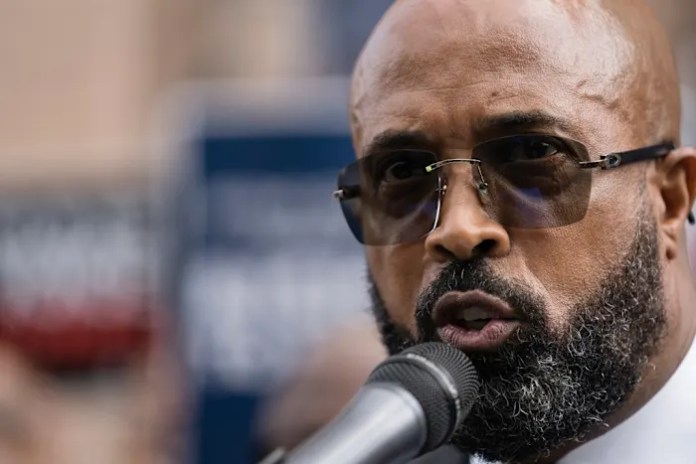
The Rev. Frederick Haynes III has supported Dallas Democratic Rep. Jasmine Crockett for years, offering her spiritual guidance and political support as her pastor and friend.

Now, with her endorsement, the longtime Baptist minister is seeking to succeed Crockett in Texas’ 30th Congressional District, after she decided to pursue a Senate bid rather than run for reelection to the House.

Haynes, who has served as the senior pastor at Friendship-West Baptist Church in Oak Cliff for over 40 years, has been involved in social justice and political causes for decades as one of the nation’s most visible Black Baptist leaders. He briefly served as president and CEO of the Rainbow PUSH Coalition, founded by civil rights leader and former Democratic presidential candidate Jesse Jackson, and is a board member of major civil rights and Baptist advocacy organizations. 

At an event formally kicking off his campaign this week, Haynes staked out several progressive policy positions, saying he supported “quality affordable health care for all” and dismantling Immigration and Customs Enforcement, the federal agency in charge of enforcing immigration laws, which has come under scrutiny recently after an agent shot and killed a U.S. citizen in Minneapolis.

Well known to Democratic politicians and Black leaders in Dallas, Haynes counts Crockett and Georgia Sen. Raphael Warnock, a senior pastor as well, as confidantes. He told The Texas Tribune he consulted with both in the days leading up to the December filling deadline, and ultimately decided that Congress was another forum for the advocacy he’s done from the pulpit. 

“This is a continuation of the mission I’ve been doing for so many years, and it’s just extending it to a political platform, even though I’ve always been one to stand for justice and try to bring justice to politics,” Haynes said in an interview. “I just think it was a matter of prayer, responding to the push of my people and then my own sense of calling.”

Haynes, 65, is running in a deep-blue district whose boundaries were shifted by Republicans during their mid-decade redistricting summer to shrink the number of Democratic-held seats in North Texas from three to two. The newly constituted 30th District contains the southern portion of Dallas County, including downtown Dallas and Oak Cliff, and stretches to DeSoto and Lancaster. It also extends into Tarrant County, encompassing portions of Arlington and Grand Prairie. 

Long a bastion of Black political power, the district was represented by Rep. Eddie Bernice Johnson for 20 years before Crockett succeeded her in 2023.

Haynes said he was first approached about running for Congress after testifying against the GOP’s redistricting push at hearings in Arlington and Austin in July. In the days leading up to the Dec. 8 filing deadline, as Crockett remained publicly mum about her plans, Haynes said he began hearing from more people encouraging him to run — an effort that spilled into public view with a website encouraging voters to “draft” Haynes for Congress.

Two days before the deadline to get on the 2026 ballot, Haynes spoke to Warnock, who told the Dallas pastor he had run for Senate several years ago because he had felt a calling to serve in politics. In the final 48 hours of the filing period, Haynes said he prayed about the decision, and ultimately decided on the day of the deadline to file.

That same day, he appeared at Crockett’s Senate launch event; in turn, Crockett filmed a video in support of Haynes that he played at his own launch event this week. In the video, she said Haynes, despite never having been elected to office before, has “been at this fight at every level” and “knows what it’s going to take to win, to lead, to govern.”

While Haynes has provided Crockett with spiritual guidance, he said their roles have now somewhat reversed as she offers him campaign pointers. 

“Even though I’ve been with her during her previous campaigns, I never paid attention with a view toward, okay, I’ll be doing this one day,” Haynes said. “And so she’s been really helpful in that regard. She has been very encouraging about my prospects of serving and serving well.”

The seat is safely blue, but Haynes will have to make it out of a primary against two lesser-known Democrats, pastor Rodney LaBruce and former state Rep. Barbara Mallory Carroway.

Besides Crockett, Haynes has been endorsed by state Rep. Chris Turner, D-Grand Prairie, Tarrant County Commissioner Alisa Simmons and Johnson’s son, Kirk, who said at Haynes’ launch event that Haynes was like an adopted son to his mother, and she would have encouraged voters to support him.

U.S. Rep. Marc Veasey, D-Fort Worth, also considered running after the seat he currently represents was dismantled by Republicans. But Veasey, one of Texas’ longest-tenured members from either party, ultimately decided against a bid.

If Haynes wins, he will join a Democratic delegation from Texas that, due to redistricting, will include fewer members and a crop of freshmen. Under the current boundaries, 12 of Texas’ 38 House districts are represented by Democrats, with a 13th set to join their ranks after a special election between two Democratic candidates at the end of the month. The new GOP map was drawn to narrow the number of blue seats to as little as eight, while forcing some veteran Democrats into retirement or difficult matchups against younger challengers. 

Haynes said it will be critical for the remaining Texas Democrats in Congress to organize cohesively for future elections.

“We have to play chess,” he said. “And a part of playing chess is looking not just to what happens this year, but what’s going to happen in ‘28 and what will happen in 2030. And that’s what I try to bring — a long-term vision so that we can turn this thing around and make some changes that will benefit the people I know.”

Congress already has a handful of ordained members, including Warnock. Haynes said there is overlap between the skills required for pastoral and public service, including listening, organizing and offering people a vision.

If elected, he said he plans to focus on lowering the cost of health care, housing, child care and college. 

“The sad reality is that most in District 30, for example, are one crisis away from economic disaster,” Haynes said. “And that has to do with the fact that, sadly, what many people are making does not keep up with inflation. And so we have to rethink what a living wage is, as opposed to talking about minimum wage.”

Haynes also expressed an interest in using congressional oversight powers to investigate what he sees as ethical violations by the Trump administration. If Democrats take the House majority in 2026, party leaders could compel Trump administration figures to testify before Congress and use subpoena power to investigate government agencies, from ICE conduct to the president and his family’s business dealings. 

Crockett has garnered national attention for her questioning of witnesses on the House Oversight Committee, the accountability-focused panel that counts many of the party’s rising stars as members.

“We have a president and a Congress that run roughshod over the law, over ethics,” Haynes said. “Congress is supposed to — in their job description — hold the executive branch accountable, and that has not been done. And so that is a part of my ‘why’ for running for Congress.”

Haynes took a medical leave of absence from Friendship-West last fall after having surgery on his prostate in September. He said he is in better shape now and is fit to run. 

The health of congressional hopefuls is under a microscope more than ever this cycle, with both parties recently affected by the deaths and medical absences of members in a narrowly divided House. Two Texas Democrats have died in office in the past two years.

“I am healthier today than I was before surgery, and I’m healthier this year than I was at this time last year,” Haynes said.

Great Job Texas Tribune, Gabby Birenbaum & the Team @ KSAT San Antonio for sharing this story.
GOP Cuts Will Cripple Medicaid Enrollment, Warns CEO of Largest Public Health Plan – KFF Health News

GOP Cuts Will Cripple Medicaid Enrollment, Warns CEO of Largest Public Health Plan – KFF Health News

When the head of the nation’s largest publicly operated health plan worries about the looming federal cuts to Medicaid, it’s not just her job. It’s personal.

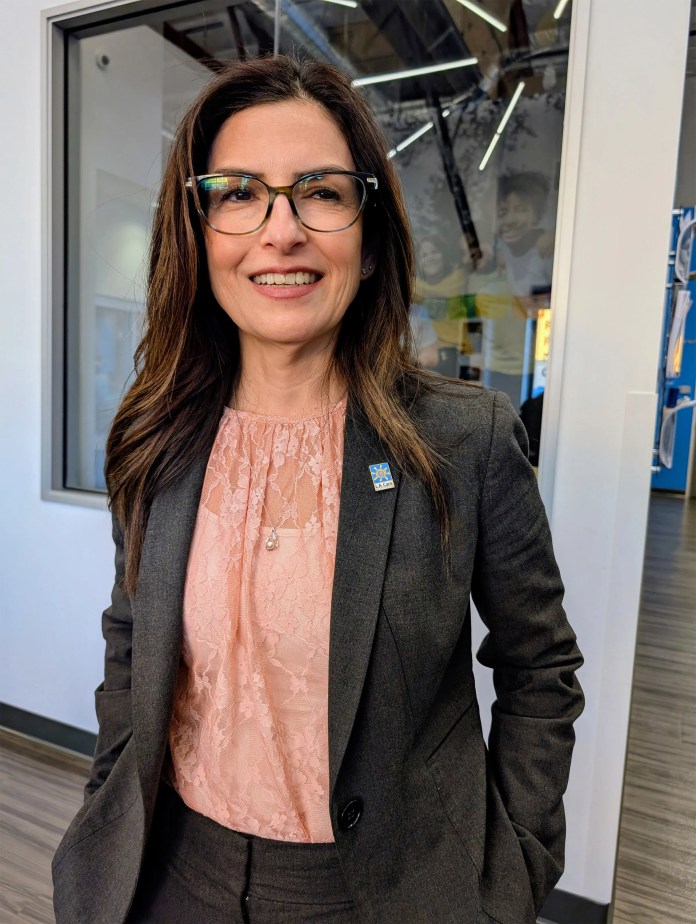
Martha Santana-Chin, the daughter of Mexican immigrants, grew up on Medi-Cal, California’s version of Medicaid, the government-run health care program for people with low incomes and disabilities. Today, she is CEO of L.A. Care, which runs by far the biggest Medi-Cal health plan, with more than 2.2 million enrollees, exceeding the Medicaid and Children’s Health Insurance Program enrollments in 41 states.

“If it weren’t for safety nets like the Medi-Cal program, I think, many people would be stuck in poverty without an ability to get out,” she said. “For me personally, not having to worry about health care allowed me to really focus on what I needed to focus on, which was my education.”

As she begins her second year steering L.A. Care, Santana-Chin is grappling with federal and state spending cuts that complicate her task of providing health care to the poor and medically vulnerable enrollees in Medicaid. The insurer also provides Affordable Care Act marketplace plans through Covered California.

Santana-Chin warns that the GOP’s One Big Beautiful Bill Act, enacted last year and also known as HR 1, could result in 650,000 enrollees falling off L.A. Care’s Medi-Cal rolls by the end of 2028. This will strain the plan’s finances as revenues decline. The insurer had revenues of $11.7 billion in the last fiscal year.

HR 1 is expected to cut more than $900 billion from Medicaid over the next 10 years — including $30 billion or more in California, according to the Department of Health Care Services, which runs Medi-Cal.

Like other states facing big deficits, California has reduced its Medicaid spending through such steps as freezing new enrollments for immigrants without legal status and reintroducing an asset limit. And that’s before the state reckons with the spending cuts that likely will be required by the withdrawal of so many federal dollars under HR 1.

Santana-Chin oversaw Medi-Cal and Medicare operations for the for-profit insurer Health Net before taking the helm of L.A. Care in January 2025, nearly three years after state regulators fined L.A. Care $55 million over violations they said compromised the health and safety of its members. L.A. Care paid $27 million in penalties to the state and agreed to contribute $28 million to community health projects.

In a wide-ranging interview, Santana-Chin talked to KFF Health News senior correspondent Bernard J. Wolfson about the financial headwinds facing L.A. Care and why she believes health care shouldn’t be restricted based on a person’s immigration status. This interview has been edited for length and clarity.

Santana-Chin is the daughter of Mexican immigrants and was a beneficiary of Medi-Cal throughout her childhood. Because of that experience, she says, the concerns of L.A. Care members resonate with her on a personal level.(Bernard J. Wolfson/KFF Health News)

Q: You grew up on Medicaid. How has that shaped your views now that you run one of the largest Medicaid plans in the country?

What really motivates me is knowing that many of the people that we’re serving are just like my family. They’ve struggled and have had to have their own children translate things that were very difficult to translate. I remember doing that for my own mother. You know, basic human dignity requires that you have access to health care.

Q: Has anything you’ve dealt with at Health Net or L.A. Care reminded you of your childhood experiences in Medi-Cal?

Back then they didn’t cover transportation, and we didn’t have a vehicle. Today, one of the issues we’ll hear from our members is the need to make sure we have trustworthy transportation that shows up on time, where the drivers treat them with respect. Had I had that, had my mother had that, life would have been much easier.

Q: What do you think the impact of HR 1 will be?

It’s going to devastate the delivery system. The state obviously isn’t going to be able to make up for the shortfalls in federal funding, and over the course of the next several years, funding is going to be less and less, and the people we cover are going to decrease significantly. We are expecting between now and the end of 2028 that we’re going to see 650,000 people drop off the rolls. That’s just L.A. Care.

Q: That’s over a quarter of your Medi-Cal enrollment.

Yes, it’s very, very significant. The reductions in payment and the rise in uncompensated care are really going to impact our delivery system. As the delivery system gets destabilized and hospitals and other health care providers are forced to close services or reduce the number of sites they have, it’s going to impact access. And it’s not only going to impact those that lose coverage.

Q: How will L.A. Care respond?

Obviously, we’re going to see a significant drop in revenue. We’re very focused on making sure that we are operating as efficiently as we can operate. And we are looking at creative ways to use technology to empower our people to do higher-level work. Mostly supporting our call center agents with smarter technology that helps them answer questions and resolve problems more quickly. Some of it is automating processes on the claims payment side.

Q: What do you have to say to congressional Republicans who passed HR 1?

We are at a point of inflection in the health care delivery system. And we have to recognize that some of the components of HR 1 will have long-term unintended consequences — maybe they were intended; I’ve got to believe that some of these things are not. There’s probably a need to reconsider some of the things that were passed.

Q: Such as?

Work requirements are an example of something that many people did believe was the right thing to do to be good stewards of the health care dollar. It is very complex and is going to cause people to lose coverage that actually do qualify. It’s unfortunate, and that would be something that I would urge folks to reconsider.

Q: What impact do you expect from California’s decision to freeze Medi-Cal enrollment for immigrants without legal status?

It doesn’t matter what immigration status you are. If you are a human being and you need health care, you’re going to try to access health care wherever you can. That’s going to put a strain on the delivery system if you’re uninsured.

Q: What has L.A. Care done to address the state’s concerns in 2022 that it delayed authorizing care and addressing patient grievances?

There has been quite a bit of investment in the L.A. Care infrastructure over the last several years — our IT platforms, our data. There’s also quite a bit of investment in adding new capacity, adding bandwidth to many of the teams, more folks to help support the work.

Q: How have federal immigration raids in L.A. affected L.A. Care members and the broader community?

It absolutely has had a chilling effect. Families are afraid to come in. They’re not taking their children to get vaccinated. I’ve had numerous providers in emergency departments say that they have experienced a drop in the volume of individuals coming in. One of our case managers was really distraught because there was an individual that decided to forgo serious lifesaving treatment because of fear.

Great Job Bernard J. Wolfson & the Team @ Public Health Archives – KFF Health News Source link for sharing this story.

After Italy, WhatsApp excludes Brazil from rival chatbot ban | TechCrunch

After Italy, WhatsApp excludes Brazil from rival chatbot ban | TechCrunch

WhatsApp is allowing AI providers to continue offering their chatbots to users with Brazilian phone numbers, days after the country’s competition regulator ordered the company to suspend its new policy that bars third-party, general-purpose chatbots from being offered on the app via its business API.

Under the new policy, the company is providing a 90-day grace period starting January 15 to developers and AI providers, mandating them to cease responding to user queries on the chat app, and notify users that their chatbots won’t work on WhatsApp.

Now, Meta told developers that they don’t have to notify users with Brazilian phone numbers (with code +55) of any changes or cease offering their services, per a notice to AI providers seen by TechCrunch.

“The requirement to cease responding to user queries and implement pre-approved auto-reply language (mentioned below) before January 15, 2026, no longer applies when messaging people with a Brazil country code (+55),” the notice reads.

WhatsApp did not immediately respond to a query seeking to confirm the decision.

The policy, which goes into effect from today, impacts general-purpose chatbots like ChatGPT and Grok on the platform. Notably, the policy does not stop businesses from providing customer service via bots within WhatsApp to their customers.

In its notice, Brazil’s competition agency said it would investigate if Meta’s terms are exclusionary to competitors and unduly favor Meta AI, the company’s chatbot that’s offered on WhatsApp.

Techcrunch event

San Francisco
|
October 13-15, 2026

Meta has previously provided a similar exemption to users in Italy after the country’s competition agency took issue with the policy in December. Separately, the EU has also opened an antitrust investigation into the new rules.

The company has consistently maintained that AI chatbots are straining its systems that were designed for different uses of its business API. Meta has even said in the past that people who want to use different chatbots can do so outside WhatsApp.

“These claims are fundamentally flawed,” a WhatsApp spokesperson said in response to CADE’s probe on Tuesday. “The emergence of AI chatbots on our Business API put a strain on our systems that they were not designed to support. This logic assumes WhatsApp is somehow a de facto app store. The route to market for AI companies is the app stores themselves, their websites and industry partnerships; not the WhatsApp Business Platform.”

Great Job Ivan Mehta & the Team @ TechCrunch Source link for sharing this story.

NeNe Leakes Makes Emotional Video About Bravo Comeback + Thanks Andy Cohen

NeNe Leakes Makes Emotional Video About Bravo Comeback + Thanks Andy Cohen

Photo Credit: Bravo

Real Housewives of Atlanta” fans have a lot to chat about today on social media. Earlier today, it was revealed that NeNe Leakes is returning to Bravo. NeNe will be featured on the upcoming season of “The Real Housewives: Ultimate Girls Trip.” While NeNe will not be a full-time cast member, she will make an appearance when the RHUGT cast makes a stop in the city of Atlanta. Bravo wanted to celebrate the 20th anniversary of “Real Housewives” in the grandest way possible. Andy Cohen and other executives didn’t think this could be possible with NeNe.

NeNe took to social media to thank everyone for the support. She also shouted out Andy and a couple of housewives for keeping her name relevant, although she hasn’t been on Bravo in years.

“I want to thank Frances Berwick, Andy Cohen, so many executives behind the scenes who have worked to make this happen. So many people that have continued to throw my name in the ring over and over again. Thank you to everybody over at Bravo. Thank you to all of the people over at Truly Original. Thank you to Shed Media. Thank you to the producers on the ground who were calling and texting me and wanting this to be an amazing thing.”

She continued, “I have to thank some of the housewives that I know have continuously kept my name being said behind the scenes. Porsha Williams, yeah, thank you so much. You know how I feel about you. You’re my little sister. Thank you, I appreciate everything. Phaedra Parks, thank you so much, Phaedra, for keeping my name going, and all of you guys and all of you ladies who constantly say my name to keep my name out there in the ring. I appreciate you guys so much. Thank you so much.”

Great Job Amanda Anderson-Niles & the Team @ Urban Belle Magazine Source link for sharing this story.

CEO leading Saks Global through bankruptcy has a management philosophy of ‘leading with love’ | Fortune

CEO leading Saks Global through bankruptcy has a management philosophy of ‘leading with love’ | Fortune

Good morning. The C-suite drama at Saks Global was one of our most popular stories with subscribers last week—and it’s no wonder why. It had risky dealmaking, a failing real estate scion, and luxury chains flailing even though consumers are spending like never before. Now there’s a new twist—Saks Global has filed for Chapter 11 bankruptcy protection and luxury executive Geoffroy van Raemdonck will have the job of turning around the luxury retail group.

It’s an area where van Raemdonck certainly has relevant experience: In 2018, he became CEO of Neiman Marcus Group (which included Bergdorf Goodman), then struggling under the weight of heavy debt from years of private equity ownership. This time around, as CEO of Saks Global, which also piled on debt stemming from the $2.7 billion union in 2024, he’ll have an even tougher job with multiple chains to fix. 

During his six years running Neiman Marcus, he succeeded in protecting its market share from the industry headwinds facing luxury department stores and returned it to profitability. As CEO of Neiman Marcus Group, he often called his management philosophy “leading with love,” a term that often won him snickers at conferences. 

What it really meant was making sure luxury was not merely transactional but more about a deeper connection with the consumer, whether inspiring their loyalty from highly personalized service or making them feel like they were at the forefront of fashion. (He famously landed in controversy in 2023 after he told Fortune that his plan was to focus on the well-heeled, much more than on those aspiring to be part of the elite.)

But you can’t woo customers if you have stale or low inventory, so winning AWOL customers, which should be van Raemdonck’s top priority, will certainly have to begin with mending fences with beleaguered vendors. Between sluggish business and its cash crunch, Saks has in the last two years delayed payments to many vendors. Many of the suppliers, particularly smaller ones that could give Neiman and Saks tastemaking cachet, have stopped shipping to its stores. Nordstrom and Bloomingdale’s have wasted no time in swooping in and grabbing some of that market share.

Indeed, one of the reasons van Raemdonck got the job, on top of his experience heading Neiman, was his many years of management experience as a vendor, including years at Ralph Lauren and Louis Vuitton; he speaks their language.

His hands-on experience guiding a company through a bankruptcy reorganization will be a huge help. He knows how to talk to financiers, vendors and employees all at once. That’s a good place to start in the quest to get these historic brands back to health.—Phil Wahba

Contact CEO Daily via Diane Brady at diane.brady@fortune.com

Top news

A ‘watch and see’ approach to Iran

President Donald Trump said Wednesday that Iran had stopped killing anti-government protestors, which seemed to dial down his earlier threats of a military strike. Trump has vowed to attack Iran if it killed demonstrators. U.S. troops were starting to mobilize from a base in Qatar as human rights groups reported hundreds of such deaths. The president said Wednesday, “we’re going to watch and see what the process is,” when asked whether a strike was now off the table. Oil prices sank on the apparent deescalation. 

Dimon’s break with Trump

Jamie Dimon has worked to repair his relationship with President Donald Trump, often expressing support for the administration while watering down criticism of specific policies. But now the JPMorgan CEO’s criticism of the DOJ’s Federal Reserve investigation threatens to derail the relationship again

TSMC earnings boost confidence

Taiwan Semiconductor Manufacturing Co. reported blowout earnings Thursday, posting higher profit and revenue in the last three months of 2025. The world’s largest contract chip maker indicated it could meet surging demand for AI chips, reassuring tech investors who had moved away from the Magnificent 7 in recent days. 

Another visa crackdown

The U.S. will pause immigration visa processing for applicants from 75 countries, including Russia, Iran, Brazil, Egypt, and Thailand as it tries to block foreign nationals who may rely on public services. The government will still issue short-term visas.

AI’s risk to London jobs

In an address tonight, London Mayor Sadiq Khan will warn that AI could lead to “a new era of mass unemployment” in the British capital and call on lawmakers to establish guardrails that ensure AI is used for “positive transformation” and not the “destruction of jobs.”

Citigroup CEO issues stern employee memo

Citigroup CEO Jan Fraser stressed to employees that “the bar is raised” in a new internal memo, reported previously by Bloomberg, that emphasized to employees that they are “judged on our results.” The bank plans to cut about 1,000 jobs this week.

Coinbase CEO throws wrench in Senate crypto act debates

Coinbase CEO Brian Armstrong abruptly came out against the Genius Act, a landmark crypto bill that is set for debate by the Senate Banking Committee. Armstrong named a number of specific critiques in his X post, including disagreements over offering rewards on stablecoin holdings and asserted that “we’d rather have no bill than a bad bill.” 

The markets

S&P 500 futures were up 0.34% this morning. The last session closed down 0.53%. STOXX Europe 600 was up 0.36% in early trading. The U.K.’s FTSE 100 was up o.52% in early trading. Japan’s Nikkei 225 was down 0.42%. China’s CSI 300 was up o.2%. The South Korea KOSPI was up 1.58%. Indian markets are closed today. Bitcoin was at $97K.

Around the watercooler

Peter Thiel makes his biggest donation in years to help defeat California’s billionaire wealth tax by Nick Lichtenberg

Whole Foods cofounder says his hardest ever business decision was firing his father from his company board: ‘That was when my mentorship was over’ by Sasha Rogelberg

Rural America is getting a bailout, but not from Trump—billionaires are riding to the rescue by Nick Lichtenberg

The job market is broken, but Nvidia CEO Jensen Huang is ‘fairly confident’ that AI will increase productivity and therefore, hiring—but there’s a catch by Preston Fore

CEO Daily is compiled and edited by Joey Abrams, Claire Zillman and Lee Clifford.

Great Job Diane Brady & the Team @ Fortune | FORTUNE Source link for sharing this story.

Coco Gauff and Venus Williams set for potential Australian Open meeting in 2nd round

Coco Gauff and Venus Williams set for potential Australian Open meeting in 2nd round

MELBOURNE – Coco Gauff and Venus Williams could meet in the second round of the Australian Open, another potential chapter in a tennis tale that started with a 15-year-old on her Grand Slam debut beating a seven-time major winner at Wimbledon.

Gauff thanked Williams for being such an inspiration for her career after that win at the All England Club in 2019, saying “I wouldn’t be here if it wasn’t for her.”

She followed it up with a first-round win at the Australian Open in 2020.

Now she’s the No. 3 seed and a two-time major winner. The 45-year-old Williams has a wild-card entry for the Australian Open, where she’s playing for the first time in five years.

The tournament starts Sunday at Melbourne Park. When the draw was conducted Thursday, Gauff was drawn to open against No. 91-ranked Kamilla Rakhimova and No. 576-ranked Williams — who made her Australian Open debut in 1998 and has twice reached the final — was drawn to face No. 68-ranked Olga Danilovic in the first round.

Williams is set to become the oldest woman to compete in an Australian Open main draw, surpassing the record previously held by Japan’s Kimiko Date, who was 44 when she lost in the first round at Melbourne Park in 2015.

To have any chance of facing Gauff again, she needs to do something she hasn’t done in 2026: record a win. In the last two weeks, Williams played tournaments in New Zealand and in Hobart, losing in the first round at both.

After a 6-4, 6-3 win over Williams on Tuesday, Tatjana Maria said it was a tough one because “everyone loves Venus. I love her, too.”

Gauff and Williams are in the same half of the draw as top-ranked Aryna Sabalenka, who won back-to-back Australian Open titles before losing last year’s final to Madison Keys.

Sabalenka, who opened her season with a title in Brisbane last week, has a potential third-round meeting against 2021 U.S. Open winner Emma Raducanu.

Defending champion Keys, who lost her quarterfinal match at the Adelaide International to rising Canadian star Victoria Mboko in three sets on Thursday, was drawn into the same quarter as No. 6 Jessica Pegula, and No. 4 Amanda Anisimova.

No. 2-ranked Iga Świątek, seeking a career Grand Slam with her first title at Melbourne Park, is in the bottom quarter on that side of the draw and has a potential fourth-round match against four-time major winner Naomi Osaka.

Jannik Sinner and Novak Djokovic landed in the same half of the draw, setting up a potential semifinal between the defending champion and the 24-time major winner.

Djokovic, who has won 10 Australian titles but hasn’t gone past the semifinals at Melbourne Park since 2023, played an exhibition against Frances Tiafoe on Rod Laver Arena hours after the draw was made. He withdrew last week from a warmup tournament in Adelaide to give himself more time to be ready for the Open.

Top-ranked Carlos Alcaraz is on the opposite side to Sinner and Djokovic, and has Tiafoe and local hope and sixth-seeded Alex De Minaur in his quarter of the draw.

___

AP tennis: https://apnews.com/hub/tennis

Copyright 2026 The Associated Press. All rights reserved. This material may not be published, broadcast, rewritten or redistributed without permission.

Great Job John Pye, Associated Press & the Team @ KSAT San Antonio Source link for sharing this story.

Pity the Jewish Intellectuals of MAGA

Pity the Jewish Intellectuals of MAGA

At a Turning Point USA conference in December, the podcaster Ben Shapiro delivered a speech that was hailed as the sort of moral stand one rarely encounters in the age of polarization. Confronting the right’s surging anti-Semitism, he denounced two of its most popular peddlers—Tucker Carlson and Candace Owens—by name. Speaking at a Heritage Foundation event the day before, Shapiro had called for “ideological border control,” a purge of the haters from the movement.

It was a brave foray into intramural politics, but also a damning self-indictment. Not so many years ago, Shapiro was guilty of the very thing he now decries. The Daily Wire, of which he is a co-founder and part owner, hired Owens in 2020. Even before she arrived, there were signs of where she was headed: “If Hitler had just wanted to make Germany great and have things run well, okay, fine,” she had told a crowd in London in 2018. Shapiro’s company ignored that and subsequent warnings. When Kanye West went on an anti-Semitic tear in 2022, Owens rushed to his defense: “It’s like you cannot even say the word ‘Jewish’ without people getting upset.”

That incident was the moment for border control. Shapiro refused. “We allow disagreement at The Daily Wire,” he said, “even when I think that some of my colleagues are wrong.” No wonder anti-Semitism crept toward the movement’s mainstream.

For a time, it was possible for the Jewish intellectuals of MAGA—a small but influential set of podcasters, columnists, and theorists—to minimize anti-Semitism in the movement. But it’s now so ubiquitous and so noxious that even they can’t ignore it. Joel Pollak, the former editor in chief of Breitbart News, wrote on X in December that, until a few months before, he would have happily sent his children to a Turning Point USA event. Not anymore. “Now: why would I send them to one more place where Jewish kids have to defend who they are and what they believe?”

But Pollak, Shapiro, and others were delusional in denying the problem for so long. They built careers inside a movement animated by fantasies about “globalists,” suspicions of hidden hands, and a yearning for national purity—an ideological combination that has never been particularly healthy for Jews. They lent their prestige to it anyway, certain that the hateful rhetoric was meant for someone else. Now that it has landed directly on them, they want credit for noticing the stench.

No case is sadder than the Israeli American political theorist Yoram Hazony—a Princeton and Rutgers graduate who ran a conservative think tank in Jerusalem, but saw Trump and the American right’s bubbling hostility toward classical liberalism as his chance to break out on a larger stage. In 2018, he published The Virtue of Nationalism, not a flame-throwing manifesto so much as a homely defense of nationalism as the natural way to organize a polity—an argument he traced back to biblical times.

Hazony didn’t just write about the revolt against liberalism; he became one of its leading impresarios. He convened regular gatherings of what he called the “National Conservatives,” a melange of theocrats and populists, and grasped for a new coalition that might provide the bedrock ideology of right-wing political parties throughout the Western world. Rising Republican politicians including J. D. Vance and Josh Hawley headlined these conferences, which, for several years, were the hottest tickets on the right.

Under the National Conservative banner, the right was swerving from classical liberalism to nationalism, away from the most American of American ideas: that the United States is held together by a creed rather than a bloodline. Hazony’s movement didn’t merely sneer at “wokeness”; it sneered at the pluralist project, articulated movingly by George Washington himself, that enabled Jews to flourish in the U.S. in the first place. Say what you will about the Enlightenment; at least it emancipated Jews.

While Hazony projected a mild image, his conferences were bombastic. When my colleague David Brooks attended one in 2021, he walked away gobsmacked by the “callousness, invocations of combat, and whiffs of brutality.” His dispatch from the conference was titled “The Terrifying Future of the American Right.”

Jewish history supplied a pretty good preview of what that terrifying future might look like. Four years after Brooks attended Hazony’s conference, it has unmistakably arrived. Each week brings a new instance of anti-Semitism moving from the internet’s febrile periphery into the conservative movement’s mainstream. A leaked text chain from the New York Young Republicans included the line “Great. I love Hitler.” Tucker Carlson, arguably the movement’s most popular personality, hosted Holocaust deniers on his show. Kevin Roberts, the head of the Heritage Foundation, rose to Carlson’s defense by dismissing the host’s critics as a “venomous coalition”—language that echoed old insinuations about a Jewish cabal pulling the strings. (Roberts eventually apologized.)

When Hazony convened the National Conservatives in September, he felt obliged to address the matter of surging anti-Semitism. He told the crowd that he’d been “pretty amazed by the depth of the slander of Jews as a people” online. Then he made what would surely count as one of the most naive statements ever offered at a political conference, at least if it could be judged sincere. “I didn’t think it would happen on the right,” he said. “I was mistaken.”

But contained in his speech were clues that perhaps he wasn’t as surprised as he claimed to be. For years, he said, he had defended his comrades against accusations of anti-Semitism. “It makes you really popular,” he said. “Everybody is really grateful: I’m the guy who defended them against absolutely false, ridiculous accusations of anti-Semitism.”

What did this long history of loyalty buy MAGA’s Jewish intellectuals? Several days after Shapiro addressed the Turning Point USA conference, Vance took the same stage. Because of all the attention Shapiro’s speech had received, Vance was compelled to address his concerns. But when the time came to evict Holocaust deniers and conspiracists from the movement, Vance chose a different path. He rejected “purity tests,” telling the crowd, “I didn’t bring a list of conservatives to denounce or to deplatform.” Vance spectacularly failed Shapiro’s moral test. And yet, Shapiro said nothing critical in response. He stayed silent, and evidently chose to preserve his relationship with the Republican Party’s heir apparent. In other words, Shapiro failed the moral test he himself wrote.

Despite all their bellyaching, the Jewish intellectuals of MAGA still hesitate to wage civil war or break ranks. After wringing his hands about anti-Semitism on the right, Hazony turned around and defended Roberts as he was besieged by accusations of anti-Semitism: “I’ll never forget how the jackals circled, sniveling for blood,” Hazony said. Sniveling is an interesting choice of words, given all the feeble excuses that Hazony has made for his allies.

Great Job Franklin Foer & the Team @ The Atlantic Source link for sharing this story.

More Than a Movie: Hollywood’s Demons Are Closer To Scripture Than We Think – Christ and Pop Culture

More Than a Movie: Hollywood’s Demons Are Closer To Scripture Than We Think – Christ and Pop Culture

Recently, I became interested in horror films, especially those concerning demons and paranormal activity. It started in 2023 when my mom had me watch Julius Avery’s The Pope’s Exorcist. While I enjoyed the movie, my initial thoughts were that this movie is just Hollywood’s understanding of exorcisms and the demonic. Surely there are no real cases of people climbing walls, and possessions matching the artistic representations Hollywood uses in the movies. However, as I thought about what the Bible says about possessions and exorcisms, I realized movie depictions of demonic possession are more accurate to Scripture than I first assumed.

Thankfully, Christians are equipped with ways to handle possessions, the demonic, Satan, and spiritual warfare.

Christians, especially Protestants, have become numb to the reality that possessions still occur today. The demonic has become a genre of horror and entertainment instead of the spiritual warfare Christians are engaged in every day. Realizing that my knowledge and preparation to deal with the paranormal was limited, I began a deep dive into what the Bible says concerning false gods, demons, and how Christians are supposed to handle such matters. Ultimately, what I came up with was that people can be and are still possessed today. Thankfully, Christians are equipped with ways to handle possessions, the demonic, Satan, and spiritual warfare. 

While my mom enjoys the occasional horror movie, she is not a fan of my research into the demonic. My mom believes these movies and my research are bringing demons into our house. However, my argument is that even though I enjoy paranormal horror movies and shows, I am not participating in these practices. I understand the reality of spiritual warfare, demons, possessions, the occult, and Satan. I am doing my research using the Bible and not the internet or movies. I analyze movies, TV shows, books, and podcasts using a biblical framework. I do not pursue these things out of mere curiosity, as we are commanded to not seek such things out, but I enjoy studying them and I am prepared for the day that something comes my way (Luke 10:20; Eph. 6:10-18; 1 Peter 5:8).

In these movies and shows, Hollywood wants us to believe that levitating children and possessed dolls, like Annabelle depicted in The Conjuring movies, are exaggerated nonfiction. After all, how does a mirror create so much chaos in a home where teens are choking on glass they never swallowed and grandparents mysteriously and inexplicably die? We are meant to believe these are merely ghost stories, but there are fascinating reports in the Bible of men with supernatural strength, children who can tell the future, and gods requiring children to be sacrificed. Hollywood’s depiction of demons, Satan, and false gods are actually accurate instead of exaggerated. 

The goal of these demons is to destroy humanity because of our connection to God through Jesus and through our creation in God’s image.

In Mark 5:1-20, Jesus comes face to face with a possessed man who had been ostracized by the city. The Bible tells us this man had incredible strength, “And no one could bind him anymore, not even with a chain, for he had often been bound with shackles and chains, but he wrenched the chains apart, and he broke the shackles in pieces.” The only way this man could have such strength is from the demon possessing him. The demon causes this man to do things he would never do. However, when it comes to this demon-possessed man, the Bible does not depict Jesus flashing a cross at the demons or sprinkling them with holy water. Instead, the Bible tells us that Jesus commanded the unclean spirits to come out of the man. The demons obeyed, actually pleading with Jesus to allow them to possess some swine. This is because of Christ’s authority as the Son of God over everything (Matt. 28:18; 1 John 4:4). 

A modern case similar to this is the Amityville horror, where a young man gruesomely murdered his family. This man was not deemed a cold-blooded killer or a psychopath, but rather demonically possessed. Since the case began, there has been public speculation and ridicule surrounding the Amityville house. The Lutz family, later owners of the Amityville house, reported paranormal activity which brought in investigators and ghost hunters. However, these claims have been ridiculed and refuted by the public, often citing the financial hardship the Lutz family faced during that time. While the legitimacy of the case is often debated, it did not stop The Conjuring franchise from creating a movie regarding this case, and Ed and Lorraine Warren’s involvement with the case and the house. Whether or not this man was possessed, it should not surprise us that demons want to harm humans. 

Leviticus 20 documents laws written concerning the punishment for child sacrifice. In this passage, a false god named Molech is introduced. Molech was worshipped by heating a statue until it was glowing red. Once the metal reached this burning state, a live child was placed on the outstretched hands of Molech while drums played, drowning out the screams of the child. It is important to note that these false gods are actually demons in disguise (Deut. 32:17; 2 Cor. 11:14-15). The goal of these demons is to destroy humanity because of our connection to God through Jesus and through our creation in God’s image. One way that demons do this is by leading us astray and killing us (John 10:10; 1 Peter 5:8-9). 

There were not any special prayers, holy water, or pictures and symbols of Christ—merely power from the Holy Spirit and the name of Jesus. 

Even knowing this, we do not need to fear the demons. We have power over the demons through Christ. We can follow Paul’s example demonstrated in Acts 16. While in Macedonia serving the people and sharing the Gospel, Paul and Silas find themselves being followed by a “slave girl who had a spirit of divination” (Acts 16:16-17). While following the men, this girl would announce, “These men are servants of the Most High God, who proclaim to you the way of salvation” (Acts 16:17). This girl did this everywhere Paul and Silas went, causing a stir. Paul finally got so irritated that he “turned and said to the spirit, ‘I command you in the name of Jesus Christ to come out of her’” (Acts 16:18). The demon obeyed and exited the girl instantly. 

The phrase Paul used was not some special ritualistic prayer. He used the truth and the power of Christ. For those of us who have given our lives to Christ, we share in this same power, thanks to the Holy Spirit living in us (Matt. 10:1; Mark 16:17; Luke 10:19; Acts 1:8; Rom. 8:9-11). Those of us who are not in Christ lack this power to cast out demons.

Later in Acts, Paul arrives in Ephesus. God uses Paul to complete wondrous miracles. The Jewish exorcists noticed Paul’s abilities and power and took some notes. These exorcists attempted to rebuke unclean spirits saying, “I adjure you by the Jesus whom Paul proclaims” (Acts 19:13). But the demon did not fear the men or leave, rather the demon said, “Jesus I know, and Paul I recognize, but who are you?” (Acts 19:15). Then the demon chased the exorcists out, wounding them.

This happened because Jesus is not a special charm used to ward off spirits: He is the Son of God. “You believe that God is one, you do well. Even the demons believe and shudder” (James 2:19). A difference between Christians and demons consists in the nature of their belief in Christ as the Messiah. The demons know who Jesus is, but they will never accept Him or love Him as the Son of God. Yet, even they must still obey the King. There were not any special prayers, holy water, or pictures and symbols of Christ—merely power from the Holy Spirit and the name of Jesus which everything is subject to. 

Demons are accurately depicted by certain Hollywood films, but we as Christians do not need to fear what the demons can and cannot do, or worry about whether they’re coming into our homes through the TV. The goal of Hollywood creating these movies is to create fear. When we analyze these movies using the Bible, we are reminded of the ancient rebellion we have been warned about. God gives us instructions and examples throughout the Bible for what to do when we come across demons. 

It is important to understand that there is nothing wrong with enjoying The Pope’s Exorcist or The Conjuring franchise, as long as we’re conscious of our role in spiritual warfare. We do not watch as victims who should fear demons, but as victors who stand in the very true and real power of Jesus Christ because everything is subject to Him.

Great Job Elise Wolf & the Team @ Christ and Pop Culture Source link for sharing this story.

President Trump Says Executions Have Stopped in Iran

President Trump Says Executions Have Stopped in Iran

(WBAP/KLIF) AP — U.S. President Donald Trump said Wednesday that he’s been told “on good authority” that plans for executions in Iran have stopped, even as Tehran has signaled fast trials and executions ahead in its crackdown on protesters.

The U.S. president’s claims, which were made with few details, come as he’s told protesting Iranians in recent days that “help is on the way” and that his administration would “act accordingly” to respond to the Iranian government.

But Trump has not offered any details about how the U.S. might respond and it wasn’t clear if his comments Wednesday indicated he would hold off on action. Earlier Wednesday, Gholamhossein Mohseni-Ejei, Iran’s judiciary chief, said the government must act quickly to punish more than 18,000 people who have been detained through rapid trials and executions.

(Getty Images)

The security force crackdown on the demonstrations has killed at least 2,586, the U.S.-based Human Rights Activists News Agency reported. The death toll exceeds that of any other round of protest or unrest in Iran in decades and recalls the chaos surrounding the country’s 1979 Islamic Revolution.

Here is the latest:

Iranian foreign minister asks UN to condemn terrorism
In a letter obtained by The Associated Press on Wednesday, Iranian Foreign Minister Abbas Araghchi called for the top U.N. official to condemn and reject “all acts of terrorism during the unrests regardless of the incentives.”

Araghchi reiterated Iranian officials’ claims, without providing evidence, that the U.S. and Israel have been directly involved in the escalation of recent nationwide protests in Iran that have killed more than 2,500 Iranians.

“Peaceful protests started from Dec. 28, 2025 on economic grounds were sabotaged by terrorist elements who turned them into armed riots,” he wrote to U.N. Secretary-General António Guterres.

Iranian government holds mass funeral
A mass funeral was held in Tehran for some 100 security force members killed in the demonstrations. Tens of thousands of mourners attended, holding Iranian flags and photos of Ayatollah Ali Khamenei.

The caskets, draped in Iranian flags, stood stacked at least three high. Red and white roses and framed photographs of the dead covered them.

Iranians describe the government’s crackdown
“We are very frightened because of these sounds (of gunfire) and protests,” said a mother of two shopping for fruits and vegetables, who spoke on condition of anonymity for fear of reprisals.

“We have heard many are killed and many are injured. Now peace has been restored, but schools are closed, and I’m scared to send my children to school again.”

Ahmadreza Tavakoli, 36, told The Associated Press he witnessed one demonstration in Tehran and was shocked by the use of firearms by authorities.

“People were out to express themselves and protest, but quickly it turned into a war zone,” Tavakoli said. “The people do not have guns. Only the security forces have guns.”

Iranians and Germans protest in Berlin
At a protest march of 900 Iranian exiles and German supporters in Berlin on Wednesday night, Maryam Nejatipur, 32, told The Associated Press how unbearably worried she was about her family back home.

“They’re in a complete blackout. We don’t have any news,” said the former teacher who was forced to leave her home country about two years ago.

She said she didn’t know how to get through the days since Iran shut down the internet and phones and she could not longer find out if her family was still alive.

She sobbed and said really she was not only worried about her immediate family but all Iranians. “There are 90 million people inside Iran and they are killing all of them,” she said.

US met with exiled former crown prince of Iran
U.S. envoy Steve Witkoff has met with exiled former crown prince of Iran Reza Pahlavi, a White House official confirmed on Wednesday, speaking on condition of anonymity about the private meeting. The official provided no further details.

Italy foreign ministry advises Italian citizens to leave
Italy’s Foreign Minister Antonio Tajani has been meeting on Wednesday evening with officials from the Italian Ministry of Defense, the Italian Ambassador to Tehran and ambassadors from the main capitals involved in the current crisis in Iran.

The ministry reiterated its recommendation that Italian citizens should leave Iran if they are able to do so, a statement said.

Iran’s Revolutionary Guard blames US and Israel for protests
Mohammad Pakpour, commander of Iran’s paramilitary Revolutionary Guard, threatened Wednesday that the country would give a “decisive response” to the death of Iranian “martyrs and security protectors,” according to Iran’s semiofficial Tasnim news agency.

Pakpour reiterated Iranian officials’ claims that U.S. and Israel have instigated these protests and that they are the “main killers” of the hundreds of casualties. He added that those countries will “receive the response in the appropriate time.”

(Copyright 2026 WBAP/KLIF Newsroom News. All rights reserved. Contains material from the Associated Press.)

Great Job & the Team @ News Talk WBAP-AM for sharing this story.

Why is Duke Energy retreating from a major pumped-hydro expansion?

Why is Duke Energy retreating from a major pumped-hydro expansion?

North Carolina’s predominant utility is backing away from a long-held plan to double the size of its largest pumped storage hydropower plant — just as data centers and other voracious energy users threaten to stretch power supplies to their limit.

The reversal was tucked away in Duke Energy’s latest long-term blueprint, which was filed in October and will be evaluated and finalized by regulators this year. Clean energy advocates had expected to fight that blueprint on familiar fronts — from its inclusion of new gas-fired power plants to its complete lack of near-term wind energy — but they were surprised by the backpedaling on the Bad Creek storage facility, located just over the border in South Carolina.

Duke put this forward as something they were going to do, and everybody agreed,” said David Neal, senior attorney at the Southern Environmental Law Center. To take out the one thing that everybody agreed on, without any announcement, without any fanfare,” he said, is just baffling to me.”

Pumped hydro is a uniquely useful form of carbon-free electricity. It’s available on demand and can dispatch power over a much longer period than a lithium-ion battery can. It’s also rare: Construction of new pumped hydro facilities in the U.S. has stagnated for decades.

Duke’s original Bad Creek expansion plan would have catapulted the company to become the nation’s leader in pumped hydro. Now, advocates fear its about-face will undermine the state’s zero-carbon law by opening the door for a fleet of new gas plants instead.

A massive natural battery

Hydropower is one of the oldest forms of electricity generation — and it’s how Duke Energy, then called the Catawba Power Company, got its start in the early 1900s. A trio of entrepreneurs, led by James B. Duke, built a series of dams and lakes along the Catawba River, fostering the growth of mills and other industries that helped diversify the region’s economy.

Pumped storage hydropower — like that at Bad Creek — is a related but different beast. Two bodies of water at different elevations are connected with reversible turbines, producing or storing electricity, depending on what the grid needs.

Let’s say it’s a spring day, a sunny day, a lot of solar on the grid, but not a lot of demand. You just bring that water uphill,” to store in the upper reservoir, Neal explained. When you’re in a peak period, you run the water back downhill to generate electricity. It’s a very efficient, clean way of having storage.”

Duke launched its first pumped storage project in 1975 after building a dam between what is now Lake Jocassee and Lake Keowee below it. On the South Carolina side of the Blue Ridge Mountains, the four reversible turbines are slated to operate for at least another two decades.

The Bad Creek complex followed in 1991. The upper reservoir sits at an elevation of 2,310 feet, and Lake Jocassee, more than 1,000 feet below, serves as the lower reservoir. They’re linked by an underground concrete tunnel and a four-turbine powerhouse, capable of supplying enough electricity to power 1 million homes.

Duke recently upgraded the existing Bad Creek facility, increasing its capacity to nearly 1.7 gigawatts. But the utility has also long envisioned drilling a new tunnel and adding another four-turbine powerhouse at the site, adding another roughly 1.8 gigawatts. Doing so would help the company zero out its carbon emissions by midcentury, as required by state law.

In 2022, the company offered four pathways to limit its pollution; all included the expansion, dubbed Bad Creek II, by 2034. The additional Bad Creek capacity was also cemented in a compromise Duke struck with stakeholders to help get its last carbon-reduction plan approved. Regulators on the North Carolina Utilities Commission blessed the deal, directing the company to pursue all reasonable development activities” to put Bad Creek II in place.

Great Job Elizabeth Ouzts & the Team @ Canary Media Source link for sharing this story.

Secret Link