Home News Page 6

Geothermal startup Fervo Energy may finally go public

Geothermal startup Fervo Energy may finally go public

On Wednesday, Zanskar said it raised $115 million in a Series C funding round led by Spring Lane Capital to develop its gigawatt-scale pipeline” of projects. The Salt Lake City–based company uses AI and modern prospecting tools to identify naturally occurring reservoirs of hot water and steam that are hidden beneath the surface, without the visible signs — like vents and geysers — that typically help developers find hot spots.

Zanskar recently announced the discovery of one such geothermal system in western Nevada, which it says has the potential to produce more than 100 MW of electricity using traditional drilling technologies, marking a key proof point for the firm.

Meanwhile, Sage Geosystems said it closed over $97 million in Series B funding, in a round led by conventional geothermal giant Ormat Technologies and investment firm Carbon Direct Capital. The funding will support the build-out of Sage’s first commercial-scale project, to be located at one of Ormat’s existing power plants.

Sage’s approach to geothermal energy involves tapping into both heat and pressure from hot, dry rocks found deep underground. The company drills wells and fractures rocks to create artificial reservoirs that it pumps full of water. Sage then cycles the water in and out of the fracture and jettisons the liquid to the surface in order to drive turbines and produce electricity.

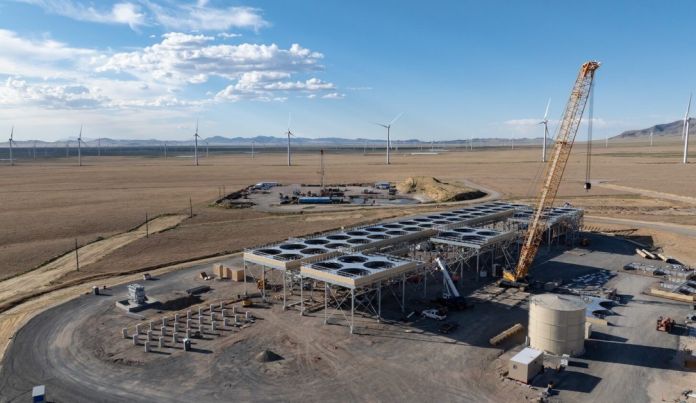
Fervo, for its part, also uses fracking tools to create artificial reservoirs for generating power. In 2023, the company hit a key milestone when it completed the world’s first commercial pilot system to use enhanced” drilling methods. This 3.5-MW facility in Nevada was built with support from Google, which is also working with Fervo to develop 115 MW of geothermal energy to power the tech giant’s data centers in the state.

Now, along with the IPO filing, Fervo is gearing up to mark an even bigger achievement: completing the first 100 MW of its 500-MW Cape Station project in Utah and delivering power to the grid in October.

{
if ($event.target.classList.contains(‘hs-richtext’)) {
if ($event.target.textContent === ‘+ more options’) {
$event.target.remove();
open = true;
}
}
}”
>

Great Job Maria Gallucci & the Team @ Canary Media Source link for sharing this story.

Successful Home SCIg Self-Administration for Primary Immunodeficiency

Successful Home SCIg Self-Administration for Primary Immunodeficiency

For many people, inserting the needle is the most intimidating part of home SCIg. The good news is that SCIg uses small, short needles placed just under the skin, not into muscle or veins.

During training, nurses typically demonstrate proper technique and supervise several practice sessions.

“The first time you receive the infusion it can cause anxiety; it may be ideal for the first injection to be given in a provider’s office, so patients and caregivers can experience the injection with on-site help,” says Megan Ehret, PharmD, a professor in the department of practice, sciences, and health outcomes research at the University of Maryland School of Pharmacy in Baltimore.

The subsequent injections will get easier over time, says Ehret.

Reducing Pain or Discomfort

There are ways to make the needle insertion less painful. Ehret recommends:

  • Pinch the skin using two fingers around the infusion site, and then insert the needle with a quick, dart-like motion straight into the skin.
  • Numb your skin by placing an ice pack on the location for about 15 minutes prior to the injection. “This will temporarily reduce pain and serve as another distraction,” she says.
  • Use numbing creams (ask your provider for recommendation or prescription) if sensitivity is an issue.
  • For the first administration, start out with a slow infusion rate, and consider using an extra needle to avoid putting too much Ig in at one site — that can reduce irritation.

Over time, many people report that needle insertion becomes routine and less stressful than they initially expected, says Ehret.

Great Job Becky Upham & the Team @ google-discover Source link for sharing this story.

Ring is adding a new content verification feature to videos | TechCrunch

Ring is adding a new content verification feature to videos | TechCrunch

It’s going to be more difficult to fake or manipulate Ring camera video footage going forward. On Thursday, the Amazon-owned device maker introduced Ring Verify, a new video authenticity feature that will allow anyone to determine whether a video has been altered in any way.

The company says this could be useful when you come across shared videos, like those sent to you by a neighbor or those purporting to show some sort of incident.

While you may not be able to instantly identify whether some TikTok video was AI-generated — like bunnies jumping on a trampoline, for instance — you will be alerted to any changes to a Ring video that someone has shared with you directly.

Image Credits:Ring

“Think of it like the tamper-evident seal on a medicine bottle — if anyone changes the video in any way, even something small like trimming a few seconds or adjusting the brightness, the seal breaks,” Ring explained in its announcement.

The verification feature will be automatically enabled on every video recorded with a Ring device from December 2025 onward, the company notes. Any changes or edits, including cropping and filters, will break that verification seal. Ring says this includes videos uploaded to sharing sites that compress footage.

Failing verification doesn’t necessarily mean the video is fake. It’s just a signal that it has been altered. Maybe someone boosted the brightness for visibility, or it could mean the video was recorded before December 2025.

Ring is adding a new content verification feature to videos | TechCrunch
Image Credits:Ring

In the case of a failed verification, recipients can request a copy of the unedited video. Ring suggests this could be useful for purposes like insurance claims.

The verification feature will be present on all videos downloaded or shared from Ring’s cloud, regardless of the specific device that captured the footage. But the company notes that content verification will not be compatible with videos recorded using end-to-end encryption — those will always show as “not verified,” it said.

To verify footage, Ring will be able to visit the website Ring.com/verify and submit their video link and get instant results.

TechCrunch noticed the site isn’t yet up and running, which could suggest the announcement was shared prematurely. We also didn’t see the announcement on the Ring blog’s homepage at the time of publication but were able to preview the news via the blog post’s direct URL. We’ve asked the company for clarification.

Great Job Sarah Perez & the Team @ TechCrunch Source link for sharing this story.

Attorney general announces the arrest of at least 2 people involved in Minnesota church protest

Attorney general announces the arrest of at least 2 people involved in Minnesota church protest

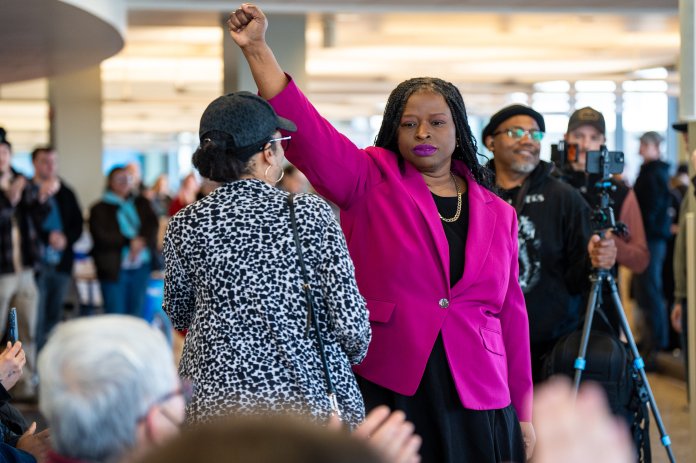
A prominent civil rights attorney and at least one other person involved in an anti-immigration enforcement protest that disrupted a service at a Minnesota church have been arrested, Attorney General Pam Bondi said Thursday, just as Vice President JD Vance is set to visit the state.

Bondi announced the arrest of Nekima Levy Armstrong in a post on X. On Sunday, protesters entered the Cities Church in St. Paul, where a local official with U.S. Immigration and Customs Enforcement serves as a pastor. Bondi later posted on X that a second person had been arrested.

The Justice Department quickly opened a civil rights investigation after the group interrupted services by chanting “ICE out” and “Justice for Renee Good,” referring to the 37-year-old mother of three who was fatally shot by an ICE officer in Minneapolis earlier this month.

“Listen loud and clear: WE DO NOT TOLERATE ATTACKS ON PLACES OF WORSHIP,” the attorney general wrote on X.

Cities Church belongs to the Southern Baptist Convention and lists one of its pastors as David Easterwood, who leads the local ICE field office. Many Baptist churches have pastors who work at least part-time in other jobs.

Vance threatens the protesters with prison terms

Levy Armstrong, a civil rights attorney and prominent local activist, had called for the pastor affiliated with ICE to resign, saying his dual role poses a “fundamental moral conflict.”

“You cannot lead a congregation while directing an agency whose actions have cost lives and inflicted fear in our communities,” she said Tuesday. “When officials protect armed agents, repeatedly refuse meaningful investigation into killings like Renée Good’s, and signal they may pursue peaceful protesters and journalists, that is not justice — it is intimidation.”

Prominent leaders of the Southern Baptist Convention have come to the church’s defense, arguing that compassion for migrant families affected by the crackdown cannot justify violating a sacred space during worship.

Vance, speaking in Toledo ahead of his Minnesota visit, said the church protesters scared “little kids.”

“Those people are going to be sent to prison so long as we have the power to do so. We’re going to do everything we can to enforce the law,” he said.

Minnesota Gov. Tim Walz says the Trump administration has denied the state’s Bureau of Criminal Apprehension a role in an investigation into the fatal shooting of a Minneapolis woman by an ICE officer, calling it a threat to accountability.

A swift civil rights investigation into the protest but not Good’s death

A longtime activist in the Twin Cities metropolitan area, Levy Armstrong has helped lead local protests after the high-profile police-involved killings of Black Americans, including George Floyd, Philando Castile and Jamar Clark. She is a former president of the NAACP’s Minneapolis branch.

Homeland Security Secretary Kristi Noem posted a photo on X of Levy Armstrong with her arms behind her back next to a person wearing a badge. Noem said she faces a charge under a statute that bars threatening or intimidating someone exercising a right.

FBI Director Kash Patel posted on X that Chauntyll Louisa Allen, the second person Bondi said was arrested, is charged under the Freedom of Access to Clinic Entrances Act, which prohibits physically obstructing or using the threat of force to intimidate or interfere with a person seeking reproductive health services or seeking to participate in a service at a house of worship.

It’s unclear who Allen’s attorney is.

Saint Paul Public Schools, where Allen is a member of the board of education, is aware of her arrest but will not comment on pending legal matters, according to district spokesperson Erica Wacker.

The Justice Department’s swift investigation into the church disruption stands in contrast to its decision not to open a civil rights investigation into Good’s killing by an ICE officer. Deputy Attorney General Todd Blanche said last week there is “no basis” at this time for a civil rights investigation into her death.

Administration officials have said the officer acted in self-defense and that the driver of the Honda was engaging in “an act of domestic terrorism” when she pulled forward toward him. But the decision not to have the department’s Civil Rights Division investigate marked a sharp departure from past administrations, which have moved quickly to probe shootings of civilians by law enforcement officials.

The Justice Department has separately opened an investigation into whether Minnesota officials impeded or obstructed federal immigration enforcement though their public statements. Prosecutors this week sent subpoenas to the offices of Gov. Tim Walz, Attorney General Keith Ellison, Minneapolis Mayor Jacob Frey, St. Paul Mayor Kaohly Her and officials in Ramsey and Hennepin counties, according to a person familiar with the matter.

President Donald Trump said Tuesday that federal agents “make mistakes sometimes” in enforcing his immigration crackdown, an acknowledgment that comes after weeks of violent confrontations, including the fatal shooting of Renee Nicole Good.

Judge rejects charges against a journalist

A magistrate judge rejected federal prosecutors’ bid to charge journalist Don Lemon related to the church protest, a person familiar with the matter said Thursday.

The person spoke on the condition of anonymity because they were not authorized to publicly discuss the ongoing investigation.

Lemon was among those on Sunday who entered the church in St. Paul, where a local official with U.S. Immigration and Customs Enforcement serves as a pastor. Lemon has said he has no affiliation to the organization that organized the protest and was there chronicling as a journalist.

“Once the protest started in the church we did an act of journalism which was report on it and talk to the people involved, including the pastor, members of the church and members of the organization,” Lemon said in a video posted on social media. “That’s it. That’s called journalism.”

It wasn’t immediately clear what the Justice Department would do after the magistrate judge’s rejection. But authorities could gather more facts and return to a magistrate judge to again seek a criminal complaint or they could seek an indictment against Lemon before a grand jury.

CNN, which fired Lemon in 2023, first reported that the judge’s decision.

Democratic Congresswoman Robin Kelly of Illinois introduced three articles of impeachment against Homeland Security Secretary Kristi Noem on Wednesday, alleging obstruction of Congress, erosion of public trust and self-dealing.

VP visiting Minnesota

Vance, a Republican, is due to arrive amid tense interactions between federal immigration law enforcement authorities and residents, including state and local elected officials who have opposed the crackdown that has become a major focus of Department of Homeland Security sweeps.

His visit comes less than a month after Renee Good was fatally shot by an Immigration and Customs Enforcement officer on Jan. 7. Vance called Good’s death a “tragedy of her own making.”

Vance said the “far left” has decided the U.S. shouldn’t have a border.

“If you want to turn down the chaos in Minneapolis, stop fighting immigration enforcement and accept that we have to have a border in this country. It’s not that hard,” Vance said.

Federal appeals court this week suspended a decision barring federal officers from using tear gas or pepper spray against peaceful protesters in Minnesota.

The 8th U.S. Circuit Court of Appeals was persuaded to freeze a judge’s ruling that bars retaliation against the public in Minnesota, including detaining people who follow agents in cars. The government is pursuing an appeal.

After the court’s stay, U.S. Border Patrol official Greg Bovino, who has commanded the administration’s big-city immigration campaign, was seen on video repeatedly warning protesters on a snowy Minneapolis street “Gas is coming!” before tossing a canister that released green smoke into the crowd.

Golden State Warriors head coach Steve Kerr shared his thoughts on the fatal shooting of a woman by an ICE officer in Minneapolis.

Bovino on the ‘current climate’

Bovino, speaking Thursday during a news conference, told reporters undocumented people who are accused of crimes were “walking the streets less than 24 hours a go.”

Bovino urged better cooperation from local and state officials in Minnesota, and blamed an “influx of anarchists” on the contributing to the current anti-ICE climate in the state.

“How much better can we do what we do and how much better this work can be for you … for the taxpayer?” Bovino asked. “The current climate confronting law enforcement … is not very favorable right now in Minneapolis.”

The Associated Press emailed and left phone messages for the Minneapolis Police Department requesting its response to Bovino’s comments.

___

Durkin Richer reported from Washington. Associated Press reporters Chris Megerian in Washington; Corey Williams in Detroit; and Jack Dura in Bismarck, North Dakota, contributed.

Great Job Alanna Durkin Richer and Giovanna Dell’Orto | The Associated Press & the Team @ NBC 5 Dallas-Fort Worth for sharing this story.

Robert E. Howard’s Conan And The Texas Connection

Robert E. Howard’s Conan And The Texas Connection

The popular image of Conan is intrinsically tied to Arnold Schwarzenegger’s portrayal in the 1982 film and its sequel, which pretty much ignores how much Texas influenced the character

Robert E. Howard’s Conan And The Texas Connection
Howard’s childhood home in Cross Plains (taken by Larry D. Moore) via Wikimedia Commons

It’s not uncommon for fictional characters to overshadow their creators, but few have done so the way Conan the Barbarian has his Texas author, Robert E. Howard. This is a shame because Conan has Texas deep in his DNA. 

Born January 22, 1906, Howard lived his entire life in Texas, most of it in the town of Cross Plains, where a small museum holds a festival in his honor every summer. As a very young man, he worked a few outdoor jobs, such as surveyor, but he was already a prolific published pulp writer by 25. Alongside H. P. Lovecraft, his work became the backbone of Weird Tales, and he almost single-handedly birthed the sword and sorcery sub-genre through his characters King Kull and later Conan.

The popular image of Conan is intrinsically tied to Arnold Schwarzenegger’s portrayal in the 1982 film and its sequel. Even today, Conan’s appearance as a guest character in the most recent Mortal Kombat game is directly mimicking Schwarzenegger, not Howard’s original characterization. While an immediate hit and iconic performance, it sadly established Conan as a vaguely European figure tied to that continent’s mythology and culture, dismissing how Texas influenced Conan.

“What Robert Howard created was a thinking, rational individual who is decisive and has his own opinions,” said Willard M. Oliver, author of the biography Robert E. Howard: The Life and Times of a Texas Author. “That difference between pop culture and what the author actually created. Usually what the author created is a lot better, and in the case of Howard it’s more Texas-centric, but you don’t see it with watching any of the movies.” 

Oliver cited several examples of Texas geography in Conan’s world. “Beyond the Black River” is one of the best and most famous Conan stories, pitting the barbarian against the Picts (loosely inspired by the real-world Celtic people but heavily re-imagined being more like Native Texan tribes). Howard scholars now believe that the titular river is actually the Brazos River, and that the Picts are just renamed Comanches. 

Texas is a big place, and though Howard himself explored only a fraction of it, he was well read about his home state. Conan had plenty of proxy piney forests, mountains, rivers, and deserts to wander looking for adventures. The barbarian had a fairly long career a pirate, and Howard drew on the legendary Gulf Coast privateer Jean Lafitte when writing about Conan’s high seas adventures. 

Photo by Norman Saunders via Wikimedia Commons

The sea-faring tradition continues to modern Conan scribes as well. Texas author Shaun Hammil recently published an official Conan story, “Lethal Assignment” for Titan Books. In Hammil’s story, Conan is essentially working security on a ship hauling a cursed cargo. Once people start dying, Conan has to fight an ancient evil. Hammil drew on the Conan mythos when penning his own sorcery novel The Dissonance. He immediately recognized the Texan aspects on the barbarian.

“I think there’s definitely a lot of the Texan myth of Texas self-reliance, but especially when you grow up sort of roughneck, lower income and have to really scrabble for a living,” said Hammil.

“There is sort of just a mythic dimension to Texas because it is just so big. And especially if you live in rural Texas, there’s so much nothing around you, and it’s impossible not to see that. Also that mistrust of authority, this idea that barbarism is inevitable, but also, in a way, morally superior to civilization, which I think is a very Texan attitude to have for better or worse, you know.”

Howard was a man of contradictions; a strapping amateur boxer who was rarely in good health; a perennial mama’s boy while also fearless when standing up to cruel bosses; a fervent friend and pen pal to the notoriously racist Lovecraft, who also pushed back on Lovecraft’s paranoia about miscegenation by uplifting the nobility of “savage” races.

In other words, he was Texan through and through. Conan has more in common with a gunslinger than, say Michael Moorcok’s Elric or a Tolkien protagonist. The myth of the frontier and the DNA of the cowboy runs through Conan’s veins.

 “The character itself was kind of an amalgamation of people he knew, but of course, the people he knew were all Texans,” said Oliver. “Whether it was the roughnecks on the oil rigs, or the regular locals. One of the things he really liked to do was to talk to the older people, because he realized that they lived on the frontier when they were growing up. He would often go listen to their stories, and a lot of those stories got incorporated into his.”

Howard would have been 120 this month. Conan continues to go through a mini-Renaissance, through new stories by authors like Hammil and appearing in Marvel comics again such as a recent run in Savage Avengers. While the character is unlikely to step out from under Schwarzenegger’s considerable shadow any time soon, more people are getting to see the original Texas version. 

This is a state that thrives on being bigger than life. It’s time Conan was reclaimed as a part of that.

“Texas is very aware of its [mythos] and wanting to buy into that and this rugged individualism,” said Hammil. “Conan is very Texan in that way because he is the ideal of the stoic but passionate, very self-reliant man who doesn’t trust anybody. The kind of man with no name who rides into town, rights the wrong, and then rides off again.”

Great Job Jef Rouner & the Team @ The Texas Signal for sharing this story.

‘Guess We Finally Know’: David Beckham Breaks His Silence After His Son’s Explosive Accusations — as an Unexpected Voice Adds a Darker Twist

‘Guess We Finally Know’: David Beckham Breaks His Silence After His Son’s Explosive Accusations — as an Unexpected Voice Adds a Darker Twist

Brooklyn Beckham, the eldest son of David and Victoria Beckham, unleashed the unknown on social media this week, confirming the long-rumored speculation that he and his family were not on good terms.

According to Brooklyn, the drama stems from his parents’ disapproval of his wife, Nicola Peltz. He made a series of shocking accusations against both parents that completely dismantled their perfect family image.

Now the family patriarch is breaking his silence following his son’s unsettling claims.

‘Guess We Finally Know’: David Beckham Breaks His Silence After His Son’s Explosive Accusations — as an Unexpected Voice Adds a Darker Twist
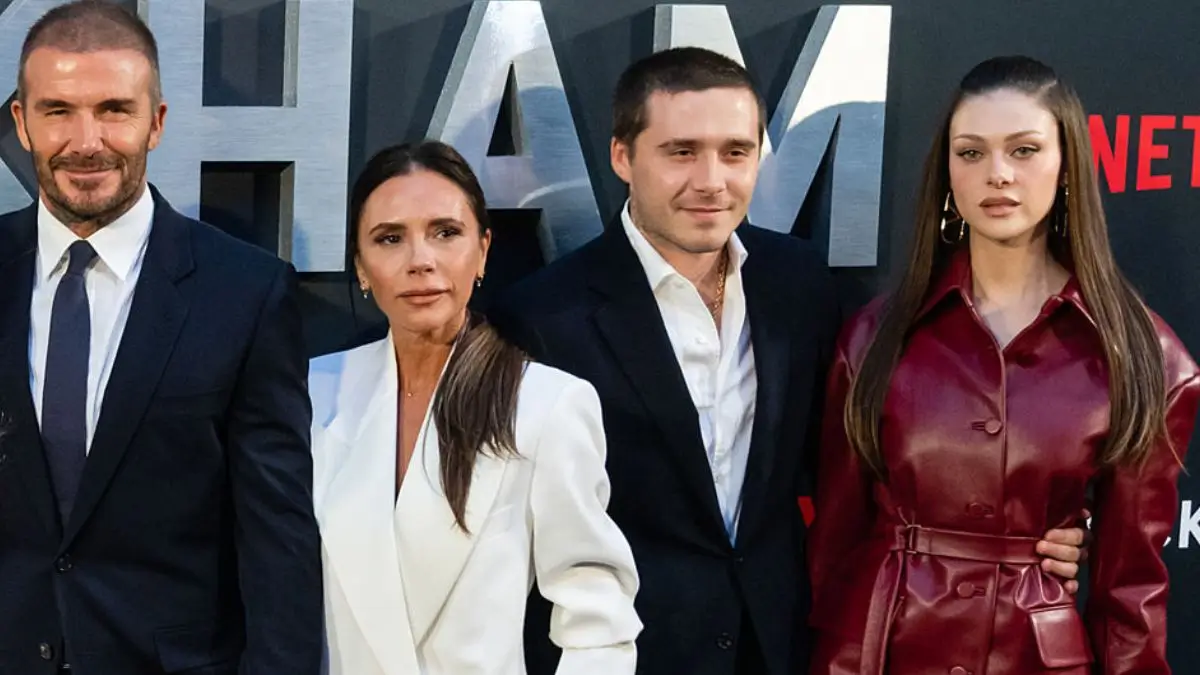
LONDON, ENGLAND – OCTOBER 03: David Beckham, Victoria Beckham, Brooklyn Beckham and Nicola Peltz attend the Netflix ‘Beckham’ UK Premiere at The Curzon Mayfair on October 03, 2023 in London, England. (Photo by Samir Hussein/WireImage)

‘Looks Stuck On’: David Beckham’s Latest Hair Reveal Has Fans Zooming In Months After Victoria Clowns His At-Home Haircut

During his Tuesday, Jan. 20, appearance on CNBC’s financial program “Squawk Box,” David spoke about the dangers of kids being on social media.

The former soccer player said, “I’ve always spoke about social media and the power of social media, for the good and for the bad. The bad, we’ve talked about, what kids can access these days and it can be dangerous. But what I’ve found personally, especially with my kids as well, use it for the right reasons.”

Speaking of his support for UNICEF he said, “It’s been the biggest tool to make people aware of what’s going on around the world for children, and I’ve tried to do the same.”

Without naming anyone specifically, Davie made a general mention of his kids Brooklyn, 26, Romeo James Beckham, 23, Cruz David Beckham, 20, and 14-year-old Harper Seven Beckham, all of whom he shares with Victoria. 

He noted, “I’ve tried to do the same with my children, to educate them. They make mistakes. Children are allowed to make mistakes. That’s how they learn. So, that’s what I try to teach my kids. You have to sometimes let them make those mistakes.”

Many suspect that the “mistake” David was subtly referencing was his son Brooklyn airing the family business out on his Instagram Story the day before. 

In six separate slides with a black screen and white lettering, the model and cook detailed several moments where his parents have tried “endlessly to ruin [his] relationship” with Nicola. 

Brooklyn said he felt he had “no choice” but to address the “lies” in the media being presented as truth, explaining that his parents’ behavior aimed at destroying his relationship began before their April 2022 wedding. 

Brooklyn claimed his fashion designer mother, Victoria, was set to design his wife’s dress, but pulled out at the last minute. He said his parents have been treating him differently for quite some time, even asking him to sign over the rights to his name, but his delay in doing so affected the pay day.

The night before his wedding, he alleged, family members told him Nicola was “not blood” and “not family.” 

“I’ve received endless attacks from my parents, both privately and publicly, that were sent to the press on their orders,” Brooklyn said. “Even my brothers were sent to attack me on social media, before they ultimately secured me out of nowhere this last summer.”

But the most shocking detail he shared was that Victoria “hijacked” his first dance with his wife.

He said Marc Anthony called him to the stage for a dance that was meant for his wife but his mom stepped in instead. “She danced very inappropriately on me in front of everyone,” Brooklyn recalled. “I’ve never felt more uncomfortable or humiliated in my entire life.”

He went on to explain that even his father refused to see them for a week when they traveled to London for his birthday, only agreeing if Nicola was not invited. Brooklyn alleged that the family refused to see him weeks later in Los Angeles and accused his mother of refusing to offer support during the wildfires last year.

Brooklyn alleged that his family prioritizes their brand and also dismissed speculation that he is being “controlled” by Nicola, whom he has honored with 70 tattoos. Instead, he claims the real manipulators and controllers are his parents.

Since tying the knot, he’s also changed his name to include Nicola’s last name and he now goes by Brooklyn Peltz Beckham. 

Even with the lengthy statement, Brooklyn never specifies why his parents seem to dislike Nicola. Fans responded to the Beckham family drama when The Shade Room posted about it on Instagram.

@extra_tv Some 2023 red carpet footage is resurfacing after Brooklyn Beckham slammed parents David and Victoria for trying to ruin his relationship with wife Nicola Peltz. Brooklyn brings wife Nicola along to pose for family photos, and fans noted the seemingly icy and uncomfortable vibes. #davidbeckham #victoriabeckham #brooklynbeckham ♬ Cool Attitude (Vox) – Ah2

One person defending his parents said, “He got a lot to learn. One day he will apologize to his parents for this foolishness.”

Another suspicious fan wrote, “Sounds like his wife wrote that honestly.”

On The Neighborhood Talk, Brooklyn did receive some support, with one person writing, “Parents need to learn boundaries. He’s an adult now. Respect his choices & let him live his life.”

Someone else typed, “I love how he’s standing 10 toes behind his wife!!!” Another said, “Oop guess we finally know.”

While the internet picks sides in the family drama, one source close to the Beckhams has already backed Brooklyn’s claims. 

David’s former assistant, Rebecca Loos, responded to comments from fans who mentioned the incident under her recent post.

She told a fan, “So happy he is standing up for himself and speaking publicly finally!!!! I have felt so bad for his poor wife, knowing too well what they can be like!”

Loos worked with David Beckham for just a few months in 2003. Another person wrote her saying, “Fascinating admission from Brooklyn.”

She replied, “The truth always comes out,” before later disabling her comments.

Loos wasn’t just David’s assistant, she was also his alleged lover. Following the end of her contract, she did an interview in 2004 where she claimed the two had had a four-month affair while he was married to Victoria. 

David and Victoria have been married since 1999 and dated for two years before that. 

Since all of this has come to light neither Victoria nor her other children have come forward about Brooklyn’s claims. 

Brooklyn stated that he has no desire to “reconcile” with his family. 

Great Job J. Jones & the Team @ Atlanta Black Star Source link for sharing this story.

James Fishback is the radical right’s great white hope

James Fishback is the radical right’s great white hope

Far-right media figures including Tucker Carlson and Nick Fuentes are rallying around the Florida gubernatorial campaign of James Fishback, a hedge fund manager who rails against “white genocide,” praises the extremist “groyper” movement, and is currently polling at about 5% in the GOP primary.

Fox News has been the key media venue for would-be GOP candidates seeking to reach right-wing voters and attract support over several election cycles. Current Florida Gov. Ron DeSantis broke through in the 2018 primary by making himself a Fox fixture, and the front-runner to succeed him, network favorite and GOP Rep. Byron Donalds, has adopted the same political strategy, with at least 40 weekday appearances last year.

Fishback, the 31-year old CEO of the anti-“woke” investment firm he co-founded, has been on a tour of the right-wing political factions in recent years, from writing pieces for Bari Weiss’ site The Free Press to backing Vivek Ramaswamy’s presidential campaign before trying to get himself named to a seat on the Federal Reserve Board by promising to be President Donald Trump’s “bulldog.” After launching his gubernatorial campaign in November by painting himself as aligned with DeSantis, Fishback subsequently positioned himself as what The Bulwark’s Will Sommer described as “the first groyper candidate” — with a media profile to match. 

Fishback worked his way up through interviews with “white nationalist influencer Ella Maulding,” “groyper leader Beardson Beardly,” “a Youtube show run by white nationalists in northern Idaho,” and “former Infowars host Owen Shroyer,” before breaking through with a fawning treatment from Carlson, as right-wing extremism expert Ben Lorber documented for The Nation.

Lorber reported that Fishback — along with groyper leader Fuentes — represents “an ascendant, Gen-Z America First wing of MAGA openly suspicious of Israel, economically populist and steeped in a white Christian nationalist worldview that scorns Jews, women, and nonwhite immigrants.” 

Far-right media figures host, endorse Fishback

Carlson, a GOP power broker and White House regular who once used his Fox show to lift up Republican candidates like Vice President JD Vance, is currently focused on promoting such ideas and the noxious pundits and would-be GOP officeholders who espouse them on his streaming program. His hourlong interview with Fishback was published January 9.

“James Fishback is running for governor in Florida,” Carlson said as he promoted the interview. “Pretty soon, all winning Republican politicians will talk like this.” The landing image for the interview’s YouTube video featured text reading “WHO REALLY RUNS FLORIDA?” over photos of DeSantis — and Israeli Prime Minister Benjamin Netanyahu. 

Discussing why he is running for governor as Carlson nodded along, Fishback railed against foreign students taking university slots from Floridians, “white guilt lessons” in schools, and H-1B “slave labor,” declaring that “the only systemic racism in America is against white Christian men.”

“I’m aware,” Carlson replied. 

Fishback won Carlson’s support by promising that Florida would divest from Israeli government bonds and use the funds to help provide down payment assistance to married first-time homebuyers. 

“You’ve got my vote,” he responded after Fishback laid out the proposal. “That’s all I needed to hear. Amen. Amen.”

Fishback’s turn on Carlson’s podcast spurred an outpouring of interest from higher-profile far-right media figures. 

The following week, Fishback did a joint interview with antisemitic misogynist streamer “Sneako” (real name: Nico Kenn De Balinthazy) and “looksmaxxing” influencer “Clavicular” (real name: Braden Peters). 

Fishback discussed his proposal to, as he put it, implement a 50% tax on women who “hoe out on OnlyFans” to disincentivize them from doing so (“Say what you want about Saudi Arabia — there are no women hoeing out on the internet in Saudi Arabia,” Fishback said). He also alluded to an antisemitic conspiracy theory, saying of OnlyFans, “Let’s not get in trouble talking about who owns that platform.” Sneako endorsed Fishback later in the interview, while Clavicular praised his “insane reaction-baiting” but repeatedly poked holes in his policy proposals. 

On Wednesday, Fishback appeared on the podcast of Patrick Bet-David, who often provides a friendly platform for far-right extremists like white nationalist streamer Fuentes to spread their messages unimpeded. Bet-David praised Fishback for his “bold ideas.”

Fuentes himself has also taken notice of the campaign, praising Fishback on his show while stressing that he didn’t want to damage the candidate’s chances with an endorsement.

“I really like what I’ve seen from Fishback,” he said on his January 12 stream in response to a question from “FloridaGroyper” about the candidate’s Carlson interview. “I have to say I’m a bit conflicted still for a few reasons. I don’t want to hurt him. That’s kind of my first thing is I don’t want to speak out of turn and hurt a politician by association if they’re an ally. And the other thing is I didn’t vet him myself.”  

Fuentes commented that Fishback “seems really smart,” and said he was “really impressed” with the interview as well as with Fishback’s social media presence, adding that it had been “hilarious” when Fishback said that Donalds, who is Black, wanted to “turn Florida into a Section 8 ghetto.”

He later told Sneako and Clavicular that Fishback is “solid on the issues,” adding, “I watched him on Tucker — I don’t think I disagreed with anything he said.”

And even before his appearance with Carlson, Fishback counted in his corner the gaming streamer Zack Hoyt, better known as Asmongold, who had more than 2 billion views on YouTube alone last year. In December, Hoyt endorsed Fishback as “my guy,” cheering along with one of the candidate’s videos, praising his proposals as “based,” and urging his fans to “vote for people like this.”

Is this actually going anywhere?

Each of these far-right media figures have large followings — but trying to elect Fishback governor of Florida will put their influence to the test. The candidate is polling at or below 5% in recent surveys and had raised “just under $19,000” according to his most recent campaign filing. 

While Fuentes is reportedly seeking to build a political movement — and recent reports suggest that his message is resonating with younger Republicans — this election cycle may be too soon for such candidates to succeed.

But for his part, Fishback says that his alternative media play will pay dividends. 

“Ultimately, we are in an attention economy,” he told Carlson near the end of their interview. “And the attention is going to go to the person who is going to connect and show up and earn the trust of voters.” 

“You don’t get to earn the trust of voters in that Fox News studio in Washington, D.C.,” he added.

Great Job Media Matters for America & the Team @ Media Matters for America Source link for sharing this story.

The Energy Wars Come to Louisiana: Carbon Capture, Removal, and Storage Projects Face New Hurdles in the Pelican State – Climate Law Blog

The Energy Wars Come to Louisiana: Carbon Capture, Removal, and Storage Projects Face New Hurdles in the Pelican State – Climate Law Blog

Until recently, Louisiana was the darling of the carbon capture, removal, and storage industry. Due to its history of oil and gas production, the state has a fairly extensive carbon dioxide pipeline network, and ideal geology for storing carbon dioxide. For those reasons, federal incentives to advance point source capture of carbon dioxide (e.g., at industrial facilities and power plants) and its removal directly from the atmosphere have often gone to projects in Louisiana.

Most recently, the Biden administration awarded $50 million to Project Cypress, which aims to develop two direct air capture facilities (i.e., facilities that strip carbon dioxide out of the air) in the Pelican State. The news was welcomed by state leaders, with Governor Jeff Landry declaring that the project “represents the best of Louisiana.” This was a bit of a surprise for a man who had previously called climate change a “hoax” and staunchly opposed Biden administration efforts to advance renewable energy and other climate solutions. The Governor likely does not care much (if at all) about the potential for Project Cypress to help mitigate climate change, but he does like the jobs and other economic benefits it could bring to his state. Indeed, he’s described projects like it as “driving economic growth on a scale unimaginable for Louisiana.”

At the local level, though, carbon capture, removal, and storage projects have been met with growing opposition from Louisiana residents. That opposition is spurring legal action—from communities, local governments, the state legislature, and even Governor Landry—to restrict new projects. The dynamic is, in many ways, similar to what has been seen in the renewable energy space where community opposition has pushed local and state governments to adopt new and increasingly severe restrictions. Could the same be in store for carbon, capture, removal, and storage projects in Louisiana and perhaps beyond? This blog post reviews what has happened to date in Louisiana, what might be coming, and what can be learned from the experience of the renewable energy sector.

Opposition to Carbon Capture, Removal, and Storage

The role that carbon capture, removal, and storage might play in addressing climate change has generated heated debate for many years—not only in Louisiana but across the U.S. and around the world. Some international and national environmental organizations have raised fundamental objections to the technologies, arguing that they are not truly “climate solutions,” but a way for existing industries to maintain the status quo. They assert, for example, that installing carbon capture equipment at fossil fuel power plants will provide an excuse to continue using them even though better alternatives exist. Similar concerns have been raised about carbon removal—that the possibility of removing carbon dioxide from the atmosphere will reduce incentives to cut emissions. Recently, studies have outlined a range of tools and strategies to prevent that and ensure that emissions reductions and removals are instead used in tandem, as the Intergovernmental Panel on Climate Change has said is essential.

While no doubt important, these questions about the role of carbon capture, removal, and storage in mitigating climate change likely aren’t what is driving local opposition in places like Louisiana. Communities tend to be much more concerned about the local impacts of developing such projects. This is unsurprising in a state like Louisiana, where communities have a long history of harm from industrial development. Given this, many are understandably nervous about a new industrial activity coming to their area and keen to understand the risks it might pose. Too often, however, developers have failed to engage with local communities and pushed ahead with projects without local buy-in.

This has been a particular issue in Louisiana in connection with the build-out of carbon dioxide pipelines to support capture and removal projects. A major carbon dioxide pipeline rupture in the town of Satartia, Mississippi, in 2020 put many landowners in neighboring Louisiana on high alert. Subsequent research showing that carbon dioxide pipelines “have a strong overall safety record,” and generally pose lower risks to public health and property than other types of pipelines (e.g., carrying hazardous liquids), has done little to calm their fears. Rather than working with landowners to address their concerns, some developers have reportedly threatened to take their land via eminent domain if they do not agree to lease it for carbon dioxide pipeline projects.

Many Louisiana residents are also concerned about the safety of storing carbon dioxide in underground geologic formations. This is a commonly discussed option for dealing with carbon dioxide once it has been captured. With careful site selection and monitoring, the carbon dioxide can remain locked away for centuries to millennia, with minimal risks (e.g., of carbon dioxide leakage, subsurface migration, and pollution). Research suggests that, rather than being a liability, having a carbon storage facility on or near one’s land can actually increase its value. Still, though, many landowners and communities are concerned about storage wells being developed in their backyards.

Many of the arguments local communities are making against carbon capture, removal, and storage projects echo those made by residents opposing renewable energy development in their area. Both groups frequently point to the potential for harm to the local environment, aesthetic impacts, declines in property values, disruptions from construction activities, and similar local issues to justify their opposition to new development. Research showing that risks are low and/or benefits are significant often carry little weight with the groups. For example, Louisiana State Representative Rodney Schamerhorn recently suggested that studies showing the benefits of carbon capture and storage projects should not be trusted because they “leave out the bad stuff and concentrate on the good stuff.” Developers’ seeming unwillingness to engage with communities in good faith only reinforces this skepticism.

Local Opposition Leads to Local Restrictions

In the renewable energy context, community opposition has prompted many local and some state governments to impose restrictions on new development. (See the Sabin Center’s database on opposition to renewable energy facilities in the U.S. for more information.) The same dynamic is now playing out in the carbon capture, removal, and storage space in Louisiana.

In recent years, Louisiana has seen a flurry of local ordinances aimed at restricting such projects. New Orleans was among the first to act. In May 2022, the city council adopted Resolution No. R-22-219 in which it resolved to “preserve our environment, natural resources, and public health by prohibiting the deployment of any carbon capture and storage … project” in the city. Not long after, in September 2022, Livingston Parish imposed a twelve-month moratorium on the drilling of carbon storage wells in the parish, which was later extended for an additional 3 months (through the end of 2023).

More recently, in May 2025, Allen Parish adopted an ordinance requiring local permits to be obtained for carbon storage projects and establishing mandatory set-back and other conditions for permitted projects. The ordinance was rescinded a few months later, after ExxonMobil Low Carbon Solutions filed a lawsuit, alleging that its adoption exceeded the Parish’s legal authority and was preempted by state law. (Briefly, by way of background, carbon storage projects in Louisiana must be authorized by the state Department of Conservation and Energy, which issues permits for the drilling of storage wells pursuant to authority delegated to it under the federal Safe Drinking Water Act. The Allen Parish ordinance effectively required project developers to obtain an additional permit from local authorities. In its lawsuit challenging the ordinance, ExxonMobil Low Carbon Solutions alleged that it “purports to give the [parish] authority to regulate a field that the Louisiana Legislature wholly occupies and exclusively regulates.”)

Perhaps concerned about facing similar legal challenges, in recent months, several other parishes have adopted ordinances expressing their opposition to carbon storage projects but not actually banning them (see here and here, for example).

Additionally, similar to what we have seen in the renewable energy context, local governments and others are also increasingly using litigation to challenge carbon capture, removal, and storage projects in Louisiana. One notable lawsuit was filed in November by a group of elected officials and residents from Allen, Beauregard, Livingston, Rapides, and Vernon Parishes. They allege that state statutes allowing the use of eminent domain for carbon dioxide pipelines and storage projects violate the Louisiana Constitution. Among other things, the plaintiffs claim that the statutes “divest the citizens of their Constitutionally guaranteed right to property,” result in “improper takings, without just compensation of law and without a public purpose,” and “unconstitutionally provide special privileges and immunities to private corporations.”

In the renewable energy context, several states have responded to local government efforts to restrict new development by limiting local authority over projects (e.g., by giving state agencies exclusive or back-stop authority to site projects). Given their prior support for carbon capture, removal, and storage, one might have expected Louisiana Governor Jeff Landry and other state leaders to do the same here. But, in fact, they’ve done the opposite.

Bowing to public pressure, in October, Louisiana Governor Jeff Landry signed an executive order directing the state Department of Conservation and Energy to suspend the review of new applications for permits for carbon storage wells. The executive order calls on the Department to review its permitting processes and emphasizes, among other things, the need to ensure that “local governments’ views [are] given due consideration.” To this end, the executive order indicates that, moving forward, the department must “document, in writing, all relevant local government concerns received and demonstrate how these comments were taken into account in the permitting decision.” Many want more than that.

Last Week, Louisiana House Speaker Mike Johnson introduced a bill—HB5—which would, if enacted, give local authorities and their residents greater control over the development of carbon dioxide pipelines and storage projects in their area. Among other things, the bill empowers the “governing authority” of a parish to determine, “by resolution or ordinance,” whether “carbon dioxide [storage] and pipelines transporting carbon dioxide may be permitted within the parish.” The bill also allows residents to request that the governing authority call a parish-wide election so that they can vote on whether to allow carbon dioxide storage and pipelines in the parish. If a majority vote against allowing such projects, they “shall be prohibited within the parish,” even if the governing authority has previously agreed to permit them. Moreover, any local determination made by the parish governing authority or voters “shall supersede and preempt any conflicting state or local law, regulation, order, permit or certificate.”

Future Prospects for Carbon Capture, Removal, and Storage in Louisiana

It remains to be seen whether HB5 will pass the state legislature and be signed into law by Governor Landry. But, if it does become law, it could transform the legal landscape for carbon capture, removal, and storage in Louisiana. For a preview of might happen, the state can look to Ohio which, in 2021, enacted legislation authorizing counties to adopt resolutions designating “restricted areas” in which large renewable energy projects are prohibited. Within a year of the law taking effect, 13 counties had designated restricted areas; another 10 did so in 2023 and 4 more in 2024. Given the level of local opposition to carbon capture, removal, and storage in Louisiana, one might expect similar action at the local level if HB5 takes effect.

Overall, the outlook for carbon capture, removal, and storage in Louisiana seems fairly grim. But there is something else, more hopeful, that can be learned from the renewable energy experience—the power of robust community engagement. Research by the Sabin Center and others shows that listening to communities’ concerns, involving them in planning and decision-making regarding proposed projects, and ensuring that they share in the benefits and don’t just feel the harms of those projects (e.g., via community benefits agreements), can help to reduce local opposition and improve the project development process. To date, some carbon capture, removal, and storage project developers have been reluctant to do this. They will need to change their approach if they are to have any hope of advancing projects in Louisiana and perhaps beyond.


Romany Webb is a Research Scholar at Columbia Law School, Adjunct Associate Professor of Climate at Columbia Climate School, and Deputy Director of the Sabin Center for Climate Change Law.


Great Job Romany Webb & the Team @ Climate Law Blog Source link for sharing this story.

Jamie Dimon is done being ‘binary’: On Trump’s ‘economic disaster’ credit card plan, foreign policy, and NATO | Fortune

Jamie Dimon is done being ‘binary’: On Trump’s ‘economic disaster’ credit card plan, foreign policy, and NATO | Fortune

In an increasingly fraught political environment, JPMorgan CEO Jamie Dimon is steering clear of any “binary” outlooks.

Macroeconomic and foreign policy out of the White House under Trump 2.0 has divided opinion: Critics have blasted his tariff plans as “bullying,” while advocates believe the Oval Office is merely righting unfair trade practices.

The Wall Street titan is keen to find a middle ground, particularly if the outcome of some policies remains unclear. Speaking at the World Economic Forum in Davos, Switzerland, this week, Dimon repeatedly said he wanted to avoid drawing “binary” conclusions about the economy and the impact of foreign policy.

Even on White House policies he said he feels would be a “disaster,” he said he was still open to the idea of an experiment. For example, President Donald Trump is pressuring U.S. lawmakers to pass legislation to limit credit card rates to 10%, having appealed to banks on social media to voluntarily sign up to the agreement.

“It would be an economic disaster,” Dimon told the Davos audience, suggesting it would remove credit lines to 80% of Americans. A study released Monday by the American Bankers Association found 74% to 85% of open credit card accounts nationwide would be closed or have their credit lines drastically reduced if the cap was brought in—up to 159 million cardholders.

Even then, “I have a great idea,” Dimon said. “Since there’s a huge disagreement on this one … I think we should test it.”

The CEO of America’s biggest bank said he was confident JPMorgan would survive such an event, adding: “The people crying the most won’t be the credit card companies. It’ll be the restaurants, the retailers, the travel companies, the schools, the municipalities—because people [will] miss their water payments, this payment, that payment”

“They should test it,” he added.

The foreign policy question

Trump has raised eyebrows even further in the past few weeks alone, on account of his foreign policy demands. This has included threatening tariffs on a bevy of European countries that opposed his bid to acquire Greenland.

While those threats have since been rolled back, Trump shared some similarly controversial opinions about NATO. The president has previously threatened to leave the military alliance, and also claimed in his speech at Davos this week: “The United States is treated very unfairly by NATO. When you think about it, nobody can dispute it. We give so much, and we get so little in return.”

“And I’ve been a critic of NATO for many years, and yet I’ve done more to help NATO than any other president, by far than any other person,” he added. “You wouldn’t have NATO if I didn’t get involved in my first term.”

Asked whether Trump’s approach had made the NATO alliance stronger or weaker, 69-year-old Dimon said the answer wasn’t as “binary” as that.

He explained highlighting NATO’s weaknesses and areas for improvement was understandable, but countered: “I think it’s OK to point out, I would be more polite about it, about the weaknesses of Europe, what they need to do. But if the goal is to make them stronger as opposed to fragment Europe, then I think that’s OK.”

An aversion to political polarization is something of an anomaly in the current political climate. In July, Pew Research published a study which found 80% of Americans say Republican and Democratic voters not only disagree on important challenges facing the country, but also on basic fact.

Davos elite

Dimon also refused to be drawn on whether or not there was a “culture of fear” among U.S. business leaders when it comes to criticising the administration. The question, which drew applause from the audience, prompted some blunt feedback for what Dimon labelled the “Davos elite.”

“I’ve been coming to Davos all these years and listen to chatter and stuff like that,” he said. “And you didn’t do a particularly good job making the world a better place. I think it’s great we get together and talk.”

Striving for a balanced view has been a hallmark of Dimon’s since Trump won the Oval Office this year, and has established the man—who himself has been tipped for a career on Capitol Hill from the Oval Office to the Federal Reserve—as something of a critical friend to the White House.

He has backed some policies, for example, saying the White House was right to address trade imbalances between the U.S. and its partners. He told Fox in an interview in May that at first, he thought tariff rhetoric was “too large, too big, and too aggressive when it started.” 

However, he was concerned by the Oval Office’s proclamation imposing a new $100,000 fee for H-1B visas. The specialist visas let U.S. employers temporarily hire non-U.S. workers, typically for specialized tech-sector jobs, and have been held by some of Silicon Valley’s most notable names.

“I would beg the president,” he told CNBC at JPMorgan’s 10th annual India Investor Conference in September. “We should have good immigration. I think there will be some pushback on the H-1Bs.”

The banker robustly summarized his views at Davos as being a “globalist.” He said: “I’ve made it clear I want a stronger NATO, a stronger Europe. Some of the things Trump has done are causing that, some are not. I’m not a tariff guy, though I’d use it in [some] cases. I think they should change their approach to immigration. I’ve said it.”

Great Job Eleanor Pringle & the Team @ Fortune | FORTUNE Source link for sharing this story.

The AP NFL MVP finalists are Allen, Lawrence, Maye, McCaffrey and Stafford

The AP NFL MVP finalists are Allen, Lawrence, Maye, McCaffrey and Stafford

NEW YORK – Christian McCaffrey has become only the second player to be a finalist for three AP NFL awards in the same year, as he joins Josh Allen, Trevor Lawrence, Drake Maye and Matthew Stafford in the running for The Associated Press 2025 NFL Most Valuable Player award.

McCaffrey and Maye are also finalists for Offensive Player of the Year. McCaffrey and Lawrence are among the finalists for Comeback Player of the Year.

The winners will be announced at “NFL Honors” on Feb. 5. A nationwide panel of 50 media members who regularly cover the league completed voting before the playoffs began. Votes were tabulated by the accounting firm of Lutz and Carr.

Voters selected a top 5 for the eight AP NFL awards. First-place votes were worth 10 points. Second- through fifth-place votes were worth 5, 3, 2 and 1 points.

Here are the finalists, in alphabetical order, for the eight AP NFL awards:

Most Valuable Player

Allen, the reigning MVP, threw for 3,668 yards, 25 touchdowns and 10 interceptions, posting a 102.2 passer rating while leading Buffalo to its seventh straight playoff appearance. He also ran for 14 TDs. The Bills were knocked out of the playoffs by Denver in the divisional round and fired coach Sean McDermott.

Lawrence helped Jacksonville win 13 games and the AFC South title. He had 4,007 yards passing, 29 TDs and 12 picks. The Jaguars were eliminated by the Bills in the wild-card round.

McCaffrey, an All-Purpose All-Pro, ran for 1,202 yards and 10 TDs and caught 102 passes for 924 yards and seven TDs. He played a key role in helping the injury-depleted San Francisco 49ers win 12 games. He’s a finalist for three awards this year, a feat last accomplished by Joe Burrow.

Maye had 4,394 yards passing, 31 TDs and eight picks to lead the New England Patriots to an AFC East title and an appearance in the AFC championship game on Sunday. Maye led the NFL in passer rating (113.5) and completion percentage (72).

Stafford led the NFL with 4,707 yards passing and 46 TDs. He threw eight picks and finished second to Maye with a 109.2 passer rating. Stafford was first-team All-Pro for the first time in his 17-year career.

Last year, Lamar Jackson was the first-team All-Pro QB but was edged out by Allen for MVP.

Coach of the Year

Liam Coen led the Jaguars to a 13-4 record and a division title in his first season, a nine-win turnaround for the franchise.

Ben Johnson guided the Chicago Bears to an 11-5 record and their first NFC North championship in seven seasons.

Mike Macdonald led the Seattle Seahawks to a 14-3 record and the NFC’s No. 1 seed. The Seahawks host the Rams in the NFC championship game on Sunday.

Kyle Shanahan guided the 49ers to 12 wins despite a slew of injuries to key players, including losing defensive stars Nick Bosa and Fred Warner for the season.

Mike Vrabel, the 2021 AP NFL Coach of the Year, took the Patriots from worst to first, a 10-win turnaround in his first season with the team.

Assistant Coach of the Year

Eagles defensive coordinator Vic Fangio, Vikings defensive coordinator Brian Flores, Broncos defensive coordinator Vance Joseph, Seahawks offensive coordinator Klint Kubiak and Patriots offensive coordinator Josh McDaniels are the finalists.

Comeback Player of the Year

Lawrence, McCaffrey, Patriots wide receiver Stefon Diggs, Lions edge rusher Aidan Hutchinson and Cowboys quarterback Dak Prescott are the finalists.

Defensive Player of the Year

All-Pro edge rusher Will Anderson Jr. had 12 sacks for the Houston Texans and was a major part of the NFL’s No. 1 ranked defense.

Broncos edge rusher Nik Bonitto had 14 sacks for the league’s second-ranked defense.

Browns edge rusher Myles Garrett, a unanimous choice for All-Pro, set a single-season record with 23 sacks and had 33 tackles for loss. He was the 2023 AP Defensive Player of the Year.

Lions edge rusher Hutchinson had 14 1/2 sacks.

All-Pro edge rusher Micah Parsons had 12 1/2 sacks in 13 1/2 games before tearing his ACL in his first season in Green Bay.

Offensive Player of the Year

Puka Nacua, Bijan Robinson and Jaxon Smith-Njigba join Maye and McCaffrey as finalists.

Nacua and Smith-Njigba were unanimous selections for All-Pro.

Nacua led the NFL with 129 catches for 1,715 yards and 10 TDs for the Rams. Smith-Njigba caught 119 passes and led the league with 1,793 yards receiving and had 10 TDs.

Robinson, who was All-Pro running back, led the NFL with 2,298 yards from scrimmage. He ran for 1,478 yards and seven TDs and caught 79 passes for 820 yards and four scores.

Defensive Rookie of the Year

Giants edge rusher Abdul Carter, Seahawks defensive back Nick Emmanwori, Falcons edge rusher James Pearce Jr., Browns linebacker Carson Schwesinger and Falcons safety Xavier Watts are the finalists.

Offensive Rookie of the Year

Giants quarterback Jaxson Dart, Buccaneers wide receiver Emeka Egbuka, Patriots running back TreVeyon Henderson, Panthers wide receiver Tetairoa McMillan and Saints quarterback Tyler Shough are the finalists.

___

AP NFL: https://apnews.com/hub/nfl

Copyright 2026 The Associated Press. All rights reserved. This material may not be published, broadcast, rewritten or redistributed without permission.

Great Job Rob Maaddi, Associated Press & the Team @ KSAT San Antonio Source link for sharing this story.

Secret Link