

Home News Page 7

Legal Obstacles to U.S. Acquisition of Greenland

Legal Obstacles to U.S. Acquisition of Greenland

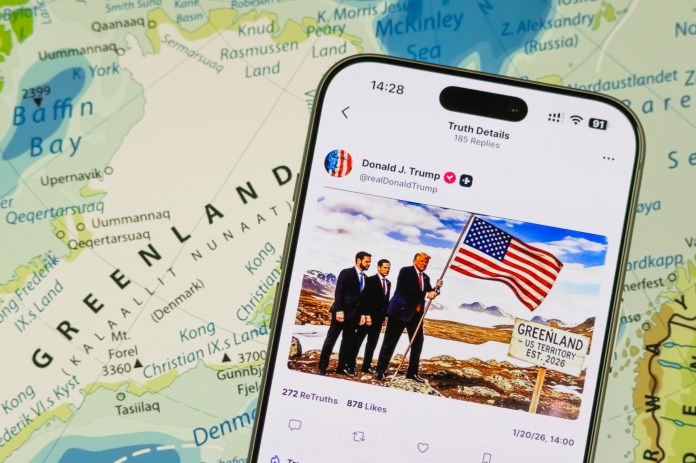
In early 2026, President Donald Trump renewed a goal he had set in his first term, acquiring Greenland, a territory over which Denmark exercises sovereignty. Trump escalated the situation by threatening to use force to do so, warning that he was “going to do something on Greenland, whether they like it or not,” and that while he “would like to make a deal the easy way, … if we don’t do it the easy way we’re going to do it the hard way.” He later told reporters aboard Air Force One, “one way or the other, we’re going to have Greenland.” The president’s threats have also taken the form of Truth Social posts showing him planting the U.S. flag on Greenland and chairing a meeting with European leaders, with a map in the background showing Canada and Greenland covered in an American flag. Taking a less bellicose stance, Secretary of State Marco Rubio has informed members of Congress that the United States is trying to buy Greenland, although he, too, has at times left the door open to using force.

As we’ll explain below, the acquisition of territory by the threat or use of force is not only prohibited under international law binding on the United States, but that rule forms the backbone of the entire international system and constitutes the major achievement of the post-WWII era. While sometimes violated, to be sure, naked threats to acquire territory by threat or use of force without even purporting to justify that action under international law (say, as an act of self-defense) are rightfully seen as belonging to a bygone era that was less secure and less prosperous than one in which sovereignty and stability are valued over sheer military might – and perhaps most important, in which self-determination is recognized as a foundational right, while imperial conquest is outlawed.   

Danish Prime Minister Frederiksen has responded to the threats by unambiguously stating, “Greenland is not for sale. Greenland is not Danish. Greenland belongs to Greenland.” Other leaders have echoed her stance. For instance, seven European heads of State issued a joint statement on Greenland that noted “Greenland belongs to its people. It is for Denmark and Greenland, and them only, to decide on matters concerning Denmark and Greenland.” They emphasized that all NATO Allies were obligated to “uphold the principles of the UN Charter, including sovereignty, territorial integrity and the inviolability of borders. These are universal principles, and we will not stop defending them.” European Union leaders likewise pointed to “territorial integrity and sovereignty,” confirming the “EU stands in full sovereignty with Denmark and the people of Greenland.” In the hope of deterring a U.S. attack, a number of European States also deployed small troop contingents to Greenland as a military “trip wire” (although framed as an “exercise” to avoid unduly escalating the situation), one that would presumably draw those countries into any conflict between Denmark and the United States. 

Whether because the world rallied around the bedrock principles of international law in response to Trump’s threats or for other reasons, on Jan. 21 at Davos, the president shifted towards appearing to rule out the use of force – “I don’t have to use force. I don’t want to use force. I won’t use force” – while still insisting that the United States must acquire the territory, stating:

We want a piece of ice for world protection, and they won’t give it. We’ve never asked for anything else … So, they have a choice. You can say yes and we will be very appreciative, or you can say no and we will remember.

Following a subsequent meeting with NATO Secretary General Rutte, Trump announced on Truth Social that they “formed the framework of a future deal with respect to Greenland and, in fact, the entire Arctic Region,” one that, “if consummated, will be a great one for the United States of America, and all NATO Nations.” 

At this point, it is unclear whether Trump is willing to shelve his desire to acquire Greenland, including the use of force to achieve that objective, if he finds the European response unsatisfactory. The track record thus far demonstrates that his hunger for Greenland is something he has difficulty shaking. Moreover, as Trump’s positions frequently vacillate, little is certain at this point. The risk of cleaving the transatlantic alliance, which has benefitted the Western world (and globally, all who value global goods like open shipping lanes) for over 75 years, remains real.  

Trump’s persistent desire to acquire Greenland raises the question of how international law treats the acquisition of another State’s territory, whether by force or by other means. There are two general methods. The first is “conquest,” which the Permanent Court of International Justice defined in 1933 as “a cause of loss of sovereignty when there is war between two States and by reason of the defeat of one of them sovereignty over territory passes from the loser to the victorious State” (Eastern Greenland case, page 47). Note that war, or “international armed conflict” as it is labeled today, can be triggered even by an unopposed occupation of the territory of one State by another (Common Article 2, Geneva Conventions I-IV), as could be the case if U.S. troops seized a remote area of Greenland. The second is “cession,” which denotes the consensual transfer of territory from one State to another. Historical U.S. examples include the purchase of Louisiana from France in 1803 or Alaska from Russia in 1867.

In this essay, we examine these modalities of territorial acquisition in general and with respect to Greenland. Before doing so, however, it is essential to emphasize that Denmark unquestionably exercises sovereignty over Greenland. As one of us (Mike) explained in a previous Just Security article, Greenland

enjoys broad autonomy under Denmark’s 2009 Self-Governing Act, especially in internal affairs. However, that autonomy is an issue of domestic law. Under international law, Denmark undeniably enjoys sovereignty over Greenland. In 1933, the Permanent Court of Justice, in a dispute between Norway and Denmark, found that Greenland was a Danish possession (Legal Status of Eastern Greenland). Subsequently, Denmark listed Greenland as a non-self-governing territory under Chapter XI of the UN Charter. In 1953, Greenland was incorporated into Denmark through domestic legislation, a status recognized by the General Assembly the following year (GA Res. 849). The United States has long acknowledged Danish sovereignty over Greenland (see, e.g., the 1916 Secretary of State declaration, the 1951 Defense of Greenland Agreement, and the 2004 Amendment to the Defense of Greenland Agreement). 

Therefore, military action into Greenland would be a use of force against Denmark, which would destroy the NATO alliance from within. Cessation would also be a matter to be negotiated at the inter-State level between Denmark and the United States, although, as will be explained, the people of Greenland would have a say in any such negotiations.

Conquest and its Prohibition 

Although international law historically recognized that title to territory could be transferred through conquest, as we referenced above, that premise was put to rest in the 20th century (see here). Most notably, Article 2(4) of the UN Charter addresses the issue head-on: 

“All Members shall refrain in their international relations from the threat or use of force against the territorial integrity or political independence of any state, or in any other manner inconsistent with the purposes of the United Nations” (emphasis added). 

It is a prohibition that undeniably reflects customary international law (Paramilitary Activities, ¶ 190). 

A U.S. military operation, even if unopposed, to seize Greenland would qualify as a violation on both grounds. First, the mere presence of U.S. troops (or even operations into Greenland from outside the territory, such as missile strikes) would amount to a violation of Danish territoriality. Second, the annexation of Greenland as a result of a U.S. use of force (or any alteration in the territory’s governance) would violate 2(4) on the basis that the force was directed at Denmark’s political independence.

During the decolonization that followed the immediate post-WWII period, the international community reaffirmed this prohibition in several forms. In 1970, the General Assembly, in its Declaration on Friendly Relations (adopted by consensus), famously confirmed the prohibition: “The territory of a State shall not be the object of acquisition by another State resulting from the threat or use of force” (GA Res. 2625(XXV)). Along the same lines, the 1974 Definition of Aggression Resolution states that “no territorial acquisition or special advantage resulting from aggression is or shall be recognized as lawful” (art. 5(3)). And in its 1986 Frontier Dispute judgment, the International Court of Justice (ICJ) emphasized that even where States have effective control over territory, they do not acquire title if that control was secured through unlawful means (¶ 63).

Since any forcible action against Greenland would trigger an international armed conflict between the United States and Greenland, the prohibition on the permanent transfer of territory during occupation under the law of armed conflict is also relevant. Specifically, Article 47 of Geneva Convention IV provides that the rights of protected persons in occupied territory are inviolable. It is a fundamental LOAC rule that occupation of territory is temporary and is not permitted to morph into annexation. Another way of stating this prohibition is that the rights of protected persons in occupied territory would be violated if title to that territory changed hands. The ICRC’s Commentary to Article 47 explains,

The law of occupation is predicated on the temporary and provisional nature of occupation; it thus follows that the Occupying Power does not acquire sovereign rights over the occupied territory. 

Although international humanitarian law does not expressly prohibit the forcible acquisition of territory, any such annexation during an ongoing occupation would inescapably lead to violations of that law. For example, the annexed territory would, by definition, be subject to the legislation of the annexing State, which would exceed the limited scope of the Occupying Power’s legislative competences in the occupied territory. More broadly, unilateral annexation would entail the exercise of sovereignty over the occupied territory and purport to create a permanent situation that would eliminate the status quo ante. In the ICRC’s view, both of those consequences are inconsistent with the law of occupation’s underlying principles, namely that the Occupying Power does not acquire any sovereignty over the occupied territory and that it must maintain the status quo ante. 

The U.S. Department of Defense (DoD) Law of War Manual makes the same point: “Protected persons who are in occupied territory shall not be deprived, in any case or in any manner whatsoever, of the benefits of the GC by any change introduced…by any annexation…of the whole or part of the occupied territory” (§ 11.6.3). 

The prohibition on acquiring territory through conquest is likewise supported in case law. Perhaps most notably, in United States v. Ulrich Griefelt et al. (the RuSHA case), the U.S. Military Tribunal at Nuremberg held that 

Any purported annexation of territories of a foreign nation, occurring during the time of war and while opposing armies were still in the field, we hold to be invalid and ineffective. Such territory never became a part of the Reich but merely remained under German military control by virtue of belligerent occupancy. 

Treaties to which the United States is not Party, but that represent further testament to the extent to which international law condemns the acquisition of territory by conquest, are in accord. The 1977 Additional Protocol to the Geneva Conventions expressly provides that “occupation of a territory… shall [not] affect the legal status of the territory in question” (art. 4). Moreover, under international criminal law, the Rome Statute of the International Criminal Court criminalizes “annexation by the use of force of the territory of another State or part thereof” (art. 8bis(2)(a)).

The Duty of Non-Recognition of Annexed Territory

Importantly, even if the United States seized Greenland and annexed it, other States would be prohibited from treating the territory as if it were the United States. As noted in the Declaration on Friendly Relations, “No territorial acquisition resulting from the threat or use of force shall be recognized as legal.” In its Wall advisory opinion, the ICJ recognized this statement as reflecting customary international law (¶ 87, implemented at ¶ 159). 

In Paramilitary Activities, the ICJ noted that the United States has long recognized the principle of non-recognition of territory unlawfully seized. In doing so, it pointed to the 1933 Montevideo Convention on the Rights and Duties of States (¶ 189). Article 11 provides, 

The contracting states definitely establish as the rule of their conduct the precise obligation not to recognize territorial acquisitions or special advantages which have been obtained by force whether this consists in the employment of arms, in threatening diplomatic representations, or in any other effective coercive measure. The territory of a state is inviolable and may not be the object of military occupation nor of other measures of force imposed by another state directly or indirectly or for any motive whatever even temporarily.

As the United States is Party to the Montevideo Convention, other Parties (States in Central and South America) would be prohibited by the terms of the treaty from recognizing the unlawful U.S. acquisition of Greenland. More significantly, as noted by the ICJ, Article 11 reflects the customary law principle of non-recognition, which would bind all States from recognizing the U.S. action. 

UN organs, with the support of the United States, have likewise emphasized the obligation not to recognize unlawful seizure of territory. For instance, in 1990, following Iraq’s annexation of occupied Kuwait, the Security Council “call[ed] upon all States, international organizations and specialized agencies not to recognize that annexation and to refrain from any action or dealing that might be interpreted as an indirect recognition of the annexation” (SC Res. 662). Following Russia’s unlawful annexation of Crimea in 2014 following its occupation and a sham referendum, the General Assembly did the same, “Calling upon all States, international organizations and specialized agencies not to recognize any alteration of the status of the Autonomous Republic of Crimea and the city of Sevastopol on the basis of the above-mentioned referendum and to refrain from any action or dealing that might be interpreted as recognizing any such altered status” (GA Res. 68/262).

What about Self-Defense?

Might the seizure of Greenland be justified on U.S. security grounds? After all, administration officials have suggested that taking control of Greenland is necessary in the face of threats by Russia and China in the Arctic (we must note here that working within NATO to address any security concerns would be a lawful, legitimate, and likely effective course). While self-defense is a “circumstance precluding the wrongfulness” of a use of force under Article 51 of the UN Charter (Articles on State Responsibility, art. 21), forcible defensive actions may only be directed at a State that has engaged in an “armed attack” against the State taking them. Accordingly, even if U.S. security were threatened by Russia or China moving into the Arctic, that fact would not, in itself, legally justify any action against Denmark. 

It should not be lost in the current discussion that Russian President Vladimir Putin attempted to employ pretextual self-defense claims in his war of attempted conquest against Ukraine. That attempt remains ongoing but has been resoundingly and repeatedly rejected by the United States, the United Nations General Assembly (but not the Security Council due to Russia’s veto), the European Union, notable international law associations, and scholars. Russia’s purported annexation of Crimea (undertaken largely without firing shots in 2014) and parts of Ukraine’s Donbas region are not recognized by the majority of States, owing to their obligation not to do so as described above. 

Solely for the sake of discussion, let us assume that a State had a valid self-defense claim, was involved in an international armed conflict as a result of an armed attack against it, and attempted to lay claim to territory it seized during that conflict. This raises the question of whether a State legitimately acting in self-defense may acquire territory. In this regard, the International Law Commission (ILC) has concluded, correctly in our view, that “States may not recognize as lawful, for example, a unilateral acquisition of territory procured by the use of force, even if the use of force was arguably lawful” (Third Report on State Responsibility, page 107). This conclusion also bears on the earlier point regarding other States’ recognition of territory acquired through conquest.

Finally, U.S. threats to acquire Greenland by conquest already constitute a violation of international law. As we explained in an earlier Just Security article, “Article 2(4) of the UN Charter and customary law prohibit States from even threatening to use force unlawfully if the threats are communicated to the threatened State, coercive, and capable of being carried out.” Administration officials have repeatedly indicated a willingness to resort to force if Denmark does not cede Greenland to the United States (though they have see-sawed on these threats in recent days, it is difficult to discount them once issued so repeatedly and forcefully by a sitting head of State); the coercive nature of the threats is evidenced by the alarm they have caused in Europe, Canada, and beyond; and the U.S. military has recently demonstrated its substantial capacity to employ significant force abroad. Perhaps most notably, the U.S. willingness to attack Venezuela in clear violation of international law renders the threats against Greenland much more credible than they would otherwise be.

Cession: When it is Permissible Under International Law

While international law prohibits the acquisition of territory through force, it does not prohibit territorial change altogether. Instead, a sovereign may transfer parts of its territory by cession, usually through a treaty or other international agreement. When that happens, the transferring State relinquishes title, and the acquiring State assumes sovereignty. The practice is quite rare in the contemporary (post-WWII) era and is generally limited to minor border adjustments or resolving longstanding ambiguities in inherited post-colonial borders. Such exchanges typically result in compensation or form part of a broader political agreement. 

Contemporary international law subjects such transfers to two conditions. First, the State making the transfer must give its consent freely; it cannot be coerced. Second, the transfer must be consistent with the right of self-determination under international human rights law. 

Lack of coercion: Since any transfer would likely be concluded by treaty, the Vienna Convention on the Law of Treaties establishes the framework for determining the validity of consent to transfer. Article 52 of the instrument provides, “A treaty is void if its conclusion has been procured by the threat or use of force in violation of the principles of international law embodied in the Charter of the United Nations.” 

That is precisely what has happened in the case of U.S. demands for Greenland. It is almost unimaginable that the threat of U.S. military action would not have significantly influenced any agreement by Denmark to transfer Greenland, or portions of the territory, to the United States. Although the United States is not a Party to the Vienna Convention, Article 52 is well recognized as reflecting customary law (Fisheries Jurisdiction, ¶ 24).

Self-determination: The second condition is that a transfer be consistent with the principle of self-determination. Article 1(2) of the UN Charter recognizes the principle, which also plays a prominent role in the International Covenant on Civil and Political Rights (ICCPR) and the International Covenant on Economic, Social and Cultural Rights (ICESCR). They provide, in identical Articles 1(1), “All peoples have the right of self-determination. By virtue of that right, they freely determine their political status and freely pursue their economic, social and cultural development.” The United States is Party to the ICCPR (but not the ICESCR).

The ICJ has applied the principle of self-determination in the context of territory on multiple occasions. In its Western Sahara advisory opinion, the Court “confirm[ed] and emphasize[d] that the application of the right of self-determination requires a free and genuine expression of the will of the peoples concerned” (¶ 54). Similarly, in its East Timor judgment, the Court labeled the assertion that the right is of erga omnes character (owed to all States) as “irreproachable,” and called self-determination “one of the essential principles of contemporary international law” (¶ 29). 

Denial of a right to participate in the decision to transfer territory is a paradigmatic example of a violation of the right to self-determination. It is a right that applies to “peoples.” That term is not well-defined in international law. However, as a general matter, it refers to a significantly large group of individuals who share common characteristics such as history, language, ethnicity, or religion; have a connection to the territory concerned; and consider themselves a distinct community.

Despite the imprecision of the term “peoples,” it is clear that it applies to Greenland’s inhabitants. Indeed, the 2009 Act on Greenland Self-Government expressly recognizes that “the people of Greenland is a people pursuant to international law with the right of self-determination” (pmbl). Importantly, this is a legally binding acknowledgment that the people of Greenland have a right to participate in determining their political status. Moreover, the act provides, “Decisions regarding Greenland’s independence shall be taken by the people of Greenland ((art. 21(1)). If they enjoy a legal right under Danish law to decide on independence, they surely enjoy no lesser right vis-à-vis the transfer of sovereignty.

Moreover, as noted, Greenland was formerly a non-self-governing territory and has been moving towards independence. As such, it is subject to the decolonization principles outlined in the 1960 UN General Assembly Resolution 1541(XV). Those principles emphasize the “freely expressed wishes” of a territory’s people concerning the status of the territory upon which they reside. In its Chagos advisory opinion, the ICJ observed that although the resolution was formally a recommendation, “it has a declaratory character with regard to the right to self-determination as a customary norm” (¶ 152). That means under international law, the principle of self-determination prohibits the transfer of sovereignty over a territory inhabited by a “people” without their consent.

Finally, the Declaration on Friendly Relations repeatedly highlights the right of self-determination. It provides,

By virtue of the principle of equal rights and self-determination of peoples enshrined in the Charter of the United Nations, all peoples have the right freely to determine, without external interference, their political status and to pursue their economic, social and cultural development, and every State has the duty to respect this right in accordance with the provisions of the Charter.

The establishment of a sovereign and independent State, the free association or integration with an independent State or the emergence into any other political status freely determined by a people constitute modes of implementing the right of self-determination by that people.

The Declaration then ties together the right of self-determination and the use of force: “Every State has the duty to refrain from any forcible action which deprives peoples referred to in the elaboration of the principle of equal rights and self-determination of their right to self-determination and freedom and independence.” The principle would apply equally to the threat of the use of force that might, in turn, lead to non-consensual cession. 

As discussed above with respect to territory secured by force, other States would be barred from recognizing the transfer of Greenland through cession, given that it was secured by coercion and failed to respect the right of the Greenlandic people to self-determination. The ILC has acknowledged as much in Article 41(2) of its Articles on State Responsibility: “No State shall recognize as lawful a situation created by a serious breach within the meaning of article 40, nor render aid or assistance in maintaining that situation.”

As a consequence of the above, any transfer of Greenland to the United States would require the freely given consent of both Denmark and Greenland. This is so under both domestic Danish law and international law. That consent is unlikely.

Finally, if Denmark were to cede Greenland to the United States in violation of the right of self-determination of the Greenlandic people, under principles of the law of State responsibility, the United States arguably would also shoulder responsibility for that “internationally wrongful act.” Article 18 of the Articles on State Responsibility, which in significant part reflects customary international law binding on the United States, provides that “a State which coerces another State to commit an act is internationally responsible for that act if: (a) the act would, but for the coercion, be an internationally wrongful act of the coerced state; and (b) the coercing State does so with the knowledge of the circumstances of the act.” Threats of the use of force clearly qualify as coercive (“conduct which forces the will of the coerced State”) according to the Article’s commentary. Moreover, as the right of self- determination is customary, all States shoulder the obligation. And, of course, the United States is aware of the circumstances, for it is their author.

Concluding Thoughts

It is indisputable that, under current circumstances, any acquisition of Greenland by the United States–whether by force or through coerced agreement–would directly violate fundamental principles of international law, including the prohibition on the threat or use of force, the principle of non-recognition of territorial acquisition by such means, the invalidity of agreements secured through coercion, and the right of the people of Greenland to self-determination. These are insurmountable legal barriers to the legitimacy of such an action. Accordingly, consistent with long-standing legal norms, any U.S. effort to claim sovereignty over Greenland, or parts of the territory, must continue to be met with international non-recognition and political condemnation.

FEATURED IMAGE: A smartphone displays a post by U.S. President Donald Trump on the Truth Social platform showing a composite image featuring Trump alongside U.S. Secretary of State Marco Rubio and U.S. Vice President J.D. Vance, with the U.S. flag and a sign reading Greenland, U.S. Territory Est. 2026, while a map of Greenland is visible in the background, on January 20, 2026 (Photo illustration by Cheng Xin/Getty Images)

Great Job Michael Schmitt & the Team @ Just Security Source link for sharing this story.

2026 Oscar Nominations: ‘Sinners’ Smashes Record With 16 Nominations, Ryan Coogler Receives First Nods For Directing & Screenwriting

2026 Oscar Nominations: ‘Sinners’ Smashes Record With 16 Nominations, Ryan Coogler Receives First Nods For Directing & Screenwriting

Sinners is officially the most Oscar-nominated film of all time.

Source: Noam Galai / Getty

The nominations for the 2026 Academy Awards were announced on Thursday, Jan. 22.

Ryan Coogler’s boundary-pushing drama Sinners shattered records with a staggering 16 Oscar nominations, more than any film has ever received. It eclipses the former benchmark jointly held by All About Eve (1950), Titanic (1997) and La La Land (2016). The film’s presence is especially strong in top-tier categories, earning recognition for Best Picture, Lead Actor (Michael B. Jordan), Supporting Actor (Delroy Lindo), Supporting Actress (Wunmi Mosaku), as well as Director and Original Screenplay for Coogler himself.

Upon its release in April, Sinners had already made waves by becoming the highest-grossing domestic film in 15 years, a feat not seen since Christopher Nolan’s Inception. Though there was a lot of industry doubt and controversy surrounding the film before its release, Sinners ultimately defied expectations, emerging as North America’s breakout theatrical event of the spring.

Paul Thomas Anderson’s One Battle After Another follows behind Sinners with 13 nominations, including four for actors Leonardo DiCaprio, Teyana Taylor, Benicio del Toro and Sean Penn, as well as Best Picture. The other nominees for Best Picture were Bugonia, F1, Frankenstein, Hamnet, Marty Supreme, The Secret Agent, Sentimental Value, and Train Dreams.

Nominees in the newly-added casting category were Sinners, One Battle After Another, Hamnet, Marty Supreme, and The Secret Agent.

As for snubs, Jon M. Chu’s Wicked: For Good, the sequel to 2024’s Wicked, did not receive a single Oscar nomination. The original film received 10 nods, winning two.

The 98th Academy Awards ceremony will be held on Sunday, March 15, at the Dolby Theatre in Los Angeles at 7 p.m. ET/4 p.m. PT on ABC. Conan O’Brien returns as host for the second consecutive year.

Check out the full list of nominees after the flip:

Best Picture
Bugonia
F1: The Movie
Frankenstein
Hamnet
Marty Supreme
One Battle After Another
The Secret Agent
Sentimental Value
Sinners
Train Dreams

Best Actor
Timothée Chalamet, Marty Supreme
Leonardo DiCaprio, One Battle After Another
Ethan Hawke, Blue Moon
Michael B. Jordan, Sinners
Wagner Moura, The Secret Agent

Best Actress
Jessie Buckley, Hamnet
Rose Byrne, If I Had Legs I’d Kick You
Kate Hudson, Song Sung Blue
Renate Reinsve, Sentimental Value
Emma Stone, Bugonia

Best Supporting Actor
Benicio del Toro, One Battle After Another
Jacob Elordi, Frankenstein
Delroy Lindo, Sinners
Sean Penn, One Battle After Another
Stellan Skarsgård, Sentimental Value

Best Supporting Actress
Elle Fanning, Sentimental Value
Inga Ibsdotter Lilleaas, Sentimental Value
Amy Madigan, Weapons
Wunmi Mosaku, Sinners
Teyana Taylor, One Battle After Another

Best Director
Chloé Zhao, Hamnet
Josh Safdie, Marty Supreme
Paul Thomas Anderson, One Battle After Another
Joachim Trier, Sentimental Value
Ryan Coogler, Sinners

Original Screenplay
Robert Kaplow, Blue Moon
Jafar Panahi, It Was Just an Accident
Ronald Bronstein & Josh Safdie, Marty Supreme
Eskil Vogt & Joachim Trier, Sentimental Value
Ryan Coogler, Sinners

Adapted Screenplay
Will Tracy, Bugonia
Guillermo del Toro, Frankenstein
Chloé Zhao & Maggie O’Farrell, Hamnet
Paul Thomas Anderson, One Battle After Another
Clint Bentley & Greg Kwedar, Train Dreams

Animated Feature
Arco
Elio
Kpop Demon Hunters
Little Amélie or the Character of Rain
Zootopia 2

Documentary Feature
The Alabama Solution
Come See Me in the Good Light
Cutting Through Rocks
Mr. Nobody Against Putin
The Perfect Neighbor

International Feature
The Secret Agent, Brazil
It Was Just an Accident, France
Sentimental Value, Norway
Sirāt, Spain
The Voice of Hind Rajab, Tunisia

Editing
Stephen Mirrione, F1: The Movie
Ronald Bronstein & Josh Safdie, Marty Supreme
Andy Jurgensen, One Battle After Another
Olivier Bugge Coutté, Sentimental Value
Michael P. Shawver, Sinners

Cinematography
Dan Laustsen, Frankenstein
Darius Khondji, Marty Supreme
Michael Bauman, One Battle After Another
Autumn Durald Arkapaw, Sinners
Adolpho Veloso, Train Dreams

Original Score
Jerskin Fendrix, Bugonia
Alexandre Desplat, Frankenstein
Max Richter, Hamnet
Jonny Greenwood, One Battle After Another
Ludwig Goransson, Sinners

Casting
Nina Gold, Hamnet
Jennifer Venditti, Marty Supreme
Cassandra Kulukundis, One Battle After Another
Gabriel Domingues, The Secret Agent
Francine Maisler, Sinners

Production Design
Frankenstein
Production Design: Tamara Deverell; Set Decoration: Shane Vieau

Hamnet
Production Design: Fiona Crombie; Set Decoration: Alice Felton

Marty Supreme
Production Design: Jack Fisk; Set Decoration: Adam Willis

One Battle After Another
Production Design: Florencia Martin; Set Decoration: Anthony Carlino

Sinners
Production Design: Hannah Beachler; Set Decoration: Monique Champagne

Costume Design
Deborah L. Scott, Avatar: Fire and Ash
Kate Hawley, Frankenstein
Malgosia Turzanska, Hamnet
Miyako Bellizzi, Marty Supreme
Ruth E. Carter, Sinners

Visual Effects
Avatar: Fire and Ash
F1: The Movie
Jurassic World Rebirth
The Lost Bus
Sinners

Sound
F1: The Movie
Frankenstein
One Battle After Another
Sinners
Sirât

Makeup and Hairstyling
Frankenstein
Mike Hill, Jordan Samuel, & Cliona Furey

Kokuho
Kyoko Toyokawa, Naomi Hibino, & Tadashi Nishimatsu

Sinners
Ken Diaz, Mike Fontaine, & Shunika Terry

The Smashing Machine
Kazu Hiro, Glen Griffin, & Bjoern Rehbein

The Ugly Stepsister
Thomas Foldberg & Anne Cathrine Sauerberg

Original Song
Dear Me
from Diane Warren: Relentless; Music and Lyric by Diane Warren

Golden
from KPop Demon Hunters; Music and Lyric by EJAE, Mark Sonnenblick, Joong Gyu Kwak, Yu Han Lee, Hee Dong Nam, Jeong Hoon Seon, and Teddy Park

I Lied to You
from Sinners; Music and Lyric by Raphael Saadiq and Ludwig Goransson

Sweet Dreams of Joy
from Viva Verdi!; Music and Lyric by Nicholas Pike

Train Dreams
from Train Dreams; Music by Nick Cave and Bryce Dessner; Lyric by Nick Cave

Live-Action Short
Butcher’s Stain
A Friend of Dorothy
Jane Austen’s Period Drama
The Singers
Two People Exchanging Saliva

Documentary Short
All the Empty Rooms
Armed Only With a Camera: The Life and Death of Brent Renaud
Children No More: “Were and Are Gone”
The Devil Is Busy
Perfectly A Strangeness

Animated Short
Butterfly
Forevergreen
The Girl Who Cried Pearls
Retirement Plan
The Three Sisters

Great Job Rebecah Jacobs & the Team @ Black America Web Source link for sharing this story.

Rising Incidence of Cervical Cancer Among Millennial Women

Rising Incidence of Cervical Cancer Among Millennial Women

Strong Link Between HPV and Cervical Cancer

About 99.7 percent of cervical cancers are caused by persistent infection with high-risk human papillomavirus (HPV), which is spread through sexual contact.

 While most cases of HPV resolve within a couple of years without causing any health problems, sometimes the virus lingers.

Lingering infection with high-risk HPV can set in motion a series of changes that, over time, turn healthy cervical cells into abnormal cells. Left unchecked, these abnormal cells can become precancerous and eventually cancerous unless they’re surgically removed.

Indeed, the lack of screenings can create missed opportunities for critical follow-up care. “It is also likely that fewer women are receiving necessary follow-up care, including treatment for precancer,” Dr. Deshmukh says.

HPV Prevention

While there’s no cure for the HPV virus itself, effective vaccines are available. Research shows that HPV vaccination dramatically reduces the incidence of cervical cancer, particularly when women are vaccinated at a younger age.

The Centers for Disease Control and Prevention recommends girls and boys receive the HPV vaccine at age 11 or 12 years, although it can be started at age 9. (The vaccine is recommended for boys because it can prevent infection with HPV types that cause cancers of the mouth, throat, penis, and anus, as well as genital warts.)

Teens and young adults through age 26 who are not already vaccinated should get the HPV vaccine as soon as possible.

The HPV vaccine isn’t typically recommended for adults older than 26, mostly because they have probably already been exposed to HPV. The vaccine — which works best before any exposure to HPV — prevents new HPV infections but doesn’t treat existing infections or disease.

Great Job Hilary Macht & the Team @ google-discover Source link for sharing this story.

Struggling fusion power company General Fusion to go public via $1B reverse merger | TechCrunch

Struggling fusion power company General Fusion to go public via B reverse merger | TechCrunch

Last year, fusion power startup General Fusion was struggling to raise funds, laying off at least 25% of its staff before receiving a $22 million lifeline investment while it figured out how to keep the company afloat.

Today, General Fusion revealed its survival plan: it will go public through a reverse merger with an special purpose acquisition company, Spring Valley III, combined with additional investment from institutional investors. It’s a significant change in fortunes for a company whose CEO wrote a public letter just last year pleading for funding.

If the deal closes as planned, General Fusion could receive up to $335 million from the transaction, more than double what it was reportedly seeking to raise last year before it landed the $22 million lifeline.

The transaction will value the combined company at about $1 billion, General Fusion said. Before the merger was announced. The fusion startup, which was founded in 2002, had previously raised over $440 million, according to PitchBook.

General Fusion plans to use the money to complete its demonstration reactor, Lawson Machine 26 (LM26). The device uses an approach called “inertial confinement,” which works by compressing a fuel pellet until its atoms fuse together, releasing energy in the process. The National Ignition Facility used inertial confinement in its successful fusion experiments, using lasers to bombard the fuel pellets to unleash the compressive force.

LM26 eschews the lasers, though. Instead, it uses steam-driven pistons that drive a wall of liquid lithium metal inward to compress the fuel pellet. That liquid lithium then circulates through a heat exchanger, which generates steam to spin a generator. By avoiding expensive lasers or superconducting magnets, which are required in other fusion reactor designs, General Fusion hopes to build a fusion power plant for less money. But first the company has to prove its approach is viable.

Last year, before it revealed its financial problems, General Fusion said that in 2026, LM26 would hit scientific breakeven, in which a fusion reaction generates more power than was required to start it. Scientific breakeven is a key milestone, though distinct from and easier to attain than commercial breakeven, in which fusion reactions release enough energy to export electricity to the grid. General Fusion did not reply to a request asking if its timeline had change.

Techcrunch event

San Francisco
|
October 13-15, 2026

The acquisition company, Spring Valley, is something of a specialist in reverser mergers with energy companies. It previously took NuScale Power, a small modular nuclear reactor company, public in a deal whose stock price has since fallen more than 50% from its peak last year. The firm is also in the midst of completing a merger with Eagle Energy Metals, a uranium mining company that’s also supposedly developing its own SMR.

General Fusion isn’t the first fusion company to go public. In December, TAE Technologies announced it would merge with Trump Media & Technology Group in a deal valuing the combined company at more than $6 billion.

The common thread connecting these deals is data centers, of course. They’re expected to consume nearly 300% more power by 2035, according to BloombergNEF, and General Fusion explicitly points to rising data center energy demand in its merger announcement

But the company also pointed to broader electrification trends, including EVs and electric heating, that could increase overall electricity demand by up to 50% by 2035. It’s a reminder that, while the Trump administration has cast doubts on an electrified future, other countries are charging ahead. While General Fusion may face technological challenges, trends in the energy world suggest that if it can deliver fusion power at a reasonable cost, it will find plenty of willing buyers.

Great Job Tim De Chant & the Team @ TechCrunch Source link for sharing this story.

President Trump Asks For More Time To File His Taxes | Houston Public Media

President Trump Asks For More Time To File His Taxes | Houston Public Media

President Trump has filed for an extension on his taxes. Trump has bucked the tradition of presidents and major presidential candidates releasing their tax returns to the public. Saul Loeb/AFP/Getty Images

President Trump will not meet the federal deadline to file his 2017 tax return in April, the White House said.

“The president filed an extension for his 2017 tax return, as do many Americans with complex returns,” White House spokeswoman Sarah Sanders said in a statement.

Sanders said Trump will file his returns by Oct. 15, the deadline set by the IRS for taxpayers who ask for extensions.

Trump has bucked decades of tradition by not releasing his tax returns to the public.

During the campaign he argued that he could not release his taxes because he was under audit, though tax experts told NPR that no law bars people from releasing their returns during an audit. After the election, Trump said Americans do not care about seeing his tax returns.

Details about some of his tax filings have leaked to news outlets.

The White House confirmed that Trump and his wife, Melania, earned about $150 million in 2005 and paid federal taxes of about $38 million, after copies of the president’s 2005 returns were anonymously sent to a journalist.

Documents obtained by the New York Times in 2016 showed that Trump declared a $916 million loss on his 1995 tax returns.

Great Job & the Team @ Houston Public Media for sharing this story.

The slow death of Snapchat – The Cougar

The slow death of Snapchat – The Cougar

Lily Huynh/ The Cougar

There was a time when Snapchat was the best platform to communicate with people. Users post 10-second stories using filters, locations and mentions, capturing moments as they happened rather than curating them. 

The platform also thrived on spontaneity. If you messaged someone and didn’t save the chat, it would disappear. Conversations felt private and everything was about the now. People had streaks that reached the thousands and the fear of screenshotting a message on Snapchat was and still is a genuine concern for many users. 

The simplicity that once defined the app was replaced by clutter, ads and features that few users asked for. As social media evolved, Snapchat tried to grow with it. Updates included private stories, location sharing and the ability to add music to a snap. 

Instead of letting Snapchat fade into the background, users should take a moment to decide what role, if any, the app plays in their lives. Whether that means backing up memories, turning off notifications or finally deleting the app, being intentional matters. Social media apps shouldn’t linger on our phones just because. 

Snapchat’s identity crisis

In 2018, The Verge reported that some users stopped using Snapchat after a redesign made the app harder to navigate, disrupting established user habits and making it difficult to find desired content. 

Now, for many users, Snapchat just sits there. 

I drifted away from the app this semester. I stopped using it once I realized I never used the app with intention. Days pass without tapping the icon. When I do open it, I do so only to keep the few streaks I had left, then close it again.

The app no longer feels essential in the way that it once did. Instagram stories offer longer videos, better editing and a broader reach. TikTok has become the go-to platform for creativity and entertainment. Texting and iMessage feel more reliable and intentional. 

Snapchat, once a leader in communication, has fallen into an awkward middle ground – not quite messaging, not quite social media. Yet many users haven’t deleted the app. Instead, they keep it for one reason: memories.

The cost of memories

Snapchat Memories, introduced in July 2016, allowed users to save their “Snaps” in a private folder, rather than having them disappear after 24 hours.

But according to Snapchat Support, holding onto these memories will come at a cost. 

Snapchat is now limiting how much content users can save before prompting them to upgrade to Snapchat+. The subscription, which ranges from $1.49 to $14.99 a month, offers features such as extended storage, custom app icons and zero ads. While the price may seem small, it reflects a larger trend: platforms monetizing nostalgia. 

What once felt like a free space to exist and share memories with friends now quietly charges users to preserve their past.

For many, deleting Snapchat isn’t an option. Doing so risks losing years of photos that were never backed up elsewhere. The app becomes less of a social tool and more of a storage unit – one that users pay for emotionally and financially. 

Every monthly fee reinforces the idea that memories are something to be maintained, managed and protected behind a paywall. This creates an uncomfortable tension. Snapchat was built on impermanence, yet it now profits from permanence. 

When Snapchat stopped being Snapchat

The very feature that made the app unique – disappearing content – has been replaced by the pressure to record and save everything. Users are no longer living in the moment; they are archiving it.

There is also an emotional cost. Opening memories can feel like stepping into a time capsule. Old friends, ended relationships and forgotten places resurface unexpectedly. 

While nostalgia can be comforting, it can also be painful. Snapchat’s “1 Year Ago, Today” reminders often bring back memories users did not ask to relive. Still, those memories remain, quietly stored and challenging to let go of.

I have thought about deleting my account more than once. But every time, I think about the photos saved there – pictures with people who have passed, dorm room pictures, moments I never downloaded anywhere else.

 I downloaded Snapchat in 2016. Deleting the app would mean losing pieces of my life I didn’t realize I’d stored in one place.

Snapchat has not entirely died – but it has changed. It’s no longer the app that people rush to open when something exciting happens. Instead, it lingers on phones, occupying space. 

Charging users to keep their memories revealed how social media has shifted from a platform for connection to a platform for collection. Snapchat once promised moments that would disappear. Now, it asks users to pay to remember them.

For many, that is why it still sits there – unopened, unused but impossible to delete.

opinion@thedailycougar.com

Great Job Caroline Bouillion & the Team @ The Cougar for sharing this story.

Fox pretends Trump and his tariffs have revived manufacturing, but reports show the US has lost 72,000 manufacturing jobs since April

Fox pretends Trump and his tariffs have revived manufacturing, but reports show the US has lost 72,000 manufacturing jobs since April

In early 2025, as Trump began implementing his most sweeping tariff proposals, industry surveys already began to show manufacturers had concerns about the new import taxes harming their sector. Business owners warned that Trump’s tariffs would make operations more difficult and expensive, while experts warned that tariffs would not result in Trump’s promised increases in employment in the manufacturing sector. Now, one year into Trump’s second term, surveys of the manufacturing sector and new data on employment reveals a manufacturing downturn during the Trump administration.

  • Respondents to the December 2025 Institute for Supply Management’s Purchasing Managers’ Index report complained that tariffs are hurting their manufacturing businesses. One chemical products manufacturer said: “It has not been a great year. We have had some success holding the line on costs; however, real consumer spending is down and tariffs are ultimately to blame.” A machinery manufacturer responded: “Trough conditions continue: depressed business activity, some seasonal but largely impacted by customer issues due to interest rates, tariffs,” and other issues. And an electrical equipment manufacturer said: “Morale is very low across manufacturing in general. The cost of living is very high, and component costs are increasing with folks citing tariffs and other price increases. … So, things look a bit bleak overall.” [Institute for Supply Management via PRNewswire, 1/5/26]
  • The National Association of Manufacturers’ 2025 Q4 Manufacturers’ Outlook Survey reported that “trade uncertainties remained the top business challenge at 73.1%, with 80.3% of respondents reporting they have paid tariffs on imported manufacturing inputs since the start of the year.” The report also stated: “Tariffs are impacting manufacturers of all sizes, with 72.8% small and medium-sized manufacturers with less than 500 employees paying tariffs on inputs this year—alongside 97% of large manufacturers.” [National Association of Manufacturers, 12/17/25]
  • The Federal Reserve Bank of Dallas reported on December 29: “Texas manufacturing activity dips.” One manufacturer commented: “Tariffs [remain a concern]. I feel like a broken record.” A printing manufacturer commented: “We have gotten stupid slow. … We will be shutting down the plant floor for multiple days due to lack of work. We have to believe this is a direct effect from the total lack of predictability coming from Washington and the ill-conceived idea of tariffs benefiting our economy.” [Federal Reserve Bank of Dallas, 12/29/25]
  • The Federal Reserve Bank of Richmond reported: “Fifth District manufacturing activity remained slow in December, according to the most recent survey from the Federal Reserve Bank of Richmond.” [Federal Reserve Bank of Richmond, 12/23/25]
  • CNBC’s latest survey with the Association for Supply Chain Management found that “rising costs associated with President Trump’s tariffs have resulted in increased layoffs and less capital for investments.” CNBC also reported that “65% of survey respondents reported at least a 10%-15% increase in their supply chain costs, and business tell CNBC that even if the Supreme Court rules IEEPA [International Emergency Economic Powers Act] tariffs illegal, refunds won’t recover many costs they have incurred.” [CNBC, 1/12/26]
  • Bloomberg columnist and Cato Institute economist Scott Lincicome: “The harms to manufacturers are consistent with research on past tariff episodes and help to explain why the sector struggled in 2025 — and why things might not get much better this year. Recent forecasts also suggest caution, with manufacturers and supply chain professionals predicting continued headwinds due to the costs, uncertainty and complexity of tariffs.” Lincicome added: “Then there’s the Federal Reserve’s Beige Book of regional economic conditions and surveys from the regional Fed banks, which have repeatedly documented cases of manufacturers delaying hiring and investment amid weak market conditions, rising costs, shrinking profit margins and persistent uncertainty. As for the ‘hard’ data, manufacturing capacity and output, while incomplete, sagged through the Fall.” [Bloomberg, 1/15/26]

Great Job Media Matters for America & the Team @ Media Matters for America Source link for sharing this story.

Private jets and first-class passengers could be charged extra to fly

Private jets and first-class passengers could be charged extra to fly

Several countries are eyeing new taxes on premium air travel. The revenue could fund climate solutions.

The post Private jets and first-class passengers could be charged extra to fly appeared first on Yale Climate Connections.

Great Job YCC Team & the Team @ Yale Climate Connections Source link for sharing this story.

Resilience 2.0: Stephanie Mitchell Hughes on Storytelling and Recovery

Resilience 2.0: Stephanie Mitchell Hughes on Storytelling and Recovery

Guest Contributor: Stephanie Mitchell Hughes, Attorney & Assistant Director of the National Alliance on Mental Illness (NAMI) Franklin County affiliate

How do you promote change and well-being in the Black community?

I am a peer. I promote change and well-being by telling my story about living with mental health conditions. I take advantage of training opportunities, teach, and share resources.

What are some upcoming events you are leading, that promote mental health and wellness, that you would like for our Black Mental Wellness audience to know about?

I host a LinkedIn Live Podcast called Resilience 2.0

Tell us about your educational and/or professional training, and current area of expertise related to mental health and wellness?

I am a proud graduate of Spelman College and Case Western Reserve University School of Law. I have practiced law for 37 years. While I represented children and older adults, my background is primarily in labor and employment law. Currently, I serve as the Assistant Executive Director of NAMI Franklin County.

I have also lived with major depressive disorder and generous episodes of suicidal thinking for at least 46 years. I have stood alone on that line between life and death many times. Because I survived the beast, I must tell my story so that others know that recovery is possible.

What are some ways that you promote mental health and wellness through your area of expertise?

I tell my story, use my training as a peer supporter to advocate on behalf of individuals with lived experience, and expertise as an employment law attorney to encourage employers to create safe workspaces.

What are some things that we should know about your area of expertise?

While I can provide legal education, I am unable to comment on specific cases or give legal advice. I am also a mandated reporter.

How can we encourage more people to seek mental health treatment?

We must fight stigma, demystify mental health conditions, and provide resources.

What can potential clients expect during an initial session? Follow up sessions?

I am not a clinician. It depends upon the service offered. Most of my work is done through a storytelling/lived experience lens. I provide training on mental health and well-being, barriers to creating healthy workplaces, and navigating change amid disruption.

Do you have an experience with seeking mental health treatment that you would like to share with the Black Mental Wellness audience?

Yes, I speak candidly about my initial resistance to taking medication to treat my depression, the consequences of being unmedicated, and how acceptance paved the way to my recovery.

What wellness strategies do you think should be given more attention within the Black community? Are there any reasons why you think they are not given more attention?

Wellness strategies will receive more attention by forging partnerships with communities where mental illness is not openly discussed. For example, NAMI Franklin County’s program Faith Link will provide a therapist for interested places of worship.

How do you make time for your own wellness and self-care?

What are your top 5 favorite wellness and self-care strategies?

Sleep, acupuncture, withdraw/solitude, therapy, writing, and binge watching Call the Midwife. Whenever possible I spend several days at the Omega Institute.

What resources do you find most helpful to encourage mental health and wellness?

For me storytelling is the gold standard. According to author Patti Digh “the shortest distance between to two people is a story.” Stories remind us that we are not alone. I also find books and podcasts such as Therapy for Black Girls, The Anxious Achiever, and Black Mental Health Matters very helpful. Organizations like NAMI, American Foundation for Suicide Prevention, Mental Health America, Mind Share Partners, and IWIL also promote mental health and wellbeing.

Stephanie Mitchell Hughes is a longtime attorney and the Assistant Director of the National Alliance on Mental Illness, NAMI, Franklin County affiliate. She has lived with depression and what she describes as generous episodes of suicidal ideation for more than 46 years. Stephanie writes about, speaks, and presents at national conferences on living with a mental illness, resilience, well-being in the legal profession, navigating change amid disruption, healthy workplaces, and life with Long COVID. She is a frequent podcast guest and sought after continuing legal education teacher. Stephanie also hosts a LinkedIn Live Podcast entitled Resilience 2.0.

Instagram: @stephaniespeaksandwrites

Great Job Black Mental Wellness & the Team @ Black Mental Wellness, Corp Source link for sharing this story.

Quadric rides the shift from cloud AI to on-device inference — and it’s paying off | TechCrunch

Quadric rides the shift from cloud AI to on-device inference — and it’s paying off | TechCrunch

Companies and governments are looking for tools to run AI locally in a a bid slash cloud infrastructure costs and build sovereign capability. Quadric, a chip-IP startup founded by veterans of early bitcoin mining firm 21E6, is trying to power that shift, scaling beyond automotive into laptops and industrial devices, with its on-device inference technology.

That expansion is already paying off.

Quadric posted $15 million to $20 million in licensing revenue in 2025, up from around $4 million in 2024, CEO Veerbhan Kheterpal (pictured above, center) told TechCrunch in an interview. The company, which is based in San Francisco and has an office in Pune, India, is targeting up to $35 million this year as it builds a royalty-driven on-device AI business. That growth has buoyed the company, which now has post-money valuation of between $270 million and $300 million, up from around $100 million in its 2022 Series B, Kheterpal said.

It has also helped attract investors to company. Quadric announced last week a $30 million Series C round led by ACCELERATE Fund, managed by BEENEXT Capital Management, bringing its total funding to $72 million. The raise comes as investors and chipmakers look for ways to push more AI workloads from centralized cloud infrastructure onto devices and local servers, Kheterpal told TechCrunch.

From automotive to everything

Quadric began in automotive, where on-device AI can power real-time functions like driver assistance. Kheterpal said the spread of transformer-based models in 2023 pushed inference into “everything,” creating a sharp business inflection over the past 18 months as more companies try to run AI locally rather than rely on the cloud.

“Nvidia is a strong platform for data-center AI,” Kheterpal said. “We were looking to build a similar CUDA-like or programmable infrastructure for on-device AI.”

Unlike Nvidia, Quadric does not make chips itself. Instead, it licenses programmable AI processor IP, which Kheterpal described as a “blueprint” that customers can embed into their own silicon, along with a software stack and toolchain to run models, including vision and voice, on-device.

Techcrunch event

San Francisco
|
October 13-15, 2026

Quadric’s tech is chip-agnostic and is driven by codeImage Credits:Quadric

The startup’s customers span printers, cars, and AI laptops, including Kyocera and Japan’s auto supplier Denso, which builds chips for Toyota vehicles. The first products based on Quadric’s technology are expected to ship this year, beginning with laptops, Kheterpal told TechCrunch.

Nonetheless, Quadric is now looking beyond traditional commercial deployments and into markets exploring “sovereign AI” strategies to reduce reliance on U.S.-based infrastructure, Kheterpal said. The startup is exploring customers in India and Malaysia, he added, and counts Moglix CEO Rahul Garg as a strategic investor helping shape its India “sovereign” approach. Quadric employs nearly 70 people worldwide, including about 40 in the U.S. and around 10 in India.

The push is being driven by the rising cost of centralized AI infrastructure and the difficulty many countries face in building hyperscale data centers, Kheterpal said, prompting more interest in “distributed AI” setups where inference runs on laptops or small on-premise servers inside offices rather than relying on cloud-based services for every query.

The World Economic Forum pointed to this shift in a recent article, as AI inference moves closer to users and away from purely centralized architectures. Similarly, EY said in a November report that the sovereign AI approach has gained traction as policymakers and industry groups push for domestic AI capabilities spanning compute, models, and data, rather than relying entirely on foreign infrastructure.

For chipmakers, the challenge is that AI models are evolving faster than hardware design cycles, Kheterpal said. He argued that customers need programmable processor IP that can keep pace through software updates rather than requiring costly redesigns every time architectures shift from earlier vision-focused models to today’s transformer-based systems.

Quadric is pitching itself as an alternative to chip vendors such as Qualcomm, which typically uses its AI technology inside its own processors, as well as IP suppliers like Synopsys and Cadence, which sell neural processing engine blocks. Kheterpal said Qualcomm’s approach can lock customers into its own silicon, while traditional IP suppliers offer engine blocks that many customers find difficult to program.

The programmable approach by Quadric allows customers to support new AI models through software updates rather than redesigning hardware, giving an advantage in an industry where chip development can take years, while model architectures shift in a matter of months nowadays.

Still, Quadric remains early in its buildout, with a handful of signed customers so far and much of its longer-term upside dependent on turning today’s licensing deals into high-volume shipments and recurring royalties.

Great Job Jagmeet Singh & the Team @ TechCrunch Source link for sharing this story.

Secret Link