


Home News Page 77

We Found More Than 40 Cases of Immigration Agents Using Banned Chokeholds and Other Moves That Can Cut Off Breathing

We Found More Than 40 Cases of Immigration Agents Using Banned Chokeholds and Other Moves That Can Cut Off Breathing

Reporting Highlights

  • Chokeholds: We found over 40 cases of agents using chokeholds and other moves that can block breathing. “I felt like I was going to pass out and die,” said a 16-year-old citizen.
  • Former Police Are Appalled: We showed former police and immigration officials videos of incidents. They said agents are out of control. One said it’s “the kind of action which should get you fired.”
  • Banned Tactics, No Punishment: There is a federal ban on chokeholds and similar tactics. But there is no sign of punishment for officers who’ve used them.

These highlights were written by the reporters and editors who worked on this story.

Immigration agents have put civilians’ lives at risk using more than their guns.

An agent in Houston put a teenage citizen into a chokehold, wrapping his arm around the boy’s neck, choking him so hard that his neck had red welts hours later. A black-masked agent in Los Angeles pressed his knee into a woman’s neck while she was handcuffed; she then appeared to pass out. An agent in Massachusetts jabbed his finger and thumb into the neck and arteries of a young father who refused to be separated from his wife and 1-year-old daughter. The man’s eyes rolled back in his head and he started convulsing.

After George Floyd’s murder by a police officer six years ago in Minneapolis — less than a mile from where an Immigration and Customs Enforcement agent shot and killed Renee Good last week — police departments and federal agencies banned chokeholds and other moves that can restrict breathing or blood flow.

But those tactics are back, now at the hands of agents conducting President Donald Trump’s mass deportation campaign.

Examples are scattered across social media. ProPublica found more than 40 cases over the past year of immigration agents using these life-threatening maneuvers on immigrants, citizens and protesters. The agents are usually masked, their identities secret. The government won’t say if any of them have been punished.

In nearly 20 cases, agents appeared to use chokeholds and other neck restraints that the Department of Homeland Security prohibits “unless deadly force is authorized.”

About two dozen videos show officers kneeling on people’s necks or backs or keeping them face down on the ground while already handcuffed. Such tactics are not prohibited outright but are often discouraged, including by federal trainers, in part because using them for a prolonged time risks asphyxiation.

We reviewed footage with a panel of eight former police officers and law enforcement experts. They were appalled.

This is what bad policing looks like, they said. And it puts everyone at risk.

“I arrested dozens upon dozens of drug traffickers, human smugglers, child molesters — some of them will resist,” said Eric Balliet, who spent more than two decades working at Homeland Security Investigations and Border Patrol, including in the first Trump administration. “I don’t remember putting anybody in a chokehold. Period.”

“If this was one of my officers, he or she would be facing discipline,” said Gil Kerlikowske, a longtime police chief in Seattle who also served as Customs and Border Protection commissioner under President Barack Obama. “You have these guys running around in fatigues, with masks, with ‘Police’ on their uniform,” but they aren’t acting like professional police.

Over the past week, the conduct of agents has come under intense scrutiny after an ICE officer in Minneapolis killed Good, a mother of three. The next day, a Border Patrol agent in Portland, Oregon, shot a man and woman in a hospital parking lot.

Top administration officials rushed to defend the officers. Speaking about the agent who shot Good, DHS Secretary Kristi Noem said, “This is an experienced officer who followed his training.”

Officials said the same thing to us after we showed them footage of officers using prohibited chokeholds. Federal agents have “followed their training to use the least amount of force necessary,” department spokesperson Tricia McLaughlin said.

“Officers act heroically to enforce the law and protect American communities,” White House spokesperson Abigail Jackson said.

Both DHS and the White House lauded the “utmost professionalism” of their agents.

Our compilation of incidents is far from complete. Just as the government does not count how often it detains citizens or smashes through vehicle windows during immigration arrests, it does not publicly track how many times agents have choked civilians or otherwise inhibited their breathing or blood flow. We gathered cases by searching legal filings, social media posts and local press reports in English and Spanish.

Given the lack of any count over time, it’s impossible to know for certain how agents’ current use of the banned and dangerous tactics compares with earlier periods.

But former immigration officials told us they rarely heard of such incidents during their long tenures. They also recalled little pushback when DHS formally banned chokeholds and other tactics in 2023; it was merely codifying the norm.

That norm has now been broken.

One of the citizens whom agents put in a chokehold was 16 years old.

American citizen Arnoldo Bazan was hospitalized after being choked and pinned to the ground at a restaurant supply store in Houston during the arrest of his father nearby. Courtesy of the Bazan family
We Found More Than 40 Cases of Immigration Agents Using Banned Chokeholds and Other Moves That Can Cut Off Breathing
American citizen Arnoldo Bazan was hospitalized after being choked and pinned to the ground at a restaurant supply store in Houston during the arrest of his father nearby. Courtesy of the Bazan family

Tenth grader Arnoldo Bazan and his father were getting McDonald’s before school when their car was pulled over by unmarked vehicles. Masked immigration agents started banging on their windows. As Arnoldo’s undocumented father, Arnulfo Bazan Carrillo, drove off, the terrified teenager began filming on his phone. The video shows the agents repeatedly ramming the Bazans’ car during a slow chase through the city.

Bazan Carrillo eventually parked and ran into a restaurant supply store. When Arnoldo saw agents taking his father violently to the ground, Arnoldo went inside too, yelling at the agents to stop.

One agent put Arnoldo in a chokehold while another pressed a knee into his father’s neck. “I was going to school!” the boy pleaded. He said later that when he told the agent he was a citizen and a minor, the agent didn’t stop.

“I started screaming with everything I had, because I couldn’t even breathe,” Arnoldo told ProPublica, showing where the agent’s hands had closed around his throat. “I felt like I was going to pass out and die.”

DHS’ McLaughlin accused Arnoldo’s dad of ramming his car “into a federal law enforcement vehicle,” but he was never charged for that, and the videos we reviewed do not support this claim. Our examination of his criminal history — separate from any immigration violations — found only that Bazan Carrillo pleaded guilty a decade ago to misdemeanor driving while intoxicated.

McLaughlin also said the younger Bazan elbowed an officer in the face as he was detained, which the teen denies. She said that Arnoldo was taken into custody to confirm his identity and make sure he didn’t have any weapons. McLaughlin did not answer whether the agent’s conduct was justified.

Experts who reviewed video of the Bazans’ arrests could make no sense of the agents’ actions.

“Why are you in the middle of a store trying to grab somebody?” said Marc Brown, a former police officer turned instructor who taught ICE and Border Patrol officers at the Federal Law Enforcement Training Centers. “Your arm underneath the neck, like a choking motion? No! The knee on the neck? Absolutely not.”

DHS revamped its training curriculum after George Floyd’s murder to underscore those tactics were out of bounds, Brown said. “DHS specifically was very big on no choking,” he said. “We don’t teach that. They were, like, hardcore against it. They didn’t want to see anything with the word ‘choke.’”

After agents used another banned neck restraint — a carotid hold — a man started convulsing and passed out.

A man wearing a white shirt and baseball hat convulses in the driver’s seat of a car while a black-gloved hand presses into his neck.
Officers used a carotid hold on Carlos Sebastian Zapata Rivera while arresting his wife in Massachusetts. Newsflare
A man wearing a white shirt and baseball hat convulses in the driver’s seat of a car while a black-gloved hand presses into his neck.
Officers used a carotid hold on Carlos Sebastian Zapata Rivera while arresting his wife in Massachusetts. Newsflare

In early November, ICE agents in Fitchburg, Massachusetts, stopped a young father, Carlos Sebastian Zapata Rivera, as he drove with his family. They had come for his undocumented wife, whom they targeted after she was charged with assault for allegedly stabbing a co-worker in the hand with scissors.

Body camera footage from the local police, obtained by ProPublica, captured much of what happened. The couple’s 1-year-old daughter began crying. Agents surrounded the car, looking in through open doors.

According to the footage, an agent told Zapata Rivera that if his wife wouldn’t come out, they would have to arrest him, too — and their daughter would be sent into the foster system. The agent recounted the conversation to a local cop: “Technically, I can arrest both of you,” he said. “If you no longer have a child, because the child is now in state custody, you’re both gonna be arrested. Do you want to give your child to the state?”

Zapata Rivera, who has a pending asylum claim, clung to his family. His wife kept saying she wouldn’t go anywhere without her daughter, whom she said was still breastfeeding. Zapata Rivera wouldn’t let go of either of them.

Federal agents seemed conflicted on how to proceed. “I refuse to have us videotaped throwing someone to the ground while they have a child in their hands,” one ICE agent told a police officer at the scene.

But after more than an hour, agents held down Zapata Rivera’s arms. One, who Zapata Rivera’s lawyer says wore a baseball cap reading “Ne Quis Effugiat” — Latin for “So That None Will Escape” — pressed his thumbs into the arteries on Zapata Rivera’s neck. The young man then appeared to pass out as bystanders screamed.

The technique is known as a carotid restraint. The two carotid arteries carry 70% of the brain’s blood flow; block them, and a person can quickly lose consciousness. The tactic can cause strokes, seizures, brain damage — and death.

“Even milliseconds or seconds of interrupted blood flow to the brain can have serious consequences,” Dr. Altaf Saadi, a neurologist and associate professor at Harvard Medical School, told us. Saadi said she couldn’t comment on specific cases, “but there is no amount of training or method of applying pressure on the neck that is foolproof in terms of avoiding neurologic damage.”

In a bystander video of Zapata Rivera’s arrest, his eyes roll back in his head and he suffers an apparent seizure, convulsing so violently that his daughter, seated in his lap, shakes with him.

“Carotid restraints are prohibited unless deadly force is authorized,” DHS’ use-of-force policy states. Deadly force is authorized only when an officer believes there’s an “imminent threat of death or serious bodily injury” and there is “no alternative.”

In a social media post after the incident and in its statement to ProPublica, DHS did not cite a deadly threat. Instead, it referenced the charges against Zapata Rivera’s wife and suggested he had only pretended to have a medical crisis while refusing help from paramedics. “Imagine FAKING a seizure to help a criminal escape justice,” the post said.

“These statements were lies,” Zapata Rivera alleges in an ongoing civil rights lawsuit he filed against the ICE agent who used the carotid restraint. His lawyer told ProPublica that Zapata Rivera was disoriented after regaining consciousness; the lawsuit says he was denied medical attention. (Representatives for Zapata Rivera declined our requests for an interview with him. His wife has been released on bond, and her assault case awaits trial.)

A police report and bodycam footage from Fitchburg officers at the scene, obtained via a public records request, back up Zapata Rivera’s account of being denied assistance. “He’s fine,” an agent told paramedics, according to footage. The police report says Zapata Rivera wanted medical attention but “agents continued without stopping.”

Saadi, the Harvard neurologist, said that as a general matter, determining whether someone had a seizure is “not something even neurologists can do accurately just by looking at it.”

DHS policy bars using chokeholds and carotid restraints just because someone is resisting arrest. Agents are doing it anyway.

Federal officers arrested American citizen Luis Hipolito with a chokehold, pinning him to the ground in Los Angeles on June 24.
Federal officers arrested American citizen Luis Hipolito with a chokehold, pinning him to the ground in Los Angeles on June 24. @the_moxie_report
Federal officers arrested American citizen Luis Hipolito with a chokehold, pinning him to the ground in Los Angeles on June 24.
Federal officers arrested American citizen Luis Hipolito with a chokehold, pinning him to the ground in Los Angeles on June 24. @the_moxie_report

When DHS issued restrictions on chokeholds and carotid restraints, it stated that the moves “must not be used as a means to control non-compliant subjects or persons resisting arrest.” Deadly force “shall not be used solely to prevent the escape of a fleeing subject.”

But videos reviewed by ProPublica show that agents have been using these restraints to do just that.

In Los Angeles in June, masked officers from ICE, Border Patrol and other federal agencies pepper-sprayed and then tackled another citizen, Luis Hipolito. As Hipolito struggled to get away, one of the agents put him in a chokehold. Another pointed a Taser at bystanders filming.

Then Hipolito’s body began to convulse — a possible seizure. An onlooker warned the agents, “You gonna let him die.”

When officers make a mistake in the heat of the moment, said Danny Murphy, a former deputy commissioner of the Baltimore Police Department, they need to “correct it as quickly as possible.”

That didn’t happen in Hipolito’s case. The footage shows the immigration agent not only wrapping his arm around Hipolito’s neck as he takes him down but also sticking with the chokehold after Hipolito is pinned on the ground.

The agent’s actions are “dangerous and unreasonable,” Murphy said.

Asked about the case, McLaughlin, the DHS spokesperson, said that Hipolito was arrested for assaulting an ICE officer. Hipolito’s lawyers did not respond to ProPublica’s requests for comment.

According to the Los Angeles Times, Hipolito limped into court days after the incident. Another citizen who was with him the day of the incident was also charged, but her case was dropped. Hipolito pleaded not guilty and goes to trial in February.

Some of the conduct in the footage isn’t banned — but it’s discouraged and dangerous.

A woman wearing a white mask and blue jacket is pinned to the ground and handcuffed by two men wearing blue jeans and covering their faces with their shirts.
An officer kneels on the neck of nurse and activist Amanda Trebach, a U.S. citizen, during an arrest in Los Angeles. Courtesy of Union del Barrio
A woman wearing a white mask and blue jacket is pinned to the ground and handcuffed by two men wearing blue jeans and covering their faces with their shirts.
An officer kneels on the neck of nurse and activist Amanda Trebach, a U.S. citizen, during an arrest in Los Angeles. Courtesy of Union del Barrio

A video from Los Angeles shows a Colombian-born TikTokker who often filmed ICE apparently passed out after officers pulled her from her Tesla and knelt on her back or neck. Another video shows a DoorDash driver in Portland, Oregon, screaming for air as four officers pin him face down in the street. “Aire, aire, aire,” he says. “No puedo respirar” — I can’t breathe. Then: “Estoy muriendo” — I’m dying. A third video, from Chicago, shows an agent straddling a citizen and repeatedly pressing his face into the asphalt. Onlookers yell that the man can’t breathe.

Placing a knee on a prone subject’s neck or weight on their back isn’t banned under DHS’ use-of-force policy, but it can be dangerous — and the longer it goes on, the higher the risk that the person won’t be able to breathe.

“You really don’t want to spend that amount of time just trying to get somebody handcuffed,” said Kerlikowske, the former CPB commissioner, of the video of the arrest in Portland.

Brown, the former federal instructor and now a lead police trainer at the University of South Carolina, echoed that. “Once you get them handcuffed, you get them up, get them out of there,” he said. “If they’re saying they can’t breathe, hurry up.”

DoorDash driver Victor José Brito Vallejo was pinned to the ground by federal agents in Portland, Oregon, on Sept. 11. The Oregonian

Taking a person down to the ground and restraining them there can be an appropriate way to get them in handcuffs, said Seth Stoughton, a former police officer turned law professor who also works at the University of South Carolina. But officers have long known to make it quick. By the mid-1990s, the federal government was advising officers against keeping people prolongedly in a prone position.

When a federal agent kneeled on the neck of an intensive care nurse in August, she said she understood the danger she was in and tried to scream.

“I knew that the amount of pressure being placed on the back of my neck could definitely hurt me,” said Amanda Trebach, a citizen and activist who was arrested in Los Angeles while monitoring immigration agents. “I was having a hard time breathing because my chest was on the ground.”

McLaughlin, the DHS spokesperson, said Trebach impeded agents’ vehicles and struck them with her signs and fists.

Trebach denies this. She was released without any charges.

Protesters have also been choked and strangled.

In the fall, a protester in Chicago refused to stand back after a federal agent told him to do so. Suddenly, the agent grabbed the man by the throat and slammed him to the ground.

“No, no!” one bystander exclaims. “He’s not doing anything!”

DHS’ McLaughlin did not respond to questions about the incident.

Along with two similar choking incidents at protests outside of ICE facilities, this is one of the few videos in which the run-up to the violence is clear. And the experts were aghast.

“Without anything I could see as even remotely a deadly force threat, he immediately goes for the throat,” said Ashley Heiberger, a retired police captain from Pennsylvania who frequently testifies in use-of-force cases. Balliet, the former immigration official, said the agent turned the scene into a “pissing contest” that was “explicitly out of control.”

“It’s so clearly excessive and ridiculous,” Murphy said. “That’s the kind of action which should get you fired.”

“How big a threat did you think he was?” Brown said, noting that the officer slung his rifle around his back before grabbing and body-slamming the protester. “You can’t go grab someone just because they say, ‘F the police.’”

Roving patrols + unplanned arrests = unsafe tactics.

Two uniformed federal officers wearing tactical vests subdue a man wearing a gray sweatshirt and black pants in an industrial kitchen. One officer has his arm around that man’s neck, and the other is holding his wrist.
Two federal officers arrest a construction worker in Charlotte, North Carolina, on Nov. 19. Ryan Murphy/Getty Images
Two uniformed federal officers wearing tactical vests subdue a man wearing a gray sweatshirt and black pants in an industrial kitchen. One officer has his arm around that man’s neck, and the other is holding his wrist.
Two federal officers arrest a construction worker in Charlotte, North Carolina, on Nov. 19. Ryan Murphy/Getty Images

In November, Border Patrol agents rushed into the construction site of a future Panda Express in Charlotte, North Carolina, to check workers’ papers. When one man tried to run, an officer put him in a chokehold and later marched him out, bloodied, to a waiting SUV.

The Charlotte operation was one of Border Patrol’s many forays into American cities, as agents led by commander-at-large Gregory Bovino claimed to target “criminal illegal aliens” but frequently chased down landscapers, construction workers and U.S. citizens in roving patrols through predominantly immigrant or Latino communities.

Freelance photographer Ryan Murphy, who had been following Border Patrol’s convoys around Charlotte, documented the Panda Express arrest.

“Their tactics are less sophisticated than you would think,” he told ProPublica. “They sort of drive along the streets, and if they see somebody who looks to them like they could potentially be undocumented, they pull over.”

Experts told ProPublica that if officers are targeting a specific individual, they can minimize risks by deciding when, where and how to take them into custody. But when they don’t know their target in advance, chaos — and abuse — can follow.

“They are encountering people they don’t know anything about,” said Scott Shuchart, a former assistant director at ICE.

“The stuff that I’ve been seeing in the videos,” Kerlikowske said, “has been just ragtag, random.”

There may be other factors, too, our experts said, including quotas and a lack of consequences amid gutted oversight. With officers wearing masks, Shuchart said, “even if they punch grandma in the face, they won’t be identified.”

As they sweep into American cities, immigration officers are unconstrained — and, the experts said, unprepared. Even well-trained officers may not be trained for the environments where they now operate. Patrolling a little-populated border region takes one set of skills. Working in urban areas, where citizens — and protesters — abound, takes another.

DHS and Bovino did not respond to questions about their agents’ preparation or about the chokehold in Charlotte.

Experts may think there’s abuse. But holding officers to account? That’s another matter.

A young man with black curly hair and a thin goatee, wearing a gray long-sleeve shirt and blue jeans, poses for a picture alongside a woman with black hair and a gold locket around her neck, wearing a leopard-print shirt.
Arnoldo, 16, and his sister, Maria Bazan, 27, at their home in Houston. Maria brought her brother to the hospital after his detention by federal officers. Danielle Villasana for ProPublica
A young man with black curly hair and a thin goatee, wearing a gray long-sleeve shirt and blue jeans, poses for a picture alongside a woman with black hair and a gold locket around her neck, wearing a leopard-print shirt.
Arnoldo, 16, and his sister, Maria Bazan, 27, at their home in Houston. Maria brought her brother to the hospital after his detention by federal officers. Danielle Villasana for ProPublica

Back in Houston, immigration officers dropped 16-year-old Arnoldo off at the doorstep of his family home a few hours after the arrest. His neck was bruised, and his new shirt was shredded. Videos taken by his older sisters show the soccer star struggling to speak through sobs.

Uncertain what exactly had happened to him, his sister Maria Bazan took him to Texas Children’s Hospital, where staff identified signs of the chokehold and moved him to the trauma unit. Hospital records show he was given morphine for pain and that doctors ordered a dozen CT scans and X-rays, including of his neck, spine and head.

From the hospital, Maria called the Houston Police Department and tried to file a report, the family said. After several unsuccessful attempts, she took Arnoldo to the department in person, where she says officers were skeptical of the account and their own ability to investigate federal agents.

Arnoldo had filmed much of the incident, but agents had taken his phone. He used Find My to locate the phone — at a vending machine for used electronics miles away, close to an ICE detention center. The footage, which ProPublica has reviewed, backed the family’s account of the chase.

First image: A young man with a torn gray T-shirt sits on a medical examination bed in a doctor’s office. Second image: Two medical staffers wearing black scrubs assist a young man wearing a neck brace on a hospital gurney with a blue sheet.
After Arnoldo was choked by a federal officer, his sister took him to the hospital, where doctors quickly moved him to the trauma unit. Courtesy of the Bazan family

The family says Houston police still haven’t interviewed them. A department spokesperson told ProPublica it was not investigating the case, referring questions to DHS. But the police have also not released bodycam footage and case files aside from a top sheet, citing an open investigation.

“We can’t do anything,” Maria said one officer told her. “What can HPD do to federal agents?”

Elsewhere in the country, some officials are trying to hold federal immigration officers to account.

In California, the state Legislature passed bills prohibiting immigration officers from wearing masks and requiring them to display identification during operations.

In Illinois, Gov. JB Pritzker signed a law that allows residents to sue any officer who violates state or federal constitutional rights. (The Trump administration quickly filed legal challenges against California and Illinois, claiming their new laws are unconstitutional.)

In Colorado, Durango’s police chief saw a recent video of an immigration officer using a chokehold on a protester and reported it to the Colorado Bureau of Investigation, which announced it was looking into the incident.

In Minnesota, state and local leaders are collecting evidence in Renee Good’s killing even as the federal government cut the state out of its investigation.

Arnoldo is still waiting for Houston authorities to help him, still terrified that a masked agent will come first. Amid soccer practice and making up schoolwork he missed while recovering, he watches and rewatches the videos from that day. The car chase, the chokehold, his own screams at the officers to leave his dad alone. His father in the driver’s seat, calmly handing Arnoldo his wallet and phone while stopping mid-chase for red lights.

The Bazan family said agents threatened to charge Arnoldo if his dad didn’t agree to be deported. DHS spokesperson McLaughlin did not respond when asked about the alleged threat. Arnoldo’s dad is now in Mexico. 

Asked why an officer choked Arnoldo, McLaughlin pointed to the boy’s alleged assault with his elbow, adding, “The federal law enforcement officer graciously chose not to press charges.”

How We Did It

ProPublica journalists Nicole Foy, McKenzie Funk, Joanna Shan, Haley Clark and Cengiz Yar gathered videos via Spanish and English social media posts, local press reports and court records. We then sent a selection of these videos to eight police experts and former immigration officials, along with as much information as we could gather about the lead-up to and context of each incident. The experts analyzed the videos with us, explaining when and how officers used dangerous tactics that appeared to go against their training or that have been banned under the Department of Homeland Security’s use-of-force policy.

We also tried to contact every person we could identify being choked or kneeled on. In some cases, we also reached out to bystanders.

Research reporter Mariam Elba conducted criminal record searches of every person we featured in this story. She also attempted to fact-check the allegations that DHS made about the civilians and their arrests. Our findings are not comprehensive because there is no universal criminal record database.

We also sent every video cited in this story to the White House, DHS, CBP, ICE, border czar Tom Homan and Border Patrol’s Gregory Bovino. DHS spokesperson Tricia McLaughlin provided a statement responding to some of the incidents we found but she did not explain why agents used banned tactics or whether any of the agents have been disciplined for doing so.

Great Job Nicole Foy & the Team @ ProPublica Source link for sharing this story.

Austin Hip-Hop Icon Qi Dada Centers Music and Motherhood in PBS Special ‘Black Divas’

Austin Hip-Hop Icon Qi Dada Centers Music and Motherhood in PBS Special ‘Black Divas’

Two years ago, hip-hop legend Ghislaine “Qi Dada” Jean set out to record the lullabies that mothers sing in the first blurry months of their child’s life. “I don’t think that kind of intimacy is highlighted enough,” she explains. “And it’s one of our first contacts with true intimacy.”

She captured not only songs, but also deeply personal stories. One mother revealed that she had been too shrouded in postpartum depression to sing to her child. Jean set her spoken words to music and dance, making it into a cathartic moment of empathy rather than shame. “Art transmogrified it into something beautiful,” the musician explains. The song was featured on Black Divas, a nationally syndicated live music special on PBS that Jean produces. The show features classical and gospel singers and shines a spotlight on Texas mothers.

An activist, coach, mentor, and producer, Jean is the portrait of a multi-hyphenate. She is half of Riders Against the Storm, the first hip-hop act to win Band of the Year at the Austin Music Awards three years in a row, alongside her husband, Jonathan “Chaka” Mahone. Together, they’ve opened for national artists like K’Naan and Wu-Tang Clan. The duo has also teamed up with DJ Chorizo Funk for monthly “Body Rock ATX” dance parties. Casually, she’s known as the Priestess of the Party. “I have a particular gift for uplifting droves of people at once and being able to curate that experience to feel intimate to each and every person,” she explains. Four years ago, she added another descriptor to her identity when she became a mom.

Black Divas exists at the convergence of all of Jean’s passions. For her, the experience of pregnancy and having a child was a powerful creative spark. She had long been familiar with the troubling state of women’s health care, and particularly maternal health care, in Texas. In addition to “maternity care deserts” and a relative lack of postpartum support, Texas Women’s Healthcare Coalition places the maternal mortality ratio at 27.7 deaths per 100,000 live births—and significantly higher for Black women, 39 deaths per 100,000 live births. Those numbers took on a new and personal immediacy for Jean.

While she knew plenty of women were pushing hard for better government policies and better clinical care, there was a gap in the conversation: art. “I was going through this process, and I didn’t have art that was speaking to what I was living in that immediate moment,” she explains, “as a woman of color [who was] was giving birth in Texas where things are dicey.”

Black Divas is that art. The show is a kaleidoscope of emotions—a live music performance that centers the experiences that so many Black mothers have in isolation. After its debut in 2024, Jean returned to the show this past December to produce a second special that will air in 2026.

As Jean sees it, Black Divas invites you to care about motherhood because of its joy, not because the show recapitulates the hardships in women’s health and maternity care in Texas. Women’s joy, she says, is worth investing in. 


Great Job Rose McMackin & the Team @ Austin Monthly Magazine Source link for sharing this story.

Texas Children’s announces launch of its first pediatric helicopter

Texas Children’s announces launch of its first pediatric helicopter

Texas Children’s announced the launch of its first pediatric helicopter. It’s a major milestone. 

Texas Children’s is now the first pediatric hospital system to operate its own helicopter in Austin, designed to bring specialized care in a timely fashion.

What they’re saying:

“Time is of the essence when you’re facing a sick child,” said Hannah Scfcik, a registered nurse at Texas Children’s.

The Kangaroo Crew is Texas Children’s specialized transport team for pediatric, neonatal, and high-risk maternal patients.

Previously, the team would race through the streets of Austin in an ambulance to get children the help they need. Now, they’ll take to the skies.

“The helicopter is basically a flying intensive care unit. It has a respiratory therapist and a nurse on board. We can bring in medical specialists depending upon what the child needs. It can also accommodate a parent who may want to travel with the patient here into the hospital,” said Dr. Jeff Shilt, president of Austin and central Texas, Texas Children’s.

The Texas Children’s Hospital system will be the first to operate its own helicopter in Austin traveling distances of up to 120 miles.

The team’s fleet now includes two helicopters, ground ambulances, and a fixed wing aircraft.

Texas Children’s announces launch of its first pediatric helicopter

“When you have a baby that’s just been born or a sick teenager or anything like that, the helicopter allows us to decrease the out of facility time, so we’re not bumping down the road with a sick child. We can just quickly pick up in the air and arrive at Texas Children’s Hospital,” said Scfcik.

6-year-old Maxine Garza Purisima was diagnosed with a rare lung disease that only about 500 other people have. With the helicopter, Maxine can be moved to specialized care quickly if she needs.

“Maxine represents the very reason this helicopter exists. To make sure children with complex, life-threatening conditions in central Texas and surrounding areas can reach the right experts quickly without added distance standing in the way,” said Shilt.

For Maxine’s mom, Connie, the new service provides some much-needed relief for her daughter.  

“It’s been very eye-opening and amazing to be able to share our story and to be able to speak to people in the community about it. So I think it offers a really good potential for everybody that needs help around here,” said Garza Purisima.

In the summer, the helicopter is looking to expand its reach even further from 120 miles to 200.

The Source: Information from interviews conducted by FOX 7 Austin’s Jenna King

Austin

Great Job & the Team @ Latest & Breaking News | FOX 7 Austin for sharing this story.

Mary Peltola may put Alaska’s Senate race in reach for Democrats

Mary Peltola may put Alaska’s Senate race in reach for Democrats

Former Rep. Mary Peltola is challenging GOP Sen. Dan Sullivan in Alaska, potentially putting a tough race in reach for Democrats. 

Peltola, a Democrat who served one term as Alaska’s at-large U.S. House representative from 2022 to 2025, was widely seen as a prized top recruit for the race and for national Democrats, who have an uphill battle to reclaim control of the U.S. Senate in 2026. 

Peltola, the first Alaska Native person elected to Congress, focused on supporting Alaska’s fisheries while in office. 

“My agenda for Alaska will always be fish, family and freedom,” Peltola said in her announcement video Monday. “But our future also depends on fixing the rigged system in D.C. that’s shutting down Alaska while politicians feather their own nest.” 

“It’s about time Alaskans teach the rest of the country what Alaska first and really, America first, looks like,” she added.  

A 2025 survey by progressive pollster Data for Progress, which regularly polls Alaska voters, found that Peltola has the highest approval rating of any elected official in the state. She narrowly lost reelection to Republican Rep. Nick Begich in 2024. 

Elections in Alaska are conducted with top-four nonpartisan primaries and ranked-choice general elections. In the Data for Progress poll, 46 percent of voters said they would rank Sullivan first and 45 percent said they would rank Peltola first in a matchup for U.S. Senate. Sullivan won reelection by a margin of 13 points in 2020. 

Republicans control the Senate by a three-seat majority, 53 to 47, and senators serve six-year terms, meaning a third of the Senate is up every election cycle. For Democrats to win back the chamber in 2026, they’d need to hold competitive seats in states like Georgia and Michigan while flipping four GOP-held seats in Maine, North Carolina and even more Republican-leaning states like Alaska, Ohio, Iowa, Nebraska and Texas.

Great Job Grace Panetta & the Team @ The 19th Source link for sharing this story.

Musk Isn’t Stopping Grok From Creating Explicit Photos of Minors Using AI. Here’s What Can Be Done.

Musk Isn’t Stopping Grok From Creating Explicit Photos of Minors Using AI. Here’s What Can Be Done.

Grok is making it easy for users to flood X with nonconsensual sexualized images.

People are creating sexualized images with Elon Musk’s AI chatbot. (Nikolas Kokovlis / NurPhoto via Getty Images)

Musk Isn’t Stopping Grok From Creating Explicit Photos of Minors Using AI. Here’s What Can Be Done.

Originally published by The Conversation, under the headline “Grok Produces Sexualized Photos of Women and Minors for Users on X: a Legal Scholar Explains Why It’s Happening and What Can Be Done.”

Since December, X’s artificial intelligence chatbot, Grok, has responded to many users’ requests to undress real people by turning photos of the people into sexually explicit material. After people began using the feature, the social platform company faced global scrutiny for enabling users to generate nonconsensual sexually explicit depictions of real people.

The Grok account has posted thousands of “nudified” and sexually suggestive images per hour. Even more disturbing, Grok has generated sexualized images and sexually explicit material of minors.

X’s response: Blame the platform’s users, not us. The company issued a statement on Jan. 3, 2026, saying, “Anyone using or prompting Grok to make illegal content will suffer the same consequences as if they upload illegal content.” It’s not clear what action, if any, X has taken against any users.

As a legal scholar who studies the intersection of law and emerging technologies, I see this flurry of nonconsensual imagery as a predictable outcome of the combination of X’s lax content moderation policies and the accessibility of powerful generative AI tools.

Targeting Users

The rapid rise in generative AI has led to countless websites, apps and chatbots that allow users to produce sexually explicit material, including “nudification” of real children’s images. But these apps and websites are not as widely known or used as any of the major social media platforms, like X.

State legislatures and Congress were somewhat quick to respond. In May 2025, Congress enacted the The Tools to Address Known Exploitation by Immobilizing Technological Deepfakes on Websites and Networks (TAKE IT DOWN) Act, which makes it a criminal offense to publish nonconsensual sexually explicit material of real people. The TAKE IT DOWN Act criminalizes both the nonconsensual publication of “intimate visual depictions” of identifiable people and AI- or otherwise computer-generated depictions of identifiable people.

Those criminal provisions apply only to any individuals who post the sexually explicit content, not to the platforms that distribute the content, such as social media websites.

Other provisions of the TAKE IT DOWN Act, however, require platforms to establish a process for the people depicted to request the removal of the imagery. Once a request is submitted, a platform must remove the sexually explicit depiction within 48 hours. But these requirements do not take effect until May 19, 2026.

Problems With Platforms

Meanwhile, user requests to take down the sexually explicit imagery produced by Grok have apparently gone unanswered. Even the mother of one of Elon Musk’s children, Ashley St. Clair, has not been able to get X to remove the fake sexualized images of her that Musk’s fans produced using Grok. The Guardian reports that St. Clair said her “complaints to X staff went nowhere.”

This does not surprise me because Musk gutted then-Twitter’s Trust and Safety advisory group shortly after he acquired the platform and fired 80 percent of the company’s engineers dedicated to trust and safety. Trust and safety teams are typically responsible for content moderation and initiatives to prevent abuse at tech companies.

Grok is letting users flood X with nonconsensual images.

Publicly, it appears that Musk has dismissed the seriousness of the situation. Musk has reportedly posted laugh-cry emojis in response to some of the images, and X responded to a Reuters reporter’s inquiry with the auto-reply “Legacy Media Lies.”

Limits of Lawsuits

Civil lawsuits like the one filed by the parents of Adam Raine, a teenager who committed suicide in April 2025 after interacting with OpenAI’s ChatGPT, are one way to hold platforms accountable. But lawsuits face an uphill battle in the United States given Section 230 of the Communications Decency Act, which generally immunizes social media platforms from legal liability for the content that users post on their platforms.

Supreme Court Justice Clarence Thomas and many legal scholars, however, have argued that Section 230 has been applied too broadly by courts. I generally agree that Section 230 immunity needs to be narrowed because immunizing tech companies and their platforms for their deliberate design choices—how their software is built, how the software operates and what the software produces—falls outside the scope of Section 230’s protections.

In this case, X has either knowingly or negligently failed to deploy safeguards and controls in Grok to prevent users from generating sexually explicit imagery of identifiable people. Even if Musk and X believe that users should have the ability to generate sexually explicit images of adults using Grok, I believe that in no world should X escape accountability for building a product that generates sexually explicit material of real-life children.

Regulatory Guardrails

If people cannot hold platforms like X accountable via civil lawsuits, then it falls to the federal government to investigate and regulate them. The Federal Trade Commission, the Department of Justice or Congress, for example, could investigate X for Grok’s generation of nonconsensual sexually explicit material. But with Musk’s renewed political ties to President Donald Trump, I do not expect any serious investigations and accountability anytime soon.

For now, international regulators have launched investigations against X and Grok. French authorities have commenced investigations into “the proliferation of sexually explicit deepfakes” from Grok, and the Irish Council for Civil Liberties and Digital Rights Ireland have strongly urged Ireland’s national police to investigate the “mass undressing spree.” The U.K. regulatory agency Office of Communications said it is investigating the matter, and regulators in the European Commission, India and Malaysia are reportedly investigating X as well.

In the United States, perhaps the best course of action until the TAKE IT DOWN Act goes into effect in May is for people to demand action from elected officials.

Great Job Wayne Unger & the Team @ Ms. Magazine Source link for sharing this story.

Pentagon is embracing Musk’s Grok AI chatbot as it draws global outcry

Pentagon is embracing Musk’s Grok AI chatbot as it draws global outcry

WASHINGTON – Defense Secretary Pete Hegseth said Monday that Elon Musk’s artificial intelligence chatbot Grok will join Google’s generative AI engine in operating inside the Pentagon network, as part of a broader push to feed as much of the military’s data as possible into the developing technology.

“Very soon we will have the world’s leading AI models on every unclassified and classified network throughout our department,” Hegseth said in a speech at Musk’s space flight company, SpaceX, in South Texas.

The announcement comes just days after Grok — which is embedded into X, the social media network owned by Musk — drew global outcry and scrutiny for generating highly sexualized deepfake images of people without their consent.

Malaysia and Indonesia have blocked Grok, while the U.K.’s independent online safety watchdog announced an investigation Monday. Grok has limited image generation and editing to paying users.

Hegseth said Grok will go live inside the Defense Department later this month and announced that he would “make all appropriate data” from the military’s IT systems available for “AI exploitation.” He also said data from intelligence databases would be fed into AI systems.

Hegseth’s aggressive push to embrace the still-developing technology stands in contrast to the Biden administration, which, while pushing federal agencies to come up with policies and uses for AI, was also wary of misuse. Officials said rules were needed to ensure that the technology, which could be harnessed for mass surveillance, cyberattacks or even lethal autonomous devices, was being used responsibly.

The Biden administration enacted a framework in late 2024 that directed national security agencies to expand their use of the most advanced AI systems but prohibited certain uses, such as applications that would violate constitutionally protected civil rights or any system that would automate the deployment of nuclear weapons. It is unclear if those prohibitions are still in place under the Trump administration.

During his speech, Hegseth spoke of the need to streamline and speed up technological innovations within the military, saying, “We need innovation to come from anywhere and evolve with speed and purpose.”

He noted that the Pentagon possesses “combat-proven operational data from two decades of military and intelligence operations.”

“AI is only as good as the data that it receives, and we’re going to make sure that it’s there,” Hegseth said.

The defense secretary said he wants AI systems within the Pentagon to be responsible, though he went on to say he was shrugging off any AI models “that won’t allow you to fight wars.”

Hegseth said his vision for military AI systems means that they operate “without ideological constraints that limit lawful military applications,” before adding that the Pentagon’s “AI will not be woke.”

Musk developed and pitched Grok as an alternative to what he called “woke AI” interactions from rival chatbots like Google’s Gemini or OpenAI’s ChatGPT. In July, Grok also caused controversy after it appeared to make antisemitic comments that praised Adolf Hitler and shared several antisemitic posts.

The Pentagon did not immediately respond to questions about the issues with Grok.

Copyright 2026 The Associated Press. All rights reserved. This material may not be published, broadcast, rewritten or redistributed without permission.

Great Job Konstantin Toropin And David Klepper, Associated Press & the Team @ KSAT San Antonio for sharing this story.

Lohri 2026 AI Portraits: Best Photo Editing Prompts For Festive Pictures

Lohri 2026 AI Portraits: Best Photo Editing Prompts For Festive Pictures

Lohri 2026 celebrations are getting a high-tech makeover as AI photo tools help users create stunning festive portraits in just a few clicks. From glowing bonfire backdrops and traditional Punjabi outfits to cinematic lighting and artistic effects, AI-powered prompts can transform everyday photos into share-worthy Lohri visuals perfect for Instagram, WhatsApp and digital greetings.

Lohri 2026 celebrations are going digital, with AI-powered photo editing tools helping users create eye-catching festive portraits in minutes. From vibrant bonfire scenes and glowing winter nights to traditional Punjabi attire, AI prompts allow people to reimagine their pictures with a distinctly Lohri-themed aesthetic, perfect for social media and personalised greetings.

ALSO SEE: Microsoft’s Satya Nadella Thinks 2026 Will Be AI’s Turning Point: Here’s Why

With the right prompts, AI tools can add cultural elements such as crackling bonfires, sugarcane, rewri, popcorn, and dhols, while enhancing lighting to give photos a warm, cinematic glow. Users can also experiment with traditional outfits like phulkari dupattas, kurta-pajamas, and jewellery, even if the original photo was taken in casual wear.

Here are the steps that you can follow

  1. Choose a clear, well-lit portrait where your face is clearly visible, preferably a front-facing photo for the best AI results.
  1. Upload the image to an AI photo editing or image-generation tool that accepts text prompts and supports realistic portrait enhancements.
  1. Enter a detailed Lohri-themed prompt mentioning elements like a glowing bonfire, traditional Punjabi attire, warm golden lighting, festive night ambience, and cultural props.
  1. Refine the output by tweaking colours, facial details, or background intensity, then download and share your Lohri 2026 AI portrait.

As AI tools continue to evolve, festive photo editing is becoming more accessible and creative than ever. For Lohri 2026, well-crafted AI prompts offer an easy way to blend tradition with technology, helping users celebrate the harvest festival with personalised, visually striking images that stand out online.

ALSO SEE: Apple to Launch iPhone 18 Pro Soon: Expected Price, Specifications

Great Job Priya Singh & the Team @ Mashable India tech Source link for sharing this story.

True Crime Series: A Christmas murder – Sophienburg Museum and Archives

True Crime Series: A Christmas murder – Sophienburg Museum and Archives

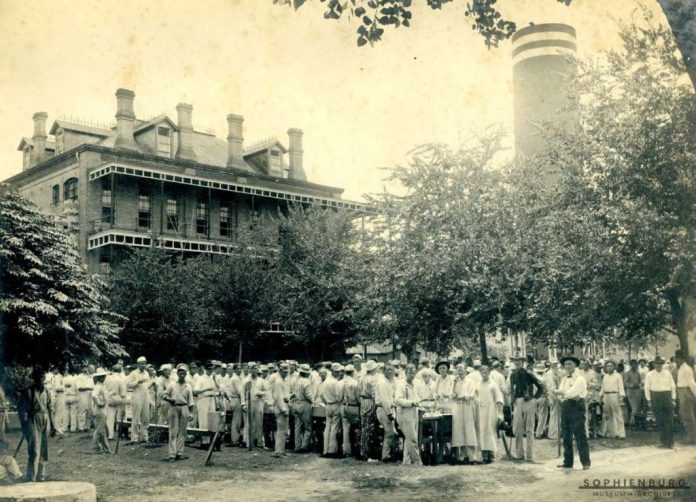
Photo Caption: Picnic at Huntsville Prison, July 4, 1911.

By Simon V. Simek —

Six score years ago to this very week of January, a story appeared in the English-language New Braunfels Herald, while the German-language paper, Neu-Braunfelser Zeitung, had run the story the previous week. They both detailed an interesting and puzzling report about how a meeting hall dedication party on Christmas night 1905, turned into a murder mystery. It was not a whodunit but a “why did they do it?”

The articles in our town’s papers were not the only ones, as various local outfits picked up the story across Texas, such as the Bryan Morning Eagle and the Galveston Tribune. Despite all of this coverage, there are still many questions left unanswered about why the incident occurred. It seems that in the early hours of Dec. 26, 1905, a heated argument ended with Mrs. Minnie Ramsey shot in the shoulder, Mr. Robert White having fired the gun, Mr. Horace Clark holding the gun after taking it from Robert, and Frank Garrison, a known peace-loving man, gut-shot and dying. Mrs. Ramsey, wife to Willie Ramsey, would survive the ordeal, but Mr. Frank Garrison, the long-time employee of state politician and Sophienburg President Somers. V. Pfueffer, would not recover from his injuries.

Horace Clark, Robert White, and Tom Clark, the father of Horace, were all immediately jailed following the incident. This was not Tom’s first time behind bars, as he and his family were infamous for their reported run-ins with the law and Sheriff Nowotny. He was released, but his son Horace was then charged with the murder of Frank Garrison, and his bond was set at $1,000 (around $35,000 today adjusted for inflation). Meanwhile, Rob White was charged with the assault on Minnie Ramsey and was bonded for $500. Making matters more interesting is the fact that Horace would go on to marry a Louisa “Leah” Ramsey in 1919. Leah Ramsey’s cousin John Branch and his family lived right next door to Minnie Ramsey’s husband, Willie Ramsey, when he was a child. The Herald-dubbed “shooting scrape” was widely reported, and was quite the talk of the town in the first months of 1906 here in New Braunfels, especially as the townsfolk awaited the coming trials in February.

While the shooting leaves many questions unanswered, the trials that followed leave even more answers to be desired. The trials began in February 1906, and despite high public interest, there is almost no official record of what was said, what evidence was presented, or what witnesses were brought forward. No official court documents or transcripts of the trials have been located, and there is no mention of the trials in either the Comal County Law Library or at the State Archives in Austin. The only official records that could be located are from a microfilm roll labeled as District Court Minutes, which provide brief details about the trials, including the defendant’s name, plea, verdict, and sentencing.

While information is limited on the unfolding of the trials, evidence of their results is still very well documented. Horace Clark’s trial ended with his sentencing to five years behind bars in Huntsville for the second-degree murder of Frank Garrison. This may indicate a lenient sentence, because next to the original article covering the shooting incident in the Dec. 28 edition of the Zeitung was the story of 78-year-old Comal County man Mat Porter, who was sentenced to 1,000 years in prison for rustling cattle. Robert White was also found guilty, despite appeal, of assault with intent to murder for the wounding of Mrs. Ramsey in the shoulder, and was sentenced to three years in state prison.

Almost immediately following these trials, Judge L.W. Moore recalled 35 of the witnesses who had testified in the two cases before the grand jury. The San Antonio Daily Light quoted him as declaring “he had never in all his official career listened to so much lying as was displayed.” Tom Clark Sr. was once again under suspicion, as was Horace’s younger brother Ananias Clark. Addie White and Viola White, relatives of Robert, were also investigated for perjury. While the Whites’ charges were dropped, Ananias was found guilty of perjury and sentenced to two years of incarceration, and Tom was sentenced to five years. The Clarks were joined by Charles Jones who was also found guilty of perjury and sentenced to three years. All were to serve their time with Horace and Robert in Huntsville.

They all arrived within a few days of each other and were logged into the state prison’s record book.

The prison noticed that 61-year-old Tom had several scars and had stubs on each hand where a sixth finger once was. In prison, none of the five men would serve their full sentences, as Robert White, Horace Clark, and Charles Jones were discharged early. Ananias Clark was pardoned by Texas Gov. Thomas Mitchell Campbell in October 1907 just a few months before his full sentence would end. Later that year, the governor inquired about Ananias when Comal County Attorney H.G. Henne went for an official visit. Henne was pleased to tell him that Ananias returned well, and was to be married that very day. Ananias’ father, Tom, would not be so lucky, as he would die of pneumonia in June of 1907, serving just over a year of his five-year sentence.

Besides Frank Garrison and Tom Clark, who both in the end fell victim to the shooting and its repercussions, the other involved parties went on to make successful lives for themselves and for their families. The town moved on. The story concluded and labeled old news, pushed to the side, and put away. What was lost, however, is what caused all of this: the argument, the shooting of Mrs. Ramsey, Horace taking the gun, the killing of Frank, the perjury and lying, and ultimately the debate within the courtroom. And while we may all come up with our own ideas and theories about the reasons, the unfortunate reality is we may never know the truth.


Sources: New Braunfels Herald, New Braunfels Zeitung, San Antonio Daily Express, Bryan Morning Eagle, Austin Statesman, San Antonio Daily Light, Galveston Tribune, District Court Minutes, Federal Census Records (1880, 1890, 1900, 1910), Huntsville Prison Records.


“Around the Sophienburg” is published every other weekend in the New Braunfels Herald-Zeitung.

Great Job Alan King & the Team @ Sophienburg Museum and Archives for sharing this story.

Trending on the Timeline: The Weekend’s Biggest Wins and Losses

Trending on the Timeline: The Weekend’s Biggest Wins and Losses

Source: ione nicole thomas / IONE, VIA NICOLE THOMAS

We are keeping our ear to the streets and bringing you the hottest updates shaking up the sports world. This past weekend gave us plenty to debate at the barbershop, the beauty salon, and in the family group, here is everything you need to know to stay ahead of the game.

Here’s a closer look at the stories that had everyone talking about:

Peach Bowl Dominance

If you missed the crew on OTC Live on social media, you missed witnessing absolute history at the Peach Bowl. DJ Misses put it plainly for everyone listening: it was a certified beatdown. The Indiana Hoosiers are not just winning games this season; they are completely dominating the field. They rolled over the Oregon Ducks with a crushing 56-22 victory that had fans constantly checking the scoreboard to make sure it was real. It felt like every time you looked up from your plate, the Hoosiers were finding the end zone again. And again. This level of relentless performance is exactly why we tune in—it is pure black-and-white excellence on display, and Indiana is looking unstoppable right now..

Great Job Nia Noelle & the Team @ Black America Web Source link for sharing this story.
Is Powell’s Fed head independence dead? It’s just one more diversionary Trump trick | Fortune

Is Powell’s Fed head independence dead? It’s just one more diversionary Trump trick | Fortune

The only surprising quality regarding President Trump unleashing federal investigators to prepare potential prosecution criminal charges against the highly respected Federal Reserve Chairman Jay Powell — a Trump appointee himself — is that anyone is surprised by this news.

The sequential, dramatic waves of prosecutions against officials such as his former National Security Advisor John Bolton, former FBI chiefs James Comey and Christopher Wray, New York Attorney General Letitia James, former CIA chief John Brennan, Federal Reserve Governor Lisa Cook,  former Homeland Security official Miles Taylor, Senator Adam Schiff, cybersecurity chief Christoper Krebs and former special counsel Jack Smith, among others, is alarming. As his Truth Social messaging shows, Trump has personally directed such prosecution, demonstrating a weaponization of the judiciary against perceived political enemies. Some critics see this as the impulsive, emotional fits of the crazed Queen of Hearts in Alice in Wonderland, screaming “off with their heads” regarding any who displease her. What is missed in that perception is that these moves are far more deliberate, part of a large tactical pattern.

The charges against Powell that he lied to Congress due to building renovation costs overruns is ludicrous and will surely be dismissed in court. The alleged 40% cost overruns may be true but they are not criminal, let alone reckless. The actual Fed renovations are costing $2.5 billion, which is 40% overbudget due to cost inflation, while Trump admitted last month that his own demolition and construction of a new ballroom in the White House’s East Wing has ballooned to 200% over budget. That is truly stunning, as this project was only begun six months ago and Trump, as a builder himself, should know how to estimate construction accurately. 

The Fed renovation costs aren’t out of line, given that this is the first comprehensive renovation in the roughly 90 years since the Marriner Eccles building was built in 1937.  By contrast, the nearby Hart, Russell, and Dirksen Senate Office buildings and the Cannon House Office building have continuously undergone massive renovations over the decades. 

Plus, regardless of the nature of these common cost overruns, not a penny of this is from US tax payer funds. The Fed is funding these renovations out of its own budget as the Fed is entirely operationally self-sufficient, mostly funded primarily by its own investment income on the US Treasury bonds it owns — not congressionally appropriated taxpayer dollars.

Ambush gone awry

Trump did try to ambush Powell on national TV this summer, during a tour of the construction site, but it backfired, with Trump embarrassing himself and Powell correcting him — Trump’s claim that the renovations had ballooned to $3.1 billion was quickly shown to be incorrect by the Fed chair, who pointed out that figure included a separate, already-completed renovation of a different building.

On the surface, Trump is angry that the Federal reserve is not cutting rates faster and further, and that is how the chair explained why he is being targeted: “This new threat is not about my testimony last June or about the renovation of the Federal Reserve buildings … Those are pretexts. The threat of criminal charges is a consequence of the Federal Reserve setting interest rates based on our best assessment of what will serve the public, rather than following the preferences of the President.”

The bipartisan endorsement of Powell’s assessment includes comments from Senator Thom Tillis, Republican of North Carolina and member of the Banking Committee, who concluded, “If there were any remaining doubt whether advisors within the Trump administration are actively pushing to end the independence of the Federal Reserve, there should now be none.  It is not the independence of the Department of Justice that are in question.”

Fully 71% of the 200 CEOs at our recent Yale CEO Summit complained that Trump had already eroded the independence of the Federal Reserve through actions taken by the Trump administration, and 81% stated that they prefer Governor Chris Waller as Powell’s prospective successor when the chairman’s term ends this spring, presuming he will fortify Fed independence. 

So, if this lawfare attack is not an impulsive tantrum, what is the strategic rationale? Like Trump’s false assertion this month that the attack on Venezuela was driven by the advance interest of U.S. oil producers, which they soundly denied. claiming Venezuela was “uninvestable,” this was diversionary maneuvering on Trump’s part. In a forthcoming new book, Trump’s Ten Commandments (Simon & Schuster), we label this Trump’s “Wall of Sound” tactic to change the public narrative from his faltering polling, with Gallup’s end-of-year national survey reporting only 36% of the nation approving of his performance, and Economist/YouGov  polling showing that 57% disapprove—with over half of even MAGA/Trump voters not supporting Trump on his handling of the Epstein files and affordability, healthcare, and ICE/immigration tactics, which have plummeted to 30% in recent polling. 

And Trump has succeeded in his mission of getting every media outlet to drop their 24/7 hammering on his weaknesses on salient domestic policies. Plus, he pulls three other levers in this Fed/Powell diversionary maneuver — he invokes his “hub & spoke” leadership model where there are no independent agencies of control, his crushing of adversaries with selective retribution, and his deft manipulation of the classic mass communication propaganda tool “sleeper effect,” where a false message is repeated in an unrelenting, determined way, until it eventually gets traction.  These are all in Trump’s tool kit that we label his “Ten Commandments.”  He is far from tone deaf or foolish. He is dumb as a fox.

The opinions expressed in Fortune.com commentary pieces are solely the views of their authors and do not necessarily reflect the opinions and beliefs of Fortune.

Great Job Jeffrey Sonnenfeld, Stephen Henriques & the Team @ Fortune | FORTUNE Source link for sharing this story.

Secret Link