Home News Page 78

Lohri 2026 AI Portraits: Best Photo Editing Prompts For Festive Pictures

Lohri 2026 AI Portraits: Best Photo Editing Prompts For Festive Pictures

Lohri 2026 celebrations are getting a high-tech makeover as AI photo tools help users create stunning festive portraits in just a few clicks. From glowing bonfire backdrops and traditional Punjabi outfits to cinematic lighting and artistic effects, AI-powered prompts can transform everyday photos into share-worthy Lohri visuals perfect for Instagram, WhatsApp and digital greetings.

Lohri 2026 celebrations are going digital, with AI-powered photo editing tools helping users create eye-catching festive portraits in minutes. From vibrant bonfire scenes and glowing winter nights to traditional Punjabi attire, AI prompts allow people to reimagine their pictures with a distinctly Lohri-themed aesthetic, perfect for social media and personalised greetings.

ALSO SEE: Microsoft’s Satya Nadella Thinks 2026 Will Be AI’s Turning Point: Here’s Why

With the right prompts, AI tools can add cultural elements such as crackling bonfires, sugarcane, rewri, popcorn, and dhols, while enhancing lighting to give photos a warm, cinematic glow. Users can also experiment with traditional outfits like phulkari dupattas, kurta-pajamas, and jewellery, even if the original photo was taken in casual wear.

Here are the steps that you can follow

  1. Choose a clear, well-lit portrait where your face is clearly visible, preferably a front-facing photo for the best AI results.
  1. Upload the image to an AI photo editing or image-generation tool that accepts text prompts and supports realistic portrait enhancements.
  1. Enter a detailed Lohri-themed prompt mentioning elements like a glowing bonfire, traditional Punjabi attire, warm golden lighting, festive night ambience, and cultural props.
  1. Refine the output by tweaking colours, facial details, or background intensity, then download and share your Lohri 2026 AI portrait.

As AI tools continue to evolve, festive photo editing is becoming more accessible and creative than ever. For Lohri 2026, well-crafted AI prompts offer an easy way to blend tradition with technology, helping users celebrate the harvest festival with personalised, visually striking images that stand out online.

ALSO SEE: Apple to Launch iPhone 18 Pro Soon: Expected Price, Specifications

Great Job Priya Singh & the Team @ Mashable India tech Source link for sharing this story.

True Crime Series: A Christmas murder – Sophienburg Museum and Archives

True Crime Series: A Christmas murder – Sophienburg Museum and Archives

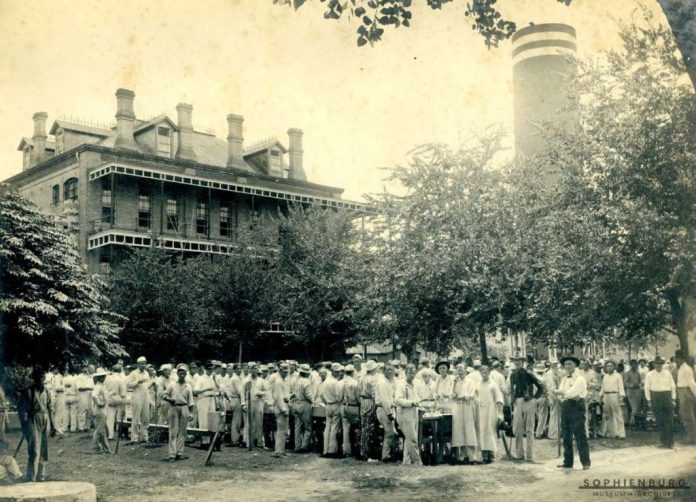
Photo Caption: Picnic at Huntsville Prison, July 4, 1911.

By Simon V. Simek —

Six score years ago to this very week of January, a story appeared in the English-language New Braunfels Herald, while the German-language paper, Neu-Braunfelser Zeitung, had run the story the previous week. They both detailed an interesting and puzzling report about how a meeting hall dedication party on Christmas night 1905, turned into a murder mystery. It was not a whodunit but a “why did they do it?”

The articles in our town’s papers were not the only ones, as various local outfits picked up the story across Texas, such as the Bryan Morning Eagle and the Galveston Tribune. Despite all of this coverage, there are still many questions left unanswered about why the incident occurred. It seems that in the early hours of Dec. 26, 1905, a heated argument ended with Mrs. Minnie Ramsey shot in the shoulder, Mr. Robert White having fired the gun, Mr. Horace Clark holding the gun after taking it from Robert, and Frank Garrison, a known peace-loving man, gut-shot and dying. Mrs. Ramsey, wife to Willie Ramsey, would survive the ordeal, but Mr. Frank Garrison, the long-time employee of state politician and Sophienburg President Somers. V. Pfueffer, would not recover from his injuries.

Horace Clark, Robert White, and Tom Clark, the father of Horace, were all immediately jailed following the incident. This was not Tom’s first time behind bars, as he and his family were infamous for their reported run-ins with the law and Sheriff Nowotny. He was released, but his son Horace was then charged with the murder of Frank Garrison, and his bond was set at $1,000 (around $35,000 today adjusted for inflation). Meanwhile, Rob White was charged with the assault on Minnie Ramsey and was bonded for $500. Making matters more interesting is the fact that Horace would go on to marry a Louisa “Leah” Ramsey in 1919. Leah Ramsey’s cousin John Branch and his family lived right next door to Minnie Ramsey’s husband, Willie Ramsey, when he was a child. The Herald-dubbed “shooting scrape” was widely reported, and was quite the talk of the town in the first months of 1906 here in New Braunfels, especially as the townsfolk awaited the coming trials in February.

While the shooting leaves many questions unanswered, the trials that followed leave even more answers to be desired. The trials began in February 1906, and despite high public interest, there is almost no official record of what was said, what evidence was presented, or what witnesses were brought forward. No official court documents or transcripts of the trials have been located, and there is no mention of the trials in either the Comal County Law Library or at the State Archives in Austin. The only official records that could be located are from a microfilm roll labeled as District Court Minutes, which provide brief details about the trials, including the defendant’s name, plea, verdict, and sentencing.

While information is limited on the unfolding of the trials, evidence of their results is still very well documented. Horace Clark’s trial ended with his sentencing to five years behind bars in Huntsville for the second-degree murder of Frank Garrison. This may indicate a lenient sentence, because next to the original article covering the shooting incident in the Dec. 28 edition of the Zeitung was the story of 78-year-old Comal County man Mat Porter, who was sentenced to 1,000 years in prison for rustling cattle. Robert White was also found guilty, despite appeal, of assault with intent to murder for the wounding of Mrs. Ramsey in the shoulder, and was sentenced to three years in state prison.

Almost immediately following these trials, Judge L.W. Moore recalled 35 of the witnesses who had testified in the two cases before the grand jury. The San Antonio Daily Light quoted him as declaring “he had never in all his official career listened to so much lying as was displayed.” Tom Clark Sr. was once again under suspicion, as was Horace’s younger brother Ananias Clark. Addie White and Viola White, relatives of Robert, were also investigated for perjury. While the Whites’ charges were dropped, Ananias was found guilty of perjury and sentenced to two years of incarceration, and Tom was sentenced to five years. The Clarks were joined by Charles Jones who was also found guilty of perjury and sentenced to three years. All were to serve their time with Horace and Robert in Huntsville.

They all arrived within a few days of each other and were logged into the state prison’s record book.

The prison noticed that 61-year-old Tom had several scars and had stubs on each hand where a sixth finger once was. In prison, none of the five men would serve their full sentences, as Robert White, Horace Clark, and Charles Jones were discharged early. Ananias Clark was pardoned by Texas Gov. Thomas Mitchell Campbell in October 1907 just a few months before his full sentence would end. Later that year, the governor inquired about Ananias when Comal County Attorney H.G. Henne went for an official visit. Henne was pleased to tell him that Ananias returned well, and was to be married that very day. Ananias’ father, Tom, would not be so lucky, as he would die of pneumonia in June of 1907, serving just over a year of his five-year sentence.

Besides Frank Garrison and Tom Clark, who both in the end fell victim to the shooting and its repercussions, the other involved parties went on to make successful lives for themselves and for their families. The town moved on. The story concluded and labeled old news, pushed to the side, and put away. What was lost, however, is what caused all of this: the argument, the shooting of Mrs. Ramsey, Horace taking the gun, the killing of Frank, the perjury and lying, and ultimately the debate within the courtroom. And while we may all come up with our own ideas and theories about the reasons, the unfortunate reality is we may never know the truth.


Sources: New Braunfels Herald, New Braunfels Zeitung, San Antonio Daily Express, Bryan Morning Eagle, Austin Statesman, San Antonio Daily Light, Galveston Tribune, District Court Minutes, Federal Census Records (1880, 1890, 1900, 1910), Huntsville Prison Records.


“Around the Sophienburg” is published every other weekend in the New Braunfels Herald-Zeitung.

Great Job Alan King & the Team @ Sophienburg Museum and Archives for sharing this story.

Trending on the Timeline: The Weekend’s Biggest Wins and Losses

Trending on the Timeline: The Weekend’s Biggest Wins and Losses

Source: ione nicole thomas / IONE, VIA NICOLE THOMAS

We are keeping our ear to the streets and bringing you the hottest updates shaking up the sports world. This past weekend gave us plenty to debate at the barbershop, the beauty salon, and in the family group, here is everything you need to know to stay ahead of the game.

Here’s a closer look at the stories that had everyone talking about:

Peach Bowl Dominance

If you missed the crew on OTC Live on social media, you missed witnessing absolute history at the Peach Bowl. DJ Misses put it plainly for everyone listening: it was a certified beatdown. The Indiana Hoosiers are not just winning games this season; they are completely dominating the field. They rolled over the Oregon Ducks with a crushing 56-22 victory that had fans constantly checking the scoreboard to make sure it was real. It felt like every time you looked up from your plate, the Hoosiers were finding the end zone again. And again. This level of relentless performance is exactly why we tune in—it is pure black-and-white excellence on display, and Indiana is looking unstoppable right now..

Great Job Nia Noelle & the Team @ Black America Web Source link for sharing this story.

Is Powell’s Fed head independence dead? It’s just one more diversionary Trump trick | Fortune

Is Powell’s Fed head independence dead? It’s just one more diversionary Trump trick | Fortune

The only surprising quality regarding President Trump unleashing federal investigators to prepare potential prosecution criminal charges against the highly respected Federal Reserve Chairman Jay Powell — a Trump appointee himself — is that anyone is surprised by this news.

The sequential, dramatic waves of prosecutions against officials such as his former National Security Advisor John Bolton, former FBI chiefs James Comey and Christopher Wray, New York Attorney General Letitia James, former CIA chief John Brennan, Federal Reserve Governor Lisa Cook,  former Homeland Security official Miles Taylor, Senator Adam Schiff, cybersecurity chief Christoper Krebs and former special counsel Jack Smith, among others, is alarming. As his Truth Social messaging shows, Trump has personally directed such prosecution, demonstrating a weaponization of the judiciary against perceived political enemies. Some critics see this as the impulsive, emotional fits of the crazed Queen of Hearts in Alice in Wonderland, screaming “off with their heads” regarding any who displease her. What is missed in that perception is that these moves are far more deliberate, part of a large tactical pattern.

The charges against Powell that he lied to Congress due to building renovation costs overruns is ludicrous and will surely be dismissed in court. The alleged 40% cost overruns may be true but they are not criminal, let alone reckless. The actual Fed renovations are costing $2.5 billion, which is 40% overbudget due to cost inflation, while Trump admitted last month that his own demolition and construction of a new ballroom in the White House’s East Wing has ballooned to 200% over budget. That is truly stunning, as this project was only begun six months ago and Trump, as a builder himself, should know how to estimate construction accurately. 

The Fed renovation costs aren’t out of line, given that this is the first comprehensive renovation in the roughly 90 years since the Marriner Eccles building was built in 1937.  By contrast, the nearby Hart, Russell, and Dirksen Senate Office buildings and the Cannon House Office building have continuously undergone massive renovations over the decades. 

Plus, regardless of the nature of these common cost overruns, not a penny of this is from US tax payer funds. The Fed is funding these renovations out of its own budget as the Fed is entirely operationally self-sufficient, mostly funded primarily by its own investment income on the US Treasury bonds it owns — not congressionally appropriated taxpayer dollars.

Ambush gone awry

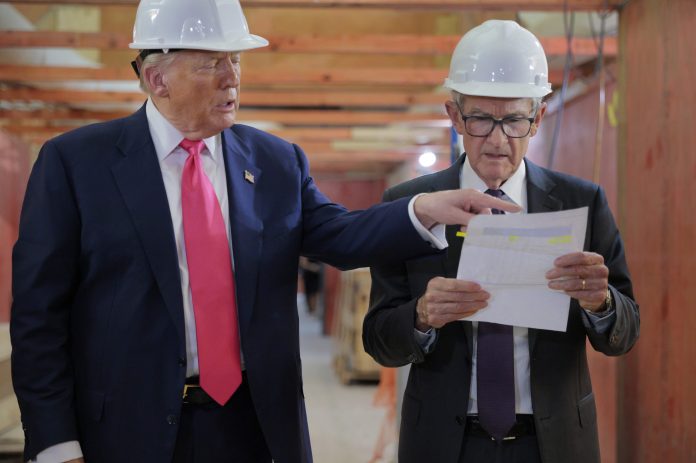
Trump did try to ambush Powell on national TV this summer, during a tour of the construction site, but it backfired, with Trump embarrassing himself and Powell correcting him — Trump’s claim that the renovations had ballooned to $3.1 billion was quickly shown to be incorrect by the Fed chair, who pointed out that figure included a separate, already-completed renovation of a different building.

On the surface, Trump is angry that the Federal reserve is not cutting rates faster and further, and that is how the chair explained why he is being targeted: “This new threat is not about my testimony last June or about the renovation of the Federal Reserve buildings … Those are pretexts. The threat of criminal charges is a consequence of the Federal Reserve setting interest rates based on our best assessment of what will serve the public, rather than following the preferences of the President.”

The bipartisan endorsement of Powell’s assessment includes comments from Senator Thom Tillis, Republican of North Carolina and member of the Banking Committee, who concluded, “If there were any remaining doubt whether advisors within the Trump administration are actively pushing to end the independence of the Federal Reserve, there should now be none.  It is not the independence of the Department of Justice that are in question.”

Fully 71% of the 200 CEOs at our recent Yale CEO Summit complained that Trump had already eroded the independence of the Federal Reserve through actions taken by the Trump administration, and 81% stated that they prefer Governor Chris Waller as Powell’s prospective successor when the chairman’s term ends this spring, presuming he will fortify Fed independence. 

So, if this lawfare attack is not an impulsive tantrum, what is the strategic rationale? Like Trump’s false assertion this month that the attack on Venezuela was driven by the advance interest of U.S. oil producers, which they soundly denied. claiming Venezuela was “uninvestable,” this was diversionary maneuvering on Trump’s part. In a forthcoming new book, Trump’s Ten Commandments (Simon & Schuster), we label this Trump’s “Wall of Sound” tactic to change the public narrative from his faltering polling, with Gallup’s end-of-year national survey reporting only 36% of the nation approving of his performance, and Economist/YouGov  polling showing that 57% disapprove—with over half of even MAGA/Trump voters not supporting Trump on his handling of the Epstein files and affordability, healthcare, and ICE/immigration tactics, which have plummeted to 30% in recent polling. 

And Trump has succeeded in his mission of getting every media outlet to drop their 24/7 hammering on his weaknesses on salient domestic policies. Plus, he pulls three other levers in this Fed/Powell diversionary maneuver — he invokes his “hub & spoke” leadership model where there are no independent agencies of control, his crushing of adversaries with selective retribution, and his deft manipulation of the classic mass communication propaganda tool “sleeper effect,” where a false message is repeated in an unrelenting, determined way, until it eventually gets traction.  These are all in Trump’s tool kit that we label his “Ten Commandments.”  He is far from tone deaf or foolish. He is dumb as a fox.

The opinions expressed in Fortune.com commentary pieces are solely the views of their authors and do not necessarily reflect the opinions and beliefs of Fortune.

Great Job Jeffrey Sonnenfeld, Stephen Henriques & the Team @ Fortune | FORTUNE Source link for sharing this story.

Texans stifle Aaron Rodgers and the Steelers 30-6 for franchise’s 1st road playoff win

Texans stifle Aaron Rodgers and the Steelers 30-6 for franchise’s 1st road playoff win

PITTSBURGH – Sheldon Rankins returned a fumble by Aaron Rodgers 33 yards for a touchdown early in the fourth quarter to highlight a dominant performance by the NFL’s top-ranked defense, and the Houston Texans beat the Pittsburgh Steelers 30-6 on Monday night for the first road playoff win in franchise history.

The Texans (13-5) play at New England (15-3) in the divisional round on Sunday night.

C.J. Stroud turned it over three times but also threw a first-half touchdown pass to Christian Kirk, who had eight catches for 144 yards. Woody Marks had 112 yards rushing for Houston, which had been 0-6 on the road in the postseason before shutting down Rodgers and the Steelers (10-8).

Marks’ 13-yard touchdown run with 3:43 to go sealed it, and Calen Bullock added Houston’s second defensive score with a 50-yard pick-6 less than a minute later on Rodgers’ final throw of the game — and possibly his 21-year career.

Rodgers passed for just 146 yards as the Steelers were held to 175 yards of offense. The four-time MVP will take some time before deciding whether to return next fall.

While Rodgers’ play down the stretch was one of the reasons the Steelers won the AFC North, he struggled in much the same way his predecessors Russell Wilson and Mason Rudolph did as Pittsburgh lost its seventh straight playoff game and dropped a Monday night home game for the first time since 1991.

His Hall of Fame career may have ended on a forced downfield throw that Bullock stepped in front of. Rodgers tried and failed to tackle Bullock on the way to the end zone.

The Steelers’ defense, long the biggest problem during a playoff victory drought that is nearing a decade, forced Stroud into numerous mistakes and kept Pittsburgh in the game until late.

The result, however, was the same as it has been for the Steelers and coach Mike Tomlin since they fell to New England in the 2016 AFC championship game, with a long walk to the locker room and a longer-than-hoped-for offseason to figure out what went wrong.

Houston’s 10th straight win was hardly a thing of beauty, as a thrilling opening weekend of the playoffs ended with a rock fight between clubs trying to shed some ignominious playoff history.

The Texans survived the way they have much of the season, by letting the league’s best defense smother their opponent.

The Steelers failed to capitalize on the miscues from a jittery Stroud, who fumbled twice and threw a pick. Pittsburgh scored just three points off those turnovers.

Not even the return of wide receiver DK Metcalf from a two-game suspension for making contact with a fan in Detroit helped. Metcalf finished with two catches for 42 yards and had a critical drop that cost the Steelers a chance to extend a 3-0 lead.

The Texans gathered themselves after an iffy start and took a 7-6 lead when Stroud finished off a 16-play, 92-yard drive by flipping a pass to Kirk for a 4-yard touchdown.

Stroud let a chance to extend the lead get away early in the second half when he was intercepted deep in Pittsburgh territory.

The Steelers’ offense again did nothing with the opportunity.

Ka’imi Fairbairn’s 51-yard field goal early in the fourth quarter pushed Houston’s lead to 10-6. Will Anderson sacked Rodgers on Pittsburgh’s ensuing possession, the ball popped loose and Rankins alertly scooped it up and raced to the end zone to put the Texans up by 11.

Unlike a heart-stopping fourth-quarter rally against Baltimore that earned them their first AFC North title since 2020, this time there was no late-game magic from Rodgers and the Steelers.

Instead, Tomlin’s postseason losing streak hit seven, tying Marvin Lewis of the Bengals for the longest playoff skid by an NFL coach.

While the NFL’s longest-tenured coach is all but assured of returning for a 20th season if he wants — even if there were chants for his firing in the final moments — Pittsburgh heads into yet another offseason in search of a quarterback and answers to a playoff drought whose weight seems to grow by the year.

Houston, meanwhile, heads to New England as the hottest team in the NFL with a quarterback who will be eager for a chance at a reprieve and a defense that can keep a game close against any opponent.

Injuries

Texans: WRs Nico Collins and Justin Watson both went into the concussion protocol in the second half. S Jaylen Reed (forearm), who was activated off injured reserve early Monday, left in the first quarter with a knee injury.

Up next

Texans: Face the Patriots for the first time this season.

Steelers: The NFL draft, which Pittsburgh is hosting in late April.

___

AP NFL: https://apnews.com/hub/nfl

Copyright 2026 The Associated Press. All rights reserved. This material may not be published, broadcast, rewritten or redistributed without permission.

Great Job Will Graves, Associated Press & the Team @ KSAT San Antonio Source link for sharing this story.

A Breathtaking Week of Pure Trump Id

A Breathtaking Week of Pure Trump Id

Scarcely a week ago, U.S. warplanes and drones were streaking across the Caracas night sky to deliver a swift end to the reign of the Venezuelan strongman Nicolás Maduro. The extraordinary display of kinetic violence delivered a stunning reminder about the reach of the world’s most powerful military—and symbolized the start of a new chapter for the man who commands it.

Donald Trump has been emboldened. The president and his advisers believe that the strike both reignited his political momentum and underscored the lack of concrete limits on his ability to wield power at home and abroad. He blew past the need for congressional approval—or even notification—and has reveled in brandishing armed forces to intimidate foreign foes and friends alike. He seized upon a deadly confrontation on a cold Minnesota street to accelerate his push to put masked, armed federal officers in Democrat-run cities that didn’t vote for him. And he brought his campaign of retribution against perceived political enemies to a new target, one that could undermine faith in the pillars of the nation’s economy.

Even for Trump, it’s been quite the week. But this is more than just a series of dizzying news cycles. The White House, after months of struggle, believes that it has found its footing again. Trump, though never restrained, is now pure id, acting on impulse and goaded on by advisers who see an opportunity to further expand executive power.

His poll numbers are still low, and the aura of invincibility that he held for the first half of last year is gone. The MAGA base has been fractured, and some Republicans have objected to his plans, while many more quietly worry that the president is ignoring the economic issues that will likely decide this year’s midterm elections. But Trump simply doesn’t care.

Steve Bannon, Trump’s longtime adviser, put it to me this way: “It’s a full flex.”

The first days of 2026 have been breathtaking in their share of Wait, he did what? headlines, cable chyrons, and news alerts. The Caracas strike, though rumored for weeks, happened so quickly that many Americans who’d gone to bed unaware that a capture operation was under way woke up to an image of Maduro wearing a Nike tracksuit and handcuffs. Trump then announced that the United States would “run” Venezuela—wait, what?—and also take much of its oil. The military’s triumph then inspired the president and his advisers to renew a call to seize Greenland, thoroughly alarming European leaders who have watched in horror as Trump’s desires for a strategically placed but largely uninhabited sheet of ice have escalated from social-media trolling to an existential threat against the NATO alliance. Where else could Trump wield American power? Perhaps in Iran, which has been engulfed by mass protests, leading the president to threaten action against an oppressive regime that has bedeviled the United States for nearly half a century.

Back home, an ICE agent in Minneapolis fired three bullets into the car of a 37-year-old mother who had been protesting deportation operations. Trump, instead of calling for national unity at a time of tragedy, blamed the victim, and his administration sent more armed officers to the city. And his retribution campaign—faltering to this point, to be sure—targeted the chairman of the Federal Reserve, who is now the subject of a Justice Department investigation. The normally soft-spoken Jerome Powell called it payback for a disagreement on interest rates and warned that Trump had jeopardized the Fed’s independence, perceived by many as the bedrock of American financial stability.

Oh, and for good measure, the White House launched a website on January 6 that thoroughly twisted the facts of the 2021 insurrection, as Trump, once more, suggested that U.S. elections, including the upcoming midterms, could be rigged. The next day, Trump sat for a two-hour interview with a newspaper he often derides to express regret for not seizing voting machines in 2020 and to bemoan the impact of civil-rights legislation on white people.

“It’s insane,” Senator Mark Warner of Virginia told me, as he recapped the events of the past week, including the threats against Powell and Greenland. “This is beyond ludicrous. What is he even talking about? At what point is enough enough?”

Many second-term presidents, coming to grips with their fate as a lame duck, turn to an area in which they have the most unilateral control: foreign policy. Yet it’s been surprising to see how firmly Trump has embraced a new plan of international action. He campaigned in 2016 against so-called forever wars in Iraq and Afghanistan and pledged to avoid such military entanglements. But then he fell in love with the “one and done” strategy of a quick burst of military action—such as the bombing of Iran’s nuclear facilities last June—and blustered about Maduro for months before green-lighting the strike.

He surprised many—and outraged the isolationist factions of his base—by repeatedly declaring that the U.S. would be heavily involved in Venezuela for years. Besotted with Venezuela’s ability to flood the market with oil, Trump has set up what critics say is an extortionist racket of the South American nation. He has told its new leader, in essence, Give us the oil we want, and we’ll let you stay in power, and has privately joked that Venezuela could be in the running to become the 51st state, two people close to him told me.

There’s likely more to come. Some in the administration believe that Cuba could be next, and White House aides told me that Trump will be briefed tomorrow on an array of options for intervention in Iran, including some military operations that are ostensibly meant to protect the protesters but that could also hasten the end of the regime. Trump has repeatedly refused to rule out using military force to seize Greenland, even though it could shatter the globe’s most enduring and successful alliance. Greenland is part of Denmark, a fellow member of NATO (Article 5 of NATO’s charter declares that an attack on one is an attack on all). European leaders are so spooked by Trump’s bellicose rhetoric that they’ve publicly rebuked the United States. Germany and the United Kingdom are considering troop deployments to Greenland. Trump, though, seems unbothered by the blowback to his threat to redraw the world’s maps. Making a deal instead of using force would be “easier,” the president told reporters last night on Air Force One, adding, “But one way or the other, we’re going to have Greenland.”

Trump, of course, is no stranger to the strategy of flooding the zone with outrageous statements and acts, making it hard for his political opponents and the media (not to mention the general public) to keep track. White House aides and close allies privately acknowledged to me that they have been grateful to control the news cycle in the early days of 2026.

But Trump is still set to begin the second year of his term far weaker than he was in the first. He is an unpopular president, per polling, and most Americans dislike both the strong-arm deportation tactics at the center of the Minneapolis protests and Trump’s efforts to use the Department of Justice to carry out his political vendettas. West Wing aides have been eager to shift the conversation away from the ongoing Jeffrey Epstein controversy, which, when it erupted over the summer, was the first moment when many Republican lawmakers seemed willing to defy Trump. (The DOJ has repeatedly missed deadlines to release all of the materials in the case; the story will likely spring back to life when more comes out in the weeks ahead.) The White House has also begun to take on its thorniest political issue: high prices. As part of its news blitz this month, the Trump administration has unveiled measures meant to drive down the costs of prescription drugs and credit-card fees, as well as to make mortgages more obtainable.

The White House spokesperson Kush Desai told me in a statement that the blitz is part of the administration’s work in “implementing the free market policies like tax cuts and deregulation that do work rectifying the ‘America Last’ policies that have let Americans down.”

But some in the GOP remain concerned that Trump is distracted and that the flurry of foreign-policy flexing will be a sugar high that wears off quickly. Others have urged him to stop meddling with allies. Senator Thom Tillis of North Carolina, in a floor speech last week, said that he was “sick of stupid” and urged Trump to focus on his domestic legacy.

Indeed, Republican lawmakers have sent word to the White House that affordability, not military interventionism, remains top of mind for their constituents, and that voters don’t much care about what’s going in distant lands such as Venezuela and Iran—and can find Greenland on the map only because it’s drawn disproportionately large.


Great Job Jonathan Lemire & the Team @ The Atlantic Source link for sharing this story.

Famous Members Of Delta Sigma Theta

Famous Members Of Delta Sigma Theta


Source: Creative Services / iONEDigital


Delta Sigma Theta Sorority, Inc.: A Legacy of Excellence and Service

Founded on January 13, 1913, at Howard University, Delta Sigma Theta Sorority, Inc. stands as a beacon of empowerment, service, and achievement. Established by 22 visionary women, this historic organization was founded on a desire to promote academic excellence and uplift communities in need. These trailblazers, including Osceola Macarthy Adams, Winona Cargile Alexander, and Ethel Cuff Black, united around shared values that continue to inspire generations.

Delta Sigma Theta’s mission remains deeply rooted in scholarship, sisterhood, and service. With its motto, “Intelligence is the Torch of Wisdom,” the organization emphasizes the power of education as a tool for progress. The sorority has grown to include more than 300,000 initiated members, making it one of the largest predominantly Black sororities in the world. This vast network exemplifies the collective strength and impact of its membership.

Delta Sigma Theta’s identity shines through its vibrant crimson and cream colors and its enduring symbol, the elephant. These elements reflect its strength, resilience, and unyielding determination. Over the decades, the sorority has implemented programs and initiatives addressing social justice, education, health, and economic development, leaving a profound mark on communities everywhere.

Today, Delta Sigma Theta Sorority, Inc. continues to uphold its founders’ vision. Its legacy is one of leadership, advocacy, and unwavering dedication to making the world a better place.

Notable Members of Delta Sigma Theta Sorority, Inc.

Delta Sigma Theta Sorority, Inc. boasts a legacy of extraordinary women who have excelled across diverse fields, leaving a profound impact on society. From arts and entertainment to politics, education, and social action, the sorority’s members exemplify excellence and leadership.

Among its most iconic members is Aretha Franklin, the Queen of Soul, whose unparalleled contributions to music and culture earned global recognition. Another standout is Loretta Lynch, who made history as the first African American woman to serve as the U.S. Attorney General, showcasing her dedication to justice and public service. Keisha Lance Bottoms, a trailblazer in politics, served as the dynamic mayor of Atlanta, bringing progressive leadership and community-focused initiatives to the forefront.

These women, along with many others like Nikki Giovanni, Joy-Ann Reid, and Cicely Tyson, embody the sorority’s mission of promoting scholarship, service, and social change. Their achievements span generations, reinforcing Delta Sigma Theta’s commitment to uplifting communities and inspiring future leaders.

Together, these remarkable Deltas continue to uphold the organization’s legacy, demonstrating that the sorority is not just a network but also a movement for empowerment and progress. Their contributions remind the world of the boundless potential of sisterhood and excellence.

Great Job Jennifer | @jenn.alyse & the Team @ Black America Web Source link for sharing this story.

After Losing a Climate Case in a Louisiana Courtroom, Chevron Wants a Change of Venue – Inside Climate News

After Losing a Climate Case in a Louisiana Courtroom, Chevron Wants a Change of Venue – Inside Climate News

A jury in Plaquemines Parish, Louisiana, thought it had put the issue to rest.

In April 2025, after an 18-day trial, the group of south Louisianans awarded two coastal parish governments $744.6 million in damages, finding that Chevron had contributed to the decline of the state’s shoreline and wetlands. 

In the face of that landmark ruling, Chevron and oil companies facing similar suits fought back. 

On Monday, eight of the U.S. Supreme Court’s nine justices heard the companies’ appeal. Lawyers representing Chevron, Texaco and Exxon Mobil argued that the case should be litigated in federal, not state, court. Justice Samuel Alito recused himself from further consideration of the case, though he’d already participated in the court’s decision to address the issue. 

Lawyers for Chevron argued that the company should be permitted to remove lawsuits against it from state to federal court because its actions, which stretch back to the World War II era, were at times done at the encouragement and direction of the federal government. 

Paul Clement, a seasoned advocate before the nation’s highest court now representing Chevron, told the justices the controversy amounted to a “relatively straightforward case.” Because of the federal government’s outsized involvement in the oil market beginning in the 1940s, he argued, the court should require that suits over oil companies’ related actions should be heard by federal, not state, judges. 

Justice Elena Kagan questioned whether the oil company’s suggested legal theory would lead to absurd outcomes, like requiring suits against vertically integrated producers to be heard in federal court while suits against oil refiners, for example, would remain in state courtrooms. 

Clement suggested the court ignore the contradiction, calling it “a surface anomaly.”

Ben Aguiñaga, Louisiana’s solicitor general, told justices that Clement’s argument before the court, focused in large part on oil companies’ actions during the World War II era, strayed far from the on-the-ground, contemporary evidence that was presented during the state court trial in Pointe à la Hache. 

“They do not dispute that they dumped billions of gallons of produced water from oil wells directly into our marsh,” he said of Chevron’s executives. 

Aguiñaga pointed the court to its own decision in Watson, a 2007 case where the body unanimously decided that Phillip Morris, a tobacco company, could not remove lawsuits against it to federal court simply because it operated under the close supervision of government regulators. 

The parishes’ successful lawsuit, which alleged Chevron had violated a 1978 Louisiana coastal management law, was rightly heard in state courts, Aguiñaga argued, because that’s where the expertise on the relevant law lies. 

“We want the actual experts interpreting state law, especially when we get the Louisiana Supreme Court on an important statute like this, and especially with respect to a problem that is so sweeping in scope,” he said.

Legal experts say the oil companies view the federal courts as a friendlier venue that will be more receptive to their arguments that they are owed some protection from liability because of their role in national security. The court’s decision will determine the venue for a slew of similar cases, including 40 lawsuits by Louisiana officials. It also could have bearing on litigation now underway around the country over oil company liability for the costs of climate change.

While the legal outlines of the Louisiana case don’t seem to fall along traditional political lines, the court’s liberal justices appeared more skeptical of the oil companies’ insistence that the cases be moved to federal courts during Monday’s arguments. 

Justice Sonia Sotomayor said that the companies’ suggested scope of when a case should be forced into a federal courtroom was too broad.

“They way you’re defining this, but for a nail, something could fall apart,” Sotomayor said. 

But Clement told justices that federal law is broad in its categorization of cases that can be removed from state courts. 

This story is funded by readers like you.

Our nonprofit newsroom provides award-winning climate coverage free of charge and advertising. We rely on donations from readers like you to keep going. Please donate now to support our work.

Donate Now

“If we are going to get into a big debate about exactly what happened in World War II, boy, I think that should take place in federal court,” he said.

The case puts lawyers for Republican-led Louisiana up against both Chevron and the Trump administration, which filed a brief in the case and delivered arguments at Monday’s hearing supporting the removal of the case to federal court. 

The implications of the court’s decision could be significant, with both the $744 million judgement and future precedent at stake. 

Whatever the court’s decision, Louisiana’s loss of coastline is likely to continue. The state has lost more than 2,000 square miles of land in the last century, according to the U.S. Geological Survey, though Chevron maintains it has not caused the state’s coastal woes. 

An environmental impact like that shouldn’t be ignored, Aguiñaga said. “That’s why this is such a massive deal for the state of Louisiana.”

Marianne Lavelle contributed reporting for this story. 

About This Story

Perhaps you noticed: This story, like all the news we publish, is free to read. That’s because Inside Climate News is a 501c3 nonprofit organization. We do not charge a subscription fee, lock our news behind a paywall, or clutter our website with ads. We make our news on climate and the environment freely available to you and anyone who wants it.

That’s not all. We also share our news for free with scores of other media organizations around the country. Many of them can’t afford to do environmental journalism of their own. We’ve built bureaus from coast to coast to report local stories, collaborate with local newsrooms and co-publish articles so that this vital work is shared as widely as possible.

Two of us launched ICN in 2007. Six years later we earned a Pulitzer Prize for National Reporting, and now we run the oldest and largest dedicated climate newsroom in the nation. We tell the story in all its complexity. We hold polluters accountable. We expose environmental injustice. We debunk misinformation. We scrutinize solutions and inspire action.

Donations from readers like you fund every aspect of what we do. If you don’t already, will you support our ongoing work, our reporting on the biggest crisis facing our planet, and help us reach even more readers in more places?

Please take a moment to make a tax-deductible donation. Every one of them makes a difference.

Thank you,

Great Job By Lee Hedgepeth & the Team @ Inside Climate News Source link for sharing this story.

On The Weeknight, Angelo Carusone says “the misinformation engine of Fox News in 2020 is quaint compared to the environment that we’re in now”

On The Weeknight, Angelo Carusone says “the misinformation engine of Fox News in 2020 is quaint compared to the environment that we’re in now”

MICHAEL STEELE (CO-HOST): Some of the things, pushing states to redraw House districts, demanding to end mail voting, attacking voting machines, seeking millions of voters’ private information, staffing the administration with election skeptics, as you’ve just noted and deniers, calling out the troops who are right now on a lot of streets across cities, across the country. But where are those cities? They’re in blue states, right, where the voting population is likely larger and going to turn out. So, if you can cut that short on the front end, you have to worry less about it on Election Day on the back end, right? Am I missing something here or is this part of the authoritarian playbook? Simone likes to give us the history of how they play the game. But the reality, folks, is being played out right in front of you right now.

ANGELO CARUSONE (GUEST): That’s right. I mean, we see this in international law, in the international arena. Might makes right, power and the exercise of power to implement your ideas. Why does that somehow not apply domestically? Everything so far has demonstrated that he’s willing to do it. The one thing that I would add to that list is that the misinformation engine of Fox News in 2020 is quaint compared to the environment that we’re in now. By the time we move into the midterms, Larry Ellison will have control of TikTok, CBS News is no longer a fixture. A whole bunch of Trump entities have been buying up local media properties and aligning it. 

The landscape to backfill the narrative that Trump puts out there is way more potent than we saw in 2020. That doesn’t mean we’re impotent and we don’t have any ability to respond. There are just increasingly few levers. And so I think now there’s the so what comes in and that is there are a few senators that always express concern, the Republicans. They should be on the record now that they’re not going to tolerate this stuff. They’re not going to put out statements. They’re going to change their party and caucus with Democrats if they start to see this kind of nonsense. They need to start drawing red lines. They need some political pressure for them to do it. That’s one lever of power. It’s not the be all and end all, but we’re going to need to start putting antibodies into the system because this is the reality that we are living in. It’s happening.

Great Job Media Matters for America & the Team @ Media Matters for America Source link for sharing this story.

How to Avoid the Side Effects of GLP-1s When You Have Type 2 Diabetes

How to Avoid the Side Effects of GLP-1s When You Have Type 2 Diabetes

Side effects are a common complaint for people taking GLP-1s. In fact, research shows that the side effects cause some people to stop taking the medication altogether.

“The majority of people will experience some degree of gastrointestinal issues with a GLP-1, especially as we start the medication and increase the dose,” says Shiara Ortiz-Pujols, MD, MPH, a weight management physician at Northwell Health Physician Partners Surgery in Staten Island, New York.

However, while roughly 50 to 60 percent of people can experience gastrointestinal distress at the outset, this number decreases over time, according to research.

Many of the side effects listed below can happen to anyone, but some people — such as those with underlying gastric motility disorders or gastroparesis — can be more at risk for them than others, says Kristin Criner, MD, an endocrinologist and associate professor of clinical medicine at the Lewis Katz School of Medicine at Temple University in Philadelphia.

If you’re starting a GLP-1, here’s how to recognize (and hopefully minimize) the most common side effects.

Nausea and Vomiting

As many as 50 percent of people on a GLP-1 will have some nausea after starting the medication. This is especially true in the first 4 to 5 weeks, when gastric emptying (the rate that food moves through the stomach) slows.

Nausea typically occurs within 24 to 48 hours, says Dr. Ortiz-Pujols. Usually, it’s mild, but severe nausea and vomiting can lead to dehydration or — rarely — acute kidney injury or gastrointestinal obstruction, says Dr. Criner.

To keep nausea to a minimum, try to eat at least 30 minutes after the GLP-1 dose, and stick to foods such as apples, crackers, and mint- or ginger-based foods and drinks. You may also want to avoid drinking during meals themselves. Instead, drink at least 30 minutes before or after eating.

You may also notice that certain foods are more likely to trigger nausea than others. Some common offenders include greasy, high-fat, processed, and spicy foods, as well as alcohol and carbonated beverages, says Ortiz-Pujols. If that’s the case, you may want to limit them in your diet. A nutritionist can help you determine which foods to avoid.

Constipation and Diarrhea

Both slowness in the gut and an urgent need to go are common side effects, says Ortiz-Pujols. “Initially, you might feel that your bowel movements are slowing down in frequency. And as we go up in dose, that often becomes more pronounced,” she says.

Once it worsens, it can become so uncomfortable that some people feel the need to go to the emergency room. If constipation is a constant problem, talk to your doctor about whether you should take a stool softener.

Sometimes, constipation can also shift to urgent diarrhea, says Ortiz-Pujols. If you get diarrhea, try limiting your intake of greasy and more processed foods, she says. You should also make sure you’re drinking plenty of fluids, which can help ward off both diarrhea and constipation.

Dehydration

Dehydration can be caused by diarrhea or nausea and vomiting, but you could also become dehydrated simply because you don’t feel like you need to drink as much as usual. “These medications reduce appetite not only for food, but some people experience a lower appetite for hydration as well,” says Ortiz-Pujols.

To make sure you’re staying hydrated, try drinking water with lemon or sipping on soups such as chicken broth.

Facial Aging

Stemming, in part, from a rapid loss of fat in the face, some people on a GLP-1 say their facial anatomy looks different, says Criner. Think: hollowed cheeks and temples, sagging skin along the jawline and neck, sunken or dark under-eye circles, and worsened wrinkles.

To sidestep this side effect, Criner recommends aiming for more-gradual weight loss, eating a protein-rich diet, and staying hydrated. If you still need help minimizing these facial effects, getting “cosmetic procedures like facial fillers, skin-tightening treatments, or surgical interventions can restore facial volume and manage excess skin,” she says.

Fatigue and Weakness

These feelings are common the first day or two after taking a dose, but some medications are bigger culprits than others, says Ortiz-Pujols. If you’re noticing debilitating fatigue or weakness, talk to your doctor about switching to a new medication, which may help relieve these side effects.

Hypoglycemia

Some people with type 2 diabetes can also develop low blood sugar — typically defined as below 55 milligrams per deciliter (mg/dL) or 3.1 millimoles per liter (mmol/L) — while taking a GLP-1, especially if they’re also on other medications, such as insulin, that can also lower blood sugar levels.

If you’re having frequent drops in blood sugar levels, talk to your doctor, who may recommend lowering the medication dosage. If you do feel hypoglycemic, eat foods with simple sugars, such as a banana, or drink a half cup of apple juice.

Teeth Problems

Because you’re likely eating — and possibly also drinking — less while on a GLP-1, your mouth produces less saliva than usual, says Oritz-Pujols. The resulting dry environment can lead to cavities and gum disease.

Along with drinking enough water, ask your doctor if you should chew sugar-free gum or use a mouthwash designed for dry mouth.

Great Job Laurel Leicht & the Team @ google-discover Source link for sharing this story.

Secret Link