Guest Contributor: Stephanie Mitchell Hughes, Attorney & Assistant Director of the National Alliance on Mental Illness (NAMI) Franklin County affiliate
How do you promote change and well-being in the Black community?
I am a peer. I promote change and well-being by telling my story about living with mental health conditions. I take advantage of training opportunities, teach, and share resources.
What are some upcoming events you are leading, that promote mental health and wellness, that you would like for our Black Mental Wellness audience to know about?
I host a LinkedIn Live Podcast called Resilience 2.0
Tell us about your educational and/or professional training, and current area of expertise related to mental health and wellness?
I am a proud graduate of Spelman College and Case Western Reserve University School of Law. I have practiced law for 37 years. While I represented children and older adults, my background is primarily in labor and employment law. Currently, I serve as the Assistant Executive Director of NAMI Franklin County.
I have also lived with major depressive disorder and generous episodes of suicidal thinking for at least 46 years. I have stood alone on that line between life and death many times. Because I survived the beast, I must tell my story so that others know that recovery is possible.
What are some ways that you promote mental health and wellness through your area of expertise?
I tell my story, use my training as a peer supporter to advocate on behalf of individuals with lived experience, and expertise as an employment law attorney to encourage employers to create safe workspaces.
What are some things that we should know about your area of expertise?
While I can provide legal education, I am unable to comment on specific cases or give legal advice. I am also a mandated reporter.
How can we encourage more people to seek mental health treatment?
We must fight stigma, demystify mental health conditions, and provide resources.
What can potential clients expect during an initial session? Follow up sessions?
I am not a clinician. It depends upon the service offered. Most of my work is done through a storytelling/lived experience lens. I provide training on mental health and well-being, barriers to creating healthy workplaces, and navigating change amid disruption.
Do you have an experience with seeking mental health treatment that you would like to share with the Black Mental Wellness audience?
Yes, I speak candidly about my initial resistance to taking medication to treat my depression, the consequences of being unmedicated, and how acceptance paved the way to my recovery.
What wellness strategies do you think should be given more attention within the Black community? Are there any reasons why you think they are not given more attention?
Wellness strategies will receive more attention by forging partnerships with communities where mental illness is not openly discussed. For example, NAMI Franklin County’s program Faith Link will provide a therapist for interested places of worship.
How do you make time for your own wellness and self-care?
What are your top 5 favorite wellness and self-care strategies?
Sleep, acupuncture, withdraw/solitude, therapy, writing, and binge watching Call the Midwife. Whenever possible I spend several days at the Omega Institute.
What resources do you find most helpful to encourage mental health and wellness?
For me storytelling is the gold standard. According to author Patti Digh “the shortest distance between to two people is a story.” Stories remind us that we are not alone. I also find books and podcasts such as Therapy for Black Girls, The Anxious Achiever, and Black Mental Health Matters very helpful. Organizations like NAMI, American Foundation for Suicide Prevention, Mental Health America, Mind Share Partners, and IWIL also promote mental health and wellbeing.
Stephanie Mitchell Hughes is a longtime attorney and the Assistant Director of the National Alliance on Mental Illness, NAMI, Franklin County affiliate. She has lived with depression and what she describes as generous episodes of suicidal ideation for more than 46 years. Stephanie writes about, speaks, and presents at national conferences on living with a mental illness, resilience, well-being in the legal profession, navigating change amid disruption, healthy workplaces, and life with Long COVID. She is a frequent podcast guest and sought after continuing legal education teacher. Stephanie also hosts a LinkedIn Live Podcast entitled Resilience 2.0.
Instagram: @stephaniespeaksandwrites
Great Job Black Mental Wellness & the Team @ Black Mental Wellness, Corp Source link for sharing this story.
Companies and governments are looking for tools to run AI locally in a a bid slash cloud infrastructure costs and build sovereign capability. Quadric, a chip-IP startup founded by veterans of early bitcoin mining firm 21E6, is trying to power that shift, scaling beyond automotive into laptops and industrial devices, with its on-device inference technology.
That expansion is already paying off.
Quadric posted $15 million to $20 million in licensing revenue in 2025, up from around $4 million in 2024, CEO Veerbhan Kheterpal (pictured above, center) told TechCrunch in an interview. The company, which is based in San Francisco and has an office in Pune, India, is targeting up to $35 million this year as it builds a royalty-driven on-device AI business. That growth has buoyed the company, which now has post-money valuation of between $270 million and $300 million, up from around $100 million in its 2022 Series B, Kheterpal said.
It has also helped attract investors to company. Quadric announced last week a $30 million Series C round led by ACCELERATE Fund, managed by BEENEXT Capital Management, bringing its total funding to $72 million. The raise comes as investors and chipmakers look for ways to push more AI workloads from centralized cloud infrastructure onto devices and local servers, Kheterpal told TechCrunch.
From automotive to everything
Quadric began in automotive, where on-device AI can power real-time functions like driver assistance. Kheterpal said the spread of transformer-based models in 2023 pushed inference into “everything,” creating a sharp business inflection over the past 18 months as more companies try to run AI locally rather than rely on the cloud.
“Nvidia is a strong platform for data-center AI,” Kheterpal said. “We were looking to build a similar CUDA-like or programmable infrastructure for on-device AI.”
Unlike Nvidia, Quadric does not make chips itself. Instead, it licenses programmable AI processor IP, which Kheterpal described as a “blueprint” that customers can embed into their own silicon, along with a software stack and toolchain to run models, including vision and voice, on-device.
Techcrunch event
San Francisco | October 13-15, 2026
Quadric’s tech is chip-agnostic and is driven by codeImage Credits:Quadric
The startup’s customers span printers, cars, and AI laptops, including Kyocera and Japan’s auto supplier Denso, which builds chips for Toyota vehicles. The first products based on Quadric’s technology are expected to ship this year, beginning with laptops, Kheterpal told TechCrunch.
Nonetheless, Quadric is now looking beyond traditional commercial deployments and into markets exploring “sovereign AI” strategies to reduce reliance on U.S.-based infrastructure, Kheterpal said. The startup is exploring customers in India and Malaysia, he added, and counts Moglix CEO Rahul Garg as a strategic investor helping shape its India “sovereign” approach. Quadric employs nearly 70 people worldwide, including about 40 in the U.S. and around 10 in India.
The push is being driven by the rising cost of centralized AI infrastructure and the difficulty many countries face in building hyperscale data centers, Kheterpal said, prompting more interest in “distributed AI” setups where inference runs on laptops or small on-premise servers inside offices rather than relying on cloud-based services for every query.
The World Economic Forum pointed to this shift in a recent article, as AI inference moves closer to users and away from purely centralized architectures. Similarly, EY said in a November report that the sovereign AI approach has gained traction as policymakers and industry groups push for domestic AI capabilities spanning compute, models, and data, rather than relying entirely on foreign infrastructure.
For chipmakers, the challenge is that AI models are evolving faster than hardware design cycles, Kheterpal said. He argued that customers need programmable processor IP that can keep pace through software updates rather than requiring costly redesigns every time architectures shift from earlier vision-focused models to today’s transformer-based systems.
Quadric is pitching itself as an alternative to chip vendors such as Qualcomm, which typically uses its AI technology inside its own processors, as well as IP suppliers like Synopsys and Cadence, which sell neural processing engine blocks. Kheterpal said Qualcomm’s approach can lock customers into its own silicon, while traditional IP suppliers offer engine blocks that many customers find difficult to program.
The programmable approach by Quadric allows customers to support new AI models through software updates rather than redesigning hardware, giving an advantage in an industry where chip development can take years, while model architectures shift in a matter of months nowadays.
Still, Quadric remains early in its buildout, with a handful of signed customers so far and much of its longer-term upside dependent on turning today’s licensing deals into high-volume shipments and recurring royalties.
Great Job Jagmeet Singh & the Team @ TechCrunch Source link for sharing this story.
The internet has been waiting to see where Lil Baby stands after Supa Peach started throwing heavy shade at Jayda Cheaves. Things seemingly popped off between Jayda and Peach after Jayda claimed Ari Fletcher had past history with Baby. And if that wasn’t enough, Emily Huff, who Baby also allegedly messed with jumped in and threw shots at Jayda and her sister, Jazmine Cheaves too. Grab your popcorn Roommates, we have a lot to unpack!
Lil Baby Chimes In After Supa Peach Drags Jayda Cheaves On Social Media
It looks like Lil Baby is making it real clear where he stands after Supa Peach went off on Jayda on social media. The rapper dropped a post on his Instagram Story about the mother of his youngest son, Loyal. He made it real clear that Jayda is the topic and the TOP PICK right now! Baby reposted one of Jayda’s recent Instagram photos and added his hit single, ‘Mrs. Trendsetter,’ along with the caption, “CBFW” which means, “Can’t be f*** with.” Jayda hasn’t responded to Baby’s post, but she has been continuing to keep her unbothered energy.
Here’s Where Jayda & Peach Left Off
Things seemingly started to heat up between Jayda Cheaves and Supa Peach after Peach weighed in on Jayda’s comments about Ari Fletcher. Right after that, Jayda dropped receipts, sharing an old DM where Peach asked about becoming an ambassador for her brand. Jayda followed up with a meme and a caption, writing, “Guess she mad I ain’t want her in my stuff. Chy idk anyways lollll.” That sent Peach to pop off even more, as she pulled her own receipts and claimed Jayda’s mom reached out to her to network with Jayda’s brothers.
Jayda didn’t let Peach’s comments slide one bit. When a Snapchat user told her, “New lawsuit money for you, go get your bag. Since lil girl wanna be funny.” This comment appeared to pop up after Peach alleged that Jayda had herpes and won a million-dollar lawsuit due to it. That led Jayda to clap back in a post with, “Last person that lied on me and said I had a disease I didn’t have lost her job and had to pay. It’s public records. Read the files. Let me call my lawyer right now. You will be dealt with.” She then dropped another message adding, “I got a rack for anybody who can get me her address right now.”
Jazmine Cheaves Holds Jayda Down After Emily Huff Enters The Chat
You’re probably wondering who Emily Huff is and how she got tangled into things with Jayda. Well, Emily jumped into the mix after Peach accused Jayda of sneaking around with Lil Baby while Emily was supposedly with him. That pushed Emily to step up, calling out Jayda after an alleged spam IG account threw shade at her. In a lengthy Instagram comment, Emily accused Jayda of being obsessed with Baby. She also claims Jayda stole her business concept for her cosmetic line.
“I’ve kept it cute but you’re doing too much rn. I wasn’t trying to start my year like that, but Drop ya n**s! & I saw your DM. You find YOU something safe to do.. you’re not a bully. Go have that energy with Ari scary a** b***h.”
But Jazmine Cheaves, Jayda’s sister, didn’t just sit there. She came through and had Jayda’s back, replying to Emily on her IG Story, saying she was just looking for attention. “@emilyhuff please stop the bulls**t. IT WAS NEVER NO RELATIONSHIP & u also gave her the green light to f*** with him cause u knew he didn’t want you h**! I was there.”
How Did Ayesha Howard Get Wrapped Into The Mix Jayda?
And then there was Ayesha Howard, the mother of Lil Baby’s eldest son, Jason Armani. Folks online were shocked to see Ayesha ready to ride at dawn behind Jayda after an Instagram user wrote, “Gurl leave Jayda alone” in response to Supa Peach going off on Wayda. Ayesha seemed to agree with the IG user saying if it goes down she’s stepping behind Wayda without hesitation. “Naw fr cause I love Loyal and for the love of Loyal I’ll slide for his momma if it get too out of hand !”
While it might appear that the most significant updates about the global economy are currently coming from a small town in the Swiss Alps, Tokyo may disagree. This week Japan’s bond market suffered a major selloff, with yields hitting an all-time high.
10-year yields spiked to 2.2%, while 30-year yields hit 3.66%. While the onset of the selloff can’t be pinpointed, it is likely a combination of geopolitical tensions and simmering concerns about Prime Minister Sanae Takaichi’s ¥21.3 trillion ($134 billion) economic plan to bolster Japan’s debt-heavy economy.
This, warned Citadel CEO Ken Griffin, should be a cautionary tale to the U.S., where yields neared the danger benchmark of 5% this week.
“I think there’s an explicit warning that if your fiscal house is not in order, the bond vigilantes can come out and retract their price,” Griffin said at a Bloomberg event in Davos.
The 5% threshold is a concern for investors because it’s the point at which holding U.S. debt is comparable to the returns on stocks. This is a worry because bonds are seen as a stable, low-risk component of a balanced portfolio—if yields are at a level comparable to stocks, then risk may also be too high for investors who want stability.
“What’s particularly troubling is … when bonds and stocks move together in price, then bonds are no longer a hedge for your equity portfolio, and they lose a substantial part of what makes them so special in constructing a portfolio,” Griffin said.
U.S. Treasuries had a shaky week after President Trump announced over the weekend that a bevy of European nations would face additional tariffs if they did not support his bid to purchase Greenland. Yields spiked as speculation mounted over how Europe and its investors would respond: Namely, whether they would continue to hold U.S. debt.
The speculation bothered Treasury Secretary Scott Bessent, who claimed that Deutsche Bank’s CEO called him personally to apologise for a note published by his institution over the weekend, which suggested European investors may vote with their feet in response to Trump’s threats. Deutsche’s note was one of many that suggested Treasuries could be used to right-size Trump’s plan, including UBS’s Paul Donovan who suggested Uncle Sam’s deficits were the nation’s “Achilles Heel.”
A U.S. funding issue
While recent yield shifts have been due to short-term foreign policy, it does lay bare the broader question about U.S. funding. National debt now exceeds $38 trillion, with the government forking out in excess of $270 billion in debt interest payments alone in the final three months of fiscal year 2025. Everyone from JPMorgan Chase CEO Jamie Dimon to Fed Chairman Jerome Powell are concerned not necessarily about the value of the nation’s debt, but its borrowing in relation to its economic growth.
While some might argue a debt crisis will never come to pass because the Federal Reserve can simply print more money (inflationary in its own right), others fear investors at some point will feel the U.S. has reached an unstable spending threshold and demand higher returns as a result.
“If U.S. Treasuries are viewed as being at risk because the United States is not seen as creditworthy, then bonds and stocks will move together in price. That will result in bonds having a much higher demand yield in the marketplace, so mortgage rates will be higher, the cost for us to finance our deficits will be higher,” Griffin said.
So far, investors seem relatively sanguine about America’s fiscal trajectory. Yields fell fairly rapidly after President Trump delivered yet another TACO trade (Trump Always Chickens Out) and unwound his tariff threat on European nations. Likewise, while 30-year bonds are sitting between 4% and 5%, in keeping with the general trend of the past few years.
That confidence may not last forever, added Griffin. While the nation is not currently “playing with fire,” he warned: “The U.S. has so much wealth we can maintain this level of deficit spending for some period of time. But the longer we wait to change direction, the more draconian the consequences will be of that change.”
Join us at the Fortune Workplace Innovation Summit May 19–20, 2026, in Atlanta. The next era of workplace innovation is here—and the old playbook is being rewritten. At this exclusive, high-energy event, the world’s most innovative leaders will convene to explore how AI, humanity, and strategy converge to redefine, again, the future of work. Register now.
Great Job Eleanor Pringle & the Team @ Fortune | FORTUNE Source link for sharing this story.
MELBOURNE – From fashion to friction, Naomi Osaka’s first two rounds at the Australian Open couldn’t have been more different.
Osaka ended Sorana Cirstea’s farewell to the Australian Open in a tense 6-3, 4-6, 6-2 win at Margaret Court Arena on Thursday night. Cirstea’s parting shot was at the net.
The pair barely exchanged a handshake over the net, with Cirstea glancing in Osaka’s direction briefly and then turning her head away.
As they walked toward the umpire’s chair, Osaka asked: “What was that for?”
Cirstea responded directly to the two-time Australian Open winner, apparently upset with Osaka’s efforts to pump herself up during the match.
Osaka turned again and waved to the crowd, and in a later on-court TV interview tried to explain what happened.
“Apparently a lot of ‘C’mons’ that she was angry about but whatever,” Osaka said. “I mean, I tried to play well, I tried my best. She’s a great player — I think this was her last Australian Open so, OK, sorry she was mad about it.”
Osaka got emotional when asked to clarify why the tension heightened, saying, “She could have asked me (to stop).”
The tense finish was in stark contrast to Osaka’s grand entrance that went viral two days earlier for her first-round win over Antonia Ruzic.
The No. 16-seeded Osaka didn’t make quite the same entrance this time, dispensing with the couture wide-brim hat, veil and parasol but still wearing the jellyfish-inspired dress, a matching warmup jacket in the same blue and green aquatic hues, and a visor.
“Just something fun I like to do on the court. I like to express myself through clothes,” Osaka said of her prematch walk-on designs.
“I’m really glad that you love it,” she added, looking up at two women in the crowd who had replicas of the wide-brim hat and veil that Osaka wore for her walk-on in the previous match. “You guys look really cool by the way.”
Before the start of the night session on Day 5, all spectators were asked to join a moment of silent reflection to remember the 15 people killed in the Bondi terror attack last month. It was a national day of mourning in Australia for the deaths and signs in the main arenas at Mebourne Park highlighted the message, “Light Will Win.”
Copyright 2026 The Associated Press. All rights reserved. This material may not be published, broadcast, rewritten or redistributed without permission.
Great Job Associated Press & the Team @ KSAT San Antonio Source link for sharing this story.
No Prison: Billionaire fugitive Roger Ver avoided prison by hiring a defense attorney whom DOJ prosecutors label one of the “Friends of Trump.”
White-Collar Whitewash: The story of “Bitcoin Jesus” highlights the extent that white-collar criminal enforcement has eroded under Trump.
Gift to Crypto: Prosecutors had hoped to make Ver a marquee example amid concerns about widespread cryptocurrency tax evasion.
These highlights were written by the reporters and editors who worked on this story.
Days into President Donald Trump’s second term in the White House, a cryptocurrency billionaire posted a video on X to his hundreds of thousands of followers. “Please Donald Trump, I need your help,” he said, wearing a flag pin askew and seated awkwardly in an armchair. “I am an American. … Help me come home.”
The speaker, 46-year-old Roger Ver, was in fact no longer a U.S. citizen. Nicknamed “Bitcoin Jesus” for his early evangelism for digital currency, Ver had renounced his citizenship more than a decade earlier. At the time of his video, Ver was under criminal indictment for millions in tax evasion and living on the Spanish island of Mallorca. His top-flight legal defense team had failed around half a dozen times to persuade the Justice Department to back down. The U.S., considering him a fugitive, was seeking his extradition from Spain, and he was likely looking at prison.
Once, prosecutors hoped to make Ver a marquee example amid concerns about widespread cryptocurrency tax evasion. They had spent eight painstaking years working the case. Just nine months after his direct-to-camera appeal, however, Ver and Trump’s new Justice Department leadership cut a remarkable deal to end his prosecution. Ver wouldn’t have to plead guilty or spend a day in prison. Instead, the government accepted a payout of $49.9 million — roughly the size of the tax bill prosecutors said he dodged in the first place — and allowed him to walk away.
Ver was able to pull off this coup by taking advantage of a new dynamic inside of Trump’s Department of Justice. A cottage industry of lawyers, lobbyists and consultants with close ties to Trump has sprung up to help people and companies seek leniency, often by arguing they had been victims of political persecution by the Biden administration. In his first year, Trump issued pardons or clemency to dozens of people who were convicted of various forms of white-collar crime, including major donors and political allies. Investigations have been halted. Cases have been dropped.
Within the Justice Department, a select club of Trump’s former personal attorneys have easy access to the top appointees, some of whom also previously represented Trump. It has become a dark joke among career prosecutors to refer to these lawyers as the “Friends of Trump.”
The Ver episode, reported in detail here for the first time, reveals the extent to which white-collar criminal enforcement has eroded under the Trump administration. The account is based on interviews with current and former Justice Department officials, case records and conversations with people familiar with his case.
The Trump administration has particularly upended the way tax law violators are handled. Late last year, the administration essentially dissolved the team dedicated to criminal tax enforcement, dividing responsibility among a number of other offices and divisions. Tax prosecutions fell by more than a quarter, and more than a third of the 80 experienced prosecutors working on criminal tax cases have quit.
But even amid this turmoil, Ver’s case stands out. After Ver added several of these new power brokers to his team — most importantly, former Trump attorney Chris Kise — Trump appointees commandeered the case from career prosecutors. One newly installed Justice Department leader who had previously represented Trump’s family questioned his new subordinates on whether tax evasion should be a criminal offense. Ver’s team wielded unusual control over the final deal, down to dictating that the agreement would not include the word “fraud.”
It remains the only tax prosecution the administration has killed outright.
Roger Ver in 2018Paul Yeung/Bloomberg/Getty Images
Ver did not reply to an extensive list of questions from ProPublica. In court filings and dealings with the Justice Department, Ver had always denied dodging his tax bill intentionally — a key distinction between a criminal and civil tax violation — and claimed to have relied on the advice of accountants and tax attorneys.
“Roger Ver took full responsibility for his gross financial misconduct to the tune of $50 million because this Department of Justice did not shy away from exposing those who cheat the system. The notion that any defendant can buy their way out of accountability under this administration is not founded in reality,” said Natalie Baldassarre, a Justice Department spokesperson.
In response to a list of detailed questions, the White House referred ProPublica to the Justice Department.“I know of no cases like this,” said Scott Schumacher, a former tax prosecutor and the director of the graduate program in taxation at the University of Washington. It is nearly unheard of for the department to abandon an indicted criminal case years in the making. “They’re basically saying you can buy your way out of a tax evasion prosecution.”
Roger Ver is not a longtime ally of Trump’s or a MAGA loyalist. He renounced his U.S. citizenship in 2014, a day he once called “the happiest day of my entire life.” In the early days of bitcoin, he controlled about 1% of the world’s supply.
Ver is clean-cut and fit — he has a black belt in Brazilian jujitsu. In his early 20s, while he was a libertarian activist in California, Ver was sentenced to 10 months in prison for illegally selling explosives on eBay. He’s often characterized that first brush with the law as political persecution by the state. After his release, he left the U.S. for Japan.
Ver in Tokyo in 2014Tomohiro Ohsumi/Bloomberg/Getty Images
Ver became a fixture in the 2010s on the budding cryptocurrency conference circuit, where he got a kick out of needling government authority and arguing that crypto was the building block of a libertarian utopia. At a 2017 blockchain conference in Aspen, Colorado, Ver announced he had raised $100 million and was seeking a location to create a new “non-country” without any central government. For years, Ver has recommended other wealthy people consider citizenship in the small Caribbean nation of Saint Kitts and Nevis, which has no individual income tax.
“Bitcoin completely undermines the power of every single government on the entire planet to control the money supply, to tax people’s income to control them in any way,” he told a gathering of anarcho-capitalists in Acapulco, Mexico, in 2016. “It makes it so incredibly easy for people to hide their income or evade taxes.” More than one friend, he said with a smirk, had asked him how to do so: They “say, ‘Roger, I need your help. How do I use bitcoins to avoid paying taxes on it?’”
Renouncing U.S. citizenship isn’t a magic get-out-of-tax-free technique. Since 2008, the U.S. has required expatriates with assets above $2 million pay a steep “exit tax” on the appreciation of all their property.
In 2024, the Justice Department indicted Ver in one of the largest-ever cryptocurrency tax fraud cases. The government accused Ver of lying to the IRS twice. After Ver renounced his citizenship in 2014, he claimed to the IRS that he personally did not own any bitcoin. He would later admit in his deal with the government to owning at least 130,664 bitcoin worth approximately $73.7 million at the time. Then in 2017, the government alleged, Ver tried to conceal the transfer of roughly $240 million in bitcoin from U.S. companies to his personal accounts. In all, the government said he had evaded nearly $50 million in taxes.
Ver’s defense was that his failure to pay taxes arose from a lack of clarity as to how tax law treated emerging cryptocurrency, good-faith accounting errors and reliance on his advisors’ advice. He claimed it was difficult to distinguish between his personal assets and his companies’ holdings and pinpoint what the bitcoin was actually worth.
The Biden administration’s Justice Department dismissed this legal argument. Prosecutors had troves of emails that they said showed Ver misleading his own attorneys and tax preparers about the extent of his bitcoin holdings. (Ver’s team accused the government of taking his statements out of context.) The asset tracing in the case was “rock solid,” according to a person familiar with the investigation who spoke on the condition of anonymity for fear of retaliation. A jury, prosecutors maintained, was unlikely to buy Ver’s defense that he made a good-faith error.
By the time of Trump’s election, Ver had been arrested in Spain and was fighting extradition. He was also the new owner of a sleek $70 million yacht that some law enforcement officials worried he might use to escape on the high seas.
In Trump, Ver saw a possible way out. After the 2024 election, he was “barking up every tree,” said his friend Brock Pierce, a fellow ultrawealthy crypto investor who tried to gin up sympathy for Ver in Trump’s orbit.
Ver had initially gone the orthodox route of hiring tax attorneys from a prestigious law firm, Steptoe. Like many wealthy people in legal jeopardy, Ver now also launched a media blitz seeking a pardon from the incoming president.“If anybody knows what it’s like to be the victim of lawfare it’s Trump, so I think he’ll be able to see it in this case as well,” Ver said in a December 2024 appearance on Tucker Carlson’s show. On Charlie Kirk’s show, Ver appeared with tape over his mouth with the word “censored” written in red ink. Laura Loomer, the Trump-friendly influencer, began posting that Ver’s prosecution was unfair. Ver paid Trump insider Roger Stone $600,000 to lobby Congress for an end to the tax provision he was accused of violating.
A dress at the New York Young Republican Club’s annual gala in 2024 shows an image of Ver.Adam Gray/AFP/Getty Images
Ver’s pardon campaign fizzled. His public pressure campaign — in which he kept comparing himself to Trump — was not landing, according to Pierce. “You aren’t doing yourself any favors — shut up,” his friend recalled saying.
One objection in the White House, according to a person who works on pardons, may have been Ver’s flamboyant rejection of his American citizenship. Less than a week after Trump was inaugurated, Elon Musk weighed in, posting on X, “Roger Ver gave up his US citizenship. No pardon for Ver. Membership has its privileges.”
But inside the Justice Department, Ver found an opening. The skeleton key proved to be one of the “Friends of Trump,” a seasoned defense lawyer named Christopher Kise. Kise is a longtime Florida Republican power player who served as the state’s solicitor general and has argued before the U.S. Supreme Court. He earned a place in Trump’s inner circle as one of the first experienced criminal defenders willing to represent the president after his 2020 election loss. Kise defended Trump in the Justice Department investigation stemming from the Jan. 6, 2021, attack on the U.S. Capitol and against charges that Trump mishandled classified documents when leaving the White House.
Kise had worked shoulder-to-shoulder on Trump’s cases with two lawyers who were now leaders in the Trump 2.0 Justice Department: Todd Blanche, who runs day-to-day operations at the department as deputy attorney general, and his associate deputy attorney general, Ketan Bhirud, who oversaw the criminal tax division prosecuting Ver. Kise reportedly helped select Blanche to join Trump’s legal team in the documents case, and he and Bhirud had both worked for Trump’s family as they fought civil fraud charges brought by New York Attorney General Letitia James in 2022.
On Ver’s legal team, Kise worked the phones, pressing his old colleagues to rethink their prosecution against Ver.
Kise scored the legal team’s first big victory in years: a meeting with Bhirud that cut out the career attorneys most familiar with the merits of the case.
In that meeting, however, it wasn’t clear that the new Justice Department leadership would be willing to interfere with the trajectory of Ver’s case. While the Trump administration had backed off aggressive enforcement of white-collar crimes writ large, the administration said it was still pursuing most criminal cases that had already been charged.
Bhirudinitiallyexpressed skepticism that Ver accidentally underpaid his taxes. It was “hard to believe” that a man going by “Bitcoin Jesus” would have no idea how much bitcoin he owned, Bhirud said, according to a person familiar with the case.
Bhirud and Blanche did not respond to detailed questions from ProPublica.
The Justice Department stuck to its position that either Ver would plead guilty to a crime, or the case would go to trial.
But Kise would not stop lobbying his former colleagues to reconsider. Blanche and Bhirud had already demanded that career officials justify the case again and again. Over the course of the summer, Kise wore down the Trump appointees’ zeal for pursuing Ver on criminal charges.
Kise and the law firm of Steptoe did not respond to questions.
“While there were meetings and conversations with DOJ, that is not uncommon. The line attorneys remained engaged throughout the process, and the case was ultimately resolved based on the strength of the evidence,” said Bryan Skarlatos, one of Ver’s tax attorneys and a partner at Kostelanetz.
It was a chaotic moment at the Justice Department, an institution that Trump had incessantly accused of being “weaponized” against him and his supporters. After Trump took office, the department was flooded with requests to reconsider prosecutions, with defendants claiming the Biden administration had singled them out for political persecution, too.
While many cases failed to grab the administration’s attention, Kise got results. Last week, Kise’s client Julio Herrera Velutini, a Venezuelan-Italian billionaire accused of trying to bribe the former governor of Puerto Rico, received a pardon from Trump.
“Every defense attorney is running the ‘weaponization’ play. This guy gets an audience because of who he is, because his name is Chris Kise,” said a person who recently attended a high-level meeting Kise secured to talk the Justice Department down from prosecuting a client.
As Kise stepped up the pressure, Ver’s case ate up a significant share of Bhirud’s time, despite his job overseeing more than 1,000 Justice Department attorneys, according to people familiar with the matter. Ordinarily, it would be rare for a political appointee to be so involved, especially to the exclusion of career prosecutors who could weigh in on the merits.
Bhirud began to muse to coworkers about whether failure to pay one’s taxes should really be considered a crime. Wasn’t it more of a civil matter? It seemed to a colleague that Bhirud was aware Ver’s advocates could try to elevate the case to the White House.
The government ceded ground and offered to take prison time off the table. Eventually, Ver’s team and Bhirud hit on the deal that would baffle criminal tax experts. They agreed on a deferred prosecution agreement that would allow Ver to avoid criminal charges and prison in exchange for a payout and an agreement not to violate any more laws. The government usually reserves such an agreement for lawbreaking corporations to avoid putting large employers out of business — not for fugitive billionaires.
By the time fall approached, Kise and Bhirud, with Blanche’s blessing, were negotiating Ver’s extraordinary deal line by line. Once more, career prosecutors were cut out from the negotiations.
Ver’s team enjoyed a remarkable ability to dictate terms. They rejected the text of the government’s supposed final offer because it required him to admit to “fraud,” according to a person familiar with the negotiations. In the end, Ver agreed to admit only to a “willful” failure to report and pay taxes on all his bitcoin and turned over the $50 million.
The government arrived at that figure in a roundabout manner. It dropped its claim that Ver had lied on his 2017 tax return. The $50 million figure was based on how much he had evaded in taxes in 2014 alone, plus what the government asserted were interest and penalties. In the end, the deal amounted to the sum he allegedly owed in the first place. He never even had to leave Mallorca to appear in a U.S. court.
Under any previous administration, convincing the leadership of the tax division to drop an indicted criminal case and accept a monetary penalty instead would be a nonstarter. While the Justice Department settles most tax matters civilly through fines, when prosecutors do charge criminal fraud, their conviction rate is over 90%.
People “always ask you, ‘Can’t I just pay the taxes and it’ll go away?’” said Jack Townsend, a former federal tax prosecutor. “The common answer that everybody gave — until the Trump administration — was that, no, you can’t do that.”
When the Justice Department announced the resolution in October, it touted it as a victory.
“We are pleased that Mr. Ver has taken responsibility for his past misconduct and satisfied his obligations to the American public,” Bhirud said in the Justice Department’s press release announcing the deferred prosecution agreement. “This resolution sends a clear message: whether you deal in dollars or digital assets, you must file accurate tax returns and pay what you owe.”
Inside the Justice Department, the resolution was demoralizing: “He’s admitted he owes money, and we get money, but everything else about it stinks to high heaven,” said a current DOJ official familiar with the case. “We shouldn’t negotiate with people who are fugitives, as if they have power over us.”
Among the wealthy targets of white-collar criminal investigations, the Ver affair sent a different message. Lawyers who specialize in that kind of work told ProPublica that more and more clients are asking which of the “Friends of Trump” they should hire. One prominent criminal tax defense lawyer said he would give his clients a copy of Ver’s agreement and tell them, “These are the guys who got this done.”
The only one of Ver’s many lawyers to sign it was Christopher Kise.
Great Job Avi Asher-Schapiro & the Team @ ProPublica Source link for sharing this story.
I grew up on a steady diet of Star Wars long before I had words for genre or myth. I couldn’t have explained archetypes or Campbellian beats, but I understood the pull of it, the sense that something old and immense lay just under the adventure. Luke gazing at the twin suns on Tatooine felt like an ache I didn’t yet know how to name. As a child, Star Wars was simply the world I wanted to live in, a place where goodness and danger and mystery lived side by side across deserts and starships, quiet homesteads and impossible, far-off worlds.
The gunfighters and lone riders in L’Amour’s novels felt strangely at ease beside smugglers, bounty hunters, and Jedi, as if they belonged to the same moral landscape.
By the time I was a young teenager, that same pull had drawn me to Louis L’Amour’s paperbacks. I tore through them—Hondo, Shalako, Kilkenny, and more—sometimes finishing one and reaching straight for the next. A Latin teacher once told me, with the kind of academic pity only a classics instructor can muster, “You could be studying Latin instead of reading Louis L’Amour.” I thought it pretentious at the time, and my assessment hasn’t softened one iota in the years since (that’s Greek, incidentally).
I couldn’t have named it then, but threads were already running between that galaxy far away and the dusty frontier towns of the American West. The gunfighters and lone riders in L’Amour’s novels felt strangely at ease beside smugglers, bounty hunters, and Jedi, as if they belonged to the same moral landscape. Years later, when I learned that George Lucas had drawn not only from samurai films and Flash Gordon serials but from classic Westerns as well, something finally settled into place. The stories that shaped my adolescent imagination were the very stories that had shaped his. I’d spent my childhood absorbing tales of knights in space only to discover they owed as much to the hard-edged ethics of the frontier as to any fairy tale.
But that overlap is more than just literary trivia. It reveals how deeply the Western continues to shape the way we tell stories about right and wrong, and why that matters for Christians trying to think carefully about the culture that forms us.
Westerns tend to be stories about borders, thin places where civilization frays and the wilderness presses in, where law rubs against chaos and justice is something a person has to carry for themselves. The frontier strips away the padding of society and leaves character exposed. Star Wars slides into that framework so easily you can miss it if you’re not looking. Picture Luke Skywalker stepping out onto his moisture farm, watching the twin suns dip toward the sand. The image could sit alongside any lone cowboy framed against the horizon. Tatooine itself is built on Western logic: a hard land ruled by crime lords, patched together by settlers, raiders, marshals, and drifters.
Western heroes often start self-serving but become protectors when faced with injustice that threatens people they’ve come to care about.
“Mos Eisley spaceport,” Obi-Wan tells Luke. “You will never find a more wretched hive of scum and villainy.” He might as well be warning him about Deadwood or any frontier town where the law has worn thin. The cantina scene that follows, one of the most iconic in the entire saga, plays like a page lifted from a pulp Western: a stranger steps through the doors of a rough saloon, the locals size him up, fists or weapons are drawn, and after the dust settles everyone drifts back to their drinks as though nothing happened. Swap blasters for six-shooters and Han Solo becomes the same sly, dangerous charmer who’s been swaggering through frontier tales for generations.
But more than set dressing, it’s the moral architecture of the Western that gives Star Wars its discernable spine. The best Westerns understand that wide open spaces don’t make life simpler. On the frontier, there’s nowhere to hide who you really are. A man’s character isn’t protected by institutions or excuses. Instead, it’s revealed whenever trouble rides into town. A rancher who refuses to bend to corruption, a gunman who finally hangs up his weapon, a sheriff who stands his ground when the rest of the town scatters—these traits define them more than the outcome of any gunfight or duel ever could.
Likewise, Star Wars is filled with moral clarity born from the same crucible. Han Solo stands right where the Western and the space opera overlap. He begins the classic wandering gun-hand, cut from the same cloth as L’Amour’s Lance Kilkenny or Hondo Lane, self-reliant, suspicious, interested only in profit. He’ll draw his blaster in a heartbeat. He shoots first. He’s the man who insists he “ain’t in this for your revolution.” But like so many of L’Amour’s protagonists, Han is not morally static. Western heroes often start self-serving but become protectors when faced with injustice that threatens people they’ve come to care about. Han’s arc sees him become something even more recognizably Western: a good man forged in a bad land.
And though the Jedi borrow language and imagery from samurai culture and monastic traditions, they fit just as naturally into the Western mold as lone wanderers dispensing justice, answering calls for help, or intervening when the law is powerless or corrupt. Obi-Wan Kenobi in A New Hope is essentially an aging gunslinger in the tradition of Shane or John Bernard Brooks (The Shootist), hiding in the hills, reluctant to take up his weapon again. Luke’s brief appearance in The Mandalorian channels the old Western image of the mysterious stranger who rides into town, puts the world right, and slips away before anyone can thank him. Even the notion of The Force, a binding moral reality beyond societal laws, is akin to the Western’s instinct that justice ultimately flows from something beyond human systems, be it providence, fate, or just the moral order of the universe.
Boba Fett, from his very first appearance in The Empire Strikes Back, arrives on screen with the taciturn menace of the Man With No Name. His armor functions like a poncho and hat, his terse dialogue mirroring Clint Eastwood’s granite delivery. He lives by a simple code: take the job, collect the bounty, survive. Cad Bane, by contrast, is pure Lee Van Cleef. His voice, his hat, his swagger all evoke the archetype of the elegant, snake-like gunfighter who enjoys the duel as much as the payday. If Fett nods toward Eastwood’s iconic antihero, then Bane draws directly from Van Cleef’s gallery of Western rogues. Together, they embody the darker edges of the Western, the hired guns whose presence reinforce the idea that the frontier is not only a proving ground for heroic virtue, but also a landscape where moral ambiguity walks on two legs.
The Western understands the mixed reality of human nature. The frontier reveals people to be a mix of bravery and selfishness, capable of compassion and violence in turn.
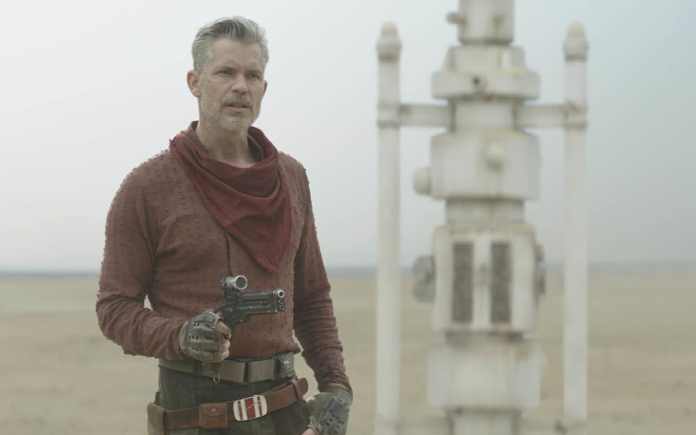
Perhaps no modern Star Wars story makes the connection with the Western genre clearer than The Mandalorian. Its very first episode begins with the Mandalorian stepping into a bar filled with rough men. Duels, bounties, and dusty frontier towns follow soon after. Din Djarin (whose name looks suspiciously like Django), the titular Mandalorian, embodies the archetype of the laconic gunslinger whose moral compass slowly finds true north. His initial mantra, “This is the Way,” functions like an honor code, giving him stability in a chaotic galaxy. But that code becomes challenged and softened through his bond with Grogu, similar to how weary gunfighter Shane is transformed by young Joey’s trust. In both tales, a hardened wanderer finds his humanity in the eyes of a child who sees something good in him long before he sees it himself.
Din’s path eventually crosses with that of Cobb Vanth, who functions as the quintessential Western marshal—part Matt Dillon, part Will Kane—armed with decency and stubborn courage. Introduced in Chuck Wendig’s Aftermath novels before appearing in The Mandalorian and The Book of Boba Fett, Vanth protects a small desert settlement from raiders, wearing Mandalorian armor he doesn’t quite deserve but uses to defend the defenseless. His story is straight from the pages of a Western dime novel: a man with no authority except the badge he earns himself, standing between his town and the chaos beyond its borders.
Vanth’s arc is less flashy than the Mandalorian’s, but is nonetheless morally potent. He is a civic hero in a world without a functioning civic order. His decency isn’t supernatural or mystical, but neighborly. He stays and fights because someone has to, and he becomes marshal less by election, more by necessity. There is a Christian resonance here worth noticing. The call to love one’s neighbor does not vanish simply because the structures of justice are broken. Vanth’s story reminds us that virtue often expresses itself through ordinary faithfulness, protecting home, community, and the vulnerable.
Westerns are often dismissed as simplistic or morally naïve, full of white-hatted heroes and black-hatted villains. But the best Westerns (and the Western DNA within Star Wars) offer a vision of moral clarity without drifting into moralism, and virtue without perfectionism. In a cultural moment that sees clarity often confused with rigidity, or conviction with narrowness, those distinctions matter.
The Western understands the mixed reality of human nature. The frontier reveals people to be a mix of bravery and selfishness, capable of compassion and violence in turn. The Western rarely presents characters who are purely virtuous, and its heroes tend to have pasts they aren’t proud of. But they are capable of change. This resonates with the Christian understanding of sin and redemption. The human heart is bent, yet redeemable. Grace works on flawed material. Characters like Han Solo, Din Djarin, and Cobb Vanth stand as pristine examples of this dynamic, imperfect men whose courage grows precisely because they are tested.
The Western also values boundaries, which define the frontier setting, whether territorial or moral or communal. Western stories tend to dramatize what happens when those boundaries collapse.
The Western also values boundaries, which define the frontier setting, whether territorial or moral or communal. Western stories tend to dramatize what happens when those boundaries collapse. Lawlessness invites injustice and chaos ultimately harms the innocent. Civilization, flawed as it may be, is worth defending. This parallels the biblical vision of boundaries as gifts, not prisons, meant to protect the vulnerable and restrain evil. Star Wars mirrors this struggle in its depiction of crime syndicates and failed republics, where the fight for justice often looks like preserving and protecting real communities.
And many Western heroes ultimately become guardians, people who risk themselves for others. This is the territory of men like L’Amour’s Hondo, who repeatedly step into danger for those they barely know, or the drifters who protect besieged towns in The Magnificent Seven or Pale Rider. They stand alone against outlaws. They return to danger when it would be easier to walk away. Their heroism is less internal enlightenment than it is concrete action. This aligns with the Christian conviction that love is sacrificial and embodied—incarnational, if you will—and not merely emotional. Christ lays down his life for his friends. Western heroes often do the same. And it’s no accident that some of the most moving moments in Star Wars mirror this logic: Obi-Wan’s sacrifice, the Mandalorian’s protection of Grogu, Luke facing down the First Order alone to buy his friends time to escape.
The true power of Star Wars lies in its moral imagination. And that imagination was shaped in no small part by the Western. The Western gives Star Wars its sense of frontier, its fascination with outlaws and lawmen, its focus on virtue under pressure, its understanding of justice as protection for the weak, and its conviction that courage is often lonely but always necessary.
For Christians, these themes land close to home because they mirror the moral terrain we actually walk. Scripture describes life in contested space, on a frontier of sorts, where faithfulness is possible, but never effortless, and the choices made there shape the kind of people we become. Christian character is hammered out in the places where life pinches, not in the moments when everything sits neatly in place.
In all these stories, virtue emerges in the places where certainty thins out and the conditions turn harsh… The frontier they describe is sometimes a place on a map, sometimes the contested ground inside a person’s own heart.
Paul writes that “affliction brings about perseverance; and perseverance, proven character; and proven character, hope” (Rom. 5:3–4). Peter says that various trials result in the proof of one’s faith (1 Pet. 1:6–7). James goes further and instructs his readers to “consider it all joy” when they encounter trials, “knowing that the testing of your faith brings about perseverance” (Jas. 1:2–4). These are frontier realities, not abstract theological ideas, and Paul, Peter, and James all say the same thing in different keys. Hardship has a way of exposing what’s real in us and strengthening what’s fragile. That is the terrain of ordinary life. It’s the place where the line between good and evil cuts through our own hearts, and where the decisions that shape us most profoundly are usually small ones that no one else sees.
The Western knows this terrain well. Its heroes don’t grow in peace and plenty. They grow because the world around them forces their hand. Integrity shows up when no one else will confront the men doing harm. Restraint matters when pulling a trigger would only widen the wound. Courage appears because someone has to hold the line or the whole town falls. Star Wars puts its characters in the same crucible: Luke standing before the Emperor and refusing the easier, violent path; Din Djarin deciding the safety of a child matters more than his own code. Pressure reveals them, just as it does in every good Western.
In all these stories, virtue emerges in the places where certainty thins out and the conditions turn harsh. Both the Western and Star Wars imagine a world where character must be forged and not assumed, where goodness is real, but never cheap. The frontier they describe is sometimes a place on a map, sometimes the contested ground inside a person’s own heart. Christians recognize that terrain. It’s the place where God does quiet, steady work in us, shaping a faith that can stand when the world feels uncertain, and revealing in the process more than we ever expected about who we are and who He is.
Great Job Cole Burgett & the Team @ Christ and Pop Culture Source link for sharing this story.
In Australia, the Parliament of New South Wales (NSW) is considering whether to ban the slogan “globalize the intifada.” This follows moves in the UK to criminalize the slogan, and the NSW government has similarly justified the push by arguing that the slogan “is hate speech and encouraging of violence in our community.” Their argument implies a causal link between calls to “globalize the intifada” and acts of anti-Jewish violence such as the atrocity committed at Bondi Beach on December 14, 2025.
The alarmist public discourse essentially asks Australians to believe that in calling to globalize the intifada, pro-Palestine demonstrators are inciting violence against Jewish people. Certainly this is how many Zionist organizations interpret the phrase. As David Ossip from the NSW Jewish Board of Deputies puts it, “Globalizing the Intifada means killing a Jew wherever you find one.”
For commentators like the Sydney Morning Herald’s David Crowe, the historic fact of Palestinian suicide bombings is enough to deem any use of intifada as a call for violence. “It is true that many interpret the term more broadly,” he acknowledges, “but the link to those attacks is indisputable.”
Political language, particularly language of resistance and rebellion, is always a site of contestation. “Intifada” refers to periodic flare-ups of mass Palestinian resistance, within which different tactics have come to the fore at different times. It cannot be reduced to any of those tactics. Arabic, like English, has its own words for those. But it is not enough to simply look up “intifada” in an Arabic dictionary to settle today’s dispute surrounding the term. Slogans have a life of their own and must be interpreted historically and contextually. Some consideration of how this language actually entered Western political discourse is therefore helpful.
The late 1990s saw a series of mass mobilizations targeting the World Trade Organization and other gatherings of the world’s superrich. The “battle in Seattle” was the catalyst for this summit-hopping movement, which came to Melbourne, Australia, in the three-day S11 blockade of 2000. “Globalize resistance” was a popular slogan of these mobilizations.
Two events at the turn of the millennium complicated this picture for the Left. First, in 2000, the Second Intifada erupted in Palestine. Then in 2001, the September 11 attacks on New York put the United States and its allies on a war footing. Activists in the United States and elsewhere had to quickly pivot and build bridges between the existing global justice movement and the emerging pro-Palestine and antiwar campaigns.
One important scene for these negotiations was a set of meetings and rallies held in Washington, DC, in late April of 2002. On the eve of the main rally, a conference was held at American University calling itself “Global Intifada: Globalization, US Militarism, and the Struggle for Justice in Palestine.” As one Arab American activist at the gathering put it, “The rights of the Palestinian struggle are linked to other countries’ struggles dealing with voting rights, wars on drugs and terrorism, suffrage, and so on. This is our kind of globalization, the linking of such common efforts to end injustice.” At the rally the next day — which ended up being the biggest ever pro-Palestine mobilization in American history — speakers on the platform called to “globalize the intifada.”
Two months later, the Group of Eight (G8) forum of leading industrialized nations convened in the Canadian mountain resort of Kananaskis, a venue deliberately chosen to preclude direct demonstrations. Small rallies were held in the nearby city of Calgary. Among the slogans raised there was “G8 says nada. We say global intifada.”
Then, at the end of August, a South African coalition of community organizations, trade unions, and social movements convened the Global People’s Protest March at the World Summit on Sustainable Development in Johannesburg. Their slogans included “end poverty: land, food, jobs,” “Africa is not for sale, our world is not for sale,” but also “globalize the intifada.” At a side event dedicated to the campaign to free Palestinian political prisoner Marwan Barghouti, the coalition festooned Johannesburg City Hall with banners including the phrase “globalize the intifada against imperialism.”
The new slogan reflected a conscious intervention to reorient the global justice movement toward a campaign that was both in solidarity with Palestine and against the looming US invasion of Iraq. Its frame of reference was not confined to Palestine alone, and its emergence had nothing to do with any stance toward specific tactics of Palestinian resistance. It recognized, and sought to build, links between Palestinian resistance and campaigns for justice elsewhere. At its most capacious, “globalize the intifada” embodied a call for a global spirit of resistance against injustice and imperialism. These remain some of the basic meanings that participants in today’s pro-Palestine demonstrations give to “globalize the intifada.”
The first prominent invocation of a “global intifada” on the right side of politics seems to date to 1990, when conservative commentator Charles Krauthammer wrote an article entitled “The New Crescent of Crisis: Global Intifada.” Krauthammer was writing during the first Palestinian intifada (1987–1993), but his mind was on America’s post–Cold War positioning. The end of America’s rivalry with the Soviet Union brought with it a need for new political paradigms.
Krauthammer’s “global intifada” was an interlinked front of Islamic militancy stretching across Eurasia, part of an emerging “clash of civilizations” (a perspective soon to be elaborated by political scientist Samuel Huntington).
For the critic Edward Said, Krauthammer’s vision relied on a “monolithic, enraged, threatening, and conspiratorially spreading Islam.” It was Islamophobic and served Israel’s interests by interpreting Palestinian resistance as motivated not by oppression but by global jihad. Such talk, as Middle East scholar John Esposito put it, “distracts and detracts from the nature and real causes of discontent in the Palestinian intifada.”
This is a paranoid view of a global intifada. It provided a convenient framing for the West’s “war on terror.” As America and its allies invaded Iraq, Australian journalist Paul Sheehan imagined “global intifada” as “a hot war driven by medievalism and resentment” in dysfunctional Muslim societies. According to Sheehan, Australia was on the “outer edges” of this violent conflagration, with “paramilitary flying columns of Muslim men assembling in Punchbowl and Lakemba.” Sheehan’s global intifada was racialized, serving to demonize Muslim migrants in the West.
For other right-wing commentators, the “global intifada” was widening. Speaking at Columbia University in 2005, conservative culture warrior Phyllis Chesler expressed alarm that “the intifada has gone global.” Yet her global intifada was one in which Westerners were complicit, and her ire was directed at domestic enemies. “Western academics and intellectuals have made an alliance with Islamist totalitarian terrorists,” she railed. At this time, the negative connotations of intifada were still self-evident to many in the West: to position academics as part of an “academic propaganda-intifada” was enough to discredit them.
This line of thinking lives on today in public commentary on the Palestine solidarity movement. On the Australian right, there is speculation that the local movement is coordinating with foreign actors. According to the Australian Academic Alliance Against Antisemitism (5A), a judicial inquiry into antisemitism was necessary to establish “the extent to which foreign and proscribed actors have been seeking to infiltrate and influence students and staff on campus.”
Among the recommendations in her Plan to Combat Antisemitism, Special Envoy to Combat Antisemitism Jillian Segal demanded the right to direct authorities to “investigate sources of overseas funding entering public institutions, including universities, which might drive extreme ideologies.” No doubt Segal and her allies will strive to make this line of inquiry a focus of the forthcoming Royal Commission.
“Globalize the intifada” is a relatively rare slogan at Australian demonstrations. Its centrality to the current debate certainly cannot be explained by its prominence at these events. This history of conservative anxieties and fulminations against a “global intifada” helps explain the particular spotlight that has been put on the slogan today.
Talk of a “global intifada” has been with us for a long time, as have the divergent meanings given to it by both the Left and the Right. As Palestine activists have sought to shift prevailing interpretations of the term, they have elicited a strong response from Israel’s defenders.
Advocates of a ban interpret this slogan in a narrow and lurid way. Their spin does not stand up to scrutiny. When pro-Palestine activists argue that they associate “globalize the intifada” with a call for global solidarity against injustice, they are on perfectly sound historical footing. The slogan essentially gives a pro-Palestine tinge to late-’90s calls to “globalize resistance.” Those who say they are using it in this way have every right to be taken at their word.
An outright proscription of the phrase would cross a major threshold in the erosion of civil liberties in Australia — particularly if it does not consider the intent of the utterer, the context in which it is uttered, or any demonstrable consequences that flow from the utterance. Such a move will do nothing to enhance public safety in NSW. Its main practical effect will be to boost ongoing efforts by pro-Israel organizations to frame all forms of Palestine solidarity as inherently antisemitic and illegitimate — efforts that predate the Bondi attacks by decades.
Great Job David Brophy & the Team @ Jacobin Source link for sharing this story.
Cleveland-Cliffs, which had been awarded a $500 million grant from the Biden administration to finance construction of new, greener equipment at one of its Ohio steelworks, abandoned the initiative and is now working with Trump’s Energy Department to develop a coal-focused scope for the project.
U.S. Steel, whose sale to Japanese rival Nippon Steel was approved by the Trump administration, finds itself at a crossroads. The company has promised some greener investments in the U.S. but has yet to announce any specifics. Its new owner, however, has a reputation as “a coal company that also makes steel” — and Nippon has also promised to invest in upgrading U.S. Steel’s blast furnaces to last longer.
That leaves Hyundai’s project to build a low-carbon steel factory in Louisiana as the flagship push for clean steel in the U.S.
Despite recent challenges from the Trump administration, Hyundai has signaled its commitment to bringing the facility online by 2029. The plant is designed to first use blue hydrogen, the version of the fuel made with fossil gas and carbon capture equipment, to produce the cleaner direct reduced iron. But by the mid-2030s, the facility is expected to switch to green hydrogen, made with electrolyzers powered by renewables.
The low-carbon iron will then be fed into electric arc furnaces to produce steel — making it the first integrated low-carbon steel plant in the U.S. That Louisiana plant could reduce emissions by at least 75% relative to a traditional integrated steel plant with a blast furnace and basic oxygen furnace.
In a sign of progress, Hyundai this month announced plans to test its DRI equipment at an existing steelworks in South Korea in anticipation of bringing the technology to Louisiana.
Once that Louisiana plant comes online, Groch said, it’s expected to generate enough steel to meet Hyundai’s needs and supply additional potential buyers — opening up an opportunity for other automakers. In its report, Mighty Earth calls on automakers to commit to buying more green steel in the coming years.
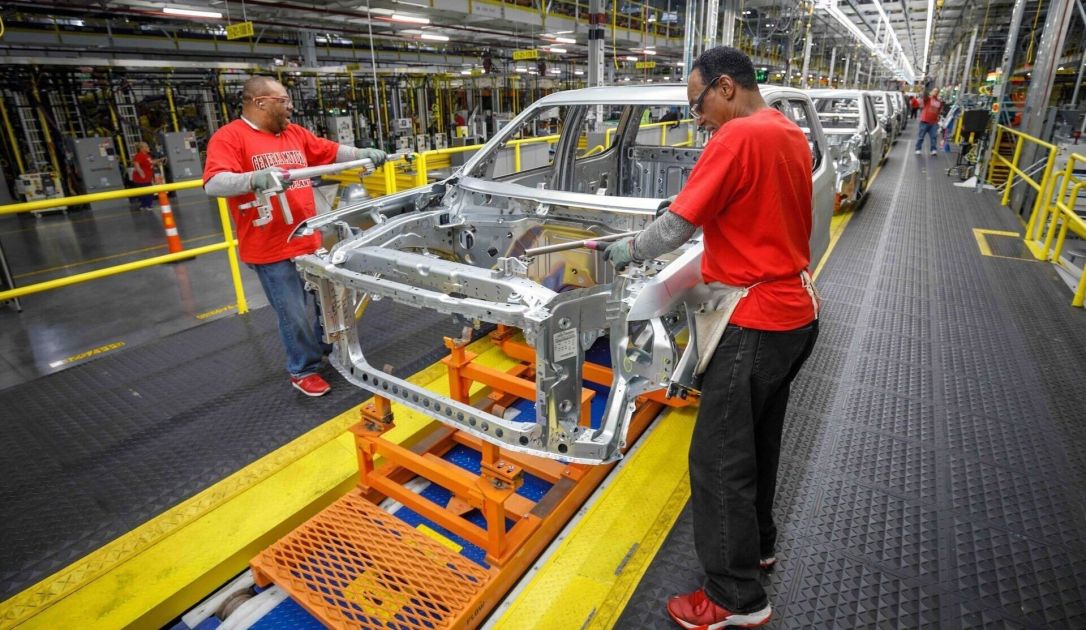
General Motors and Ford have committed to buying at least 10% green steel by 2030 as part of a pledge via the First Movers Coalition, led by the World Economic Forum. Other global carmakers not included in Mighty Earth’s report, such as Volvo, Mercedes-Benz, and BMW, have adopted separate targets. Honda, Stellantis, and Toyota, meanwhile, have avoided making such promises.
Holding car companies to those targets has proved challenging. While some companies have vowed to slash emissions by buying more low-carbon steel, a September 2024 report by the International Council on Clean Transportation found that carmakers’ pledges to buy fossil-free steel by 2030 cover less than 2% of their total demand for the metal.
“We’re not asking for everyone to have 100% green steel,” Groch said. “But these are their commitments, and the car companies are the ones driving investment in steel.”
{
if ($event.target.classList.contains(‘hs-richtext’)) {
if ($event.target.textContent === ‘+ more options’) {
$event.target.remove();
open = true;
}
}
}”
>
Great Job Alexander Kaufman & the Team @ Canary Media Source link for sharing this story.