

Home News Page 84

The trans athletes at the center of Supreme Court cases don’t fit conservative stereotypes

The trans athletes at the center of Supreme Court cases don’t fit conservative stereotypes

Conservatives have increasingly argued that transgender women and girls have an unfair advantage in sports, that their hormone levels make them stronger and faster. And for that reason, they say, trans women should be banned from competition.

But Lindsay Hecox wasn’t faster. She tried out for her track and field team at Boise State University and didn’t make the cut. A 2020 Idaho bill banned her from a club team, anyway. 

Becky Pepper-Jackson wasn’t necessarily hormonally different from other girls. The 15-year-old West Virginia student transitioned before ever undergoing male puberty. A state ban on transgender athletes is keeping her from playing on her high school’s track team.

Both cases — Little v. Hecox and West Virginia v. B.P.J — will be in the spotlight Tuesday, when the American Civil Liberties Union (ACLU) and Lambda Legal will argue to the Supreme Court that the states violated the girls’ rights by banning them from competition.

“It just shows the breadth of these laws,” said Sruti Swaminathan, who is representing Little as a senior staff attorney at the ACLU. “It’s not just about trophies and competitions. It’s even just the mere presence of trans girls on girls teams that’s bothering these states and these advocates on the other side.”

It’s possible that the cases will have big implications for transgender athletes and trans people more broadly — but the ruling may well be limited to the two athletes. Their lawyers will argue that trans athletes in general don’t have an unfair advantage in sports, they said. But they plan to really focus on just Pepper-Jackson and Hecox, whose cases so clearly fall outside conservative stereotypes about transgender athletes. 

“We’re not conceding that somebody that has gone through puberty shouldn’t be able to participate,” said Sasha Buchert, who is representing Pepper-Jackson as a senior attorney at Lambda Legal. “We’re just saying, in this particular case involving this particular athlete, the only athlete in West Virginia that’s a transgender girl … that there isn’t an adequate justification for it.”

The realities of trans women in sports

It’s unknown how many trans athletes are competing in grade schools, college or even professional sports, but advocates insist that the numbers represent a tiny fraction of competitors. NCAA President Charlie Baker in 2024 stated that of the 500,000 college athletes in the country, openly trans people accounted for “less than 10” athletes total. 

Transgender women have competed in sports for decades, although their numbers are small. Scientific research on trans participation in sports is also limited, but studies thus far have not shown any overall physical advantage for trans women over their cisgender peers after medical transition. 

Four recent studies measured physical differences between athletes including hand grip strength and countermovement jump, which measures lower body strength, and found that trans and cisgender women athletes performed similarly. A 2021 study published in the Journal Sports Medicine found no basis in existing research for banning trans women from sports. A 2024 study funded by the International Olympic Committee published in the British Journal of Sports Medicine concluded that transgender women likely had several physical disadvantages compared with their cisgender peers.

But transgender advocates have also argued that fixating on overall physical differences between transgender and cisgender women misses the point. All athletes are born with advantages, they argue, including class, geography, natural strength and other variables. The obsession with bodies denies transgender women their humanity and defaults to cisgender viewpoints, say advocates. 

The question in front of the Supreme Court is whether the state bans on trans athletes violate Title IX or the equal protection clause of the Constitution.

Because both laws touch on other areas of life, advocates have fretted that a ruling against Hecox and Pepper-Jackson could set a precedent with potential serious consequences for LGBTQ+ freedoms beyond sports.

“The goal of this [anti-trans sports] campaign is not only dividing us against one another, it’s to secure a sweeping legal precedent that endangers transgender people (and other people, including gay, lesbian and bisexual people, and all women) across our lives, not just in sports,” said the ACLU in an explainer. “Depending on the precise language of the court’s ruling, it could likewise implicate our fight for equality in those contexts and potentially many more, like our access to health care and our safety while incarcerated.”

But Ezra Ishmael Young, a lawyer and constitutional law professor in New York, said such a devastating outcome for queer people is highly unlikely given the scope of the legal questions in the case. 

“Even if trans people lost this case, it would only really be a loss in those two narrow contexts. It wouldn’t have any bearing on, for instance, what the International Olympic Committee does, or what the WNBA does, or what the NBA does,” Young said.  

Young said trans rights will continue to default to state law because the question before the court focuses on those, not a national ban. 

“The states that were pro-trans are still pro-trans,” he said. “The states that are not pro -trans, are not pro-trans.”

In other words, a loss might look like the scenario the country currently has, with many states banning trans athletes from competing in their lived genders, while others welcome them. Young believes that the handful of trans athletes attending college would opt for friendly states, if possible.

‘Think about like during the era of segregation, Jackie Robinson went to UCLA because they weren’t segregated,” Young said. “That’s how athletes have always navigated this nonsense.”

In the event of a draw

Even with a 6-3 conservative majority Supreme Court, a loss for Hecox and Pepper-Jackson is not guaranteed, according to experts. It’s not just that the girls have unique stories that set the cases apart. Lawyers for both sides have signaled that the cases may not have all the makings of a blockbuster Supreme Court case because they are limited in scope and foundationally weak.

Young points out that Idaho’s sports ban was passed in 2020 at the height of the COVID-19 pandemic when other state houses were shuttering. The virus would kill more than 5,400 people in the state

“That’s what even President Trump was directing, this is an extreme emergency, we have to take precautions,” said Young. Idaho called a special session to deal with a health emergency. 

 “The health emergency was trans women and girls playing sports hypothetically, not an actual global pandemic that had already been declared,” Young said. “The context matters. … It’s based upon untruths.”

Young thinks that premise weakens the states’ legal arguments. 

Further, the state of Idaho added new evidence to its Supreme Court briefs that was not heard in lower courts, something generally forbidden by the Supreme Court. The move could prove problematic for Idaho and West Virginia, Young said.

“It’s also confusing, because these cases only apply to two individual students,” Swaminathan said. “The relief sought is only on these individual students’ behalf. It’s not statewide relief.”

The ACLU and Lambda Legal sued on behalf of Hecox and Pepper-Jackson alone, not all transgender people throughout the state or even the nation. Further, Hecox became so distressed by the media attention from the case that she asked the court to drop her case altogether. Hecox said she would no longer play sports. 

Young said it is possible that the court will find the cases moot or no longer relevant as the plaintiffs age out of the respective group sports. 

Hope for a win

Still Lambda Legal and the ACLU say they have a strong case to make before the nation. Lawyers say that once the public is introduced to the women through oral arguments, transgender athletes will have a face. It will be harder to discriminate against them.

“I would like to think that the American public will get a chance to meet Becky,” Buchert said, adding that she recently met Pepper-Jackson and her mom for the first time and watched her throw the discus. Buchert saw the joy it brought her young client. She feels that if other people learn that through court testimony and media interviews, it will be harder to demonize her.

“She’s just such a wonderful kid, just an absolute champ, has gotten so much out of sports — and it’s been so good for her — and is turning into this wonderful adult.”

Great Job Kate Sosin & the Team @ The 19th Source link for sharing this story.

Austin protesters at State Capitol call on President Trump to “Help Iran”

Austin protesters at State Capitol call on President Trump to “Help Iran”

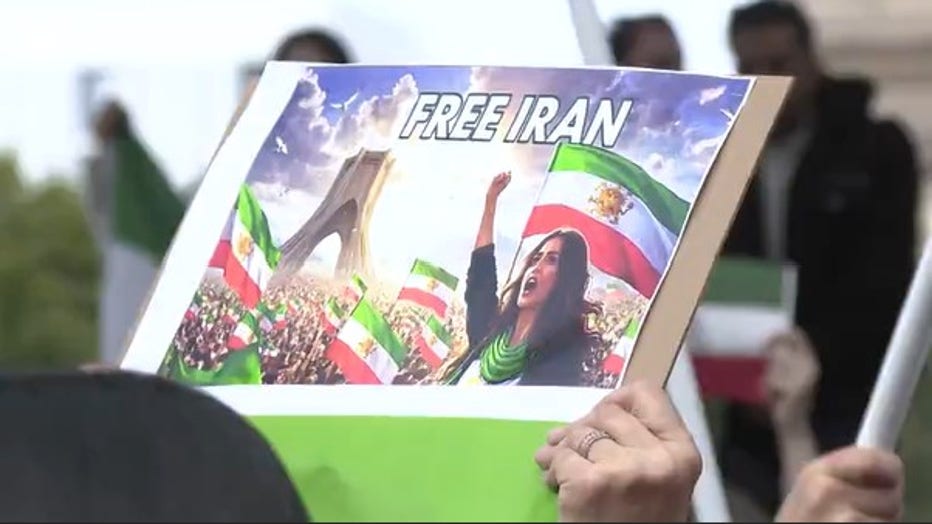
A sea of Iranian flags waved in front of the State Capitol on Sunday afternoon, as chants filled the air in support of the ongoing protests in Iran. 

Austin protesters at State Capitol call on President Trump to “Help Iran”

“Freedom for Iran”

What we know:

“Freedom, Freedom for Iran,” was screamed by hundreds who hoped to see the end of the current government in control of the country. 

Widespread protests swept across the country two weeks ago, as Iranians took the streets in opposition to rising inflammation and economic instability which has soared in recent years. 

Rising death toll and blackouts

Several encounters with government security forces have turned deadly, with activists estimating that at least 544 people have been killed. 496 are said to be protesters while 48 are supposedly security forces. Another 10,600 people have been detained during the protests. 

Internet access has also been cut off for millions across the country, as government officials plunged the country into an internet blackout on Thursday.

The human cost

What they’re saying:

“We are all crying when we are watching the news. We are all crying, you know, bursting to tears because we cannot do anything about that,” said Avat Kiomarsi, who fled Iran years ago. Her parents are currently taking part in the countrywide protests. 

“My parents are actually back in Iran. My mom goes to the protest. She is 68, but she said that I’m going to go, it doesn’t matter. “

“The last I talked to my cousins was three days ago or four days ago, but that was before the blackout, so they said they’re okay, but a lot of people are very concerned on almost everybody here has someone back home,” said Neda Alrobaire, who helped to organize Sunday’s protest in front of the Capital. 

Several of the demonstrators themselves had fled Iran in recent years, citing a lack of political and religious freedom as one of the leading causes in leaving the country. 

“I remember I was there until 2013 before I moved to America, how we feared the regime. I couldn’t even speak a word,” said Kiarash, a young man protesting in front of the Capitol. 

“As soon as you speak up, obviously you get killed, or we have to flee the country. I’ve been here for 25 years because of that, because I’m not Muslim, so that’s why I’m here,” Neda told FOX 7. 

Demanding action

Local perspective:

Beyond the chants for Iran’s freedom, chants could be heard calling for U.S. support of the protesters, with the crowd screaming, “Donald Trump help Iran.”

“I voted for him. I’m a proud voter of President Trump. I cannot dictate him what to do, but I at least expect him to make the right decision and support the Iranian people,” said Kiarash. 

Several signs were also carried which depicted Reza Pahlavi, the exiled son of Iran’s last shah (king), who was thrown out of power when the revolution swept through Iran in 1979. Many of Sunday’s demonstrators see him as the most viable option to assume power if the Iranian regime is overthrown. 

“Prince Reza Pahlavi is the best alternative that one can find at the moment. I hope the president makes the right decision and trusts him as the best alternative,” said Kiarash.

U.S. weighs military options

Dig deeper:

Earlier in the week, President Trump made his view on the protests clear, telling the media, I’ve made the statement very strongly that if they start killing people like they have in the past, we will get involved. We will hit them hard where it hurts.”

As of Sunday, Trump and his national security team have been considering potential options that could be taken against Iran, including cyberattacks and direct strikes by the U.S. or Israel. President Trump has confirmed that his administration was working to set up a meeting with Iranian officials but warned he may have to act first as the death toll in the country continues to rise.

The Source: Information in this article was provided by FOX 7’s Marco Bitonel.

AustinTexasPolitics

Great Job & the Team @ Latest & Breaking News | FOX 7 Austin for sharing this story.

We Found the Best Travel Cameras You’ll Actually Use on Vacation

We Found the Best Travel Cameras You’ll Actually Use on Vacation

If I were buying a camera today, this is the body I would get, travel or otherwise. The A7C R is one of the smallest full-frame, interchangeable-lens cameras on the market. This is why it’s our top pick for travelers in our guide to the Best Mirrorless Cameras. The 61-MP sensor offers amazing detail and very good dynamic range (14.7 EV). The super fast autofocus system is among the best you’ll find in mirrorless camera, and there’s great subject tracking as well, making it perfect for shooting fast-moving scenes on the go.

While Sony’s R series cameras are mainly for high resolution still images, the video specs here are solid enough for the casual video user, with support for 4K/60 fps video in full-frame mode (1.2X crop) or oversampled 4K/30 fps video. Both support 10-bit 4:2 color depth, various Log formats, and even 16-bit RAW output to an external recorder.

My main gripe about the A7C R is the same as it was in my initial review. The viewfinder is cramped and low-resolution (2.36 million dots). It’s not a deal breaker for me, but it’s something to keep in mind and good reason to rent a camera before you invest.

The big question with this camera is, which lens do you pair it with for travel? There’s a compelling argument to be made for the Sony FE 24-105-mm f/4 G ($1,398), which gives you everything from wide to portrait with a little bit of extra reach as well. Another great option if you like primes is the Sony 40-mm f2.5 G ($798), which makes for a compact kit, and 40-mm is a surprisingly great focal length for travel in my experience.

★ Alternative: At $2,198, Sony’s A7C II (note, no R) is a bit cheaper. It uses Sony’s smaller 33-MP sensor but is otherwise very close in size and capabilities, with considerably more video chops than the A7C R. If you want to make videos as well as stills, the A7C II is a better choice.

Great Job Scott Gilbertson & the Team @ WIRED Source link for sharing this story.

‘Did He S—t Himself?’ Trump Keeps Talking After a ‘Nasty’ Sound Blasts Through White House Meeting as Viewers Scramble to Process What They Heard

‘Did He S—t Himself?’ Trump Keeps Talking After a ‘Nasty’ Sound Blasts Through White House Meeting as Viewers Scramble to Process What They Heard

President Donald Trump sat at the center of a long White House table, flanked by oil and gas executives and members of his administration, prepared to spotlight a deal he clearly wanted to frame as consequential.

The meeting followed his announcement that Venezuela would “turn over” as many as 50 million barrels of oil, with American companies expected to rebuild the country’s oil infrastructure using private funds. On paper, the gathering was meant to project leverage, momentum, and control.

‘Did He S—t Himself?’ Trump Keeps Talking After a ‘Nasty’ Sound Blasts Through White House Meeting as Viewers Scramble to Process What They Heard
US President Donald Trump looks on as Secretary of Health and Human Services Robert F. Kennedy Jr. (out of frame) speaks during an announcement event about weight-loss drugs in the Oval Office of the White House in Washington, DC on November 6, 2025. Trump announced deals Thursday with pharmaceutical giants Eli Lilly and Novo Nordisk to lower the prices of some popular weight-loss drugs. Both companies “have agreed to offer their most popular GLP-1 weight-loss drug,” Trump said, “at drastic discounts.” (Photo by ANDREW CABALLERO-REYNOLDS / AFP) (Photo by ANDREW CABALLERO-REYNOLDS/AFP via Getty Images)

‘I’m Confused… Is This in Slow Motion? Trump Tries to Play It Cool After Landing, but the Careful Walk and the ‘Fake’ Ground Has Fans Concerned
Instead, it became something else entirely.

As the POTUS delivered remarks on Friday, Jan. 9, a sharp, unexpected sound cut through the room. It was loud enough to be caught on video and distinct enough to prompt reactions from viewers later watching a clip from one narrow camera C-SPAN angle featured on social media. What made the moment linger wasn’t the noise itself, but Trump’s response — or lack of one.

He didn’t pause, glance around, or acknowledge anything unusual. He simply kept talking, as though nothing had happened, allowing the meeting to continue uninterrupted.

That silence ultimately did more than any reaction could have. The clip quickly shifted reactions from consideration of a policy moment to replay fodder, and the purpose of the meeting faded as viewers fixated on the unanswered question of what had interrupted the president mid-sentence. One puerile theory soon began to dominate timelines.

Once the video hit social media, the commentary was swift and relentless.

One viewer wrote, “What was that sound?? Did he sh— himself?? seriously!”

Another confidently declared, “That’s a fart!!” while someone else added, “He doesn’t miss a beat. Hopefully the diaper got it all.”

Trump’s refusal to acknowledge the interruption only amplified the guessing game, turning a routine executive meeting into a viral spectacle, although there is a mundane explanation for the source of the noise: the sound of a chair scraping against the tiled floor of the White House East Room.

A wider camera angle of the meeting clearly shows Department of the Interior Secretary Doug Burgum — seated two places to Trump’s right — scooting forward in his chair at the exact moment of the noise that sparked the reactions on Threads. But this broader view did not figure into the blinkered responses on the social media thread.

The episode also reopened a familiar lane of public jokes that have followed Trump beyond the White House.

Sunny Hostin leaned into the moment in 2024 during Trump’s hush-money trial, where he faced 34 felony counts tied to a $130,000 payment to Stormy Daniels. Speaking during a televised discussion, Hostin reported claims that he had been “farting up a storm in court,” a remark that quickly spread online and became shorthand for critics dissecting his courtroom demeanor.

The reference resurfaced as viewers connected the dots between past jokes and the latest clip.

Late-night television has long played a role in keeping those jokes alive. Jimmy Kimmel once devoted a monologue to claims that Trump had been passing gas, framing it as yet another example of how even serious moments surrounding the former president tend to drift into absurdity.

The jokes arrived complete with hashtags, including #OdorInTheCourt and #YouHaveTheRightToBeSilentButDeadly, ensuring the gag lived far beyond the broadcast.

Online chatter didn’t start there.

For years, rumors have followed Donald Trump, with claims that some world leaders complained about his smell and old whispers resurfacing that he wore adult diapers. None of it was ever confirmed or addressed by Trump. But online, repetition has done the work, turning rumor into running joke and internet shorthand.

After the internet got through with the clip, the oil executives, Venezuela, and the policy stakes had faded into the background.

What stuck was the image of a president plowing ahead as the internet replayed the moment on a loop, hunting for an explanation he never gave. In the end, it wasn’t the sound that hijacked the message, but Trump’s refusal to acknowledge it — once again letting a minor moment overpower the narrative he meant to control.

Great Job Nicole Duncan-Smith & the Team @ Atlanta Black Star Source link for sharing this story.

One reason CEOs tie layoffs to AI? It motivates remaining employees to learn AI | Fortune

One reason CEOs tie layoffs to AI? It motivates remaining employees to learn AI | Fortune

Good morning. At a recent CEO dinner in New York, conversation turned to the topic of jobs. 2025 was an underwhelming year for U.S. job growth—adding 584,000 jobs compared to 2 million in 2024—and this year is likely to be more of the same. (Strip out health care and social assistance industries, and the U.S. lost jobs last year.)

But the question being debated was how to talk about possible job cuts in relation to AI. “I’d rather focus on AI than falling demand,” one attendee said. “At least you look ahead of the curve instead of behind it.”

Last year, U.S. employers explicitly blamed AI for 55,000 of the 1.17 million job cuts, according to Challenger, Gray & Christmas. That’s fewer than 5% of layoffs. AI is not yet the bête noire nor the magic elixir that people have made it out to be. (Forgive the mixed metaphors there; proof of a human at the helm.) In August, MIT released a study that found 95% of generative AI pilots fail to produce meaningful return.

And yet we’re all hearing predictions about how AI is going to impact jobs, from gutting knowledge work to creating an army of AI-enhanced humans who will achieve more in 5 hours than most of us do in 5 days. If my dinner conversation is anything to go by, leaders are quite happy to stoke that debate. Here’s why:

It motivates employees. The prospect of AI can spark both fear and fascination. In either case, talking about it externally and internally is a great way to get people motivated to learn about it. The productivity boost, especially in areas like coding, can be significant. Tying it to job cuts is code for telling everyone to learn it.

It can excite investors. UPS stock jumped 8% the day that CEO Carol Tomé announced 48,000 jobs had been cut in “the most significant strategic shift” in company history. Research from the IMF, Deloitte and others confirm that public companies are quicker to resort to layoffs than their private counterparts. “I think it’s too early to quantify,” one dinner attendee told me, “but AI impacts how we think about hiring and firing.”

It focuses the mind. With geopolitical conflicts, tariffs, climate risk and general concerns about the U.S. economy, leaders have a lot of variables to juggle when deciding what to do next. Being on the cusp of a new era of innovation can simplify some of those choices. As one person put it: “I don’t know what’s going to happen in Venezuela but I do know I have to invest in AI.”

Contact CEO Daily via Diane Brady at diane.brady@fortune.com

Top news

Powell under investigation

The U.S. attorney’s office in D.C. has opened a criminal investigation into Fed Chair Jerome Powell over renovations to the Fed’s headquarters and whether he lied to Congress about the scope of the work. In a response, Powell acknowledged that the Fed had been served subpoenas, questioned the motive, and vowed to continue his job “without political fear or favor.” Federal Housing Finance Agency Director Bill Pulte is reportedly behind the probe; he’s used the usually staid agency to investigate foes of President Donald Trump for mortgage fraud. 

Possible U.S. action against Iran

Protests in Iran continued over the weekend, as did the government’s crackdown on demonstrators, with human rights groups reporting that hundreds have been killed in the unrest. The Trump administration is considering how to respond; military, cyber, and economic measures are all on the table. President Trump says Tehran has proposed talks as the administration weighs its options. 

Trump targets Exxon

President Trump has threatened to sideline Exxon Mobil on future Venezuela oil projects for “playing too cute.” In a Friday meeting between Trump and oil company executives, Exxon CEO Darren Woods called the Venezuelan market “uninvestable” in its current state, a comment that seemed to draw Trump’s ire. 

CEO who laid off employees that rejected AI would do it again

IgniteTech CEO Eric Vaughan laid off almost 80% of his employees two years ago because they wouldn’t adopt AI. He told Fortune it was “extremely difficult” but would do it again.

Tariff removal could boost jobs

In a social media post over the weekend, Moody’s Analytics chief economist Mark Zandi argued that the removal of President Trump’s Liberation Day tariffs would be “the fastest way to boost the job market.” A decision from the Supreme Court on the legality of the tariffs is expected any day now. 

How a cap on credit card rates would play out

President Trump indicated his support for a one-year 10% cap on credit card interest rates late last week. Some experts say doing so would soften credit card rewards programs and make accessing credit hard for those with lower credit scores.

The markets

S&P 500 futures were down 0.7% this morning. The last session closed up 0.65%. STOXX Europe 600 was down 0.23% in early trading. The U.K.’s FTSE 100 was down o.o9% in early trading. Japan markets were closed. China’s CSI 300 was up o.65%. The South Korea KOSPI was up 0.84% to reach a record high. India’s NIFTY 50 was up 0.42%. Bitcoin was at $90K.

Around the watercooler

CEO coach to the Fortune 500: The most powerful way to tackle 2026 is assuming you’ll live till 130 by Bill Hoogterp

As U.S. debt soars past $38 trillion, the flood of corporate bonds is a growing threat to the Treasury supply by Jason Ma

AI adoption isn’t an easy way to cut jobs—or easy at all, Wharton professor says: ‘The key thing … is just how much work is involved in doing it’ by Nick Lichtenberg

L’Oreal exec tells Gen Z to be that person who grabs their manager’s coffee—instead of making you look junior, she says it can get you noticed by Orianna Rosa Royle

Netflix’s $82.7 billion rags-to-riches story: How the a DVD-by-mail company swallowed Hollywood by Natalie Jarvey

CEO Daily is compiled and edited by Joey Abrams, Claire Zillman and Lee Clifford.

Great Job Diane Brady & the Team @ Fortune | FORTUNE Source link for sharing this story.

Max Naumov secures spot on Team USA year after parent’s death in D.C. plane crash

Max Naumov secures spot on Team USA year after parent’s death in D.C. plane crash

His parents, former world champions Vadim Naumov and Evgenia Shishkova, died their flight crashed into a military helicopter midair and killed 67 last year.

WASHINGTON — Figure skater Max Naumov made it to the Olympics one year after his parents died when their plane crashed into a military helicopter on approach to Washington, D.C.

Naumov, 24, is the son to former world champions Vadim Naumov and Evgenia Shishkova and was announced Sunday as one of the men competing on Team USA at the 2026 Winter Games in Milan. 

His performance Thursday earned him a 163.44 free skate score, securing his first U.S. Figure Skating Championships podium of his senior career, according to the Olympics

He managed to hold his emotions in while performing, and a standing ovation carried him off the ice.

He did finally get emotional when in the kiss-and-cry area, named for emotional reactions after performances. He held up a photo of him at 3 years old, his parents by his side, stepping onto the ice in white skates for the first time at the International Skating Center of Connecticut.

“Sharing the vulnerability with the audience and me feeling their energy back has been something I remember for the rest of my life,” he told reporters.

Naumov was fourth at nationals a year ago, and he had returned home from Wichita on an earlier flight. His mom and dad stayed behind for the development camp and were making their own way home when the plane crash that killed 67 happened.

Of the victims, more than two dozen were returning from a development camp following the U.S. championships in Wichita, Kansas. Many were young skaters, taught by the elder Naumov and Shishkova, who looked up to their son.

One of the last conversations Naumov had with his parents was about the Olympics, and what it would take to earn a spot on the American team in Italy. His short program Thursday night, which began with a quad salchow and ended with a triple-triple combination, was good enough to briefly give him the lead, and keep him in the mix heading into Saturday’s free skate.

“My dad would have told me to keep fighting for that salchow,” Naumov told the Associated Press.

He will now join Team USA in the Winter Olympics alongside teammates Ilia Malinin and Andrew Torgashev to represent the U.S. for men’s figure skating.

The Associated Press contributed to this report. 

Great Job & the Team @ KBMT RSS Feed: sports Source link for sharing this story.

The Biggest Takeaways From Our Investigation Into Grazing on Public Lands

The Biggest Takeaways From Our Investigation Into Grazing on Public Lands

The federal government allows livestock grazing across an area of publicly owned land more than twice the size of California, making ranching the largest land use in the West. Billions of dollars of taxpayer subsidies support the system, which often harms the environment.

As President Donald Trump’s administration pushes a pro-ranching agenda, ProPublica and High Country News investigated how public lands ranching has evolved. We filed more than 100 public record requests and sued the Bureau of Land Management to pry free documents and data; we interviewed everyone from ranchers to conservationists; and we toured ranching operations in Arizona, Colorado, Montana and Nevada.

The resulting three-part investigation digs into the subsidies baked into ranching, the environmental impacts from livestock and the political clout that protects this status quo. Here are the takeaways from that work.

The system has evolved into a subsidy program for ranchers.

The public lands grazing system was modernized in the 1930s in response to the rampant use of natural resources that led to the Dust Bowl — the massive dust storms triggered by poor agricultural practices, including overgrazing. Today, the system focuses on subsidizing the continued grazing of these lands.

The BLM and Forest Service, the two largest federal land management agencies, oversee most of the system. Combined, the agencies charged ranchers $21 million in grazing fees in 2024. Our analysis found that to be about a 93% discount, on average, compared with the market rate for forage on private land. We also found that, in 2024 alone, the federal government poured at least $2.5 billion into subsidy programs that public lands ranchers can access. Such subsidies include disaster assistance after droughts and floods as well as compensation for livestock lost to predators.

Ranching is consolidated in the hands of some of the wealthiest Americans.

A small number of wealthy individuals and corporations manage most livestock on public lands. Roughly two-thirds of the grazing on BLM acreage is controlled by just 10% of ranchers, our analysis found. And on Forest Service land, the top 10% of permittees control more than 50% of grazing. Among the largest ranchers are billionaires like Stan Kroenke and Rupert Murdoch, as well as mining companies and public utilities. The financial benefits of holding permits to graze herds on public lands extend beyond cattle sales. Even hobby ranches can qualify for property tax breaks in many areas; ranching business expenses can be deducted from federal taxes; and private property associated with grazing permits is a stable long-term investment. (Representatives of Kroenke did not respond to requests for comment, and Murdoch’s representative declined to comment.)

The Trump administration is supercharging the system, including by further increasing subsidies.

The administration released a “plan to fortify the American Beef Industry” in October that instructed the BLM and Forest Service to amend grazing regulations for the first time since the 1990s. The plan suggested that taxpayers further support ranching by increasing subsidies for drought and wildfire relief, livestock killed by predators and government-backed insurance. The White House referred questions to the U.S. Department of Agriculture, which said in a statement, “Livestock grazing is not only a federally and statutorily recognized appropriate land use, but a proven land management tool, one that reduces invasive species and wildfire risk, enhances ecosystem health, and supports rural stewardship.” Roughly 18,000 permittees graze livestock on BLM or Forest Service land, most of them small operations. These ranchers say they need government support and cheaper grazing fees to avoid insolvency.

The administration is loosening already lax oversight.

Ranchers must renew their permits to use public lands every 10 years, including undergoing an environmental review. But Congress passed a law in 2014 that allows permits to be automatically renewed if federal agencies are unable to complete such reviews. In 2013, the BLM approved grazing on 47% of its land open to livestock without an environmental review, our analysis of agency data showed. (The status of about an additional 10% of BLM land was unclear that year.) A decade later, the BLM authorized grazing on roughly 75% of its acreage without review.

This is in large part because the BLM’s rangeland management staff is shrinking. The number of these employees dropped 39% between 2020 and 2024, according to Office of Personnel Management data, and roughly 1 in 10 rangeland staff left the agency between Trump’s election win and last June, according to BLM records.

The system allows widespread environmental harm in the West.

The BLM oversees 155 million acres of public lands open to grazing, and assessments it conducts on the health of the environment found that grazing had degraded at least 38 million acres, an area about half the size of New Mexico. The agency has no record of land health assessments for an additional 35 million acres. ProPublica and High Country News observed overgrazing in multiple states, including streambeds trampled by cattle, grasslands denuded by grazing and creeks fouled by cow corpses.

Ranchers contend that public lands grazing has ecological benefits, such as preventing nearby private lands from being sold off and paved over. Bill Fales and his family, for example, run cattle in western Colorado and have done so for more than a century. “The wildlife here is dependent on these ranches staying as open ranch land,” he said. While development destroyed habitat nearby, Fales said, the areas his cattle graze are increasingly shared by animals such as elk, bears and mountain lions.

Regulators say that it’s difficult to significantly change the system because of the industry’s political influence.

We interviewed 10 current and former BLM employees, from upper management to rank-and-file rangeland managers, and they all spoke of political pressure to go easy on ranchers. “If we do anything anti-grazing, there’s at least a decent chance of politicians being involved,” one BLM employee told us. “We want to avoid that, so we don’t do anything that would bring that about.” A BLM spokesperson said in a statement that “any policy decisions are made in accordance with federal law and are designed to balance economic opportunity with conservation responsibilities across the nation’s public lands.”

The industry has friends in high places. The Trump administration appointed to a high-level post at the U.S. Department of the Interior a lawyer who has represented ranchers in cases against the government and owns a stake in a Wyoming cattle operation. The administration also named a tech entrepreneur who owns a ranch in Idaho to a post overseeing the Forest Service.

Moreover, politicians from both parties are quick to act if they believe ranchers face onerous oversight. Since 2020, members of Congress on both sides of the aisle have written to the BLM and Forest Service about grazing issues more than 20 times, according to logs of agency communications we obtained via public records requests.

Read our full investigation of the federal public lands grazing system.

Great Job Mark Olalde & the Team @ ProPublica Source link for sharing this story.

Phantom Blade Zero: Release Date, Platforms, Story, Gameplay, Trailers and More – Our Culture

Phantom Blade Zero: Release Date, Platforms, Story, Gameplay, Trailers and More – Our Culture

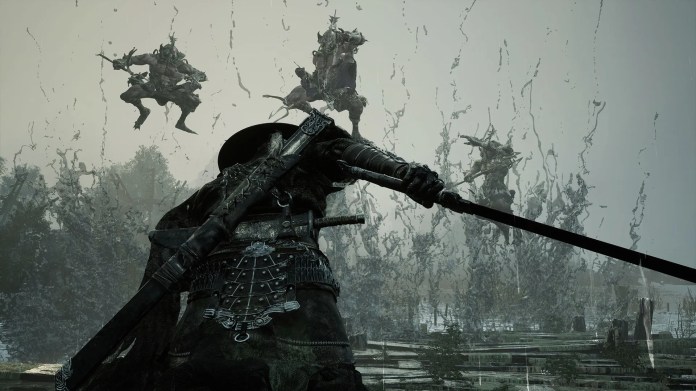
Since its reveal at the 2023 PlayStation Showcase, Phantom Blade Zero has been almost impossible to ignore. Developed and published by S-GAME, the upcoming action RPG combines wuxia-inspired martial arts with modern action design, featuring fast, reactive fighting, blisteringly quick hack-and-slash gameplay, and a dark, broody mood wrapped in a cinematic art style.

While the game is billed as an action RPG, its design bears a strong influence from the Soulslike genre, with game director Soulframe Liang describing Phantom Blade Zero as a hybrid of classical kung fu, steampunk, and cyberpunk themes. With the game recently securing a September release date and more details starting to fall into place, here’s all you need to know about Phantom Blade Zero, including its release date, story, gameplay, and more.

Phantom Blade Zero: Release Date

After months of speculation, Phantom Blade Zero is finally set to launch on September 9, 2026. Out of the gate, Phantom Blade Zero will be available on PS5 and PC, with no Xbox version at launch.

S-GAME has confirmed that the game will initially skip Xbox, with a release planned 12 months later, making it a timed PlayStation console exclusive. The game is targeting current-gen hardware only and will not be released on PS4 or Xbox One.

What Will The Story of Phantom Blade Zero Be About?

Phantom Blade Zero tells a grim, wuxia-inspired story about Soul, an elite assassin working for a powerful and secretive organisation known as The Order. The game takes place in the Phantom World, a shared universe created by S-GAME that draws heavily from classic wuxia traditions while introducing gritty, more unconventional elements.

According to studio founder and CEO Soulframe Liang, the project represents a spiritual rebirth of Rainblood, the indie RPG he began developing in 2010, now reimagined on a far larger scale. The game’s story begins when Soul is framed for the murder of The Order’s patriarch, which sets off a brutal manhunt led by his former allies. During the pursuit, he is severely wounded and left on the brink of death, only to be rescued by a mysterious healer who keeps him alive using a temporary cure that will only last for 66 days.

With time already running out, you are forced into a desperate hunt for the mastermind behind the conspiracy that condemned him. As Soul digs deeper, the story pulls him into a larger web of betrayal, secret groups, and hidden power structures that exist within the Phantom World. As per S-GAME, Phantom Blade Zero is a character-driven revenge story with moral uncertainty and looming consequences, featuring multiple endings that will change depending on how Soul’s final days play out.

Phantom Blade Zero: Release Date, Platforms, Story, Gameplay, Trailers and More – Our Culture
Image Credit: S-Game

Phantom Blade Zero: Gameplay

Phantom Blade Zero’s gameplay is built around fast, aggressive melee combat, and what’s been shown so far suggests the devs are going for something more visceral and cinematic. The game plays as a high-paced action RPG, with close-range encounters built around faster, more fluid combat that rewards precise timing alongside constant pressure.

Enemy variety also seems to be a major focus, particularly in boss encounters, with footage released thus far showing bosses wielding long-range weaponry, trick weapons, and abilities that can alter or destroy parts of the environment mid-fight.

Players will have access to a broad mix of weapons, including blades, axes, and even cannons, adding flexibility instead of limiting Soul to a single fighting style. While comparisons to Soulslike games are inevitable, Phantom Blade Zero will favour speed and visual flair over slower, more methodical pacing. Liang has described this hybrid tone as “Kungfupunk.”

As Liang puts it, “From Louis Cha’s Wuxia stories to Bruce Lee’s movies, and Michelle Yeoh in Everything Everywhere All at Once, and Donnie Yen in John Wick: Chapter 4, Kungfu in pop culture is constantly evolving, but always awesome! With Phantom Blade Zero, we are adding a new twist to the formula, a heavy dose of punk spirit, alongside with stylish visuals. We call this overall art direction “Kungfupunk”.”

Outside of combat, the game will feature a semi-open world made up of interconnected regions rather than a single massive map. Exploration is built around Soul’s acrobatic movement, allowing players to traverse environments quickly and fluidly between encounters.

Is There A Trailer For Phantom Blade Zero?

Phantom Blade Zero already has a healthy slate of trailers, and the devs have been generous in showing the game off. The very first trailer for Phantom Blade Zero was shown off during PlayStation Showcase 2023, setting the tone with early looks at its world, style, and action.

Following that, a special “Year of the Snake” trailer was revealed in early 2025. Often associated with Chinese New Year celebrations, this trailer teases the game’s combat in greater detail. It features fast-paced swordplay, themed weapons like twin snake blades, and a boss encounter.

More recently, the developers released a 22-minute demo walkthrough blending exploration, story moments, and combat from a hands-on build shown at the S-Party 2025 event. To cap things off, S-GAME dropped the official release date announcement trailer, confirming the game will launch on September 9, 2026 and offering another extended look at its story, combat, and world ahead of its debut.

Are There Any Other Games Like Phantom Blade Zero?

If you’re looking for games that come close to Phantom Blade Zero, the best place to start is Devil May Cry 5. The team at S-GAME has been open about their love for classic hack-and-slash games, and that influence shows in the focus on fast, stylish melee combat and fluid combo chains. Ninja Gaiden, particularly the modern entries, is another useful reference point.

On the more deliberate side of action design, Sekiro: Shadows Die Twice and Wo Long: Fallen Dynasty are also worth playing.

Great Job Shubhendu Vatsa & the Team @ Our Culture Source link for sharing this story.

Malaysia, Indonesia become first to block Musk’s Grok over AI deepfakes

Malaysia, Indonesia become first to block Musk’s Grok over AI deepfakes

Malaysia and Indonesia have become the first countries to block Grok, the artificial intelligence chatbot developed by Elon Musk’s xAI, after authorities said it was being misused to generate sexually explicit and non-consensual images.

The moves reflect growing global concern over generative AI tools that can produce realistic images, sound and text, while existing safeguards fail to prevent their abuse. The Grok chatbot, which is accessed through Musk’s social media platform X, has been criticized for generating manipulated images, including depictions of women in bikinis or sexually explicit poses, as well as images involving children.

Regulators in the two Southeast Asian nations said existing controls were not preventing the creation and spread of fake pornographic content, particularly involving women and minors. Indonesia’s government temporarily blocked access to Grok on Saturday, followed by Malaysia on Sunday.

“The government sees non-consensual sexual deepfakes as a serious violation of human rights, dignity and the safety of citizens in the digital space,” Indonesia’s Communication and Digital Affairs Minister Meutya Hafid said in a statement Saturday.

The ministry said the measure was intended to protect women, children and the broader community from fake pornographic content generated using AI.

Initial findings showed that Grok lacks effective safeguards to stop users from creating and distributing pornographic content based on real photos of Indonesian residents, Alexander Sabar, director general of digital space supervision, said in a separate statement. He said such practices risk violating privacy and image rights when photos are manipulated or shared without consent, causing psychological, social and reputational harm.

In Kuala Lumpur, the Malaysian Communications and Multimedia Commission ordered a temporary restriction on Grok on Sunday after what it said was “repeated misuse” of the tool to generate obscene, sexually explicit and non-consensual manipulated images, including content involving women and minors.

The regulator said notices issued this month to X Corp. and xAI demanding stronger safeguards drew responses that relied mainly on user reporting mechanisms.

“The restriction is imposed as a preventive and proportionate measure while legal and regulatory processes are ongoing,” it said, adding that access will remain blocked until effective safeguards are put in place.

Launched in 2023, Grok is free to use on X. Users can ask it questions on the social media platform and tag posts they’ve directly created or replies to posts from other users. Last summer the company added an image generator feature, Grok Imagine, that included a so-called “spicy mode” that can generate adult content.

The Southeast Asian restrictions come amid mounting scrutiny of Grok elsewhere, including in the European Union, Britain, India and France. Grok last week limited image generation and editing to paying users following a global backlash over sexualized deepfakes of people, but critics say it did not fully address the problem.

Great Job Eileen Ng | The Associated Press and Edna Tarigan | The Associated Press & the Team @ NBC 5 Dallas-Fort Worth for sharing this story.

6 books to start 2026 – Greenpeace Australia Pacific

6 books to start 2026 – Greenpeace Australia Pacific

Here are 6 inspiring books discussing oceans, critiques of capitalism, the Indigenous fight for environmental justice, and hope—for your upcoming reading list this year.

The Deepest Map: The High-Stakes Race to Chart the World’s Oceans

by Laura Trethewey (2023)

This book reminds me of the statement saying that people hear more about the moon and other planets in space than what lies beneath Earth’s oceans, which are often cited as ‘scary’ and ‘harsh’. Through investigative and in-depth reportage, ocean journalist and writer Laura Trethewey tackles important aspects of ocean mapping.

The mapping and exploration can be very useful to understand more about the oceans and to learn how we can protect them. On the other hand, thanks to neoliberal capitalism, it can potentially lead to commercial exploitation and mass industrialisation of this most mysterious ecosystem of our world.

The Deepest Map is not as intimidating as it sounds. Instead, it’s more exciting than I anticipated as it shows us more discoveries we may little know of: interrelated issues between seafloor mapping, geopolitical implications, ocean exploitation due to commercial interest, and climate change.


6 books to start 2026 – Greenpeace Australia Pacific

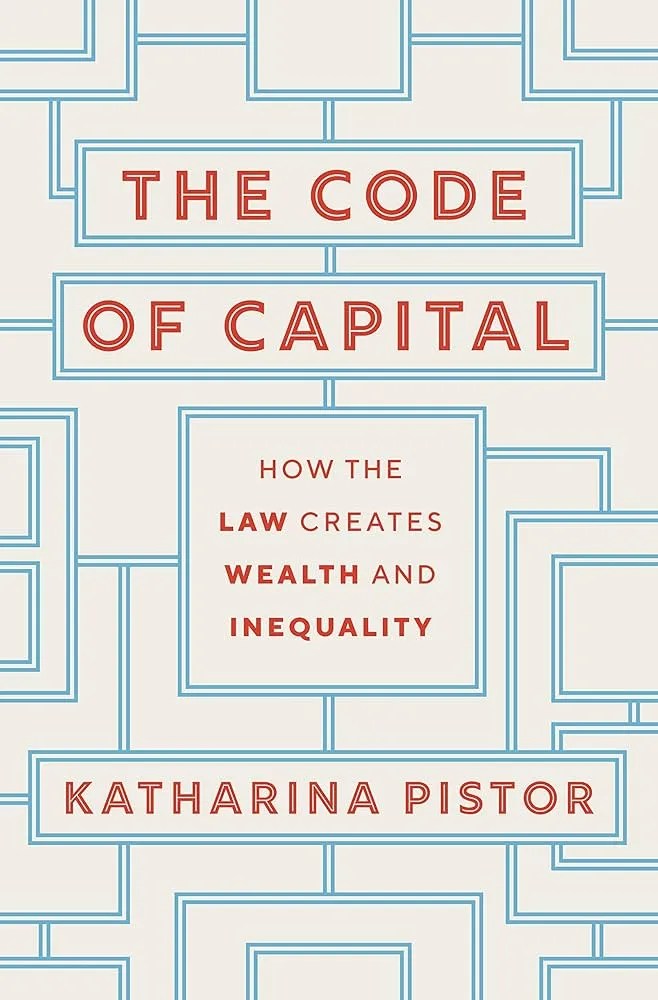
The Code of Capital: How the Law Creates Wealth and Inequality

by Katharina Pistor (2019)

Through The Code of Capital, Katharina Pistor talks about the correlation between law and the creation of wealth and inequality. She noted that though the wealthy love to claim hard work and skills as reasons why they easily significantly generate their fortunes, their accumulation of wealth would not last long without legal coding.

“The law is a powerful tool for social ordering and, if used wisely, has the potential to serve a broad range of social objectives: yet, for reasons and with implications that I attempt to explain, the law has been placed firmly in the service of capital,” she stated.

The book does not only show interesting takes on looking at inequality and the distribution of wealth, but also how those people in power manage to hoard their wealth with certain codes and laws, such as turning land into private property, while lots of people are struggling under the unjust system.


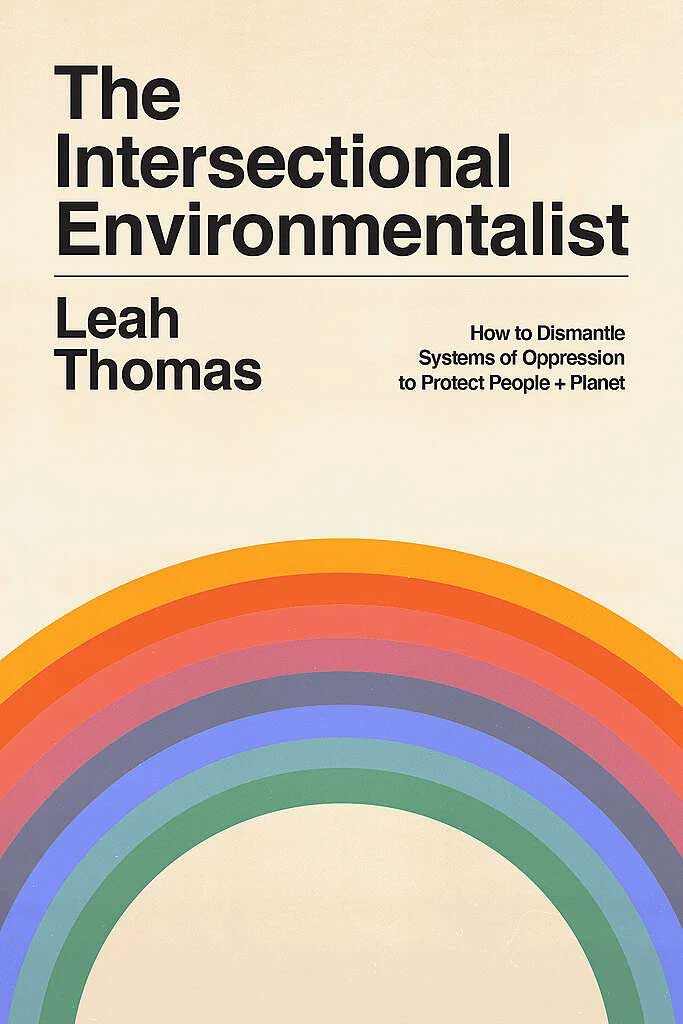
The Intersectional Environmentalist: How to Dismantle Systems of Oppression to Protect People + Planet
by Leah Thomas (2022)

The Intersectional Environmentalist: How to Dismantle Systems of Oppression to Protect People + Planet

by Leah Thomas (2022)

Arguing that capitalism, racism, and other systems of oppression are the drivers of exploitation, activist Leah Thomas focuses on addressing the application of intersectionality to environmental justice through The Intersectional Environmentalist. Marginalised people all over the world are already on the front lines of the worsening climate crisis yet struggling to get justice they deserve.

I echo what she says, as a woman born and raised in Indonesia where clean air and drinkable water are considered luxury in various regions, where the extreme weather events exacerbated by the climate crisis hit the most vulnerable communities (without real mitigation and implementations by the government while oligarchies hijack our resources).

I think this powerful book is aligned with what Greenpeace has been speaking up about for years as well, that social justice and climate justice are deeply intertwined so it’s crucial to fight for both at the same time to help achieve a sustainable future for all.


As Long As Grass Grows
by Dina Gilio-Whitaker (2019)

As Long As Grass Grows

by Dina Gilio-Whitaker (2019)

Starting with the question “what does environmental justice look like when Indigenous people are at the centre?” Dina Gilio-Whitaker takes us to see the complexities of environmental justice and the endless efforts of Indigenous people in Indian country (the lands and communities of Native American tribes) to restore their traditional cultures while healing from the legacy of trauma caused by hundreds of years of Western colonisation.

She emphasizes that what distinguishes Indigenous peoples from colonisers is their unbroken spiritual relationship to their ancestral homelands. “The origin of environmental justice for Indigenous people is dispossession of land in all its forms; injustice is continually reproduced in what is inherently a culturally genocidal structure that systematically erases Indigenous people’s relationships and responsibilities to their ancestral places,” said Gilio-Whitaker.

I believe that the realm of today’s modern environmentalism should include Indigenous communities and learn their history: the resistance, the time-tested climate knowledge systems, their harmony with nature, and most importantly, their crucial role in preserving our planet’s biodiversity.


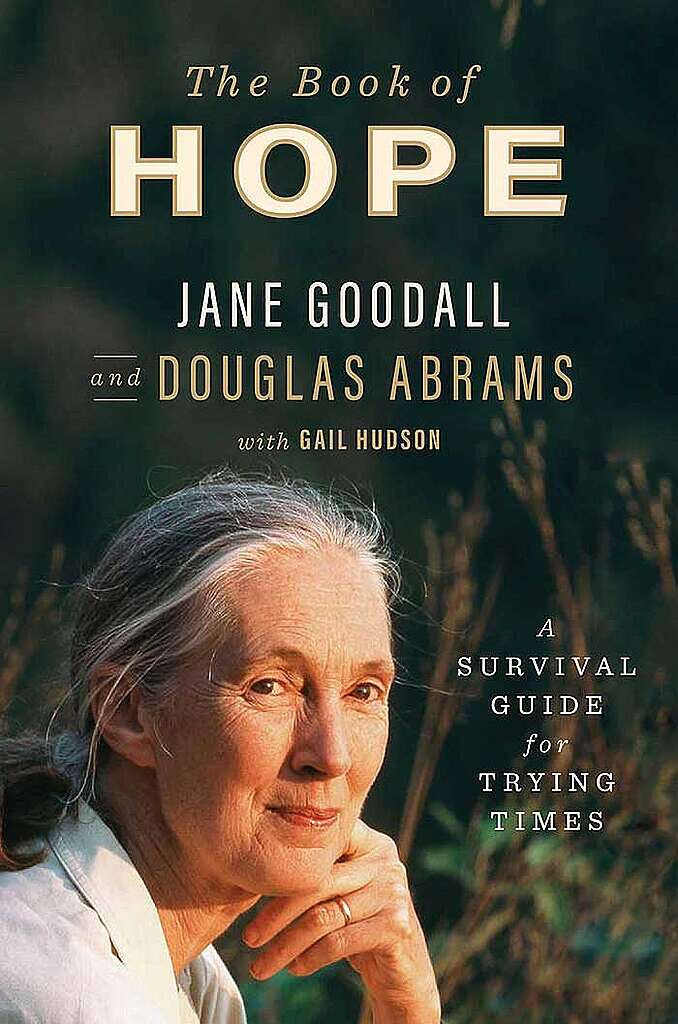
The Book of Hope
by Jane Goodall and Douglas Abrams with Gail Hudson (2021)

The Book of Hope

by Jane Goodall and Douglas Abrams with Gail Hudson (2021)

The Book of Hope is a marvelous glimpse into primatologist and global figure Jane Goodall’s life and work. The collaborator of the book, journalist Douglas Abrams, makes this reading experience even more enjoyable by sharing the reflective conversations between them, such as the definition of hope, and how to keep it alive amid difficult times.

Sadly, as we all know, Jane passed away this year. We have lost an incredible human being in the era when we need more someone like her who has inspired millions to care about nature, someone whose wisdom radiated warmth and compassion. Though she’s no longer with us, her legacy to spread hope stays.


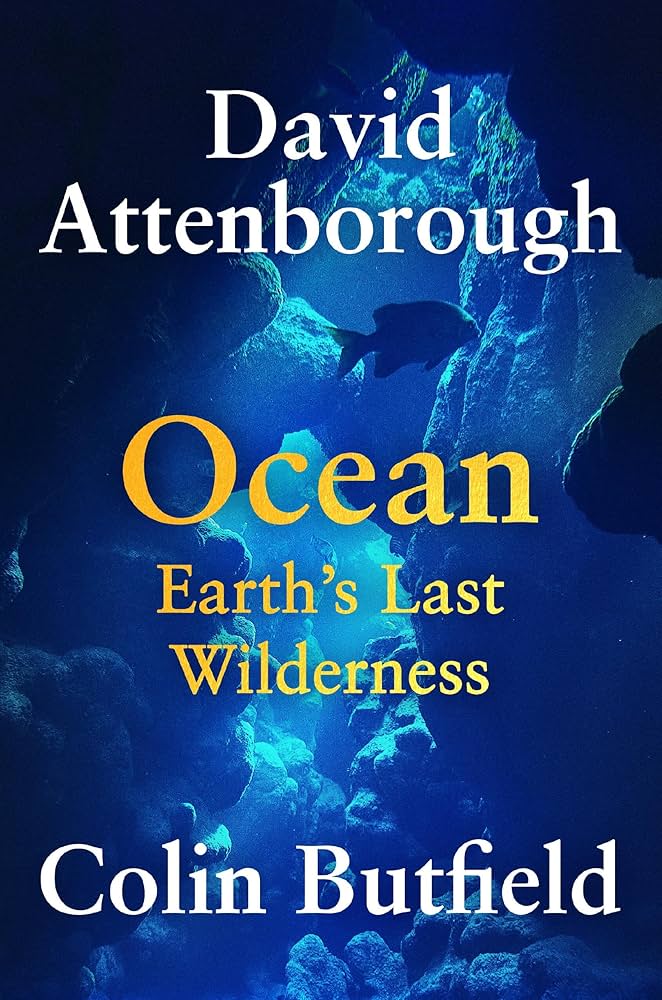
Ocean: Earth’s Last Wilderness
by David Attenborough and Colin Butfield (2025)

Ocean: Earth’s Last Wilderness

by David Attenborough and Colin Butfield (2025)

 “I could only have dreamed of recording in the early stages of my career, and we have changed the ocean so profoundly that the next hundred years could either witness a mass extinction of ocean life or a spectacular recovery.”

The legend David Attenborough highlights how much humans have yet to understand the ocean in his latest book with Colin Butfield.  The first part of it begins with what has happened in a blue whale’s lifetime. Later it takes us to coral reefs, the deep of the ocean, kelp forest, mangroves, even Arctic, Oceanic seamounts, and Southern Ocean. The book contains powerful stories and scientific facts that will inspire ocean lovers, those who love to learn more about this ecosystem, and those who are willing to help protect our Earth. 

To me, this book is not only about the wonder of the ocean, but also about hope to protect our planet. Just like what Attenborough believes: the more people understand nature, the greater our hope of saving it.


Kezia Rynita is a Content Editor for Greenpeace International, based in Indonesia.

Great Job Kezia Rynita – Content Editor for Greenpeace International & the Team @ Article – Greenpeace Australia Pacific Source link for sharing this story.
Secret Link