
Home News Page 85

6 books to start 2026 – Greenpeace Australia Pacific

6 books to start 2026 – Greenpeace Australia Pacific

Here are 6 inspiring books discussing oceans, critiques of capitalism, the Indigenous fight for environmental justice, and hope—for your upcoming reading list this year.

The Deepest Map: The High-Stakes Race to Chart the World’s Oceans

by Laura Trethewey (2023)

This book reminds me of the statement saying that people hear more about the moon and other planets in space than what lies beneath Earth’s oceans, which are often cited as ‘scary’ and ‘harsh’. Through investigative and in-depth reportage, ocean journalist and writer Laura Trethewey tackles important aspects of ocean mapping.

The mapping and exploration can be very useful to understand more about the oceans and to learn how we can protect them. On the other hand, thanks to neoliberal capitalism, it can potentially lead to commercial exploitation and mass industrialisation of this most mysterious ecosystem of our world.

The Deepest Map is not as intimidating as it sounds. Instead, it’s more exciting than I anticipated as it shows us more discoveries we may little know of: interrelated issues between seafloor mapping, geopolitical implications, ocean exploitation due to commercial interest, and climate change.

6 books to start 2026 – Greenpeace Australia Pacific

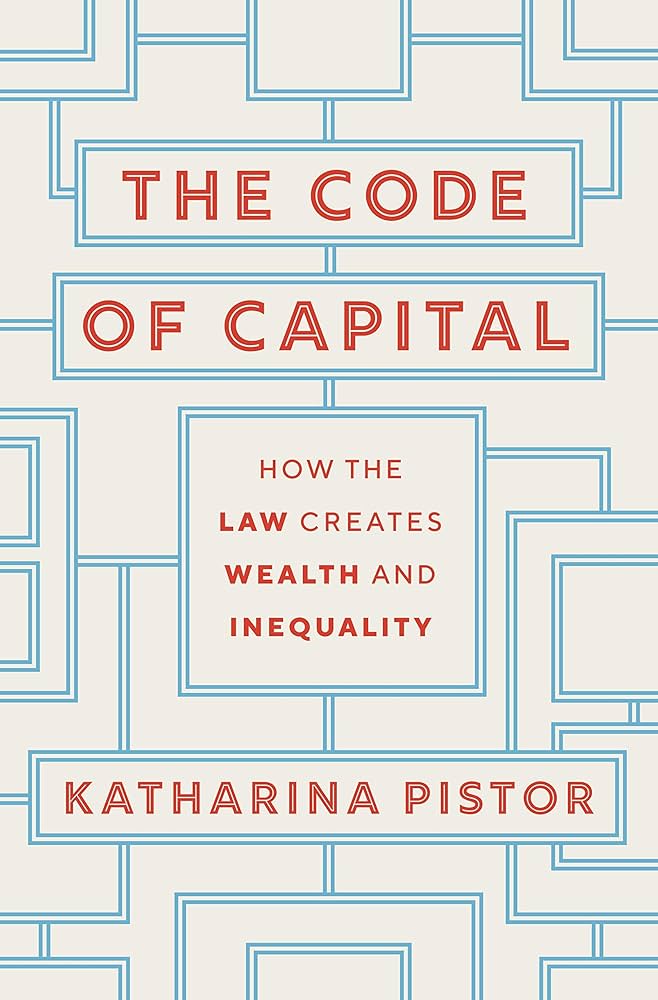
The Code of Capital: How the Law Creates Wealth and Inequality

by Katharina Pistor (2019)

Through The Code of Capital, Katharina Pistor talks about the correlation between law and the creation of wealth and inequality. She noted that though the wealthy love to claim hard work and skills as reasons why they easily significantly generate their fortunes, their accumulation of wealth would not last long without legal coding.

“The law is a powerful tool for social ordering and, if used wisely, has the potential to serve a broad range of social objectives: yet, for reasons and with implications that I attempt to explain, the law has been placed firmly in the service of capital,” she stated.

The book does not only show interesting takes on looking at inequality and the distribution of wealth, but also how those people in power manage to hoard their wealth with certain codes and laws, such as turning land into private property, while lots of people are struggling under the unjust system.
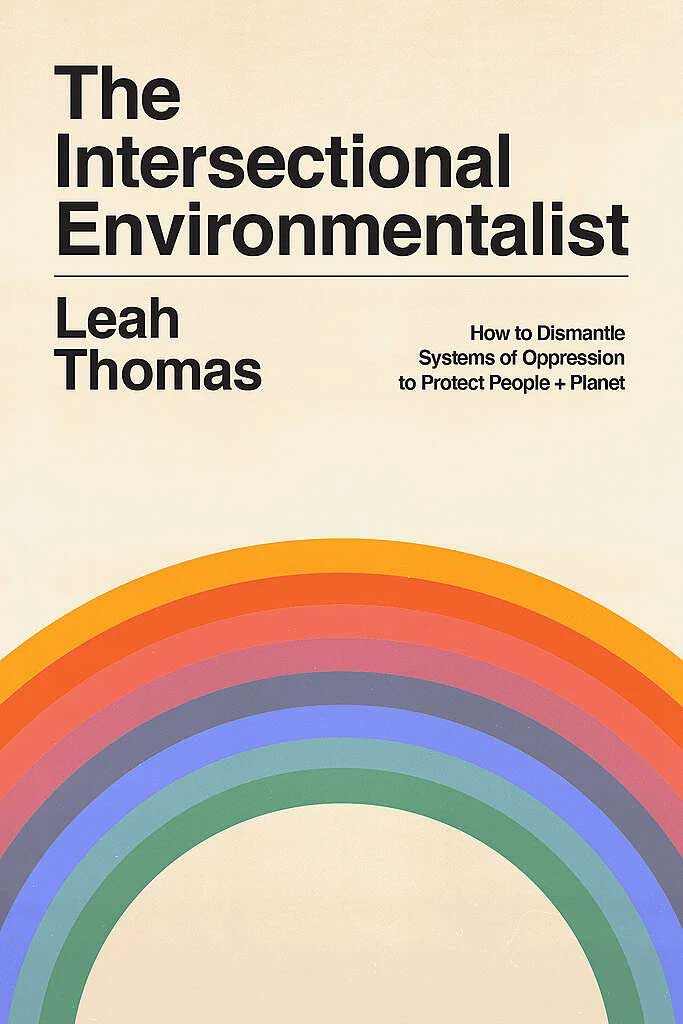

The Intersectional Environmentalist: How to Dismantle Systems of Oppression to Protect People + Planet
by Leah Thomas (2022)

The Intersectional Environmentalist: How to Dismantle Systems of Oppression to Protect People + Planet

by Leah Thomas (2022)

Arguing that capitalism, racism, and other systems of oppression are the drivers of exploitation, activist Leah Thomas focuses on addressing the application of intersectionality to environmental justice through The Intersectional Environmentalist. Marginalised people all over the world are already on the front lines of the worsening climate crisis yet struggling to get justice they deserve.

I echo what she says, as a woman born and raised in Indonesia where clean air and drinkable water are considered luxury in various regions, where the extreme weather events exacerbated by the climate crisis hit the most vulnerable communities (without real mitigation and implementations by the government while oligarchies hijack our resources).

I think this powerful book is aligned with what Greenpeace has been speaking up about for years as well, that social justice and climate justice are deeply intertwined so it’s crucial to fight for both at the same time to help achieve a sustainable future for all.


As Long As Grass Grows
by Dina Gilio-Whitaker (2019)

As Long As Grass Grows

by Dina Gilio-Whitaker (2019)

Starting with the question “what does environmental justice look like when Indigenous people are at the centre?” Dina Gilio-Whitaker takes us to see the complexities of environmental justice and the endless efforts of Indigenous people in Indian country (the lands and communities of Native American tribes) to restore their traditional cultures while healing from the legacy of trauma caused by hundreds of years of Western colonisation.

She emphasizes that what distinguishes Indigenous peoples from colonisers is their unbroken spiritual relationship to their ancestral homelands. “The origin of environmental justice for Indigenous people is dispossession of land in all its forms; injustice is continually reproduced in what is inherently a culturally genocidal structure that systematically erases Indigenous people’s relationships and responsibilities to their ancestral places,” said Gilio-Whitaker.

I believe that the realm of today’s modern environmentalism should include Indigenous communities and learn their history: the resistance, the time-tested climate knowledge systems, their harmony with nature, and most importantly, their crucial role in preserving our planet’s biodiversity.
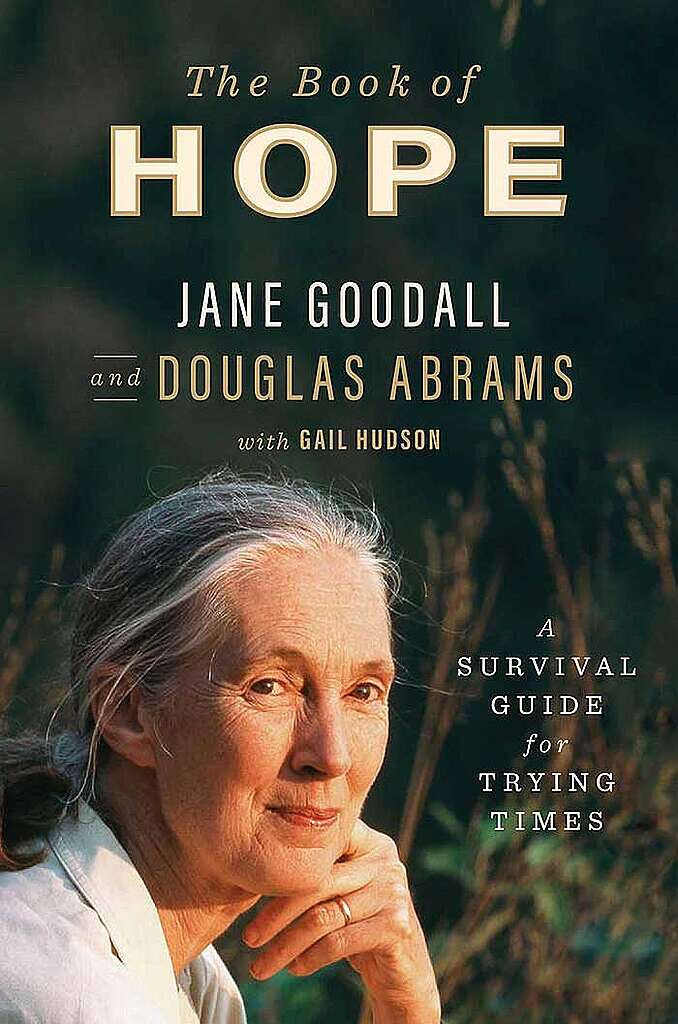

The Book of Hope
by Jane Goodall and Douglas Abrams with Gail Hudson (2021)

The Book of Hope

by Jane Goodall and Douglas Abrams with Gail Hudson (2021)

The Book of Hope is a marvelous glimpse into primatologist and global figure Jane Goodall’s life and work. The collaborator of the book, journalist Douglas Abrams, makes this reading experience even more enjoyable by sharing the reflective conversations between them, such as the definition of hope, and how to keep it alive amid difficult times.

Sadly, as we all know, Jane passed away this year. We have lost an incredible human being in the era when we need more someone like her who has inspired millions to care about nature, someone whose wisdom radiated warmth and compassion. Though she’s no longer with us, her legacy to spread hope stays.
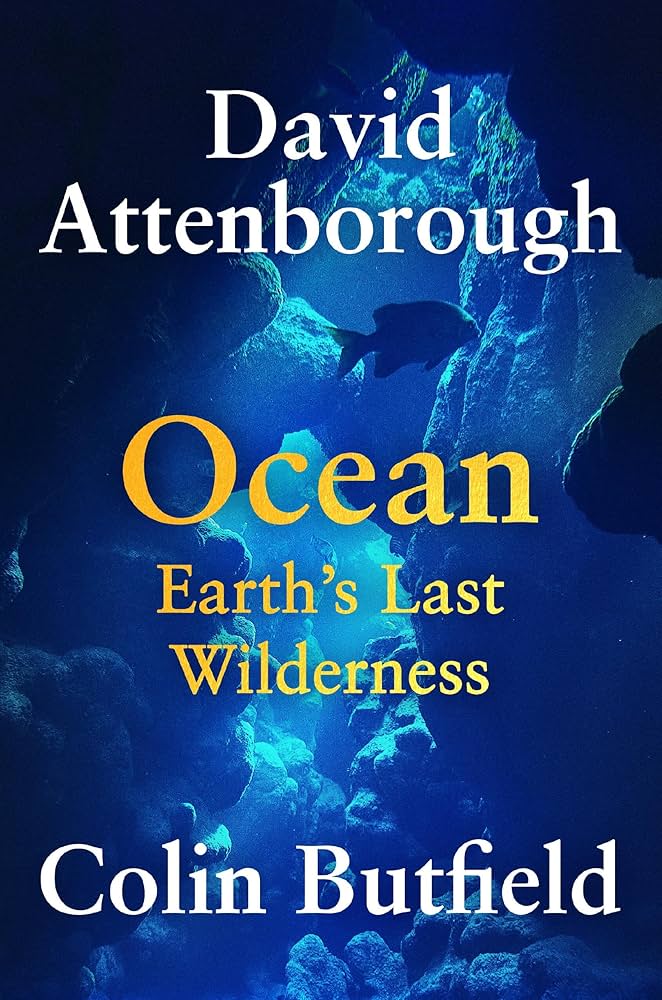

Ocean: Earth’s Last Wilderness
by David Attenborough and Colin Butfield (2025)

Ocean: Earth’s Last Wilderness

by David Attenborough and Colin Butfield (2025)

 “I could only have dreamed of recording in the early stages of my career, and we have changed the ocean so profoundly that the next hundred years could either witness a mass extinction of ocean life or a spectacular recovery.”

The legend David Attenborough highlights how much humans have yet to understand the ocean in his latest book with Colin Butfield.  The first part of it begins with what has happened in a blue whale’s lifetime. Later it takes us to coral reefs, the deep of the ocean, kelp forest, mangroves, even Arctic, Oceanic seamounts, and Southern Ocean. The book contains powerful stories and scientific facts that will inspire ocean lovers, those who love to learn more about this ecosystem, and those who are willing to help protect our Earth. 

To me, this book is not only about the wonder of the ocean, but also about hope to protect our planet. Just like what Attenborough believes: the more people understand nature, the greater our hope of saving it.


Kezia Rynita is a Content Editor for Greenpeace International, based in Indonesia.

Great Job Kezia Rynita – Content Editor for Greenpeace International & the Team @ Article – Greenpeace Australia Pacific Source link for sharing this story.
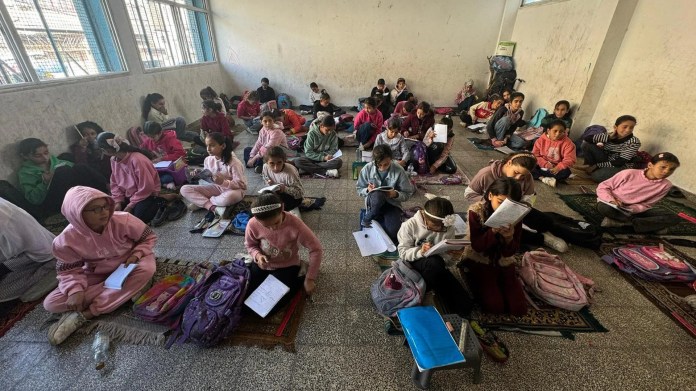
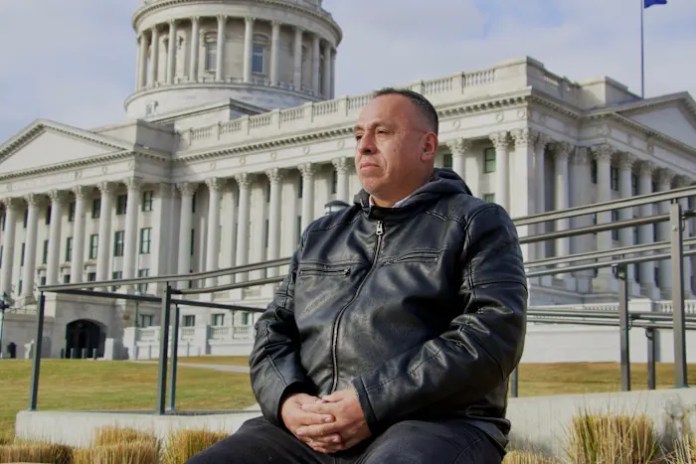
War has pushed Gaza’s children to the brink – “like the living dead”

War has pushed Gaza’s children to the brink – “like the living dead”

After more than two years of fighting, many Palestinian children in Gaza are so physically depleted and emotionally distressed that they can no longer learn or play, according to a new report. The study warns that some children now believe they will be “killed for being Gazans.” Led by the University of Cambridge, the research also delivers the first detailed look at education conditions in the West Bank and East Jerusalem since October 7, 2023.

The authors say urgent international support for education is needed across Palestine, regardless of whether the current ceasefire in Gaza continues. In Gaza, the report finds that prolonged conflict has brought children’s access to education close to total collapse, threatening not only learning but a core part of their identity.

A Childhood Shattered by Conflict and Hunger

Following a similar study released in 2024, the report offers an in depth examination of how war has transformed children’s lives in Gaza. It documents a school system that has largely fallen apart and describes how violence, food shortages, and psychological trauma have stripped away any sense of a normal childhood.

Researchers recount children fainting from exhaustion and being advised not to play so they can save energy. Before the recent ceasefire, many parents and teachers were forced to weigh children’s survival against their education. Some families were surviving on little more than a bowl of lentils a day.

Growing Anger and Loss of Faith

One of the report’s most concerning findings is the damage to young people’s sense of hope and trust in the global community. Witnesses told researchers that children are becoming increasingly angry and are losing faith in principles such as peace and human rights. “Students are asking about the reality of those rights. They feel they are killed just for being Gazans,” one international organization staff member said.

Professor Pauline Rose, Director of the Research for Equitable Access and Learning (REAL) Centre at the University of Cambridge, said the situation has rapidly worsened. “A year ago we said education was under attack – now children’s lives are on the brink of a complete breakdown.”

She added that Palestinians have continued to value education despite the war, but warned that the despair expressed by young people should be taken seriously. “We must do more to support them. We cannot wait.”

A Lost Generation at Risk

The research was carried out by teams from the REAL Centre and the Centre for Lebanese Studies, in partnership with the United Nations Relief and Works Agency for Palestinian Refugees (UNRWA). It combines data from UN agencies, charities, and NGOs with interviews involving aid workers, officials, teachers, and students.

The study cautions that Gaza faces a serious risk of a “lost” generation due to the combined educational, physical, and psychological toll of the war.

As of October 1, 2025, the UN Office of Coordination of Humanitarian Affairs (OCHA) reported that 18,069 students and 780 education staff had been killed in Gaza, while 26,391 students and 3,211 teachers were injured. Save the Children estimates that during the fighting, 15 children sustained life altering injuries every day.

Teachers interviewed for the report described deep despair among families. Some parents asked, “Why should I care about education for my kids if I know they will die from famine?” Focus group discussions found children were “afraid of everything,” and another report cited in the study said many Gazan children felt “like the living dead.”

Years of Learning Already Lost

The authors estimate that repeated school closures since 2020 have cost children in Gaza the equivalent of five years of education, first due to COVID-19 and later because of war. While UNRWA and the Palestinian Ministry of Education introduced temporary and distance learning programs, these efforts have been limited by ongoing violence, damaged facilities, and severe shortages of resources.

To calculate learning losses, researchers accounted for the combined effects of trauma and starvation, drawing on established studies showing how both undermine learning. By October 2025, nearly 13,000 children in Gaza had been treated for acute malnutrition, and 147 of them had died.

If schools remain closed until September 2027, the study estimates that many teenagers could fall as much as ten years behind expected educational levels.

West Bank and East Jerusalem Also Struggling

The situation in the West Bank, including East Jerusalem, was also described as severe. Since October 2023, 891 students and 28 teachers have been killed or injured by settlers or Israeli forces, and hundreds more have been arrested, often on grounds the UN Human Rights Office considers “arbitrary.” Schools in these areas have faced repeated disruptions, with some temporarily or permanently shut down. Children there are estimated to have lost at least 2.5 years of schooling.

Across Palestine, teachers described their profession as deeply demoralized and in crisis. One international organization staff member said educators were “working day and night” to provide any form of learning, with many not taking a single day off in two years.

The Price of Rebuilding Education

The study estimates that restoring education across Palestine could cost about US$1.38 billion. Yusuf Sayed, Professor of Education at the University of Cambridge, said teachers and counselors continue to show sumood (steadfastness) and dedication to preserving Palestinian identity through education, but stressed that the scale of need is enormous. Thousands of new teachers will be required to replace those lost and to support a full recovery. He emphasized that investment in teachers is essential to rebuilding education in Palestine.

With Gaza’s economy nearly paralyzed, education is expected to rely on foreign aid for the foreseeable future. Despite this dependence, the report points to growing “donor fatigue.” Of the US$230.3 million requested by OCHA for education in 2025, only 5.7% had been received by July, amounting to roughly US$9 per child. Full reconstruction is estimated to require about US$1,155 per person.

Dr. Maha Shuayb, Director of the Centre for Lebanese Studies, said, “Education and children’s services cannot be an afterthought. They are a vital source of stability and care.”

Signs of Hope Amid the Crisis

Despite its grim findings, the report highlights some reasons for cautious optimism. During the ceasefire at the start of 2025, schools reopened quickly, and Tawjihi exams for high school graduates resumed. One teacher described the return to classrooms and exams as “a miracle.”

Great Job & the Team @ Public Health News — ScienceDaily Source link for sharing this story.

Venezuelans in the US are torn between joy and worry after ousting of Maduro

Venezuelans in the US are torn between joy and worry after ousting of Maduro

NEW YORK – In the days since the Trump administration ousted Venezuelan President Nicolás Maduro in a late-night military raid, Alejandra Salima has spoken to fellow Venezuelan migrants in her role as an advocate. Like her, most voice feelings that seesaw between joy and trepidation, she said.

The removal of Maduro is “a first step, but we’re nervous,” said Salima, who fled to the U.S. three years ago with her 7-year-old son and assists other Venezuelans at the Miami office of the National TPS Alliance. With the regime that Maduro led still in place, “at this moment, returning would put me and my son at risk,” she said.

For more than 770,000 Venezuelans living in the U.S., reactions to Trump’s forceful moves in the country they left behind — and the one that has taken them in — are as intense as they are complicated.

Many are thrilled by the removal of Maduro, who harassed and jailed political opponents while presiding over an economic collapse, driving millions of Venezuelans from the country. But as they try to figure out what’s next for them and for families and friends still in Venezuela, many share Salima’s conflicted feelings.

The Trump administration’s move to deport Venezuelans without permanent residency has increased worry. Many were allowed to stay in the U.S. after they were granted Temporary Protected Status, or TPS, a designation Trump revoked after taking office. At the same time, the fear instilled by the government Maduro left behind makes many wary of returning.

“First, they grabbed Maduro, and I feel happy, happy, happy, grateful to the Trump administration,” said Manuel Coronel, a lawyer who left Venezuela in 2017 and now lives just north of Salt Lake City. But he worries the change will be too limited.

“They got him, but the criminals are still there,” said Coronel, who is 54 and works at an immigration law practice. “There’s no new government. Everything’s exactly the same.”

No rush to return

The tensions belie assurances by Homeland Security Secretary Kristi Noem, who asserted that “overwhelmingly the Venezuelans that I’ve heard from or talked to are excited about the changes.”

“They have more opportunities to go back to their country and have it be more successful and provide for their families today than they did a week ago when Maduro was still in charge,” Noem said last week.

But in interviews with Venezuelans who live in communities around the U.S. there was little indication of a rush to return.

“Thank God we’re here,” said José Luis Rojas, who ended up in New York City after fleeing the Venezuela capital of Caracas in 2018.

Rojas, 31, recounted how Venezuela’s hyperinflation, which topped 1 million percent the year he fled, made it impossible to buy essentials like diapers after his partner became pregnant. They went first to Ecuador then Peru, but left to escape crime, joining thousands of Venezuelans who migrated on foot through the jungle of Panama’s Darién Gap.

Since the couple and their son arrived in the U.S., Rojas has obtained political asylum, a work permit and a driver’s license.

In an interview this week at a Venezuelan restaurant on a New York City street lined with immigrant-run businesses, Rojas welcomed the toppling of Maduro “so there can be change in Venezuela, because many people are struggling.”

But he expressed doubt about the Trump administration’s tightened policies on Venezuelans in the U.S. that have already pushed a number of his friends to leave for countries in South America and elsewhere.

For Venezuelans in the U.S., Trump has “done good things and he’s done bad things,” said Rojas as he and his wife tucked into the restaurant’s $30 special: a heaping platter of fried potatoes, cassava, corn cakes, sausages, beef, chicken, plantains, fried pork rinds and cheese.

“It all depends on your point of view.”

New lives in the US

About 8 million Venezuelans have fled the country over the past decade, with the great majority landing elsewhere in Latin America. Hundreds of thousands have made their way to the U.S., with large numbers settling in suburban communities like Kissimmee, Florida, outside Orlando, and Herriman, Utah, outside Salt Lake City.

Venezuelans quickly became among the largest nationalities to immigrate to the U.S. after COVID-19, lured in part by job prospects. The Biden administration offered new or expanded temporary legal protections, largely ended by Trump after he took office. Hundreds of thousands more were released in the United States after entering illegally from Mexico to pursue asylum or other forms of relief in immigration court.

For people like Jesus Martinez, who fled to the U.S. in 2021 after facing physical threats and persecution, “life in Venezuela is behind us.”

Martinez, who now lives with his wife and children in Orem, Utah, and has applied for political asylum, recalled how life in Venezuela had become intolerable. While it is a relief that Maduro has been removed, he said, the Trump administration’s push to send Venezuelans back to a country whose government they still deeply distrust presents a paradox.

“It’s obviously a contradictory situation,” said Martinez, 50. He noted that it will take considerable time before loyalists to Maduro are rooted out and Venezuela can make a transition to a stable democracy.

Reservations about going back

Salima, 48, who works in the Miami advocacy office, was active in opposition politics in Venezuela, where she trained as a lawyer and marched in peaceful protests. She came to the U.S. legally with her son, who is now 10 years old, on a temporary permit for humanitarian reasons, which Trump has revoked. She is elated by Maduro’s ouster.

But those feelings are tempered by her unease over Venezuela’s future while his allies are still in power. Her mother remains in Venezuela and, even with Maduro gone, she refuses to discuss politics during chats on an encrypted app, fearful that government authorities who remain in power will find out, Salima said.

With that reality still in place, the pending end of Temporary Protected Status for Venezuelans makes her feel “very unstable,” Salima said.

Asking for a choice

Rallying with other Venezuelans this week in Doral, Florida, to celebrate Maduro’s ouster, Jorge Galicia recounted fleeing in 2018 after a fellow student activist was arrested during a wave of demonstrations against the regime.

After settling in the Miami area, Galicia said he joined Charlie Kirk’s conservative Turning Point USA movement, whose politics closely align with Trump’s. But Galicia, 30, said his support for the Trump administration began to waver as the White House’s crackdown on immigrants intensified, breaking up families.

Now, with Maduro gone, he expects many of the Venezuelans who fled to neighboring countries and the U.S. to start returning home. But he hopes Trump will reconsider his decision to deport Venezuelans like himself who have built new lives in the U.S. but still lack permanent status.

“The reason we’re here is because there was a horrible regime that forced millions of us to leave,” said Galicia, wrapped in a Venezuelan flag. But, he said, “everyone deserves to have the choice of returning home.”

—-

Associated Press writers Valerie Gonzalez in McAllen, Texas; Josh Goodman in Doral, Florida; Elliot Spagat in San Diego and Hannah Schoenbaum in Salt Lake City contributed to this report.

Copyright 2026 The Associated Press. All rights reserved. This material may not be published, broadcast, rewritten or redistributed without permission.

Great Job Michael Weissenstein And Adam Geller, Associated Press & the Team @ KSAT San Antonio for sharing this story.

These Gen Zers just raised $11.75M to put Africa’s defense back in the hands of Africans | TechCrunch

These Gen Zers just raised .75M to put Africa’s defense back in the hands of Africans | TechCrunch

After five years of building an edtech company, Nathan Nwachuku, 22, realized that Africa was at a crossroads. The continent is undergoing rapid industrialization, he told TechCrunch. There is money, opportunity, and a young, driven population. He figured, soon enough, the continent was on the “edge of an industrial revolution.” 

“At the same time,” he said, he felt the continent still struggled to address what was one of its biggest Achilles heels. “Terrorism and insecurity.” Africa has more terror-related deaths than any region in the world, and it is this problem that could slow down — or even stop completely — the growth of the region, Nwachuku said. 

He teamed up with a friend, Maxwell Maduka, 24, and launched Terra Industries, a defense company that designs infrastructure and autonomous systems to help governments and organizations monitor and respond to threats. The company announced Monday that it emerged from stealth with a $11.75 million round led by Joe Lonsdale’s 8VC. 

Others in the round include Valor Equity Partners, Lux Capital, SV Angel, and Nova Global. The company previously raised an $800,000 pre-seed round, and Nwachuku said others took much interest in the company after it appeared on CNN. African investors in the company include Tofino Capital, Kaleo Ventures, and DFS Lab. 

“The goal is to build Africa’s first defense prime, to build autonomous defense systems and other systems to protect our critical infrastructure and resources from armed attacks,” Nwachuku, the company’s CEO, said. Maduka serves as the company’s CTO. 

The team is stacked with military experience: 40% of its engineers held the same role in the Nigerian military; 8VC’s Alex Moore, who specializes in defense investing, is also on the board, and Nigeria’s Vice Air Marshal Ayo Jolasinmi serves as an advisor. Maduka also served as an enginner in the Nigerian Navy and founded a drone company at 19.

The company, based in Nigeria’s capital, Abuja, took a multi-domain approach to product development, considering how to protect critical infrastructure from the ground, water, and air. For the air, the company produces long-range and short-range drones. On the ground, it has surveillance towers and ground drones. The company is still working on developing maritime technology to help protect infrastructure such as offshore rigs and underwater pipelines. 

Techcrunch event

San Francisco
|
October 13-15, 2026

Terra powers its tech with its proprietary software, ArtemisOS, which collects, analyzes, and synthesizes data in real time. Once threats are spotted, they alert response forces (such as security agencies) so they can intercept them. “We want to geofence all of Africa’s critical infrastructure and resources,” Nwachuku said, adding that the problem is not lack of firepower (many African armies already have that).

Instead, it’s a lack of sovereign intelligence, as much of the intelligence that African countries depend on comes from Western powers, China, and Russia. 

“We want to take the defense of our continent’s resources and infrastructure into Africa’s own hands,” Nwachuku continued. “We are the first truly Pan-African defense company.” 

Terra recently won its first federal contract, though it said it cannot provide more details. The company makes money when governments and commercial customers place orders for Terra systems and then pay an annual fee for data processing and storage. Nwachuku said the company has generated more than $2.5 million in commercial revenue so far and is protecting assets valued at around $11 billion. 

Commercial revenue comes from protecting private infrastructure, like gold mines or power plants. Terra said it is protecting at least two hydro power plants and several smaller mines, with most of the company’s clientele coming from Nigeria. 

The company hopes to use the fresh capital to help expand and build more defense factories across Africa. It also wants to further expand its software capabilities and grow its AI team. It will open software offices in San Francisco and London, but the company said manufacturing will remain in Africa, with more factories opening across the continent to boost job creation. 

“It’s clear Africa today is undergoing what I see as an epic struggle for its very survival,” Nwachuku said. “The only way for us to truly break ourselves from the shackles that have held us back for the last decade or two is ensuring the core resources, the core infrastructures of the continent, are entirely protected.”

Great Job Dominic-Madori Davis & the Team @ TechCrunch Source link for sharing this story.

‘We deserve better’: Jasmine Crockett brings Senate campaign to San Antonio

‘We deserve better’: Jasmine Crockett brings Senate campaign to San Antonio

Sign up for TPR Today, Texas Public Radio’s newsletter that brings our top stories to your inbox each morning.

Democratic U.S. Rep. Jasmine Crockett made a campaign stop in San Antonio on Sunday as part of her bid to unseat Republican U.S. Sen. John Cornyn.

Crockett spoke to a packed house at Tony G’s Soul Food restaurant on the city’s East Side.

“I believe that we deserve better. I believe that we can get better and frankly I believe that we can do better, and that is why I am running to become the next senator from the state of Texas,” she told the crowd.

Jerry Clayton

/

Texas Public Radio

Jasmine Crockett speaks to supporters in San Antonio 1/11/2026

Crockett also addressed critics who have questioned her decision to run.

“Some people say, well, congresswoman, you should just stay in the house because we need your voice. We need to make sure you’re gonna be there because, you know, Texas likes to do Texas things. We can’t afford to lose you in this moment. But I never signed up for public office to be anybody’s safety blanket. I signed up because I wanted to make change,” she said.

Supporters and media hear Jasmine Crockett speak in San Antonio 1/11/2026

Jerry Clayton

/

Texas Public Radio

Supporters and media hear Jasmine Crockett speak in San Antonio 1/11/2026

Her decision to run comes after newly drawn congressional maps drastically reshaped her North Texas district. She launched her Senate campaign shortly after the U.S. Supreme Court allowed Texas’ new congressional maps to take effect.

Crockett last week agreed to debate fellow Democratic Senate candidate James Talarico in Georgetown on January 24.

On the Republican side, Cornyn is seeking a fifth term but faces a primary challenge from Texas Attorney General Ken Paxton, setting up a high-profile intraparty fight ahead of the general election.

Great Job Jerry Clayton & the Team @ Texas Public Radio for sharing this story.

Wayment! GloRilla Pops Out With NEW Look & The Internet Can’t Stop Mentioning Lil Mama (VIDEO)

Wayment! GloRilla Pops Out With NEW Look & The Internet Can’t Stop Mentioning Lil Mama (VIDEO)

Roommates, it looks like everybody is on a “new year, new vibe” wave right now. Celebs keep popping out with fresh looks and GloRilla just joined the list.

RELATED: Aht! Aht! GloRilla Addresses Viral Comment Claiming Sexyy Red Wanted To Join Her Relationship With Brandon Ingram (VIDEO)

GloRilla Turns Heads After Unveiling NEW Look

Recently, GloRilla dropped a video showing off her new look, and the girlies are living for it! Big Glo totally switched up a traditional half-down, half-up hairstyle, adding a bun in the middle and a long straight ponytail in the back. Two straight pieces framed her face in the front and her makeup stayed subtle to help let the fresh vibe shine. The video of Glo immediately had fans talking, with plenty saying they thought she was Lil Mama at first. Is it giving twin flame energy? We’ll let y’all decide. Peep the video of GloRilla below.

Fans Are Buzzin’ After Glo Shows Off Her Fresh 2026 Look

Folks flooded The Shade Room’s comment section with mentions of Lil Mama, while others dropped heart-eye emojis showing they were feeling Glo’s look.

Instagram user @prettygirlcj wrote, She looks really pretty.” 

Instagram user @slimlife_tae wrote,Def giving 2008 lil mama ” 

While Instagram user @chanel__5 wrote, she look like lil mama right here still cute tho.” 

Then Instagram user @adorblyn wrote, always pretty but something lately has been ” 

Another Instagram user @jayduh._ wrote, “She been looking so cute and feminine I love” 

While another Instagram user @parrrislucille wrote, Glo pretty no cap.” 

Then another Instagram user @stann.da.mann_ wrote, Idcccc she looks tf good!!!” 

Finally, Instagram user @misspinkmas wrote,She looks goooood” 

Glo Stays Keeping Her Foot On Necks

GloRilla always has the internet talking, whether its her hair, boo’d up moments, or even when she’s in the gym. Even when she’s busy grinding and working on her fitness, she keeps her foot on necks. In summer 2025, Glo had the girlies living for her snatched bawdy and said she was serving goals on a platter when she showed off her progress in the gym. See the viral photo below.


RELATED: All Good? GloRilla Gives Update On Status With Young Thug After He Called Her “Ugly” In Leaked Jail Call (VIDEO) 

What Do You Think Roomies?

Great Job Ashley Rushford & the Team @ The Shade Room Source link for sharing this story.

Stock futures slide while gold and silver jump after Powell investigation raises fears over the Fed’s independence | Fortune

Stock futures slide while gold and silver jump after Powell investigation raises fears over the Fed’s independence | Fortune

U.S. equity futures fell sharply Sunday night after Federal Reserve Chair Jerome Powell confirmed that he is under investigation related to testimony he gave last June concerning the renovation of Federal Reserve buildings. 

The New York Times report breaking news of the investigation and Powell’s subsequent disclosure rattled markets, reviving fears that years of President Donald Trump pressuring the Federal Reserve could now be realized into a direct assault on its independence.

Futures tied to the Nasdaq 100 led the decline, falling about 0.8%, as interest-rate-sensitive technology stocks bore the brunt of the selloff. S&P 500 futures were down roughly 0.5%, while Dow Jones Industrial Average futures fell about 0.4%, according to late-evening pricing.

Investors sought protection in the traditional safe-haven assets. Gold futures rose 1.7% to around $4,578 an ounce, while silver jumped more than 4%, reflecting renewed demand for protection against political and monetary instability. The U.S. dollar weakened modestly against several major currencies, including the Swiss franc and Japanese yen.

After years of largely staying silent while Trump repeatedly mocked and threatened him, Powell appeared to have reached a breaking point, issuing a rare and pointed statement. 

He wrote that while “No one—certainly not the chair of the Federal Reserve—is above the law,” the attack should be seen in the “the broader context of the administration’s threats and ongoing pressure.” 

“This new threat is not about my testimony last June or about the renovation of the Federal Reserve buildings…Those are pretexts. The threat of criminal charges is a consequence of the Federal Reserve setting interest rates based on our best assessment of what will serve the public, rather than following the preferences of the President.”

Economists warn that if the executive branch successfully co-opts the Fed, it could create a “self-fulfilling prophecy” of higher long-term inflation.

As Oxford Economics recently noted, any “cracks in the Fed’s independence” could spread rapidly through markets and ultimately raise borrowing costs for the businesses the administration seeks to protect with low interest rates. 

In a note published last July, when Trump publicly threatened to fire Powell, Deutsche Bank warned that such a move could spark severe market disruption.

“Both the currency and the bond market can collapse,” the bank wrote, citing heightened risks of inflation and financial instability. “The empirical and academic evidence on the impact of a loss of central-bank independence is fairly clear.”

Wall Street executives have echoed those concerns. Brian Moynihan, chief executive of Bank of America, said recently the erosion of Fed independence would carry serious consequences.

“The market will punish people if we don’t have an independent Fed,” Moynihan said.

Great Job Eva Roytburg & the Team @ Fortune | FORTUNE Source link for sharing this story.

Maye throws late TD pass and Patriots’ defense roughs up Herbert, Chargers in 16-3 playoff win

Maye throws late TD pass and Patriots’ defense roughs up Herbert, Chargers in 16-3 playoff win

FOXBOROUGH, Mass. – Drake Maye threw a touchdown pass to Hunter Henry in the fourth quarter, and New England’s defense roughed up Justin Herbert as the Patriots beat the Los Angeles Chargers 16-3 in an AFC wild-card playoff game on Sunday night.

Andy Borregales kicked three field goals for the Patriots (15-3), who won a playoff game for the first time since their Super Bowl victory to cap the 2018 season. They’ll host the winner of Monday night’s game between Pittsburgh and Houston in the divisional round.

In his first career playoff game, Maye completed 17 of 29 passes for 268 yards and ran for a team-high 66 yards. He also threw an interception and lost a fumble, but the Chargers (11-7) couldn’t capitalize on those turnovers.

New England held the Chargers to 207 yards of offense and sacked Herbert six times, with one of those resulting in a lost fumble that set up the Patriots’ TD.

“How about our defense, man? Congrats to the defense,” Maye said. “What a night. It was so fun to watch.”

This is the second straight season in which the Chargers have lost in the wild-card round. Herbert finished 19 of 31 for 159 yards and was his team’s leading rusher with 57 yards as he fell to 0-3 in the playoffs.

The Chargers last failed to score a TD in a playoff game in their 21-12 AFC championship game loss to the Patriots during the 2007 season.

The Patriots drove into the red zone on their first possession of the third quarter, but the drive ended when Maye was strip-sacked by Odafe Oweh and De’Shawn Hand recovered for the Chargers.

After Los Angeles punted, Maye connected on a pass to Kayshon Boutte that went for 42 yards to set the Patriots up on the Chargers 27. But New England settled for a 39-yard field goal that stretched their lead to 9-3.

Early in the fourth quarter, Maye used a 16-yard pass to Boutte and a 13-yard burst by Rhamondre Stevenson to set up his precise 28-yard TD toss to Henry that put the Patriots in front 16-3.

The Chargers picked up back-to-back first downs to open their ensuing drive. But when Herbert dropped back to pass on the next play, linebacker K’Lavon Chaisson strip-sacked him and fell on loose ball.

Los Angeles had one final possession, but it ended with Herbert getting sacked by Milton Williams on fourth down.

Patriots get 3 the hard way

The opening quarter had lots of action, but it took until early in the second quarter for the Patriots to end a scoreless stalemate.

With New England pinned inside its own 10 after a Chargers punt, Maye had a pass intended for Austin Hooper tipped by Teair Tart and intercepted by Daiyan Henley.

Los Angeles started with the ball on the Patriots 10 but was stopped on fourth-and-2 when Herbert misfired a pass to Keenan Allen.

The Patriots took over and got some breathing room via a 48-yard catch-and-run by Stevenson.

Thirteen plays and a fourth-down conversion later, the drive ended with Borregales’ 23-yard field goal.

Injuries

Patriots: CB Carlton Davis left in the first half with a toe injury but returned. … CB Christian Gonzalez left in the second half with a head injury.

Up next

Chargers: End of season.

Patriots: Host either Houston or Pittsburgh next Sunday.

___

AP NFL: https://apnews.com/hub/nfl

Copyright 2026 The Associated Press. All rights reserved. This material may not be published, broadcast, rewritten or redistributed without permission.

Great Job Kyle Hightower, Associated Press & the Team @ KSAT San Antonio Source link for sharing this story.

A Sobering Awards Season Pivot

A Sobering Awards Season Pivot

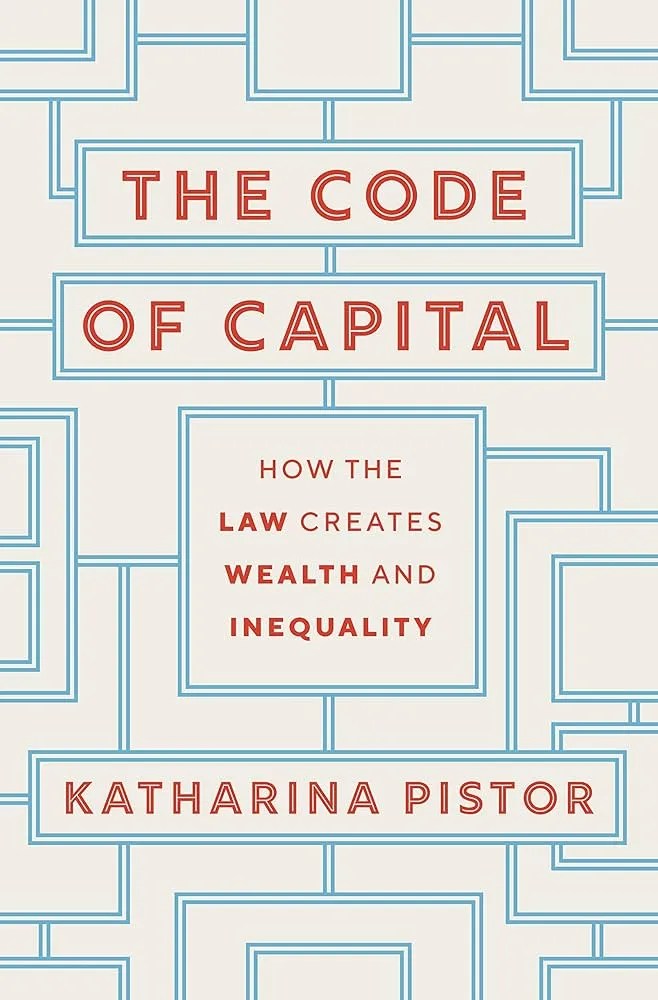
Timothée Chalamet’s promotional campaign for his new film Marty Supreme has been a little unconventional thus far. Staged Zoom sessions. Promotional blimp work. A lot of chatter about a jacket nobody can buy. When Chalamet did The Tonight Show with Jimmy Fallon, he was flanked by an entourage of people with giant orange ping-pongs for heads. The strategy has worked—the film is doing well at the box office—but Chalamet’s energy has vibed uncomfortably with the fusty atmosphere of awards season campaigning, where glad-handing with showbiz retirees and eating rubber chicken at galas is still very much the norm.

Chalamet seems to have clocked that dissonance, and his speech at tonight’s Golden Globes (where he won for Best Performance by a Male Actor in a Motion Picture — Musical or Comedy) was tellingly subdued despite the show’s notoriety for messy, drunken speech-giving. “My dad instilled in me a spirit of gratitude growing up: Always be grateful for what you have,” he said, after tossing off a few jokes about the movie’s crowded cast and the presence of Shark Tank’s “Mr. Wonderful,” Kevin O’Leary, who plays a villainous businessman in Marty Supreme.It’s allowed me to leave this ceremony in the past empty-handed, my head held high, grateful just to be here, but I’d be lying if I didn’t say those moments didn’t make this moment that much sweeter.”

It was a perfectly lovely sentiment that just sounded a tad jarring coming from a celebrity who has been delightfully un-humble over the years. After some noteworthy supporting turns as a teen actor, Chalamet burst to fame at the age of 21 with Call Me By Your Name. Since then, he has grown into a unique A-lister, finding a variety of big-budget projects that fit his skinny frame and delicate screen presence, among them the Dune films, Wonka, and the Bob Dylan biopic A Complete Unknown. He has every reason to swagger, but that’s just not something that happens at award shows, where faux-humble surprise is always the order of the day.

That’s what made Chalamet’s tactics last year, when he was campaigning for A Complete Unknown, stick out so sorely. “I know we’re in a subjective business, but the truth is, I’m really in pursuit of greatness,” he said when he won the SAG Award for Best Actor. “I know people don’t usually talk like that, but I want to be one of the greats. I’m inspired by the greats.” He then threw out some names that inspire him: Daniel Day-Lewis, Marlon Brando, Viola Davis, Michael Jordan, Michael Phelps. It was memorable stuff, but Oscar pundits pointed out that while Chalamet was yapping like an ESPN talking head, his rival Adrien Brody was working Hollywood parties. Brody, eventually, ended up with the Oscar for his turn in The Brutalist.

With Chalamet’s aggressive and surreal approach to selling Marty Supreme, it looked like he was staying true to himself, whether or not Oscar voters could handle it. But then at last week’s Critics Choice Awards (another televised show that serves as an Oscar predictor), a slightly more demure Chalamet took the stage upon winning Best Actor. He thanked his fellow nominees by name; he thanked Marty Supreme’s director Josh Safdie; he thanked his partner, Kylie Jenner, saying, “I love you. I couldn’t do this without you. Thank you from the bottom of my heart.”

Classic stuff—and the kind of stuff he’s avoided. Chalamet didn’t really spotlight Jenner during last year’s awards tour, but this year she’s been front and center, getting another thank-you during the Globes speech. Gone is the lovably hyped-up guy pitching exasperated marketing executives about blimp rentals. In the parlance of political thinking, he’s now pivoting to the center after winning the primary. Given that his most major competition in Best Actor is probably coming from Leonardo DiCaprio, the star of One Battle After Another, it makes some historical sense, too. DiCaprio didn’t win an Oscar for decades, missing for hits like The Aviator, Blood Diamond, and The Wolf of Wall Street. When he finally collected, for The Revenant, it was by contritely playing the awards season game, going to the dinners, and giving many dutiful speeches acknowledging the work he’d done to get to this moment. Now, it might be Chalamet’s turn to do the same.

Great Job David Sims & the Team @ The Atlantic Source link for sharing this story.

Starsand Island: Gameplay, PC Requirements, and Latest News – Our Culture

Starsand Island: Gameplay, PC Requirements, and Latest News – Our Culture

Starsand Island is another entry to the life simulation genre, joining big names such as Stardew Valley and Animal Crossing. While such a game is not new to players due to many other titles of its kind, it promises a more meaningful experience. Published and developed by Seed Lab, the upcoming game puts a subtle change in the formula; instead of pressure-driven progression, it leans towards freedom and immersion.

About the Game: Experiencing a Peaceful Island Life

At its core, Starsand Island follows the usual premise of leaving urban life for a relaxing life on an island. In detail, players can enjoy a pastoral lifestyle, wherein they can farm, fish, and care for animals.

Gameplay: Rediscovering Life’s Simple Joys

While the project builds on a familiar plot, the shift lies in the offerings it has for players. For instance, they can show their creativity by customizing villas, gardens, and farms. In the same way, movement on the island is designed to feel open and flexible. Exploration also includes the use of many different vehicles.

Aside from this, Seed Lab is banking on its unique NPC Affection System. With this, player behavior influences the reactions of NPCs, resulting in organic interactions.

On top of that, the game adds a touch of mystery into the mix. It features old ruins, treasures, and awaiting battles against creatures.

System Requirements

Given its gameplay and formula, the title does not require demanding system specifications. Here are the minimum and recommended PC requirements for Windows users.

Minimum PC Specs

  • DirectX: Version 11
  • Graphics: GeForce GTX 760 or Radeon HD 7950
  • Memory: 12 GB RAM
  • Network: Broadband Internet
  • OS: Windows 7 or later (64-bit)
  • Processor: 2.6 GHz Quad Core
  • Storage: 10 GB

Recommended PC Specs

  • DirectX: Version 11
  • Graphics: GeForce GTX 1060 or Radeon RX 580
  • Memory: 16 GB RAM
  • Network: Broadband Internet
  • OS: Windows 7 or later (64-bit)
  • Processor: 3.0 GHZ
  • Storage: 20 GB

Meanwhile, the developer said that Mac users need an Apple processor to play the game.

Latest News and Release Schedule

Despite tight competition in the genre, Starsand Island is having a bright start. Recently, it had a successful stint at the 2025 Galaxies Games Showcase. The positive response during the event also translated into figures, with its Steam wishlist jumping by 30,000 in a span of seven days.

As of now, Seed Lab has not yet announced a specific rollout date. However, its official Steam page indicates that the planned drop is in the first quarter of this year.  

Looking Ahead

After receiving feedback and suggestions, the studio began developing the highly requested Mount System feature. Players can expect updates in upcoming devlogs. Starsand Island’s Kickstarter campaign will also launch on April 29.

Great Job Prince Addams & the Team @ Our Culture Source link for sharing this story.

Secret Link