Indonesian officials said Saturday that they are temporarily blocking access to xAI’s chatbot Grok.
This is one of the most aggressive moves so far from government officials responding to a flood of sexualized, AI-generated imagery — often depicting real women and minors, and sometimes showing assault and abuse — posted by Grok in response to requests from users on the social network X. (X and xAI are part of the same company.)
In a statement shared with the Guardian and other publications, Indonesia’s communications and digital minister Meutya Hafid said, “The government views the practice of non-consensual sexual deepfakes as a serious violation of human rights, dignity, and the security of citizens in the digital space.”
The ministry has also reportedly summoned X officials to discuss the issue.
Varied governmental responses over the past week include an order from India’s IT ministry for xAI to take action to prevent Grok from generating obscene content, as well as an order from the European Commission for the company to retain all documents related to Grok, which could be setting the stage for an investigation.
In the United Kingdom, the communications regulator Ofcom has said that it will “undertake a swift assessment to determine whether there are potential compliance issues that warrant investigation.” Prime Minister Keir Starmer said in an interview Ofcom has his “full support to take action.”
xAI initially responded by posting a seemingly first-person apology to the Grok account, acknowledging that a post “violated ethical standards and potentially US laws” around child sexual abuse material. It later restricted the AI image-generation feature to paying subscribers on X, though that restriction did not appear to affect the Grok app itself, which still allowed anyone to generate images.
In response to a post wondering why the U.K. government wasn’t taking action against other AI image generation tools, Musk wrote, “They want any excuse for censorship.”
Great Job Anthony Ha & the Team @ TechCrunch Source link for sharing this story.
Six people were killed in Mississippi shootings Friday night by a single gunman in incidents that sprawled across three different crime scenes, according to the Clay County Sheriff’s Office.
“Unfortunately tonight we have dealt with tragedy in our community,” Clay County Sheriff Eddie Scott said in a Facebook post about the shooting.
The shootings took place in West Point, near the Alabama border, The Associated Press reported. It claimed the lives of six people, some of whom were related to the shooter, Scott told NBC News.
Officials did not share any information on the shooting, or identify any of the victims.
The suspect is in custody and there is no additional threat to the community, Scott said.
“I ask that you lift our victims and their families in your prayers,” Scott said. “Law Enforcement is busy investigating and will release an update as soon as possible.”
The incident, and a motive, are still under investigation.
Austin Mullen contributed.
Great Job Mirna Alsharif and Madison Lambert | NBC News & the Team @ NBC 5 Dallas-Fort Worth for sharing this story.
Sign up for TPR Today, Texas Public Radio’s newsletter that brings our top stories to your inbox each morning.
There were five times more visits to San Antonio emergency rooms for flu at the end of December than in the beginning. About 10% of all patients seeking emergency care in Bexar County were seeking treatment for the flu. That’s higher than it’s been in years, according to assistant director of the Communicable Disease Division of the San Antonio Metropolitan Health District, Miguel Cervantes.
“The previous high or peak in other flu seasons was around eight percent,” Cervantes said, “At least for the last five years since COVID, we haven’t seen this high rate of emergency room visits due to flu.”
Despite the decrease in the number of people seeking medical care in Texas for the flu, the Centers for Disease Control has categorized influenza-like illness activity in Texas as “very high.”
There are other respiratory illnesses complicating the January public health picture, including COVID and viruses like respiratory syncytial virus (RSV) and adenovirus.
In South Texas, cedar fever season is also in high gear.
All of these maladies have similar symptoms, but Cervantes urged everyone with symptoms to get a test to determine what they have, because the treatments are different. “A lot of people think that, ‘Oh! I’m sick! I’m gonna get an antibiotic!'” Cervantes said. “Well, guess what? That’s not gonna be effective against the flu because the flu is a virus.”
Antiviral medications are available for both flu and COVID, but for them to be effective, you have to start them at the beginning of your illness. They are also treated with different antivirals, so determining which one you have is essential.
Immediate antiviral treatment for flu is of particular importance this year because the dominant strain, H3N2, is more severe. “So timing does matter,” Cervantes said. “If you’re someone who generally has a weakened immune system or someone who has other health conditions, you should take the symptoms seriously, even if they are less severe at the early stages.”
You can help slow the spread of the flu by taking precautions, Cervantes said, like washing your hands regularly and thoroughly. And if you’re sick, stay home. “Don’t go to work. Don’t go to school. Don’t send your kids to school,” Cervantes said. “Because that’s how transmission occurs, right? When people go to places where they’re going to be throughout the span of the day, there’s an increased risk of passing it on to other people.”
A vaccine might also be protective, even in mid-flu season. Those who haven’t caught the virus yet can reduce their risk, and those who were infected with one strain can reduce their risk of infection from other circulating strains. Cervantes said healthcare providers and pharmacists are still offering vaccines. “And if you don’t have either, call Metro Health. We’re happy to answer questions and see if you’re eligible to receive a vaccination through our clinics.”
Great Job Bonnie Petrie & the Team @ Texas Public Radio for sharing this story.
Renee Nicole Good was shot to death by agent Jonathan Ross in an encounter with federal Immigration and Customs Enforcement personnel as she observed their activity in a residential neighborhood after she dropped off her 6-year-old child at school.
Video of the shooting captured Good being polite to the agent seconds before he shot her as she was attempting to drive away from him in her SUV.
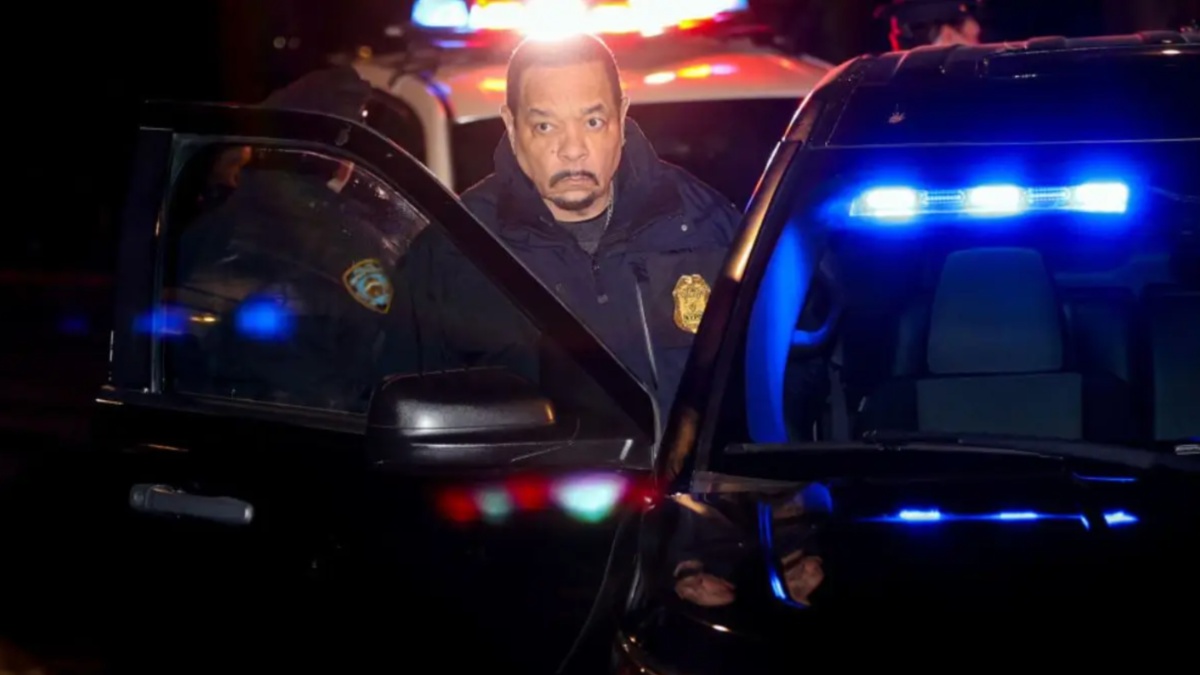
Ice-T changes his lyrics from “Cop Killer” to “ICE Killer” following ICE agent Jonathan Ross murdering Renee Nicole Good in Minneapolis. Photo credit: Jose Perez / Bauer-Griffin / GC Images
The White House claims she tried to weaponize her vehicle in an act of “domestic terrorism,” but Minneapolis Mayor Jacob Frey called the self-defense claim “bullsh-t,” and Ice-T agrees.
Good was shot to death on Jan. 7 as ICE conducted a raid in the city, and two people were shot by a Customs and Border Protection agent in Portland, Oregon, the following day. Luis David Nico Moncada and Yorlenys Betzabeth Zambrano-Contreras were shot inside a red Toyota during the “Operation Oregon” ICE raid. ICE also claimed that the driver tried to use his car as a weapon and claimed self-defense.
Rapper Ice-T is well-known for his provocative song “Cop Killer” with the heavy metal band Body Count. The song is about a person who is fed up with rampant police brutality and has a desire to kill police officers, and during their latest performance, the recording artist changed the lyrics to “ICE Killer.”
The original version begins “Cop Killer! Yeah!︱ I got my black shirt on ︱I got my black gloves on ︱I got my ski mask on ︱This shit’s been too long ︱I got my twelve gauge sawed off ︱I got my headlights turned off ︱I’m ’bout to bust some shots off ︱I’m ’bout to dust some cops off.”
Ice-T said during the performance that he was dedicating the song to ICE agents.
“This is going out to all the ICE agents, running up in muthf*ckas. F*ck ’em all. I don’t give a f*ck,” he said before adding, “I changed the words, ICE KILLER!”
The latest version changed the lyrics to “ICE killer! Yeah! ︱ I got my black shirt on ︱I got my black gloves on ︱I got my ski mask on ︱This sh*t’s been too long ︱I got my twelve gauge sawed off ︱I got my headlights turned off ︱I’m ’bout to bust some shots off ︱I’m ’bout to dust some cops off.”
Fans reacted to the change on Instagram, and many posted fire emojis. One fan wrote, “Ice-T never changed his political stance. Can’t say the same for the other ice and doggy.”
“See…this my era my type of artist to speak up! Let’s go,” added another.
“Cop Killer” was an extremely controversial song when it came out in 1992, and both then-President George H.W. Bush and then-Vice President Dan Quayle called the song “sick” and said it incited sedition.
Police groups also targeted the song, and Ice-T’s then-record label, Time Warner Inc., and the artist pulled the song after the label received bomb threats. The “Colors” rapper defended the song and said it was to condemn racism and police brutality. He also called it a “protest song.”
“The enemies on that album are racist people, parents who teach racism to their kids and brutal police,” he said at the time. “If those are my enemies, so be it.”
The song was re-released in 2005 on the group’s album “Body Count: Live in LA.”
Great Job Niko Mann & the Team @ Atlanta Black Star Source link for sharing this story.
The largest anti-government demonstrations to rock Iran in recent years intensified Friday night, fueling fears of growing fatalities as authorities battle to suppress the protests.
Social media footage trickling out of Iran amid a blanket shutdown of internet and telecommunications networks showed hundreds of thousands marching and chanting anti-regime slogans across the country, with graphic scenes of bodies lying in blood. Other clips showed that the elderly made up many of the protesters.
Separate mobile-camera footage from Fardis, a city about 50 kilometers (31 miles) west of Tehran, showed at least seven bodies covered in blood inside a building. In the videos, people are seen bandaging the head and patching an eye of another individual, while a voice says at least 10 people were killed by gunfire. None of the footage could be independently verified by Bloomberg.
Security forces have arrested nearly 200 “leaders of terrorist groups,” seizing ammunition, hand grenades and Molotov cocktails, Tasnim reported Saturday, citing an informed security official. Iran’s prosecutor general warned that all detainees would be charged as an “enemy of God” — a broadly defined offense punishable by death under Islamic law in the country.
Mohammad Movahedi Azad said all “rioters” would face the same charge, “whether an individual has assisted rioters and terrorists” or “whether they are mercenaries who have taken up arms.” He said trial proceedings will be carried out without any delay and “without leniency, compassion, or indulgence,” the state-run IRIB News reported.
The US-based Human Rights Activists News Agency said Friday that at least 65 people have been killed and 2,311 arrested since protests began on Dec. 28, when traders in Tehran protested a currency crisis and worsening living conditions. The demonstrations have since spread nationwide.
Thirty-eight of the fatalities were identified in Chaharmahal and Bakhtiari, Ilam, Kermanshah, and Fars provinces in central and western Iran, according to the Human Rights Activists group. Time magazine reported Friday that at least 217 protesters have died in Tehran, mostly by live ammunition, citing a doctor in the capital.
Internet-monitoring group NetBlocks said in an X posting that a nationwide internet blackout remained in place in Iran as of Saturday. People inside the country appeared largely cut off from international online services afternoon local time, with many users worldwide reporting they had been unable to get in touch with loved ones at home for almost two days.
The protests over Thursday and Friday — Iran’s weekend — followed a call by Reza Pahlavi, the exiled son of the country’s former shah who’s positioning himself as an opposition leader. He urged demonstrators again to return to the streets after 6 p.m. local time on Saturday and Sunday.
“Our goal is no longer merely to take to the streets,” the US-based, 65-year-old Pahlavi said in an X posting. “The goal is to prepare to seize city centers and hold them.” Pahlavi urged workers in oil, gas and transportation industries to begin a nationwide strike, and said he is “preparing to return to the homeland.”
Oman’s Foreign Minister Badr Albusaidi arrived in Tehran on Saturday, Iranian media reported. The visit comes amid rising tensions between the US and Iran over the Islamic Republic’s handling of protests, a day after Iranian Foreign Minister Abbas Araghchi said it was unclear whether Albusaidi was carrying “a message from anywhere.” Oman mediated five rounds of nuclear talks between Tehran and Washington last year, which stalled after US and Israeli attacks on Iran in June.
State TV played down the protests on Saturday, saying security forces had largely contained the demonstrations on Friday after what it described as unrest by “armed terrorists” in Tehran and other cities the night before.
Iran’s regular army signaled its loyalty to Supreme Leader Ayatollah Ali Khamenei, saying it will “monitor enemy movements in the region and firmly safeguard the nation’s interests, strategic infrastructure, and public property” under the 86-year-old leader, the semi-official Tasnim news agency reported.
Chanting Crowds
Iranian authorities have so far refrained from releasing an official tally of fatalities among protesters or security forces. State-affiliated media reported at least a dozen deaths among police and Basij volunteer militia forces since Thursday. Tasnim said “armed terrorists” killed several police personnel in gunfire on Thursday.
Violence also broke out in Zahedan, a Sunni-majority city in south-western Iran and a long-standing flashpoint for deadly security incidents. The Norwegian-registered Hengaw Organization for Human Rights said security forces opened fire on demonstrators after Friday prayers, leaving several wounded.
State media published images of several burned buildings in Tehran, while a social media video purportedly showed a municipality building in Karaj, west of the capital, engulfed in flames.
Chants recorded in footage included “Death to the dictator,” “No Gaza, no Lebanon, my life for Iran,” and “This is the year of blood; Seyyed Ali will be toppled,” referring to Khamenei, who on Friday repeated his pledge to quash protesters.
While the US has so far been reluctant to embrace Pahlavi as a potential replacement for the Iranian government, President Donald Trump has warned the regime repeatedly against killing protesters.
On Friday, the leaders of France, the UK and Germany also called on the regime to “exercise restraint, to refrain from violence, and to uphold the fundamental rights of Iran’s citizens.”
Great Job Arsalan Shahla, Bloomberg & the Team @ Fortune | FORTUNE Source link for sharing this story.
MACCLESFIELD – Minnow Macclesfield beat title holder Crystal Palace 2-1 in one of the biggest upsets in FA Cup history on Saturday to reach the fourth round.
Macclesfield is a team playing in the sixth tier of English soccer, five levels below its Premier League opponent, and took the lead when captain Paul Dawson headed in a cross from Luke Duffy in the 43rd minute.
Isaac Buckley-Ricketts made it 2-0 in the 60th, prompting wild celebrations.
Following a scramble in the penalty area the ball pinged to Buckley-Ricketts, who came through the Manchester City academy, and he deftly clipped the ball with the outside of his right foot past goalkeeper Walter Benítez.
“I can’t believe it, we never thought we would be in this position,” Macclesfield coach John Rooney told broadcaster BBC. “We were incredible from the first minute. I thought we were deserved winners. I couldn’t be any prouder of the lads.”
Rooney started and ended his playing career as a midfielder with the club — and is in only his first season coaching. He is the younger brother of former England and Manchester United star Wayne Rooney.
Yeremy Pino curled in a last-minute free kick over the wall to leave Macclesfield facing a nervous six minutes of stoppage time as home fans broke out into chants of “Silkmen! Silkmen!” — the club’s nickname.
Macclesfield held on against a Palace side whose dismal afternoon was summed up when U.S. central defender Chris Richards did a foul throw in the final minute of stoppage time, giving possession back to Macclesfield.
The fans sprinted onto the field at Moss Rose — a modest 5,900-capacity stadium in northwest England — in celebration at the final whistle while Dawson and Duffy were carried aloft.
The FA Cup has a long history of dramatic knockouts and huge upsets on the day, such as when non-league Hereford beat Newcastle 2-1 in a third round replay in 1972 or when underdog Palace beat overwhelming favorite Liverpool 4-3 in the 1990 semifinals.
“I didn’t think it was possible but there is that little bit of hope that anything can happen on the day,” coach Rooney said.
Dawson said Macclesfield “means the world to me” and called the victory “an immense achievement.”
Palace manager Oliver Glasner had “no explanation” for what he’d just seen.
“You don’t need tactics. In these kinds of games, you don’t need a manager,” he told the BBC. “If you just show what you’re capable of and having a little bit of pride, then you perform in a different way, but today we missed everything.
“We deserved to lose.”
Palace captain Marc Guéhi walked over to speak with the team’s traveling fans after the defeat.
Other matches
In an all-Premier League tie, Sunderland beat Everton on penalties after the match finished 1-1 following extra time.
Enzo Le Fée put Sunderland ahead in the first half while fellow midfielder James Garner equalized for home side Everton in the 89th.
Norway forward Jørgen Strand Larsen scored a hat trick as Premier League struggler Wolves routed fourth-tier Shrewsbury 6-1. The 2021 FA Cup winner Leicester, now playing in the second tier, won 2-0 at fourth-tier Cheltenham.
Top-flight clashes ahead
Among Saturday’s later third-round matches, seven-time FA Cup winner Manchester City — the runner-up last season — took on third-tier Exeter, while Newcastle hosted Bournemouth and Tottenham faced Aston Villa in all-Premier League clashes.
Also, eight-time champion Chelsea visited second-tier Charlton in the last game.
Semenyo says goodbye
Bournemouth sold Ghana forward Antoine Semenyo to City on Friday in a deal worth a reported 65 million pounds ($87 million).
He thanked Bournemouth fans “for all the memories” in a full-page advertisement printed in the Bournemouth Echo newspaper.
Copyright 2026 The Associated Press. All rights reserved. This material may not be published, broadcast, rewritten or redistributed without permission.
Great Job Associated Press & the Team @ KSAT San Antonio Source link for sharing this story.
Just Security is a non-profit, daily, digital law and policy journal that elevates the discourse on security, democracy and rights. We rely on donations from readers like you. Please consider supporting us with a tax-deductible donation today. Donate Now
Great Job Just Security & the Team @ Just Security Source link for sharing this story.
Netflix has turned Harlan Coben adaptations into New Year Day staples. In 2024, we had Fool Me Once. 2025 brought us Missing You. Now, along came Run Away.
TV fans seem to dig the tradition. With 12.7 million views this week, Run Away is the second most-popular show globally and the #1 show in seven countries. Does that mean we’re getting season 2?
Run Away Season 2 Release Date
Run Away is based on the 2019 novel of the same name, which doesn’t have a sequel. Also, if previous Coben adaptations are any indication, they are meant to be standalone stories.
In other words, Run Away season 2 is unlikely. Add in the fact that the title is listed as a limited series on Netflix, and this is probably all we get.
Still, you never know. If the show proves incredibly popular, a follow-up is never out of the question. In that case, a second installment could arrive in 2027.
Run Away Cast
James Nesbitt as Simon Greene
Ruth Jones as Elena Ravenscroft
Minnie Driver as Ingrid Greene
Alfred Enoch as Isaac Fagbenle
Lucian Msamati as Cornelius Faber
Jon Pointing as Ash
Ellie de Lange as Paige Greene
Adrian Greensmith as Sam Greene
What Is Run Away About?
Run Away revolves around Simon, whose life unravels when his eldest daughter, Paige, runs away.
Simon tracks Paige to a park, where she appears under the influence, accompanied by a troubled young man named Aaron. A heated confrontation between Simon and Aaron is caught on camera and goes viral. Soon after, Aaron is found murdered, and Simon becomes a prime suspect. With Paige still unaccounted for, the father is pulled into an investigation that exposes criminal underworlds and connections to a dangerous cult.
In other words, what begins as a frantic search for his missing child spirals into a dark mystery brimming with twists. The show consists of eight episodes, so it’s a quick and riveting watch.
By the time the finale wraps up, viewers get answers to their most pressing questions. Without going into spoiler territory, we learn Paige’s fate and find out who was Aaron’s killer. The show ends on a pretty definite note, which is why Run Away season 2 seems unlikely. Thankfully, there are many other Colben shows available to stream.
Are There Other Shows Like Run Away?
If you liked Run Away, check out the other Harlan Colben adaptations on Netflix. The list includes The Stranger, Stay Close, Gone for Good, The Innocent, Safe, Hold Tight, and The Woods.
The recent kidnapping of Venezuelan president Nicolás Maduro was not a “counter-narcotics” initiative: it was the culmination of a long-running hybrid warfare strategy aimed at regime change in Caracas.
US strategic planners are pursuing regime change while seeking to avoid the political costs of open war. Instead of relying on direct military occupation, they prefer to blend methods such as economic strangulation, lawfare, diplomatic isolation, covert action, and media management into what is known as hybrid warfare — a strategy designed to achieve regime change while preserving the appearance of legality and restraint.
The attempt to oust Venezuela’s government is not itself new. Ever since the Bolivarian Revolution came to power in 1999 with the election of Hugo Chávez, Venezuela has been subjected to hybrid forms of destabilization. The “War on Drugs” and casting of Maduro as a narco-terrorism chief has, however, gained a central role as a pretext for a long-yearned-for power-grab in Caracas.
WikiLeaks cables show that regime change has long been US strategy. A 2006 US Embassy document set out a strategy to “strengthen democratic institutions, penetrate and divide Chavismo, and build independent society”. The legal groundwork for escalation was established in 2015 when Barack Obama’s administration declared Venezuela a “national security threat,” allowing more coercive pressure.
Since at least 2002, the United States has worked to cultivate an opposition-aligned “civil society.” By working with Venezuelan opposition groups behind the scenes and by financing a dense ecosystem of NGOs through agencies such as USAID and the National Endowment for Democracy, Washington has worked to reengineer Venezuela’s political terrain and bring about a government favorable to US interests. What is labeled “democracy promotion” serves a core function of hybrid warfare: it provides plausible deniability for a real project of foreign intervention.
The most visible expression of this political warfare was Washington’s recognition of Juan Guaidó in 2019 as Venezuela’s “interim president.” This became the centerpiece of an international effort to construct a parallel state apparatus abroad, presenting Guaidó as the legitimate head of government. This fiction provided the political foundation for the seizure of Venezuelan assets, massively stepped-up economic strangulation, and the channeling of diplomatic and financial support to a US-backed opposition. Nearly sixty countries were enlisted in this coordinated attempt to isolate Maduro. It was about manufacturing the conditions for regime change behind the language of constitutional legitimacy.
Yet, this hybrid-warfare campaign didn’t work. Despite mounting pressure — political warfare, economic strangulation, lawfare, diplomatic siege, and constant behind-the-scenes efforts to fracture the Bolivarian Revolution — this strategy failed to deliver. Donald Trump even dismissed Guaidó as the “Beto O’Rourke of Venezuela,” with reference to the failed US presidential candidate — a fitting epitaph for the collapse of this particular initiative.
As the Guaidó project fell apart, Washington leaned on a tried-and-tested script for intervention in Latin America — the War on Drugs — using indictments, rewards, and narco-terrorism allegations to rebrand regime change as law enforcement.
Journalists across mainstream media amplified a cartel narrative that recast Maduro as a drug kingpin — the alleged head of the so-called Cartel de los Soles. What had once been framed as a struggle over “democracy” was now described as a criminal manhunt for a leader of a narco-terrorist organization.
The weaponization of War on Drugs narratives to justify foreign intervention in Latin America has been a central pillar of US geopolitical strategy for decades. It has functioned as a key pretext through which Washington has exerted political leverage, tying access to trade, financial markets, security cooperation, and diplomatic legitimacy to compliance with US strategic priorities. Governments that fall out of favor, even as they announce record drug seizures, are branded as “drug leaders” and “narco-regimes” — a label that serves to delegitimize them internationally and open the door to sanctions and more overt forms of coercion. Through the strategic initiative of Plan Colombia from 2000 onward, billions of dollars in military assistance were poured into Colombia to combat leftist insurgents, even as wide sections of political society actively collaborated with drug-funded right-wing paramilitaries.
Under the second Trump administration, this logic was fully operationalized. The bounty on Maduro’s head was raised from $15 million to $50 million by the US Department of State in a move designed to intensify pressure. An aggressive campaign portrayed Venezuela — not the far more central producers and trafficking hubs in Colombia or Mexico — as the epicenter of the global drugs trade. Even the DEA’s own 2025 National Threat Assessment didn’t list Venezuela as a major producer or a trafficking hub, instead singling out Colombia, Peru, Bolivia, and Mexico.
A whole procedural storyline, facilitated by the US court system — indictments, warrants, and state-sanctioned reward programs — was deployed to present escalation as “due process” and generate the illusion of plausible deniability for regime change. This was “statecraft by indictment” — the criminalization of the Bolivarian leadership, as the new spearhead of Washington’s hybrid war.
Efforts to manufacture consent were paired with a massive intensification of coercive operations against Venezuela, supposedly to stop drugs from reaching US shores. This military build-up took concrete form in a major US naval deployment to the Caribbean, backed by extensive sea and air power. The United States sought to economically strangle Venezuela by targeting its primary export, oil, enforcing a “total and complete blockade,” seizing tankers in international waters, and as of January 7, claiming they were going to control sales.
In the months leading up to Maduro’s kidnapping, counter-narcotics claims were used to justify military “strikes” against sea and land targets in and around Venezuela. At least 110 people were extrajudicially executed on boats by the start of this month, with Trump baselessly claiming that “every one of those boats . . . kills 25,000 Americans” — and insisting that “Maduro’s days were numbered.” At the same time, strategic planners such as Marco Rubio and Pete Hegseth, working with their friends in the media, constantly repeated that the unprecedented escalation was law-enforcement rather than a hybrid regime change operation. This was the political purpose of the drug-war framing: to provide moral cover for a geostrategic offensive as part of the wider project to restore US dominance in Latin America.
Operation “Absolute Resolve,” as it was dubbed by US strategic planners, was a hybrid operation par excellence. It brought overt and covert methods of warfare together to achieve a key objective: the kidnapping of President Maduro and First Lady Cilia Flores.
The raid began with overwhelming air dominance and military action that served as a “shock and awe” strategy designed to spread fear and disorientation across an entire city. Power outages and blackouts were reported across Caracas, with Trump boasting that the “lights of Caracas largely turned off due to a certain expertise that we have; it was dark, and it was deadly.” The operation drew directly from the repertoire of hybrid warfare, fusing military force, intelligence operations, and the law enforcement framing into a single, tightly choreographed act of coercion.
The special-forces assault on Maduro’s residence benefited from speed and surprise: far from any recognizable arrest or judicial process, it was a capture by force. The night-time kidnapping brutally executed the lawfare strategy.
What followed over the next hours and days was an avalanche of propaganda as Maduro’s kidnapping was legitimated with constant references to legality and “judicial processing” by mainstream media. The “law enforcement” narrative was placed front and center on networks like CNN and Fox News, as cameras and commentary fixated on “indictments” and the “processing” of the “captured” and “arrested” Maduro. Leaked emails show that the BBC directly instructed its staff to refer to the kidnapping in these terms — thus presenting Maduro as a wanted man, running from the law.
The framing was perverse but central to the operation: it chose to launder a naked act of state terror, recasting it as the legitimate execution of a court order. With hollow references to “law and order,” the victims, including civilians, were reduced to disposable figures in a grand performance of imperial legality.
Yet the operation and media fanfare that accompanied it were about more than Maduro himself. They were a form of geostrategic communication: a moment of spectacle and intimidation that also provided an opportunity to warn others. Reading from a carefully prepared script on January 3, Trump declared that the “extremely successful operation should serve as warning to anyone who would threaten American sovereignty or endanger American lives.”
In this new phase of hybrid warfare, the United States’ Venezuela policy is no longer contested through election disputes or self-proclaimed presidents, but a more open form of coercion and submission to empire. Indeed, Venezuela occupies a critical position in the architecture of contemporary imperialism, where struggles over strategic resources, the US-China rivalry, Latin American autonomy, and the survival of the Cuban Revolution converge.
As Trump openly admitted, Venezuela is one of the few Latin American states that has maintained a long-term refusal to fall into line with US strategic priorities. It has redirected oil, finance, and security cooperation away from Washington and toward strategic rivals of the United States, building close alliances with China, Russia, Iran, and others. This makes Venezuela not just an economic prize for a few US multinational corporations, but a strategic hinge in the quest for regional and global dominance.
The broader ambitions were clearly spelled out in the US National Security Strategy, unveiled in November: “the United States will reassert and enforce the Monroe Doctrine to restore American preeminence in the Western Hemisphere, and to protect our homeland and our access to key geographies throughout the region. We will deny non-Hemispheric competitors the ability to position forces or other threatening capabilities, or to own or control strategically vital assets, in our Hemisphere.”
Venezuela possesses the largest oil reserves in the world, a commodity foundational to military projection and the stability of the international political economy. The scale of Venezuela’s reserves is such that they can shape the viability of long-term geopolitical objectives even in a context of low prices and production decline.
Control of energy resources is intimately intertwined with the dollar system and strategic-alliance politics. When a major oil producer like Venezuela aligns with powers seeking to structurally reform the Western-led world order, it threatens to erode the pillars of US power – which explains why the United States treats Venezuelan oil as a strategic asset worth breaking international law for, and why the kidnapping is about more than War on Drugs rhetoric.
In its struggle to survive economic warfare, Maduro’s government has been pushed toward using yuan pricing, oil-backed debt resettlement, experimentation with cryptocurrencies, intermediary trading, and relabeling Venezuelan crude. In other words, sanctions had the unintended effect of incentivizing Caracas to develop alternative mechanisms that reduced its dependence on dollar-cleared markets and made Venezuelan oil a vehicle for challenging the very financial levers the United States relies on to enforce its hegemony.
There are also other geopolitical issues at stake. Washington has long viewed the Bolivarian Revolution as a center of gravity for political resistance in the region — not least because of its crucial solidarity with the Cuban Revolution. Far from being “just another left-wing government,” the Bolivarian Revolution has sought to build an alternative political-economic project by reorganizing key state institutions — including a civil–military alliance — toward sovereignty and redistribution, moving away from the liberal “democratic” forms of governance that so effectively allow US interests and dominant class forces to penetrate civil and political society.
Unlike other electoral left-leaning governments that proved fragile in the face of coups, lawfare, economic attack, and elite sabotage, the Venezuelan project has endured prolonged internal and external pressure, making it a qualitatively different form of state project — and therefore a uniquely high-value target for regime change. Together with its strategic assets, commitment to a multipolar world order, and political resistance to the United States within Latin America, Venezuela represents not simply a local nuisance but a challenge to the global hierarchy of imperialism.
Ultimately, the kidnapping was the violent escalation of a hybrid strategy designed to bring a strategically positioned nonaligned state back under US control. The narrative of the War on Drugs and the media fixation on Maduro’s courtroom processing are not incidental: they are the ideological cover that converts a kidnapping into a fraudulent exercise in due process. This is how consent is manufactured for a power play aimed at restoring US dominance in the western hemisphere and warning others who may dare to defy the Empire.
Great Job Oliver Dodd & the Team @ Jacobin Source link for sharing this story.
New Year’s resolution season is in full swing, and you’ve officially made it past Quitter’s Day (the second Friday in January, when many people have given up on their resolutions). Maybe you want to exercise more often, or keep better track of your schedule, or hit a certain step goal, or drink more water. Whatever the habit you’re making or breaking, we’ve found some deals on WIRED-tested gear that can help you on your journey.
The Beats Powerbeats Pro 2 are the best workout earbuds you can buy. This price matches the best deal we’ve seen, and every color (orange, lavender, black, and beige) is discounted. The design is supremely comfortable, they have great noise canceling and a transparency mode, and they last up to 10 hours depending on your noise-cancellation settings. There’s also a built-in heart rate monitor. These sleek buds have punchy sound and are compatible with iOS and Android devices.
BlueAnt
Pump X
Our favorite over-ears for the gym have cooling ear pads and great active noise cancellation.
Garmin Vivoactive 6 for $250 ($50 off)
The Garmin Vivoactive 6 recently earned the top spot in our fitness tracker buying guide. It looks great on your wrist, and it plays well with both Android and iOS devices. Moreover, it’s accurate, and it has onboard satellite connectivity and a bright, easy-to-read AMOLED display. You’ll get a spate of fitness features, including blood oxygen monitoring, sleep tracking, heart rate and step counts, and fall detection. There’s an optional Connect+ subscription that costs $70 per year, but we don’t think you need it.
Fitbit
Ace LTE
We like this smartwatch for kids, and most important, our kids like it too.
Apple Watch Series 11 for $300 ($100 off)
The Apple Watch Series 11 finally has a full 24 hours of battery life, which makes it worth consideration if you’ve been in the market for an upgrade. It is both an excellent fitness tracker and smartwatch. It can track all sorts of stats, from the basics like steps and workouts to sleep, hypertension, and blood oxygen. It has been on sale at this price since the holiday shopping season, but it does tend to fluctuate back and forth, and we haven’t seen it sell for less than it is right now. For more recommendations, check out our Apple Watch Buying Guide.
Google
Pixel Watch 4
The best smartwatch for Android owners is repairable, sleek, and at a match of its lowest price.
Apple
Watch SE 3
This budget-friendly Apple Watch is still excellent for those that don’t need the latest and greatest features.
Optimum Nutrition Gold Standard 100 Percent Whey Protein Powder for $32 ($18 off)
Photograph: Boutayna Chokrane
Photograph: Boutayna Chokrane
Optimum Nutrition
Gold Standard 100 Percent Whey Protein Powder
Optimum Nutrition was having a “Quitter’s Day” sale this week, but the powder is also on sale at Amazon. This is the best protein powder overall. It delivers 24 grams of protein per serving, and it’s available in more than 20 flavors, so you should be able to find one that you like. (My favorite is Banana Cream, which tastes like a yellow Laffy Taffy, and WIRED editor Kat Merck’s favorite is Delicious Strawberry, but there are less adventurous options as well.) If you’re working on your gains this year, this is a solid deal worth considering.
Hydro Flask
Standard Mouth Water Bottle
This durable, double-insulated, and affordable water bottle is our top pick.
Hyperice
Hypervolt 2
This massage gun offers excellent value, especially with the discount.
Day Designer Daily Planner for $57 ($21 off)
Day Designer
Daily Planner
This planner has space for a typical calendar and a daily to-do list. Half of each page has blocks of time from 5 am to 9 pm, and you’ll also get a to-do list section and a “three most important things” section. It’s a bulky planner, but if you’re looking for space to fine-tune the minutiae of your day-to-day life, there’s room.
Amazon
Kindle Scribe (2nd Gen, 2024)
Want to read more in 2026? This digital notebook is a hybrid with e-reader functionality and a neat smart pen.
Dreamegg
Sunrise 1
Get better sleep this year with this affordable sunrise alarm, which can help you wake up feeling refreshed.