Home News Page 98

Trump, 79, Accidentally Reads Marco Rubio’s Private Note Out Loud

Trump, 79, Accidentally Reads Marco Rubio’s Private Note Out Loud

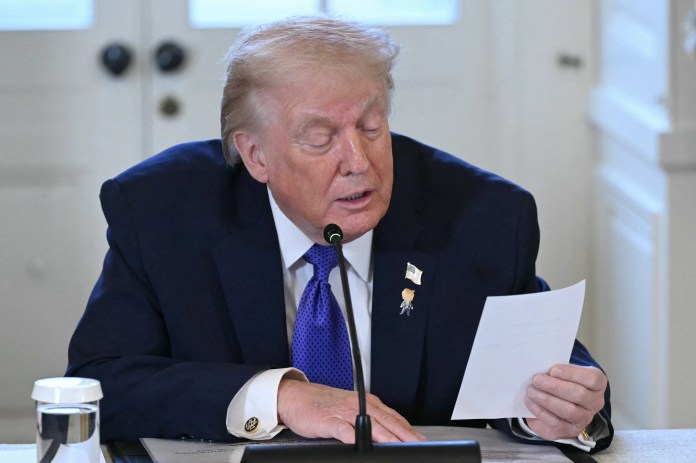
Donald Trump humiliated himself Friday when Secretary of State Marco Rubio tried to slyly pass him a note during a meeting with oil executives, and the president immediately read it aloud.

Trump was in the midst of promising “a very nice return” for executives from Chevron, ConocoPhillips, Exxon, Halliburton, Valero, and Marathon—in exchange for a $100 billion investment in rebuilding Venezuela’s energy sector, when he was suddenly sidetracked by a scrap of paper from Rubio.   

“You’re all gonna do very well—Marco just gave me a note. ‘Go back to Chevron, they want to discuss something,’” Trump read, turning to look at Chevron Vice Chairman Mark Nelson. “Go ahead, I’m going back to Chevron, Mark.”

Rubio grimaced uncomfortably, as Trump patted him on the back. “Thank you, Marco,” he said.

“Was there a question, Mr. President?” Nelson asked.

“Yes, go ahead Marco, what are you saying here?” Trump asked, inspecting the note again.

Energy Secretary Chris Wright jumped in. “Mark, if you could update us on operations on the ground, appropriate approvals, what you might be able to achieve in the next 12 to 18 months—give us a little view from the ground,” he said. 

Nelson launched into a description of Chevron’s ground operations. Chevron is the only oil company currently operating in Venezuela, as part of a joint venture with Petróleos de Venezuela. Wright told CNBC Wednesday that the Trump administration was receiving “daily updates” from Chevron and working closely to “allow their model to grow even more.”

Trump’s gaffe was part of a larger trend of cognitive decline, as the aged president has spent the last year in office appearing to fall asleep during meetings and giving incoherent, confused rants.

Great Job Edith Olmsted & the Team @ The New Republic Source link for sharing this story.

The Long Walk Is a Death March Across an Eerily Familiar America – Christ and Pop Culture

The Long Walk Is a Death March Across an Eerily Familiar America – Christ and Pop Culture

These days, we see suffering streamed straight to our screens. Tragedy goes viral and real human pain is reduced to background noise. Every once in a while, though, a story reflects our society so clearly that it becomes impossible to look away. Francis Lawrence’s The Long Walk is one such story that hits close to home. Though it’s an adaptation of one of Stephen King’s earliest novels from nearly fifty years ago, The Long Walk remains eerily familiar today while telling a story of tenacity, human exploitation, friendship, and sacrifice.

Although King may be best known for horror, some of his most memorable works—The Shawshank Redemption, The Green Mile, Stand by Me—stand out because they uncover the quiet strength and hope in everyday people. This movie follows that same path, showing what happens when a nation exchanges its conscience for a bit of entertainment.

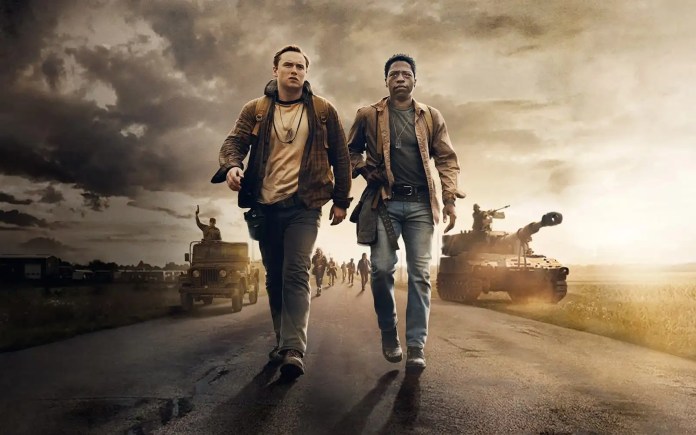
Set in a dystopian America during the 1970s, The Long Walk depicts what happens when the state becomes god. The country is in an economic depression and the totalitarian regime has created an annual ritual that offers the only hope for many but requires a sacrifice. Fifty teenage boys, one for each state, are selected by lottery for the chance to win a great prize: wealth and the fulfillment of any wish. The catch is that they must remain the last one standing after a grueling, non-stop walk across America. They must keep a pace of at least three miles/hour and if they stop for sleep or bathroom breaks, or if they receive three warnings, they face execution.

What horrors do we witness daily with indifference? What injustices have we learned to scroll past? And most painfully, who have we silently decided doesn’t matter?

The film centers on Ray, a regular teenager-next-door who becomes the story’s emotional core. After his father dies, he lives alone with his mother and wants to provide a better life for them. Like the other boys, he “volunteers” for the Long Walk, but his choice isn’t about fame or glory. Rather, it comes from grief, desperation, and the kind of pressure poverty puts on those who have run out of options. Through Ray, we see just how cruel the system is; the state pushes its poorest kids to gamble with their own lives for even the slightest shot at a future. He’s the classic everyman thrown into something horrific because he loves his family and sees no other way.

Ray quickly forms a deep bond with Pete, who becomes his closest companion and the person he trusts most on the Walk. Pete is the type of guy who cracks jokes to hide his fear. He’s been hurt before, and it’s left him aching for real connection. He clings to friendship because it helps him define who he is in a world determined to erase that. His kindness, curiosity, and soft-heartedness make him the glue of the group, offering the other boys comfort in a world built to rob them of their humanity. His friendship with Ray becomes its own quiet rebellion, a way of saying that while the state might control their bodies, it can’t fully claim their hearts.

The duo soon falls in with several others: Arthur, a devout Christian and steady optimist; Hank, a loud-mouthed cynic; and Stebbins, who is quiet and insecure but physically adept. Each boy reveals a different way that people cope with suffering. Arthur becomes the group’s spiritual center, and though faith does not spare him from pain, it sharpens his sense of right and wrong. He prays over the boys, quotes Scripture, and speaks hope into their exhaustion. Arthur sees the Walk for what it truly is: a violent ritual dressed up as entertainment. And while he can’t change the regime, he resists it by treating the boys not as competitors, but rather, as valuable individuals. His optimism becomes a type of gentle protest, a reminder of the dignity the system tries to erase.

Hank, on the other hand, represents cynicism born from disappointment. He’s loud, blunt, and rarely filters what he says. His humor is sharp and often stings, but it cuts through the Walk’s cruelty in a way that nothing else can. Underneath the sarcasm, though, lies a kid bracing for disappointment from the world because it has never given him anything else. Hank reflects a common stance many people take in unjust societies: mock the system because you cannot change it. Underneath his show of bravery, he is actually very afraid, showing how mistrust often grows out of old wounds and lack of hope.

Stebbins is different: strong, capable, but emotionally distant. He walks at the edge of the road, detached from the other boys, always watching and rarely joining in. This makes the others uneasy, as if he knows something they don’t. He seems to understand the Walk on a deeper level and when he talks, he chooses every word carefully. In another life, his strength might have opened doors, but here, it’s just used against him. Eventually, we discover that the only reason he’s on the Walk is because of who his father is. He’s not walking to win the prize; he’s walking to be seen.

As the boys travel across the American landscape, crowds gather to cheer, soldiers march beside them, and cameras broadcast their every step live to a gawking nation. The boys form brief but meaningful connections along the way. They endure sleep deprivation, hunger, hallucinations, and the trauma of watching each other die. Their journey is both a test of physical endurance and a spiritual nightmare.

Leading their death march stands the Major, a cold, sunglass-wearing figure who feeds on control. He smiles at death, delights in fear, and enjoys the power he holds over the boys. As the Walk’s twisted leader, he resembles an anti-Christ figure, offering false blessing, false hope, and a false path to salvation. He demands loyalty but offers nothing in return. He symbolizes a godless, power-obsessed society. Whereas Christ lays down his life for others, the Major demands other lives to boost his own power.

Although the Walk is technically “voluntary,” it’s really the only chance that boys trapped in crushing poverty have. The system forces them to choose death, and even then, their sacrifice won’t change the world they long to escape. The Long Walk shows just how easily ordinary people can accept unthinkable things simply by going along with them. It highlights how society often forces its most vulnerable members to sacrifice dignity, health, and even their future simply to survive. 

As the crowds line the road to cheer, the nation participates in its own spiritual decay. Adults and children clap as contestants fall. Only when the camera shifts to the grieving families of the fallen do viewers remember that these are not characters in a game—they are children. Watching such pain, we can’t help but ask ourselves: What horrors do we witness daily with indifference? What injustices have we learned to scroll past? And most painfully, who have we silently decided doesn’t matter? Jesus’ words in Matthew 25:40 resonate with fresh urgency: “Truly, I say to you, as you did it to one of the least of these… you did it to me.”

Even though the Walk is built to turn the boys into enemies, deep friendships form, highlighting human compassion in a place meant to crush it. The boys share water and food, encourage each other, and tell jokes and stories to stay human while the Major insists they are nothing but numbers. But every friendship carries the pain of knowing that only one can survive. Ray and Pete choose connection anyway, symbolizing Christ’s teaching: “Greater love has no one than this, that someone lay down his life for his friends” (John 15:13).

Unlike some Hollywood movies, The Long Walk does not offer easy redemption. The suffering is brutal and the boys die without honor. There are no hints of divine justice, no suggestion that good will overcome evil. God feels painfully absent here, and the film forces us to imagine a society where human power is the only authority left. Yet despite its bleakness, The Long Walk is impossible to look away from. The grotesque imagery and harsh language are unsettling but never gratuitous while the performances keep us emotionally tied to the boys and worried for each character’s fate. 

In the end, this heartbreaking film leaves us with one truth: real sacrifice comes from love, not force. And whenever a society forgets that, it inevitably begins its own long walk toward destruction.

Great Job Melissa Givens & the Team @ Christ and Pop Culture Source link for sharing this story.

Man arrested, charged for deadly shooting at downtown Austin hotel

Man arrested, charged for deadly shooting at downtown Austin hotel

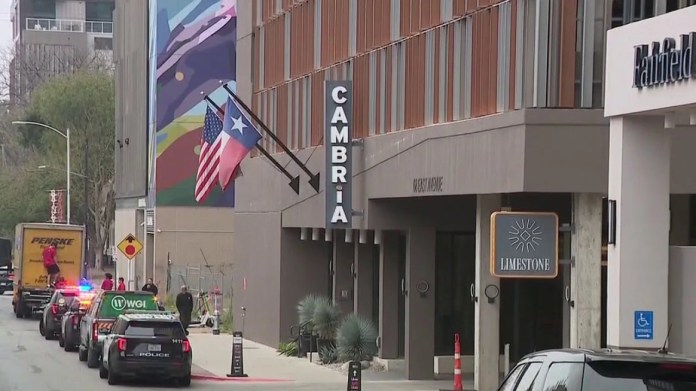
A 20-year-old was arrested and charged with murder for a deadly shooting at the Cambria Hotel in downtown Austin, police said.

What we know:

Police said on Monday, Jan. 5, around 6:55 a.m., officers responded to a report of a gunshot at the Cambria Hotel at 68 East Avenue #824. The caller said a person had been shot.

When officers arrived, they found a man with injuries. He later died at the scene. He was identified as Luke Bradburn.

The investigation revealed that Bradburn drove and crashed a car that belonged to 20-year-old Maximillian Salinas. After the crash, Bradburn and the other people in the car left and went to the Cambria Hotel. 

Salinas went to the hotel and shot Bradburn.

On Jan. 6, Salinas was arrested and charged with murder.

Anyone with information is asked to contact the Austin Police at 512-974-TIPS. You may submit your tip anonymously through the Capital Area Crime Stoppers Program by visiting austincrimestoppers.org or calling 512-472-8477.

The Source: Information from the Austin Police Department

DowntownCrime and Public Safety

Great Job & the Team @ Latest & Breaking News | FOX 7 Austin for sharing this story.

Oil Executives Non-Committal to Trump’s Venezuela Pitch at the White House – Inside Climate News

Oil Executives Non-Committal to Trump’s Venezuela Pitch at the White House – Inside Climate News

President Donald Trump’s meeting with oil industry executives was high on praise for Trump and his actions in Venezuela, but low on commitments from U.S. oil majors to invest the billions of dollars it would take to revive the country’s foundering oil industry. 

Less than a week after a U.S. military operation captured and arrested the president of Venezuela, Trump met with executives from many of the top oil companies in the world Friday to discuss what to do with the country’s huge oil reserves. 

Nearly two dozen oil industry CEOs attended Friday’s meeting with Trump, Vice President J.D. Vance, Secretary of State Marco Rubio, Energy Secretary Chris Wright and Interior Secretary Doug Burgum.

“We’re going to discuss how these great American companies can help rapidly rebuild Venezuela’s dilapidated oil industry and bring millions of barrels in oil production to benefit the United States, the people of Venezuela and the entire world,” Trump said to begin the meeting. 

“We’re going to be working with Venezuela, we’re going to be making the decision as to which oil companies are going to go in, that we’re going to allow to go in,” Trump said. “We’re gonna cut a deal with companies. We’ll probably do that today or very shortly thereafter.”

Trump pitched Venezuela as an opportunity for companies to profit, saying that the companies would have “total security.” 

The oil company executives were less enthused.

“If we look at the legal and commercial constructs and frameworks in place today in Venezuela today, it’s uninvestable,” Exxon CEO Darren Woods said in the meeting. “And so significant changes have to be made to those commercial frameworks, the legal system. There has to be durable investment protections, and there has to be a change to the hydrocarbon laws in the country.”

Woods said the company had its assets in Venezuela seized twice, losing billions, and that the company takes a decades-long view when choosing to enter a country. 

“The investments that we make span decades and decades,” Woods said. “So we do not go into any opportunity with a short mindset, short-term mindset. There’s a value proposition that we have to meet.”

But Woods also did not rule out Exxon’s return to Venezuela, saying he believed the necessary changes could be made and that it would be “absolutely critical” to get a technical team in the country to better assess the situation. 

“We’re confident that with this administration and President Trump, working hand in hand with the Venezuelan government, that those changes can be put in place,” he said. 

Executives from Chevron, Exxon, Conoco Phillips, Continental, Halliburton, HKN, Valero, Marathon, Shell, Trafigura, Vitol Americas, Repsol, Eni, Aspect Holdings, Tallgrass, Raisa Energy and Hilcorp were expected to attend the meeting, which was live streamed with the press corps in attendance.

Venezuela holds the largest known oil reserve in the world at an estimated 303 billion barrels, but getting companies to make the investments to get the oil may be a tough sell. 

Oil companies are reported to be wary of operating in Venezuela, after companies had their assets seized in 2007 when then-President Hugo Chavez nationalized the country’s oil industry. Since then much of the oil infrastructure in the country has fallen into disrepair, and the workforce fled. 

Energy consulting firm Rystad Energy estimated it would take “at least $30 to $35 billion” in capital over the next two to three years to return Venezuela to its pre-Chavez level of production, and $184 billion over the next 14 years. 

Trump has said he wants oil companies to invest $100 billion toward the effort. 

There would be heavy environmental costs as well. Trump himself has called Venezuelan oil some of the “dirtiest, worst oil” in the world. Described as “extra-heavy crude,” Venezuela’s oil is a tar-like substance that must be heated to bring it to the surface and mixed with chemicals to be transported in pipelines. An analysis by clean energy nonprofit RMI found Venezuela’s oil to produce more greenhouse gas emissions per barrel than that of the other 54 leading oil-producing nations in 2024.  

The heavy crude, like Canadian tar sands oil, requires additional refining because of its poor quality, further increasing the energy needed to turn it into a usable product. 

That refining would likely take place in Black communities in Texas and Louisiana where the populations are already heavily impacted by the oil industry. 

A spokesperson for the American Petroleum Institute, a trade group representing U.S. oil and gas industry interests, said the industry welcomed the collaboration with the White House, but said investment decisions would be made by individual companies. 

“Our industry welcomes the President’s invitation to discuss how American energy leadership, global markets, and developments in Venezuela intersect,” the spokesperson said in an email. “As always, our role is to share industry expertise and perspective, while any investment decisions are made independently by individual companies and depend on fundamental conditions such as security, the rule of law, market factors, and stable governance.” 

Trump posted to social media Friday that a “very big factor in this involvement will be the reduction of Oil Prices for the American People.” 

But crude oil prices are already as low as they’ve been since early 2021, according to the U.S. Energy Information Administration. The EIA states that in 2025, there was more supply in the global crude oil market than demand. 

About This Story

Perhaps you noticed: This story, like all the news we publish, is free to read. That’s because Inside Climate News is a 501c3 nonprofit organization. We do not charge a subscription fee, lock our news behind a paywall, or clutter our website with ads. We make our news on climate and the environment freely available to you and anyone who wants it.

That’s not all. We also share our news for free with scores of other media organizations around the country. Many of them can’t afford to do environmental journalism of their own. We’ve built bureaus from coast to coast to report local stories, collaborate with local newsrooms and co-publish articles so that this vital work is shared as widely as possible.

Two of us launched ICN in 2007. Six years later we earned a Pulitzer Prize for National Reporting, and now we run the oldest and largest dedicated climate newsroom in the nation. We tell the story in all its complexity. We hold polluters accountable. We expose environmental injustice. We debunk misinformation. We scrutinize solutions and inspire action.

Donations from readers like you fund every aspect of what we do. If you don’t already, will you support our ongoing work, our reporting on the biggest crisis facing our planet, and help us reach even more readers in more places?

Please take a moment to make a tax-deductible donation. Every one of them makes a difference.

Thank you,

Great Job By Dennis Pillion & the Team @ Inside Climate News Source link for sharing this story.

The Right Is Exploiting the Bondi Massacre to Silence Dissent

The Right Is Exploiting the Bondi Massacre to Silence Dissent

Interview by
Chris Dite

The Bondi massacre in Australia was perpetrated by Islamic State supporters. But immediately following the killings, a chorus of right-wing voices began placing the blame on pro-Palestinian slogans, protests, and policies.

Israeli prime minister Benjamin Netanyahu blamed the murders on Australia’s recognition of the state of Palestine. Australia’s Special Envoy to Combat Antisemitism, Jillian Segal, claimed there was an obvious link between Bondi and the three hundred thousand people who marched across the Sydney Harbour Bridge against the genocide in Gaza. The premier of New South Wales, Chris Minns, said the implications of pro-Palestine protests could be seen in the massacre and banned protests in the state for at least three months. Other states promised to follow suit. Some government-connected trade union leaders echoed calls to end all protests for the foreseeable future.

The federal government announced a Royal Commission into the Bondi attack to appease some of its critics. Its choice of commissioner, however, was condemned by right-wing politicians for having previously ruled that freedom of political communication was an implied constitutional right. The Adelaide Writers Festival has now dropped a Palestinian writer from its lineup, implying some sort of link between Palestinian solidarity and danger. The South Australian premier slanderously supported the move, declaring “I do not support the inclusion of people who actively undermine the cultural safety of others, or celebrate the death of innocent civilians.”

The Jewish Council of Australia has been an active voice of opposition to those linking anti-genocide protests with violence. A growing group of progressive Jewish people who reject the equation of anti-semitism with criticism of Israel, the Jewish Council regularly faces the wrath of the Zionist political establishment and the Murdoch media. Jacobin spoke with Jewish Council representatives Sarah Schwartz and Max Kaiser about the dangers of the current moment.


Great Job Max Kaiser & the Team @ Jacobin Source link for sharing this story.

Vaccines Jettisoned by CDC Safeguarded Millions From Disease – KFF Health News

Vaccines Jettisoned by CDC Safeguarded Millions From Disease – KFF Health News

The federal government scaled back its recommended childhood vaccines, sidelining six that have safeguarded millions from serious diseases, long-term disability, and death. 

Just three of those that the Centers for Disease Control and Prevention says it will no longer routinely recommend — against hepatitis A, hepatitis B, and rotavirus — have prevented nearly 2 million hospitalizations and 90,000 deaths in the past 30 years, according to the CDC’s own publications

Federal and private insurance will still cover the vaccines

Experts on childhood disease were baffled by the change, which the Department of Health and Human Services said followed “a scientific review of the underlying science.” 

The vaccines are “held to a safety standard higher than any other medical intervention that we have,” said Lori Handy, a pediatric infectious disease specialist at the Children’s Hospital of Philadelphia. “The value of routine recommendations is that it really helps the public understand that this has been vetted upside down and backwards in every which way.”

Public health officials say the guidance puts the onus on parents to research each vaccine and its importance. Here’s what they prevent: 

RSV. Respiratory syncytial virus is the most common cause of hospitalization for infants in the U.S. It spreads in fall and winter, producing cold-like symptoms and causing tens of thousands of hospitalizations and hundreds of deaths yearly. 

Hepatitis A. Hepatitis A vaccination, recommended for all toddlers since 2006, has led to a more than 90% drop in the disease since 1996. The foodborne virus, which causes a wretched illness, still plagues adults, particularly people who are homeless or abuse drugs or alcohol, with 1,648 cases and 85 deaths reported in 2023. 

Hepatitis B. The disease causes liver cancer, cirrhosis, and other serious illnesses and is particularly dangerous when contracted by babies and young children. The hepatitis B virus is transmitted through blood and other bodily fluids, even in microscopic amounts, and can survive on surfaces for a week. From 1990 to 2019, vaccination resulted in a 99% decline in reported cases of acute hepatitis B among children and teens. Liver cancer among American children also plummeted with universal childhood vaccination. 

Rotavirus. Before routine administration of the current rotavirus vaccines began in 2006, 70,000 young children were hospitalized and 50 died yearly from the virus, known as “winter vomiting syndrome,” said Sean O’Leary, a University of Colorado pediatrician. “It was a miserable disease that we hardly see anymore.” 

Meningococcal disease. About 600 to 1,000 U.S. cases of meningococcal disease are reported yearly, killing more than 10% of those it sickens and leaving 1 in 5 survivors with a disability. 

Flu. The virus has killed hundreds of children in recent years, though it tends to be much more severe in older adults.

Great Job Arthur Allen and Jackie Fortiér & the Team @ Public Health Archives – KFF Health News Source link for sharing this story.

Save 50% at Total Wireless, Even Without a Promo Code

Save 50% at Total Wireless, Even Without a Promo Code

Total Wireless, formerly known as Total by Verizon, is a prepaid, no-contract wireless provider with unlimited data covered by the Verizon 5G network. Total Wireless Total 5G Unlimited plan has unlimited data, talk, and text, along with a five-year price guarantee—meaning it won’t get jacked up after a trial period, guaranteeing you get unlimited data at a low price. Total Wireless has also introduced unlimited data on Verizon’s 5G Ultra Wideband network that promises to be up to 10 times faster than the median download speeds of other providers.

Whether you have to have the newest iPhone 17, or are more of an Android phone person, we wanted to highlight the best Total Wireless promo codes and discounts that will make anyone happy!

50% Off With BYOD at Total Wireless (No Promo Code Required)

My phone bill is always way more expensive than I think it will be, and it doesn’t help that phone contracts can be confusing and difficult. Total Wireless makes it easy, with incentives like free items and price-lock discounts. Right now, you can get 50% off the Total 5G Unlimited plan when you bring your own phone (aka ‘Bring Your Own Device’). These plans start at as low as $20 per month, with taxes and fees included.

Save up to $250 on Select Devices When You Switch to Total Wireless

Total Wireless wants to thank you for switching. Right now, you can get a free Galaxy A36 5G when you switch to a Total 5G or 5G+ unlimited plan. Or, you could choose to get up to 4 free Moto G Stylus 5G phones when you switch to the Total Base 5G Unlimited plan (or higher). They have tons of other promos going on too, so there’s something no matter your taste. Right now, if you switch, you’ll get up to $250 off select devices, including the iPhone 13 for $50 ($249 off), a free Samsung Galaxy, or a free Samsung Galaxy A25 5 (originally $180), and so much more.

Loop in Friends, Get a Month Free

Total Wireless also has a loyalty program; when your friend gives you a referral code to join, you’ll get a free month of service upon joining. Once you make the switch to Total Wireless and join Total Rewards, as long as you enter your friend’s code within 14 days of activation, you’ll both receive 5,000 points, which is enough for a $50 service plan.

Other Ways to Save at Total Wireless (No Coupon Required)

Tons of other Total Wireless deals are active throughout the month, like the chance to get a free Samsung Galaxy A26 5G or Samsung Galaxy A16 5G when you Port-in, Switch, and purchase a 2-month 5G Unlimited plan or higher, through April 15. On top of that, with the Total 5G Unlimited plan, you can get unlimited talk, text, and data for under $30 per month, plus a 15 GB hotspot, and a Disney+ subscription.

Great Job Molly Higgins & the Team @ WIRED Source link for sharing this story.

Texas hands over complete list of registered voters to Trump administration

Texas hands over complete list of registered voters to Trump administration

This coverage is made possible through Votebeat, a nonpartisan news organization covering local election administration and voting access. Sign up for Votebeat Texas’ free newsletters here.

Texas officials have turned over the state’s voter roll to the U.S. Justice Department, according to a spokesperson for the Texas Secretary of State’s Office, complying with the Trump administration’s demands for access to data on millions of voters across the country.

The Justice Department last fall began asking all 50 states for their voter rolls — massive lists containing significant identifying information on every registered voter in each state — and other election-related data. The Justice Department has said the effort is central to its mission of enforcing election law requiring states to regularly maintain voter lists by searching for and removing ineligible voters.

Alicia Pierce, a spokesperson for the Texas Secretary of State’s Office, told Votebeat and The Texas Tribune that the state had sent its voter roll, which includes information on the approximately 18.4 million voters registered in Texas, to the Justice Department on Dec. 23.

The state included identifiable information about voters, including dates of birth, driver’s license numbers and the last four digits of their Social Security numbers, Pierce said.

Experts and state officials around the country have raised concerns over the legality of the Justice Department’s effort to obtain states’ voter rolls and whether it could compromise voter privacy protections. The Justice Department has said it is entitled to the data under federal law and withholding it interferes with its ability to exercise oversight and enforce federal election laws.

The department has now sued 23 states and Washington, D.C., for declining to voluntarily turn over their voter rolls. Those states, which include some led by officials of both political parties, have generally argued that states are responsible for voter registration and are barred by state and federal law from sharing certain private information about voters. In an interview with “The Charlie Kirk Show” last month, Assistant Attorney General Harmeet K. Dhillon said 13 states, including Texas, had voluntarily agreed to turn over their voter rolls.

In a letter to Nelson dated Friday and obtained by Votebeat and The Texas Tribune, the Democratic National Committee said the move to hand over the voter roll could violate federal election law.

DNC Chair Ken Martin said the turnover of such data is tantamount to a “big government power grab” and would invite privacy violations and could result in eligible voters being kicked off the rolls. The DNC, he said in a statement, “won’t stand idly by as the Trump DOJ tries to get access to Texas voters’ sensitive information.”

In its letter, Daniel Freeman, the DNC’s litigation director, requested records related to the Justice Department’s request, and warned the party could take further action.

Some election officials and voting rights watchdog groups have raised concerns about what the Justice Department intends to do with the information provided by the states, with some suggesting it may be used to create a national database of voters.

Votebeat and The Texas Tribune have asked the Texas Secretary of State’s Office for a signed copy of the agreement between the state and the Justice Department, known as a memorandum of understanding, governing how the sharing of the voter data would work and steps the state has agreed to take in response to any questions about voter eligibility raised by the Justice Department. The state has not yet released it.

In a proposed memorandum of understanding sent to Wisconsin officials last month and publicly released by state officials, the Justice Department said that upon receiving the state’s voter data, it would check the state’s voter roll for “list maintenance issues, insufficiencies, anomalies or concerns.” The department would then notify the state and give it 45 days to correct any problems. The state would then agree to resubmit the voter roll to the department. Wisconsin declined the agreement, and the Justice Department has since sued the state.

In his letter to Nelson, Freeman identified two potential legal violations associated with some of those clauses, though acknowledged he didn’t yet know whether Texas had signed such an agreement and asked for records.

Freeman wrote that the 45-day removal period as laid out in the public versions of the memorandum would run afoul of a provision in the National Voter Registration Act that lays out specific conditions, such as having missed two elections after receiving a notice from the state, for states to remove registered voters from the rolls.

Freeman also wrote that federal law also bars states from doing systemic voter removals from the rolls within 90 days of a primary or general election. Because Texas has an upcoming March 3 primary, May 26 runoff and Nov. 3 general election, the state cannot conduct such list maintenance until after the runoff, Freeman wrote. The 90-day moratorium would then kick in again on Aug. 6, ahead of the November election.

Texas agreed to the memorandum of understanding and released the data, but told the department that it did so with the understanding it wouldn’t “limit or affect the duties, responsibilities, and rights” of the state under either the NVRA or other federal laws, according to two letters the Texas Secretary of State’s Office sent the Justice Department in December and released to Votebeat and The Texas Tribune.

Natalia Contreras is a reporter for Votebeat in partnership with the Texas Tribune. Contact Natalia at ncontreras@votebeat.org.

This article first appeared on The Texas Tribune.

Great Job Natalia Contreras | Votebeat and The Texas Tribune , Gabby Birenbaum | The Texas Tribune & the Team @ Texas Public Radio for sharing this story.

ICE officer who killed a Minnesota woman is a war veteran who spent over a decade working for DHS

ICE officer who killed a Minnesota woman is a war veteran who spent over a decade working for DHS

Before Immigration and Customs Enforcement officer Jonathan Ross encountered Renee Nicole Good on a snowy Minneapolis street, fatally shooting her as she tried to drive away during a confrontation, he spent years working for the government and serving in the military.

Now, as Minneapolis reels from yet another tragedy making national headlines, Ross is at the center of debate over whether his actions during Wednesday’s confrontation were justified.

Trump administration figures, including President Donald Trump, have defended Ross and claimed that Good was an agitator who attempted to run him over with her SUV. Witnesses have told NBC News that it didn’t appear Ross was in the direct path of Good’s SUV as she tried to evade ICE officers. Videos contradict Trump’s claim that Good “viciously ran over” Ross, showing that Good’s car didn’t knock down Ross, whose legs were to the side of the SUV as it moved by him while he fired.

On Friday, on a quiet, suburban cul-de-sac full of multi-level homes about 30 miles from the scene of the shooting in south Minneapolis, few neighbors were out bicycling and walking their dogs. Hockey sticks lay on porches and “let it snow” signs decorated doorways.

Some onlookers from other neighborhoods had come to observe the scene outside Ross’ house, where he lives with his wife and children. Someone had ordered pizza to the home, and a delivery driver spent some time ringing the doorbell before returning to his car, taking the pies with him. Neighbors talked amongst themselves about getting away for the weekend.

One female neighbor, who asked that she not be identified by name for fear of retribution, said she saw people packing boxes at Ross’ home Friday morning.

“What I did see was three trucks and people moving boxes out of there. I texted one of my friends right away,” she said. “I mean, they were really hustling when I was down there.”

Asked who was moving the boxes, she said, “No idea.”

Multiple neighbors told NBC News that during the presidential election, a pro-Trump and at least one “Don’t Tread On Me” Gadsden sign had been on display. There were no political signs outside the house Friday, and Ross’ political affiliation is unknown.

A neighbor who also asked not to be identified by name said everyone in the neighborhood is “freaking out.” She said the pro-Trump signage at Ross’ home was noticeable because “part of the neighborhood is not generally supportive of Trump, so the houses stick out if they are.”

So far, Ross has not made any public statements about the shooting and NBC News has made numerous attempts to reach him with no response.

None of the neighbors interviewed were aware that Ross worked for ICE, but one suspected he had some kind of involvement with the military because they saw him wearing fatigue pants.

Deployed to Iraq as a member of the Indiana National Guard from November 2004 to November 2005, Specialist Ross of the 138th Signal Battalion earned the Army Commendation Medal, the Army Good Conduct Medal, the Global War on Terrorism Medal and the Iraq Campaign Medal among others, according to the guard.

During his time in Iraq, Ross was a machine gunner on a combat logistical patrol team, court documents show.

After he returned home, Ross joined the U.S. Border Patrol in 2007 in El Paso, Texas, and worked for the agency until 2015 as a field intelligence agent who gathered and analyzed information on drug cartels and human traffickers.

That year, Ross joined ICE as a deportation officer based in Minnesota whose job, he testified in a case recently, was to identify and arrest “higher value targets.”

Ross testified that he was also a member of the FBI’s Joint Terrorism Task Force as well as a firearms instructor and field intelligence officer. Ross said some of his work involves investigating organized crime and working on national security cases.

Ross was not part of the hiring surge that began in August under Department of Homeland Security Secretary Kristi Noem.

While Ross’ name has been widely reported, the DHS has, so far, refused to “expose the name of this officer,” DHS spokesperson Tricia McLaughlin said in a statement. But the agency has confirmed that Ross was seriously injured in June while trying to arrest an immigrant who had refused to get out of his car.

Court records viewed by NBC News revealed that the sequence of events that left Ross bloodied and bruised bore some similarities to the scenario that ended with Good’s death.

In both cases, Ross was confronting a driver at the wheel of a vehicle.

In the June incident, Ross broke the window of a car when the driver refused to exit the vehicle and then found himself being dragged at least 50 yards when the driver hit the gas.

“I was yelling at him to stop,” Ross testified of Robert Muñoz-Guatemala, who was found guilty last month of assault on a federal officer with a dangerous or deadly weapon. “Over and over and over again at the top of my lungs.”

Ross said in his testimony that he feared for his life and fired his Taser repeatedly at Muñoz-Guatemala.

“It didn’t appear that it affected him at all,” Ross said.

After Ross fell from Muñoz-Guatemala’s car, he was in “excruciating” pain, he said. He needed 33 stitches across all of his wounds.

Seven months after the dragging incident, Ross was on the job again in Minneapolis when he came across Good, a 37-year-old mother and U.S. citizen.

In videos of the confrontation, which is under investigation by the FBI, Good’s Honda Pilot SUV is seen partially blocking traffic on a residential street with several federal vehicles in her path. Next to the SUV, a woman, who later identified herself as Good’s wife, and Ross, who is masked, are recording the scene with their phones.

One ICE officer tells Good to get out of the car and one grabs the driver’s side door handle and reaches inside the open window.

Ross moves around the SUV, making his way to the front. Witness videos show Good reversing, then moving forward, turning her wheels to the right, away from the officers.

Ross, now at the front driver’s side of the SUV, draws his gun. His video captures what sounds like him hollering “whoa,” and he fires.

Witness videos show that at the moment Ross fires his first shot into the front of the SUV, its wheels are directed away from him. His legs appear to be clear of the car. He fires the second and third shots into the open driver’s side window as the car is moving.

Ross’ phone then captures the SUV accelerating down the street. A male voice says, “f—— b—-.”

Good, struck in the head, loses control of the SUV, which accelerates and crashes into a parked car about 140 feet away.

Another of Ross’ neighbors said he was “shocked” when he found out the ICE officer who shot Good lives around the corner.

“I assumed it was some ICE agent that had come into Minnesota for their operations,” said a 44-year-old neighbor who asked to be identified by his first name, which is Jonathan. “It hurts to think that as someone who’s lived here for probably quite a while, because it doesn’t to me reflect what our community is about, what our state is about.”

Homeland Security Secretary Kristi Noem did not name the ICE officer who killed Renee Nicole Good, but described him as experienced.

Courtney Kube, Rich Schapiro and Jon Schuppe contributed.

Great Job Daniella Silva, Rebecca Cohen and Corky Siemaszko | NBC News & the Team @ NBC 5 Dallas-Fort Worth for sharing this story.


‘Lots of Loose Skin’: Lauren Sánchez’s Cut-Out Top Reveals More Than She Intended Once Fans Zoom In, Stunned by What They See

‘Lots of Loose Skin’: Lauren Sánchez’s Cut-Out Top Reveals More Than She Intended Once Fans Zoom In, Stunned by What They See

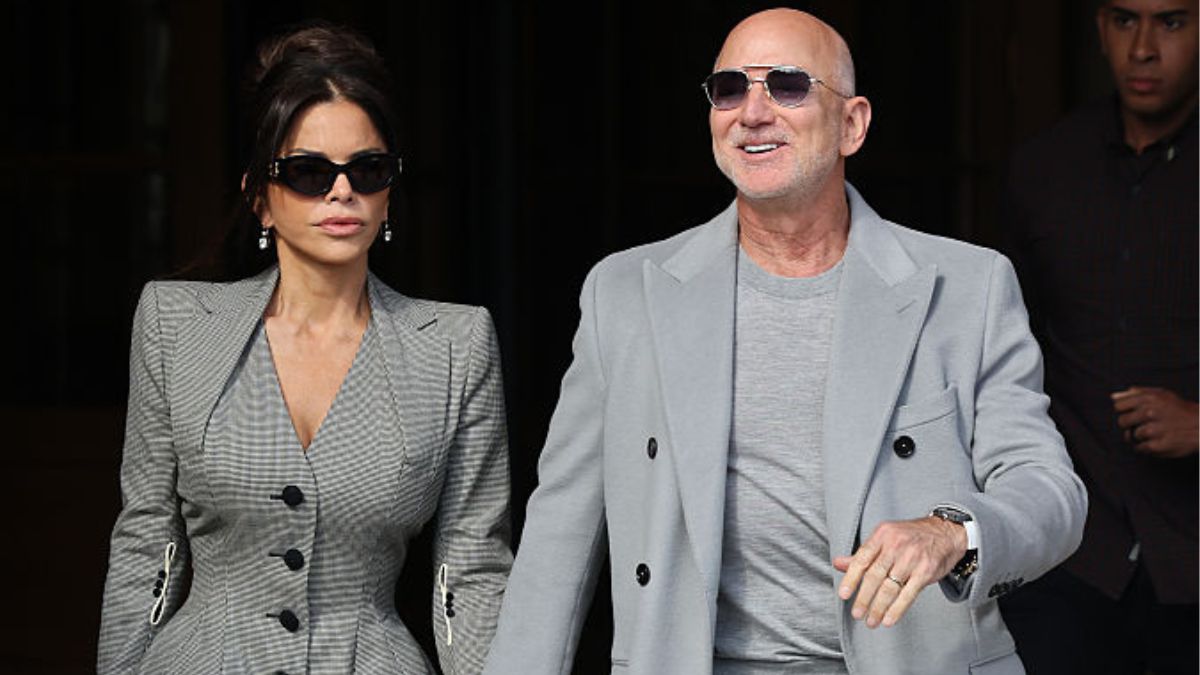
Lauren Sánchez‘s free spirit is most expressed in the way she looks, dresses, and dances, and while fashion critics can’t stand it, her husband, Jeff Bezos, seems unfazed — even amused.

The former journalist appears to live in a rarefied bubble, bouncing between lavish international trips, exclusive invitations with her billionaire husband, and hosting celebrity guests like the Kardashian-Jenner family — all with a full glam team never far behind.

‘Lots of Loose Skin’: Lauren Sánchez’s Cut-Out Top Reveals More Than She Intended Once Fans Zoom In, Stunned by What They See
Lauren Sanchez’s latest revealing look without Jeff Bezos leaves fans stunned. (Photo by Neil Mockford/Getty Images)

‘She Will Never Compare’: Lauren Bezos’ Latest Power Move Using Jeff’s Fortune Has Fans Convinced She’s Competing with His Ex-Wife MacKenzie Scott

On Jan. 4, makeup artist Laura Mele shared pictures in the Caribbean on Instagram to show the final of her work on Sánchez’s face. Yet social media users were fixated on something else.  

In the first shot of the two-photo post, Sánchez was seated with her knees pulled to her chest and one hand on her head. The second photo more clearly showed her standing up with her hand on her hips, wearing a backless black halter top with a few cutouts embellished with diamante and a matching skirt.

Confirming that the photos were taken on New Year‘s Eve, Mele wrote, “NYE with the baddest,” in the caption, before tagging Sánchez along with the hairstylist and photographer. 

It’s not clear where exactly she was or who she was with but, Sánchez responded, “Such a fun night. Thank you.”

While many praised her appearance, others were less impressed and took to the comments on Harper’s Bazaar’s Facebook post to share their criticism. One commenter fixated on her appearance, writing, “Why does she have a lot of loose skin under her arms?”

Another person wrote, “You can’t buy class or style, and apparently can’t pay a plastic surgeon to throw glitter at you !”

Though she has never admitted to having any work done, Sánchez’s lips and bust have appeared to grow more pronounced over the years, a detail some commenters seized on. One critic shaded not only her but also her husband, writing, “She should bare less skin. She looks 20 years older here. And when did Bezos buy Harper’s Bazaar?”

Not everyone piled on. Sánchez’s bold fashion choices have long made her a lightning rod for criticism, particularly from those who question her sense of modesty. She faced similar pushback in November after attending a VIP Dior dinner in Beverly Hills, where critics once again took aim at her look.

She wore a gray tweed minidress with ivory lace, hugging her curves and plunging low. Pictured with Kylie and Kendall Jenner, their modest looks sharpened online comparisons further.

She wore a gray tweed minidress that was trimmed with ivory colored lace. Not only did the outfit hug her curves, but it also featured a low-cut neckline. Many of her looks have a neck-plunging feature, which sparks the belief that Sánchez is an attention seeker. 

The criticism has also revived familiar comparisons to Bezos’ first wife, MacKenzie Scott, particularly in how each woman is perceived to handle wealth.

While Sánchez is often scrutinized for her fashion choices and high-profile lifestyle, Scott has built a public reputation around quietly donating billions from her divorce settlement to charities, grassroots organizations, and social justice causes. The contrast has fueled online commentary framing Sánchez as someone who enjoys spending Bezos’ money, while Scott is praised for giving hers to good causes — a comparison that resurfaces almost every time Sánchez steps into the spotlight.

Great Job J. Jones & the Team @ Atlanta Black Star Source link for sharing this story.

Secret Link