
Home News Page 97

Social Services Cuts Will Mean More Women Stop Working—and Maybe That’s the Point

Social Services Cuts Will Mean More Women Stop Working—and Maybe That’s the Point

Freezing childcare and social-services funding exposes how the administration’s “pro-family” agenda relies on pushing women out of the workforce and back into unpaid caregiving.

Rep. Robert Garcia (D-Calif.) speaks during a House Oversight and Government Reform Committee hearing about the Trump administration’s decision to freeze $10 billion in childcare funds for families with low incomes in California, Colorado, Illinois, Minnesota and New York at the U.S. Capitol on Jan. 7, 2026. (Chip Somodevilla / Getty Images)

The current federal administration is very pro-family—they tell us that all the time. One of JD Vance’s first public appearances as vice president was his speech at the antiabortion March for Life rally in January 2025, where he called for more births in the U.S. and framed his agenda as both “pro-life” and “pro-family.” Trump reaffirmed that position in March, where he reiterated that this was a pro-family administration.

But at the start of this year, on Jan. 6, 2026, alleging concerns about fraud in state-run social services programs (even though the only concerns that have been raised—not proven—are in Minnesota), the Trump-Vance administration’s U.S. Department of Health and Human Services suspended three programs that provide support to children—not only in Minnesota, but also in California, Colorado, New York and Illinois. Those states, all led by Democrats, will lose access to billions in funding through the Temporary Assistance for Needy Families (TANF) program, the Child Care and Development Fund, and the Social Services Block Grant program. To be clear, these funds are the backbone of services-provision for families living in poverty in most communities, Republicans and Democrats alike.

This announcement comes days after the administration moved to eliminate a rule that had capped childcare copayments for low‑income families at 7 percent of their income.

It also comes after last year’s efforts to eliminate support for Head Start, quality and affordable education and other services for young children living in poverty.

…. All this from the pro-family party. 
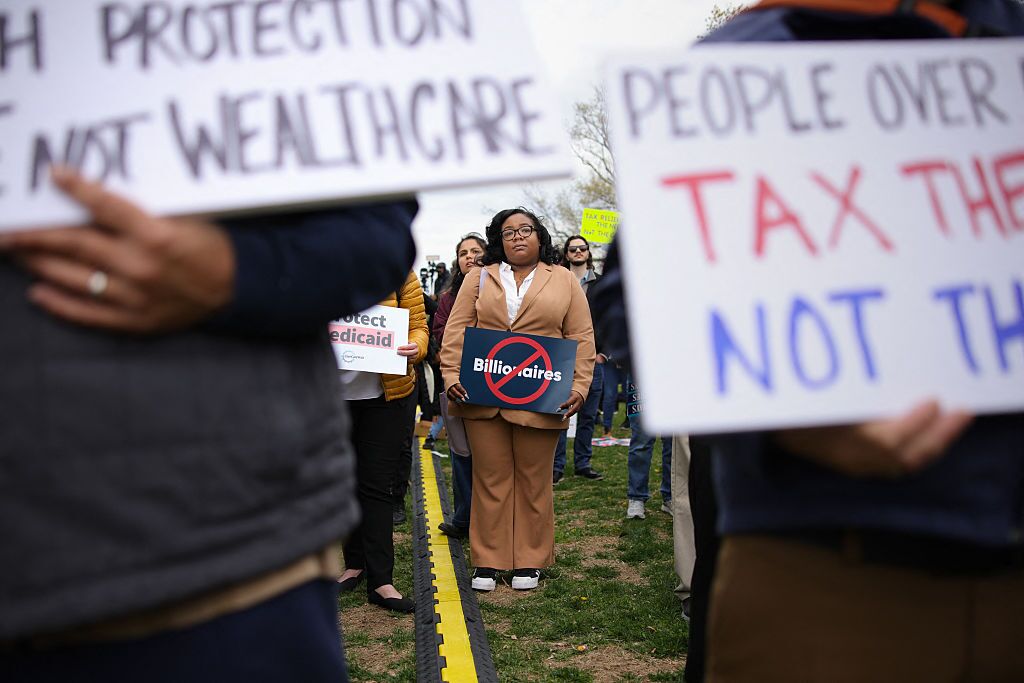
A press conference and rally in support of fair taxation near the U.S. Capitol on April 10, 2025. Tax justice advocates spoke out against President Trump’s tax cuts for the wealthy, and urged members of Congress to intervene. (Bryan Dozier / Middle East Images via AFP and Getty Images)

TANF is the best known of the menu of social services support, but the Child Care and Development Fund (CCDF) explicitly provides financial relief for families needing childcare. Childcare is a key support for working parents. And while 2025 was the weakest year for job growth since 2003, key everyday costs like food, rent and energy are still rising. Even worse, the cost of childcare remains astronomical in many communities. For single parents it can represent up to 35 percent of what they earn, causing some people with children to quit jobs because they literally cannot afford to work. Cuts, or freezes, on the CCDF will make childcare costs shoot up even higher.

So how is eliminating government funding for childcare pro-family you ask? It depends what kind of family you want to support. Because if the cost of childcare rises, one of two things has to happen: Either a parent needs to get a better paying job—quickly—or quit their job to stay home with the kids.

And given that women on average make about 76 cents per dollar paid to men (for Black women, it’s 65 cents; for Latinas, it’s 58 cents), that’s a lot of women who are going to be staying home. 

When childcare is disrupted, full-time employees can miss significant amounts of work. Those work interruptions fall disproportionately on women, as well as Black and multiracial parents.

Women make up 82 percent of those who miss work for childcare reasons, and bBack and multiracial parents have had to quit a job or turn down a job at twice the rate of white parents.

Many of the families that benefit from childcare services are those with only one parent, as well as same-sex parents. The impact on them will be different, but just as harmful.

Either way, we’re pushing people out of the workforce and into the home. And disproportionately, it’s women being pushed.

It is hard not to see that such as result is unlikely to worry the current administration much. On May 3, 2021, JD Vance co-authored an opinion piece for The Wall Street Journal declaring, “Young children are clearly happier and healthier when they spend the day at home with a parent.” 

The Heritage Foundation clearly agrees, because their hot-off-the-presses report, “Saving America by Saving the Family,” restates their belief that children do best when raised by the married couple that created them—a premise it then uses to advance policies including tax incentives for larger families and shifts in childcare funding that would steer public support away from external childcare programs and toward parental, at-home care.

And who do we think is expected to choose home over career? As Acting Assistant Secretary Andrew Gradison of the Administration for Children and Families said recently, “In a healthy America, fathers lead, protect and provide for their families.”  

Great Job Amy Barasch & the Team @ Ms. Magazine Source link for sharing this story.

These Open Earbuds Offer Active Noise Canceling

These Open Earbuds Offer Active Noise Canceling

Like all open-ear earbuds, the OpenFit Pro have an airy and open soundstage that delivers a more natural listening experience than regular earbuds — it’s closer to the experience of listening to speakers. You can make them sound even more immersive by activating the confusingly named Optimized for Dolby Atmos mode. I say confusing because this mode is neither a replacement for Dolby Atmos nor is it strictly for use with existing Dolby Atmos content. It is essentially Dolby’s best earbud-based audio software, which combines spatial audio processing (for a wider and deeper soundstage) with optional head tracking. Both of these features will work with any content; however, Dolby claims it works best when you’re listening to Dolby Atmos content.

It’s the first time Dolby’s tech has been employed on a set of open-ear earbuds, and it’s a great match. It boosts the perceived width and height of the space, and does so without negatively affecting dynamic range or loudness, something that often plagues similar systems. And yes, the effect is more pronounced when listening to Atmos than when playing stereo content. I’ve used Dolby’s spatial tech on several products, including the LG Tone Free T90Q, Jabra Elite 10, and Technics EAH-Z100, and this is the first time I’ve enjoyed it enough to leave it enabled for music listening.

Still, it’s not as effective as Bose’s Immersive Audio on the Bose Ultra Open Earbuds. Bose’s head tracking is smoother—particularly noticeable when watching movies—and its spatial processing is more convincing and immersive for both music and movies.

Where Shokz enjoys a big leg up on Bose is the OpenFit Pro’s call quality. The OpenFit Pro’s mics do a great job of eliminating noises on your end of the call. You could be walking down a busy street, hanging out in a full coffee shop, or even passing by an active construction site, and your callers probably won’t have a clue you aren’t sitting on a quiet park bench. As with all open-ear earbuds, being able to hear your own voice naturally (without the use of a transparency mode) eliminates the fatigue normally associated with long calls on regular earbuds.

Comfortable Design

Photograph: Simon Cohen

Comfort is a key benefit of Shokz’s OpenFit series, and the OpenFit Pro, with ear hooks that are wrapped in soft silicone, are no exception. Unlike previous OpenFit models, which position speakers just outside your ear’s concha, the Pro’s speaker pods project directly into your ears, and in my case, they make contact with the inner part of that cavity. This significantly increases stability, but over time, I became aware of that contact point.

They never became uncomfortable, but it’s not quite the forget-you’re-even-wearing-them experience of the OpenFit/OpenFit 2/+ models. As someone who wears glasses, I tend to prefer clip-style earbuds like the Shokz OpenDots One, and yet the OpenFit Pro’s ear hook shape was never an issue. Shokz includes a set of optional silicone support loops, presumably for folks with smaller ears or who need a more stable fit. They didn’t improve my fit, but then again, I’ve got pretty big ears.

As with all hook-style earbuds, the OpenFit Pro charging case is on the big side. It’s got great build quality thanks to the use of an aluminum frame, and you get wireless charging (not a given with many open-ear models), but it’s still way less pocketable than a set of AirPods Pro.

Easy to Use

Image may contain Electrical Device Microphone Car Transportation Vehicle Electronics and Speaker

Photograph: Simon Cohen

For the OpenFit Pro, Shokz has finally abandoned its hybrid touch/button controls in favor of just physical buttons, and I think it’s the right call. You can now decide exactly which button press combos control actions like play/pause, track skipping, volume, and voice assistant access, a level of freedom that wasn’t available on previous versions.

Great Job Simon Cohen & the Team @ WIRED Source link for sharing this story.

Trump promises oil executives ‘total safety’ if they invest in Venezuela after Maduro ouster | Houston Public Media

Trump promises oil executives ‘total safety’ if they invest in Venezuela after Maduro ouster | Houston Public Media

Julia Reihs | KUT News

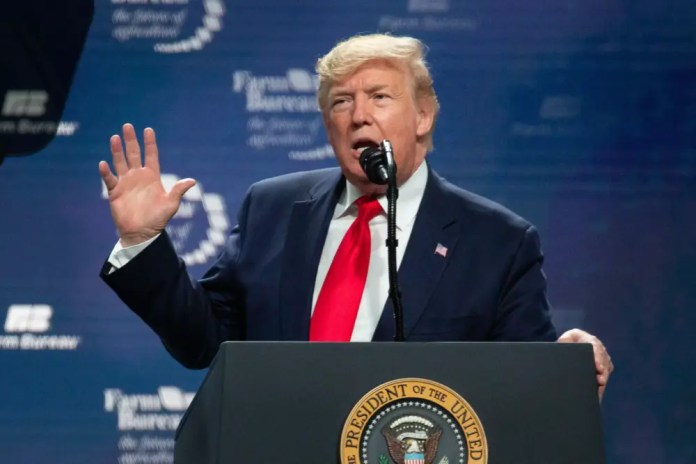
President Trump addressed farmers and ranchers at the American Farm Bureau Federation’s convention in Austin in 2020.

WASHINGTON (AP) — President Donald Trump on Friday called on oil executives to rush back into Venezuela as the White House looks to quickly secure $100 billion in investments to revive the country’s ability to fully tap into its expansive reserves of petroleum.

Since the U.S. military raid to capture former Venezuelan leader Nicolás Maduro on Saturday, Trump has quickly pivoted to portraying the move as a newfound economic opportunity for the U.S., seizing tankers carrying Venezuelan oil, and saying the U.S. is taking over the sales of 30 million to 50 million barrels of previously sanctioned Venezuelan oil and will be controlling sales worldwide indefinitely.

Trump used the meeting with oil industry executives to publicly assure them that they need not be skeptical of quickly investing in and, in some cases, returning to the South American country with a history of state asset seizures as well as ongoing U.S. sanctions and decades of political uncertainty.

“You have total safety,” Trump told the executives. “You’re dealing with us directly and not dealing with Venezuela at all. We don’t want you to deal with Venezuela.”

Trump added: “Our giant oil companies will be spending at least $100 billion of their money, not the government’s money. They don’t need government money. But they need government protection.”

The president said the security guarantee would come from working with Venezuelan leaders and their people, instead of deploying U.S. forces. He also said the companies would “bring over some security.”

Trump played up the potential for major oil companies to strike big, while acknowledging that the oil executives were sharp people who were in the business of taking risk, a quiet nod to the reality that he’s asking for big investment in Venezuela at moment when the country is teetering and economic collapse is not out of the question.

Trump welcomed the oil executives to the White House after U.S. forces earlier Friday seized their fifth tanker over the past month that has been linked to Venezuelan oil. The action reflected the determination of the U.S. to fully control the exporting, refining and production of Venezuelan petroleum, a sign of the Trump administration’s plans for ongoing involvement in the sector as it seeks commitments from private companies.

It’s all part of a broader push by Trump to keep gasoline prices low. At a time when many Americans are concerned about affordability, the incursion in Venezuela melds Trump’s assertive use of presidential powers with an optical spectacle meant to convince Americans that he can bring down energy prices.

Trump urges Big Oil to take the plunge

The White House said it invited oil executives from 17 companies, including Chevron, which still operates in Venezuela, as well as ExxonMobil and ConocoPhillips, which both had oil projects in the country that were lost as part of a 2007 nationalization of private businesses under Maduro’s predecessor, Hugo Chávez. Chevron, ExxonMobil and ConocoPhillips are each headquartered in the Houston area.

“If we look at the commercial constructs and frameworks in place today in Venezuela, today it’s un-investable,” said Darren Woods, the ExxonMobil CEO. “And so significant changes have to be made to those commercial frameworks, the legal system, there has to be durable investment protections and there has to be change to the hydrocarbon laws in the country.”

Other companies invited included Halliburton, Valero, Marathon, Shell, Singapore-based Trafigura, Italy-based Eni and Spain-based Repsol as well as a vast swath of domestic and international companies with interests ranging from construction to the commodity markets.

Large U.S. oil companies have so far largely refrained from affirming investments in Venezuela as contracts and guarantees need to be in place. Trump has suggested that the U.S. would help to backstop any investments.

Venezuela’s oil production has slumped below one million barrels a day. At the heart of Trump’s challenge to turning that around is convincing oil companies that his administration has a stable relationship with Venezuela’s interim President Delcy Rodríguez, and can provide protections for companies entering the market.

Trump, however, is confident that Big Oil is ready to take the plunge, but allowed that it’s not without risk.

“You know, these are not babies,” Trump said of the oil industry executives. “These are people that drill oil in some pretty rough places. I can say a couple of those places make Venezuela look like a picnic.”

The president also offered a new rationale for ousting Maduro and demanding the U.S. maintain oversight of its Venezuelan oil industry, saying, “One thing I think everyone has to know is that if we didn’t do this, China or Russia would have done it.”

While Rodriguez has publicly denounced Trump and the ouster of Maduro, the U.S. president has said that to date Venezuela’s interim leader has been cooperating behind the scenes with his administration.

Tyson Slocum, director of the consumer advocacy group Public Citizen’s energy program, criticized the gathering and called the U.S. military’s removal of Maduro “violent imperialism.” Slocum added that Trump’s goal appears to be to “hand billionaires control over Venezuela’s oil.”

Trying to restore diplomatic ties

Meanwhile, the United States and Venezuelan governments said Friday they were exploring the possibility of restoring diplomatic relations between the two countries, and a delegation from the Trump administration arrived in the South American nation Friday.

The small team of U.S. diplomats and diplomatic security officials traveled to Venezuela to make a preliminary assessment about the potential reopening of the U.S. Embassy in Caracas, the State Department said in a statement.

Trump also announced Friday he’d meet next week, either Tuesday or Wednesday, with Maria Corina Machado, the leader of Venezuela’s opposition party, as well as with Colombian President Gustavo Petro in early February.

Trump has declined to back Machado, even as the U.S. and most observers determined her opposition movement defeated Maduro in Venezuela’s last election. Trump said following Maduro’s ouster that Machado “doesn’t have the support within, or the respect within, the country” to lead.

Trump called on the Colombian leader to make quick progress on stemming flow of cocaine into the U.S.

Trump, following the ouster of Maduro, had made vague threats to take similar action against Petro, describing the Colombia leader as a “sick man who likes making cocaine and selling it to the United States”

Trump abruptly changed his tone Wednesday about his Colombian counterpart after a friendly phone call in which he invited Petro to visit the White House.

The seeming détente between Petro, a leftist, and Trump, a conservative, appears to reflect that their shared interests override their deep differences.

For Colombia, the U.S. remains key to the military’s fight against leftist guerrillas and drug traffickers. Washington has provided Bogotá with roughly $14 billion in the last two decades.

For the U.S., Colombia, the world’s biggest cocaine producer, remains the cornerstone of its counternarcotics strategy abroad, providing crucial intelligence used to interdict drugs in the Caribbean. —

Associated Press writers Matthew Daly and Seung Min Kim contributed to this report.

Great Job & the Team @ Houston Public Media for sharing this story.

Seeing Double?! Social Media Goes WILD After Erykah Badu’s Daughter Puma Flexes Their Twin-Like Resemblance (PHOTOS)

Seeing Double?! Social Media Goes WILD After Erykah Badu’s Daughter Puma Flexes Their Twin-Like Resemblance (PHOTOS)

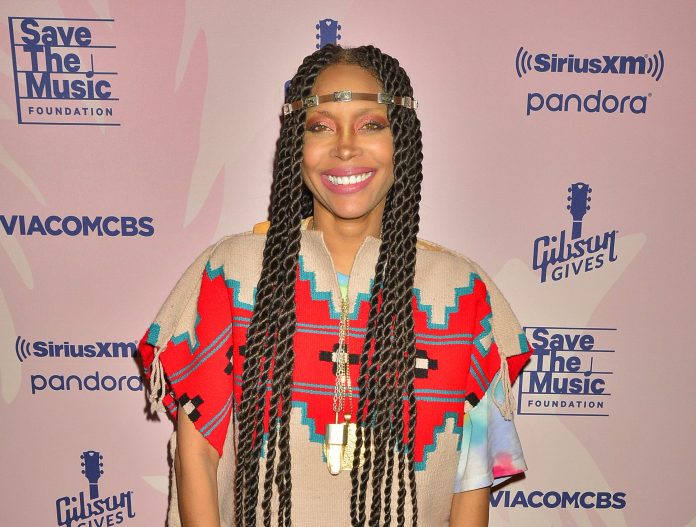
Roommates, Erykah Badu and her daughter Puma have the internet seeing double after Puma dropped some pics of them on Instagram. The photos have folks saying their copy-paste energy is next level, making them practically look like twins.

RELATED: Aht! Aht! Erykah Badu Ain’t Playing About Her “Child Support” From Andre 3000 In New Interview (VIDEO)

Erykah Badu & Puma Have The Internet Doing Double Takes

The internet is calling Erykah Badu and her daughter Puma goals after the 21-year-old dropped some cute pics of them on Instagram. In the photos, their eyes practically match, and in another one they’re even rocking similar style outfits with stocking caps on their heads.

Puma gave her mom mad props in the caption, letting everyone know her mom has always been top two and not two! “It’s uncanny she’s literally the blueprint ” Erykah slid in her comment section with the sweetest compliment adding, “ She’s the improvement ”

Internet Goes Crazy After Seeing Erykah & Puma Side By Side

After The Shade Room dropped the pics of Erykah and Puma, the comment section went wild! Some fans said they look like identical twins, while others think Puma looks like Erykah and her dad D.O.C.

Instagram user @raven_thick wrote, That’s a beautiful copy & paste situation ” 

Instagram user @dominiquechinn wrote, “Mommy said copy/paste ” 

While Instagram user @kimmymar wrote,Beauty like her Mama . And can sing too ” 

Then Instagram user @worldstarfanny_ wrote, “Crazy part is she looks just like her father as well.” 

Another Instagram user @kweenmocha wrote,Doc and Erykah went half on a baby since Puma looks like whoever she’s with ” 

Instagram user @beccahanna6 wrote, “So she just gonna clone herself and think we not gonna notice?” 

Then another Instagram user @saucybanks wrote, Identical twins bro ” 

While another Instagram user @t.leshaye_ wrote, They so pretty” 

Finally, Instagram user @reed.toni58 wrote, “Wow she gave birth to herself.”

Is Puma Her Mom’s Twin, Dad’s Mini, Or Both?

This isn’t the first time Puma had folks flooding her comment section with heart-eye emojis. Back in October 2025, she went viral after sharing pics posing with her mom and dad, D.O.C. While some debated over her genes, others gave her parents made props for being super dope.


RELATED: Erykah Badu Sparks BBL Shade After Poppin’ Out At Billboard Women In Music Awards With THIS Curvy Fit (VIDEO)

What Do You Think Roomies?

Great Job Ashley Rushford & the Team @ The Shade Room Source link for sharing this story.

Despite getting flak for being woke and lazy, an exec at $62 billion giant Colgate says Gen Z workers are actually ‘pushing us to get better’ | Fortune

Despite getting flak for being woke and lazy, an exec at  billion giant Colgate says Gen Z workers are actually ‘pushing us to get better’ | Fortune

Stereotypes stick, and some bosses have already made up their minds on Gen Z workers. Oscar-winning star Jodie Foster slammed the young staffers she encountered on the set of True Detective as “really annoying, especially in the workplace,” while fellow actress Whoopi Goldberg claimed that Gen Zers “only want to work four hours” yet expect to live in comfort. 

But the chief human resources officer at $62 billion giant Colgate-Palmolive is hitting back that young staffers aren’t the career sloths some typecast them to be. Sally Massey credits Gen Z as being ambitious, and incredibly tech savvy—critical skills that the consumer products company behind Colgate toothpaste and Irish Spring soap is looking for in talent. 

“[Gen Z] have grown up with technology. They’ve grown up in a very different way than some of the other generations in the organization,” the CHRO tells Fortune.

“They bring with them new ideas, new perspectives, curiosity,” Massey adds. “They’re pushing us to get better and to do things differently—I think it’s great.”

Massey admits that Gen Z are bringing their own distinct “perspectives and expectations” to the workplace. And with 34,000 Colgate employees spread out among four generations, bridging the divide between age groups is especially daunting. So to ensure that everyone is working in harmony, the exec is revamping the usual chain of command; Colgate’s top leaders are hearing out entry-level staffers, stimulating the flow of ideas between ranks and generations to generate the best possible outcome.

“We’re not siloed by generation or tenure, the senior leaders at Colgate want to hear ideas and thoughts from the more junior employees,” Massey says. “It’s how we get better, because as you get more senior, you can get further away. So it’s important for all of us to stay close, connected, and to learn from each other—regardless of the role.”

Employers who value Gen Z talent—especially those with tech skills

Massey’s not alone. Not all employers have given up on hiring Gen Zers—despite headlines that suggest otherwise. In fact, many are still scoping out young talent with standout AI skills. 

Emily Glassberg Sands, Stripe’s head of data and AI, revealed she’s all-in on hiring recent graduates at the $91.5 billion financial services company. Just like Massey, she singled out Gen Z’s tech adaptability as one of the in-demand skills she’s looking for in Stripe employees. 

“I’m actually hiring more new grads—now, they’re largely new grad PhDs—but more new grads than ever before,” Glassberg Sands said on the Forward Future podcast last year. “Because they have the cutting edge skills, and they come in with fresh ideas, and they know how to think, and they know how to use the latest tools.”

Even when young employees drive their bosses up the wall, CEOs are still embracing Gen Z as movers and shakers. Matt Huang, the cofounder of the $12 billion crypto investment firm Paradigm, is all too familiar with the temperament of young workers. The company’s first hire, then-19-year-old college dropout Charlie Noyes, once showed up five hours late to his first 10 a.m. meeting. The business has also embraced Gen Z-coded, unorthodox ways of choosing its top executives; Paradigm’s chief technology officer, Georgios Konstantopoulos, was discovered on a Discord server while he was still a teenager. 

Hiring these innovative—albeit, sometimes finicky—Gen Zers may sound like a gamble for traditional workplaces. The Paradigm CEO admitted that the young staffers can come with drawbacks, but the value they generate is worth any havoc they wreak in the office. 

“They create an absurd amount of chaos sometimes and you want to pull your hair out,” Huang told Colossus Review last year. “But then you see what they can do and it’s like, holy crap. Nobody else in the world could do that.”

The business leaders backing up Gen Z against lazy stereotypes 

Even the seasoned business experts teaching legions of Gen Z students are cutting in on criticism. Suzy Welch, a best-selling author and professor of management practice at New York University, hit back against those who brand the young generation lazy by reminiscing on her career journey. The baby boomer professor recalled having hope that she could one day be more successful than her parents—but for Gen Zers, that dream of prosperity is out of reach. Welch encouraged bosses to empathize with their unique job and economic vulnerabilities.

“Gen Z [has] no reason to believe that they’re ever going to have economic security,” Welch said on a podcast last year. “I don’t know about you, but I’m old enough that when I was in college, I thought ‘For sure, I’m going to have more money than my parents.’ And that ‘If I work very very hard I’m going to buy a house someday,’ and this was the assumption.”

“A lot of Gen Z [are] just saying ‘I’m not even sure we’re going to be alive in 20 years because of global warming,’” Welch continued. “And ‘The world is probably going to end anyway because of the stupidity of decisions your generations made.’”

Millionaire podcaster and former CNN legal analyst Mel Robbins also came to Gen Z’s defense. In response to stereotypes that young people are anxious, addicted to social media, and lazy, she posed one question: “Have you stopped to consider what it’s like to be a twentysomething today?” Chances are if critics try and envision stepping into their shoes, they’ll be met with the harsh reality that Gen Zers are under immense stress and pressure that didn’t exist just five years ago. 

“The world is in chaos—and most twentysomethings had parents that lived in a very predictable, stable economy,” Robbins said in a TikTok video posted last year. “They went to a corporate job, they reported to the office, they had a network of friends at work. That’s not the typical 20-year-old experience.”

This story was originally featured on Fortune.com

Great Job Emma Burleigh & the Team @ Fortune | FORTUNE Source link for sharing this story.

Kevin Durant passes Wilt Chamberlain for 7th on the NBA’s career scoring list

Kevin Durant passes Wilt Chamberlain for 7th on the NBA’s career scoring list

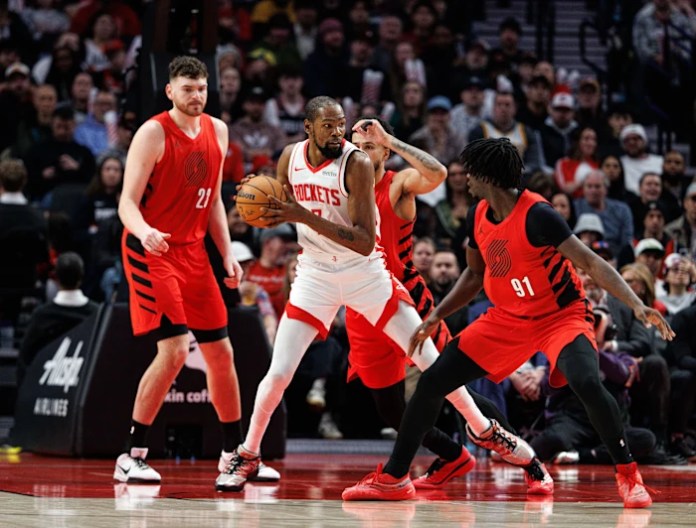
PORTLAND, Ore. – Kevin Durant passed Wilt Chamberlain for seventh on the NBA’s career scoring list Friday night when he made a 3-pointer for the Houston Rockets in the third quarter of their 111-105 loss to the Portland Trail Blazers.

Durant needed 15 points going into the game to eclipse Chamberlain, who scored 31,419. Durant’s jumper with 7:57 left in the third gave him 31,422.

Dirk Nowitzki is sixth on the career list with 31,560 points.

“To be amongst the greats is always an honor,” Durant said after the game. “Wilt is somebody I studied and tried to look up to as much as I can, a player like that. Like I always say, he set a standard for NBA players and (I’m) grateful to reach that — and inspired by what he produced for the game of basketball.”

Durant, 37, is in his 18th NBA season and is a 15-time All-Star. He finished Friday’s game with 30 points and 12 rebounds, also surpassing 8,000 career rebounds.

“No, it doesn’t amaze me when you see the work ethic and what he does on a day-to-day basis,” Rockets coach Ime Udoka said before Friday night’s game about Durant’s impending milestone.

Blazers coach Tiago Splitter said he remembered being impressed by Durant when he was a young player with Oklahoma City.

“Just a young Kevin Durant, scoring 30 every night, and he just keeps doing that, which is amazing,” Splitter said. “At his age, of course, he’s probably at the end of his career, but just doing that every night is just impressive.”

When the scoring achievement was announced to fans at the Moda Center during the game, Durant was rewarded with warm applause and a hug from Splitter.

“These milestones always have me reflecting on the people that helped me get to this point — the journey that I’ve been through, the close calls and the things that could have went left plenty of times in my life,” Durant said. “So to be here, very, very grateful, and Portland is such a classy, classy city for recognizing me in that moment and honoring me.”

___

AP NBA: https://www.apnews.com/NBA

Copyright 2026 The Associated Press. All rights reserved. This material may not be published, broadcast, rewritten or redistributed without permission.

Great Job Anne M. Peterson, Associated Press & the Team @ KSAT San Antonio Source link for sharing this story.

Trump, 79, Accidentally Reads Marco Rubio’s Private Note Out Loud

Trump, 79, Accidentally Reads Marco Rubio’s Private Note Out Loud

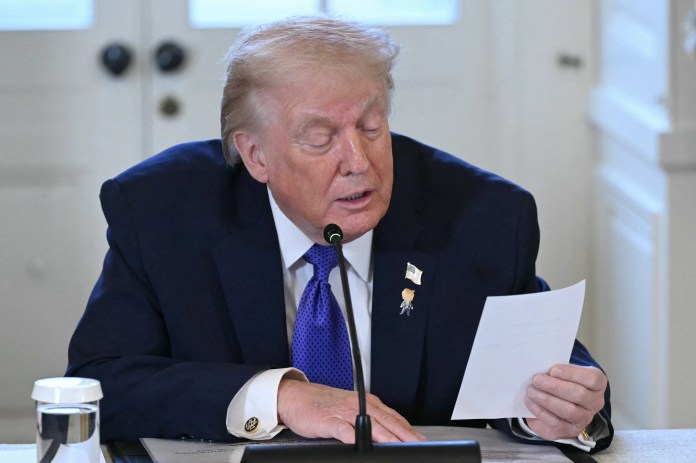
Donald Trump humiliated himself Friday when Secretary of State Marco Rubio tried to slyly pass him a note during a meeting with oil executives, and the president immediately read it aloud.

Trump was in the midst of promising “a very nice return” for executives from Chevron, ConocoPhillips, Exxon, Halliburton, Valero, and Marathon—in exchange for a $100 billion investment in rebuilding Venezuela’s energy sector, when he was suddenly sidetracked by a scrap of paper from Rubio.   

“You’re all gonna do very well—Marco just gave me a note. ‘Go back to Chevron, they want to discuss something,’” Trump read, turning to look at Chevron Vice Chairman Mark Nelson. “Go ahead, I’m going back to Chevron, Mark.”

Rubio grimaced uncomfortably, as Trump patted him on the back. “Thank you, Marco,” he said.

“Was there a question, Mr. President?” Nelson asked.

“Yes, go ahead Marco, what are you saying here?” Trump asked, inspecting the note again.

Energy Secretary Chris Wright jumped in. “Mark, if you could update us on operations on the ground, appropriate approvals, what you might be able to achieve in the next 12 to 18 months—give us a little view from the ground,” he said. 

Nelson launched into a description of Chevron’s ground operations. Chevron is the only oil company currently operating in Venezuela, as part of a joint venture with Petróleos de Venezuela. Wright told CNBC Wednesday that the Trump administration was receiving “daily updates” from Chevron and working closely to “allow their model to grow even more.”

Trump’s gaffe was part of a larger trend of cognitive decline, as the aged president has spent the last year in office appearing to fall asleep during meetings and giving incoherent, confused rants.

Great Job Edith Olmsted & the Team @ The New Republic Source link for sharing this story.

The Long Walk Is a Death March Across an Eerily Familiar America – Christ and Pop Culture

The Long Walk Is a Death March Across an Eerily Familiar America – Christ and Pop Culture

These days, we see suffering streamed straight to our screens. Tragedy goes viral and real human pain is reduced to background noise. Every once in a while, though, a story reflects our society so clearly that it becomes impossible to look away. Francis Lawrence’s The Long Walk is one such story that hits close to home. Though it’s an adaptation of one of Stephen King’s earliest novels from nearly fifty years ago, The Long Walk remains eerily familiar today while telling a story of tenacity, human exploitation, friendship, and sacrifice.

Although King may be best known for horror, some of his most memorable works—The Shawshank Redemption, The Green Mile, Stand by Me—stand out because they uncover the quiet strength and hope in everyday people. This movie follows that same path, showing what happens when a nation exchanges its conscience for a bit of entertainment.

Set in a dystopian America during the 1970s, The Long Walk depicts what happens when the state becomes god. The country is in an economic depression and the totalitarian regime has created an annual ritual that offers the only hope for many but requires a sacrifice. Fifty teenage boys, one for each state, are selected by lottery for the chance to win a great prize: wealth and the fulfillment of any wish. The catch is that they must remain the last one standing after a grueling, non-stop walk across America. They must keep a pace of at least three miles/hour and if they stop for sleep or bathroom breaks, or if they receive three warnings, they face execution.

What horrors do we witness daily with indifference? What injustices have we learned to scroll past? And most painfully, who have we silently decided doesn’t matter?

The film centers on Ray, a regular teenager-next-door who becomes the story’s emotional core. After his father dies, he lives alone with his mother and wants to provide a better life for them. Like the other boys, he “volunteers” for the Long Walk, but his choice isn’t about fame or glory. Rather, it comes from grief, desperation, and the kind of pressure poverty puts on those who have run out of options. Through Ray, we see just how cruel the system is; the state pushes its poorest kids to gamble with their own lives for even the slightest shot at a future. He’s the classic everyman thrown into something horrific because he loves his family and sees no other way.

Ray quickly forms a deep bond with Pete, who becomes his closest companion and the person he trusts most on the Walk. Pete is the type of guy who cracks jokes to hide his fear. He’s been hurt before, and it’s left him aching for real connection. He clings to friendship because it helps him define who he is in a world determined to erase that. His kindness, curiosity, and soft-heartedness make him the glue of the group, offering the other boys comfort in a world built to rob them of their humanity. His friendship with Ray becomes its own quiet rebellion, a way of saying that while the state might control their bodies, it can’t fully claim their hearts.

The duo soon falls in with several others: Arthur, a devout Christian and steady optimist; Hank, a loud-mouthed cynic; and Stebbins, who is quiet and insecure but physically adept. Each boy reveals a different way that people cope with suffering. Arthur becomes the group’s spiritual center, and though faith does not spare him from pain, it sharpens his sense of right and wrong. He prays over the boys, quotes Scripture, and speaks hope into their exhaustion. Arthur sees the Walk for what it truly is: a violent ritual dressed up as entertainment. And while he can’t change the regime, he resists it by treating the boys not as competitors, but rather, as valuable individuals. His optimism becomes a type of gentle protest, a reminder of the dignity the system tries to erase.

Hank, on the other hand, represents cynicism born from disappointment. He’s loud, blunt, and rarely filters what he says. His humor is sharp and often stings, but it cuts through the Walk’s cruelty in a way that nothing else can. Underneath the sarcasm, though, lies a kid bracing for disappointment from the world because it has never given him anything else. Hank reflects a common stance many people take in unjust societies: mock the system because you cannot change it. Underneath his show of bravery, he is actually very afraid, showing how mistrust often grows out of old wounds and lack of hope.

Stebbins is different: strong, capable, but emotionally distant. He walks at the edge of the road, detached from the other boys, always watching and rarely joining in. This makes the others uneasy, as if he knows something they don’t. He seems to understand the Walk on a deeper level and when he talks, he chooses every word carefully. In another life, his strength might have opened doors, but here, it’s just used against him. Eventually, we discover that the only reason he’s on the Walk is because of who his father is. He’s not walking to win the prize; he’s walking to be seen.

As the boys travel across the American landscape, crowds gather to cheer, soldiers march beside them, and cameras broadcast their every step live to a gawking nation. The boys form brief but meaningful connections along the way. They endure sleep deprivation, hunger, hallucinations, and the trauma of watching each other die. Their journey is both a test of physical endurance and a spiritual nightmare.

Leading their death march stands the Major, a cold, sunglass-wearing figure who feeds on control. He smiles at death, delights in fear, and enjoys the power he holds over the boys. As the Walk’s twisted leader, he resembles an anti-Christ figure, offering false blessing, false hope, and a false path to salvation. He demands loyalty but offers nothing in return. He symbolizes a godless, power-obsessed society. Whereas Christ lays down his life for others, the Major demands other lives to boost his own power.

Although the Walk is technically “voluntary,” it’s really the only chance that boys trapped in crushing poverty have. The system forces them to choose death, and even then, their sacrifice won’t change the world they long to escape. The Long Walk shows just how easily ordinary people can accept unthinkable things simply by going along with them. It highlights how society often forces its most vulnerable members to sacrifice dignity, health, and even their future simply to survive. 

As the crowds line the road to cheer, the nation participates in its own spiritual decay. Adults and children clap as contestants fall. Only when the camera shifts to the grieving families of the fallen do viewers remember that these are not characters in a game—they are children. Watching such pain, we can’t help but ask ourselves: What horrors do we witness daily with indifference? What injustices have we learned to scroll past? And most painfully, who have we silently decided doesn’t matter? Jesus’ words in Matthew 25:40 resonate with fresh urgency: “Truly, I say to you, as you did it to one of the least of these… you did it to me.”

Even though the Walk is built to turn the boys into enemies, deep friendships form, highlighting human compassion in a place meant to crush it. The boys share water and food, encourage each other, and tell jokes and stories to stay human while the Major insists they are nothing but numbers. But every friendship carries the pain of knowing that only one can survive. Ray and Pete choose connection anyway, symbolizing Christ’s teaching: “Greater love has no one than this, that someone lay down his life for his friends” (John 15:13).

Unlike some Hollywood movies, The Long Walk does not offer easy redemption. The suffering is brutal and the boys die without honor. There are no hints of divine justice, no suggestion that good will overcome evil. God feels painfully absent here, and the film forces us to imagine a society where human power is the only authority left. Yet despite its bleakness, The Long Walk is impossible to look away from. The grotesque imagery and harsh language are unsettling but never gratuitous while the performances keep us emotionally tied to the boys and worried for each character’s fate. 

In the end, this heartbreaking film leaves us with one truth: real sacrifice comes from love, not force. And whenever a society forgets that, it inevitably begins its own long walk toward destruction.

Great Job Melissa Givens & the Team @ Christ and Pop Culture Source link for sharing this story.
Man arrested, charged for deadly shooting at downtown Austin hotel

Man arrested, charged for deadly shooting at downtown Austin hotel

A 20-year-old was arrested and charged with murder for a deadly shooting at the Cambria Hotel in downtown Austin, police said.

What we know:

Police said on Monday, Jan. 5, around 6:55 a.m., officers responded to a report of a gunshot at the Cambria Hotel at 68 East Avenue #824. The caller said a person had been shot.

When officers arrived, they found a man with injuries. He later died at the scene. He was identified as Luke Bradburn.

The investigation revealed that Bradburn drove and crashed a car that belonged to 20-year-old Maximillian Salinas. After the crash, Bradburn and the other people in the car left and went to the Cambria Hotel. 

Salinas went to the hotel and shot Bradburn.

On Jan. 6, Salinas was arrested and charged with murder.

Anyone with information is asked to contact the Austin Police at 512-974-TIPS. You may submit your tip anonymously through the Capital Area Crime Stoppers Program by visiting austincrimestoppers.org or calling 512-472-8477.

The Source: Information from the Austin Police Department

DowntownCrime and Public Safety

Great Job & the Team @ Latest & Breaking News | FOX 7 Austin for sharing this story.

Oil Executives Non-Committal to Trump’s Venezuela Pitch at the White House – Inside Climate News

Oil Executives Non-Committal to Trump’s Venezuela Pitch at the White House – Inside Climate News

President Donald Trump’s meeting with oil industry executives was high on praise for Trump and his actions in Venezuela, but low on commitments from U.S. oil majors to invest the billions of dollars it would take to revive the country’s foundering oil industry. 

Less than a week after a U.S. military operation captured and arrested the president of Venezuela, Trump met with executives from many of the top oil companies in the world Friday to discuss what to do with the country’s huge oil reserves. 

Nearly two dozen oil industry CEOs attended Friday’s meeting with Trump, Vice President J.D. Vance, Secretary of State Marco Rubio, Energy Secretary Chris Wright and Interior Secretary Doug Burgum.

“We’re going to discuss how these great American companies can help rapidly rebuild Venezuela’s dilapidated oil industry and bring millions of barrels in oil production to benefit the United States, the people of Venezuela and the entire world,” Trump said to begin the meeting. 

“We’re going to be working with Venezuela, we’re going to be making the decision as to which oil companies are going to go in, that we’re going to allow to go in,” Trump said. “We’re gonna cut a deal with companies. We’ll probably do that today or very shortly thereafter.”

Trump pitched Venezuela as an opportunity for companies to profit, saying that the companies would have “total security.” 

The oil company executives were less enthused.

“If we look at the legal and commercial constructs and frameworks in place today in Venezuela today, it’s uninvestable,” Exxon CEO Darren Woods said in the meeting. “And so significant changes have to be made to those commercial frameworks, the legal system. There has to be durable investment protections, and there has to be a change to the hydrocarbon laws in the country.”

Woods said the company had its assets in Venezuela seized twice, losing billions, and that the company takes a decades-long view when choosing to enter a country. 

“The investments that we make span decades and decades,” Woods said. “So we do not go into any opportunity with a short mindset, short-term mindset. There’s a value proposition that we have to meet.”

But Woods also did not rule out Exxon’s return to Venezuela, saying he believed the necessary changes could be made and that it would be “absolutely critical” to get a technical team in the country to better assess the situation. 

“We’re confident that with this administration and President Trump, working hand in hand with the Venezuelan government, that those changes can be put in place,” he said. 

Executives from Chevron, Exxon, Conoco Phillips, Continental, Halliburton, HKN, Valero, Marathon, Shell, Trafigura, Vitol Americas, Repsol, Eni, Aspect Holdings, Tallgrass, Raisa Energy and Hilcorp were expected to attend the meeting, which was live streamed with the press corps in attendance.

Venezuela holds the largest known oil reserve in the world at an estimated 303 billion barrels, but getting companies to make the investments to get the oil may be a tough sell. 

Oil companies are reported to be wary of operating in Venezuela, after companies had their assets seized in 2007 when then-President Hugo Chavez nationalized the country’s oil industry. Since then much of the oil infrastructure in the country has fallen into disrepair, and the workforce fled. 

Energy consulting firm Rystad Energy estimated it would take “at least $30 to $35 billion” in capital over the next two to three years to return Venezuela to its pre-Chavez level of production, and $184 billion over the next 14 years. 

Trump has said he wants oil companies to invest $100 billion toward the effort. 

There would be heavy environmental costs as well. Trump himself has called Venezuelan oil some of the “dirtiest, worst oil” in the world. Described as “extra-heavy crude,” Venezuela’s oil is a tar-like substance that must be heated to bring it to the surface and mixed with chemicals to be transported in pipelines. An analysis by clean energy nonprofit RMI found Venezuela’s oil to produce more greenhouse gas emissions per barrel than that of the other 54 leading oil-producing nations in 2024.  

The heavy crude, like Canadian tar sands oil, requires additional refining because of its poor quality, further increasing the energy needed to turn it into a usable product. 

That refining would likely take place in Black communities in Texas and Louisiana where the populations are already heavily impacted by the oil industry. 

A spokesperson for the American Petroleum Institute, a trade group representing U.S. oil and gas industry interests, said the industry welcomed the collaboration with the White House, but said investment decisions would be made by individual companies. 

“Our industry welcomes the President’s invitation to discuss how American energy leadership, global markets, and developments in Venezuela intersect,” the spokesperson said in an email. “As always, our role is to share industry expertise and perspective, while any investment decisions are made independently by individual companies and depend on fundamental conditions such as security, the rule of law, market factors, and stable governance.” 

Trump posted to social media Friday that a “very big factor in this involvement will be the reduction of Oil Prices for the American People.” 

But crude oil prices are already as low as they’ve been since early 2021, according to the U.S. Energy Information Administration. The EIA states that in 2025, there was more supply in the global crude oil market than demand. 

About This Story

Perhaps you noticed: This story, like all the news we publish, is free to read. That’s because Inside Climate News is a 501c3 nonprofit organization. We do not charge a subscription fee, lock our news behind a paywall, or clutter our website with ads. We make our news on climate and the environment freely available to you and anyone who wants it.

That’s not all. We also share our news for free with scores of other media organizations around the country. Many of them can’t afford to do environmental journalism of their own. We’ve built bureaus from coast to coast to report local stories, collaborate with local newsrooms and co-publish articles so that this vital work is shared as widely as possible.

Two of us launched ICN in 2007. Six years later we earned a Pulitzer Prize for National Reporting, and now we run the oldest and largest dedicated climate newsroom in the nation. We tell the story in all its complexity. We hold polluters accountable. We expose environmental injustice. We debunk misinformation. We scrutinize solutions and inspire action.

Donations from readers like you fund every aspect of what we do. If you don’t already, will you support our ongoing work, our reporting on the biggest crisis facing our planet, and help us reach even more readers in more places?

Please take a moment to make a tax-deductible donation. Every one of them makes a difference.

Thank you,

Great Job By Dennis Pillion & the Team @ Inside Climate News Source link for sharing this story.
Secret Link