Living with chronic inflammatory demyelinating polyneuropathy (CIDP) means managing symptoms that can range from frustrating to debilitating. Depending on the severity of your CIDP, you may experience tingling in your hands and feet, numbness, coordination problems, and impaired mobility that requires a wheelchair or walker.
In addition to working with your neurologist to establish a treatment plan, you can implement a few strategies into your daily or weekly routine to make every day life with CIDP a bit easier. Here are some things you can do now to raise your CIDP symptom-management game.
1. Work With a Physical or Occupational Therapist
Many people with CIDP experience muscle weakness, balance problems, and diminished reflexes. Physical therapy can help you improve muscle strength and coordination, maintain mobility, and reduce neuropathic pain, and occupational therapy can help you work on fine motor skills and teach you new ways to perform daily tasks so you can maintain your independence.
“I think it’s very helpful to work with physical and occupational therapists — they can guide you in what exercises to do or not to do,” says Michal Vytopil, MD, PhD, vice chair of neurology at Beth Israel Lahey Health’s Lahey Hospital and Medical Center, in Burlington, Massachusetts. Dr. Vytopil generally recommends low-impact aerobic exercise, like walking, swimming, or stationary cycling, which are less likely to cause musculoskeletal damage.
When choosing a therapist, be sure they have experience working with people who have conditions involving nerve damage. Also, be sure to get the all-clear from your doctor before starting new physical activity — and better yet, ensure your physical therapist and your doctor are coordinating and communicating about your care plan.
2. Focus on Good Nutrition
A healthy diet is an important part of managing CIDP, and should focus on a Mediterranean-style diet that includes anti-inflammatory, nutrient-dense foods such as fresh fruits and vegetables, whole grains, nuts, and fish. For people with a peripheral neuropathy condition such as CIDP, it’s particularly important to steer clear of foods high in saturated fats and processed foods, as well limit or avoid high-sugar foods and alcohol, which have been found to put your nerve health at risk.
It’s also important to stay hydrated if you’re undergoing intravenous immunoglobulin therapy to prevent side effects ranging from headaches to kidney damage.
3. Seek Mental Health Support
Some research suggests people living with CIDP have a higher risk of developing mental health symptoms and disorders. Many people admit feeling sadness when thinking about life before symptoms began, a time with fewer limitations. Self-image may also be impacted; perhaps you now see yourself primarily as someone who has CIDP, rather than recognizing your condition as only a part of who you are and something you can learn to manage.
You may find it healing to work with a mental health professional who can help you process complicated feelings about living with CIDP and develop coping strategies to feel more content and in control in your daily life. You could also consider joining a chronic pain support group. There, you’ll meet people who understand what you’re experiencing and may share details on the latest treatments and strategies that are working for them.
4. Find Balance and Learn to Prioritize
It’s not just physical balance you’ll want to maintain — you’ll have to listen to your body and find a rhythm of activity and rest that feels good to you. By prioritizing and accepting help from friends and family, you can focus on what’s most important and protect your overall health.
5. Use Assistive Devices
Whether it’s a brace, walker, or small tool to make it easier for you to do things around the house, assistive devices can make a big difference by reducing pain, adjusting for muscle weakness, and preventing injury. They can also help you stay independent and safe. “Things like bracing will help not only manage symptoms, but reduce flares and improve quality of life when you have CIDP,” says Lewis.
Some other examples of assistive devices include:
Handrails and grab bars in the bathroom
Bathtub and shower thermometer to help you check the water temperature
Gloves to prevent cuts or scrapes when doing housework
Jar openers
Zipper pulls
Button hook
Long-handled shoe horn
Managing CIDP goes beyond medications. It also requires collaboration between you, your neurologist, and other specialists working together to minimize symptoms and help you maintain your quality of life.
The Takeaway
Living with CIDP can involve a wide range of symptoms, from mild tingling to significant weakness and mobility challenges, making daily life difficult for some people.
Alongside medical interventions, lifestyle measures — such as working with physical and occupational therapists, eating a healthy diet, and using assistive devices — can help you manage symptoms and maintain independence.
A holistic, team-based approach that combines medical care with personalized lifestyle strategies and mental health help can improve quality of life and allow you to feel more in control of your condition.
Great Job Katherine Lee & the Team @ google-discover Source link for sharing this story.
Tarrant County GOP officials promised to continue exploring hand-counting ballots for future primary elections, despite determining that the move would be too logistically challenging for the March 3 primaries.
Some local Republican Party officials argue that hand-counting paper ballots would better protect voters’ information and ward off potential security gaps in electronic voting machines.
“We’re not doing the ballot hand-count right now, not because of any lack of effort, or because we didn’t consider it serious. Trust me, we did,” John O’Shea, a Republican precinct chair, told members of the Republican Party during a Jan. 8 executive meeting.
“But we’re going to get there, I promise you,” O’Shea said.
John O’Shea, a Tarrant County Republican Party precinct chair, talks to members of the party during an executive committee meeting on Jan. 8, 2026, in Fort Worth. (Drew Shaw | Fort Worth Report)
Democratic Chair Allison Campolo decried the Republicans’ exploration of hand-counting, calling it slower, more expensive and “significantly less accurate and less secure” than the county’s current machines.
“They are chasing a conspiracy theory to guide them to make poorer choices, and if they do, it will negatively affect all Tarrant voters regardless of party,” she said.
Hand-counting ballots would be a switch from the county’s current system of using the Hart Intercivic voting machines. These machines, while electronic, don’t connect to the internet and store voters’ information on external hard drives.
Republicans can make such a change to their March partisan primaries unilaterally, as such elections are run by the local Republican and Democratic parties. This differs from May and November elections, which Tarrant County administers.
GOP officials considered hand-counting ballots over the fall as a team of precinct chairs explored what funding, staffing and systemic changes would be needed. Their efforts included hosting “speed tests” to assess how fast volunteers could accurately tally ballots.
Tarrant County GOP chair Tim Davis declined to comment on how the local party intends to continue exploring hand-counting ballots.
Republican officials on the team looking at hand-counting ballots told GOP precinct chairs that, while the team feels the effort is important, the party doesn’t have the time, resources, funding or logistics to make the change by this March.
However, officials added that the party is still working to take “every measure possible” to ensure “free and fair” elections.
Her sentiments were similar to those of the Dallas County GOP that abandoned its plan to switch to hand-counting, citing logistical cost and staffing issues. However, both Dallas and Williamson County Republicans plan to employ precinct-level voting, meaning voters would have to vote in the specific precinct determined by their home address.
Hand-counting ballots would notably require the Tarrant County GOP to also switch to precinct-level voting. Tarrant voters can cast ballots anywhere in the county currently.
While the Democratic Party wouldn’t be required to hand-count ballots, it would have to switch to precinct-level voting, under a state law that aims to prevent partisan disenfranchisement.
That would mean both parties would need hundreds of new voting locations unless they considerably consolidate precincts. Tarrant County has about 700 precincts — significantly more than the 200 voting locations available in the 2024 primary elections.
Those opposing such a move said these challenges would disenfranchise voters and make counting ballots too expensive.
“I am absolutely stunned that any faction of the (GOP) is still attempting to conduct hand-counting in a county of over 1 million eligible voters,” Campolo said.
Typically, Texas partially reimburses the parties for election-related costs for primaries. In 2023, the state warned county party chairs that it wouldn’t absorb higher-than-normal costs for the primary compared with previous years.
Hand-counting ballots poses a challenge for poll workers and election judges in ensuring thousands of ballots are accurately tabulated within 24 hours. State law does not require hand-counted results to be audited, as it does for machine-tabulated ones, and it severely limits public observation of the counting process.
In March 2024, about 69,000 Republicans cast votes in Tarrant County on Election Day as did about 36,000 Democrats. The 2022 primary saw about 61,000 Republicans cast ballots on Election Day and almost 36,000 Democrats.
Tarrant County elections hold up to past scrutiny
Calls to hand-count ballots have grown louder since 2020 amid skepticism and misinformation campaigns about machines used for voting and tabulating ballots.
Then-election administrator Heider Garcia repeatedly defended Tarrant County’s elections over his tenure as being secure and reliable. No evidence of widespread or coordinated election fraud has been found under Tarrant County’s current system.
In 2022, following Trump’s persistent denial of his loss in 2020, Republican Tarrant County Judge Tim O’Hare ran on the promise to increase election security. He repeated throughout his campaign unsubstantiated allegations that Tarrant County saw significant “mail ballot harvesting” and “Democrats cheating.”
O’Hare launched multiple initiatives to tighten election security, including creating an election integrity unit in 2023 to investigate any reports of fraud or security gaps. The unit’s investigations have not resulted in any criminal charges.
In recent interviews, Trump has suggested that an executive order regarding election security and interference is on the horizon before November’s midterm elections.
Abandoning countywide voting would reduce the use of the county’s electronic system used to check in and verify voters at polling sites — a system some Republicans argued is insecure because the systems connect to the internet. The e-pollbooks are different from voting machines, which do not connect to the internet.
At the Fort Worth Report, news decisions are made independently of our board members and financial supporters. Read more about our editorial independence policy here.
This <a target=”_blank” href=”https://fortworthreport.org/2026/01/12/tarrant-county-gop-promises-to-explore-hand-counting-ballots-in-future-elections-but-not-this-years/”>article</a> first appeared on <a target=”_blank” href=”https://fortworthreport.org”>Fort Worth Report</a> and is republished here under a <a target=”_blank” href=”https://creativecommons.org/licenses/by-nd/4.0/”>Creative Commons Attribution-NoDerivatives 4.0 International License</a>.<img src=”https://i0.wp.com/fortworthreport.org/wp-content/uploads/2021/04/cropped-favicon.png?resize=150%2C150&quality=80&ssl=1″ style=”width:1em;height:1em;margin-left:10px;”>
OpenAI announced it has acquired a tiny startup called Torch for an undisclosed sum. An unnamed sourced told the Information that OpenAI paid $100 million worth of equity for the startup. Torch’s four-person team is joining OpenAI, both companies said.
Torch was working on an app that combined all of a person’s medical information for AI use from a range sources such as doctor visits, lab tests, wearables and other portals, including consumer wellness tests and the like. The Torch team called their tech “a medical memory for AI, unifying scattered records into a context engine.”
This acqui-hire means a different fate. The team and its tech will be part of OpenAI’s newly announced ChatGPT Health, a service for people using the chatbot to analyze and manage their health.
Great Job Julie Bort & the Team @ TechCrunch Source link for sharing this story.
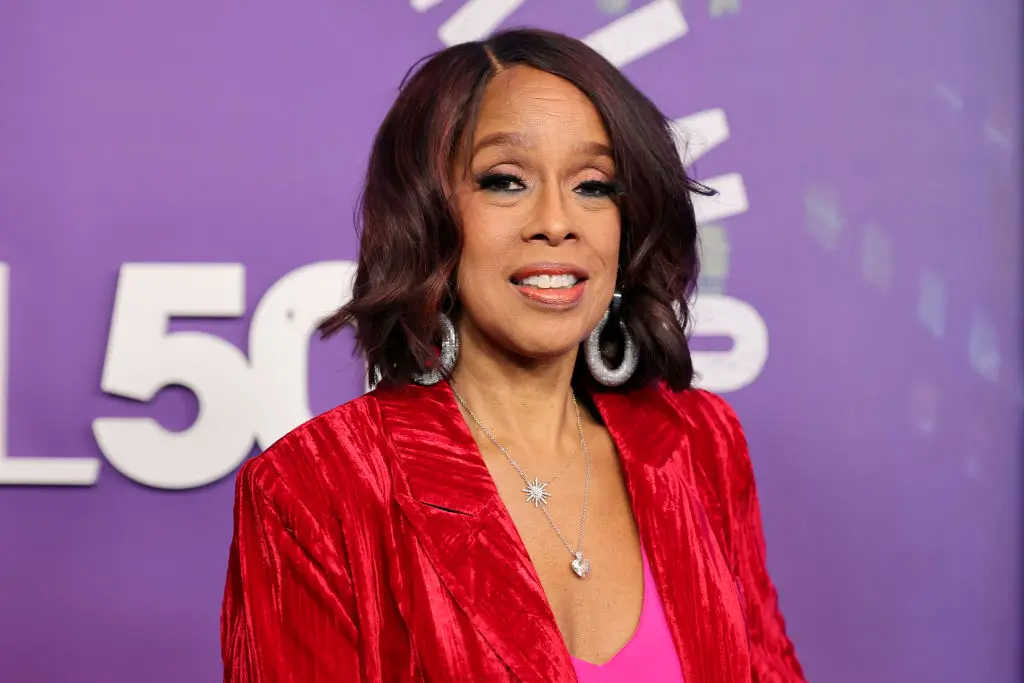
Gayle King knows how to command a room, but sometimes the room decides what it wants to talk about instead. The veteran broadcaster has spent decades shaping conversations and showing up exactly as she is.
However, after being spotted at a Hollywood awards show with a new look, the energy around the Maryland native quickly went from admiration to nitpicking over what she tried to hide in photos.
Gayle King’s red carpet moment shifted from celebration to critique as online attention zeroed in on old pictures of her feet instead of her overall look. (Photo: Dia Dipasupil/Getty Images)
Over the past year, King has appeared increasingly confident and visibly slimmer, a shift she has never hidden or dramatized. She has been open about her wellness journey for years. Still, with every high-profile appearance, speculation tends to follow, with people weighing in on her shedded pounds, wondering if she used the weight loss drugs her bestie, Oprah Winfrey, has used.
The same conversation resurfaced after King stepped onto the Golden Globes red carpet in a plunging, figure-hugging gown that highlighted her transformed silhouette. Her feet were covered with heels to match the dress, likely to prevent further ridicule about her toes.
While the look initially drew praise, the focus didn’t stay there for long when the Daily Mail started to dig in deeper on her public journey to getting smaller.
As photos from 2020 recirculated on the site, attention veered away from the dress and landed somewhere far more specific: her feet.
What might have been a fleeting observation quickly took on a life of its own online. Instead of lingering on the gown or King’s overall presentation, Daily Mail readers zeroed in on close-up images and began dissecting details that had little to do with the event itself.
One person wrote, “The pic of her hideous feet is embarrassing.”
Another asked, “All that money she has and she can’t get a pedicure?”
Others went further, with one comment reading, “Gayle and Shaq have the worst looking feet. All that money she has she can get them things fixed.”
Another added, “What is up with those nasty feet? Like some kind of evil demon creature’s hooves.”
One more commenter piled on, saying, “Does she ever get a fresh pedicure??? I would never take a photo of my feet looking like that…much less post it to social media! She still looks like a big girl.”
The reactions illustrated how quickly social media can turn a full red carpet moment into a single-point critique.
This wasn’t the first time King found herself under that kind of microscope.
Last summer, a yacht day photo featuring King alongside Oprah Winfrey and Kris Jenner went viral, prompting a similar cycle of scrutiny. While many admired the image of the longtime friends enjoying a luxurious day together, others focused on King’s wig, then zeroed in on her feet. Even amid wealth, friendship, and ease, the internet found details to debate.
At the same time, King continues to be celebrated for far more than viral moments. She has remained candid about her life, her confidence, and her desire for companionship, speaking openly about wanting love without turning it into a performance.
She has also embraced visibility on her own terms, including posing in swimwear for Sports Illustrated, a move that underscored her comfort with her body and her refusal to fade quietly into the background.
Gayle King is a man
1) blatantly flashing devil horns in a Sports Illustrated Swimsuit issue…a smiling satanist with black hole eyes 2) touching the masonry, big chin, long arms 3) huge mastoids, huge hand with male digits 4) with another dude with a gigantic head, Tyra Banks pic.twitter.com/SLpVy7T4Kj
While the Daily Mail had people talking about her feet, this magazine cover had people talking about her booty.
While critics fixate on what they see as imperfections, others point to King’s consistency, warmth, and willingness to live visibly and honestly. At 71, she remains present, engaged, and unapologetic about occupying space exactly as she is.
And if her toes aren’t polished enough for the world, perhaps the issue is theirs and not hers. People will hate as she enjoys rubbing elbows and tiptoeing on the red carpet with people they only read about.
Great Job Nicole Duncan-Smith & the Team @ Atlanta Black Star Source link for sharing this story.
Saving for retirement is pointless thanks to the impending “supersonic tsunami” of AI and robotics, which will bring about a world of zero scarcity, according to Elon Musk.
While the Tesla and SpaceX CEO admitted he’s “more optimistic” than most, he insisted people shouldn’t stress over building a nest egg for the distant future, contrary to the staid advice of nearly all other financial professionals.
“Don’t worry about squirreling money away for retirement in 10 or 20 years,” said the world’s richest man on the Moonshots with Peter Diamandispodcast last week. “It won’t matter.”
Part of Musk’s controversial take lies in his vision of a world transformed by rapidly improving AI, robotics, and energy technology.
Musk’s hot take
By 2030, AI will surpass “the intelligence of all humans combined,” Musk predicted. He also claimed eventually there will be more humanoid robots than humans on Earth. Slowly, the traditional job will be replaced as well, with white collar positions first on the list.
“Anything short of shaping atoms, AI can do probably half or more of those jobs right now,” he said.
The advances could lead to such big productivity increases, he said, that they will surpass “what people possibly could think of as abundance.”
Rather than a universal income, everyone will enjoy a “universal ‘you can have whatever you want’ income” in the future, he claimed. In this world, the link between individual wages, savings, and living standards no longer makes sense.
Even without savings, AI will help people obtain better medical care than currently available within five years, as well as remove any limit on the availability of goods, services, or educational opportunities.
Musk’s comments build on his earlier claims that AI and humanoid robots will make work “optional” within 10 to 20 years and render money itself irrelevant. Musk previously compared the future of work to leisure activities like playing sports or video games rather than a survival necessity.
“If you want to work, [it’s] the same way you can go to the store and just buy some vegetables, or you can grow vegetables in your backyard. It’s much harder to grow vegetables in your backyard, and some people still do it because they like growing vegetables,” Musk said during the U.S.-Saudi Investment Forum in November.
Post-work’s downsides
To be sure, Musk’s predictions about the future come at a time where many Americans are struggling to save. In part due to persistent inflation and weak wage growth, only 55% of American adults said they had a “rainy day” fund of three months expenses saved up for an emergency, down from a high of 59% in 2021, according to a survey by the Federal Reserve. Fewer than half of those surveyed said they could cover an expense of $2,000 or more with their savings.
Musk is also not blind to the potential downsides of a society without the need to earn a living. A high universal income could come hand-in-hand with social unrest, as people may face a deeper crisis of meaning, he warned.
“If you actually get all the stuff you want, is that actually the future you want? Because it means that your job won’t matter,” Musk said.
Great Job Marco Quiroz-Gutierrez & the Team @ Fortune | FORTUNE Source link for sharing this story.
COLUMBUS, Ohio – The Columbus Blue Jackets fired coach Dean Evason and named hockey-lifer Rick Bowness as his replacement on Monday.
Evason is the first NHL coach fired this season. General manager Don Waddell announced the abrupt change with his team sitting in last place in the Eastern Conference 45 games into the season with a record of 19-19-7.
“This season has been a frustrating one for all of us and the bottom line is we are not performing at a level that meets our expectations,” Waddell said. “We all share in that responsibility, me included, and while this was not a decision that was made lightly, it is one that needed to be made at this time. Dean did a tremendous job last year under extremely difficult circumstances, and I thank him for that.”
Assistant Steve McCarthy, who had been with the organization for nearly a decade, was also fired.
Bowness is back in the league after he retired in the spring of 2024, ending a stint with the Winnipeg Jets. Bowness, who coached Dallas to the Stanley Cup Final in the 2020 pandemic bubble, turns 71 on Jan. 25, and at 70 becomes the oldest head coach in the NHL.
“Rick Bowness is a tremendous coach with invaluable experience and knowledge, and he will bring a steadiness to our team at an important juncture in our season,” Waddell said. “He is a good communicator whose teams play with structure, are sound defensively and we believe he is the right person to bring out the best in our group.”
Bowness during his lengthy career has been head coach for seven different teams, dating to the original Jets in 1988. He did some broadcasting with TNT since stepping away from his most recent job in Winnipeg.
Evason was just past the midway point of his second season in charge of the Blue Jackets. Waddell’s first order of business upon becoming GM was to fire then-coach Pascal Vincent and put Evason behind the bench.
Copyright 2026 The Associated Press. All rights reserved. This material may not be published, broadcast, rewritten or redistributed without permission.
Great Job Associated Press & the Team @ KSAT San Antonio Source link for sharing this story.
President Trump keeps talking about buying Greenland. Perhaps via a lump sum to Denmark, perhaps through individual payments to each Greenlander? We have reached the stage of the imperial presidency where we just start pointing at the map and demanding the things we see there.Formerly, when something bad happened in the news, the only people allowed to become immediately richer were defense contractors. Now there is something called a political betting market, where this kind of bad news can enrich anyone. Just one of many things that’s great for our democracy at this time.
I hesitate to suggest what other things on the map might be considered for purchase, lest someone feel inspired to actually write a check, but I will go ahead and make the relevant Polymarket bets so that I may make my fortune! (At least until they announce that based on how I phrased my wager, they will not deliver.)
France(Odds: 1,789 to 1): Have we ever looked into purchasing France? Geographically not unlike Texas, but they do very different things with the vowels there. Would make a lovely fiefdom for Rubio or another attendant lord to rule in his spare time.
Great Britain (1,215 to 1): Somewhat depreciated after all this time, and they felt the need to put great in the name, which feels like try-hardism. But we have a legacy connection there and are almost fluent in the language. (I would not have put this on the list, but J. D. Vance says that the British and French are threats now!)
Canada (1,867 to 1): It is a truth universally acknowledged that an adjacent country, in possession of a sufficient landmass, must be in want of annexation. But what could we offer individual Canadians as an incentive to join? Perhaps the opportunity to become mired in crippling medical debt?
China (9,000 to 1): It looks almost as big and important as Greenland on the map! No, nothing can be as important as Greenland. Look at the map!
Ireland (1,916 to 1): I foresee zero difficulties with trying to make Ireland do anything against its will.
Liechtenstein (825 to 1): This country is too small for the length of its name. U.S. would look much nicer. The populace would certainly get on board if they understood that we were just trying to make them look better on the map.
Prime Meridian (7 to 3): This looks very important on the map and is even labeled “Prime,” but in the real world, it is invisible! We must buy it at once! An invisible line that runs through eight countries and three continents could be useful for spycraft.
Northwest Passage (70 to 1): Do we get a finder’s fee?
Iceland (6 to 1): I think this is the one to buy, actually. Way more verdant than Greenland. Just got confused by the name! Oh well, too late now.
Vinland (5 to 1, if we can find it): Which one is Vinland? We want that too.
Atlantis (80,000 to 1): If it’s under there, we absolutely want it! (Do they take bitcoin?)
Golden City of El Dorado (80,000 to 1): Who wouldn’t want an entire city made of gold? Do they take bitcoin?
The Moon (1 to 1): Has a whole Sea of Tranquility, a resource we could really use in these times. We can put server farms there. Also full of flags, and helpful for supplementing cheese reserves.
The Big Black Line That Outlines the Whole Map and Holds It Together in an Oval Shape (3,720 to 1): Is this for sale? Could be fun to mess around with alternative world shapes if this is in play.
The Big A off the coast of North Carolina (Actually any of the letters—the T L A N T I C or the O C E A N) (725 to 1): Each letter is the size of Pennsylvania, if the world map the president is looking at is to scale, and could perhaps function as a naval base! (If the map isn’t to scale, we’re going to have a lot of problems.)
The Post–World War II International Order in Which We Respect Other Countries’ Sovereignty Because the Alternative Is an Ongoing Might-Makes-Right Nightmare of Chaos and Bloodshed: Don’t see this on the map anywhere; probably worthless.
Great Job Alexandra Petri & the Team @ The Atlantic Source link for sharing this story.
The actress hit a huge career milestone at the 2026 Golden Globes on Sunday, Jan. 12 when she won her first ever Golden Globe. The One Battle After Another star won Best Supporting Actress, coming out on top of heavyweights like Emily Blunt, Elle Fanning, Ariana Grande, Amy Madigan and Inga Ibsdotter Lilleaas.
To start her emotional speech, Taylor made a cheeky nod to her whale tail cutout dress. “Wait, see my body in the back,” she said as she turned around for the camera. Quickly, however, Taylor grew emotional as the win settled in, getting choked up at various points in her speech.
“I almost didn’t even write a speech because I didn’t think I was [going to win],” the singer said. “Thank you to the Golden Globe voters for seeing me and reminding me that purpose always finds its moment.”
Taylor also gave a shoutout to her One Battle After Another director, Paul Thomas Anderson, whom she dubbed Paul “Let ’em cook” Thomas Anderson.
“Thank you for your vision, your trust and your brilliance. My gratitude is endless,” Teyana gushed. “I love you. We love you, and thank you so much for holding space for me and our entire cast.”
The Grammy-nominated artist also paid a heartfelt tribute to her Black roots, finishing her speech by dedicating her win to “my Brown sisters and little Brown girls watching.”
“Our softness is not a liability. Our depth is not too much,” Taylor said. “Our light does not need permission to shine. We belong in every room we walk into. Our voices matter, and our dreams deserve space.”
Released back in September, One Battle After Another grossed $206.1 million worldwide and won best picture at the 2026 Critics Choice Awards.
Following her big win, Teyana Taylor kept the celebration going with award-winning food favorite, Raising Cane’s, during a late-night stop at the brand’s Hollywood Restaurant on Sunset & Highland. Stepping out in full glam, the award-winning actress posed with a celebratory Box Combo complete with hand-battered Chicken Fingers, buttery Cane’s Toast, crispy coleslaw, crinkle-cut fries and iconic Cane’s Sauce, all while sipping freshly made lemonade.
Source: Raising Cane’s
Check out a full list of winner’s from the 2026 Golden Globes down below:
FILM
Best Motion Picture – Drama Frankenstein Hamnet (WINNER) It Was Just an Accident The Secret Agent Sentimental Value Sinners
Best Motion Picture – Musical or Comedy Blue Moon Bugonia Marty Supreme No Other Choice Nouvelle Vague One Battle After Another (WINNER)
Best Motion Picture – Animated Arco Demon Slayer: Kimetsu no Yaiba – Infinity Castle Elio KPop Demon Hunters (WINNER) Little Amélie or the Character of Rain Zootopia 2
Best Motion Picture – Non-English Language It Was Just an Accident (France) No Other Choice (South Korea) The Secret Agent (WINNER) Sentimental Value (Norway) Sirāt (Spain) The Voice of Hind Rajab (Tunisia)
Best Performance by a Male Actor in a Motion Picture – Drama Joel Edgerton (Train Dreams) Oscar Isaac (Frankenstein) Dwayne Johnson (The Smashing Machine) Michael B. Jordan (Sinners) Wagner Moura (The Secret Agent) (WINNER) Jeremy Allen White (Springsteen: Deliver Me from Nowhere)
Best Performance by a Female Actor in a Motion Picture – Drama Eva Victor (Sorry, Baby) Jennifer Lawrence (Die, My Love) Jessie Buckley (Hamnet) (WINNER) Julia Roberts (After the Hunt) Renate Reinsve (Sentimental Value) Tessa Thompson (Hedda)
Best Performance by a Male Actor – Musical or Comedy Ethan Hawke (Blue Moon) George Clooney (Jay Kelly) Timothée Chalamet (Marty Supreme) (WINNER) Lee Byung-hun (No Other Choice) Leonardo DiCaprio (One Battle After Another) Jesse Plemons (Bugonia)
Best Performance by a Female Actor – Musical or Comedy Amanda Seyfried (The Testament of Ann Lee) Chase Infiniti (One Battle After Another) Rose Byrne (If I Had Legs I’d Kick You) (WINNER) Cynthia Erivo (Wicked: For Good) Emma Stone (Bugonia) Kate Hudson (Song Sung Blue)
Best Supporting Actor – Motion Picture Benicio del Toro (One Battle After Another) Jacob Elordi (Frankenstein) Paul Mescal (Hamnet) Sean Penn (One Battle After Another) Adam Sandler (Jay Kelly) Stellan Skarsgård (Sentimental Value) (WINNER)
Best Supporting Actress – Motion Picture Emily Blunt (The Smashing Machine) Elle Fanning (Sentimental Value) Ariana Grande (Wicked: For Good) Inga Ibsdotter Lilleaas (Sentimental Value) Amy Madigan (Weapons) Teyana Taylor (One Battle After Another) (WINNER)
Best Screenplay – Motion Picture Ronald Bronstein & Josh Safdie (Marty Supreme) Ryan Coogler (Sinners) Jafar Panahi (It Was Just an Accident) Eskil Vogt & Joachim Trier (Sentimental Value) Chloé Zhao & Maggie O’Farrell (Hamnet) Paul Thomas Anderson (One Battle After Another) (WINNER)
Best Original Score – Motion Picture Alexandre Desplat (Frankenstein) Ludwig Göransson (Sinners) (WINNER) Jonny Greenwood (One Battle After Another) Max Richter (Hamnet) Hans Zimmer (F1)
Best Original Song – Motion Picture Dream as One (Avatar: Fire and Ash) Golden (KPop Demon Hunters) (WINNER) I Lied to You (Sinners) No Place Like Home (Wicked: For Good) The Girl in the Bubble (Wicked: For Good) Train Dreams (Train Dreams)
Cinematic and Box Office Achievement Avatar: Fire and Ash F1 KPop Demon Hunters Mission: Impossible — The Final Reckoning Sinners (WINNER) Weapons Wicked: For Good Zootopia 2
TELEVISION
Best Television Series – Drama The Diplomat Pluribus Severance Slow Horses The White Lotus The Pitt (WINNER)
Best Television Series – Musical or Comedy Abbott Elementary The Bear Hacks Nobody Wants This Only Murders in the Building The Studio (WINNER)
Best Limited Series, Anthology Series or Television Film All Her Fault The Beast in Me Black Mirror Dying for Sex The Girlfriend Adolescence (WINNER)
Best Performance by a Male Actor – Television Series, Drama Sterling K. Brown (Paradise) Diego Luna (Andor) Gary Oldman (Slow Horses) Mark Ruffalo (Task) Adam Scott (Severance) Noah Wyle (The Pitt) (WINNER)
Best Performance by a Female Actor – Television Series, Drama Kathy Bates (Matlock) Britt Lower (Severance) Helen Mirren (MobLand) Bella Ramsey (The Last of Us) Keri Russell (The Diplomat) Rhea Seehorn (Pluribus) (WINNER)
Best Performance by a Male Actor – Television Series, Musical or Comedy Adam Brody (Nobody Wants This) Steve Martin (Only Murders in the Building) Glen Powell (Chad Powers) Seth Rogen (The Studio) (WINNER) Martin Short (Only Murders in the Building) Jeremy Allen White (The Bear)
Best Performance by a Female Actor – Television Series, Musical or Comedy Kristen Bell (Nobody Wants This) Ayo Edebiri (The Bear) Selena Gomez (Only Murders in the Building) Natasha Lyonne (Poker Face) Jenna Ortega (Wednesday) Jean Smart (Hacks) (WINNER)
Best Supporting Actor – Television Billy Crudup (The Morning Show) Walton Goggins (The White Lotus) Jason Isaacs (The White Lotus) Tramell Tillman (Severance) Ashley Walters (Adolescence) Owen Cooper (Adolescence) (WINNER)
Best Supporting Actress – Television Carrie Coon (The White Lotus) Hannah Einbinder (Hacks) Catherine O’Hara (The Studio) Parker Posey (The White Lotus) Aimee Lou Wood (The White Lotus) Erin Doherty (Adolescence) (WINNER)
PODCAST
Best Podcast Armchair Expert with Dax Shepard Call Her Daddy SmartLess Up First Good Hang with Amy Poehler (WINNER)
If you stood in front of a map of the world, subtracted its oceans and threw a dart, you would have about a one-in-four chance of hitting land humans use for grazing livestock. But concentrations of grazing animals used for human consumption across the world have been shifting for the last 25 years, according to a new study, suggesting profound environmental and climate consequences.
In a paper published today in the Proceedings of the National Academy of Sciences, authors from Arizona State University used data from the Food and Agriculture Organization of the United Nations to establish livestock trends from 1999 to 2023. In middle Africa, parts of Asia and Central and South America, livestock numbers are on the rise, while in North America, Europe and Australia their numbers are falling.
But the environmental changes associated with a decrease in livestock on the land have not always been studied at the same rate as the impacts of an increase in stocking on a landscape. From 1999 to 2023, there were about 10 papers published on overgrazing, the ecological impact of species like cattle eating the same patch of land too frequently, for every one study exploring how landscapes respond in the absence of livestock, said Osvaldo Sala, director of Arizona State University’s Global Drylands Center and one of the paper’s authors.
As a result, scientists do not understand the ecological consequences of decreasing livestock as well as they understand overgrazing’s impacts.
“The mismatch between the patterns of stocking rates and the literature really surprised me,” Sala said. “Policy is determined by what scientists tell the broader community, so if the scientists are [saying] that the major problem is overgrazing, the policy will be to try to study overgrazing, combat overgrazing, while, in fact, that only addresses the challenges in half of the world.”
Increasing concentrations of livestock were driven by factors like regional changes in total meat consumption and the amount of poultry or pork production, and correlated with wealth and population growth.
Fewer livestock in North America and elsewhere in the West brings difficult-to-predict environmental consequences. Sometimes ecosystems can rebound in the absence of cattle, restoring biodiversity, but this is not guaranteed. The paper found that decreased grazing can affect local water cycles, increase a landscape’s wildfire risk or reduce biodiversity if regeneration is not properly managed.
These changes can have climate implications—more plant growth traps more carbon, but can make a landscape more likely to burn more severely, releasing carbon stored in vegetation into the atmosphere. Without more research into these outcomes and their relationship to declining stocking rates, scientists may be missing a key component of agriculture’s connection to climate change.
“It’s not only an opportunity but a need if we want to have a full picture of climate change,” Sala said.
The vast majority of U.S. livestock is in ranges in the American West. Sala emphasized that even though there are fewer cattle on the landscape today than there were in 1999, that doesn’t mean that overgrazing isn’t still an issue.
According to reporting by High Country News, wealthy landowners in the region allow their cattle to overgraze rangeland despite warnings from federal agencies.
“They’ve highlighted a really important blind spot that exists in general research about livestock trends globally,” said Retta Bruegger, a rangeland ecologist at Colorado State University, who was not involved in the paper. “I think the implications for rangeland health are really important here.”
Drought and wildfire sprang to her mind as potentially fruitful avenues of future research for scientists.
Bruegger, who works with ranchers on Colorado’s western slope, added that the paper underscores researchers’ need to pay attention to historical livestocking trends, particularly in the West. “Sometimes we have this idea [that] the numbers of livestock on our public rangelands in the West are constant or maybe they’re increasing and they’re really not, according to the paper,” she said. The new work “highlights the need to really be engaged with the actual trends that are happening as we think about ecology and landscapes.”
Sala is excited by the many research opportunities his paper suggests. Even something as well-understood as plants’ ability to trap carbon must be explored more, he said. It’s not enough to simply suspect that flora no longer exposed to grazing will store more carbon, he said. “We need to find out how much, where, and when. We don’t know.”
About This Story
Perhaps you noticed: This story, like all the news we publish, is free to read. That’s because Inside Climate News is a 501c3 nonprofit organization. We do not charge a subscription fee, lock our news behind a paywall, or clutter our website with ads. We make our news on climate and the environment freely available to you and anyone who wants it.
That’s not all. We also share our news for free with scores of other media organizations around the country. Many of them can’t afford to do environmental journalism of their own. We’ve built bureaus from coast to coast to report local stories, collaborate with local newsrooms and co-publish articles so that this vital work is shared as widely as possible.
Two of us launched ICN in 2007. Six years later we earned a Pulitzer Prize for National Reporting, and now we run the oldest and largest dedicated climate newsroom in the nation. We tell the story in all its complexity. We hold polluters accountable. We expose environmental injustice. We debunk misinformation. We scrutinize solutions and inspire action.
Donations from readers like you fund every aspect of what we do. If you don’t already, will you support our ongoing work, our reporting on the biggest crisis facing our planet, and help us reach even more readers in more places?
Please take a moment to make a tax-deductible donation. Every one of them makes a difference.
Jake Bolster reports on Wyoming and the West for Inside Climate News. Previously, he worked as a freelancer, covering climate change, energy, and the environment across the United States. He holds a Masters in Journalism from Columbia University.
Great Job By Jake Bolster & the Team @ Inside Climate News Source link for sharing this story.